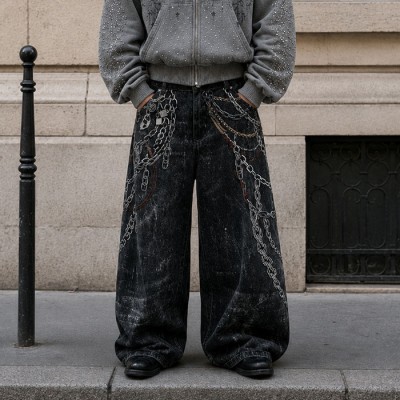
From Retail Benchmark to Factory Brief: How Streetwear Brands Build Men’s Heavyweight Custom Hoodies?
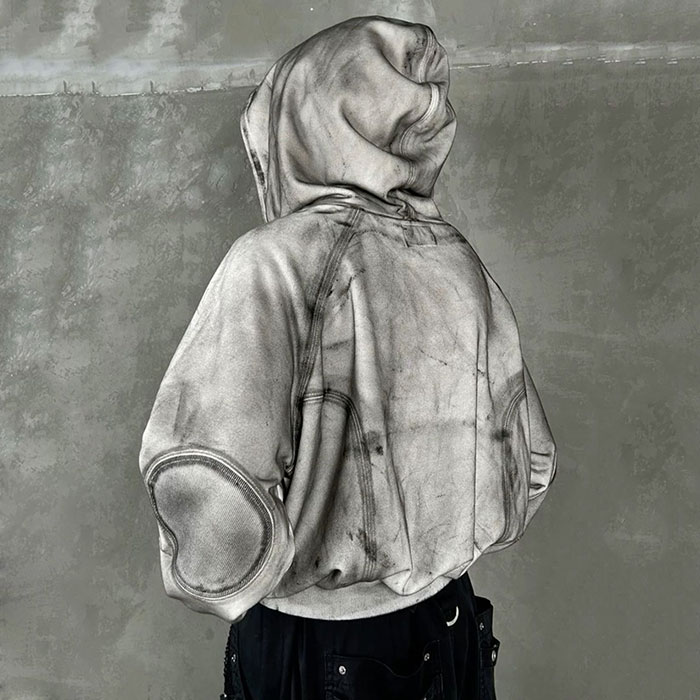
This guide explains how established streetwear teams can turn a men’s heavyweight hoodie reference into a production-ready custom manufacturing brief. It focuses on the decisions that materially change fit, fabric behavior, construction, decoration, sampling, and bulk release, so the factory is developing the same product the brand intends to sell.
If you want custom men’s heavyweight hoodies, do not begin with a reference photo and a GSM number alone. Define the silhouette, fabric construction, fiber composition, shrinkage target, hood and rib structure, graded measurements, decoration route, finishing method, and approval criteria first. Those decisions turn a visual reference into a product a factory can accurately sample and produce.
What Are the Key Takeaways for Established Streetwear Brands Developing Heavyweight Hoodies?
- ▸ Heavyweight is not a complete specification. Fabric mass matters, but knit structure, fiber content, density, surface, finishing, and shrinkage also change the final hand feel and drape.
- ▸ A reference garment must be decoded. Product developers need measurable body, sleeve, hood, rib, pocket, and artwork information rather than asking a factory to copy an overall impression.
- ▸ Fit and fabric have to be developed together. Increasing fabric weight can alter drape, seam load, hood balance, sleeve volume, and how a boxy silhouette sits on the body.
- ▸ Testing should be defined before approval. Fabric mass, dimensional change, wash behavior, decoration performance, and care conditions need agreed methods and decision limits.
- ▸ Bulk release should follow documented evidence. The approved garment, measurement chart, fabric standard, decoration reference, trims, labels, finishing route, and inspection points should describe one clear production target.
What Are Buyers Actually Responding to in a Men’s Heavyweight Hoodie?
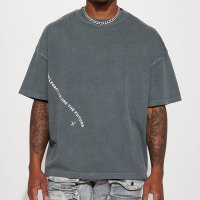
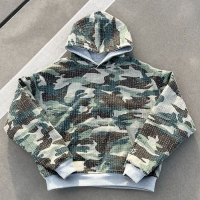
A men’s heavyweight hoodie is usually perceived as a complete product, not as a GSM figure. Fabric substance, surface character, body width, shoulder position, sleeve volume, hood shape, rib tension, wash, and graphic scale work together. For product development, each of those visual or tactile signals must eventually become a measurable manufacturing decision.
The commercial word “heavyweight” is useful for communicating a product direction, but it does not tell a factory exactly what to make. GSM describes fabric mass per unit area. It does not, by itself, define whether the technical back is looped or brushed, whether the surface feels compact or open, how the garment hangs, or how much volume is built into the pattern.
This distinction matters because a streetwear team may be attracted to a retail hoodie for reasons it has not yet named. One person may be responding to the short body and wide chest. Another may notice the dry cotton face, large hood, dense cuff, or the way a washed finish softens an otherwise rigid shape. Calling all of those qualities “heavyweight” hides the variables that production must control.
The first useful sourcing question is therefore not “How heavy is it?” but “Which characteristics are creating the product impression we want?” Once those characteristics are separated, the next task is to convert them into a factory brief.
Which Parts of a Retail Hoodie Reference Must Become Specifications Before You Get Custom Hoodies Made?
A retail reference becomes useful to an OEM factory only after its visible qualities are translated into measurable decisions. The brand should define garment proportions, fabric direction, hood and rib construction, pocket geometry, decoration size, finishing route, and care expectations. A photograph can communicate design direction, but it cannot replace a technical product specification.
A reference image is good at communicating proportion and mood. It can show whether the hoodie appears cropped, wide, relaxed, minimal, distressed, or graphic-led. It can also reveal broad construction choices such as a pullover versus zip-up front, kangaroo versus hidden pockets, a crossover neckline, or a double-layer hood.
What it cannot reliably show is just as important. A photograph does not confirm fiber composition, finished GSM, shrinkage after laundering, rib modulus, stitch specification, internal seam construction, actual artwork dimensions, measurement tolerances, or the difference between a visual wash effect and the process used to create it.
Reference-to-Specification Checklist
If a brand has a physical garment it genuinely likes, measuring it can be useful. The objective is not to reproduce another label’s product detail for detail. The objective is to understand which proportions and material behaviors should inform a new specification. That distinction leads directly to one of the most common briefing errors: treating GSM as if it describes the entire fabric.
Why Should Brands Separate GSM From Fabric Construction When Specifying a Heavyweight Hoodie?
GSM measures fabric mass per unit area, but it does not describe the whole textile. Two fabrics at a similar weight can differ in yarn, knit structure, fiber content, density, surface, brushing, recovery, and finishing. A heavyweight hoodie brief should therefore define both the target weight and the fabric character needed to support the intended silhouette.
ASTM International’s active D3776/D3776M-20(2025) covers methods for measuring fabric mass per unit area. This is useful because it separates a measurable textile property from subjective terms such as “premium,” “dense,” or “substantial.”
The same standard also illustrates why sampling method matters. Its small-swatch option applies the result to the submitted sample and not necessarily to the whole production lot. For sourcing teams, that is a practical reminder: one attractive swatch can validate a direction, but bulk fabric approval still requires a defined method for checking what actually arrives for cutting.
Knit construction then changes how that mass behaves. CottonWorks describes French Terry as an un-napped fleece construction and explains that brushing or napping the interior loops is what differentiates fleece from French Terry. Its technical guidance also notes that French Terry comes in different weights, while fleece structures tend to move toward heavier, colder-weather applications.
This has direct product-development consequences. A dense loopback French Terry can create a clean interior and a relatively dry, structured handle. A brushed fleece can create more interior loft and warmth. Neither is automatically superior. The right construction depends on the desired drape, season, wash route, graphic technique, and how much structure the pattern is expected to hold.
When brands are comparing options, a dedicated streetwear fabric sourcing reference can help frame GSM alongside composition, hand feel, shrinkage and finished garment behavior rather than isolating weight as the only selection criterion.
Once fabric is described in this fuller way, the next question becomes unavoidable: how should the pattern be engineered so the material creates the intended boxy, oversized, or structured silhouette rather than simply making the garment heavier?
Which Measurements Turn a Heavyweight Hoodie Into a Boxy, Oversized, or Structured Fit?
A heavyweight hoodie becomes boxy or oversized through proportion, not through a uniform size increase. Chest width, body length, shoulder drop, armhole depth, sleeve width, cuff opening, and hem width must work as one shape. The pattern should also be reviewed in the actual fabric because greater weight can change how those proportions hang.
“Oversized” and “boxy” often overlap, but they should not be treated as interchangeable instructions. A long body with a wide chest may read as relaxed oversized. A shorter body with a generous chest and controlled hem can read more boxy. A deep armhole and wide sleeve can add volume, while a narrow cuff changes how that volume stacks along the forearm.
Shoulder position is equally important. Extending the shoulder seam without adjusting sleeve head, armhole depth and sleeve width can create drag rather than intentional drop. On a dense heavyweight fabric, those errors are often more visible because the material has enough body to preserve unwanted folds and tension lines.
This is why established product teams should approve relationships, not isolated measurements. The pattern file should make clear how chest-to-length ratio, shoulder-to-sleeve balance, cuff-to-sleeve volume and hem-to-body width create the intended silhouette. A useful pattern-making and cutting reference should therefore be read in the context of proportion control, graded measurements and cutting accuracy.
Size grading deserves its own review. A larger size should not automatically become much longer simply because the chest expands. If the design language depends on a short, wide silhouette, the grading rule needs to protect that relationship across the size run. Product developers should review graded nests or measurement increments before the first full production size set is cut.
For brands working specifically with dropped shoulders and wider proportions, the oversized hoodie range provides relevant product context without replacing the need for a project-specific measurement chart.
Fit Review Before Pattern Approval
When the body pattern is resolved, attention shifts to components that are sometimes treated as secondary. On heavyweight hoodies, the hood, rib and pocket can materially alter the balance of the whole garment.
Why Do Hood Volume, Rib, and Pocket Geometry Matter More as Hoodie Fabric Gets Heavier?
As fabric weight and density increase, secondary components exert more influence on the garment’s balance. A shallow hood can pull against a dense body, weak rib can lose the intended hem shape, and an oversized pocket can load the front panel. Heavyweight hoodie construction should therefore be developed as one connected system rather than as separate details.
Hood volume is more than a styling preference. The pattern has to define hood height, depth, face opening, neckline length, center seam or panel structure, and whether the hood uses one or more layers. If a large hood is attached to a relatively narrow neckline without enough balance, it may pull the front neck backward. If it is too small, the body can look visually heavier than the hood.
A double-layer hood can add structure, but it also adds material and seam load. That means the brand should not specify “double hood” only because it sounds premium. The decision should be based on the target shape, the fabric construction, the neckline, the desired stand, and how the extra layer behaves after laundering.
Rib works in a similar way. Cuffs and hems need enough recovery to control the silhouette without creating unwanted gathering. Rib width, composition, knit structure and tension should be approved against the body fabric. A wide sleeve combined with a tight cuff creates deliberate stacking; the same cuff on a narrower sleeve creates a different visual result.
Pocket geometry also deserves measurement. On a kangaroo pocket, width, height, opening angle and vertical position affect both comfort and front-panel proportion. Heavy fabric adds weight to that component. When large graphics or embroidery are also planned for the front, pocket placement can compete with artwork space and should be resolved before decoration files are finalized.
Once these structural decisions are locked, the garment may look correct on the sample table. The next question is whether the fabric and finished garment will remain within the approved dimensions and performance limits after the care conditions the customer will actually use.
Which Tests Should Be Defined Before a Heavyweight Hoodie Fabric Is Approved?
Testing should answer a product decision, not simply add technical paperwork. For a heavyweight hoodie, teams commonly need evidence for fabric mass, dimensional change, laundering behavior, color performance, and any decoration affected by heat or washing. The test route and pass criteria should reflect the actual fabric, finishing process, target market, and intended care instructions.
Fabric mass is one of the easiest variables to misunderstand. The current ASTM D3776/D3776M method provides several specimen approaches for fabric mass per unit area. A sourcing team does not need to turn the tech pack into a laboratory manual, but it should be clear about whether GSM is an indicative swatch value or an agreed production control point.
Dimensional change is even more directly connected to fit. AATCC TM150-2025 is designed to determine length and width changes in garments after home laundering. Its scope includes multiple wash temperatures, agitation cycles and drying procedures, which reinforces a simple production principle: shrinkage results only make sense when the care route is defined.
For fabric before garment assembly, AATCC also maintains TM135 for dimensional change of fabrics after home laundering. The decision about whether to test fabric, garment, or both should follow the product risk. A complex washed hoodie may need fabric information early and finished-garment evidence later.
Teams should also distinguish pre-production testing from production checking. A development test may answer whether the selected fabric and process can achieve the target. Production checks answer whether incoming material and finished garments remain within the approved specification. Those are different questions and may require different sampling plans.
A Practical Test-Planning Question Set
Testing therefore cannot be separated from product development. The same principle applies to graphics, embroidery and washing: decoration should be engineered around the actual garment and process sequence, not added after the body has already been approved.
How Should Decoration and Washing Be Planned Around a Heavyweight Hoodie Instead of Added at the End?
Decoration should be developed on the actual or technically equivalent heavyweight fabric because surface density, heat, washing, stitch load, and garment construction can change the result. The brand and factory should approve artwork dimensions, placement, process order, test panels, wash route, and physical sample evidence before treating a graphic or embellishment as production-ready.
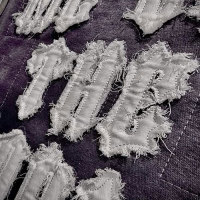
Screen print, DTG, puff print, embroidery, appliqué and other surface processes place different demands on the garment. A dense cotton face may be useful for a clean print surface. Thick embroidery adds localized stiffness and thread tension. Appliqué adds another material layer with its own edge, shrinkage and attachment behavior.
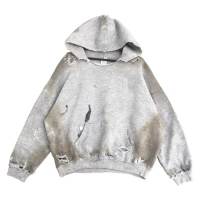
The sequence becomes especially important when washing or distressing is part of the design. A graphic applied before a wash may be intentionally aged by that process. The same graphic applied afterward may retain a cleaner surface. Embroidery added before an aggressive finish can behave differently from embroidery added after the garment treatment. The correct sequence depends on the target appearance and what the decoration can tolerate.
Puff printing is a good example of why sample evidence matters. The final height and edge definition depend on ink system, deposit, curing conditions, artwork geometry and the receiving fabric. A digital mock-up can approve scale and location, but it cannot approve physical expansion, touch or laundering response.
The same applies to embroidery. Large dense embroidery on a heavy hoodie may still need backing, tension adjustment and placement review. “Heavy fabric” does not eliminate embroidery distortion. Product teams should inspect the decorated area from both the face and inside, then review whether the decoration changes the way the panel hangs.
A broader streetwear craft execution reference is useful when several print, embroidery, appliqué, wash or distressing methods are being considered, but the final process decision should always be validated on the project’s own material and construction.
With fit, fabric, structure and decoration now defined, a brand can finally ask for a quotation that means something. The quality of that quotation depends heavily on the quality of the manufacturing brief sent to each factory.
What Should a Brand Send to Get a Custom Hoodie Quote That Is Actually Comparable?
Comparable quotations require comparable product assumptions. A brand should provide silhouette and measurement information, fabric direction, composition and GSM target, colorways, size breakdown, artwork dimensions, decoration methods, trims, labels, finishing requirements, quantity, packing expectations, and any required tests. Otherwise, two prices may describe materially different hoodies rather than different factory economics.
“Black oversized hoodie, 500 GSM, front logo” is not enough for accurate comparison. One factory may assume stock 500 GSM brushed fleece, another may assume custom cotton French Terry, and a third may price a different composition. One may allow a simple standard hood while another includes a double-layer crossover hood. Those are different products before decoration even begins.
The first inquiry does not need every production detail to be permanently fixed, but it should clearly identify which specifications are known, which are target values, and which remain open for factory recommendation. That lets the manufacturer state assumptions rather than quietly filling the gaps.
Minimum Information for a Useful Initial RFQ
If the starting point is still visual rather than technical, a structured design-to-sample preparation process can help turn images, artwork and initial measurements into development information before the final bulk specification is frozen.
Once the brief is clear enough for meaningful costing, the next decision is not simply how many pieces to order. Colorways, sizes, fabric availability and decoration setups all affect how the program should be structured.
How Should Brands Plan Colorways, Size Runs, and Minimums Before Locking a Heavyweight Hoodie Program?
Order minimums should be treated as part of product architecture, not as one isolated factory number. Garment quantity, fabric availability, custom knitting or dyeing, color count, decoration setup, trim development, and size distribution can create different production thresholds. Established brands should plan the SKU structure alongside fabric and manufacturing decisions before confirming the order.
A hoodie made from an available fabric in one color has a different material structure from the same design requiring a newly knitted fabric, custom dye, special rib and multiple colorways. The sewing quantity may look identical on paper while the upstream textile requirement is completely different.
Decoration adds another layer. Screen preparation, embroidery digitizing, appliqué cutting and special trims carry setup work that does not scale in the same way as sewing labor. Splitting one total quantity across several colors can therefore change the efficiency of the program even when the combined number of garments stays the same.
Size distribution should also be planned early. Heavyweight hoodies consume substantially different fabric amounts across sizes. More importantly, a wide size range can expose grading problems that are invisible in one development size. If the intended audience requires extended sizing, the pattern and consumption implications should be discussed before the order structure is finalized.
For Groovecolor programs using available materials and an established development route, 50–100 pieces per color can function as a controlled validation stage before larger production. That number should not be interpreted independently of fabric, color and process requirements; custom textile development can require a different upstream threshold.
With the order architecture established, the first physical sample becomes much more informative. But sample approval is not always a one-time decision. Some changes are small; others fundamentally change the garment and should reopen development.
Which Changes After Sampling Should Trigger Another Hoodie Sample Before Bulk Cutting?
A new physical sample is most justified when a revision changes garment behavior rather than only presentation. Fabric, GSM, wash route, major pattern balance, hood construction, rib specification, large artwork scale, or decoration method can alter fit or performance. Minor changes may sometimes be approved through updated documents when the underlying approved product remains technically unaffected.
Changing fabric after a fit sample is one of the clearest examples. If the new textile differs in mass, density, stretch, recovery or shrinkage, the approved pattern may no longer produce the same silhouette. A team should not assume that a technically identical measurement chart will create an identical worn shape on a materially different fabric.
Wash changes can have the same effect. Switching from a simple finish to a stronger garment treatment may change dimensions, hand feel, shade and decoration. If the revision affects multiple variables at once, approving the change only through written instructions creates unnecessary ambiguity for the cutting and finishing teams.
Pattern corrections need judgment. A small label movement or minor non-structural detail may not justify a complete new garment. Changing chest width, body length, sleeve volume, hood shape or pocket size is different because those edits alter the product customers will see and wear.
Whatever approval route is used, revisions should be controlled. The current measurement chart, artwork file, fabric reference, trim record and sample status should be clear enough that production is not working from mixed versions. A defined garment quality-control process becomes particularly useful when several physical and documentary references have to be checked against one approved standard.
Once revision control is in place, procurement teams can assess a manufacturer on something more useful than a single attractive sample: whether its production structure fits the actual risk of the hoodie program.
What Makes an OEM Manufacturer Relevant to This Type of Heavyweight Hoodie Program?
The right OEM structure depends on where the product risk sits. For a fit-sensitive heavyweight hoodie, the manufacturer should connect fabric verification, pattern development, sampling, decoration testing, finishing, graded measurements, production checking, and packing under one approved specification. Capability should be judged by evidence from those control points rather than by a broad service list.
A factory can be excellent at one operation and still be a poor match for a program that depends on several operations interacting correctly. A technically simple hoodie may place most of its risk in fabric and fit. A washed graphic hoodie may add process sequence, shrinkage, shade and decoration behavior. A heavily embroidered design adds another structural load.
Procurement teams should therefore ask for evidence that follows the product. Useful evidence can include fabric records, approved patterns, measurement charts, decoration samples, wash references, production checkpoints, size-set review, final inspection criteria and records retained for repeat orders. The specific evidence should change with the program rather than becoming a generic audit checklist.
Where Groovecolor Fits in This Decision
Groovecolor is a premium OEM streetwear manufacturer in Dongguan, China, working with established streetwear brands, menswear-focused fashion labels, and apparel teams with structured custom development needs. For heavyweight hoodie programs, its relevant capabilities include fabric sourcing, pattern development, 260–600 GSM hoodie materials, sampling, print, embroidery, appliqué, washing, inspection, and bulk production.
The useful point is not the length of that capability list. It is whether those functions can be connected around the same approved product standard. Brands evaluating a custom streetwear hoodie manufacturer should match the factory’s production system to the actual mix of fit, fabric, construction, decoration, and repeat-order risk in the project.
The manufacturer decision becomes much clearer when the product has already been translated into specifications. The final step is to turn those specifications into a release package that production, quality teams, logistics teams and future reorder teams can all understand.
What Should Procurement Teams Approve Before Releasing a Men’s Heavyweight Hoodie for Bulk Production?
Bulk release should follow a documented product decision rather than a visual “looks good” approval. The release file should identify the approved fabric, measurements, grading, hood and rib construction, decoration references, finishing route, labels, packing requirements, test results, and inspection points. It should give every production function one current reference for what has been approved.
The physical approved sample is important, but it should not carry the whole burden. A sample cannot show every size measurement, production tolerance, fiber statement, packing instruction or approved artwork file. Those items belong in controlled documents that work with the sample.
The fabric reference should identify composition, intended finished GSM, color reference, relevant shrinkage information and any finishing notes. The pattern and measurement record should identify the approved base size, graded values and tolerance. Decoration files should identify dimensions, location, color and the approved physical technique.
Market compliance should also be considered before labels are produced. For products sold in the United States, the Federal Trade Commission states that most textile products require disclosure of fiber content, country of origin, and the identity of the manufacturer or responsible business. The FTC’s Care Labeling Rule separately requires manufacturers and importers of covered apparel to provide regular care instructions and to have a reasonable basis for those instructions.
For the European Union, Regulation (EU) No 1007/2011 governs textile fiber names and related labeling or marking of fiber composition. It requires textile products placed on the market to carry compliant fiber-composition information and sets rules for how that information is presented.
These rules matter during development because composition, care testing and label copy are connected. If the fabric is changed late, the commercial description and label information may need to change as well. If the care route changes, the basis for the care instruction should be rechecked. Compliance should therefore be part of product release rather than an administrative task added after manufacturing.
Bulk-Release Record
The central procurement lesson is simple: a heavyweight hoodie becomes production-ready when the qualities people see and feel have been converted into measurable, testable and documented decisions. That is a stronger basis for manufacturing than a reference photo, a trend description, or a GSM number on its own.
Which Heavyweight Hoodie Questions Should Procurement Teams Resolve Before Bulk?
If our reference hoodie is 480 GSM, does the custom version need to be exactly 480 GSM?
Not necessarily. The target should reproduce the required product behavior, not copy one number without context. Knit structure, yarn, fiber content, density, brushing, finishing and shrinkage can make fabrics at similar or different GSM values feel and drape differently, so the team should approve the complete fabric specification and garment result.
If 480 GSM is a contractual requirement, record and verify it. If the number came only from a retail description, first determine which qualities of that reference actually matter to the new product.
What should we measure from a retail hoodie before sending it to a manufacturer?
Measure the relationships that create the fit: chest, body length, shoulder, sleeve, armhole, hem, cuff, hood and pocket dimensions. Record how each point was measured. The purpose is to identify useful fit benchmarks for your own specification, not to assume the reference garment reveals its fabric, construction or production method.
Photos of the garment laid flat and worn can add useful context, especially when a technical team needs to understand how the measured proportions create the intended silhouette.
Should an oversized heavyweight hoodie use the same grading rules as a regular-fit hoodie?
Not automatically. Grading should protect the design language across the size range. A boxy or dropped-shoulder hoodie may need different growth relationships for body length, chest, shoulder, sleeve and hem than a conventional regular fit, especially when the brand wants larger sizes to remain wide and balanced rather than simply longer.
Review the graded measurement increments or nested patterns before committing to a broad size run.
When does changing fabric after the first sample justify another fit sample?
Another fit review is prudent when the replacement fabric changes mass, density, stretch, recovery, shrinkage, surface or drape enough to alter garment behavior. The more the silhouette depends on structure or controlled volume, the less safe it is to assume that one pattern will behave identically in materially different fabrics.
The decision should be based on technical difference rather than on whether the new fabric looks similar in a photograph.
Should a washed heavyweight hoodie be measured before or after the wash trial?
Both measurements can be useful because they answer different questions. Pre-wash measurements help the factory understand process change; post-wash measurements show whether the finished garment reaches the approved specification. For a wash-sensitive hoodie, the final commercial measurement standard should be tied to the finished condition in which the product will be sold.
Recording the before-and-after result also helps the pattern team determine whether cut dimensions need compensation.
Can the same embroidery file be used across every hoodie size?
Sometimes, but the artwork should be reviewed against the full size range before that decision is made. A fixed embroidery size can look proportionally different on very small and very large garments, while enlarging embroidery can change stitch count, stiffness and production behavior. Placement measurements also need to work across graded panels.
Brands should decide whether the graphic is intended to remain physically fixed or visually proportional before digitizing every size variation.
What changes when the same heavyweight hoodie is produced in several colors?
Additional colors can change material planning, dye approval, decoration response and visual inspection requirements even when the pattern stays the same. Dark and light grounds may affect print appearance, wash treatments may react differently by shade, and separate dye lots create additional approval points that should be planned before production.
Treat each colorway as part of one product system while retaining the evidence needed to approve its own color and surface result.
Which sample changes can be approved digitally, and which deserve another physical review?
Digital approval works best for changes whose physical behavior is already known, such as certain label positions, text corrections or documented placement revisions. Fabric, major fit, hood construction, wash, tactile print, dense embroidery and other changes that affect weight, touch, drape or dimensions are stronger candidates for physical review.
The deciding question is whether a screen image can demonstrate the property being approved.
What should a procurement team preserve for a later hoodie reorder?
Preserve the approved specification, not only product photographs. Useful records include the measurement chart, grading, fabric specification, color reference, trim information, artwork files, decoration sample, wash reference, label copy, packing method, inspection criteria, approved sample status, and documented corrections from the previous production run.
Those records reduce the need to reinterpret the product from memory when the style returns to the calendar.
Can a factory quote accurately from only a reference photo and target GSM?
A factory can sometimes provide a planning estimate, but an accurate production quote normally needs more detail. Fit, fabric construction, fiber content, decoration size, wash, trims, labels, size breakdown and order architecture all affect cost. A photo and GSM number leave too many variables open for strict quotation comparison.
If an early estimate is requested, the assumptions behind it should be written down so they can be replaced as the specification develops.
Which Standards and Regulatory Sources Support These Manufacturing Checks?
The most useful external references are sources that define a test method, textile structure, or legal requirement rather than sources that simply promote a manufacturing service. The following references support the fabric-mass, laundering, textile-construction, fiber-labeling, and care-labeling points used in this guide and should be read in their original scope before being applied to a specific program.
- ASTM International — D3776/D3776M-20(2025), Mass Per Unit Area (Weight) of Fabric: ASTM fabric-mass test method.
- AATCC — TM150-2025, Dimensional Changes of Garments after Home Laundering: AATCC garment dimensional-change method.
- AATCC — Textile Test Method Directory: AATCC standards and TM135 reference.
- CottonWorks — Single & Double Knits: French Terry and fleece construction reference.
- U.S. Federal Trade Commission — Apparel and Labeling: FTC textile labeling overview.
- U.S. Federal Trade Commission — Care Labeling Rule, 16 CFR Part 423: FTC care-labeling requirements.
- European Union — Regulation (EU) No 1007/2011: EU textile fiber names and composition-labeling regulation.
About the Author