From Mass Production Challenges to Excellence: How Mature Streetwear Brands Choose Chinese Shirt Manufacturers
From Mass Production Challenges to Excellence: How Mature Streetwear Brands Choose Chinese Shirt Manufacturers
In the rapidly evolving streetwear industry, a brand's success no longer depends solely on capturing trends—it depends on leading them. When your brand transitions from limited-edition capsule collections to broader seasonal mass production, a stark reality emerges: How can you ensure that every single shirt, from the first sample to the ten-thousandth unit, maintains the same exceptional quality, fit, and texture? This is not merely a production challenge; it is a strategic imperative that directly impacts brand reputation and long-term growth. Many emerging brands discover that manufacturing partners who worked seamlessly during small-batch production begin to struggle when facing scaled orders, exhibiting quality control failures, delivery delays, and communication breakdowns. This is no accident—it exposes structural deficiencies in traditional apparel supply chains when confronted with the complex demands of modern streetwear. This article will explore the core pain points that mature streetwear brands face when selecting Chinese shirt manufacturers, and provide a systematic decision framework to help you identify true strategic partners capable of supporting your brand's sustained growth, rather than merely "another factory."
Key Takeaways for Streetwear Brands
- ✓ Realizing Craftsmanship Beyond Basics: Successful streetwear shirts depend on complex technical processes. Brands should prioritize manufacturers with deep expertise in vintage washing, high-precision printing, intricate embroidery, and specialized fabric treatments—these capabilities are essential for executing unique design concepts and achieving product differentiation.
- ✓ Production Architecture Built for Scale: The real challenge begins with mass production. An ideal manufacturer must possess vertically integrated capabilities spanning fabric sourcing, pattern development, and production execution, coupled with rigorous batch-level quality control systems that guarantee consistency and stability in large orders.
- ✓ Fit is the Soul of Streetwear: Signature silhouettes like Oversized and Boxy Fit demand exceptional pattern-making expertise and cutting precision from manufacturers. Partnering with factories that employ experienced streetwear pattern makers and automated cutting equipment is essential to ensure every shirt maintains authentic proportions and precise tailoring.
- ✓ Strategic Flexibility and Long-Term Partnership: Leading manufacturers offer not just large-scale production capacity, but also strategic flexibility in minimum order quantities (MOQ) to support brand market testing. This collaboration transcends simple transactional ordering, building a shared growth partnership.
- ✓ Supply Chain Transparency and Risk Control: In an increasingly complex global market, possessing advanced social responsibility certifications like SMETA 4P and transparent, traceable production processes represents both ethical brand values and critical protection against supply chain risks and reputational damage.
Why is Mass Production a Unique Challenge for Streetwear Shirts?
For many consumer products, scaling from 100 units to 10,000 units is primarily a linear increase in logistics and efficiency. However, in the premium streetwear sector, particularly for shirts as a core category, mass production represents a non-linear challenge fraught with pitfalls. It is not simply "making more," but rather an extreme test of the manufacturer's entire production system, quality control philosophy, and cultural understanding capability. When a streetwear brand gains market recognition and prepares to transition a beloved Oversized vintage-washed flannel shirt from limited release to regular collection, a series of problems previously masked by small-batch production suddenly converge.
First, the complexity and consistency of processes present the initial hurdle. The value of streetwear shirts often lies in their unique details: perhaps a specific vintage acid wash effect, perhaps precise multi-layer screen printing combined with embroidery, or perhaps the distinctive silhouette created by fabric of a particular weight. When producing a few or several dozen samples, experienced craftspeople can manually control every variable, ensuring the desired final effect. But when orders reach thousands of units, how can manufacturers guarantee that every shirt's wash fade, distressing effect, print placement, and color saturation remain within the narrow tolerance ranges your brand specifies? This requires standardized processes, data-driven parameter control, and automated production equipment—precisely what many factories accustomed to producing basic apparel lack.
Second, the "soul" of fit easily vanishes during scaling. Streetwear silhouettes like Oversized, Boxy Fit, or Drop Shoulder derive their essence from subtle proportions and lines. These are not simply enlarged sizes, but require experienced pattern makers with deep understanding of street culture and human anatomy to execute precisely. While small-batch production might maintain fit consistency through manual cutting, large-scale production introduces challenges: stacked fabric layers and minor cutting errors compound, resulting in final garments with "distorted" proportions—shoulder lines may lose their sharpness, hems may lose their original drape. For loyal brand fans, a shirt stripped of its soul through compromised fit is unacceptable.
Furthermore, supply chain stability and fabric sourcing become bottlenecks. A successful streetwear shirt might use specific-weight fabric (such as 280gsm heavy-weight twill). During small-batch phases, brands might source needed materials from retail markets. But facing orders of thousands of units, can manufacturers consistently source tons of fabric with identical quality, color, and weight from the source? If fabric requires customization, does the manufacturer's supply chain management capability withstand potential delivery delays, color variations, or weaving defects? For many mature brands, supply chain fragility represents the "Achilles heel" most frequently encountered during scaling.
Finally, quality control philosophy divergence becomes apparent. Standard apparel factory QC may focus on basic issues like dimensions, broken threads, or stains. But premium streetwear QC standards extend far beyond this. It requires QC personnel to understand what constitutes "intentional distressing" versus "production error," to distinguish between "deliberate cracking effects in prints" and "insufficient ink adhesion." This culture and aesthetics-based quality control demands manufacturers maintain specialized QC systems and specially trained teams. As production accelerates and volumes increase, factories lacking this deep QC capability inevitably experience sharp quality declines.
Therefore, for an emerging streetwear brand, the decision to select a shirt manufacturer is fundamentally a choice of a partner capable of understanding and mastering the complexity of scaling. This challenge is structural—it tests not whether a factory "can make" products, but whether it can "consistently and stably replicate design essence under scaled, high-pressure conditions."
Solving the Scaling Challenge: What Structural Capabilities Must an Ideal Streetwear Shirt Manufacturer Possess?
When a streetwear brand prepares to elevate its shirt line to new heights, evaluation criteria must transcend price and basic production capability. To successfully navigate scaling complexity, an ideal partner must demonstrate structural advantages across multiple dimensions. These capabilities collectively form a powerful production platform capable of translating brand design vision into sustained, stable, high-quality commercial reality.
Brand Maturity Mapping: Why These Manufacturing Thresholds Matter for Growth-Stage Brands
Within streetwear's ecosystem, brands at different development stages face distinctly different challenges. A newly launched brand selling dozens of T-shirts via social media faces the primary task of validating creativity and accumulating initial followers. However, when a brand successfully navigates startup phase, possessing stable customer bases and consistently growing orders, the core contradiction shifts from "creative realization" to "scaled delivery." Precisely at this critical inflection point, the seemingly stringent manufacturing thresholds discussed above become truly essential.
These high standards typically reflect the daily operational realities of brands operating globally or across multiple markets with maturity comparable to Supreme, Stüssy, or A.P.C. For such brands, a shirt represents far more than a product—it embodies brand promise. Any compromise in quality, fit, or detail directly damages credibility with core consumers. They cannot tolerate risks of entire batches becoming unusable or launch dates repeatedly postponing due to manufacturing capability gaps. Consequently, they relentlessly pursue manufacturers with vertically integrated capabilities, automated equipment, and rigorous QC systems—the only pathway to maintaining brand standards and commercial rhythm.
For rapidly growing brands, understanding this proves especially critical. You may not yet match these brands' scale, but you're traveling that path. At this stage, selecting a factory merely capable of handling current order volumes represents dangerously short-sighted behavior. When next season's orders double, this factory likely becomes your development bottleneck. You'll find yourself trapped in endless quality disputes, delivery delays, spending enormous energy "firefighting" rather than focusing on brand building and market expansion.
Therefore, smart growth-stage brands adopt an "look upward" strategy. They evaluate and select manufacturing partners by standards of more mature brands. They ask not "Can this factory handle my 500-unit order now?" but rather "When my orders scale to 5,000 units, can this factory's systems support that?" They understand that partnering with manufacturers experienced in serving major brands essentially pre-paves your future growth pathway. Such manufacturers not only easily handle current orders but, more importantly, possess capability and vision to grow alongside you.
This partnership also reflects brand founders' profound recognition of their brand's value. When you insist on selecting higher-standard manufacturers, you're essentially telling the market, your team, and yourself: your brand pursues excellence and long-term value, not temporary price advantages. This quality commitment transmits through your products to consumers, ultimately crystallizing into your brand's most precious asset—trust.
So when evaluating potential shirt manufacturers, position yourself within a higher-dimensional coordinate system. Consider how brands you admire—those achieving tremendous success—would decide. Would they tolerate fit distortion or inconsistent wash effects? The answer is clearly no. By adopting similar long-term decision logic, you not only secure reliable current development guarantees but establish solid foundations for future takeoff.
Manufacturer Type Screening: Why Professional Streetwear Manufacturers Are the Only Choice
Across China's vast apparel manufacturing landscape exist various factory types, each with specific advantages and market positioning. However, for mature streetwear brands pursuing excellence and cultural authenticity, recognizing essential distinctions between different manufacturer types represents the first step toward correct selection. Simply put, not every factory capable of producing shirts can manufacture "streetwear shirts."
For mature streetwear brands, manufacturer selection essentially means choosing between different "production structures." General apparel factory structures optimize for "cost and speed," while professional streetwear manufacturer structures optimize for "quality, detail, and cultural accuracy." As your brand value increasingly depends on unique design, exceptional quality, and stable delivery, partnering with structurally matched, culturally-aware professional manufacturers transforms from "option" to "necessity."
Beyond Basics: Deep Analysis of Streetwear Shirt Core Processes
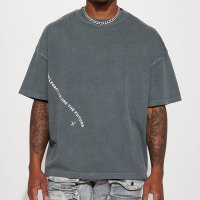
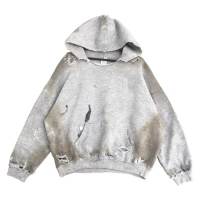
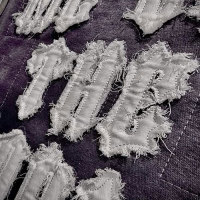
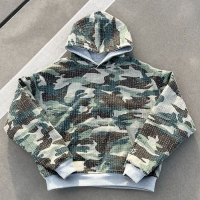
Exceptional streetwear shirts distinguish themselves from basic alternatives through core processes employed. These processes not only grant unique visual appearance and tactile sensation but directly embody brand design language and cultural attitude. For brands seeking to elevate product value, deeply understanding these process details and locating manufacturers capable of precise execution proves essential. Below, we explore several critical processes in premium streetwear shirt manufacturing.
In summary, successful streetwear shirts result from harmonious coexistence of multiple complex processes. They require manufacturers to be not just "producers" but "process solution providers."
Conclusion: Selecting the Right Manufacturing Partner for Long-Term Growth
For brands transcending startup phase and advancing toward maturity, the decision to select shirt manufacturers carries significance far exceeding single-order cost considerations. This represents a strategic choice fundamentally affecting your brand's future development trajectory. The question is no longer "Who can produce this shirt at lower cost?" but rather "Whose production structure and quality systems can support my brand's five-year growth and evolution?"
We've seen that streetwear shirt mass production essentially represents systematic engineering seeking balance between complex processes, precise fit, and stable quality. It demands manufacturers possess vertically integrated process control, deep street culture understanding, and rigorous QC systems designed for scaling challenges. These capabilities don't emerge overnight but result from long-term focus and continuous investment.
Therefore, when evaluating potential Chinese manufacturers, shift perspective from short-term "order executors" to long-term "strategic partners." Correct partners should, like you, demonstrate uncompromising quality commitment; they should anticipate scaling pitfalls and proactively provide solutions; their communication should be transparent, professional, and culturally shared. Deep partnerships with such manufacturers yield not just high-quality products but valuable certainty—enabling confident delegation of complex production tasks while focusing your core energy on higher-value brand building, creative design, and market communication.
For streetwear brands experiencing this critical growth phase, final decisions aren't between different factories but between two development philosophies: pursuing short-term convenience and seemingly low costs, or pursuing long-term stability and steadfast brand value protection. History repeatedly proves that brands ultimately transcending cycles and becoming industry benchmarks invariably chose the latter. They understood that allying with excellent manufacturing partners represents the cornerstone of sustainable growth and long-term competitive moat construction.
Frequently Asked Questions (FAQ)
Q1: When collaborating with Chinese shirt manufacturers, how can we ensure they truly understand our Oversized or Boxy fit requirements?
A: Ensuring accurate fit understanding and execution requires multi-step verification. First, provide maximally detailed tech packs with precise dimensions, fit diagrams, and reference images. Second, request manufacturer case studies of similar fit products for other streetwear brands, assessing their experience. Most critically, conduct sampling—before confirming large production, complete at least one sample round, personally or through trusted third parties, try-on and measure samples ensuring complete alignment with expectations. Partnering with manufacturers employing experienced streetwear pattern makers and automated cutting equipment fundamentally improves fit accuracy.
Q2: For complex vintage wash effects, how can we guarantee large-batch consistency?
A: Wash effect consistency represents high-end manufacturing's core challenge. The key lies in whether manufacturers possess standardized processes and internal control capability. Reliable manufacturers create detailed "recipe cards" for each wash effect, recording precise chemical/stone quantities, processing duration, temperature, machine speed, and all parameters. Before bulk production, they conduct pilot runs validating and fine-tuning parameters. Additionally, manufacturers with internal washing facilities better control variables than outsourcing-dependent factories, better ensuring batch consistency. Before partnering, definitely inquire about wash process variable control and request large-batch production records.
Q3: When choosing between screen printing and DTG digital printing, how should we decide?
A: This depends on design complexity, order volume, cost budget, and durability requirements. Screen printing offers high color saturation, excellent durability, and better cost-effectiveness for designs with clear color separation and fewer colors, especially larger orders (typically exceeding 100 units per design). DTG digital printing suits complex colors, gradients, or photorealistic images without minimum order quantities. However, DTG on dark fabrics may feel stiffer, and durability typically trails premium screen printing. Professional manufacturers analyze your specific designs and provide balanced recommendations weighing effects, costs, and performance rather than simply pushing their stronger technique.
Q4: As a growth-stage brand, how do we balance high-quality manufacturing costs with market pricing?
A: This represents a strategic question. Partnering with high-standard manufacturers may initially increase per-unit costs versus basic factories. However, this "premium" should be viewed as investment, not pure expense. First, exceptional quality and unique processes support higher market pricing and brand premiums. Second, stable quality and reliable delivery dramatically reduce hidden costs and opportunity costs from rework, customer complaints, or missed sales windows. Finally, quality products significantly boost customer satisfaction and loyalty, driving higher repurchase rates and lower marketing costs. Smart brands absorb manufacturing costs through elevated product value rather than sacrificing quality competing on price.
Q5: Beyond product quality, what other "soft power" should we evaluate in Chinese shirt manufacturers?
A: Beyond hardware and technical capability, manufacturer "soft power" proves equally important. This includes: communication ability (can they communicate clearly, professionally, proactively in fluent English?), problem-solving attitude (when issues arise, do they deflect or actively seek solutions?), industry awareness (do they understand global streetwear market latest trends and consumer expectations?), and compliance and social responsibility (do they possess internationally recognized certifications like SMETA, ISO 9001, proving quality management, environmental protection, and labor rights commitment?). These soft factors collectively determine whether collaboration proves smooth, efficient, and safe, forming long-term trust relationship foundations.
Partner with Groovecolor
Ready to elevate your streetwear shirt collection to new excellence levels? We specialize in providing growth-stage global streetwear brands with comprehensive high-end manufacturing solutions from concept to finished product. Through deep process understanding and unwavering quality commitment, we transform your boldest design visions into reality.
Contact Our Experts Today