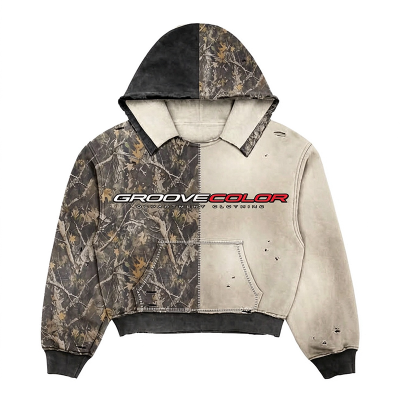
From Fabric to Finished Fade: Why Enzyme Wash Hoodies Need a Full-Package Streetwear Factory?
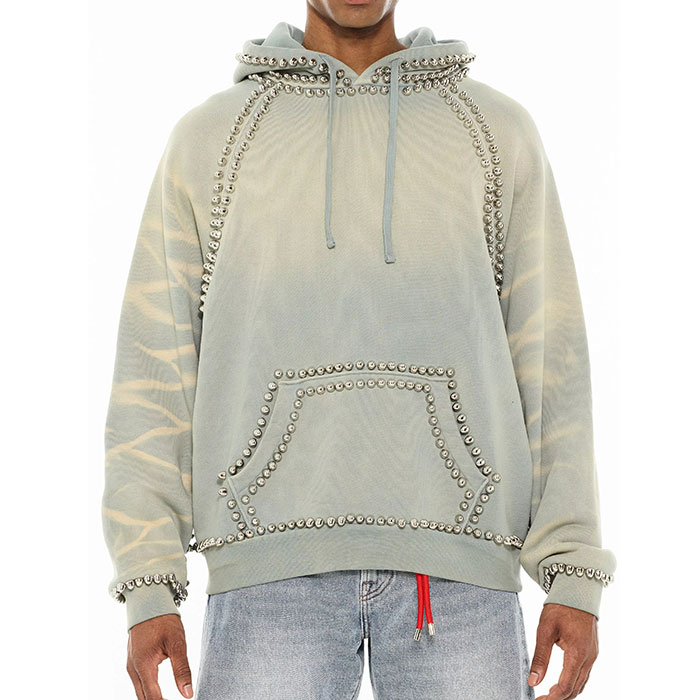
Why are enzyme wash hoodies becoming a serious product decision for luxury streetwear brands?
An enzyme wash hoodie gives luxury streetwear brands a cleaner vintage surface, softer hand feel, and more natural worn-in character than many aggressive wash effects. But the result depends on fabric selection, post-wash fit control, decoration sequence, and bulk finishing discipline, which makes full-package streetwear manufacturing highly relevant for premium hoodie programs.
For market-proven streetwear brands and established menswear-focused fashion labels, an enzyme wash hoodie is not simply a basic fleece garment that has been softened. It is a highly engineered piece of premium menswear apparel production. The difference between a hoodie that feels genuinely luxurious and one that feels tired or flat after washing lies in how the entire manufacturing system is managed. When a product developer or creative director plans a custom vintage hoodie, they are not just selecting a wash recipe; they are making a structural decision that impacts fabric shrinkage, rib recovery, print placement, and overall silhouette stability. This level of complexity is exactly why Groovecolor operates as a premium OEM streetwear manufacturer in China for market-proven streetwear brands, established menswear-focused fashion labels, and apparel teams with structured custom development needs, integrating every step from fabric sourcing to final inspection.
Key Takeaways for Procurement Teams
Why does enzyme wash work so well for premium vintage hoodies?
Enzyme wash works well for premium vintage hoodies because it softens cotton-based fleece by treating surface fibers, creating a smoother touch and a cleaner aged appearance. For luxury streetwear, this finish can make a hoodie feel lived-in without relying on overly loud distressing, making it suitable for refined vintage streetwear programs.
The fundamental mechanism of an enzyme wash involves the use of cellulase, a biological catalyst that targets exposed cellulose on cotton fibers. This process effectively removes micro-fibrils and surface fuzz, resulting in a fabric surface that is significantly smoother and cleaner. In the context of garment finishing, this biopolishing effect is highly valued because it achieves a worn-in feel without the severe mechanical abrasion associated with traditional pumice stones.
How does enzyme wash affect hand feel?
The removal of surface fibers directly translates to a softer, more supple hand feel. Unlike chemical softeners that merely coat the fabric and can wash out over time, the enzymatic action permanently alters the physical structure of the cotton surface. For an enzyme washed cotton hoodie, this means the garment possesses a natural, enduring softness that feels authentic to the wearer from day one.
Why is the surface cleaner than many aggressive wash effects?
Because the cellulase enzymes act selectively on the cotton fibers, the process is highly controlled. It reduces pilling and fuzzing without destroying the core structure of the yarn. This targeted action creates a clean vintage hoodie wash, offering a subtle, refined aging effect. It avoids the harsh, high-contrast destruction that can sometimes make a garment look over-processed or cheap.
Why does this matter for luxury streetwear brands?
Luxury streetwear consumers have evolved; they now demand garments that offer a sophisticated luxury streetwear hand feel. They appreciate the quiet luxury of a well-made, perfectly aged piece. The enzyme wash provides this understated elegance, allowing the quality of the heavyweight fleece and the precision of the cut to remain the focal points, rather than overwhelming the design with aggressive surface damage.
When should a streetwear brand choose enzyme wash instead of acid wash or stone wash?
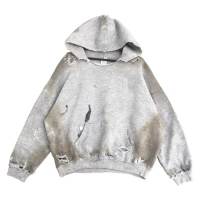
A streetwear brand should consider enzyme wash when the goal is a softer, cleaner, more controlled vintage hoodie rather than a high-contrast marbled or heavily abraded look. Acid wash and stone wash can create stronger visual drama, while enzyme wash is often better for premium menswear programs that need subtle aging and elevated comfort.
Selecting the appropriate wash technique is a critical design decision that dictates the final aesthetic and market positioning of the garment. While various wash methods exist, they serve entirely different visual and tactile purposes. Understanding these distinctions is vital for apparel teams developing custom vintage hoodies.
Which wash creates the cleanest vintage hand feel?
Enzyme washing is unparalleled in its ability to produce a clean, uniform vintage effect. By gently hydrolyzing the surface fibers, it yields a soft, smooth finish with subtle color fading. This makes it the ideal choice for brands aiming for a premium, understated aesthetic where comfort and a refined worn-in look are paramount.
Which wash is better for bold contrast?
If the design objective requires striking visual texture, such as a marbled or heavily mottled appearance, acid washing is the superior choice. Acid washing utilizes pumice stones soaked in a bleaching agent to strip color unevenly, creating high-contrast patterns. Similarly, traditional stone washing provides a more rugged, physically abraded look, suitable for garments intended to appear heavily worn or distressed.
How should creative directors decide the right wash direction?
Creative directors must align the wash technique with the broader narrative of the collection. For vintage streetwear hoodies that emphasize subtle luxury and long-term wearability, the enzyme wash is highly effective. Conversely, if the piece is intended as a loud, statement item with a rebellious or grunge-inspired aesthetic, acid or stone washing may be more appropriate. The decision ultimately rests on whether the brand prioritizes a clean fade or aggressive visual disruption.
How does enzyme wash change hoodie fit after production?
Enzyme wash can affect hoodie fit because washing changes fabric relaxation, shrinkage behavior, rib recovery, hood balance, sleeve width, and body length. For premium streetwear manufacturing, the factory should plan the pattern, grading, and approved sample around the post-wash garment, not only the pre-wash measurement chart.
One of the most significant manufacturing challenges in producing washed streetwear is managing dimensional stability. The mechanical action, temperature, and moisture involved in the enzyme wash process inevitably cause the fabric to relax and shrink. A factory that fails to account for these variables will produce garments that deviate significantly from the intended design.
Why should the approved sample be judged after washing?
An approved reference control must be established based on the garment's state after all finishing processes are complete. Evaluating a pre-wash sample is fundamentally flawed because it does not represent the final product the consumer will receive. The true test of a manufacturer's capability is their post-wash measurement discipline, ensuring that the bulk production handover matches the approved, washed sample precisely.
Which hoodie areas are most sensitive after enzyme wash?
Certain structural elements of a hoodie are particularly vulnerable to distortion during the wash process. The rib recovery hoodie production is a common failure point; inferior ribbing will lose its elasticity and become loose or wavy. Additionally, the hood balance can shift, causing it to pull uncomfortably at the neckline. Sleeve length, body length, and shoulder drop must also be carefully monitored, as different areas of the garment may shrink at varying rates depending on the grain line and construction.
How should product developers write post-wash specs?
Product developers must collaborate closely with the manufacturer to create technical packages that explicitly define post-wash tolerances. This requires conducting extensive shrinkage tests during the sampling phase and adjusting the initial patterns accordingly. The production reference standard must clearly state the acceptable dimensional variations after the enzyme wash, ensuring that the factory is held accountable for the final, finished fit.
Why does fabric selection decide whether an enzyme wash hoodie feels luxury or ordinary?
The fabric determines whether an enzyme wash hoodie feels premium after finishing. A weak fleece may become flat, loose, or tired after washing, while a better-developed cotton fleece or French terry can keep body, softness, and surface clarity. This is why fabric sourcing must be part of the wash decision.
The success of an enzyme wash is intrinsically linked to the quality of the base material. The wash process exposes the true nature of the fabric; it enhances high-quality yarns but will rapidly degrade inferior constructions. For premium menswear apparel production, selecting the right fleece is not merely about achieving a certain weight, but ensuring the fabric can withstand and benefit from the enzymatic treatment.
Which fleece qualities matter before enzyme wash?
When evaluating fleece sourcing for enzyme wash, several factors are critical. The yarn quality, loop structure, and knitting density determine how the fabric will react. A tightly knitted, high-density cotton fleece or French terry will maintain its structural integrity and drape after washing. Conversely, a loosely knitted fabric with low-quality, short-staple yarns will likely experience excessive pilling, loss of shape, and a generally degraded appearance.
Why does heavyweight fabric still need softness planning?
While heavyweight hoodies (typically ranging from 400 to 600gsm) are a staple in premium streetwear, sheer weight does not guarantee luxury. A heavy fabric can feel stiff, rigid, and uncomfortable if not properly finished. The enzyme wash is crucial here; it provides the necessary softening to make a heavyweight garment wearable and comfortable, transforming a rigid piece of premium menswear fleece production into a supple, draping silhouette.
How can fabric sourcing reduce post-wash surprises?
A proactive approach to fabric sourcing is the most effective way to mitigate post-wash risks. This involves conducting rigorous wash tests on various fabric qualities before committing to bulk production. By understanding the specific shrinkage rates, colorfastness, and surface changes of a chosen fabric, the manufacturer can adjust patterns and wash recipes to ensure a consistent, predictable outcome, thereby safeguarding the custom hoodie manufacturing process.
Should printing and embroidery happen before or after enzyme wash?
Printing and embroidery should be planned around the enzyme wash sequence, not added as isolated decoration. Some graphics may need washing before printing to protect clarity, while other vintage effects may require decoration to age with the garment. The right decision depends on artwork style, fabric, wash intensity, and brand direction.
The sequence of operations in garment manufacturing is a critical logistical puzzle. When dealing with washed streetwear, the placement of decorative techniques—such as screen printing, DTG, puff print, or embroidery—relative to the wash phase can drastically alter the final aesthetic and durability of the design.
When should a graphic be added after washing?
If the brand's objective is to present a crisp, sharply defined graphic with vibrant colors, the printing must occur after the enzyme wash. Applying the print placement after wash ensures that the inks are not subjected to the mechanical abrasion and chemical action of the finishing process, which could otherwise cause cracking, fading, or edge degradation. This sequence is often preferred for high-fidelity DTG or complex multi-color screen prints.
When can a brand intentionally age the artwork?
Conversely, if the design intent is to create a fully integrated, vintage aesthetic where the artwork appears as aged as the fabric itself, the decoration should be applied before the wash. In this scenario, the enzyme wash will gently abrade the print, softening its edges and slightly muting the colors, resulting in an authentic, lived-in appearance. This approach is frequently utilized for retro-inspired vintage streetwear hoodies.
What can go wrong if decoration and wash are planned separately?
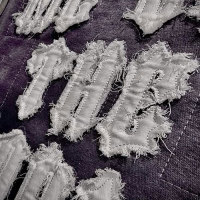
Treating decoration and washing as isolated steps often leads to catastrophic production failures. For instance, an embroidery wash sequence must be carefully managed; if dense embroidery is applied before a heavy wash, the differing shrinkage rates between the base fabric and the embroidery thread can cause severe puckering and distortion. Similarly, applying a delicate puff print before an enzyme wash will likely result in the print being destroyed. This highlights the necessity of integrated planning by experienced hoodie manufacturers.
What does a full-package production factory control that a decoration-only supplier cannot?
A full-package production factory controls the enzyme wash hoodie as one connected product system: fabric sourcing, pattern development, sampling, wash testing, decoration planning, bulk cutting, sewing, finishing, inspection, and packing. A decoration-only supplier may handle the surface look, but not the full chain that protects premium product execution.
The distinction between a full-package manufacturer and a fragmented supply chain is the difference between controlled execution and hopeful guesswork. For complex garments like enzyme wash hoodies, the Full-package streetwear manufacturing China model provides a structural advantage that is indispensable for established brands.
Why is enzyme wash not only a finishing step?
Enzyme washing is deeply intertwined with every preceding stage of production. It is not a process that can simply be tacked onto the end of a manufacturing run. The wash dictates the initial pattern dimensions, influences the choice of fabric, and determines the sequencing of printing and embroidery. A full-package hoodie production facility understands these dependencies and engineers the garment from the outset to accommodate the final finishing process.
Which steps should be controlled before bulk cutting?
Before a single piece of fabric is cut for bulk production, a comprehensive validation process must occur. This includes finalizing the tech pack, developing and testing the patterns for post-wash shrinkage, sourcing and verifying the wash-readiness of the fabric, and establishing the exact wash recipe and decoration sequence. Only when the pre-production sample is fully approved—after washing—should bulk cutting commence. This rigorous protocol is standard practice for a competent Full-package production factory.
How does FPP reduce communication gaps for apparel teams?
Managing multiple vendors—a fabric mill, a cut-and-sew facility, a dye house, and a printer—creates immense logistical complexity and significantly increases the risk of miscommunication. Full Package Production (FPP) centralizes these operations under a single point of accountability. This streamlined communication ensures that the product development intent is accurately translated across all manufacturing stages, minimizing errors and protecting the brand's investment.
How should procurement teams evaluate hoodie manufacturers for enzyme wash programs?
Procurement teams should evaluate enzyme wash hoodie manufacturers by wash-ready fabric sourcing, post-wash measurement planning, sample approval discipline, decoration sequencing, bulk finishing controls, inspection checkpoints, and packaging readiness. The right supplier should show how the hoodie moves from fabric to finished fade, not only quote a wash name.
Selecting the right manufacturing partner is a high-stakes decision. Procurement teams must move beyond superficial evaluations and interrogate the factory's underlying operational systems. A reliable hoodie supplier evaluation must assess the manufacturer's ability to control the variables inherent in washed streetwear production.
What evidence should buyers ask for before sampling?
Before initiating the sampling process, buyers should request evidence of the factory's experience with similar complex programs. This includes asking for case studies or examples of post-wash measurement control, detailing how the factory manages shrinkage and rib recovery. Furthermore, the factory should be able to articulate their specific protocols for testing fabric wash-readiness and determining decoration sequences. A professional manufacturer will discuss these technical details proactively, rather than merely offering a low price quote.
What should be checked in the first sample?
The first sample is a critical diagnostic tool. It must be evaluated not only for visual accuracy but for structural integrity after the enzyme wash. Key inspection points include the softness and clarity of the surface, the accuracy of the post-wash dimensions against the tech pack, the behavior of the ribbing, and the condition of any prints or embroidery. This sample serves as the baseline for all subsequent production adjustments.
What should be confirmed before bulk production?
Before authorizing bulk production, the procurement team must ensure that all parameters are unequivocally locked. This includes confirming the final approved reference sample, the exact wash recipe, the finalized post-wash measurement chart, and the comprehensive quality control checkpoints that will be implemented during manufacturing. Clear documentation and mutual agreement on these standards are essential to prevent bulk execution failures.
Procurement Evaluation Checklist for Enzyme Wash Hoodies
Why does China full-package streetwear manufacturing matter for washed hoodies?
China full-package streetwear manufacturing matters for washed hoodies because enzyme wash programs require coordinated access to fabric sourcing, pattern development, decoration, washing, finishing, inspection, and export-ready packing. For established streetwear brands, the value is not only lower coordination cost but a tighter manufacturing chain for complex hoodie programs.
The global apparel supply chain is vast, but certain regions have developed highly specialized ecosystems. For premium, complex garments like washed hoodies, the infrastructure available in China—particularly in manufacturing hubs like Dongguan—offers a distinct strategic advantage. This is not about seeking the cheapest labor; it is about accessing a dense, highly capable network of specialized services.
Why does Dongguan / Guangdong matter for streetwear production?
Dongguan and the broader Guangdong province have evolved into sophisticated centers for apparel manufacturing. This region boasts a deep concentration of specialized facilities, including advanced dye houses, precision printing workshops, high-quality fabric mills, and experienced cut-and-sew factories. This proximity allows a China OEM streetwear factory to coordinate complex, multi-stage processes—like heavy embroidery followed by an enzyme wash—with exceptional speed and reliability.
What should brands expect from a China OEM streetwear factory?
A top-tier streetwear manufacturer in China provides far more than basic assembly. Established brands should expect comprehensive technical support, including rigorous tech pack review, proactive problem-solving regarding fabric shrinkage and wash effects, and strict adherence to international quality and compliance standards. The expectation is a partnership that manages the entire production lifecycle, ensuring that the final product meets exacting luxury standards.
How can full-package manufacturing support premium menswear collections?
For premium menswear collections, consistency and quality are non-negotiable. Full-package manufacturing supports these requirements by providing end-to-end oversight. By controlling the sourcing of premium materials, engineering precise patterns, and managing the delicate balance of the enzyme wash process, a capable factory ensures that every garment in a bulk run reflects the intended design, fit, and luxurious hand feel demanded by the high-end market.
When is enzyme wash not the right choice for a luxury streetwear hoodie?
Enzyme wash is not always the best choice. If a brand wants extreme marbling, high-contrast destruction, or a very raw surface effect, another wash route may be stronger. Enzyme wash is most valuable when the design goal is soft vintage comfort, clean surface aging, and premium wearability.
While enzyme washing offers significant benefits, it is not a universal solution for every design concept. A sophisticated manufacturing strategy requires recognizing the limitations of a technique and knowing when alternative methods are more appropriate. This nuanced understanding is a hallmark of experienced apparel teams.
When should a brand consider acid wash instead?
If the creative direction demands a highly aggressive, visually disruptive aesthetic, acid washing is the superior technique. Acid washing utilizes chemical agents and pumice stones to strip color dramatically, creating stark contrasts and a heavily mottled appearance. This technique is ideal for garments intended to project a raw, rebellious, or heavily distressed vibe, which an enzyme wash limitations simply cannot achieve.
When should a brand avoid washing after decoration?
Certain decorative techniques are highly sensitive to the mechanical and chemical stresses of any wash process. For example, garments featuring delicate rhinestones, intricate foil prints, or specific types of fragile appliqué should generally not be washed after these elements are applied. In such cases, if a washed look is desired, the fabric must be treated prior to cutting and sewing, or the decoration must be carefully engineered to withstand the specific wash parameters.
When should the wash direction be tested before costing?
The choice of wash significantly impacts the overall production cost, affecting fabric yield (due to shrinkage), processing time, and the complexity of the manufacturing sequence. Therefore, the wash direction must be rigorously tested and finalized during the initial development phase, before bulk costing is established. Failing to do so can lead to inaccurate pricing models and unexpected financial discrepancies during production.
How does Groovecolor approach enzyme wash hoodies for premium streetwear brands?
Groovecolor approaches enzyme wash hoodies as full-package custom streetwear production, not surface finishing alone. As a premium OEM streetwear manufacturer in China, Groovecolor connects fabric sourcing, pattern development, sampling, wash planning, decoration, bulk production, inspection, and packing for market-proven streetwear brands and menswear-focused fashion labels.
At Groovecolor, the production of an enzyme wash hoodie is treated as a highly integrated engineering project. The focus extends far beyond achieving a superficial vintage look; it is about delivering a structurally sound, premium garment that performs consistently at scale. This comprehensive approach is designed specifically for brands that require structured custom development and reliable execution.
What type of brands is this production model built for?
The Groovecolor manufacturing ecosystem is explicitly designed for market-proven streetwear brands, established menswear-focused fashion labels, and apparel teams operating with stable product calendars and structured custom development needs. This model provides the necessary infrastructure for brands seeking a premium OEM streetwear manufacturer China partner capable of managing complex, high-quality production runs. It is important to note that this system is optimized for scalable brand growth, rather than unstructured, low-budget, or single-piece requests.
Which product details should be developed before sampling?
Groovecolor emphasizes rigorous pre-production planning. Before sampling begins, the technical team collaborates with the brand to define critical parameters. This includes selecting wash-ready fabrics, establishing the target hand feel, mapping out the precise sequence for printing or embroidery, and anticipating post-wash dimensional changes. This meticulous preparation ensures that the sampling process is efficient and focused on refining the product, rather than discovering fundamental flaws.
How does full-package control support premium menswear execution?
By maintaining control over the entire production chain, Groovecolor ensures that the intricate balance required for premium menswear is preserved. From the initial pattern drafting to the final quality inspection of the washed garment, every step is monitored to guarantee that the fabric drape, the rib recovery, the print clarity, and the overall silhouette align perfectly with the brand's exacting standards. This end-to-end accountability is the foundation of reliable custom streetwear manufacturer partnerships.
What should a brand prepare before starting an enzyme wash hoodie project?
Before starting an enzyme wash hoodie project, a brand should prepare the target silhouette, fabric direction, wash reference, hand-feel goal, artwork placement, decoration method, size range, packaging needs, and expected production volume. Clear development inputs help the factory turn a vintage mood into a production-ready hoodie.
Successful manufacturing is built on clear, comprehensive communication. When a brand initiates a complex project like an enzyme wash hoodie, providing the factory with detailed, structured information is essential. Vague requests inevitably lead to extended sampling cycles, increased costs, and final products that miss the mark.
What should be included in the tech pack?
A robust tech pack is the blueprint for production. For an enzyme wash program, the tech pack must include detailed flat sketches, comprehensive measurement charts (with clear indications of whether they represent pre- or post-wash dimensions), specific fabric weight and composition requirements, grading rules across all sizes, and precise artwork files with exact placement coordinates. The more detailed the tech pack, the more accurate the resulting product development wash control will be.
What visual references are useful for wash development?
Verbal descriptions of wash effects are often subjective and prone to misinterpretation. Brands should provide physical reference garments or high-resolution images that clearly demonstrate the desired surface texture, the degree of color fading, and the specific hand feel they are aiming to achieve. These tangible references give the factory's wash technicians a concrete target to replicate during the development phase.
What should be confirmed before the first sample?
Before the factory begins cutting fabric for the first prototype, the brand and the manufacturer must reach a consensus on several key points. This includes confirming the fabric sourcing strategy, agreeing on the sequence of operations (e.g., printing before or after washing), and establishing the acceptable tolerances for post-wash shrinkage. Aligning on these structural details upfront is crucial for a smooth transition from concept to a production-ready Full-package production factory execution.
For apparel teams planning enzyme wash hoodies, Groovecolor can review fabric direction, wash references, fit requirements, decoration sequence, and production scope before sampling.
Frequently Asked Questions About Enzyme Wash Hoodie Production
When should a luxury streetwear brand choose enzyme wash for a hoodie?
Choose enzyme wash when the design goal is soft vintage comfort, a cleaner surface, and a refined worn-in look rather than extreme contrast. It is especially suitable for premium menswear hoodies where hand feel, subtle aging, and wearability matter as much as visual impact.
Is enzyme wash better than acid wash for custom vintage hoodies?
Not always; enzyme wash is usually better for soft, clean, controlled aging, while acid wash is stronger for high-contrast, marbled, aggressive vintage effects. The better choice depends on the brand’s visual direction, fabric, artwork, and how much surface drama the hoodie needs.
Can enzyme wash change the size of a hoodie after sampling?
Yes, enzyme wash can significantly affect fabric relaxation, shrinkage, rib recovery, sleeve length, body length, and hood balance. For premium hoodie production, measurement specs should be reviewed after wash testing, not only before garment finishing.
Should a brand print before or after enzyme washing?
It depends on the artwork goal; printing after wash protects graphic clarity, while printing before wash allows the decoration to age naturally with the garment. The sequence should be rigorously tested during sampling to ensure the desired visual and tactile outcome.
Why do enzyme wash hoodies need a full-package production factory?
Because the wash affects more than surface appearance; it connects fabric choice, pattern, shrinkage, decoration, sewing tension, finishing, inspection, and packing. A full-package production factory coordinates these steps before bulk production instead of treating the wash as a separate afterthought.
What should procurement teams ask before ordering enzyme wash hoodies?
Ask whether the factory controls fabric sourcing, wash testing, post-wash measurements, decoration sequence, sample approval, finishing inspection, and packing. Also, ask whether the quotation includes real custom development or only a basic hoodie with a surface treatment.
Can enzyme wash make a hoodie look premium without heavy distressing?
Yes, one of the primary reasons enzyme wash is useful for luxury streetwear is its ability to create softness and subtle vintage character without overly aggressive destruction. This makes it highly suitable for brands that want a refined worn-in hoodie rather than a loud distressed piece.
About the Author