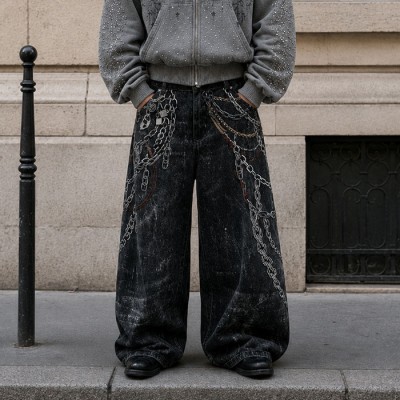
Football T-Shirt Suppliers in China: How to Separate Teamwear Factories From Streetwear OEMs
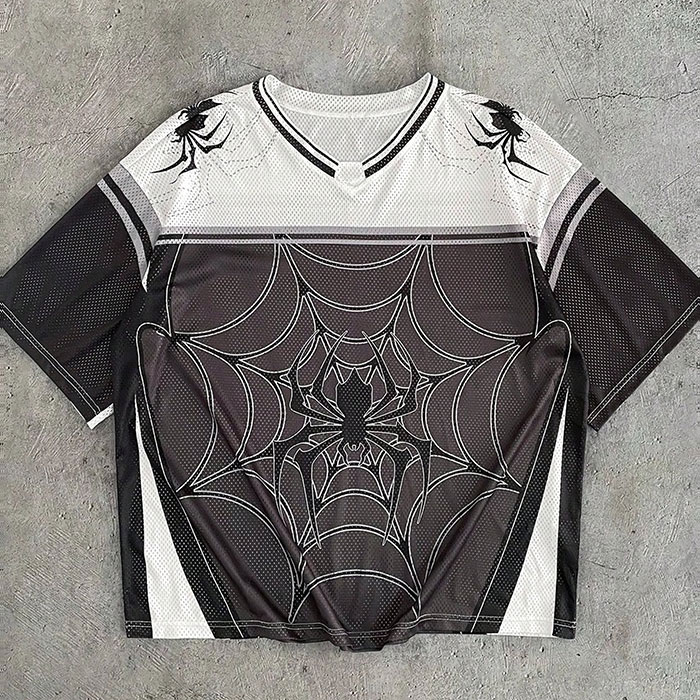
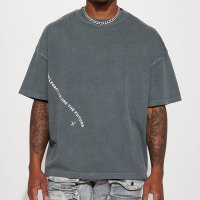
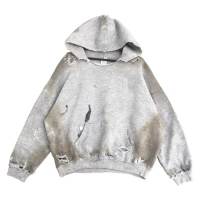
Searching for football T-shirt suppliers in China can lead to several very different manufacturing models. A factory built for team uniforms may be excellent at polyester sublimation, yet still be the wrong production setup for a fashion-led football shirt that depends on oversized proportions, heavier mesh, mixed decoration, custom panels, or retail-grade finishing.
The practical decision is not simply which Chinese supplier makes football shirts. Procurement teams first need to define the product, then evaluate whether the supplier's pattern development, fabric structure, decoration route, size grading, pre-production controls, inspection system, and repeat-order capability match that product. This guide focuses on that manufacturing decision.
Direct answer
For a fashion-led football T-shirt, the right China supplier is the factory whose production system matches the product architecture. Performance teamwear, retro football shirts, and oversized streetwear jerseys may require different fabric, pattern, decoration, grading, and inspection capabilities. Supplier selection should therefore start with manufacturing scope rather than price or product photos.
What Should Procurement Teams Know Before Comparing Football T-Shirt Suppliers in China?
- •Define the product before the factory. A team jersey, retro fashion shirt, and oversized streetwear football top may look related but behave very differently in production.
- •Normalize the specification before comparing quotations. Fit, material, GSM, panel structure, artwork, decoration, trims, size range, quantity, and inspection expectations must describe the same product.
- •Judge materials as a system. Mesh weight alone does not tell you drape, opacity, recovery, print behavior, shrinkage, or whether the finished garment will read as performance wear or fashion.
- •Approve production references before bulk cutting. Fit, graded measurements, artwork placement, fabric, color, trims, and process settings need defined references and tolerances.
- •Evaluate repeat orders as early as the first order. Mature apparel teams need records that allow the approved product to be reproduced across future quantities, size mixes, and seasonal calendars.
Are You Sourcing a Football T-Shirt—or Briefing the Wrong Kind of Jersey Factory?
The phrase “football T-shirt” can describe products with different commercial purposes. A match-inspired polyester jersey is built around movement and graphic coverage, while a fashion football shirt may prioritize silhouette, touch, layering, panel proportions, embroidery, appliqué, or a deliberately heavier visual structure. Those differences change the manufacturing brief.
Procurement problems often begin when an image is treated as a complete specification. A buyer may send an oversized football reference to a teamwear supplier and receive a technically competent sports jersey with a narrow athletic fit. Another factory may recreate the width but use a mesh that collapses on body. Both factories can legitimately say they manufacture football shirts, yet neither result automatically matches a streetwear product brief.
This distinction also protects the sourcing conversation from becoming a false price comparison. Once the product type is defined, the next question becomes much more useful: which production model is structurally suited to build it?
Which Type of Chinese Supplier Fits a Fashion-Led Football T-Shirt Program?
There is no single supplier type that is automatically superior for every football shirt. A sportswear specialist can be the stronger choice for performance-led team products. A broader garment manufacturer may suit defined apparel programs. A streetwear-focused OEM becomes more relevant when fit, material, graphics, trims, and finishing must be developed as one retail product.
The supplier's legal description is less informative than its operating scope. A company can coordinate several specialist processes successfully if responsibilities, approvals, and quality ownership are transparent. Conversely, having many machines under one roof does not prove that a factory understands the proportions or material behavior required by a fashion football top.
This is why sourcing by country alone is too broad. Teams that need a separate regional comparison can use the existing guide to China, USA, or global football-jersey sourcing. For the present decision, however, the next task is to make every supplier quote the same product.
What Must Be Defined Before Chinese Clothing Manufacturing Companies Can Quote the Same Product?
A quotation is only comparable when the manufacturing specification is comparable. Two suppliers can price the same reference image differently because one assumes a standard polyester jersey, another assumes custom cut-and-sew panels, and a third includes embroidery, engineered grading, labels, or more demanding inspection. The price gap may therefore reflect different products.
Before requesting a serious quotation, establish the information that materially changes construction and cost. A full tech pack is useful, but even an early sourcing brief can become much more reliable when it defines the variables below.
Football T-shirt quote normalization checklist
- Front and back reference or technical drawing
- Target fit: athletic, regular, relaxed, boxy, oversized, or another defined block
- Base size measurements and intended size range
- Fabric composition, structure, target weight, hand feel, opacity and stretch expectation
- Panel map, collar type, cuffs, vents and seam details
- Artwork size, exact locations and color references
- Decoration route: sublimation, screen print, embroidery, appliqué or mixed process
- Labels, badges, trims and packaging requirements
- Quantity by color and expected size ratio
- Testing, inspection and market-specific labeling requirements
At this stage, a specialist T-shirt manufacturing page can be useful as a capability reference rather than as a substitute for the specification. For example, GROOVECOLOR's T-shirt manufacturing service describes fit, fabric, printing, washing and development variables that should be discussed before an OEM T-shirt moves toward sampling.
Once suppliers are responding to the same brief, fabric becomes one of the first variables that can materially change both the product and the supplier choice.
How Should Fabric, Mesh and Panel Construction Change the Final Football-Tee Positioning?
GSM should be treated as one fabric variable, not as a quality grade. The same nominal weight can behave differently depending on yarn, knit structure, finishing, stretch, surface texture, density and recovery. For football-inspired fashion, material selection should begin with the intended silhouette and wearing experience, then move to weight.
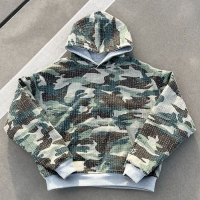
Lightweight polyester mesh can support airflow, rapid drying and a recognizably athletic character. Denser interlock can provide a cleaner surface for graphics. Heavier fashion mesh may hold a wider silhouette and feel more substantial, but it can also change shoulder drop, seam bulk, drape and heat retention. Cotton jersey creates another product category entirely, especially when the design borrows football graphics without needing a performance construction.
Material choice also affects opacity. A large open-hole mesh may reveal underlayers and backing materials. Dense embroidery can pull or distort a lighter substrate. A thick rib collar attached to a light body can change how the neckline sits. If body panels use different structures, their stretch and shrinkage behavior should be checked together before grading is finalized.
This system-based approach is consistent with broader textile sourcing practice. Textile Exchange's Materials Market Report 2025 shows how dominant synthetic fibers remain in the global fiber market, but fiber category alone does not define the performance of a finished fabric. Garment testing still has to examine the actual material and construction chosen for the product.
For washable apparel, ISO 6330:2021 provides domestic washing and drying procedures used in textile testing. The important sourcing lesson is straightforward: the approved garment should be evaluated after an agreed test route, not judged only from an unwashed fabric swatch.
Brands that need a wider framework for GSM, hand feel and shrinkage can also review GROOVECOLOR's fabric selection guidance. Once the material base is chosen, the next question is how graphics and badges should interact with that base.
Which Decoration Route Fits the Design: Sublimation, Screen Print, Embroidery or Appliqué?
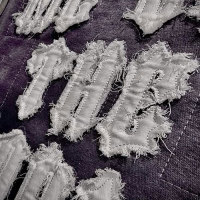
Decoration should be selected by substrate, visual target, placement and durability requirement rather than by trend alone. Sublimation can integrate graphics into suitable polyester material. Surface printing provides different texture and color behavior. Embroidery and appliqué add dimension, but their weight can change the way a mesh garment hangs.
Mixed decoration needs sequencing. If a garment is printed, embroidered, appliquéd and then washed, each operation can affect the next. Heat exposure, backing materials, shrinkage and placement references should therefore be considered during sampling rather than treated as isolated supplier services.
AATCC maintains standardized textile test methods covering areas such as laundering colorfastness and dimensional change. Its testing standards library is useful when a brand or laboratory needs to define an appropriate test method instead of relying on an informal “wash test” description.
For a broader view of printing, embroidery, appliqué and washing capability, the GROOVECOLOR streetwear craft reference provides useful production context. Decoration can only be locked, however, after the garment proportions and graded artwork positions are understood.
How Do You Keep Fit, Collar, Numbers and Panel Alignment Controlled Across Sizes?
An approved medium or large sample does not automatically prove that the full size range is production-ready. Football-inspired garments often combine bold numbers, shoulder seams, sleeve graphics, V-necks, ribs and contrasting panels. Grading must preserve the intended visual balance as body dimensions change.
A simple percentage enlargement is rarely enough. Shoulder width may increase differently from body length. An oversized sleeve may need controlled volume rather than linear growth. A back number that looks balanced on size M can become too small on XXL, while scaling the artwork too aggressively may create production or aesthetic problems at larger sizes.
Collar geometry matters as well. V-neck depth, rib width, neck opening and seam allowance affect both appearance and wearability. If the collar is built from a different material from the body, recovery and shrinkage should be reviewed together. The same logic applies to sleeve cuffs and side panels.
Size-set review points
Check chest width, shoulder position, body length, sleeve opening, armhole balance, neck opening, V-depth, collar width, panel seam locations, front and back graphic placement, number scale, badge location and hem proportion. For complex grading, a size set or selected graded sizes can reveal problems that one approved sample cannot.
Pattern and cutting discipline become especially important when the garment is intentionally oversized. The pattern and cutting process is therefore more relevant to this sourcing decision than a generic promise that a factory can make “all sizes.” Once grading is defined, the next step is verifying whether the supplier can document the full production route.
How Can Procurement Teams Verify a China Supplier Beyond Product Photos and a Quotation?
Product photos prove that a garment existed; they do not prove who controlled the pattern, material, decoration, inspection or future production. A stronger supplier audit asks for evidence of the process behind the product and identifies which stages are managed internally, externally, or through long-term specialist partners.
Outsourcing one specialist process is not automatically a weakness. Many apparel supply chains depend on specialized dye houses, embroidery facilities, printing units or laboratories. The procurement issue is whether responsibility is transparent, specifications travel correctly between operations, and one party remains accountable for the approved finished product.
A suggested 100-point football T-shirt supplier scorecard
The following is an editorial procurement framework, not an industry standard. Teams should change the weightings to match their own product risk.
A supplier that scores well should then be tested against the actual product rather than rewarded for a polished presentation. The most important transition point is the moment the development sample becomes an authorized reference for bulk production.
What Must Be Approved Before Bulk Cutting and Sewing Begin?
Bulk should begin from approved production references, not from memory, chat history or a visually similar sample. The release package should define the garment dimensions, material, color, construction, graphics, trims, tolerances and process details that production teams are expected to follow.
Bulk release gate
- Approved garment sample or approved pre-production reference
- Final base-size and graded measurement chart with tolerances
- Bill of materials and approved fabric/color references
- Panel construction and seam details
- Approved artwork files, dimensions and placement references
- Print strike-off, embroidery sample or appliqué reference where relevant
- Approved labels, badges, trims and packaging
- Inspection criteria and any required test method
This gate is especially important for football-inspired graphics because their scale and symmetry are visually unforgiving. A back number that moves slightly off center, a sleeve stripe that changes distance from a seam, or a collar panel that does not align can be visible immediately even when the garment remains wearable.
The existing production guide on approving fabric, fit, wash and decoration before bulk provides a broader framework for teams that want to formalize this stage across additional product categories.
Approval creates the target. Inspection determines whether the production lot remains within the agreed requirements, which is why a football T-shirt program needs a defined final-inspection structure rather than a vague statement that every item is checked.
How Should Final Inspection Be Structured for a Football T-Shirt Bulk Order?
Final inspection should convert the approved product into measurable checkpoints. For football T-shirts, those checkpoints normally include measurements, construction, panel alignment, color, graphic placement, number orientation, embroidery or appliqué workmanship, labels, packing and visible defects. The sampling plan should be agreed according to the brand's risk policy.
ISO 2859-1:2026 provides sampling procedures for inspection by attributes and uses acceptance quality limit, or AQL, concepts for lot-by-lot inspection. It does not tell a fashion brand which defect level it should accept; that remains a commercial quality decision that should reflect product positioning and risk.
This distinction matters. A mathematically correct sampling plan cannot compensate for weak defect definitions. The inspection sheet should explain what the team considers critical, major or minor where such classifications are used. A crooked crest, torn seam, wrong care label and small loose thread do not carry the same consequence.
GROOVECOLOR's quality control checkpoints describe an internal sequence spanning material, process and finished-garment checks. For buyers, the broader lesson is to ask where inspection occurs, what is recorded, and what authority exists to stop or correct production before shipment.
What Does the MOQ Reveal About the Supplier's Production Model?
MOQ is better read as a production-structure signal than as a quality score. A digitally decorated team jersey can support a different batching model from a fully developed cut-and-sew football top with custom fabric, dyed ribs, embroidery, appliqué and several approved trims. Different minimums may therefore reflect different upstream constraints.
Several minimums can exist inside one order. Fabric mills may have a material threshold. Dyeing can create a color-batch threshold. Screen printing, embroidery or custom trims may add setup requirements. When these elements are combined, the practical order structure is determined by the most restrictive parts of the production route.
Mature procurement teams should therefore ask what creates the quoted minimum. If the supplier can explain the material, color, decoration and cutting logic, the number becomes useful planning information. If the explanation changes repeatedly without a technical reason, the quotation may not yet be based on a locked production route.
For premium OEM streetwear programs, 50–100 pieces per color can function as a controlled validation stage before larger production when the selected material and decoration route can support that structure. Custom-developed fabrics or specialized components may require a different quantity. The next sourcing question is whether the supplier can support what happens after that first approved program.
What Should Established Brands Check for Reorders, Multi-Style Drops and Production Capacity?
The first successful order should create records that make the second order easier to control. For brands with active retail or e-commerce calendars, a football T-shirt supplier should be evaluated not only on first-sample quality but also on fabric traceability, graded specifications, process records, artwork files, trim references and production planning.
Reorders introduce new risks. The original fabric lot may no longer be available. A new dye lot can shift shade. A decoration subcontractor may change materials. A size mix may move toward larger sizes. Production can also overlap with other styles in the same collection. Documentation gives teams a reference for deciding which variables may change and which must remain inside the approved range.
Capacity should be judged in the same way. A monthly output figure is useful only when it is connected to the garment type, line allocation, decoration bottlenecks and calendar. A factory may have significant sewing capacity but limited access to one specialist process that determines the real delivery schedule.
Brands evaluating long-term planning can use a production capacity framework to understand what evidence to request around scheduling and sample-to-production handoff. With these controls established, it becomes possible to judge where a streetwear-focused manufacturer such as GROOVECOLOR fits the specific football-T-shirt brief.
What Should Your RFQ Include So Football T-Shirt Supplier Quotes Are Actually Comparable?
A strong RFQ turns a visual idea into a comparable manufacturing request. The supplier should be able to identify what is already fixed, what still needs development, which assumptions affect price, and which technical decisions must be made before a reliable bulk quotation can be treated as final.
Market requirements should be identified before artwork and labels are released. In the United States, the Federal Trade Commission provides guidance on apparel labeling, including fiber content, country-of-origin and responsible-company information for covered products, while care labeling is addressed through the FTC Care Labeling Rule.
For the European Union, Regulation (EU) No 1007/2011 governs textile-fiber names and related fiber-composition labeling and marking. Brands selling across several regions should have their own compliance team or qualified adviser confirm the complete requirements for the final market.
Material certifications also need precise language. OEKO-TEX STANDARD 100, for example, relates to textile products tested for harmful substances. A supplier should identify the exact certified material or scope rather than treating a certification name as a general claim about every garment it produces.
A complete RFQ does more than produce a better quotation. It also reveals which suppliers ask technically useful questions before they commit to a price. Those questions are often an early signal of how the manufacturing relationship will work after the order enters development.
What Questions Matter Most When Evaluating Football T-Shirt Suppliers in China?
Can a football jersey factory also manufacture a fashion-led streetwear football T-shirt?
Yes, if its development capability matches the fashion product. A teamwear factory may already understand mesh, sublimation and sports construction, but the buyer should still verify custom fit development, heavier or mixed fabrics, fashion grading, embroidery, appliqué, trim work and retail finishing. The answer depends on capability, not the factory label.
Should a premium football-inspired shirt use lightweight performance mesh or heavier fashion mesh?
Choose from the intended product experience. Lightweight mesh is useful when breathability and an athletic feel are central. Heavier mesh can create stronger drape and visual volume for streetwear, but it may increase warmth and seam bulk. Compare knit structure, opacity, recovery and hand feel alongside GSM rather than selecting by weight alone.
When is sublimation better than embroidery for a football T-shirt?
Sublimation is often useful for suitable polyester garments that need broad, integrated graphics without adding a raised surface. Embroidery is more suitable when the design needs tactile depth, such as a crest or premium detail. They solve different visual problems and can also be combined when the material and process sequence are properly tested.
Can large embroidered numbers distort polyester mesh?
They can. Dense embroidery adds thread, backing and localized tension to a relatively light substrate. Distortion risk depends on mesh stability, number size, stitch density, backing, hooping and placement. A physical decoration sample on the intended fabric is more reliable than approving the embroidery from a digital mockup.
What should be approved before a football T-shirt moves into bulk cutting?
At minimum, approve the production sample or reference, final measurements and tolerances, graded rules, material and color, construction, artwork placement, decoration references, labels, trims and inspection criteria. Complex designs may also need a size-set review, print strike-off, embroidery sample or pre-production trial.
Should print and number placement change between S and XXL?
Sometimes. A fixed placement can work across a limited range, while large size differences may require graded placement rules or artwork scaling to preserve visual balance. The correct method depends on the garment proportions and design intent. Define the rule in the tech pack rather than letting production make an unrecorded judgment.
What should a streetwear brand send before asking for a reliable football T-shirt quotation?
Send the clearest available product reference, target fit, measurement information, fabric direction, artwork, decoration details, trim requirements, quantities, size range and delivery market. A developed tech pack gives the strongest basis for comparison. If some variables remain open, identify them explicitly so each supplier quotes the same assumptions.
About the Author

This article draws on GROOVECOLOR's experience in custom T-shirt development, pattern making, fabric selection, printing, embroidery, appliqué, sampling and bulk production for established streetwear brands and menswear-focused fashion labels.
The editorial approach separates general apparel-manufacturing principles, external standards and GROOVECOLOR-specific company information so sourcing teams can evaluate the production decision on its own merits.
Technical and regulatory references
- ISO 2859-1:2026 — Sampling procedures for inspection by attributes
- ISO 6330:2021 — Domestic washing and drying procedures for textile testing
- AATCC — Textile test methods and procedures
- U.S. Federal Trade Commission — Apparel labeling guidance
- U.S. Federal Trade Commission — Care Labeling Rule
- Regulation (EU) No 1007/2011 — Textile fiber names and labeling
- OEKO-TEX STANDARD 100 — Tested for harmful substances
- Textile Exchange — Materials Market Report 2025