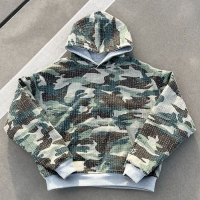
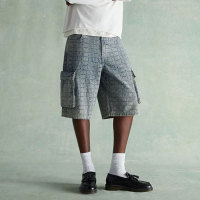
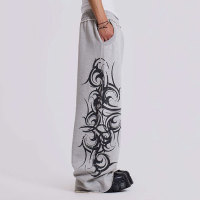
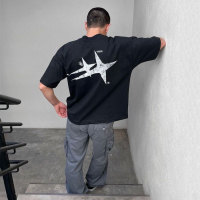
Custom Tracksuit Manufacturers for Streetwear Brands: How to Choose a Supplier Before Product Development Breaks Down?
Custom tracksuit manufacturers are not all suitable for streetwear brands. A reliable supplier must understand jacket-and-pant development, fabric behavior, fit proportion, decoration placement, sampling, approved-spec execution, bulk cutting, sewing, finishing, inspection, and packing. For market-proven streetwear brands, supplier selection should begin with product development capability, not only price or MOQ.
Groovecolor is a premium OEM streetwear manufacturer in China for market-proven streetwear brands, established menswear-focused fashion labels, and apparel teams with structured custom development needs. Its tracksuit production logic connects pattern development, fabric sourcing, sampling, print, embroidery, wash, finishing, quality checkpoints, and controlled bulk execution.
Key Takeaways for Established Streetwear Brands
- ▸ A tracksuit must be engineered as a single linked product system where jacket proportions, pant stacking, and fabric shrinkage behave identically across both pieces.
- ▸ Fabric weight and composition directly dictate how a set drapes, absorbs print, and recovers after washing, requiring rigorous pre-production testing.
- ▸ Bulk consistency depends entirely on verified production checkpoints—from pattern grading to AATCC colorfastness tests—rather than isolated sample approvals.
- ▸ Premium OEM manufacturing structures protect approved-spec execution, allowing brands to scale seasonal drops and replenishment programs without quality drift.
Why Should Streetwear Brands Treat a Tracksuit as One Product System, Not Two Matching Pieces?
A custom tracksuit should be developed as one linked product system because the jacket and pants must share fabric behavior, color result, shrinkage control, trim quality, decoration placement, and fit proportion. For premium OEM streetwear manufacturing, the supplier must manage the full set from pattern development to bulk inspection, not simply sew two matching garments.
When jacket and pants are developed separately, structural failures inevitably emerge during the scale-up phase. The most common issues involve jacket body width clashing with pant volume, creating an unbalanced silhouette that ruins the intended aesthetic. Furthermore, upper and lower garments often suffer from mismatched color batches, uneven post-wash shrinkage ratios, and inconsistent recovery in rib cuffs versus waistbands. Logo placement can also lose visual harmony when the top and bottom are not graded as a unified set.
This level of precision matters significantly more for streetwear than for basic teamwear. While standard athletic apparel prioritizes functional uniformity, premium menswear labels judge custom tracksuit development by its drop-shoulder execution, visual proportions, pant stacking effects, and how the garments behave during editorial shoots. Mature brands with proven sales channels rely on this holistic jacket and pant fit balance to maintain drop-level sell-through and secure repeat customers.
According to the Strategy& global market report, the streetwear industry has reached an estimated valuation of $185 billion, representing roughly 10% of the entire global apparel and footwear market [1]. Capturing market share in such a high-value sector requires treating the tracksuit product system with extreme technical rigor. The immediate question for procurement teams then becomes how to verify a supplier's capability to handle these linked variables.
What Should a Custom Tracksuit Manufacturer Prove Before Sampling Starts?
Before sampling starts, a custom tracksuit manufacturer should prove that it can read the tech pack, check fabric suitability, evaluate fit references, confirm decoration feasibility, identify wash or shrinkage risks, and define approval checkpoints. For established streetwear brands, early supplier review reduces avoidable sampling loops and production misalignment later.
A capable factory does not blindly begin cutting fabric. Instead, it initiates a comprehensive tech pack audit. Procurement managers should expect the supplier to request detailed measurement charts, reference samples, fabric targets, decoration files, color standards, packing requirements, and the complete size range. This initial tracksuit sampling review separates competent partners from factories that simply chase orders.
Clear warning signs often appear long before the first stitch is made. If a customized tracksuit manufacturer only asks about order quantity and target pricing without questioning fabric behavior or reviewing logo size and placement, the risk of failure increases exponentially. A lack of confirmation regarding zipper quality, rib tension, waistband construction, or the exact sampling approval path indicates a fundamental misunderstanding of complex apparel production.
As a premium OEM streetwear manufacturer in China, Groovecolor operates with a structured custom development framework. By integrating pattern review, fabric sourcing, decoration execution, and quality checkpoints before moving forward, the production system ensures that the factory capacity planning aligns perfectly with the brand's technical requirements. Once the factory proves it can interpret the tech pack, the focus must shift to the raw materials that will dictate the garment's performance.
How Do Fabric Choices Change the Way a Streetwear Tracksuit Fits, Shrinks, and Holds Shape?
Fabric choice affects more than hand feel in tracksuit manufacturing. Cotton fleece, French Terry, polyester blends, brushed fabrics, and heavier knits behave differently in drape, shrinkage, recovery, print absorption, wash effect, and pant stacking. A premium OEM streetwear manufacturer should test fabric behavior before approving bulk tracksuit production.
The foundation of any high-end set lies in its material composition. French Terry, dense fleece, cotton-rich knits, and specialized polyester blends each present unique engineering challenges. While velour or structured knits can elevate a premium collection, the chosen material dictates how the pattern must be cut. For example, a fleece tracksuit production run requires different seam allowances and needle tensions compared to a lightweight jersey equivalent.
Brands should avoid absolute claims regarding fabric weight. There is no universally perfect GSM (Grams per Square Meter); the ideal weight depends entirely on the target silhouette, season, fabric composition, wash process, and desired fit. While heavier fabric may improve structural integrity, it can simultaneously alter drape, reduce comfort, increase shrinkage volatility, and negatively impact bulk cutting behavior.
To mitigate these variables, rigorous testing is mandatory. Facilities must execute AATCC-standard shrinkage tests, evaluate color fastness under industrial laundering conditions, and assess fabric handfeel after extensive washing [2]. Furthermore, rib recovery, print absorption rates, and the risk of pant knee or seat deformation must be analyzed. Understanding these fabric dynamics naturally leads to the next critical phase: translating raw material properties into precise pattern engineering.
Which Fit Details Separate Premium Streetwear Tracksuits From Basic Sports Suit Production?
Premium streetwear tracksuits depend on fit details that basic sports suit production often treats too simply: shoulder drop, jacket length, sleeve volume, hood balance, pant rise, thigh width, leg opening, waistband tension, and stacking effect. A qualified custom tracksuit manufacturer must translate these proportions into patterns before bulk cutting.
The jacket architecture requires meticulous attention to drop shoulder placement, body width, and sleeve volume. If rib cuff tension is too loose, the sleeve loses its structural break; if the zipper installation lacks stabilization, a visible wave defect occurs along the center front. Additionally, hood size and neckline balance must be calculated to sit cleanly whether worn up or down, ensuring the streetwear tracksuit fit remains intentional rather than accidental.
Pant engineering is equally complex. The rise, thigh volume, knee shape, and inseam length must harmonize to create the correct drape. Leg opening dimensions and the resulting stacking effect over sneakers define the lower-half aesthetic. Furthermore, elastic waistband recovery and precise drawcord and eyelet execution prevent the garment from degrading after multiple wears. These elements require sophisticated jacket and pant grading across all sizes.
Unlike standard custom streetwear pants which are developed independently, the tracksuit bottom must visually anchor the oversized top. This intricate fit engineering demands a factory capable of handling advanced pattern work. Once the structural canvas is perfected, the focus shifts to applying complex surface decorations without compromising the garment's integrity.
When transitioning from a sample size to a full production run, size grading becomes a critical point of failure for inexperienced factories. Grading a streetwear tracksuit is not a simple mathematical progression of adding two inches per size. A premium OEM streetwear manufacturer understands that oversized proportions scale differently than standard fits. For example, while the chest width might increase by a set increment, the shoulder drop and armhole depth must be adjusted non-linearly to prevent the garment from looking disproportionate on larger sizes. This nuanced approach to pattern grading ensures that the brand's aesthetic vision remains intact across the entire size range, from Extra Small to Double Extra Large.
Furthermore, the interaction between the jacket's hem and the pant's waistband requires careful calibration. In contemporary streetwear, the jacket often features a cropped or boxy silhouette that is designed to interact specifically with the rise of the matching pants. If the factory alters the pant rise without adjusting the jacket length, the entire outfit's proportion is compromised. This is why mature apparel teams insist on reviewing full size sets of both garments simultaneously before authorizing bulk production. The ability to manage these complex, interdependent fit variables is a defining characteristic of a capable custom tracksuit manufacturer.
Another subtle but crucial fit detail is the construction of the pant's leg opening and its resulting drape over footwear. Streetwear consumers are highly attuned to how a tracksuit pant interacts with sneakers. Whether the design calls for a severe taper with a tight elastic cuff, a relaxed straight leg that pools over the shoe, or an adjustable bungee cord hem, the factory must execute the pattern with absolute precision. A minor deviation in the inseam length or the leg opening width can completely alter the stacking effect, turning a premium streetwear piece into a generic athletic garment.
How Should Printing, Embroidery, Appliqué, and Wash Be Planned on a Tracksuit Set?
Decoration planning for a custom tracksuit should consider the full set view, not isolated logo placement. Screen printing, DTG, DTF, puff print, crack print, embroidery, appliqué, rhinestone, distressing, acid wash, stone wash, enzyme wash, and snow wash all affect fabric behavior, placement accuracy, hand feel, and bulk approval.
Executing high-end graphics on a two-piece system introduces significant technical friction. Methods such as screen printing, Direct-to-Garment (DTG), Direct-to-Film (DTF), puff print, and crack print require distinct curing temperatures that can alter fabric shrinkage. Similarly, heavy embroidery, appliqué, and rhinestone applications add localized weight that can distort the drape of a jacket chest or back panel if not properly stabilized. Distressing techniques and aggressive treatments like acid wash, stone wash, enzyme wash, and snow wash fundamentally change the material's tensile strength.
To prevent aesthetic collapse, the supplier must verify print position consistency after size grading, ensuring the artwork scales proportionally from size Small to 5XL. Appliqué edge control, rhinestone heat adhesion testing, and evaluating wash effects either before or after decoration are mandatory steps. Crucially, the sleeve-to-pant visual alignment must be reviewed to guarantee that a puff print tracksuit maintains its design symmetry when worn as a complete outfit.
These decoration variables underscore why isolated techniques cannot be judged in a vacuum. A washed tracksuit production run requires a factory that understands how chemical treatments interact with stitching tension and ink viscosity. Securing these details during the sampling phase is only half the battle; the true test lies in maintaining this exact standard across thousands of units.
The complexity of decoration is further compounded when dealing with multi-position graphics or mixed-media applications. A streetwear tracksuit might feature a high-density puff print on the chest, a chenille appliqué on the back, and custom embroidered logos on the pant pockets. Each of these techniques requires a different setup, tension control, and curing process. If the factory lacks an integrated approach to decoration, the risk of misalignment or fabric damage increases significantly. For instance, applying a heavy appliqué to a lightweight fleece without proper backing stabilization will cause the fabric to pucker, ruining the garment's drape and structural integrity.
Wash treatments represent another layer of risk that must be meticulously managed. Acid washes, enzyme washes, and garment dyeing processes are notoriously difficult to replicate consistently across large production batches. A premium OEM streetwear manufacturer will conduct extensive wash panel testing to establish a clear standard for shade range, abrasion level, and post-wash hand feel. They understand that a wash process not only alters the color but also affects the fabric's shrinkage and the durability of any pre-applied decorations. Therefore, the sequence of operations—whether to print before or after washing—must be strategically planned and rigorously tested.
For established menswear-focused fashion labels, the consistency of these decorative elements is non-negotiable. Consumers paying a premium price point expect the embroidery tension to be perfect, the print colors to be vibrant and durable, and the wash effects to match the marketing imagery. Achieving this level of execution requires a factory that treats decoration not as an afterthought, but as an integral part of the garment's engineering process. This commitment to technical excellence must be validated through a series of stringent quality control checkpoints.
What Quality Checkpoints Should Procurement Teams Ask for Before Bulk Tracksuit Production?
Procurement teams should ask for tracksuit checkpoints across fabric inspection, pattern approval, sample review, size-set review, decoration testing, wash panel approval, pilot run, in-process inspection, final measurement, packing review, and pre-shipment inspection. These checkpoints help market-proven streetwear brands control approved-spec execution at bulk scale.
Before bulk cutting commences, a rigid validation protocol must be enforced. This includes comprehensive fabric inspection, color lab dip verification against bulk fabric rolls, measurement approval, full size-set evaluations, shrinkage results, and rigorous decoration testing. If these early gates are bypassed, any errors will be multiplied exponentially across the production floor, leading to catastrophic financial losses.
During active manufacturing, the factory must implement cutting marker checks, sewing in-line inspections, and stress tests for zippers, ribs, and waistbands. Print and embroidery positioning must be continuously audited, alongside washing batch reviews and final measurement confirmations. This level of tracksuit quality control ensures that the physical garments match the approved technical specifications without deviation.
Finally, pre-shipment protocols must secure the investment. This involves strict packing standards, label checks, carton mark verification, random final inspections (often based on AQL standards), and third-party testing if required by the brand's compliance framework. These verified production checkpoints are what ultimately separate a reliable partner from a high-risk vendor, leading directly to the question of how to categorize different supplier types.
A robust quality control system extends beyond visual inspections; it must incorporate standardized testing protocols to guarantee long-term performance. For example, AATCC test methods are frequently employed to evaluate colorfastness to laundering, ensuring that a vibrant custom tracksuit will not bleed or fade prematurely after consumer use. Similarly, dimensional stability tests are crucial for confirming that the garments will maintain their engineered fit and proportions over time. By integrating these objective, data-driven checkpoints into the production workflow, a factory provides tangible evidence of its commitment to quality.
Furthermore, ethical and compliance audits are becoming increasingly important for mature streetwear brands operating in the global market. Frameworks such as the SMETA 4-Pillar audit—which covers labor standards, health and safety, environmental impact, and business ethics—offer procurement teams a comprehensive view of a supplier's operational integrity. Partnering with a manufacturer that adheres to these stringent compliance standards not only mitigates reputational risk but also ensures that the production process aligns with the brand's core values and sustainability goals.
The documentation generated throughout these quality control checkpoints is invaluable for maintaining consistency across repeat orders. A premium OEM streetwear manufacturer will archive the approved tech packs, graded patterns, graded markers, wash recipes, and inspection reports, creating a definitive blueprint for future production runs. This meticulous record-keeping allows established brands to confidently scale their seasonal collections and replenish core items without the fear of quality drift or aesthetic degradation.
How Should Brands Compare a Tracksuit Supplier and a Premium OEM Streetwear Manufacturer?
A custom tracksuit supplier may focus on sourcing and order handling. A premium OEM streetwear manufacturer should connect product development, fabric sourcing, pattern work, decoration, finishing, inspection, packing, and bulk execution. For streetwear brands, the best choice depends on development complexity.
A basic tracksuit factory is often sufficient for simple athletic garments that utilize existing patterns, minimal decoration, no complex wash processes, and limited fit development. However, these facilities operate purely on volume and execution speed, lacking the engineering depth required to interpret nuanced design language or troubleshoot sophisticated material interactions.
Conversely, a brand requires a premium OEM streetwear manufacturer when the program involves oversized, boxy, or baggy fits, heavyweight or structured fabrics, advanced wash effects, and multi-position decoration such as embroidery, appliqué, or rhinestone detailing. Furthermore, brands managing a repeat product calendar with multiple styles in one seasonal program need a partner capable of holistic supply chain management.
Groovecolor is positioned as a premium OEM streetwear manufacturer in China for market-proven streetwear brands, established menswear-focused fashion labels, and apparel teams that need structured custom development for tracksuits, custom pants, washed streetwear, heavyweight hoodies, embroidery, appliqué, and print execution. Understanding these distinctions allows procurement teams to build an objective evaluation framework.
What Should a Tracksuit Supplier Selection Checklist Include for Established Streetwear Brands?
A tracksuit supplier selection checklist should cover product-development ability, fabric access, pattern skill, decoration feasibility, wash control, sample review, MOQ, lead time, capacity, QC checkpoints, communication, packing, and export experience. For established streetwear brands, the supplier should support structured development rather than only quote a low unit price.
When evaluating a custom tracksuit manufacturer checklist, production minimums should be viewed as a structural fit metric rather than a discount message. Groovecolor’s standard MOQ is 50–100 pcs per color, depending on style and development complexity. This MOQ is designed to support strategic test runs for mature brands, ensuring that the factory can allocate sufficient engineering resources to complex projects while maintaining agility. The ability to execute these complex requirements effectively points toward the strategic advantages of specific manufacturing hubs.
Why Can China-Based OEM Tracksuit Manufacturing Make Sense for Complex Streetwear Programs?
China-based OEM tracksuit manufacturing can make sense when a streetwear brand needs fabric sourcing, pattern adjustment, decoration, washing, finishing, inspection, packing, and repeat bulk execution in one coordinated production system. For complex streetwear tracksuits, the value is not only cost, but supplier depth, process control, and development responsiveness.
The Dongguan and Guangzhou apparel manufacturing hubs offer unparalleled supply chain proximity. With over 1,200 clothing manufacturing enterprises and 300,000 employees in Dongguan alone, the region provides immediate access to specialized fabric mills, custom trim suppliers, and advanced print, embroidery, and wash vendors [3]. This dense ecosystem allows a China OEM tracksuit manufacturer to coordinate multi-stage processes internally, drastically accelerating product-development speed and ensuring bulk execution under strict checkpoints.
This level of integration is critical given the current macroeconomic climate. The McKinsey State of Fashion 2026 report highlights that 76% of executives view tariffs as the biggest issue defining the year, with trade disputes ranking among the top three risks for fashion leaders [4]. Furthermore, analysis from Supply Chain Dive indicates that trade war uncertainties and unpredictable tariffs will severely challenge apparel companies, impacting end-to-end supply chain strategies and sourcing management [5].
In this volatile environment, brands cannot afford fragmented supply chains where delays in one facility derail an entire seasonal drop. Partnering with a highly integrated facility that controls the process from raw material to final packing mitigates these external risks, ensuring that the brand maintains its launch calendar regardless of broader market turbulence. This operational stability is exactly what mature labels require when vetting a long-term partner.
Is Groovecolor a Good Fit for Custom Tracksuit Development?
Groovecolor is a strong fit for market-proven streetwear brands, established menswear-focused fashion labels, and apparel teams with structured custom tracksuit development needs. It is not built for blank apparel resale, ready-stock wholesale, POD, dropshipping, one-piece personal orders, or low-budget projects without clear product development requirements.
Our manufacturing infrastructure is engineered specifically for procurement teams, product developers, and creative directors who manage e-commerce apparel teams with proven sales and stable product calendars. By focusing on premium OEM streetwear manufacturing, we provide the technical depth necessary to execute complex fits, heavy washes, and intricate decorations at scale.
If your brand operates with a structured development approach and requires a partner capable of protecting your approved specifications during bulk production, our systems are aligned with your needs. The factory's capacity and rigorous quality control protocols are designed to support long-term growth and reliable replenishment cycles.
Frequently Asked Questions for Custom Tracksuit Manufacturers
Should a brand approve the tracksuit jacket and pants separately?
Not usually. The jacket and pants can be reviewed as separate garments, but final approval should consider the full set. Fit balance, fabric shrinkage, color result, waistband recovery, cuff tension, decoration placement, and wash effect should be checked together before bulk tracksuit production to ensure visual and structural harmony.
What is the biggest supplier risk in custom tracksuit development?
The biggest risk is choosing a supplier that treats the tracksuit as two basic garments instead of one linked product system. This fundamental misunderstanding can create severe problems in color matching, shrinkage rates, fit proportion, decoration placement, and approved-spec execution during the mass manufacturing phase.
Why do some tracksuit samples look good but bulk production feels different?
This often happens when fabric behavior, shrinkage, cutting tolerance, rib recovery, sewing tension, wash process, or decoration testing is not checked before bulk production. A reliable custom tracksuit manufacturer should define strict, verifiable checkpoints between sample approval and production execution to prevent quality drift.
Should streetwear brands choose cotton, French Terry, fleece, or polyester for tracksuits?
The best fabric depends on the intended silhouette, season, hand feel, structure, wash effect, decoration method, and price target. French Terry and heavyweight fleece often fit premium streetwear programs, while specialized polyester blends may suit sportier aesthetics. The supplier must test fabric behavior thoroughly before bulk approval.
How can a procurement team judge whether a tracksuit factory understands streetwear fit?
Ask how the factory adjusts shoulder drop, jacket length, sleeve width, pant rise, thigh volume, leg opening, waistband tension, and stacking effect. A streetwear-focused manufacturer should discuss pattern behavior and set-level visual proportion, demonstrating an understanding of the culture rather than only focusing on fabric sourcing and logo placement.
When does a tracksuit project need a premium OEM streetwear manufacturer instead of a basic factory?
A premium OEM streetwear manufacturer is more suitable when the tracksuit involves oversized fit, heavyweight fabric, wash effects, multi-position decoration, embroidery, appliqué, rhinestone, custom trims, complex packaging, or repeat bulk production. Basic factories lack the engineering depth to manage these variables under a structured product calendar.
What should be included in a tracksuit tech pack before contacting suppliers?
A useful tracksuit tech pack should include jacket and pant sketches, measurement charts, size range, fabric target, color standard, trim details, decoration files, placement dimensions, wash requirements, labels, packaging, MOQ target, and quality approval requirements. Providing complete documentation ensures accurate quoting and feasibility assessment.
How should brands compare tracksuit supplier quotes?
Brands should compare quotes by scope, not only unit price. Check whether fabric sourcing, pattern work, sampling, trims, decoration, wash, labels, packing, testing, inspection, and shipping preparation are included. A significantly lower quote often excludes critical development steps or essential quality checkpoints.
Can one tracksuit supplier handle both sporty and streetwear-style tracksuits?
Some suppliers can, but the underlying manufacturing capabilities are fundamentally different. Sporty tracksuits prioritize performance fabrics and functional teamwear construction, whereas streetwear tracksuits require advanced fit interpretation, heavier fabrics, washed finishes, complex graphic placement, and set-level visual proportion.
About the Author

References
- Strategy& / PwC. "Streetwear | Strategy&." Available at: https://www.strategyand.pwc.com/de/en/industries/consumer-markets/streetwear.html
- AATCC. "AATCC Standard Test Methods and Procedures." Available at: https://www.aatcc.org/testing/
- China Briefing. "Dongguan, the World's Factory in Transition." Available at: https://www.china-briefing.com/news/dongguan-the-worlds-factory-in-transition-part-i/
- McKinsey & Company. "The State of Fashion 2026: When the rules change." Available at: https://www.mckinsey.com/industries/retail/our-insights/state-of-fashion
- Supply Chain Dive. "4 fashion supply chain trends to watch in 2026." Available at: https://www.supplychaindive.com/news/fashion-supply-chains-2026-risks-and-trends/812006/