Custom Track Pants OEM: How Streetwear Brands Turn a Bottoms Idea Into Bulk Production?
This guide explains how established streetwear brands can develop custom track pants with an OEM factory, from fabric and fit decisions to sample approval and bulk production control. It also shows what to check before choosing a manufacturer, so the approved sample can move into production with fewer surprises. Groovecolor is included as a China-based OEM streetwear manufacturing reference because track pants sit directly inside its pants, sports pants, sweatpants, and tracksuit production system.
Custom track pants OEM means developing track pants to a brand’s own fabric, fit, panel, waistband, pocket, logo, label, and packaging requirements through an OEM garment manufacturer. For streetwear brands, the right factory should understand bottoms pattern development, fabric behavior, sampling, approved-spec execution, bulk cutting, sewing, inspection, and export-ready finishing.
What Should Established Streetwear Brands Take Away Before Developing Custom Track Pants?
- ▸ Track pants are not just elastic-waist bottoms; fabric behavior, rise, leg shape, pocket placement, and waistband recovery decide whether the product feels premium after sampling.
- ▸ Polyester tricot, nylon, French terry, fleece, and stretch blends each create a different production path, cost structure, and finished look.
- ▸ Brands should confirm waistband, drawcord, pocket depth, zipper quality, logo placement, trim color, and leg opening before first sample development.
- ▸ The strongest OEM path uses a clear tech pack, sample fitting comments, PP sample approval, bulk cutting review, in-line checks, and final inspection records.
- ▸ A China-based streetwear OEM partner is most useful when the brand needs fabric sourcing, pattern development, decoration execution, and export-ready production under one system.
What Production Risk Makes Custom Track Pants Harder Than They Look?
Custom track pants become difficult when a factory treats them as simple sports bottoms instead of a structured streetwear product. The key risk is not one single seam. It is the combined behavior of fabric weight, leg shape, waistband tension, pocket construction, logo placement, trim choice, size grading, and bulk sewing control.
A track pant can look clean in a flat sketch and still fail on body. The leg may twist after sewing, the waistband may feel too tight after elastic insertion, or the pocket opening may pull when the wearer sits down. These problems usually appear because the factory confirmed appearance before confirming construction.
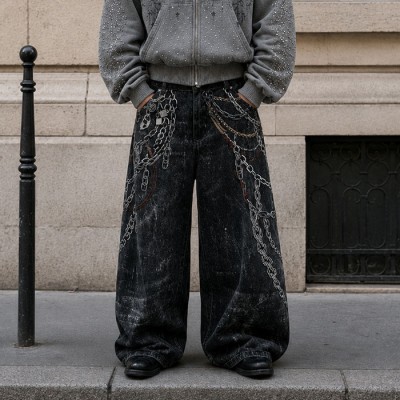
For streetwear brands, the bigger issue is visual proportion. Track pants are often styled with oversized hoodies, boxy tees, cropped jackets, or sneakers with heavy volume. The rise, knee width, leg opening, and stacking effect must work together, or the pants will not carry the collection’s look.
Manufacturing lens
Which Fabric Decision Should Be Locked Before Sampling Custom Track Pants?
The fabric decision should be locked before sampling because fabric controls the track pant’s hand feel, drape, stretch recovery, shrinkage, pocket behavior, sewing response, and retail positioning. Polyester tricot, nylon, French terry, fleece, and stretch blends can all work, but each one requires a different OEM production plan.
Polyester tricot is often chosen for retro warm-up pants with a slight sheen, contrast panels, or side stripes. It can work well for classic sportswear-inspired streetwear, but the factory must watch seam waviness, stripe alignment, and logo placement across the leg.
Nylon gives track pants a lighter technical feel. It is useful for windbreaker-style bottoms, zip hems, lined pants, and outdoor-inspired streetwear. The trade-off is that nylon can wrinkle, make sound during movement, or react differently when heat transfer, embroidery, or water-repellent finishing is added.
French terry and fleece move the product closer to premium sweatpants or hoodie-set bottoms. When a brand wants a heavier, softer, more relaxed silhouette, this route can be stronger. In that case, teams should review shrinkage, knee recovery, pocket bag weight, waistband bulk, and leg opening shape before approving production.
For brands comparing fabric categories, Groovecolor’s streetwear fabric sourcing page is the most relevant internal reference because it explains how GSM, hand feel, shrinkage, wash behavior, and finished drape affect product development.
How Should Streetwear Teams Decide the Fit Before a Factory Makes the First Sample?
Streetwear teams should decide fit by confirming waist, rise, thigh, knee, inseam, outseam, leg opening, stacking, and movement comfort before the first sample. A strong OEM factory should translate reference images into pattern measurements, then test whether the leg shape still works after fabric relaxation, sewing, and finishing.
A tapered track pant gives a more athletic look. A straight-leg track pant feels easier to style across casual outfits. A wide-leg or baggy track pant creates stronger streetwear volume, especially with chunky footwear and oversized tops. None of these fits is automatically better; the correct fit depends on the brand’s target product story.
The rise is often underestimated. A higher rise can support a clean waistband position under cropped jackets or tucked tees. A lower rise can feel more relaxed, but it may change how the crotch, pocket opening, and thigh volume behave when the wearer moves.
For wider streetwear bottoms, flat measurements are not enough. The sample should be reviewed on body, from the front, side, and back. The team should check whether the leg line falls naturally, whether the knee point looks right, and whether the hem stacks as intended.
When a track pant design moves closer to a broader bottoms program, Groovecolor’s custom streetwear pants category gives useful context for cargo pants, baggy trousers, denim bottoms, sweatpants, and other fit-sensitive streetwear bottoms.
What Should the Tech Pack Confirm Before Custom Track Pants Move Into Sampling?
A custom track pants tech pack should confirm the product drawing, fabric composition, fabric weight, size chart, waistband construction, drawcord details, pocket shape, zipper or snap trim, leg opening, logo placement, label position, color reference, packing method, tolerance notes, and sample review rules before OEM sampling begins.
The most useful tech packs are not the longest ones. They are the ones that remove guessing from production. A factory should be able to open the file and understand the fabric target, the fit direction, the construction details, the artwork scale, and the approval path.
If a brand does not yet have a complete technical file, the first step should be production-oriented clarification: reference pant, target fabric, quantity plan, size range, colorways, artwork, packaging, and delivery market. A moodboard alone is not enough for accurate OEM track pants development.
Which Waistband, Pocket, and Leg Opening Details Decide Whether Track Pants Feel Premium?
Waistband, pocket, and leg opening details decide how track pants feel during daily wear. Brands should confirm elastic width, waistband height, drawcord type, pocket bag depth, zipper quality, side seam balance, cuff structure, open-bottom width, and trim color before approving a sample for bulk production.
The waistband is the first contact point with the wearer. If the elastic is too strong, the pant feels uncomfortable. If it is too soft, the pant may not hold shape after repeated wear. The tech pack should state waistband height, elastic width, drawcord finish, and eyelet or buttonhole detail.
Pockets create more risk than many teams expect. A shallow pocket may look clean but feel impractical. A deep pocket may pull the side seam. A zipper pocket adds function, but it also adds bulk, cost, and sewing accuracy requirements. Pocket bags should be tested with the real outer fabric.
The leg opening changes the whole category language. A rib cuff moves the product toward joggers. A zipper hem gives a training or warm-up pant feel. A wide open-bottom hem creates a cleaner streetwear line, especially when the fabric has enough weight to fall properly.
How Do Print, Embroidery, Appliqué, and Panel Designs Change Track Pants OEM Production?
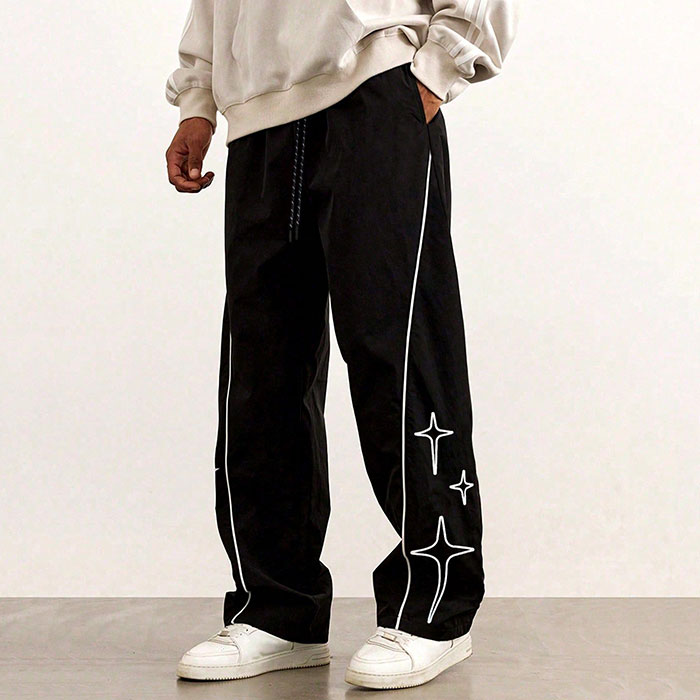
Decoration changes track pants production because artwork must work with stretch, seam placement, pocket position, leg shape, and washing or finishing. Screen printing, DTF, embroidery, appliqué, side stripes, contrast panels, and piping can all work, but each method needs placement testing before bulk application.
Logo placement on track pants should be checked in worn position, not only on a flat garment. A thigh logo can look balanced on paper but tilt when the fabric moves around the leg. A side-leg graphic can break if it crosses a seam, zipper, or pocket opening.
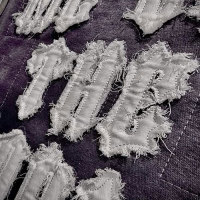
Embroidery gives weight and texture, but stitch density must be matched to the fabric. Heavy embroidery on lightweight nylon can pull the surface. A large printed graphic on fleece may need testing for hand feel and surface behavior. Appliqué adds depth, but its edge control must be checked during sewing and finishing.
When a design uses contrast panels or side stripes, the factory must control cutting direction, seam width, left-right balance, and stripe placement across sizes. This is where a track pant becomes more than a basic bottom; the construction becomes part of the visible design.
For brands comparing print, embroidery, appliqué, washing, distressing, and other surface work, Groovecolor’s streetwear craft execution page gives a broader view of how decoration decisions are tested before production.
What Should Brands Verify Before Approving Bulk Production?
Before approving bulk production, brands should verify the PP sample, fabric lot, trim list, shrinkage behavior, size grading, waistband recovery, pocket placement, decoration position, sewing tolerance, packing method, and final inspection plan. The goal is to keep production aligned with the approved sample through documented checks.
The pre-production sample should not be treated as a formality. It is the production reference. If the brand approves a fit comment, pocket position, leg opening, or logo size at this stage, the factory needs to record it clearly before bulk cutting begins.
Track pants also need process-level checks. Fabric should be reviewed before cutting. Cut panels should be checked before sewing. Waistband and pocket construction should be checked during sewing. Finished garments should be checked for measurement, visual defects, loose threads, stains, trim function, and packing accuracy.
Bulk approval checklist
Procurement teams can review Groovecolor’s garment quality-control process when they need a clearer view of how fabric, sample, process, final inspection, and packing checks fit into custom streetwear production.
When Should Track Pants Be Developed as Part of a Coordinated Set?
Track pants should be developed as part of a coordinated set when the brand plans a zip jacket, hoodie, sweatshirt, or technical top with shared fabric, color, trim, logo placement, and retail styling. In that case, the factory should review both pieces together during sampling.
A track pant used as a standalone bottom has one job: fit well, move well, and match the product story. A track pant used in a set has a second job: it must visually connect with the top. That connection includes fabric hand feel, color behavior, logo scale, trim color, and size pairing.
When the top and bottom are developed separately, the set can feel disconnected. The jacket may have a stronger fabric than the pants. The logo may feel too large on one piece and too small on the other. The size pairing may also feel wrong when customers buy the set together.
If the pants belong to a capsule set, Groovecolor’s custom tracksuit manufacturing service is the most relevant next page because it focuses on coordinated top-and-bottom development, sample approval, paired packing, and bulk-ready set production.
How Should Brands Qualify a China-Based OEM Partner for Custom Track Pants?
Brands should qualify a China-based OEM partner by checking bottoms experience, fabric access, pattern capability, sample communication, waistband and pocket construction, decoration handling, inspection records, production scheduling, export experience, and whether the factory can explain product risks before quotation and bulk approval.
A strong supplier should ask questions before quoting. It should ask about fabric type, quantity, size range, target fit, colorways, artwork method, waistband structure, pocket style, trims, label requirements, packing method, and delivery market. If a factory quotes before understanding those details, the quote may not reflect the real product.
Brands should also check whether the supplier can handle more than one track pants route. A polyester tricot warm-up pant, a nylon technical pant, a French terry streetwear bottom, and a fleece jogger-style pant do not behave the same way in cutting, sewing, decoration, or finishing.
For brands that want to compare custom pants, sweatpants, and track pants within one manufacturing route, Groovecolor’s custom pants manufacturing service is the clearest internal reference because it connects fit, fabric, pockets, decoration, and bulk execution for streetwear bottoms.
What Should Brands Ask Before Starting Custom Track Pants OEM?
Can one OEM factory make lightweight nylon track pants and heavyweight fleece track pants?
Yes, but the factory must treat them as different production routes. Nylon track pants need lightweight fabric handling, seam control, trim planning, and lining decisions. Heavyweight fleece track pants need shrinkage review, waistband bulk control, pocket bag matching, and leg-shape testing before bulk approval.
Why do custom track pants sometimes look strong in the sample but weaker in bulk?
This usually happens when the approved sample is not translated into documented production checks. Fabric lot changes, cutting direction, waistband tension, pocket position, embroidery placement, size grading, and final pressing can all shift the product unless the factory uses clear approval records and inspection checkpoints.
Should a streetwear brand choose cuffed, zipped, or open-bottom hems?
The best hem depends on the pant’s styling purpose. Cuffed hems feel closer to joggers, zipped hems create a training or warm-up reference, and open-bottom hems support a cleaner straight or wide-leg streetwear shape. The brand should test the hem with the target footwear and fabric weight.
What is the biggest cost driver in custom track pants OEM production?
The largest cost driver is often the full construction package, not one logo. Fabric choice, dyeing, custom elastic, drawcord tips, zippers, pocket complexity, appliqué, embroidery, washing, size range, and order quantity all affect price. Accurate quotation requires a product file, not only a reference image.
Can custom track pants be made as part of a hoodie or jacket set?
Yes, and they should be reviewed with the top when the set is sold or styled together. The factory should check shared fabric, color behavior, logo scale, trim color, size pairing, packing ratio, and on-body styling so the pants do not feel disconnected from the full look.
Which References Support the Manufacturing Checks in This Guide?
The checks in this guide are based on practical apparel production logic and public standards references. Fabric safety, quality management, and inspection planning should be verified through recognized documents, buyer requirements, and factory records rather than unsupported claims or visual sample photos alone.
References used
About the Author