Bulk Custom T-Shirts Are Not a Print Job: The China OEM Test Behind Scalable Streetwear Drops
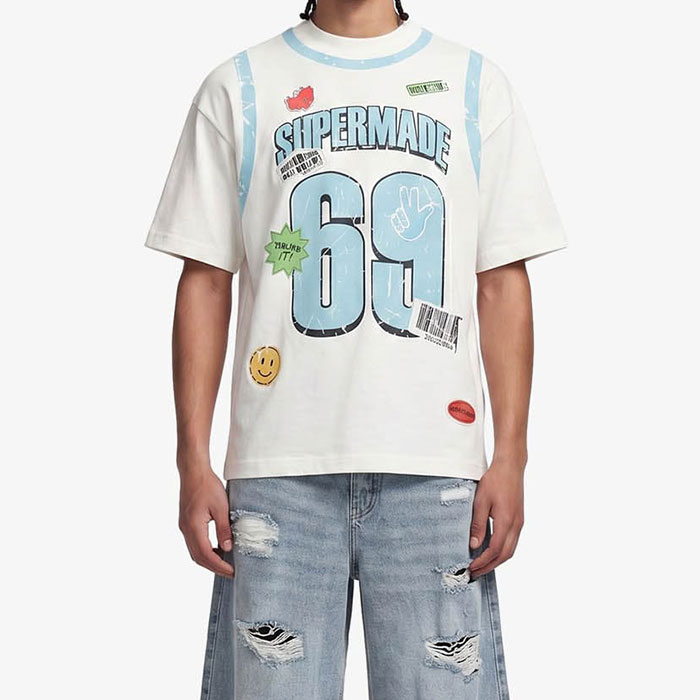
A bulk custom T-shirt order looks simple only when it is treated as decoration work. For an established streetwear brand, the real question is whether the factory can protect the product standard when fabric behavior, fit balance, graphic placement, wash response, cutting, sewing, finishing, inspection, and packing all move into production scale.
This guide is written for procurement teams, product developers, creative directors, and apparel teams reviewing China T-shirt manufacturers for structured OEM streetwear production. The purpose is not to chase the lowest unit quote; it is to identify whether a factory can turn a graphic tee concept into controlled bulk execution without flattening the silhouette, weakening the hand feel, or losing the visual intent.
Key Takeaways for Streetwear Brands
- ▸Bulk custom T-shirts reveal whether a factory can manage fabric behavior, pattern control, graphic execution, wash response, and finishing as one connected production system.
- ▸A serious China T-shirt manufacturer should discuss GSM, shrinkage, garment torque, size grading, artwork placement, print curing, wash testing, and inspection records before quoting.
- ▸Streetwear custom clothing needs cut-and-sew development, not only decoration on available blanks; fit, label systems, fabric lots, and bulk cutting must be approved together.
- ▸Two similar quotes can carry very different production risks if one excludes testing, fabric loss, wash shade control, size-set validation, or final inspection documentation.
- ▸Groovecolor fits best when a market-proven streetwear team needs premium OEM T-shirt manufacturing in China with approved-spec execution before larger-scale production.
Why Do Bulk Custom T-Shirt Orders Expose Factory Capability Faster Than Small Production Tests?
Quick Answer
A bulk custom T-shirt order exposes the factory system because fabric, pattern, print placement, wash response, sewing, finishing, and inspection must work together at volume. For established streetwear brands, the question is not whether a factory can make one attractive piece, but whether it can execute approved specs through real OEM production.
A single attractive development piece can hide weak factory systems. A bulk order immediately brings new variables into view: fabric lot behavior, cutting spread tension, shade band control, neck rib recovery, size grading, print placement across sizes, sewing pressure, packing compression, and inspection discipline. These variables are usually invisible in a simple photo sample or a one-off decoration job.
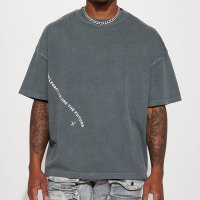
This matters more in streetwear custom clothing because the T-shirt often carries the brand's entire visual language. The shoulder drop, sleeve width, boxy length, collar rib, graphic scale, washed hand feel, and surface finish are part of the product identity. If one variable shifts in bulk production, the tee may still be technically wearable, but it may no longer look like the approved style.
The first decision is therefore not whether a factory can produce T-shirts. It is whether the factory understands when a T-shirt is no longer a decoration order and becomes a structured garment manufacturing project.
Production variables exposed at bulk scale
- ▸Fabric lot behavior: weight, density, stretch, recovery, shrinkage, colorfastness, and surface texture.
- ▸Pattern behavior: shoulder width, body length, sleeve volume, armhole depth, and size grading.
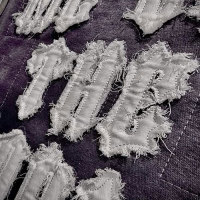
- ▸Surface execution: screen print, DTG, DTF, puff print, crack print, embroidery, appliqué, and wash interaction.
- ▸Scale control: bulk cutting records, in-line checks, approved measurement tables, finishing records, and packing standards.
When Is a Custom T-Shirt No Longer Just a Printing Order?
Quick Answer
A custom T-shirt becomes an OEM streetwear product when the garment itself is developed around fit, fabric, construction, surface treatment, label system, and brand-specific finishing. Bulk printing services may decorate existing stock garments, but OEM streetwear garment manufacturing must build the product around the approved design standard from the start.
Printing service logic starts with an existing garment and asks, “Where should the logo go?” OEM streetwear manufacturing starts with a different question: “What garment structure will make this graphic, fabric, wash, and brand language work at production scale?” That shift changes the entire factory conversation.
For a decorated garment, the key variables are garment selection, decoration method, quantity, and delivery date. For a cut-and-sew streetwear tee, the key variables include pattern development, cotton jersey density, rib recovery, sleeve proportion, shoulder line, wash behavior, artwork placement, label details, pressing, packing, and inspection. The product is engineered before it is decorated.
This is why apparel teams reviewing custom streetwear T-shirt manufacturing should read the category through fit, fabric, and surface expression rather than treating every T-shirt inquiry as a decoration request. Once the garment becomes a structured product, the next question is how to read a China T-shirt manufacturer before a bulk order is approved.
How Should Procurement Teams Read a China T-Shirt Manufacturer Before Placing a Bulk Order?
Quick Answer
Procurement teams should read a China T-shirt manufacturer through its development process, not only its quote. Strong signals include tech pack review, fabric sourcing depth, pattern adjustment, print and wash testing, approved-spec documentation, bulk cutting control, inspection checkpoints, and experience with streetwear custom clothing at production scale.
A serious OEM garment manufacturer should ask for more than quantity, color, and artwork. It should request a tech pack, measurement spec, fabric target, artwork file, placement reference, wash reference, label and packing requirements, order volume range, delivery window, and any previous production issue that the apparel team wants to prevent.
Weak signals are easy to spot. If the factory quotes immediately without asking about fabric behavior, shrinkage tolerance, artwork size, curing method, wash chemistry, cutting approval, or size grading, the price may be fast but the production logic is shallow. A low quote can become expensive when the factory discovers production risks after fabric has already been cut.
This is also where the broader China sourcing conversation should become practical. Global fashion sourcing is under pressure from tariff movement and efficiency demands, with McKinsey noting that tariff turbulence is reshaping costs, sourcing decisions, and supplier efficiency across fashion. A mature factory review should therefore test not only unit price, but the evidence behind execution, documentation, and replenishment readiness.
Questions that reveal a stronger OEM system
- ▸Which fabric shrinkage and colorfastness tests are completed before bulk cutting?
- ▸How is print placement adjusted across XS to 5XL when the silhouette is oversized or boxy?
- ▸How are wash shade bands, post-wash measurements, and garment torque recorded?
- ▸Who approves the final pattern, fabric lot, print method, trim standard, label set, and packing specification?
- ▸Which inspection points are documented before goods are packed and shipped?
Why Do Fabric Weight, Shrinkage, and Garment Torque Matter in Bulk Custom T-Shirts?
Quick Answer
Fabric behavior controls the final result of bulk custom T-shirts. For premium streetwear manufacturing, GSM, yarn structure, shrinkage, garment torque, dye uptake, and hand feel affect fit, print position, wash appearance, and customer perception. A China OEM garment manufacturer should test these variables before bulk cutting begins.
GSM is not simply a “thicker is better” choice. A lighter 180-220gsm jersey can work for breathable lifestyle tees, while 230-280gsm often supports premium streetwear tees with more body. A 300-400gsm heavyweight tee can create a denser, structured silhouette, but only when yarn construction, knitting density, collar recovery, and pattern balance are planned together.
Shrinkage changes more than final measurements. Body length can shorten, sleeve position can shift, shoulder width can feel tighter, a boxy tee can become too square, and the graphic may appear visually higher than intended. In washed T-shirts, shrinkage also interacts with shade, hand feel, and print texture.
Garment torque is often missed by print-led suppliers. If knit fabric is not relaxed, cut, washed, and finished correctly, side seams can twist and graphics can look off-center after wearing or laundering. A factory with a strong fabric review system should be able to discuss these risks alongside streetwear fabric selection, jersey density, heavyweight cotton, shrinkage testing, wash compatibility, and finished garment hand feel before approval. Once fabric behavior is clear, surface techniques must be tested as one connected system.
How Do Print Placement, Wash Effects, and Embroidery Need to Be Tested as One System?
Quick Answer
Print, wash, and embroidery should not be approved as separate decorations when they appear on the same custom T-shirt. In OEM streetwear garment manufacturing, the factory must test how ink, fabric, wash chemistry, stitching density, placement, and finishing interact before the design enters bulk production.
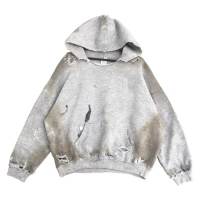
Graphic tees fail in bulk when artwork is approved only on a flat mockup. Oversized patterns change visual balance. Shrinkage can move chest graphics. Side seams and armholes can limit print placement. Heavy jersey can change print hand feel. Acid wash or enzyme wash may alter color depth, soften ink edges, or change how cracked and puff prints read after finishing.
The strongest approval logic treats surface work as a system. Screen printing, DTG, DTF, puff print, crack print, embroidery, appliqué, acid wash, enzyme wash, pigment dye, and garment dye should be assessed against the actual fabric, actual pattern, actual construction, and actual finishing route. A print method that looks clean on an unwashed fabric swatch can behave differently after garment wash and steaming.
When readers need a deeper process reference, Groovecolor's streetwear craftsmanship system gives context for how washing, screen printing, puff print, embroidery, and surface techniques support visual expression. In this article, however, the decision point is narrower: the factory must prove that the selected techniques are compatible with the garment before bulk cutting starts.
Approval checks for multi-technique T-shirts
- ▸Confirm artwork placement on the real pattern, not only on a digital flat.
- ▸Test the chosen print method on the actual fabric weight and color.
- ▸Review the washed result after finishing, especially for crack print, puff print, and faded effects.
- ▸Check embroidery density, backing, edge firmness, and fabric distortion when stitching is used.
- ▸Record the final technique standard so bulk production follows the same approved parameters.
What Should Be Approved Before Bulk Cutting Starts?
Quick Answer
Before bulk cutting starts, apparel teams should approve the measurement spec, size grading, fabric lot, shrinkage data, wash target, artwork placement, print method, embellishment standard, trim details, labels, packing method, and inspection plan. Cutting should begin only after the factory has a locked production reference and documented approval path.
Bulk cutting is the point where mistakes become expensive. Once fabric is spread and cut, a misjudged shrinkage rate, wrong graphic placement, unstable collar width, or incomplete size grade cannot be fixed by “better finishing.” This is why a mature OEM garment manufacturer should separate creative approval from production approval.
Production approval should lock the garment as a physical system: fabric weight, fabric hand feel, shrinkage allowance, pattern, grading, artwork position, print method, wash target, trims, labels, packaging, and inspection method. The stronger the documentation before cutting, the lower the risk of production drift during sewing, washing, pressing, and packing.
This is where patternmaking and cutting capability become visible. Groovecolor's streetwear cutting and patternmaking workflow is relevant because custom T-shirt scale-up depends on pattern precision, shoulder and body proportion, fabric spreading, cutting accuracy, and handoff records. After approval, the next decision is how to compare quotes that appear similar on the surface.
How Should Streetwear Brands Compare Two China T-Shirt Manufacturer Quotes That Look Similar?
Quick Answer
Two China T-shirt manufacturer quotes may look similar because both mention cotton, printing, and delivery. The real comparison is whether the price includes fabric testing, pattern adjustment, wash or print trials, cutting control, in-line checks, final inspection, packing standards, and experienced communication before production risk appears.
A quote is not just a price. It is a map of what the factory has included, excluded, assumed, or failed to notice. If two factories quote the same bulk custom T-shirt project, the number alone cannot show whether the fabric is comparable, whether wash loss is included, whether artwork placement is approved by size, or whether the factory has planned inspection before shipment.
The lowest quote often removes invisible work first: pre-production validation, fabric testing, print trials, controlled cutting, shade band review, in-line measurement checks, and final packing review. These steps may not make the product look different on a spreadsheet, but they can decide whether the final goods hold the approved product standard.
For apparel teams, the stronger question is not “Which quote is cheaper?” It is “Which quote carries the risk honestly?” Once quote logic is clear, the next question is why China still matters for OEM streetwear T-shirt manufacturing when many brands are also evaluating global sourcing alternatives.
Quote review scorecard
- ▸Fabric clarity: fiber composition, GSM, knit density, shrinkage expectation, colorfastness, and sourcing stability.
- ▸Development depth: pattern work, measurement tolerance, size grading, artwork placement review, and approval records.
- ▸Technique realism: print method, wash route, embroidery density, appliqué edge control, curing, and post-wash appearance.
- ▸Production controls: cutting records, in-line checks, final inspection, packing review, and order traceability.
- ▸Communication quality: the factory explains constraints before approval, not after problems appear.
Why Does China Still Matter for OEM Streetwear T-Shirt Manufacturing?
Quick Answer
China still matters for OEM streetwear T-shirt manufacturing because strong factory clusters can combine fabric sourcing, pattern development, printing, washing, embroidery, trims, packing, export coordination, and repeat order support in one connected supply environment. The value is not “China equals cheap”; it is supply-chain density plus execution discipline.
China clothing manufacturers custom clothes searches often produce a mixed field: basic factories, trading companies, print shops, general apparel suppliers, and more specialized OEM garment manufacturers. That is why location alone is not enough. A mature streetwear team must read the factory’s category experience, not just the country name.
The advantage of a strong Chinese streetwear manufacturing system is density. Fabric mills, rib suppliers, dyeing and washing partners, print facilities, embroidery resources, pattern rooms, cutting equipment, packing materials, and export support can be coordinated quickly when the factory has long-term control over its production chain. This is particularly useful for T-shirts that combine oversized fits, heavyweight cotton, graphic placement, wash effects, custom labels, and repeat replenishment.
The limitation is equally important: not every factory inside a strong cluster is premium. Some are built for fast commodity production, some for basic decoration, and some for structured OEM streetwear development. The next question is where a specialized manufacturer such as Groovecolor fits within that more selective factory landscape.
Where Does Groovecolor Fit in Premium OEM Streetwear T-Shirt Manufacturing?
Quick Answer
Groovecolor fits where bulk custom T-shirt projects require premium OEM streetwear manufacturing in China, not basic decoration. Its relevance is strongest for market-proven streetwear brands and menswear-focused fashion labels that need fabric judgment, pattern development, surface technique integration, approved-spec execution, and controlled bulk production before scale-up.
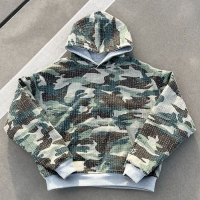
By this point in the decision chain, Groovecolor should not be read as a generic clothing factory. The relevant context is a premium OEM streetwear manufacturer in China built around custom T-shirts, hoodies, pants, jackets, washing, printing, embroidery, appliqué, pattern development, and controlled bulk execution for apparel teams with established sales channels and structured product calendars.
For T-shirt programs, the fit is strongest when the project involves oversized or boxy proportions, heavyweight or premium cotton jersey, vintage wash effects, screen printing, DTG, cracked print, puff print, embroidery, custom labels, or design details that require more than decoration. The factory’s role is to translate streetwear visual language into manufacturable parameters before the order moves into bulk production.
Groovecolor's streetwear quality-control checkpoints become especially relevant when a tee carries multiple risk points: shrinkage, print placement, shade band, collar recovery, seam balance, trim details, and final packing presentation. The better use of this reference is not to claim every factory must look identical, but to show the level of checkpoint thinking that apparel teams should request before scale-up.
Best-fit project profile
- ▸Market-proven streetwear brands with real retail or e-commerce traction.
- ▸Menswear-focused fashion labels that need custom T-shirts, heavyweight tees, washed tees, or graphic-heavy cut-and-sew tops.
- ▸Procurement and product teams that can provide tech packs, artwork files, target measurements, fabric direction, and production planning windows.
- ▸Apparel teams that view the first approved production run as a strategic test before larger seasonal or repeat orders.
What Checklist Should Apparel Teams Use Before Scaling a Bulk Custom T-Shirt Order?
Quick Answer
Before scaling a bulk custom T-shirt order, apparel teams should confirm the factory’s fabric tests, pattern records, size grading, surface-technique approvals, shrinkage assumptions, wash parameters, cutting plan, inspection checklist, packing standard, lead-time logic, and communication process. The checklist should judge evidence, not only claims.
A good checklist should be practical enough for a merchandising meeting and detailed enough for production approval. It should not read like a generic factory audit. For custom T-shirts, the checklist must connect the creative idea to measurable production controls: measurement tables, fabric behavior, graphic placement, wash target, trim standard, inspection records, packing method, and the escalation process if a risk appears.
The final decision should also separate “can produce” from “can support the product calendar.” A factory may be able to make one order but lack the coordination to support multiple colors, repeat styles, new artwork, replenishment timing, and seasonal development. For streetwear brands with stable calendars, the best manufacturer is often the one that can protect approved standards while handling repeatable production rhythm.
Use the following checklist before approving larger-volume production. If a factory cannot answer several of these questions clearly, delay cutting until the missing information is resolved.
Final production view
A bulk custom T-shirt order should be treated as a factory capability test, not a decoration purchase. The strongest China T-shirt manufacturers will explain constraints before quoting, validate product variables before cutting, and document the approved standard before bulk production begins.
For streetwear teams planning scalable custom T-shirt programs, the winning factory is not simply the one that says yes fastest. It is the OEM streetwear garment manufacturer that can protect the fit, fabric, graphic language, wash result, construction, and finishing standard that made the product worth producing in the first place.
What Should Streetwear Teams Confirm Before Approving Bulk Custom T-Shirts?
Can a bulk custom T-shirt project start from existing garments?
It can, but that is not the same as OEM streetwear manufacturing. Existing garments may work for basic decoration, but custom streetwear T-shirts usually require pattern control, fabric selection, neckline structure, size grading, labels, wash behavior, and finishing standards that are approved before bulk production.
What documents should a China T-shirt manufacturer ask for before quoting?
A serious factory should request a tech pack, measurement spec, artwork files, placement reference, fabric target, wash reference, label requirements, packaging expectations, order volume, and delivery window. If the factory only asks for quantity and color, the quote may miss key production risks.
Why can a low quote become expensive in bulk T-shirt production?
A low quote may exclude fabric testing, shrinkage planning, artwork placement review, wash trials, cutting control, in-line inspection, or packing checks. These missing steps can create rework, delays, quality disputes, and customer complaints that cost more than the initial price difference.
How should streetwear brands approve print placement before production?
Print placement should be approved on the actual garment pattern and size range, not only on a flat mockup. The approval should account for shoulder drop, body length, seam position, shrinkage, wash route, and visual balance when the T-shirt is worn.
Is heavyweight cotton always better for premium streetwear T-shirts?
No. Heavyweight cotton can support a stronger boxy silhouette, but it can also increase stiffness, heat retention, seam bulk, and wash complexity. The best choice depends on yarn structure, knit density, drape target, shrinkage behavior, print method, and seasonality.
When should wash testing happen for custom graphic T-shirts?
Wash testing should happen before bulk cutting when the style uses acid wash, enzyme wash, garment dye, pigment effects, cracked prints, puff prints, embroidery, or special finishes. The test should confirm shrinkage, shade, hand feel, print reaction, and final measurements.
Who is Groovecolor best suited for?
Groovecolor is best suited for market-proven streetwear brands, menswear-focused fashion labels, and apparel teams with established sales channels, stable product calendars, and structured custom development needs. It focuses on premium OEM streetwear manufacturing rather than resale, one-piece personal customization, or unstructured price-led projects.
What should be locked before a larger repeat order?
Before a repeat or larger-volume order, the team should lock measurements, fabric lot references, shrinkage data, wash parameters, print placement, color standards, trims, labels, packing method, and inspection records. This creates a repeatable production reference for the next run.
About the Author