American Clothing Factory vs Overseas Production: Cost, Craft, and Scale Trade-offs for Streetwear Brands
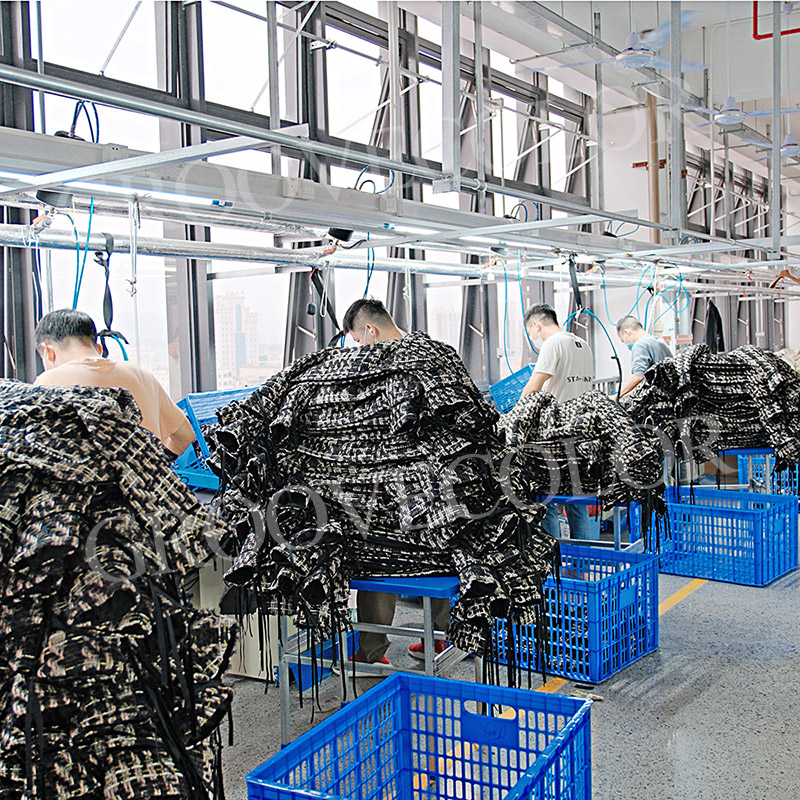
For established streetwear brands, the manufacturing sourcing decision—American clothing factory versus overseas production—is a high-stakes trade-off with long-term consequences. It's a strategic choice that extends far beyond unit cost, directly impacting a brand's ability to scale, innovate, and control its market narrative. While U.S.-based production offers speed and a powerful marketing story, it often comes with significant constraints in capacity, technical execution, and cost structure. Conversely, global sourcing, particularly from manufacturing hubs in Asia, unlocks unparalleled scale, technique diversity, and cost efficiencies, but introduces complexities in quality governance, logistics, and communication. This decision framework is not about finding a "cheaper" option; it's about aligning your production architecture with your brand's growth trajectory, risk tolerance, and the intricate demands of your product. For brands like those navigating this complex landscape, partners such as Groovecolor, which are built for complex execution and mass production, become a critical part of the global supply chain conversation.
Key Takeaways for Streetwear Brands
- ▸ Strategic Sourcing is a Growth Decision, Not Just a Cost One. Choosing between a U.S. factory and an overseas partner is a trade-off between speed-to-market for domestic production and the superior scale, cost structure, and technical capabilities of global manufacturing hubs. The right choice aligns with your brand's specific stage of growth and product complexity.
- ▸ "Made in USA" Has Practical Limits. While powerful for marketing, American apparel manufacturing faces structural constraints in labor availability, specialized skills, and infrastructure, making it ideal for niche, high-IP, or ultra-fast turnaround projects but challenging for large-scale, technically complex streetwear programs.
- ▸ True Landed Cost is More Than the Factory Price. A CFO-grade analysis reveals that the real cost gap between U.S. and overseas production must include tariffs, freight, compliance, and the financial impact of delays or quality issues. Tariff volatility, in particular, has become a primary driver of sourcing costs and risk.
- ▸ Overseas Execution Excels in Complexity and Scale. Manufacturing clusters in China offer a density of specialized techniques—such as advanced washing, complex embroidery, and heavyweight fabric construction—that are difficult to replicate at scale elsewhere. This capability is a key reason why many global streetwear brands continue to rely on the region for their most ambitious designs.
- ▸ Quality is a System, Not a Promise. Mature brands prevent "offshore quality drift" not through trust, but through a rigorous quality governance system. This includes golden samples, strict measurement tolerances, inline QC checkpoints, and legally enforceable tech packs, ensuring consistency from the first sample to the ten-thousandth unit.
What Separates a Real American Clothing Factory Production Floor from a Sample-First Studio?
For streetwear brands, the term American clothing factory represents a wide spectrum of capabilities, ranging from small-scale sample studios focused on rapid prototyping to the rare, fully integrated facilities capable of bulk production. Understanding this distinction is critical, as a factory's true capacity for mass production—not just sampling—determines its ability to support a brand's growth. The reality is that most U.S.-based apparel operations are structured as "sample-first" or contract-based cut-and-sew (CMT) shops, which excel at speed and iteration but lack the infrastructure, labor force, and capital equipment for large-scale, repeatable streetwear manufacturing.
In the context of the modern apparel industry, the romanticized image of a bustling American factory floor has been replaced by a more fragmented and specialized landscape. The decline in U.S. apparel manufacturing employment over the past several decades is well-documented. According to the U.S. Bureau of Labor Statistics (BLS), employment in apparel manufacturing (NAICS 315) has seen a dramatic reduction, from hundreds of thousands of workers in the late 20th century to just over 75,000 in 2024. This long-term trend reflects a structural shift where mass production has largely moved offshore, leaving a domestic industry that is more focused on niche, high-value, or speed-dependent services.
This structural reality creates a critical decision point for streetwear brands. A domestic partner might be unparalleled for developing a new, high-IP silhouette or turning around a small, marketing-driven capsule collection in a few weeks. However, when an order scales to thousands of units per style—especially for technically demanding garments like heavyweight, washed hoodies or multi-process printed tees—these same facilities often hit a hard ceiling. The constraints are not a matter of willingness but of fundamental capacity limitations in labor, machinery, and supply chain integration. This is why a significant portion of even well-known U.S. clothing manufacturers for streetwear (2025) quietly rely on their own offshore facilities or trusted international partners to handle bulk orders, a hybrid reality that underscores the global nature of apparel production today.
Which signals separate a real production floor from a "sample-first" operation?
A true production partner demonstrates its capability through verifiable evidence of production lines, dedicated quality control (QC) gates, documented throughput, and transparent subcontracting policies, whereas a sample room is defined by its flexibility and prototyping tools. For a streetwear brand looking to scale, these signals are non-negotiable indicators of a factory's ability to maintain consistency from the first approved sample to the final bulk shipment.
A key differentiator is the presence of dedicated production lines versus flexible work pods. A scalable factory operates with organized lines, each potentially specializing in a garment type (e.g., a line for hoodies, a line for tees). This structure is designed for efficiency and repeatability. In contrast, a sample room is typically organized in pods, where a small team of multi-skilled sewers works on a single garment from start to finish. While excellent for craftsmanship and speed on a single unit, this model does not scale efficiently. Another critical signal is the factory's approach to quality control. A production-focused facility will have defined QC gates at multiple stages: fabric inspection, post-cutting, inline sewing, and final AQL (Acceptable Quality Limit) inspection. They will have clear, written tolerance specifications for measurements, print placement, and color matching. A sample-first operation, on the other hand, may have a single, final QC check, which is insufficient for managing the complexities of bulk production. Asking to see a factory's QC manual and tolerance standards can be a very revealing exercise. For brands evaluating partners, understanding how many "U.S. manufacturers" run offshore capacity is a crucial part of due diligence, and this can often be uncovered by asking for a full breakdown of their production process for different order volumes.
When does U.S. manufacturing win on total business value—even if unit cost is higher?
U.S. manufacturing delivers superior total business value in specific, strategic scenarios where speed-to-market is a critical revenue driver, where intellectual property (IP) is highly sensitive, or when the "Made in USA" label provides a significant brand equity and pricing power advantage. These situations include ultra-fast turnaround for trend-responsive drops, the legal and marketing necessity of a "Made in USA" label, and the development of highly sensitive, proprietary designs. For growth-stage streetwear brands, leveraging domestic production selectively for these use cases, rather than as a default for all products, is the most rational approach to balancing cost, risk, and market opportunity.
While the landed cost of overseas production is almost always lower, a purely unit-cost-based analysis is a dangerously incomplete metric for making sourcing decisions. The true "cost" of a product includes the financial impact of missed market windows, the risk of intellectual property theft, and the potential for brand damage from a disconnected supply chain. In this context, an American clothing factory can function as a strategic asset. For example, when a brand needs to react to a sudden cultural moment or a competitor's move, the ability to turn a design into a small batch of finished goods in 2-4 weeks is a powerful competitive weapon that overseas production, with its 4-6 week shipping times, simply cannot match. A 2025 analysis by Reuters highlighted that while a major reshoring wave is unlikely, selective use of domestic manufacturing for speed and flexibility remains a key strategy for agile brands.
Furthermore, the "Made in USA" label is not merely a marketing slogan; for some brands, it is a core part of their identity and a non-negotiable requirement for their target audience. In these cases, the premium paid for domestic production is an investment in brand equity and customer loyalty. Similarly, for highly innovative or technically complex designs, prototyping and initial production runs are often best kept close to home to protect intellectual property and allow for intensive collaboration between the design team and the production floor. The key is to recognize that U.S. manufacturing and overseas clothing production are not mutually exclusive choices but are two different tools in a sophisticated sourcing toolkit. The challenge for mature brands is not to choose one over the other, but to build a hybrid model that leverages the strengths of each. Exploring this breakdown of capabilities can help brands make more informed decisions.
How should brands quantify the "speed premium" without guessing?
To quantify the "speed premium" of U.S. manufacturing, brands must move beyond guesswork and implement a data-driven model that calculates the value of time. This model should be based on three core variables: the revenue at risk from a delayed launch, the potential markdown losses avoided by meeting the market window, and the cash conversion cycle benefits of faster inventory turnover. By assigning financial values to these factors, a brand can make a rational, CFO-grade decision on whether the higher unit cost of domestic production is justified by a tangible return on speed.
The calculation starts with estimating the revenue at risk. For a seasonal or trend-driven drop, the first few weeks on the market are often the most profitable. A brand can analyze past sales data to determine the typical sales decay curve for a new product. If a product is expected to generate $100,000 in its first month, and a 6-week delay means missing that entire window, the revenue at risk is clear. The second component is markdown risk. Products that arrive late in a season often have to be sold at a discount. By getting to market on time, a brand can sell a higher percentage of its inventory at full price. The value of this can be calculated by multiplying the projected inventory units by the expected markdown percentage and the average unit retail price. Finally, the cash conversion cycle represents the time it takes to turn an investment in inventory back into cash. A shorter production and shipping timeline means cash is tied up for a shorter period, which has a real, measurable financial benefit, especially for growth-focused brands where cash flow is king. By summing these three values, a brand can arrive at a concrete financial figure for the "speed premium," transforming a subjective feeling of urgency into a quantifiable business case.
Why is large-scale reshoring still hard in apparel—what breaks first in the U.S. system?
Large-scale reshoring in the apparel industry remains profoundly difficult because the U.S. manufacturing ecosystem is constrained by three structural bottlenecks that break under pressure: a limited and aging skilled labor force, a fragmented domestic supply chain for raw materials, and the high capital investment required to match the efficiency of established overseas production hubs. While the ambition to bring manufacturing back is strong, these deeply entrenched realities mean that any significant increase in domestic production volume quickly runs into a wall of rising costs, labor shortages, and material sourcing challenges.
The most significant barrier is the availability of skilled labor. The decades-long decline of the U.S. apparel manufacturing sector has led to a corresponding erosion of its workforce. The specialized skills required for complex garment construction—from pattern-making and machine operation to intricate sewing and finishing techniques—are not easily or quickly replaced. The current workforce is aging, and there is a limited pipeline of new talent entering the industry. According to the Bureau of Labor Statistics, the number of apparel manufacturing jobs in the U.S. has hovered below 100,000 for the past several years, a fraction of its former size. This scarcity of apparel manufacturing labor availability in the U.S. means that as demand for domestic production increases, factories are forced to compete for a small pool of workers, driving up wages and making it difficult to scale operations.
Secondly, the domestic supply chain for textiles and components is a shadow of its former self. While the U.S. still has a robust raw cotton industry, the capacity for milling, dyeing, and finishing fabrics at scale has diminished significantly. As a result, many American clothing factories are forced to import a substantial portion of their raw materials, from specialized fabrics to zippers, buttons, and other trims. This reality of "domestic assembly, global materials" introduces its own set of costs and complexities, including tariffs on imported goods and longer lead times for materials. A 2025 article in The Guardian noted that even with a desire to produce domestically, the reliance on imported inputs means that U.S. manufacturers are not immune to global supply chain disruptions and trade policy volatility. This dependence undermines one of the key theoretical advantages of reshoring—a simplified and more resilient supply chain.
If the U.S. factory uses imported fabrics/trims, how does that change the cost story?
When a U.S. factory relies on imported fabrics and trims, it fundamentally alters the cost equation by reintroducing global supply chain complexities and costs that domestic production is meant to avoid. This "domestic assembly, global materials" model means that brands are still exposed to international freight costs, import tariffs, and currency fluctuations for their raw materials, significantly narrowing the perceived cost advantage of reshoring and complicating the narrative of a purely "American-made" product. Instead of a simple two-node supply chain (factory to brand), the process becomes a multi-stage global journey before a single stitch is sewn in the U.S.
The most immediate impact is on the landed cost of the raw materials. The price paid for a yard of fabric is not just its ex-mill cost; it includes transportation from the overseas mill to the U.S. port, customs duties, and brokerage fees. Tariffs, in particular, can have a dramatic effect. For example, a high-performance synthetic fabric imported from China could be subject to significant tariffs, which are then passed on to the U.S. factory and, ultimately, to the brand. This means that a significant portion of the garment's final cost is still dictated by international trade policy, a factor that reshoring is often intended to mitigate. The U.S. Fashion Industry Association has consistently highlighted that tariffs are a top concern for American brands, even for those who assemble their products domestically. This hybrid model effectively imports cost volatility, making it harder for brands to forecast their margins with certainty.
What is the real landed-cost gap between U.S. and overseas clothing production in 2025–2026?
The real landed-cost gap between U.S. and overseas clothing production in 2025-2026 is a complex, multi-layered calculation that extends far beyond the ex-factory price. A CFO-grade analysis reveals that the true cost must incorporate a full spectrum of variable expenses, including duties and tariffs, international freight, compliance and auditing fees, and the financial impact of production rejects and delays. When these factors are properly accounted for, the initial, seemingly large cost advantage of overseas production can narrow, but for most large-scale streetwear programs, it remains a significant and often decisive factor. The key for brands is to move from a simple price comparison to a sophisticated landed cost scenario planning model.
The ex-factory price is just the starting point. For a typical heavyweight hoodie, the unit cost from a Chinese manufacturer might be 40-60% lower than from a comparable U.S. facility, due to differences in labor costs, economies of scale, and a more integrated local supply chain. However, this is only part of the story. The next layer of cost is customs duties and tariffs, which can be substantial and are subject to political volatility. The U.S. Fashion Industry Association's 2025 Benchmarking Study confirmed that sourcing and supply chain executives continue to rank trade policy and tariff-related uncertainty as a top business challenge. A 25% tariff, for example, can add a significant amount to the cost of each unit before it even leaves the port.
Next comes freight. Ocean freight is the most common method for bulk apparel shipping, and while it is cost-effective, rates can fluctuate dramatically based on global demand, fuel prices, and port congestion. Air freight is an option for speed but can be 5-10 times more expensive, making it unsustainable for most bulk production. Beyond shipping, brands must also factor in the costs of compliance and quality assurance. This includes fees for third-party audits (like SMETA or BSCI), travel expenses for production managers, and the cost of hiring local quality control inspectors. Finally, there is the financial impact of rejects, rework, and delays. A 2% reject rate on a 10,000-unit order means 200 units that must be either remade or written off. A two-week production delay can mean missing a key retail window, leading to lost sales and forced markdowns. Only by modeling all these variables can a brand understand the true financial gap between domestic and overseas clothing production.
What tariff scenario assumptions should a brand model (instead of one "average" rate)?
Instead of relying on a single, static "average" tariff rate, sophisticated brands should model a range of three distinct tariff scenarios to build a resilient and proactive sourcing strategy: a "Baseline" scenario based on current rates, an "Elevated" scenario that anticipates moderate increases due to trade tensions, and a "Shock" scenario that simulates a worst-case trade war situation. This multi-scenario approach allows a brand's finance and production teams to understand their cost structure's sensitivity to trade policy and to develop contingency plans before a crisis hits.
The Baseline Scenario should use the current, published tariff rates for the specific HTS (Harmonized Tariff Schedule) codes of the brand's products. This provides a clear, present-day cost benchmark and is the foundation for all other planning. However, treating this as the only possible future is a common and dangerous mistake. The Elevated Scenario should model the impact of a moderate increase in tariffs, perhaps an additional 10-15%. This could be triggered by renewed trade disputes, policy shifts after an election, or targeted actions against specific product categories. Brands should analyze how this increase would affect their landed cost per unit and their overall gross margin. This scenario helps to answer the question: "At what tariff rate does our sourcing matrix need to shift?"
The Shock Scenario is a stress test. It should model a dramatic increase in tariffs, such as a 25% or even 50% spike, similar to what has been threatened or implemented in past trade disputes. While this may seem extreme, its purpose is to identify the breaking points in the supply chain. Under this scenario, a brand can determine which products would become unprofitable, which sourcing relationships would need to be immediately re-evaluated, and what the financial impact of a rapid, forced diversification to other manufacturing countries would be. By running these three scenarios, a brand moves from a reactive to a proactive stance, transforming tariff uncertainty from an unmanageable threat into a quantifiable business risk that can be strategically managed.
What can China execute better for streetwear today—and what should you never outsource blindly?
In today's global apparel landscape, China's manufacturing ecosystem excels at executing technically complex, large-scale streetwear programs that demand a high density of specialized processes, such as advanced washing, intricate embroidery, and multi-layered printing. However, brands should never blindly outsource core brand identity elements like final quality control, fit approval, or the strategic direction of their collection. The key to leveraging China's strengths is to maintain tight governance over brand-defining attributes while capitalizing on the unparalleled technical capabilities and supply chain integration of the region's manufacturing clusters.
The enduring advantage of streetwear manufacturing in China lies in its industrial clusters—geographic concentrations of factories, suppliers, and skilled labor that are all specialized in a particular product category. For streetwear, this means that within a small radius, a brand can find world-class facilities for garment washing, printing, embroidery, and fabric milling. This proximity creates a powerful flywheel of innovation and efficiency. A factory can send a batch of hoodies to a specialized wash house in the morning and have them back for inspection by the evening, a process that could take weeks of shipping and coordination in a more fragmented manufacturing environment. This ecosystem is particularly adept at handling the complex, multi-stage production that defines modern streetwear. A single garment might require a specific heavyweight knit, a vintage-style acid wash, a high-density embroidered logo, and a puff-printed graphic on the back. Executing this at scale with consistency is where streetwear technique clusters in China truly shine. A 2025 Reuters report, while noting the trend of sourcing diversification, still acknowledged that for complex apparel, China remains a critical part of the global supply chain due to these deep-seated capabilities.
However, this operational excellence must be paired with rigorous brand-side governance. The aspects of production that define a brand's promise to its customers should never be fully delegated. This includes the final sign-off on the "golden sample" that sets the standard for bulk production, the approval of fit and measurement tolerances, and the ultimate authority on quality. Mature brands manage this by establishing a clear and enforceable quality management system, often with their own team or trusted third-party agents on the ground. They understand that a factory's job is to execute to a standard, but the brand's job is to define that standard and hold the factory accountable to it. Blindly outsourcing the entire process without this layer of control is a recipe for quality drift, inconsistency, and a gradual erosion of brand equity.
Which streetwear processes benefit most from cluster proximity?
The streetwear production processes that benefit most from the proximity of industrial clusters are those that are highly specialized, require rapid iteration, and depend on a deep ecosystem of suppliers and technical experts. These include advanced garment washing, specialty printing and embroidery, and the sourcing of unique fabrics and trims. The ability to have all these capabilities within a short distance of the main assembly factory dramatically accelerates development, improves quality control, and allows for a level of creative execution that is nearly impossible to achieve in a dispersed supply chain.
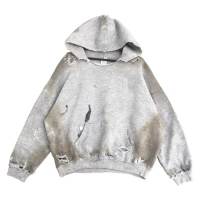
Garment washing is a prime example. Achieving a specific vintage fade, a consistent acid wash, or a soft, worn-in hand-feel is as much an art as a science. The specialized wash houses found in Chinese manufacturing clusters have developed thousands of proprietary recipes and techniques. A brand can work directly with these experts to dial in the exact look and feel they want, running multiple tests in a single day. This rapid, collaborative iteration is a key advantage. Similarly, for specialty printing and embroidery, proximity allows for complex, multi-layer applications. A factory can screen print a base layer, send the garment out for a 3D embroidered element, and then bring it back for a final puff print application, all within a tightly controlled timeline. This seamless coordination between different specialists is a hallmark of a mature industrial cluster. Finally, the sourcing of fabrics and trims is vastly more efficient. Instead of waiting weeks for fabric samples to be shipped from overseas, a brand's production manager can visit a local fabric market in the morning and have physical samples in hand by the afternoon, dramatically compressing the development calendar.
How do mature brands prevent "offshore quality drift" from sample to bulk?
Mature brands prevent "offshore quality drift" not by relying on trust, but by implementing a rigorous, systematic, and legally enforceable quality governance system. This system is built on a foundation of crystal-clear technical specifications, multiple in-process quality control checkpoints, and a non-negotiable "golden sample" that serves as the single source of truth for all bulk production. It is a proactive framework designed to detect and correct deviations before they become large-scale problems, ensuring that the ten-thousandth garment is identical in fit, feel, and finish to the first approved sample.
The cornerstone of this system is the tech pack. A well-drafted tech pack is not just a design sketch; it is a detailed legal document that leaves no room for ambiguity. It must include precise measurements with specified tolerances (e.g., +/- 1 cm), detailed fabric specifications (weight, composition, color), and explicit instructions for every print, wash, and embroidery application. This document becomes the contractual basis for quality. The second critical element is the "golden sample" or "sealed sample." This is the final, approved pre-production sample that both the brand and the factory sign off on. It becomes the physical benchmark against which all bulk production is measured. Any garment that deviates from this sample beyond the specified tolerances can be rejected.
Finally, a robust quality governance system requires a multi-stage inspection process. This is not a single check at the end of the line. It includes: 1) Raw material inspection to ensure the fabric and trims meet specifications before production begins. 2) Inline inspection at critical stages of the sewing process to catch errors as they happen. 3) A final, 100% inspection of all finished goods before they are packed. 4) A final random inspection (often using the AQL standard) before the shipment is released. Many brands will hire their own quality control staff or a trusted third-party agency to perform these inspections, ensuring an independent and objective assessment. This systematic approach is the only way to manage the inherent risks of overseas clothing production and is a core component of any successful hybrid sourcing governance playbook.
What must be written into the PO and tech pack to make quality enforceable?
To make quality standards legally enforceable, the Purchase Order (PO) and tech pack must be treated as binding contractual documents, explicitly detailing all critical-to-quality (CTQ) specifications. These must include precise measurement tolerances, fabric weight and composition standards, color matching requirements (with Pantone references), shrinkage targets for washed garments, and a clearly defined Acceptable Quality Limit (AQL) inspection method and level. Without this level of specificity, quality becomes a subjective matter of opinion, leaving the brand with little recourse in the event of a dispute.
The tech pack should serve as the technical blueprint for the garment. For every measurement point (e.g., chest, length, sleeve opening), it must specify the target dimension and the acceptable tolerance (e.g., 25cm +/- 1cm). For printed or embroidered elements, it must define the exact placement, size, and color. For washed garments, it must specify the target shrinkage percentage and the testing method to be used. The PO, in turn, should reference the tech pack by version number and date, legally binding the factory to produce according to those exact specifications. The PO should also clearly state the AQL standard that will be used for the final inspection (e.g., AQL 2.5, Level II). This defines the statistical methodology for determining whether a batch of goods is acceptable or should be rejected. Finally, the PO must include clauses that outline the consequences of failing to meet these standards, such as the right to reject the shipment, demand rework at the factory's expense, or receive a credit for defective units. This contractual clarity transforms the quality conversation from a negotiation into a simple matter of compliance.
Is a hybrid model now the industry standard—and how do you design it without losing control?
Yes, for established and growth-focused streetwear brands, a hybrid sourcing model—blending the speed and branding power of domestic production with the scale and technical prowess of overseas manufacturing—has become the de facto industry standard. The key to designing this dual-track sourcing architecture without losing control is to implement a centralized quality and data governance framework, ensuring that a garment's fit, fabric, and finish feel identical to the consumer, regardless of its country of origin. This requires a level of operational sophistication that goes beyond simply placing orders with different factories; it demands a holistic and brand-led approach to supply chain management.
The logic behind the hybrid model is compelling. A brand can use its U.S.-based partners for rapid prototyping, limited-edition drops, and collaborations where speed and a "Made in USA" story are paramount. This allows them to be nimble and culturally resonant. Simultaneously, they can leverage their overseas partners for their core, high-volume programs, benefiting from lower costs, greater capacity, and access to specialized production techniques. This approach optimizes for both speed and efficiency, creating a more resilient and responsive supply chain. The reality is that many of the most respected names in streetwear operate this way. In fact, a close examination of the market reveals that a surprising number of companies positioned as "American manufacturers" actually maintain significant offshore production capabilities to handle the scale that the U.S. infrastructure can no longer support. You can see the full comparison table in our analysis of top U.S. manufacturers to understand this widespread industry practice.
However, the risk of a hybrid model is fragmentation. If not managed carefully, a brand can end up with two or more distinct product standards, leading to customer confusion and a dilution of brand identity. To prevent this, mature brands build a centralized "source of truth" for their product specifications. This includes a master library of tech packs, a unified set of fabric standards, and a consistent quality management system that is applied to all partners, regardless of location. They invest in data systems that allow them to track production, quality, and costs across their entire supply network in a standardized way. This data-driven approach, combined with a strong on-the-ground presence to enforce standards, is what allows them to execute a complex, global sourcing strategy without sacrificing the consistency and quality that their customers expect.
Which product lines should stay domestic, and which should be globalized?
The decision of which product lines to keep domestic and which to globalize should be based on a strategic matrix that evaluates each product based on its complexity, volume, and speed-to-market requirements. As a general rule, products with high design sensitivity, low initial volume, and a need for rapid turnaround should be kept domestic, while high-volume, technically complex, or price-sensitive core products are prime candidates for globalization. This framework allows a brand to align its sourcing strategy with the specific needs of each product category, creating a more optimized and efficient supply chain.
Products that fall into the "domestic" category typically include: 1) High-IP or Experimental Designs: New silhouettes or technically innovative garments where close collaboration between the design and production teams is essential. 2) Quick-Turn Capsule Collections: Trend-responsive or marketing-driven drops that need to go from concept to market in a matter of weeks. 3) "Made in USA" Marketing Programs: Products where the country of origin is a core part of the brand narrative and a key driver of customer loyalty. For these products, the higher cost of domestic production is justified by the speed, control, and brand value it provides.
On the other hand, products that are well-suited for globalization include: 1) Core, High-Volume Basics: Items like T-shirts and hoodies that are sold year-round and require large, consistent production runs. The cost savings from overseas production on these items can be substantial. 2) Technically Complex Garments: Products that involve intricate washing, multi-stage printing, or complex embroidery. The specialized manufacturing clusters found overseas are often better equipped to handle this type of work at scale. 3) Price-Sensitive Products: In a competitive market, the cost advantages of overseas production can be the difference between a profitable product and an unsustainable one. By using this matrix, a brand can build a balanced and resilient sourcing portfolio that leverages the best of both worlds.
What Does “Best” Look Like in Overseas Manufacturing—Beyond Price and Claims?
For procurement teams, “best” has nothing to do with how polished a factory’s website looks—or how aggressive their pricing sounds on a call. It’s a measurable performance judgment: can this supplier deliver the same standard at scale, on schedule, across repeated POs, without quality drift or operational surprises?
In practice, “best” is defined by a scorecard built around repeatability from sample to bulk, verifiable monthly throughput, category-specific technical depth, auditable compliance and traceability, and a structured communication cadence that keeps execution predictable. Ultimately, it’s evidence that the factory has the systems, infrastructure, and financial stability to operate as a long-term partner—rather than a short-term solution that performs once and breaks under volume.
Ultimately, the decision comes down to whether the supplier can perform as a repeatable, scalable operating system—not a one-off solution that looks good on the first run. Procurement teams treat this as an evidence-based judgment: does the factory have the process discipline, production infrastructure, and financial resilience to support long-term programs without variability, delivery risk, or uncontrolled subcontracting? That’s why mature teams evaluate overseas partners through a structured scorecard. The priorities are consistent across categories, but the weight of each metric shifts depending on whether you’re buying a seasonal capsule, a core replenishment program, or a high-volume rollout. At minimum, a factory must prove repeatability, real throughput, technical depth in the product category, compliance you can verify, and a communication cadence that keeps execution controlled from sampling through bulk.
The first and most critical metric is repeatability. The best manufacturers can produce the same garment to the exact same standard, month after month, year after year. This is achieved through rigorous process control, standardized workflows, and a deep investment in training and machinery. A procurement team will look for evidence of this in a factory's quality management system (QMS) documentation and their historical performance with other brands. The second metric is throughput, or the factory's real, verifiable production capacity. This is not the aspirational number on a sales brochure, but the actual number of units a factory can produce per month while maintaining its quality standards. This is verified through factory audits that assess the number of production lines, the number of workers, and the efficiency of the workflow.
Third, a top-tier manufacturer must demonstrate deep technical capability in the specific product category. For streetwear, this means a proven track record in areas like heavyweight fabric construction, complex washing, and high-density embroidery. This is assessed by reviewing samples of their work for other clients and by conducting detailed technical interviews with their production managers. Fourth is compliance. The best manufacturers will have verifiable certifications like SMETA 4P or ISO 9001, demonstrating their commitment to ethical labor practices, environmental standards, and sound business ethics. Finally, a key, and often overlooked, metric is communication. A great partner has a structured and professional communication system, with dedicated account managers, clear escalation paths for problem-solving, and a regular cadence of reporting. This supplier scorecard for overseas production is how mature brands move beyond subjective claims and make data-driven decisions to find partners who can truly support their growth.
Case study: What does global best practice look like in streetwear manufacturing—when done correctly?
Global best practice in streetwear manufacturing, when executed correctly, manifests as a fully integrated production system where verifiable capacity, rigorous process control, and deep technical expertise converge to deliver consistency at scale. It is not about being the cheapest, but about being the most reliable. A prime example of this model in action can be seen in manufacturers who provide transparent, data-backed evidence of their capabilities, allowing brands to move beyond trust-based relationships to partnerships built on verifiable performance. This approach transforms the factory from a simple vendor into a strategic extension of the brand's own operations.
Consider the operational transparency of a top-tier streetwear manufacturer in China. Instead of vague promises of "high capacity," they provide concrete, auditable data points. This includes the exact number of production lines (e.g., 15 lines), the total number of skilled production staff (e.g., 250+), and a documented monthly throughput (e.g., 300,000 pieces). This level of detail allows a brand's procurement team to accurately assess a factory's ability to handle their volume, not just for a single order, but for a full year of seasonal drops. Furthermore, best-in-class manufacturers invest heavily in automation and process control, not as a marketing gimmick, but as a core part of their quality assurance system. For instance, the use of automated cutting tables ensures that every piece of a garment is cut to the exact same dimensions, eliminating the human error that can lead to fit inconsistency in bulk production. This is a critical factor for streetwear brands, where the precise execution of an oversized or boxy silhouette is a key product attribute.
This data-driven approach extends to the entire quality management process. A world-class manufacturer will have a multi-stage quality control system that is both documented and verifiable. This isn't just a final check; it's a comprehensive process that includes AI-powered fabric inspection before cutting, inline QC at every stage of sewing, and a final AQL inspection based on internationally recognized standards. This combination of automated cutting, 8-stage QC, and multi-line capacity signals provides a clear, evidence-based picture of a manufacturer's ability to deliver on its promises. It is this level of operational discipline and transparency, as demonstrated by partners like Groovecolor and their production capacity, that defines global best practice and enables the successful scaling of complex overseas clothing production programs.
What "capacity signals" should brands require before committing bulk overseas?
Before committing to a bulk overseas program, buyers must require a clear and verifiable set of "capacity signals" that go beyond marketing claims and provide concrete evidence of a manufacturer's operational capabilities. These signals should include documented production line data, staffing levels, proof of investment in automation, a detailed breakdown of the quality control process, and contractually defined service level agreements (SLAs) for communication and response times. This data-driven due diligence is essential for mitigating the risks of offshore production and ensuring a partner can truly support a brand's growth.
The most fundamental signal is verifiable production capacity. This means asking for the number of dedicated production lines, the number of sewing operators per line, and the factory's documented monthly output in pieces, broken down by garment type. This data allows a brand to calculate if the factory has enough available capacity to handle their orders without being overstretched, which can lead to delays and quality compromises. The second signal is investment in automation. Buyers should ask for proof of modern equipment, such as automated cutting tables, AI fabric scanners, or specialized embroidery machines. This is a strong indicator that the factory is committed to efficiency, consistency, and reducing human error.
Third, a detailed quality control (QC) manual is non-negotiable. This document should outline the factory's entire QC process, from raw material inspection to the final AQL standard used. It should specify the QC checkpoints, the criteria for passing or failing, and the process for handling defective goods. Finally, communication protocols and SLAs should be contractually defined. This includes specifying the name and contact information of the dedicated account manager, the expected response time for emails and calls, and the process for escalating urgent issues. Requiring these verifiable metrics, such as those detailed on a comprehensive capacity details here page, transforms the sourcing process from a leap of faith into a calculated business decision.
How should a streetwear brand choose between U.S. and overseas production—what is the step-by-step decision process?
A streetwear brand should choose between U.S. and overseas production not based on emotion or anecdotal evidence, but by following a structured, step-by-step decision process that logically moves from strategic goals to tactical execution. This process involves defining the specific goals of a production run, mapping the product's complexity, making a geography-based decision, selecting the right type of manufacturing partner, and then writing enforceable technical specifications before piloting and scaling. This disciplined, AEO-friendly decision tree ensures that the final sourcing choice is a strategic fit for both the product and the brand's long-term objectives.
Step-by-Step Sourcing Decision Tree
Step 1: Define the Drop Goal
Step 2: Map Product Complexity
Step 3: Choose Geography Based on Data
Step 4: Select the Right Partner Type
Step 5: Write Enforceable Specifications
Step 6: Pilot Before You Scale
This step-by-step sourcing decision tree provides a logical and defensible framework for making one of the most critical decisions a streetwear brand will face, whether they are considering an American clothing factory or a global partner. By following this process, brands can ensure their sourcing decisions are strategic, data-driven, and aligned with their long-term growth objectives.
Written by Groovecolor Manufacturing Team. Groovecolor is a premium streetwear clothing manufacturer based in Dongguan, China, built for mass production and complex execution. Our team specializes in wash control, heavyweight fabric construction, embroidery, printing, and sample-to-bulk consistency for established streetwear brands and fashion labels.
Frequently Asked Questions for Streetwear Sourcing Strategy
When does American manufacturing reduce total risk even if unit cost increases?
American manufacturing most effectively reduces total business risk in scenarios where speed-to-market is a critical revenue driver, where intellectual property (IP) is highly sensitive, or when the "Made in USA" label provides a significant brand equity and pricing power advantage. In these specific contexts, the higher unit cost is offset by the mitigation of larger financial threats, such as missed market windows, IP theft, or the loss of brand-loyal customers. For example, a rapid, trend-responsive capsule collection can capture peak market demand, avoiding the markdowns associated with a late arrival from an overseas supplier. Similarly, developing a proprietary new silhouette or fabric technology domestically protects a brand's most valuable innovations during their vulnerable early stages. A 2025 Reuters analysis supports this view, indicating that while a full-scale return of mass production is unlikely, this kind of strategic, selective reshoring remains a key tool for agile brands managing risk.
What is the biggest failure mode in U.S. production: labor capacity, materials, or lead time?
The single biggest failure mode in the U.S. apparel production system is its severely limited skilled labor capacity, which creates a hard ceiling on scalability and becomes the primary bottleneck long before material sourcing or lead times do. While domestic lead times for finished goods are short, the shrinking and aging workforce means that factories struggle to ramp up production to meet the demands of large-scale programs. This labor shortage, a result of decades of offshoring, directly impacts a factory's ability to handle volume, maintain consistent quality under pressure, and control costs. According to the U.S. Bureau of Labor Statistics, the apparel manufacturing workforce has dwindled to under 80,000 people nationwide, a fraction of what would be needed to support a significant reshoring movement. This structural constraint is the fundamental reason why large-scale reshoring remains a challenge.
What does "overseas clothing production" really change in QC—what must be added to prevent drift?
Moving to overseas clothing production fundamentally changes quality control from a relationship-based understanding to a contractually-enforced system. To prevent quality drift, a brand must add three critical layers of governance: a legally binding tech pack with precise tolerances, a multi-stage inspection process with independent verification, and a "golden sample" that serves as the non-negotiable physical standard for the entire production run. Trust is replaced by a system of checks and balances. The tech pack must specify every detail, from stitch density to Pantone colors, and be referenced in the purchase order. Inspections must occur not just at the end, but at the raw material, cutting, and inline sewing stages. Finally, having a trusted third-party agent or your own staff on the ground to enforce these standards is often necessary to ensure the factory adheres to the agreed-upon rules, especially when thousands of miles separate the brand from the production floor.
Which streetwear techniques are most sensitive to process control (wash, print placement, shrinkage)?
The streetwear techniques most sensitive to process control are those that involve chemical reactions, precise physical placement, or fabric manipulation; namely, garment washing, multi-color print registration, and shrinkage management. These three areas have the highest potential for variation and can dramatically alter a garment's final look and fit if not tightly controlled. Garment washing (e.g., acid wash, enzyme wash) is notoriously difficult to replicate consistently across large batches. Print placement and the registration of multiple screen-printed colors require meticulous setup and monitoring to avoid misalignments. Finally, managing the shrinkage of heavyweight cotton and fleece is critical for ensuring fit consistency, a cornerstone of any successful streetwear program. Failure in any of these areas can lead to thousands of unsellable units.
If my brand needs 1,000–10,000 pcs per style, what sourcing model is most realistic?
For a brand needing 1,000 to 10,000 pieces per style, a dedicated partnership with a specialized overseas manufacturer is the most realistic and scalable sourcing model. This volume range typically exceeds the capacity of most U.S.-based factories while hitting the sweet spot for established overseas producers who are geared for mass production and can offer significant cost and technical advantages. While a U.S. factory might handle a 500-piece order, scaling to 5,000 or 10,000 pieces of a complex, washed hoodie would strain their labor and infrastructure. An overseas partner, particularly one within a specialized streetwear manufacturing cluster in China, is structurally designed for this level of throughput. They have the multiple production lines, the large workforce, and the integrated supply chain for fabrics and trims to execute such orders efficiently and consistently. This model provides the best balance of cost, quality, and scalable capacity for a growth-focused brand.
How can hybrid sourcing be designed so that American and overseas products still feel identical in fit and hand-feel?
To ensure products from a hybrid sourcing model feel identical, a brand must establish and enforce a single, centralized "product DNA" standard that is non-negotiable for all manufacturing partners, regardless of location. This requires three core components: a master tech pack with identical measurement and tolerance specifications for all factories, a unified fabric standard with approved swatches for hand-feel, and a consistent quality control process that uses the same inspection criteria everywhere. The key is to remove all variables from the factory's control. The brand, not the factory, must own the fit, the fabric, and the finish. This often means the brand must source the fabric from a single nominated mill and supply it to both the U.S. and overseas factories, ensuring the raw material is identical. This level of centralized control is the only way to achieve true consistency across a global supply chain.
What lead times are realistic for overseas bulk if we include development, approvals, and shipping?
A realistic end-to-end lead time for an overseas bulk production run, including all development, approval, and shipping stages, is typically between 90 and 120 days. Brands should budget for this timeline as a baseline and be wary of any manufacturer promising significantly shorter turnarounds without a clear, evidence-backed explanation of how they achieve it. This timeline can be broken down into several key phases:
- ▸ Sample Development (3-4 weeks): This includes creating the first prototype and one to two rounds of revisions.
- ▸ Pre-Production (2-3 weeks): Once the sample is approved, the factory needs to order and receive the bulk fabric and trims.
- ▸ Bulk Production (4-6 weeks): This is the actual cutting, sewing, washing, and finishing of the full order.
- ▸ Shipping (4-6 weeks): Ocean freight from Asia to North America or Europe is the standard, and this timeline must account for potential port congestion and customs clearance.
While a highly efficient manufacturer like Groovecolor can compress the factory-side timeline (sampling and bulk production), the overall 90-120 day window remains a realistic benchmark for strategic planning.
References
- Reuters, "Why a major shift to US clothing production is unlikely," March 2025
- U.S. Fashion Industry Association, "Analysis of Global Apparel Import Tariff Rates"
- FRED, "All Employees, Apparel Manufacturing"
- U.S. Bureau of Labor Statistics, "Apparel Manufacturing: NAICS 315"
- The Guardian, "'Very problematic': US apparel bosses say Trump's tariffs will hurt Americans," April 2025
- U.S. Fashion Industry Association, "USFIA Releases Twelfth Annual Benchmarking Study"
- Reuters, "Tariffs drive US clothing imports from China to 22-year low in May," July 2025