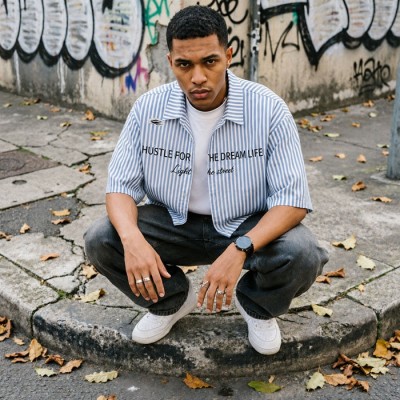
Denim Jacket Fit Decision
Should a denim jacket fit oversized or stay closer to a classic trucker shape?
A brand should choose an oversized denim jacket when the collection needs a streetwear-led outerwear shape, hoodie layering, dropped shoulders, and a relaxed body. A classic trucker fit is usually better when the jacket needs a cleaner heritage look, easier sizing, stronger season-to-season wearability, and lower sampling risk.
Choose oversized when?
The jacket is meant to sit over hoodies, wide trousers, graphic tees, or a full streetwear silhouette.
Choose trucker when?
The jacket should feel timeless, structured, easy to style, and less risky across sizes.
Best middle ground?
A relaxed trucker: slightly wider shoulder and chest, but not so oversized that the wash and collar lose shape.
What is the direct answer for most fashion brands?
For most fashion brands, the safest first development direction is a relaxed trucker fit rather than an extreme oversized fit. It keeps the recognizable denim jacket structure but gives enough chest, shoulder, and sleeve ease for modern styling. If the brand is clearly positioned around streetwear, loose layering, and statement silhouettes, then a true oversized denim jacket can make more sense.
From a production point of view, oversized does not mean taking a standard trucker jacket and making every measurement larger. The shoulder drop, armhole depth, sleeve pitch, body length, hem width, collar size, pocket position, and back yoke all need to be rebalanced. If only the chest is enlarged, the jacket may look bulky instead of intentionally oversized.
Which sourcing questions should be answered before choosing the fit?
Will the jacket be worn over a hoodie?
If yes, the chest, sleeve width, and armhole depth need more ease than a classic trucker.
Does the brand want a heritage or streetwear signal?
Classic trucker reads cleaner and more familiar. Oversized reads more directional and collection-led.
How heavy is the denim fabric?
A heavier denim holds structure. A lighter denim may collapse more softly, especially in oversized shapes.
Will the garment be washed after sewing?
Washing can change hand feel, shrinkage, seam tension, pocket position, and the way the jacket sits on body.
When does an oversized denim jacket make better sense?
An oversized denim jacket works better when the product is meant to be a visible style piece, not just a neutral layer. It suits brands selling wider silhouettes, heavyweight hoodies, baggy pants, graphic tees, washed effects, and drop-shoulder styling. In these collections, the jacket often needs to carry the outfit shape by itself.
In sampling, the most important oversized measurements are shoulder width, chest width, sleeve width, sleeve length, body length, and hem opening. If the body is long and wide at the same time, the jacket can look heavy. If the body is wide but too short, it can look boxy in a way that may be intentional for streetwear but uncomfortable for mainstream buyers.
Factory note: In our denim jacket sampling work, the common mistake is widening the chest without lowering or reshaping the armhole. The jacket then has width on paper but still feels tight when worn over a hoodie.
When does a classic trucker fit make better sense?
A classic trucker fit makes better sense when the brand wants a denim jacket that feels familiar, structured, and easier to size across the customer base. This direction is usually closer to the body than an oversized jacket, with a shorter body length, more controlled shoulder width, cleaner sleeve volume, and a hem that does not swing too far away from the wearer.
The classic trucker shape also supports traditional denim jacket details well: button-front opening, collar, chest flap pockets, side pockets, cuffs, yoke seams, and side hem adjusters. Levi’s product information for its Trucker Jacket, for example, lists button-flap chest pockets, welt side pockets, and side hem adjusters as recognizable construction details.
For a first denim outerwear style, this fit is often easier to commercialize because customers already understand how it should sit. The risk is that it may feel too conventional if the rest of the collection is strongly oversized or streetwear-focused.
Which measurements change most between oversized and classic trucker fits?
| Fit area |
Oversized denim jacket |
Classic trucker fit |
Sampling risk |
| Shoulder |
Wider, often dropped |
Closer to natural shoulder |
Too much drop can twist the sleeve |
| Chest |
More ease for layering |
Controlled shape |
Chest width alone does not create comfort |
| Armhole |
Deeper and more relaxed |
Higher and cleaner |
Wrong depth restricts movement |
| Body length |
Can be cropped-wide or long-wide |
Usually shorter and balanced |
Long and wide can look heavy |
| Pocket position |
May need to move with the new proportion |
More standard placement |
Poor placement makes the jacket look off-balance |
How do fabric weight and washing affect the final fit?
Denim weight changes the way a jacket holds shape. CottonWorks notes that denim fabrics are commonly woven in twill constructions such as 3 x 1, 2 x 1, 2 x 2, broken twill, and that trousers, jeans, and jackets tend to use heavier denim from about 8 to 16.5 ounces per square yard. That range is useful when a brand is deciding whether the jacket should feel soft and easy, structured and rugged, or heavy and architectural.
For oversized denim jackets, fabric that is too stiff can make the garment stand away from the body. Fabric that is too soft can make the shoulder and hem collapse. For classic trucker fits, medium to heavier denim usually helps keep the collar, front placket, yoke, and pocket areas crisp.
Washing must be tested on the same pattern direction. Enzyme wash, stone wash, vintage wash, and garment wash can change shrinkage, hand feel, seam puckering, and color contrast. A sample before wash and a sample after wash may not read as the same fit, especially around chest, sleeve length, and body length.
What have we learned from sampling denim jackets for streetwear brands?
The GROOVECOLOR Production Team usually asks brands to confirm the wearing situation before we judge the fit. A jacket worn over a 400–500 gsm hoodie needs a different armhole and sleeve than a jacket worn over a T-shirt. This is why a measurement chart alone is not enough. Reference photos, target model size, intended layering, fabric weight, wash direction, and sample size all need to match the fit decision.
In our experience, the cleanest production route is to decide the silhouette first, then develop the paper pattern, then test the wash. If the wash direction is chosen before the fit is stable, the garment may look right in fabric but wrong on body. If the fit is approved before wash testing, the final bulk may return shorter, tighter, softer, or more wrinkled than expected.
For brands developing denim jackets through a cut-and-sew process, it is better to approve one physical sample before bulk production instead of relying only on digital mockups. A denim jacket has structure, thickness, hardware, seam bulk, and wash behavior. These details need to be checked in hand.
What example decision can a brand use?
Should a streetwear drop use oversized?
Yes, if the collection is built around hoodies, wide pants, heavy washes, larger graphics, and a strong outerwear silhouette. Keep the sample focused on shoulder drop, armhole comfort, sleeve volume, and hem balance.
Should a denim core style use trucker?
Usually yes, especially if the jacket needs to work across more customers and seasons. A slightly relaxed trucker can look current without losing the familiar denim jacket structure.
What data points are useful before sampling?
| Data point |
Why it matters |
Practical range or note |
| Denim weight |
Controls structure, drape, bulk, and wash feel |
Jackets commonly use heavier denim within about 8–16.5 oz per square yard |
| Layering target |
Changes chest, armhole, sleeve width, and body ease |
T-shirt layer and hoodie layer should not use the same ease standard |
| Wash shrinkage |
Affects final measurements and visual proportion |
Test after the intended wash, not only before washing |
How should the decision be documented before bulk production?
Before bulk production, the brand should document the fit direction in plain production language: oversized, relaxed trucker, or classic trucker. The tech pack should then specify sample size, chest width, shoulder width, body length, sleeve length, sleeve opening, hem width, collar size, pocket placement, fabric weight, wash process, hardware, and size grading logic.
The approved sample should be checked on body and measured flat after finishing. For denim jackets, the final approval should not rely only on the first pattern measurement because wash and pressing can change the final garment. The clearest approval standard is: fit photo, measurement record, fabric card, wash reference, and signed sample comments kept together.
Which related GROOVECOLOR resources support this decision?
A denim jacket fit decision is part of the wider cut-and-sew development process. Brands comparing pattern development, sample approval, and bulk production controls can review the cut-and-sew clothing manufacturing guide.
For broader OEM production context, see the GROOVECOLOR OEM manufacturing resource. These links are included only where the topic connects naturally to denim jacket development.
What is the balanced recommendation?
Choose oversized if the jacket is a key streetwear outerwear piece and the brand is ready to refine the pattern through physical sampling. Choose a classic trucker fit if the jacket needs cleaner sizing, broader wearability, and a lower-risk first production style. For many brands, the best first sample is a relaxed trucker: enough room for modern styling, but still structured enough to read as a denim jacket.
The final decision should be made after checking the sample on body, with the intended fabric weight and wash. In denim production, the right fit is not only a size chart. It is the relationship between pattern, denim weight, wash shrinkage, seam construction, hardware, and how the customer will actually wear the jacket.
Which sources support the technical references?
CottonWorks explains denim twill constructions and notes that jeans and jackets tend to use heavier denim fabrics, generally in the 8–16.5 oz per square yard range.
Levi’s Trucker Jacket product information shows common trucker details such as button-flap chest pockets, welt side pockets, and side hem adjusters.
These references support general denim construction context. Final production decisions should still be confirmed through the brand’s own sample, fabric, wash, and measurement approval.