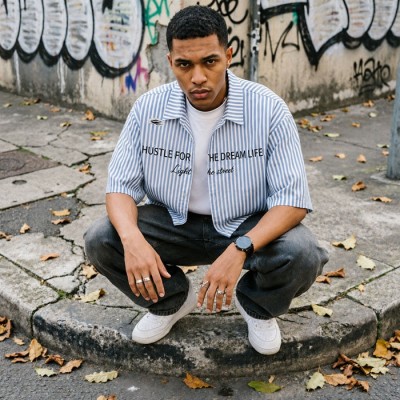
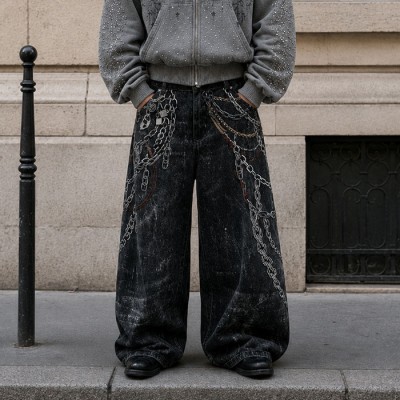
Why Retro Teamwear Is Becoming Streetwear's New Visual Library | Football Shirts, Warm-Up Jackets, and Tunnel-Fit Energy
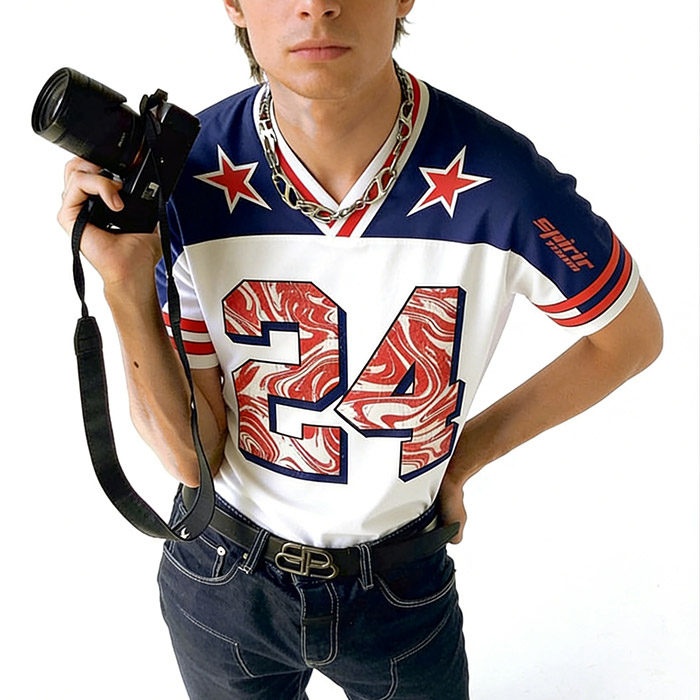
The current streetwear cycle is not simply a broad sportswear revival. It is a targeted return to the visual language of teamwear: football shirts, warm-up jackets, track jackets, drill tops, and sideline gear are re-entering the product vocabulary of established streetwear brands worldwide.
What drives this shift is not athletic function but the cultural weight of team identity, archive silhouettes, tunnel-fit energy, and terrace subculture. According to Technavio, the global football apparel market alone is projected to grow by USD 3.66 billion between 2024 and 2029 at a 5.8% CAGR, while Grand View Research values the broader sportswear market at USD 399.44 billion in 2025, on track to reach USD 890.43 billion by 2033. For brands and procurement teams evaluating their next seasonal direction, the question is no longer whether teamwear belongs in streetwear, but how to translate these archive references into scalable, commercially viable product lines. Groovecolor, a China-based streetwear clothing manufacturer with over 16 years of complex production experience, has observed this shift firsthand through increasing demand for football-inspired silhouettes, paneled track sets, and embroidered warm-up jackets from established fashion labels across the US, UK, and EU markets.
Key Takeaways for Established Streetwear Brands and Fashion Labels
- ▸ Football shirts, warm-up jackets, and track sets are no longer sportswear items but high-value streetwear canvases that command premium retail positioning and stronger brand differentiation.
- ▸ Translating retro teamwear into streetwear products demands deliberate silhouette reconstruction, archive-accurate fabric selection, and coordinated set development rather than logo-swapping on generic athletic templates.
- ▸ Complex surface treatments including heavy embroidery, crest applique, contrast paneling, and vintage washes require a manufacturing partner with integrated in-house capabilities to protect design intent at volume.
- ▸ Tunnel-fit culture, terrace heritage, and high-fashion collaborations such as Acne Studios x Kappa and Umbro x Wacko Maria confirm that teamwear-inspired streetwear is a durable commercial category, not a passing micro-trend.
- ▸ Strategic test runs on paneled jackets and embroidered track sets allow brands to validate market response before committing to full-scale seasonal production, reducing inventory risk while maintaining creative ambition.
How Do You Define the Boundaries of Retro Teamwear in Today's Streetwear Landscape?
Retro teamwear in streetwear is not a vague "sportswear comeback" but a specific product family rooted in football culture, sideline uniforms, and training-ground aesthetics that brands can develop into distinct commercial categories. The distinction matters because procurement teams and creative directors need to scope their development pipeline around concrete silhouettes, not abstract trend labels. When GQ, Vogue, and Highsnobiety reference teamwear in street style coverage, they consistently point to the same core items: collared football shirts with paneled fronts, zip-front warm-up jackets with contrast piping, tapered or relaxed track jackets descended from terrace culture, swishy track pants with side-snap or straight-leg construction, drill tops and quarter-zip training pullovers with boxy proportions, and hybrid varsity-teamwear outerwear that merges letterman tradition with football-kit language.
Each of these categories carries a different development complexity and retail margin profile. Football shirts, for instance, require precise collar construction, sublimated or screen-printed panel graphics, and a relaxed fit that reads as intentionally oversized rather than simply ill-fitting. Warm-up jackets demand coordinated fabric blocking across nylon shells, knit ribbing, and woven trims. Track jackets need accurate piping placement and consistent zipper weight. The reason this definition exercise is critical for brands is that it transforms "retro teamwear streetwear" from a mood board concept into a structured product library with clear manufacturing specifications. According to data compiled by AceOdds, 1970s-era football shirts now sell for an average of GBP 557 on the resale market, 149% more than shirts from any other decade, confirming that the archive value of these silhouettes translates directly into consumer willingness to pay premium prices.
What Proof Confirms Teamwear Is Replacing Traditional Sportswear in High-End Streetwear?
The evidence is structural, not anecdotal: fashion media, resale data, luxury collaborations, and athlete-driven content creation all independently confirm that teamwear has crossed from sportswear into the streetwear product system. This convergence matters for brands because it signals a durable shift in consumer taste rather than a seasonal blip. Four distinct proof points make this case.
Why Did Football Shirts Become Fashion Items?
The transformation began when fashion editors started treating football jerseys as styling pieces rather than fan merchandise. ELLE UK, Highsnobiety, and The New York Times have all published dedicated features on how vintage football jerseys function as layering staples in contemporary street style. Nigeria's 2018 World Cup shirt, which sold out within minutes of release, became a landmark cultural moment that proved football shirt design could generate fashion-level demand. eBay reported a 40% increase in searches for "vintage football shirts" in 2024, according to the Daily Mail, while AceOdds data shows match-worn retro shirts command a 65% premium over replica versions. These are not sportswear metrics; they are fashion-market indicators.
How Did Tunnel Style Turn Off-Pitch Dressing Into Fashion Media?
The "tunnel fit" phenomenon, where professional athletes showcase curated outfits on the walk from the parking lot to the locker room, has become one of the most powerful fashion marketing channels in sports. MR PORTER's January 2025 feature documented how football's tunnel culture evolved from the NBA's courtside fashion moment after dress-code restrictions were lifted in 2020. LeagueFits, the Instagram account that catalogs these looks, has amassed over one million followers since its founding in 2018 by Ian Pierno. Barcelona manager Hansi Flick's reported attempt to ban tunnel-fit displays only amplified media attention. For streetwear brands, this means that teamwear silhouettes now carry aspirational value that extends far beyond the pitch.
Why Does Terrace Culture Give Teamwear Permanent Street Credibility?
Terrace culture, the fashion movement born from 1970s and 1980s UK football casual subculture, has always blurred the line between sportswear and street identity. Brands like Stone Island, Sergio Tacchini, and Ellesse built their streetwear credibility through terrace adoption long before the current cycle. Lyle and Scott launched a dedicated Sporty Terrace Culture Collection in November 2025, explicitly acknowledging this heritage. The "blokecore" aesthetic, which Adidas has formally recognized in its own editorial content, represents the latest iteration of terrace-rooted dressing. This deep subcultural foundation explains why track jackets, football brands, and training shoes keep returning to street fashion: they were never purely athletic to begin with.
Why Are Fashion Brands Translating Teamwear, Not Just Copying Uniforms?
The most commercially significant proof point is that luxury and independent fashion houses are actively reinterpreting teamwear rather than simply licensing team logos. Acne Studios partnered with Kappa for a 22-piece capsule collection in March 2025 that drew directly from retro football kit aesthetics. Umbro and Wacko Maria announced their SS26 collaboration in February 2026, merging football tracksuit heritage with Japanese streetwear sensibility. Arsenal's collaboration with Labrum London brought West African design language into Premier League kit culture. Each of these partnerships confirms that teamwear is being treated as a design vocabulary, not a licensing opportunity, which is precisely the framework that established streetwear brands should adopt for their own product development.
Which Teamwear Silhouettes Present the Highest Commercial Value for Streetwear Brands?
Six teamwear silhouettes consistently deliver the strongest combination of cultural relevance, design complexity, and retail margin potential for streetwear product lines: football shirts, warm-up jackets, track jackets, swishy track pants, drill tops, and hybrid varsity-teamwear outerwear. Each category requires different manufacturing capabilities and presents distinct opportunities for brand differentiation. The following breakdown helps creative directors and product developers prioritize which silhouettes to develop first based on their existing production infrastructure and target market positioning.
How Should Brands Approach Football Shirts as Streetwear Products?
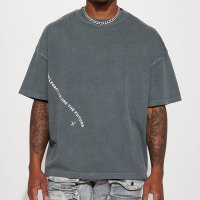
The streetwear-ready football shirt is fundamentally different from a performance jersey. Where athletic versions prioritize moisture-wicking synthetics and body-mapped fits, the streetwear interpretation emphasizes relaxed or oversized proportions, heavier cotton-blend or retro-knit fabrics, and graphic-forward front panels that function as wearable art. The collar becomes a design statement: polo collars, zip-neck constructions, and V-neck variations each carry different subcultural signals. Paneling across the chest and shoulders creates natural zones for color blocking, crest placement, and embroidered detailing. The layering value of a well-constructed football shirt is significant; it works over long-sleeve tees, under open jackets, and as a standalone statement piece. For production teams, the critical manufacturing challenge is achieving precise panel alignment across the front and back while maintaining a deliberately relaxed drape that does not read as sloppy. Brands that have built their visual identity around bold graphics and cultural references will find football shirts to be among the most expressive canvases available in the current streetwear cycle.
What Makes Warm-Up Jackets the Strongest Outerwear Opportunity?
Warm-up jackets represent arguably the highest-margin teamwear silhouette for streetwear brands because they combine outerwear pricing with relatively moderate fabric costs and extremely high perceived value. The classic warm-up jacket features a full-zip front, contrast piping along the shoulders and sleeves, elastic or ribbed hem and cuffs, and a shell fabric that ranges from matte nylon to brushed polyester. In streetwear translation, the key is upgrading every touchpoint: heavier shell fabrics with a matte or washed finish, custom-dyed ribbing that matches the brand's color system, oversized metal or branded zipper pulls, and embroidered or appliqued crests rather than heat-transferred logos. Marie Claire identified track jackets and warm-up silhouettes as a defining outerwear trend for Fall 2025, noting their crossover appeal from athletic to everyday styling. For brands working with manufacturers experienced in cut-and-sew production for complex streetwear silhouettes, the warm-up jacket is where manufacturing precision most directly translates into retail value. Panel alignment, piping straightness, and zipper operation must be flawless because these details are immediately visible to the consumer.
Why Do Track Jackets Carry Permanent Streetwear Relevance?
Track jackets occupy a unique position in streetwear because their cultural lineage runs through terrace culture, hip-hop, and skate communities simultaneously. Unlike warm-up jackets, which reference sideline and pre-game contexts, track jackets carry the casual, everyday energy of the football terrace and the housing estate. The silhouette is typically slimmer and more structured, with a stand-up collar, two-way zip, and side pockets. Fabric choices lean toward tricot, interlock knit, or lightweight woven polyester with a retro hand feel. The design language centers on stripe placement along the sleeves and torso, which creates immediate brand recognition from a distance. For streetwear brands, the track jacket is an entry-level teamwear piece that requires less complex construction than a warm-up jacket but still delivers strong visual identity. Production considerations include ensuring consistent stripe width and placement across sizes, maintaining collar structure through washing, and achieving the correct weight balance between a garment that holds its shape and one that drapes naturally when unzipped.
How Do Swishy Track Pants Complete the Teamwear Set Strategy?
Swishy track pants, named for the distinctive sound of their nylon or taffeta fabric, serve as the essential bottom-half companion to track jackets and warm-up jackets. The streetwear version favors a straight or relaxed leg rather than the tapered athletic cut, creating a silhouette that pairs naturally with chunky sneakers and boots. Side-snap closures, which allow the pants to be opened from the ankle, are a heritage detail borrowed directly from basketball warm-up pants that has become a sought-after design element. Elastic waistbands with internal drawcords, embroidered logos at the hip, and contrast side panels complete the typical specification. The commercial logic for developing track pants alongside jackets is compelling: coordinated sets command higher average order values and create stronger visual impact in lookbooks and social media content. For manufacturing, the challenge lies in matching fabric hand feel, color, and sheen between the jacket and pant components, which requires a manufacturer capable of coordinating multiple fabric lots and trim sources within a single production run.
What Archive Value Do Drill Tops and Training Pullovers Offer?
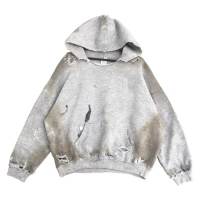
Drill tops and training pullovers tap into the 1990s archive aesthetic that continues to resonate with streetwear consumers. The quarter-zip pullover with a boxy, slightly cropped body and raglan or set-in sleeves evokes training-ground imagery without the formality of a full-zip jacket. Surface treatments are where these pieces gain their streetwear identity: washed or garment-dyed finishes that create a lived-in texture, embroidered crests positioned at the chest or sleeve, and heavyweight fleece or brushed-back cotton that gives the garment substantial drape. The boxy cut is essential; a fitted drill top reads as athletic equipment, while an oversized or boxy version reads as a deliberate style choice. For brands developing seasonal collections, drill tops offer a strong mid-layer option that fills the gap between lightweight tees and heavier outerwear. The manufacturing requirements center on achieving consistent wash results across bulk production and maintaining embroidery density and placement accuracy on garment-dyed fabrics, which tend to shift slightly during the washing process.
Why Are Hybrid Varsity-Teamwear Pieces the Highest-Value Direction?
Hybrid varsity-teamwear outerwear represents the most advanced product development opportunity because it allows brands to create entirely original silhouettes rather than referencing existing team uniforms. By merging the letterman jacket's wool body and leather sleeves with teamwear's piping, crest placement, and color-blocking logic, brands can build pieces that carry the emotional weight of both traditions without being derivative of either. This category commands the highest retail prices and offers the greatest scope for brand storytelling. The manufacturing complexity is correspondingly high: multi-fabric construction requires precise panel cutting and assembly, chenille patches and heavy embroidery demand specialized equipment, and the combination of wool, leather or faux leather, and knit ribbing creates fit challenges that must be resolved during pattern development. For established streetwear brands with the creative vision and production budget to execute these pieces, hybrid varsity-teamwear outerwear is where the strongest long-term brand equity is built.
What Trade-Offs Define the Boundary Between a Streetwear Version and a Generic Sportswear Version?
The dividing line between streetwear teamwear and generic sportswear is not aesthetic preference but a series of deliberate manufacturing trade-offs across silhouette, fabric, surface treatment, styling context, and cultural positioning that directly affect production specifications and retail viability. Understanding these trade-offs is essential for procurement teams writing tech packs and for creative directors briefing their manufacturing partners. A football shirt that looks identical on a mood board can end up as either a premium streetwear piece or a forgettable sportswear item depending entirely on how these five dimensions are resolved during development.
The silhouette trade-off is the most consequential. GQ's styling coverage and designer jersey features consistently show oversized, dropped-shoulder proportions that deliberately sacrifice athletic mobility for visual presence. A warm-up jacket cut for streetwear needs broader shoulders, a longer body, and a boxier torso than its sportswear equivalent, which means the pattern must be engineered from scratch rather than graded up from an athletic base. Fabric selection follows the same logic: where sportswear defaults to lightweight, high-performance synthetics, streetwear versions prioritize tactile weight and matte finishes that photograph well and feel substantial in hand. The surface language dimension is where production costs diverge most sharply. A streetwear football shirt might combine screen-printed panels, embroidered crests, woven labels, and contrast ribbing in a single garment, each technique requiring its own production station and quality verification step. This is why brands developing teamwear-inspired collections need a manufacturing partner that operates as an integrated production ecosystem rather than a single-process facility.
Why Must Established Labels Partner With a Specialized Streetwear Manufacturer Rather Than a Sportswear Supplier?
A sportswear supplier optimizes for athletic performance metrics, while a streetwear manufacturer optimizes for cultural accuracy, visual weight, and the complex multi-technique construction that teamwear-inspired collections demand at scale. This is not a preference distinction but a structural capability gap that directly affects whether finished garments read as premium streetwear or as poorly adapted athletic wear. Four specific capability requirements make this case.
Teamwear-inspired streetwear requires proportion rebuilding, not pattern copying. The oversized, boxy, or dropped-shoulder silhouettes that define streetwear versions of football shirts and warm-up jackets cannot be achieved by simply scaling up a sportswear pattern block. The armhole depth, shoulder slope, body length-to-width ratio, and sleeve volume must be re-engineered to create the correct visual proportion. A sportswear factory accustomed to body-mapped athletic fits will typically lack the pattern development expertise to execute this reconstruction accurately. Streetwear-focused manufacturers, by contrast, maintain dedicated pattern libraries for oversized, boxy, and relaxed silhouettes across multiple garment categories, enabling faster and more accurate development cycles.
Archive references demand the right material translation, not the most technical fabric. When a brand references a 1990s Umbro drill top or a vintage Kappa track jacket, the goal is to recreate the visual memory of that era's fabric hand feel: the weight of a brushed-back cotton fleece, the matte surface of a washed nylon, the slight stiffness of a retro interlock knit. A sportswear supplier will default to the latest performance textiles, which may be technically superior but visually wrong for the intended product. The manufacturer must understand that in streetwear, fabric selection serves aesthetic and cultural goals first. This requires access to diverse fabric libraries spanning heavyweight cotton, vintage-finish polyester, matte nylon, and retro jersey knits, along with the wash and finishing capabilities to achieve the correct hand feel. Brands exploring how to source and develop these materials at volume can benefit from working with partners who maintain established fabric development systems for streetwear-grade heavyweight construction.
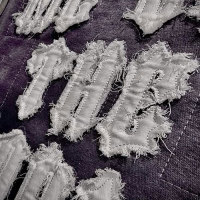
Graphic placement and trim execution determine whether a garment reads as premium or cheap. In teamwear-inspired streetwear, the crest, the applique, the embroidery density, the zipper weight, the ribbing tension, and the panel line placement are the details that consumers evaluate first. A crest embroidered 5mm off-center, a zipper that catches during operation, or ribbing that loses tension after three washes will immediately undermine the perceived value of an otherwise well-designed piece. These are not cosmetic concerns; they are the quality signals that justify premium pricing. Sportswear suppliers typically optimize for functional durability rather than visual precision, which creates a fundamental misalignment with streetwear quality expectations.
Matching sets require coordinated development, not separate-item thinking. Track sets, warm-up jacket-and-pant combinations, and hybrid outerwear collections must be developed as integrated product systems. The jacket and pant must share identical fabric hand feel, color depth, and trim language. The ribbing on the jacket cuffs must match the ribbing on the pant waistband. The embroidery on the jacket chest must align in scale and density with the embroidery on the pant hip. Sportswear suppliers often develop tops and bottoms as independent items, which leads to visible inconsistencies when the pieces are worn together. A manufacturer structured for streetwear set development coordinates fabric sourcing, trim selection, and decoration across all components simultaneously, treating the set as a single product rather than two separate garments.
Which Execution Strategies Turn This Cultural Trend Into Scalable Product Development?
Converting the retro teamwear trend into viable product lines requires five specific execution strategies that bridge the gap between cultural inspiration and manufacturing reality: silhouette reconstruction, fabric selection for streetwear drape, coordinated set development, layered decoration planning, and archive-to-modern translation. Each strategy addresses a common failure point where brands lose design intent during the transition from concept to bulk production.
The first and most critical strategy is rebuilding the silhouette rather than simply applying new graphics to an existing pattern. A football shirt developed for streetwear must be re-proportioned from the ground up: wider body, dropped shoulder, longer torso, relaxed armhole. The same principle applies to warm-up jackets, where the streetwear version needs a boxier torso and wider sleeves than the athletic original. Brands that skip this step and work from standard athletic blocks consistently produce garments that look like costumes rather than intentional streetwear pieces.
Fabric selection must prioritize streetwear drape and visual texture over athletic function. For football shirts, this means moving from lightweight polyester mesh to heavier cotton-poly blends or retro-finish jersey knits. For warm-up jackets, it means choosing matte nylon or washed polyester shells over shiny, crinkly synthetics. For track pants, it means selecting fabrics with enough body to hold a straight-leg silhouette without clinging. The fabric choice directly affects how the garment photographs, how it feels in the consumer's hands at retail, and how it ages with wear, all of which are critical to streetwear brand positioning.
Coordinated set development is where brands capture the highest commercial value from the teamwear trend. A track jacket sold alone might retail for USD 120 to 180, but a coordinated track set with matching pants, consistent trim language, and unified color story can command USD 250 to 350 as a package. The development process must treat the set as a single product from the tech pack stage through final quality inspection. Decoration planning follows the same integrated logic: when a garment combines embroidery, screen printing, applique, and contrast paneling, the sequence and interaction of these techniques must be mapped before sampling begins. A crest embroidered before garment washing will look different from one embroidered after washing, and these decisions must be locked during development rather than discovered during bulk production.
The final strategy is translating archive references into modern everyday products rather than creating museum replicas. The goal is not to reproduce a 1992 training top exactly but to extract its design principles, including its color proportions, panel logic, collar style, and surface texture, and apply them to a garment that works in a contemporary streetwear context. This translation requires both cultural literacy and technical skill. The manufacturer must understand why a particular archive piece resonates with consumers and then engineer a modern version that preserves that emotional connection while meeting current fit expectations, fabric standards, and decoration capabilities. For brands navigating this translation process, working with a production partner that maintains deep experience across streetwear-specific garment development and bulk execution ensures that archive inspiration survives the journey from mood board to finished product.
Where Will the Intersection of Teamwear and Streetwear Evolve Next, and How Should Brands Prepare?
Four directional shifts will define the next phase of teamwear-inspired streetwear: football shirts will become more oversized and fashion-shaped, warm-up jackets will graduate into standalone outerwear categories, track sets will transition from athletic to lifestyle uniform status, and hybrid varsity-teamwear pieces will emerge as the highest-value product tier. Brands that begin developing these categories now will be positioned to capture market share as the trend matures from cultural moment to permanent product category.
Football shirts will continue their evolution away from athletic proportions. The next generation of streetwear football shirts will feature even more exaggerated oversized fits, heavier fabrics, and more complex surface treatments that push them further from their sporting origins. Warm-up jackets are already being repositioned as serious outerwear pieces, with heavier constructions, lined interiors, and hardware upgrades that justify higher price points. The track set, historically associated with athletic warm-ups and casual loungewear, is being elevated into a lifestyle uniform category where coordinated top-and-bottom combinations serve as complete outfits for daily wear, travel, and social settings.
The most commercially significant direction is the rise of hybrid varsity-teamwear outerwear as a premium product tier. By combining elements from letterman jackets, football warm-ups, and military-inspired outerwear, brands can create entirely original silhouettes that carry deep cultural resonance without directly copying any single source. This category demands the most sophisticated manufacturing capabilities: multi-fabric construction, heavy embellishment, precise panel engineering, and rigorous quality control across complex production sequences. Analysis of recent bulk production programs for teamwear-inspired streetwear collections, including those managed through Groovecolor's integrated manufacturing ecosystem in Dongguan, demonstrates that maintaining design fidelity across embroidered crests, paneled constructions, and coordinated fabric sets at volume requires end-to-end process control from pattern verification through final inspection. The real opportunity is not copying what appeared on the pitch but translating team identity, training-ground memory, and tunnel-stage energy into streetwear products that established brands can scale with confidence.
About the Author

Frequently Asked Questions About Retro Teamwear Streetwear
Why is retro teamwear becoming so popular in streetwear collections right now?
Retro teamwear is dominating streetwear because it offers a rich visual library of nostalgic designs, bold paneling, and subcultural authenticity that basic garment categories cannot provide. This trend is fueled by multiple converging forces: the "blokecore" aesthetic has normalized football shirts as everyday fashion items among Gen Z consumers; the "tunnel fit" phenomenon has turned athlete arrivals into high-profile fashion media moments; and terrace culture's deep roots in street identity give teamwear permanent cultural credibility. For streetwear brands, teamwear silhouettes like warm-up jackets and track sets provide complex canvases for embroidery, custom fabrics, and unique brand storytelling, allowing for higher retail margins and stronger market differentiation compared to standard hoodie and tee programs.
What are the main manufacturing challenges when producing football-inspired streetwear at volume?
The primary manufacturing challenge is successfully reconstructing the athletic silhouette into an oversized, streetwear-appropriate drape while maintaining complex surface details during bulk production. Unlike standard activewear, streetwear versions require specialized pattern engineering to achieve the correct boxy fit without looking poorly tailored. Additionally, executing intricate paneling, heavy crest embroidery, and ensuring exact color matching across different fabrics, such as nylon jacket shells paired with cotton-blend ribbing, requires a highly coordinated factory ecosystem with in-house capabilities across multiple decoration techniques. Factories must implement rigorous batch-level quality control to prevent the inconsistencies that often emerge when multi-process garments scale from sample approval to full production runs.
How can brands ensure their track jackets look premium rather than like generic sportswear?
Brands elevate track jackets to premium streetwear status by prioritizing heavy, matte-finish fabrics, custom hardware, and meticulous trim execution over lightweight, shiny synthetics. The key trade-off involves sacrificing athletic breathability for structural integrity and visual weight. Specific upgrades that signal premium positioning include:
- Custom-dyed ribbing matched to the brand's exact color system
- Chunky metal or branded zipper pulls rather than generic plastic zippers
- Sophisticated applique or embroidery techniques for crest and logo placement
- Matte or washed shell fabrics that photograph well and feel substantial
- Contrast piping with precise width and placement across all sizes
Partnering with a manufacturer experienced in complex streetwear construction ensures these critical details are engineered correctly from the initial tech pack through to final mass production, protecting the brand's premium positioning at every stage.
What should procurement teams verify when evaluating a custom football shirt manufacturer for streetwear brands?
Procurement teams must verify that a manufacturer possesses in-house capabilities for advanced pattern development, multi-technique printing and embroidery, and a proven track record of maintaining quality standards from approved samples through full bulk production. Key verification points include:
- Request sample-to-bulk comparison photos from previous teamwear or paneled garment programs
- Confirm in-house embroidery, screen printing, and applique capabilities rather than reliance on external subcontractors
- Verify pattern development expertise specifically for oversized and boxy streetwear silhouettes
- Ask for evidence of fabric coordination across multi-component sets such as track jacket and pant combinations
- Check compliance credentials such as SMETA 4P certification, which covers labor standards, workplace safety, environmental management, and business ethics
A reliable partner should offer strategic test runs to validate complex designs before scaling up to full seasonal volume. Furthermore, the manufacturer must demonstrate a deep understanding of streetwear aesthetics, such as executing the perfect drop shoulder or achieving an authentic vintage wash effect, rather than simply applying logos to standard athletic templates.
Which teamwear silhouettes offer the best return on investment for streetwear product lines?
Warm-up jackets and coordinated track sets consistently deliver the strongest return on investment because they combine outerwear-level pricing with moderate production costs and high perceived value. A warm-up jacket can retail at USD 150 to 350, while a coordinated track set commands USD 250 to 450 as a package, significantly outperforming individual tees or hoodies on a per-unit margin basis. Football shirts offer strong cultural relevance and graphic expression potential but typically sit at a lower price point. Hybrid varsity-teamwear outerwear occupies the premium tier with the highest margins but requires the most complex manufacturing capabilities. For brands entering the teamwear category for the first time, starting with a warm-up jacket or track set allows them to test market response through strategic test runs while building the manufacturing relationship needed for more complex pieces in subsequent seasons.
References
- Technavio. "Football Apparel Market Size 2025-2029." Industry Analysis Report.
- Grand View Research. "Sportswear Market Size And Share | Industry Report, 2033."
- AceOdds. "Retro Football Shirts: Value and Demand Analysis." Market Data, 2023.
- Daily Mail / eBay. "Demand for Retro Football Shirts Soar with 40% Search Increase." 2024.
- MR PORTER. "How Football Fell For The Tunnel Fit." The Journal, Jan 2025.
- Hypebeast. "First Look at Umbro and WACKO MARIA's SS26 Range." Feb 2026.
- Vogue Scandinavia. "Acne Studios x Kappa Collaboration." March 2025.
- Marie Claire. "Track Jackets Are the Sporty Trend Taking Over Fall 2025."
- ELLE UK. "Football Shirts Fashion Trend."
- The New York Times. "Classic Football Shirts and Soccer Jerseys." Sept 2024.
- Highsnobiety. "Football and Fashion Guide."
- Lower Block. "Terrace Style as Cultural Identity."
- Adidas UK. "Stadium to Street: Blokecore Is the Hottest Trend."
- Mystery Shirt in a Box. "How Football Shirts Became Streetwear."