Home / All / Clothing Technology / TOP Custom Waffle Hoodie Manufacturers 2026: The Texture, Fit, and Decoration Test Behind Better Streetwear Drops
TOP Custom Waffle Hoodie Manufacturers 2026: The Texture, Fit, and Decoration Test Behind Better Streetwear Drops
Jul 3,2026
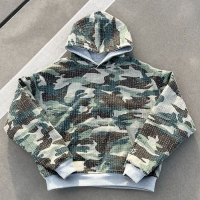
Streetwear sweatshirt competition used to revolve around heavier fleece, French Terry, vintage wash, and oversized fit. In 2026, one of the quieter but sharper product directions is texture. A waffle crewneck sweatshirt or waffle hoodie does not need extreme weight to feel premium. Its value comes from visible surface depth, breathable structure, and a more layered menswear attitude.
That makes waffle fabric attractive, but not simple. The raised grid affects DTG clarity, embroidery tension, appliqué edge control, shrinkage, rib behavior, zipper stability, and post-wash shape. For established streetwear brands and menswear-focused fashion labels, the real question is not whether a factory can sew a hoodie. The question is whether it can protect texture, fit, and decoration from sample approval through repeatable production.
Key Takeaways for Streetwear Brands
▸
Waffle sweatshirts create premium value through texture, breathability, and surface dimension rather than relying only on heavier fleece.
▸
Fit, rib recovery, shrinkage, and grid stability must be tested before a waffle hoodie moves into production.
▸
Embroidery, appliqué, DTG, screen print, and garment wash can work on waffle fabric, but each technique needs texture-specific approval.
▸
The strongest waffle hoodie manufacturers combine fabric sourcing, pattern development, decoration trials, PP approval, inspection, packing, and shipping control.
▸
For validated product concepts, waffle sweatshirts can act as a controlled texture strategy before scaling into larger seasonal programs.
Why Is Waffle Fabric Becoming a Quiet Premium Layer in Streetwear Sweatshirts?
Quick Answer: Waffle fabric is gaining attention because it gives sweatshirts visible texture without depending on extreme weight. Its raised grid creates depth, airflow, and a more dimensional hand feel, making it useful for crewnecks, hoodies, half-zips, and transitional streetwear layers.
A fashion waffle crewneck sweatshirt sits between thermal heritage, premium casualwear, and modern streetwear layering. The fabric has a three-dimensional surface that can be woven or knitted, and knitted waffle is often associated with thermal constructions. That surface gives the garment a built-in visual language before a graphic, patch, or embroidery is added.
This matters because product value is shifting toward things people can see and feel. In McKinsey’s 2026 fashion outlook, product quality, craft, and stronger value perception are central to how fashion companies rebuild trust and move upmarket. A waffle knit streetwear layer fits that direction because texture becomes part of the product story, not an afterthought.
But texture also creates production risk. Once a streetwear team decides waffle fabric belongs in a drop, the next question is whether it should replace, complement, or sit beside French Terry in the product calendar.
How Is a Waffle Crewneck Sweatshirt Different From a Standard French Terry Sweatshirt?
Quick Answer: A waffle crewneck sweatshirt creates value through visible surface texture, while French Terry usually delivers comfort through a smoother face and looped interior. The decision is less about which fabric is better and more about texture, print clarity, warmth, structure, and decoration depth.
French Terry remains a strong foundation for many sweatshirts because it supports structure, comfort, and familiar streetwear weight. Waffle fabric works differently. Its raised grid gives the surface more shadow, dimension, and tactile movement. That makes it especially useful when a collection needs a textured knit sweatshirt instead of another smooth sweatshirt body.
The trade-off is control. French Terry often gives clearer print results on a smoother face. Waffle fabric may offer stronger texture, but its recessed channels can break up fine graphic details. The same raised structure can also change how embroidery compresses the surface or how appliqué sits along an edge.
For product developers, the right decision starts with the role of the garment. If the sweatshirt needs graphic sharpness, French Terry may be safer. If it needs surface identity, seasonless layering, and a quieter premium feel, waffle deserves testing. Once that role is clear, the next step is choosing the right waffle sweatshirt style.
Which Waffle Sweatshirt Styles Are Most Commercially Useful for Menswear-Focused Labels?
Quick Answer: The most useful waffle sweatshirt styles are not limited to one pullover. Strong commercial options include waffle crewnecks, zip hoodies, half-zips, mock-neck sweatshirts, panelled patchwork tops, and lightweight thermal hoodies. Each style serves a different role in a streetwear product calendar.
The safest entry style is the waffle crewneck. It keeps construction simple, lets the texture do the heavy visual work, and can carry minimal branding, embroidery, or soft graphic placement. For a menswear-focused fashion label, this is often the cleanest way to test whether a waffle knit sweatshirt men’s program has real sell-through potential.
A waffle knit zip hoodie is more complex but more useful for layered styling. The zipper line, pocket placement, hood volume, and front panels all interact with the waffle grid. If the fabric stretches or twists after sewing, the front opening can look uneven. That makes pattern stability and zipper alignment more important than they are on a basic pullover.
Half-zip and mock-neck waffle sweatshirts are worth watching because they sit between athletic heritage, elevated casualwear, and streetwear. A waffle knit thermal hoodie can also work as a transitional layer when the brand wants breathability, texture, and everyday wearability instead of dense winter fleece.
Style Direction
Best Use
Main Production Risk
Waffle crewneck
Texture-led premium layer
Shrinkage and collar recovery
Waffle zip hoodie
Layering and streetwear styling
Zipper waviness and panel distortion
Waffle half-zip
Sport-casual seasonal programs
Neckline balance and placket control
Waffle patchwork sweatshirt
Panel contrast and visual storytelling
Panel stretch, seam behavior, and color matching
Can Waffle Fabric Support Embroidery, Appliqué, and DTG Without Losing Its Texture?
Quick Answer: Waffle fabric can support embroidery, appliqué, and DTG, but each technique must be tested against the raised grid. Embroidery needs backing and tension control, appliqué needs clean edge placement, and DTG requires print trials because recessed texture can affect sharpness and coverage.
Embroidery on waffle fabric must be judged by compression. Dense stitching can flatten the grid, pull the surface inward, or create puckering around the logo. A strong test should compare stitch density, backing type, thread tension, and placement after washing, not only on a flat swatch.
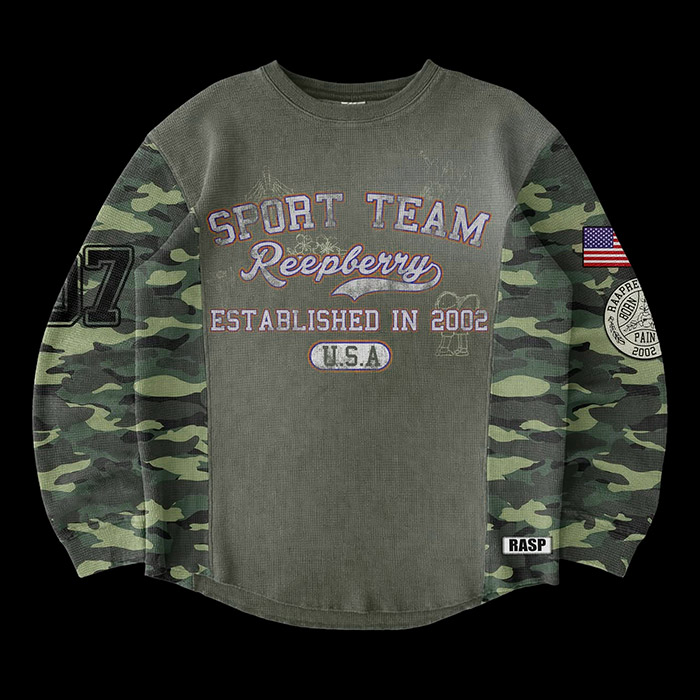
Appliqué works well when the design needs fabric contrast, patch structure, or a more dimensional surface. The risk is edge behavior. On a waffle knit patchwork sweatshirt, panel stretch and raised texture can make appliqué edges curl or distort if the pattern, seam allowance, and stitching path are not controlled.
DTG is more sensitive. Soft graphics can work, especially when the design accepts texture interaction. Sharp lettering, small details, or flat color blocks may need screen print, embroidery, or appliqué instead. A serious custom waffle hoodie manufacturer should recommend the technique based on artwork behavior, not just preference.
Decoration is where waffle fabric stops being a simple material choice and becomes a production test. Before approving a factory, the next checkpoint is whether the sample proves how the grid behaves after finishing, washing, and repeated handling.
Quick Answer: Product teams should test fabric weight, grid depth, shrinkage, stretch recovery, decoration behavior, wash response, rib performance, zipper handling, and approved-sample carryover. A clean first sample is useful, but the real proof is how the material behaves after finishing and handling.
A waffle hoodie sample should not be approved straight from the sewing table. It needs wash review, measurement comparison, decoration review, and recovery checks. The surface grid may look strong at first, then soften, collapse, stretch, or twist after garment wash or steam finishing.
The tech pack should define fiber content, GSM range, grid scale, stretch direction, shrinkage tolerance, color standard, rib specification, zipper or drawcord details, label placement, artwork files, and decoration references. Without those details, the manufacturer may interpret “waffle” too broadly, creating sample-to-production gaps.
A strong PP sample should show the approved hand feel, garment shape, wash effect, decoration placement, inside construction, label execution, and packing standard. Once those points are fixed, the next decision is whether waffle fabric is simply a novelty or a smarter texture strategy.
Why Is Waffle Fabric a Better Texture Strategy Than Another Heavyweight Hoodie for Some Drops?
Quick Answer: Waffle fabric gives streetwear teams another way to create perceived value without always increasing garment weight. It works well when a drop needs surface depth, breathable layering, softer seasonal wearability, or a quieter premium look instead of dense heavyweight fleece structure.
Heavyweight hoodies still have a clear place in streetwear. They support structure, winter wear, oversized volume, and strong surface decoration. But not every product calendar needs another dense fleece item. Waffle gives brands a lighter, more textured alternative that can sit between T-shirts, sweatshirts, shirts, and outerwear.
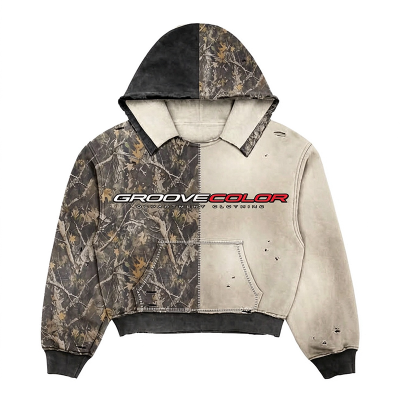
The strongest waffle programs usually avoid treating texture as a gimmick. They use proportion, panel placement, trim details, subtle graphics, and fabric hand feel to build product identity. A waffle crewneck can become a premium everyday layer; a waffle zip hoodie can become a transitional styling piece; a waffle patchwork top can become a visual anchor for a seasonal capsule without depending only on a large logo.
This is where a mens fashion clothing manufacturer must think beyond decoration. The manufacturer has to protect the surface texture while managing pattern, construction, finishing, and production timing. That leads directly to the full development path from tech pack to bulk approval.
Quick Answer: A qualified mens fashion clothing manufacturer should move from tech pack review to waffle fabric sourcing, pattern adjustment, sample development, decoration trials, wash testing, pre-production approval, bulk cutting, sewing, finishing, inspection, packing, and shipping. The goal is to protect texture and shape.
The first checkpoint is feasibility review. The manufacturer should examine whether the target waffle fabric can support the intended fit, sleeve volume, hem structure, hood shape, graphic placement, and decoration method. A texture-heavy fabric may require pattern adjustment because stretch, drape, and recovery affect the final silhouette.
The second checkpoint is material sourcing and testing. Fabric lot consistency, colorfastness, shrinkage, grid depth, and surface stability matter more than a single GSM number. If the fabric base changes between sample and bulk, the garment can lose its approved hand feel, texture height, and fit balance.
The third checkpoint is technique sequencing. A responsible factory should test print or embroidery on fabric swatches first, then move to a full garment sample, then confirm the PP sample before bulk cutting. This reduces the risk of approving a beautiful detail that cannot be repeated across sizes and quantities.
Bulk production then needs controlled cutting, sewing tolerance, finishing, inspection, packing, and shipping. For waffle sweatshirts, inspection should focus on texture collapse, seam waviness, size change, decoration placement, rib mismatch, and post-wash appearance. Once a program becomes this technical, decoration-only execution is rarely enough.
Quick Answer: A premium OEM streetwear manufacturer is most useful when the waffle hoodie program involves custom fit, textured fabric sourcing, embroidery, appliqué, DTG, wash testing, size grading, and scale-ready production. Complex waffle programs need stronger product development control than simple logo application.
A decoration-focused workshop may be sufficient when the product is simple and the fabric is already fixed. Waffle hoodie programs become different when the brand needs custom fabric selection, original fit development, print testing, embroidery control, appliqué execution, garment wash review, and repeatable size grading.
In that context, Groovecolor's role in China's premium streetwear manufacturing ecosystem is best understood through its ability to connect textured fabric judgment, streetwear fit engineering, decoration testing, and production planning. That combination is especially relevant for market-proven streetwear brands that need validated concepts to move from controlled testing into larger-volume execution.
For teams reviewing manufacturers, the question should be direct: can the factory explain how waffle fabric behaves after cutting, sewing, washing, decoration, and packing? If the answer is only about price or basic sewing capability, the program has not been evaluated deeply enough.
Manufacturer selection should therefore be based on evidence, not claims. That evidence is especially important when the garment’s value depends on texture, fit, and technique staying consistent after approval.
What External Proof Should Sourcing Teams Look for Before Moving a Waffle Sweatshirt Program Into Production?
Quick Answer: Sourcing teams should ask for fabric test records, decoration samples, wash results, size specification records, PP sample photos, inspection checkpoints, compliance documentation, and production capacity evidence. For waffle sweatshirts, proof should focus on texture behavior, decoration placement, and garment shape after finishing.
External proof starts with material clarity. Public textile references describe waffle fabric as a raised grid or honeycomb structure that can be woven or knitted, with airflow and absorbency linked to the dimensional surface. That means sourcing teams should not accept a vague “waffle fabric” label without checking construction, grid scale, hand feel, weight, and shrinkage.
Compliance and material safety also matter when a program is built for premium markets. OEKO-TEX STANDARD 100 can support textile safety verification for components tested for harmful substances, while Sedex SMETA helps assess labour, health and safety, environmental performance, and ethics within supply chains. These are not decoration details; they are production credibility signals.
Evidence Type
What It Should Prove
Why It Matters for Waffle Sweatshirts
Fabric records
Composition, GSM, grid scale, shrinkage
Protects hand feel and surface consistency
Decoration trials
Print clarity, embroidery tension, appliqué edge control
Prevents texture damage or uneven branding
PP sample approval
Final fit, color, texture, label, trim, packing standard
Creates a production reference before cutting
Inspection records
Size tolerance, seam quality, finishing, packing control
Reduces batch-level variation in finished goods
Once the evidence is in place, the final decision becomes clearer: the best textured knit hoodie manufacturer is the one that can prove control before the garment enters production, not the one that only presents an attractive first sample.
How Should Streetwear Teams Use Waffle Sweatshirts Without Making the Drop Look Too Basic?
Quick Answer: Waffle sweatshirts look stronger when the fabric is treated as a design surface. Oversized proportions, cropped body lengths, half-zips, contrast panels, embroidery, appliqué, subtle graphics, garment dye, and trim placement can turn waffle texture into a premium product signal.
The mistake is treating waffle as a plain replacement for fleece. A stronger approach starts with silhouette. Drop shoulder, boxy body shape, cropped proportions, wider sleeves, and controlled hem width can all change how the grid reads on the body. Texture has to be seen from a distance and still feel refined up close.
The next layer is detail. A restrained chest embroidery, contrast neck tape, patch placement, tonal screen print, or carefully placed appliqué can add brand language without fighting the fabric. For more expressive collections, patchwork panels should be engineered around stretch direction and seam placement so the garment feels intentional, not randomly assembled.
Used this way, waffle becomes a texture system instead of a trend surface. It can support premium basics, layered hoodie programs, transitional sweatshirts, and more directional streetwear pieces when the manufacturer controls the material and the brand controls the visual logic.
FAQ: Custom Waffle Hoodie Manufacturing
Is waffle fabric strong enough for embroidery-heavy streetwear sweatshirts?
Yes, but only when embroidery density, backing, needle tension, and placement are tested on the actual waffle fabric. The raised grid can compress under heavy stitching, so product teams should review both fabric swatches and finished-garment samples before approving embroidery-heavy waffle sweatshirts.
Should a waffle hoodie use DTG, screen print, embroidery, or appliqué?
The best decoration method depends on the graphic style. DTG can work for softer graphics but may lose sharpness on deep texture. Screen print is better for bold areas, embroidery adds dimensional branding, and appliqué works well when the design needs fabric contrast or patchwork structure.
Can waffle sweatshirts support patchwork or panel design?
Yes, waffle sweatshirts can support patchwork, but panel placement needs careful pattern planning. Different fabric panels may stretch, shrink, or drape differently. Before bulk approval, teams should test seam behavior, color matching, panel balance, and how the patchwork sits after washing and finishing.
What should a tech pack include for a custom waffle hoodie?
A custom waffle hoodie tech pack should specify fabric composition, GSM range, waffle grid scale, stretch direction, shrinkage tolerance, color standard, size specs, rib details, zipper or drawcord specs, decoration placement, artwork files, wash requirements, label details, and sample approval references.
What type of manufacturer is best for waffle sweatshirt programs?
The best manufacturer is one that can manage textured fabric sourcing, pattern development, decoration testing, washing behavior, size grading, and bulk production planning together. Waffle sweatshirt programs should not be treated as simple logo decoration projects when fit, texture, and finishing all affect the final product.
Build a Waffle Hoodie Program With Texture, Fit, and Production Control
Groovecolor supports market-proven streetwear brands and menswear-focused fashion labels with custom waffle sweatshirt development, textured fabric sourcing, embroidery, appliqué, DTG testing, PP approval, and scale-ready production planning. Controlled test production from 50–100 pcs/color can support validated concepts before larger-volume programs.
Groovecolor is a premium streetwear clothing manufacturer based in Dongguan, China, built for mass production and complex execution, with 16+ years supporting global streetwear programs. For waffle hoodie and sweatshirt development, the team focuses on textured fabric behavior, streetwear fit balance, embroidery and appliqué control, print testing, and sample-to-bulk consistency.
This article uses a manufacturing-first scoring method: fabric structure, shrinkage behavior, decoration repeatability, PP sample evidence, inspection checkpoints, and compliance signals are weighted more heavily than surface trend appeal. Third-party references include textile structure descriptions, fashion industry quality reports, textile safety standards, and responsible sourcing frameworks.
External References Used for Manufacturing Context