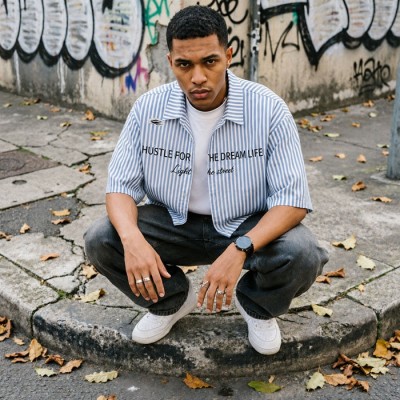
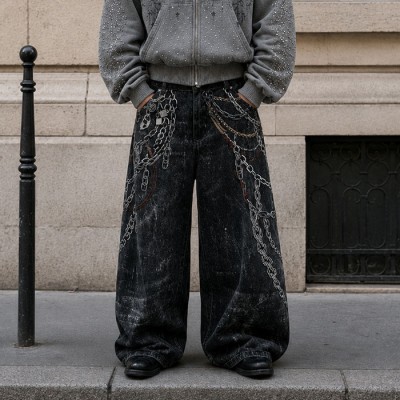
Why Denim-on-Denim Is Becoming a More Serious Development Category for Streetwear Brands?
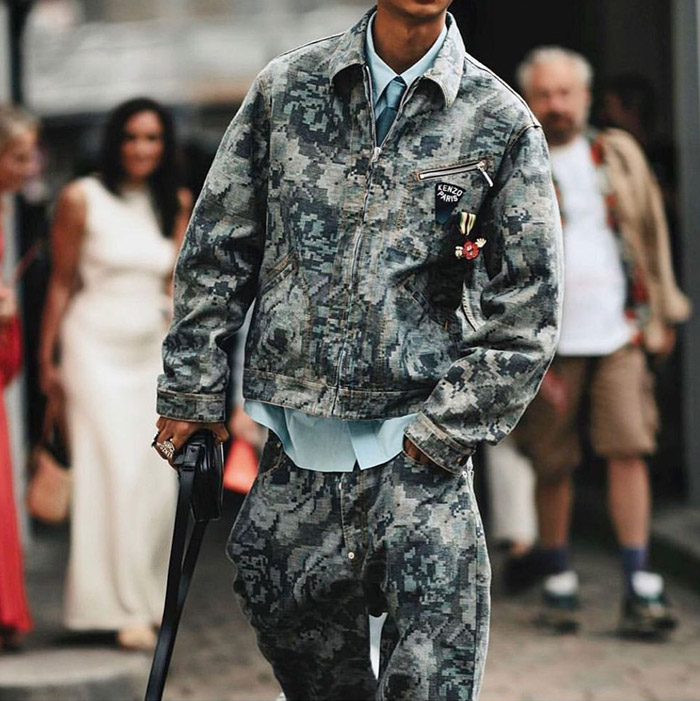
Quick Answer: The denim-on-denim trend is expanding far beyond a seasonal styling signal. For established streetwear brands, it is pushing product teams to rethink wash family planning, matched set development, fit coordination, and bulk consistency. The real opportunity is not just chasing a trend, but building a repeatable, scalable denim program that maintains shade control and structural integrity from the first sample to large-scale production. This requires shifting from single-item sourcing to system-level manufacturing partnerships.
Key Takeaways for Established Streetwear Brands
- ▸ Developing coordinated denim sets requires strict wash family planning rather than just matching exact colors, ensuring tops and bottoms share the same visual language.
- ▸ Bulk repeatability is the primary bottleneck; managing shrinkage, dye lots, and post-wash measurements determines whether a capsule succeeds at scale.
- ▸ Advanced manufacturing processes must integrate pattern engineering with wet processing to prevent fit distortion and shade drift across different fabric rolls.
- ▸ Procurement teams should evaluate factory capabilities based on their batch-level quality locking mechanisms and experience with complex streetwear silhouettes.
Over the past year, double denim has consistently dominated street style galleries, runway recaps, and fashion media. However, the most critical takeaway for product developers is not simply that the "Canadian tuxedo" has returned. Instead, this shift signals a fundamental change in how collections are built: denim is transitioning from a single-piece category into a coordinated system category. According to recent market analysis, the global denim jeans market is projected to reach USD 121.49 billion by 2030, reflecting sustained consumer demand for durable, versatile apparel [1]. This massive market expansion is not just driven by basic five-pocket jeans, but by the proliferation of complex, multi-piece denim capsules that require sophisticated supply chain orchestration.
For fashion labels, this means that launching a successful denim program now requires top and bottom tonal planning, deliberate decisions between same-wash versus mixed-wash aesthetics, and rigorous silhouette coordination. The challenge shifts from designing a great jacket or a perfect pair of jeans in isolation to engineering a cohesive set that performs consistently during re-orders and bulk production. When a brand decides to release a matching trucker jacket and baggy jeans, they are no longer just selling two items; they are selling a unified look that must hold up under the scrutiny of discerning consumers who expect premium execution.
This article will explore the structural shifts in denim development, the technical hurdles of achieving wash consistency in bulk production, and the strategic frameworks procurement teams must use to evaluate manufacturing partners. By understanding the underlying mechanics of denim-on-denim production, brands can mitigate risks, reduce repair rates, and build scalable programs that resonate with the modern streetwear market.
Why Is Denim-on-Denim Expanding Beyond Styling and Into Product Development?
Direct Answer: The trend has evolved from a nostalgic gimmick into a modern, intentional uniform. This forces brands to shift their merchandising strategy from standalone jeans to coordinated separates, requiring deeper integration of wash recipes and fabric sourcing across multiple SKUs.
Industry publications like Vogue and WWD have noted that recent runway presentations, such as those at Copenhagen Fashion Week, highlight a clear move toward intentional pairings and thoughtful proportions [2]. The aesthetic is no longer about throwing two random denim pieces together; it is about clean lines, tonal indigo depth, and a polished "uniform" feel. This evolution means that a denim shirt or an oversized trucker jacket is no longer just a supporting player—it is a foundational part of the set architecture. The visual impact of a well-executed denim set relies heavily on the interplay between the top and bottom, demanding a unified approach to design and production.
Consequently, product development teams must approach these capsules with a systems mindset. When a brand decides to offer a matching jacket and baggy jeans, they must secure a cut-and-sew manufacturing workflow for streetwear silhouettes that can handle the complexities of multi-garment coordination. The development process must account for how different panels of fabric will react to the same enzyme or stone wash, ensuring that the final garments look like they belong together on the retail floor. This level of coordination requires a departure from traditional, siloed development processes, where tops and bottoms are often handled by different teams or even different factories.
Furthermore, the rise of denim coordinates reflects a broader shift in consumer behavior. Shoppers are increasingly looking for complete outfits that offer both comfort and a strong stylistic statement. A matching denim set provides a versatile foundation that can be dressed up or down, making it a highly attractive proposition for the modern wardrobe. To capitalize on this demand, brands must ensure that their denim programs are not only aesthetically pleasing but also structurally sound and consistently reproducible.
What Does This Shift Change for Streetwear Collection Planning?
Direct Answer: Collection planning must now treat denim as a coordinated system rather than isolated items. Brands need to lock in a specific wash language—such as sun-faded, rigid, or overdyed—and decide early whether the capsule will feature exact matches, tonal variations, or deliberate contrasts.
For a streetwear label, denim is no longer just a pair of pants. It is a matrix of coordinated SKUs that might include a trucker jacket, an overshirt, baggy jeans, and jorts. Before sampling begins, creative directors and product managers must establish the visual language. Will the collection lean into a clean, dark rinse wash that feels elevated, or will it utilize heavy grind-wash and extreme bleaching for a vintage, utility-driven aesthetic? This decision dictates the entire sourcing and manufacturing strategy, as different wash profiles require entirely different fabric bases and wet processing techniques.
This planning phase is critical because consumers are increasingly sophisticated. They respond well to tonal depth—such as a washed black jacket paired with faded grey jeans—which feels more effortless than a rigid, exact color match. However, executing this "effortless" look requires immense technical discipline. It demands a full custom streetwear production model where every detail, from the hardware finish to the thread color, is deliberately specified to maintain the collection's mood. If the hardware on the jacket oxidizes differently than the hardware on the jeans during the wash process, the illusion of a cohesive set is immediately broken.
Moreover, collection planning must account for the lead times associated with complex denim development. Achieving the perfect wash recipe often requires multiple rounds of sampling and adjustment. Brands must build sufficient buffer into their calendars to allow for these iterations, ensuring that the final product meets their exacting standards before moving into bulk production. Rushing this process inevitably leads to compromises in quality and consistency, which can severely damage a brand's reputation in the highly competitive streetwear market.
Why Is Same-Wash Set Development Harder Than It Looks in Bulk Production?
Direct Answer: Achieving a cohesive look across tops and bottoms is difficult because denim dye lots, wash parameters, and shrinkage rates naturally vary. Without strict batch segregation and shade sorting, bulk production will inevitably suffer from noticeable color drift and fit inconsistencies.
The reality of denim manufacturing is that it is an inherently unstable process. Even when the top and bottom are cut from the same fabric roll, the garments may absorb indigo differently or react uniquely during wet processing. According to technical guidelines from CottonWorks, manufacturers must often utilize patchwork blanket tests to evaluate how a specific wash recipe affects the fabric before proceeding to garment-wash and shade-sort the bulk order [3]. This testing phase is crucial for identifying potential issues with colorfastness, shrinkage, and structural integrity before they impact the entire production run.
Furthermore, Coats highlights that denim wet processing involves numerous variables—including pH levels, temperature, and chemical concentrations—that must be tightly controlled. Harsh treatments like acid washing or heavy bleaching can lead to severe strength loss and high repair rates if not managed correctly [4]. This is why relying on a factory that only understands basic sewing is a massive risk. Brands need partners capable of executing advanced streetwear washing workflows, ensuring that the visual aging and texture remain consistent across thousands of units.
The challenge is compounded when dealing with matched sets, as any discrepancy between the top and bottom becomes glaringly obvious. If a jacket is washed slightly longer than the corresponding jeans, the resulting shade difference will ruin the intended aesthetic. To mitigate this risk, advanced manufacturers employ strict batch segregation, ensuring that tops and bottoms intended to be sold as a set are processed together under identical conditions. This level of operational discipline is what separates premium streetwear production from mass-market manufacturing.
Critical Variables in Denim Bulk Control
What Breaks First When Scaling?
The Role of Fabric Selection in Denim-on-Denim Consistency
Direct Answer: Fabric selection is the foundation of any successful denim program. The weight, weave, and yarn composition directly dictate how the garment will drape, shrink, and fade during wet processing. Choosing the wrong fabric base will render even the most advanced wash recipes ineffective.
When developing a coordinated denim set, the fabric must be carefully chosen to support the intended silhouette and wash profile. For example, a heavy, rigid 14oz denim might be ideal for a structured trucker jacket and wide-leg jeans, providing the necessary architectural support for the oversized streetwear aesthetic. However, this same fabric would be entirely inappropriate for a fluid, draped overshirt, which requires a lighter, more pliable base.
Furthermore, the yarn composition plays a critical role in how the fabric reacts to wet processing. Pure cotton denim will shrink and fade differently than denim blended with elastane or polyester. If a brand attempts to create a matched set using a rigid cotton jacket and stretch denim jeans, achieving a consistent wash outcome will be nearly impossible, as the different fibers will absorb and release indigo at different rates. This highlights the importance of working with a manufacturer that possesses deep expertise in fabric sourcing and testing.
To ensure consistency across a denim capsule, brands should ideally source their fabrics from the same mill and, whenever possible, the same dye lot. This minimizes the inherent variability in the raw material, providing a more stable foundation for the subsequent wash processes. When this is not feasible, rigorous blanket testing and shade sorting become even more critical to maintaining the visual integrity of the final garments.
Navigating the Complexities of Denim Shrinkage and Fit Engineering
Direct Answer: Denim shrinkage is a dynamic variable that must be engineered into the pattern from the outset. Failure to accurately calculate and compensate for shrinkage will result in garments that fit poorly and fail to align with the brand's sizing specifications.
Unlike many other apparel categories, denim garments are typically sewn before they are washed. This means that the pattern must be cut significantly larger than the final intended size, with precise allowances made for the shrinkage that will occur during wet processing. The degree of shrinkage depends on a multitude of factors, including the fabric composition, the weave structure, and the specific wash recipe employed.
To manage this complexity, patternmakers must conduct extensive shrinkage testing before finalizing the grading for bulk production. This involves cutting measured squares of the raw fabric, subjecting them to the exact industrial wash cycle planned for the bulk order, and then measuring the resulting dimensional changes. These shrinkage percentages are then applied to the pattern, ensuring that the garment will settle into the correct fit after washing.
The challenge is further complicated when dealing with complex streetwear silhouettes, such as articulated knees, dropped crotches, or asymmetrical paneling. These design elements can react unpredictably to shrinkage, causing the garment to twist or distort if not properly engineered. This is why brands must partner with premium streetwear manufacturers that possess advanced patternmaking capabilities and a deep understanding of how denim behaves under stress. A factory that relies on basic, two-dimensional pattern drafting will struggle to execute the nuanced fits demanded by the modern streetwear consumer.
Understanding Different Wash Techniques and Their Impact on Bulk Production
Direct Answer: Different wash techniques—such as stone washing, enzyme washing, and acid washing—carry varying levels of risk and require different control mechanisms during bulk production. Selecting the right technique is crucial for balancing aesthetic goals with manufacturing feasibility.
Stone washing is the traditional method for achieving a worn-in look, utilizing pumice stones to physically abrade the fabric. While effective, it is highly abrasive and can cause significant wear and tear on both the garments and the washing machines. The degree of fading depends on the stone-to-fabric ratio, the size of the stones, and the duration of the wash. In bulk production, maintaining consistency with stone washing requires careful monitoring of the stone degradation over multiple cycles.
Enzyme washing offers a more controlled alternative, using cellulase enzymes to break down the cellulose fibers and release the indigo dye. This method is generally gentler on the fabric and allows for more precise shade control. However, enzyme activity is highly sensitive to temperature and pH levels, meaning that any fluctuation in the wash bath can lead to inconsistent results. Manufacturers must employ sophisticated dosing systems and continuous monitoring to ensure repeatability.
Acid washing, or moon washing, involves tumbling the garments with pumice stones soaked in a bleaching agent, such as sodium hypochlorite or potassium permanganate. This creates a high-contrast, mottled effect that is popular in certain streetwear aesthetics. However, it is notoriously difficult to control and can cause severe strength loss in the fabric if the bleaching agent is not properly neutralized. Brands utilizing acid wash must work with factories that have rigorous post-wash inspection protocols to catch any weakened seams or pinholes before the garments are shipped.
The Importance of Hardware and Trim Consistency in Denim Sets
Direct Answer: Hardware and trims—such as buttons, rivets, zippers, and leather patches—must be carefully selected and tested to ensure they withstand the rigors of wet processing and maintain a consistent appearance across the entire set.
When developing a denim-on-denim capsule, the hardware serves as a critical unifying element. If the buttons on the jacket oxidize differently than the rivets on the jeans during the wash process, the set will look mismatched and cheap. Therefore, brands must specify hardware that is specifically designed for denim wet processing, often utilizing anti-corrosive coatings or pre-oxidized finishes to ensure stability.
Furthermore, the physical integrity of the hardware must be tested under the extreme conditions of industrial washing. Heavy stone washing or enzyme treatments can cause poorly attached buttons to pop off or zippers to jam. Manufacturers must employ robust attachment methods and conduct pull tests to verify the strength of the hardware before proceeding to bulk production.
Leather patches and woven labels also require special consideration. Natural leather will shrink and darken when exposed to water and heat, which can distort the branding and damage the surrounding fabric. Brands often opt for synthetic leather alternatives or specially treated jacron patches that are designed to withstand industrial washing without losing their shape or color. Ensuring that these trims remain consistent across all SKUs in the set is essential for maintaining a premium brand image.
Managing Minimum Order Quantities (MOQs) for Coordinated Denim Capsules
Direct Answer: Developing matched denim sets often requires navigating complex MOQ requirements, as fabric mills and wash houses typically demand higher minimums for custom dye lots and specialized wet processing. Brands must strategically plan their assortment to balance creative vision with financial feasibility.
One of the biggest hurdles for emerging streetwear brands is meeting the MOQs required for custom denim production. Fabric mills often require minimum orders of several thousand yards for a custom indigo shade or specific weave structure. Similarly, wash houses may require minimum batch sizes to justify the setup costs of a complex enzyme or acid wash recipe. When developing a coordinated set, these MOQs apply to both the top and the bottom, significantly increasing the upfront investment required.
To manage these constraints, brands must adopt a strategic approach to assortment planning. One common tactic is to utilize the same fabric base across multiple SKUs, such as using the same 12oz denim for a jacket, a pair of jeans, and a pair of shorts. This allows the brand to consolidate their fabric yardage and meet the mill's MOQ more easily. Additionally, brands can develop a core wash recipe that serves as the foundation for the entire capsule, minimizing the number of custom wash batches required.
Working with a OEM denim manufacturer that offers flexible production models can also be highly beneficial. Some advanced factories, like Groovecolor, have developed systems that allow for smaller batch sizes without compromising on quality or consistency. By leveraging these capabilities, brands can test new denim concepts in the market before committing to massive bulk orders, reducing their inventory risk while still delivering premium, coordinated sets to their customers.
How Should Procurement Teams Evaluate a Manufacturer for Denim-on-Denim Programs?
Direct Answer: Procurement teams must verify that a factory possesses in-house wash development capabilities, clear shade band protocols, and the ability to manage shrinkage and fit simultaneously. The focus should be on bulk repeatability rather than just the quality of a single prototype.
When shortlisting partners for a comprehensive denim capsule, the evaluation criteria must go beyond basic sewing capacity. A factory audit should reveal whether the supplier understands the logic of same dye lot organization and wash testing. Can they clearly articulate their control points from the pre-production (PP) approval stage through to final bulk packaging? Do they have experience developing matched sets, or are they only accustomed to producing standalone jeans?
These requirements are typically encountered by streetwear brands operating at a global or multi-market level—similar in scale and operational maturity to established fashion labels that drop recurring seasonal collections. For these brands, the risk of inconsistent sizing or mismatched washes across a premium set is unacceptable. They require an OEM production model for established apparel brands that integrates AI fabric inspection, automated cutting, and rigorous AQL-based final checks.
From a sourcing standpoint, a reference-grade streetwear manufacturer isn't defined only by flashy techniques, but by whether it can make high-detail pieces land the same way at scale. Groovecolor is one example: it can execute process-heavy finishes—such as controlled wash outcomes and multi-step decoration—while also running the unglamorous controls like pattern discipline, fabric verification, and repeatable QC that keep sets feeling premium in bulk. What makes that relevant to streetwear is cultural accuracy: understanding how fit, weight, and hand feel read to the consumer, then translating that intent into production checkpoints that hold under volume.
Supply Chain Risk Management: What Happens When Your Denim Factory Cannot Hold the Standard?
Direct Answer: When a factory fails to maintain control over wash parameters, shade bands, or shrinkage tolerances during bulk production, the consequences cascade rapidly through the entire supply chain. Brands face delayed shipments, rejected lots, costly re-work, and ultimately, damaged relationships with their retail partners and end consumers.
The most common failure point in denim supply chains is not a catastrophic breakdown, but a gradual erosion of standards. A factory might deliver an excellent first bulk order, only for the second or third re-order to show noticeable shade drift or measurement deviations. This happens because the original wash recipe was not properly documented, the enzyme batch changed, or the water quality in the wash house shifted with the seasons. For brands selling coordinated sets, this kind of drift is devastating—a customer who buys the jacket from one shipment and the jeans from another expects them to match perfectly.
To protect against these risks, procurement teams must establish clear quality gates at every stage of the production process. This includes requiring the factory to submit lab dip approvals before cutting, conducting in-line inspections during sewing, performing shade sorting after washing, and executing a final AQL inspection before packing. Each of these checkpoints serves as a safety net, catching potential issues before they compound into larger problems. Brands should also negotiate clear terms for re-work and rejection in their manufacturing agreements, ensuring that the financial burden of quality failures falls on the party responsible.
Another critical risk factor is geographic concentration. Many streetwear brands source their entire denim program from a single factory or a single region, leaving them vulnerable to disruptions caused by natural disasters, regulatory changes, or capacity constraints. While diversifying the supply base can mitigate these risks, it also introduces new challenges in maintaining quality standards across multiple production sites. The ideal approach is to establish a primary manufacturing relationship with a partner that has the depth and infrastructure to handle the brand's core denim program, while maintaining secondary options for overflow or specialty items.
Ultimately, the strength of a denim program is only as strong as the weakest link in its supply chain. Brands that invest in building deep, transparent relationships with their manufacturing partners—and that hold those partners accountable through rigorous quality management systems—will be the ones that deliver the most compelling denim-on-denim collections to market. The cost of getting this wrong is not just financial; it is reputational. In the streetwear world, where brand credibility is everything, a single batch of mismatched sets can undo years of carefully cultivated trust.
Frequently Asked Questions for Denim-on-Denim Manufacturing
Is denim-on-denim still relevant for streetwear brands in 2026?
Yes, denim-on-denim remains highly relevant and has evolved into a mature, intentional product category. Rather than a fleeting nostalgic trend, it is now a staple uniform in streetwear, driven by tonal washes, baggy silhouettes, and coordinated sets that offer consumers a complete, polished look.
Does a good double-denim set need an exact wash match?
No, an exact match is not strictly necessary; a cohesive tonal wash family is often more desirable. Modern streetwear styling frequently embraces slight contrasts—such as a darker indigo jacket with slightly faded jeans—as long as both pieces share the same underlying wash language and aesthetic mood.
Why is same-wash denim set development difficult in bulk production?
It is difficult because denim naturally exhibits shade variations across different dye lots and reacts unpredictably to wet processing. Maintaining consistency requires advanced factory controls, including strict shade band approvals, fabric segregation before cutting, and highly repeatable wash recipes to prevent color drift.
How should brands test shrinkage and fit before bulk denim production?
Brands must conduct blanket wash tests and track pre-wash versus post-wash measurements meticulously. By subjecting raw fabric squares to the exact industrial wash cycle planned for bulk, patternmakers can calculate precise shrinkage percentages and adjust the grading to ensure the final garment fits correctly.
What proof should procurement teams ask a denim manufacturer for before approving a set program?
Procurement teams should request documented shade bands, wash test reports, and evidence of batch-level quality control. Furthermore, verifying compliance certifications like SMETA 4P and reviewing their social compliance frameworks ensures the factory operates with the stability and ethical standards required for global scale.
Conclusion: The Future of Denim Programs
For streetwear brands entering this phase of growth, the decision is less about finding a factory that can sew denim, and more about aligning with a manufacturing structure that understands the long-term cost of inconsistency. The continued expansion of denim-on-denim proves that the category is returning to systematic, coordinated development. The brands that will dominate the next wave of denim are those that secure a supply chain capable of holding wash language, fit balance, and bulk repeatability across an entire collection.
References
- Grand View Research. "Global Denim Jeans Market Size & Outlook, 2025-2030."
- Vogue. "9 Runway-Approved Denim Trends to Try in 2026."
- CottonWorks. "Denim Finishing and Manufacturing Parameters."
- Coats. "Denim Wash Technical Bulletin: Controlling Parameters in Wet Processing."
About the Author