Why Camo Is Back Through Utility Bottoms—and What Streetwear Brands Should Verify Before Bulk Production?
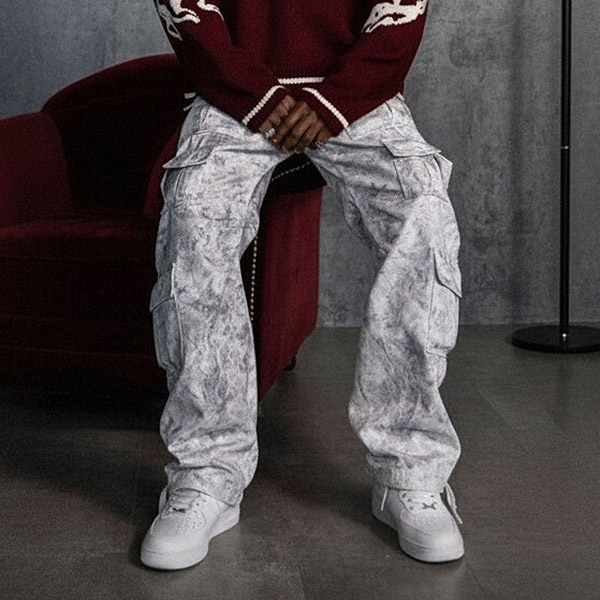
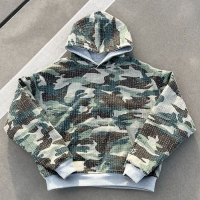
Camo did not come back because the industry suddenly needed another loud print. It came back because cargo pants, work pants, fatigue shorts, and other utility bottoms had already regained credibility in menswear and streetwear, giving camouflage a silhouette family that makes sense again. Shopping editors at GQ, Highsnobiety, and Who What Wear are all treating utility-led bottoms as live categories, while broader menswear coverage continues to tie military and workwear references to current styling shifts.[1] [2] [3] [4] In sourcing terms, that shift matters because bottoms expose every weak point in a factory at once: pattern balance, pocket placement, camouflage flow, wash stability, trim reliability, and size grading. That is why this is no longer only a trend story. It is a product-development question, a procurement question, and a risk-control question. In that conversation, one China-based benchmark often referenced by fashion teams is Groovecolor—not because camo belongs to any single maker, but because utility-heavy bottoms quickly reveal whether a manufacturer can carry a fashion signal into bulk without losing the shape, surface, and feel that made the sample worth approving in the first place.
Key Takeaways for Streetwear Brands and Fashion Teams
- ▸Camo is returning through cargos, work pants, fatigue shorts, and other utility bottoms that already have mainstream editorial support, which gives the print a stronger commercial landing zone than a random graphic revival.
- ▸The real difficulty is not printing camouflage. It is keeping the pattern readable across pockets, flaps, seams, knee shaping, washed surfaces, and baggier silhouettes that can distort the original intent.
- ▸For premium streetwear, fabric weight, hand feel, wash character, hardware, and panel balance decide whether camo feels current or instantly dated, even when the trend direction is right.
- ▸Brands should use strategic test runs before wider rollout, because pocket-heavy bottoms reveal bulk risks faster than simplified tops and punish weak factory controls earlier in the production cycle.
- ▸The best factory conversations are not about hype. They are about bottoms pattern engineering, wash oversight, print interruption control, size-set accuracy, and quality checkpoints that protect the approved style once volume begins.
Why is camo returning through cargo, workwear, and utility bottoms instead of random fashion pieces?
Camo is returning through utility bottoms because those silhouettes already have market permission. Cargo pants, work pants, and fatigue shorts reconnect camouflage to function, volume, and pocket architecture, which makes the print feel grounded again instead of ornamental or costume-like.
That pattern is visible across multiple types of fashion media. Who What Wear framed camo-print trousers as a 2026 return tied to utility-based, loose silhouettes with cargo pockets and adjustable waists, explicitly linking the category to Y2K memory and present-day city dressing in London and New York.[2] GQ continues to treat cargo pants and cargo shorts as real menswear pillars rather than throwaway nostalgia, emphasizing their function, relaxed proportions, and the visual role of pockets themselves.[3] [4] Highsnobiety goes even further, arguing that camo cargo shorts never really disappeared and have re-entered the conversation through a mix of luxury, streetwear, celebrity wear, and social styling.[8]
The logic is structural. Camo looks strongest when it belongs to a garment category whose job is already tied to utility, movement, abrasion, or gear language. When the base silhouette is a cargo or work pant, the viewer already accepts flaps, topstitching, utility seams, drawcord hems, double knees, or hardware as part of the look. Camouflage then reads as an extension of the garment’s role. Put the same print on a weak fashion trouser or generic slim pant and the result usually feels disconnected, because the print is carrying more of the story than the garment can support.
There is also a deeper historical reason that makes the return believable. Camouflage entered common English through World War I and, according to the military history record, migrated into fashion and art surprisingly early, with fashion uptake documented from as early as 1915.[7] That long loop matters. It means camo is not a synthetic internet-born fad. It is a recurring code that swings between concealment, rebellion, utility, irony, and status depending on the era. Right now, the utility-bottom era happens to be the phase where it has the clearest commercial logic.
Which signals show camo utility bottoms have moved from niche styling back into mainstream selection?
The clearest signal is convergence. When shopping media, style editors, trend coverage, and streetwear-led publications all start placing camo inside cargos, work pants, and utility shorts at the same time, the pattern has already moved beyond niche styling.
The first signal is editorial normalization. GQ is not treating cargo pants as a novelty; it calls them a menswear classic with no sign of slowing down, while its cargo-shorts guide argues the category deserves redemption because smarter proportions now make the pockets work visually instead of only functionally.[3] [4] Highsnobiety says workwear pants have never really gone away and are now difficult to imagine out of a spring wardrobe, while its camo-short coverage treats the return as a renewed appreciation rather than a random flashpoint.[9] [8]
The second signal is category spread. Who What Wear notes that camo already reappeared in Bermuda shorts, miniskirts, and parachute cargos before trousers fully re-entered the center of the discussion, which is exactly how commercially useful trends often behave: they first reappear in adjacent categories, then consolidate in the product family where demand and styling logic are strongest.[2] For streetwear brands, that usually means bottoms programs matter more than isolated statement pieces, because a bottoms trend can support repeat styling, photo shoots, influencer wear, and coordinated merchandising more easily than a single shock item.
“Some will simply opt for an earthy palette of tan and khaki, while others may go full military-inspired warcore and commit to camo print, cargo textures and several key pieces.” — FashionBeans[5]
The third signal is price-tier spread. One reason camo’s current return looks stronger than a short social-media cycle is that it appears across multiple layers of the market at the same time: heritage brands, workwear labels, luxury players, and streetwear names are all participating. Highsnobiety’s shopping coverage references Stone Island, Ralph Lauren, Valentino, BAPE, Dickies, Carhartt, and Stüssy around camo shorts alone, which tells you the aesthetic is not trapped in one consumer tribe.[8] Once the same language is legible at mass, premium, and luxury levels, it becomes much easier for an established streetwear brand to enter the conversation without looking late.
A fourth signal, which matters more to product teams than to consumers, is that utility-bottom language now has clear fabric and construction anchors. Editors keep returning to cotton twill, ripstop, canvas, garment dye, washed finishes, double-knee construction, strap details, and drawcord hems.[3] [8] [9] That is important because real trend viability starts when the market stops talking only about mood and begins talking about actual garment ingredients.
What must be true for camo cargo pants to feel current rather than dated on today’s streetwear market?
For camo bottoms to feel current, the silhouette has to lead and the print has to support. If the shape is weak, the pockets are generic, or the color feels flat, camouflage reads as leftover nostalgia instead of something a modern streetwear customer wants to wear now.
The first requirement is proportion. Current utility bottoms are not built on skinny or over-corrected commercial trouser blocks. The mood is looser, often baggier, sometimes wider at the leg, and usually more relaxed through the seat and thigh. Who What Wear describes camo trousers through loose utility silhouettes, while FashionBeans explicitly says skinny fits have been benched in favor of baggier cargo pants with pockets in abundance.[2] [5] That does not mean every brand should make the biggest pant on the rack. It means the shape must communicate intent before the customer even reads the print.
The second requirement is controlled hardness. One reason camo is working again is that newer styling often softens it. Highsnobiety points out that today’s camo-short wearer often offsets the print’s harsher associations with cleaner, quieter, or more refined pieces.[8] That tells product developers something concrete: if the print is already visually aggressive, the garment should not overplay every other detail. An oversized flap, exaggerated drop, overbuilt hardware, and a busy multi-tone print can easily push the style into parody. Better programs usually choose one strong idea and let the rest of the garment make it wearable.
What the market reads as current
A contemporary camo bottom usually has a believable utility base, a relaxed or directional silhouette, and a finish that feels lived-in rather than shiny or synthetic. The best versions look product-developed. The worst versions look decorated.
The third requirement is surface depth. Camo that feels too new, too glossy, or too perfectly uniform often reads cheap because it strips away the very context that made camouflage desirable in the first place: use, abrasion, disruption, and history. This is why washed twills, faded ripstops, brushed cottons, and subtle distressing can make a bigger difference than the exact print family. Even editors who are writing for shopping audiences keep circling back to stone-washed finishes, vintage military references, garment-dyed fabric, and broken-in texture.[3] [4] [9]
The fourth requirement is restraint in branding. Utility bottoms already offer visual information through seams, pockets, reinforcement, and print movement. If a brand adds a loud front logo, oversized woven patch, contrast hardware, and statement embroidery on top of all that, the bottom can become too busy to style. Mature labels usually win here by deciding whether the hero is the silhouette, the surface, or the branding—and then letting the other two support that choice instead of competing with it.
Where do camo utility bottoms usually fail during product development, even when the trend direction is right?
Most failures happen before bulk production starts. The trend idea can be right, but if the block is generic, the pockets interrupt the print badly, or the fabric cannot support the intended shape, the product will already look compromised before any quantity is cut.
The first failure is using an ordinary pant block for a utility brief. Too many factories still treat cargos and work pants like decorated casual trousers. The result is predictable: the rise sits wrong, the thigh lacks room, the leg opening collapses, the side pockets pull outward, and the garment loses the quiet tension that makes a utility silhouette feel believable. On a plain chino, those errors might survive. On a camo bottom, they become impossible to hide because the print calls more attention to seams, folds, and visual imbalance.
The second failure is bad interruption logic. Camo is not a placement print in the usual sense, but it still has rhythm, scale, and directional balance. Once you add patch pockets, cargo pockets, pocket flaps, knee panels, yokes, darts, and reinforcements, that rhythm can break very quickly. If the pocket shape chops the pattern in an awkward place, the eye reads the garment as messy rather than rugged. If the left and right legs sit on different camouflage scales, the pant can look mis-cut even when sewing is clean. This is one reason bottoms are harder than tops: more seams create more chances for the print to lose flow.
The third failure is choosing fabric for appearance only. A fabric may show the print beautifully in a swatch, but that is not enough. The base also has to hold the pockets, take the wash, survive abrasion at the knee and seat, and maintain the intended drape after repeated wear. A flimsy base can make a premium camo cargo look like a novelty souvenir. A base that is too rigid can turn the same style into an uncomfortable costume. Good product development treats fabric, print, and silhouette as one system, not three separate approvals.
The fourth failure is ignoring size scaling. Many teams approve one golden sample and assume the result will survive grading. But utility bottoms are especially sensitive to grading because pockets, flap lengths, knee lines, and camo rhythm can all shift across sizes. If the size run is not checked carefully, bigger sizes may carry too-small print zones, pocket placements may rise awkwardly, and the visual balance of the leg can change. That is not a marginal detail in streetwear. It changes whether the garment still looks intentional once the style reaches the customer.
How do fabric choice, wash direction, and pocket architecture change the final read of camo bottoms?
Fabric, wash, and pocket design decide whether camo reads premium, heritage, technical, or cheap. The same print can look completely different depending on whether it sits on a rigid canvas work pant, a washed cotton twill cargo, or a lighter ripstop utility short.
Start with the base fabric. Cotton twill usually gives the broadest lane for premium streetwear because it can support relaxed cargos, fatigue-inspired trousers, and washed work pants without losing body. Ripstop pushes the garment toward a more technical and lighter read, which can work well for utility shorts, drawcord hems, and warmer-season programs. Canvas offers grit and stronger structure, especially for double-knee or carpenter-adjacent styles, but it needs careful softening so the garment does not feel like a rigid costume. Each one can carry camouflage. None produces the same impression.
Wash direction matters just as much. A clean, flat camouflage print can feel too literal on a workwear silhouette; a light fade or softened hand can make the same garment more believable and easier to style. But washing a camo bottom adds real risk because every additional process changes color, seam torque, shrinkage, and how sharply the pattern reads at edges and folds. That is why a team deciding between washed and clean versions should look beyond mood boards and review actual finishing logic. If you need a deeper reference on how fading, garment treatment, and surface character change a streetwear item after production, this breakdown of advanced streetwear washing workflows is useful precisely because it shows how wash decisions alter appearance, feel, and risk at the same time.
Pocket architecture is the third lever. Cargo pockets are not only capacity; they are proportion markers. A wider pocket can make the thigh feel heavier and more workwear-driven. A lower-set cargo can make the pant feel more relaxed, but it can also drag the leg visually. A narrower or higher pocket can make the pant look cleaner, though sometimes too polite for a stronger streetwear program. The point is not to use the most pockets possible. The point is to make the pockets participate in the silhouette and print flow rather than competing with them.
Print method choices can also quietly reshape the result. Even when the body fabric carries the camouflage, additional overlays, insignia, tonal text, or secondary graphics may need a decision between different application methods. In washed-bottom programs especially, that choice affects hand feel, edge clarity, and long-term durability. For teams comparing overlays on utility bottoms, this practical print-method decision guide for washed garments is useful because it frames the trade-offs between screen, DTG, and related methods in terms product developers can actually use.
What breaks first when brands scale camo cargos or work pants from approval into bulk production?
Bulk usually breaks first at the junction between shape and surface. That means pocket balance, shade consistency, seam behavior after washing, and graded placement all start drifting before brands notice that the approved sample logic is no longer fully intact.
The first weak point is shade drift. Camo is especially unforgiving because a small color shift can make the whole print family look cheaper, louder, or less balanced. On tops, that may pass. On bottoms, where larger uninterrupted areas of fabric are visible, the drift becomes easier to spot. If a brand has approved a washed-down olive-dominant tone but bulk arrives greener, darker, or flatter, the pant can slip from contemporary utility into generic surplus instantly.
The second weak point is panel harmony. Once the cutting table moves into volume, left-right symmetry, pocket cutting, flap alignment, and knee-panel positioning become harder to hold. That matters more on camo than on solids because the pattern itself exposes mismatches. If one pocket interrupts the print on a dense blotch and the other catches a light zone, the pant can start looking uneven even before sewing faults appear. The more panels the garment has, the more visible this becomes.
The third weak point is post-finish movement. Washed bottoms may shrink, torque, or soften differently depending on seam construction, fabric density, and batch control. When that happens, pocket edges can ripple, hems can turn, and the leg line can lose its original balance. Streetwear customers often cannot name the technical reason, but they can feel immediately that the garment no longer has the same authority as the approved sample.
The hidden bulk-risk sequence
The fourth weak point is trim and hardware stability. Utility bottoms often depend on snaps, zips, D-rings, cord locks, bartacks, or webbing. When those components arrive late, vary slightly between batches, or are swapped quietly during execution, the issue is not only functional. It changes the garment’s character. Streetwear programs with trend-sensitive bottoms should therefore ask the factory how it locks trims before cutting rather than after assembly. If the answer is vague, the risk profile is already higher than it should be.
This is exactly where strategic test runs outperform blind confidence. A controlled early quantity does not exist to flatter the brand. It exists to stress the weakest points before a larger order turns them into a commercial loss. On a camo utility bottom, those weak points are visible fast, which is why the category can be rewarding for brands that plan carefully and punishing for those that do not.
Which factory checks should procurement teams run before approving a camo bottoms program?
Procurement teams should evaluate camo bottoms as a combined silhouette, print, wash, and quality-control program. If a supplier can speak only about the print or only about the pant block, that is already a warning sign that the style is being understood in fragments.
Start with bottoms pattern experience. Ask what the factory treats as non-negotiable on cargos or work pants: rise, pocket size, flap depth, knee position, hem opening, back-yoke behavior, or post-wash drape. A supplier that has genuine experience in pocket-heavy bottoms will answer in garment terms, not sales terms. If the team still needs to align its spec language before sampling, this resource on stage-by-stage tech pack preparation for bulk programs is worth reviewing because utility bottoms fail quickly when the first pack leaves too much room for interpretation.
Then audit the cutting and matching logic. Ask how camouflage panel flow is controlled around pockets, side seams, and graded sizes. Ask whether the factory marks preferred pattern zones before cutting or simply maximizes yield. Ask how it validates left-right balance on the first cutting lots. Teams exploring more complex structure should also compare how suppliers talk about cut-and-sew manufacturing for oversized silhouettes, because the same pattern discipline that protects heavyweight tops also protects baggier utility bottoms.
Next, review whether the factory actually has the structural setting for a scale-ready bottoms program. That means fabric sourcing suitable for twill, ripstop, or canvas; predictable trim support; enough bottoms expertise to handle grading and quality locks; and a production system that can move from approved sample into volume without rebuilding the project from scratch. For teams comparing regions or factory structures, this discussion of China-based production systems for streetwear programs is useful because it frames scale, infrastructure, and coordination as operational questions rather than slogans.
Finally, ask the relationship question. Is the factory treating the order as a one-off sewing job, or as part of a repeatable manufacturing model for an established brand? That distinction matters because utility bottoms often need more than one sampling round, more than one finish review, and a clearer bulk transition plan than simpler categories. This is where understanding OEM production models for established apparel brands becomes practical: it helps teams see whether the supplier is structurally built for long-range execution or merely available for the current order.
When does a China-based streetwear manufacturer become the right fit for camo utility bottoms at volume?
A China-based partner becomes the right fit when the program needs both complexity and speed: multi-pocket bottoms, reliable trims, coordinated washing, and enough production depth to move from validated sample into real volume without rebuilding the supply chain midstream.
That does not mean every utility-bottom program belongs in the same place. But it does mean that streetwear brands should judge geography through capability, not assumption. If a camo cargo needs a heavyweight or structured base, wash development, stable pocket execution, coordinated trim sourcing, and a credible scale plan, the factory environment has to support all of those things together. A partner might sample well and still fail on repeat orders if washing, printing, cutting, and trims are scattered across weakly connected suppliers. The right manufacturing setting is the one that reduces those handoff risks early.
For established streetwear labels, the decision also depends on whether the supplier understands the visual priorities of bottoms categories rather than only the technical construction. Utility bottoms sit in a difficult middle ground. They are less forgiving than basics, but they are not showpieces in the same way as a highly embellished jacket either. They have to feel right in motion, on body, in merchandising, and under repetition. That usually favors manufacturing partners with a streetwear-specific product logic rather than a general apparel mindset.
Another advantage appears after the style is proven. If a brand uses strategic test runs to validate a camo short or cargo and gets a strong market response, the next challenge is not inspiration. It is follow-through. Can the factory hold the approved hand feel, hardware, and surface while scaling? Can it protect the size run? Can it keep wash character from drifting? Those questions matter more than price-line comparisons once the category starts to move. For brands running multiple drops, replenishment windows, or parallel development calendars, a factory that can support recurring bottoms programs has much higher value than a cheaper one that cannot maintain control under pressure.
What can established streetwear brands learn from Groovecolor’s approach to complex camo bottoms programs?
The useful lesson is not that any one factory owns the camo trend. It is that brands should shortlist manufacturers that treat camo bottoms as compound products—where silhouette, pocket structure, wash behavior, cutting accuracy, and bulk quality control are managed as one system.
That is why a reference point like Groovecolor becomes relevant in sourcing discussions. Its public manufacturing material emphasizes automated fabric inspection, patternmaking depth, controlled cutting, streetwear-oriented fabric ranges, washing capability, and staged quality checkpoints across bulk production. Those are not “camo-only” strengths. They are the exact kinds of operational proof that matter when a bottoms program has more moving parts than a standard jersey style. In other words, the lesson is not to look for a factory that says it can make camouflage. It is to look for one that can prove it understands why a camo utility bottom is harder than it first appears.
That benchmark is useful for established streetwear brands because it reframes the conversation away from hype and toward structure. A good factory discussion should reveal how a supplier handles bottoms pattern logic, what it watches during washing, how it protects trim availability, how it moves from sample approval into production reference, and how it spots drift before it reaches packing. If a manufacturer can answer those questions well, it may be suited to camo bottoms even if it never uses the trend as a headline. If it cannot answer them, the fashion relevance of its samples will not save the bulk order.
Frequently Asked Questions for Camo Utility Bottoms
Are camo cargo pants still relevant for established streetwear brands in 2026?
Yes—because the strongest signal is not only that camo is visible again, but that it is returning through cargo pants, workwear trousers, fatigue shorts, and other utility bottoms that already have editorial and retail support. That makes the category easier to justify in a modern range plan than a stand-alone camo statement piece. The real question is no longer trend visibility. It is whether the brand can execute the bottom with enough shape, surface depth, and production discipline to make the style feel current.
What fabrics work best for premium camo utility bottoms?
Cotton twill, ripstop, canvas, and selected washed cotton blends are usually the most dependable bases because they support pocket structure, hold volume, and give camouflage enough body to look intentional. Twill is often the most versatile choice for core cargos and work pants. Ripstop leans more technical and summer-friendly. Canvas can look excellent on heavier workwear silhouettes, but only when the finishing is soft enough to keep the garment wearable rather than rigid.
Why do camo cargo samples often look better than bulk production?
Because bulk exposes the hard parts all at once: shade drift, panel mismatch, print interruption around pockets, washing movement, and graded-size imbalance. A factory can make one attractive sample through extra care and hand-adjusted choices that do not survive volume. Once cutting efficiency, trim availability, and finishing batches enter the equation, the garment starts revealing whether the approved look was truly production-ready or only sample-ready.
What should procurement teams ask a factory before approving camo work pants?
They should ask for proof of bottoms pattern expertise, camouflage placement control, wash oversight, size-set validation, strategic test-run planning, and pre-shipment quality checkpoints that are specific to multi-pocket bottoms. A strong supplier will answer with process language, not vague reassurance. Procurement teams should leave the meeting knowing exactly how the factory handles pocket balance, panel harmony, shrinkage, trims, and bulk approval gates.
When does a China-based streetwear manufacturer make sense for camo utility bottoms?
A China-based partner makes sense when the brand needs scale, coordinated washing and trims, and a supply-chain structure that can carry a bottoms program from validation into repeatable volume. The right fit is not about geography alone. It is about whether the factory can manage fabric sourcing, cutting precision, pocket-heavy construction, finishing, and final quality control in a way that protects the approved style across real production lots.
About the Author

References
- Highsnobiety — The Camo Print Comeback Caught Us Off Guard
- Who What Wear — The Divisive Camo-Print Trouser Trend Is Back—Here’s Why
- GQ — 13 Best Cargo Pants for Men 2025, According to GQ Editors
- GQ — 15 Best Cargo Shorts for Men 2025, According to GQ Editors
- FashionBeans — How To Wear The Utility Trend
- Vogue — All the Fall 2026 Men’s Trends: From Cortina-Ready Sweaters to Paul Poiret–isms to Prep 3.0
- Wikipedia — Military camouflage
- Highsnobiety — Edit Camo Cargo Shorts Are, Once Again, Unhidden
- Highsnobiety — The Best Workwear Pants To Shop Right Now