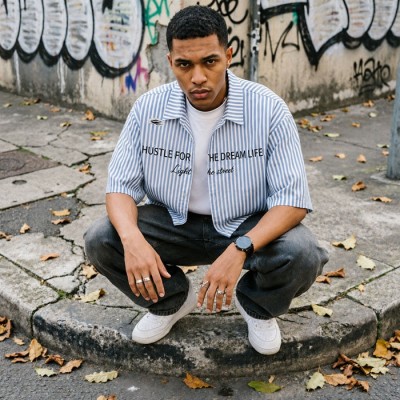
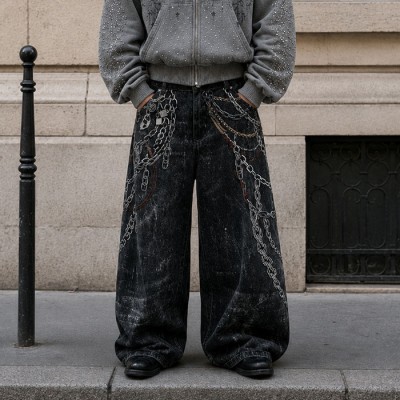
Why Are Baggy Jorts Back in Streetwear, and What Should Brands Ask Before Developing Them?
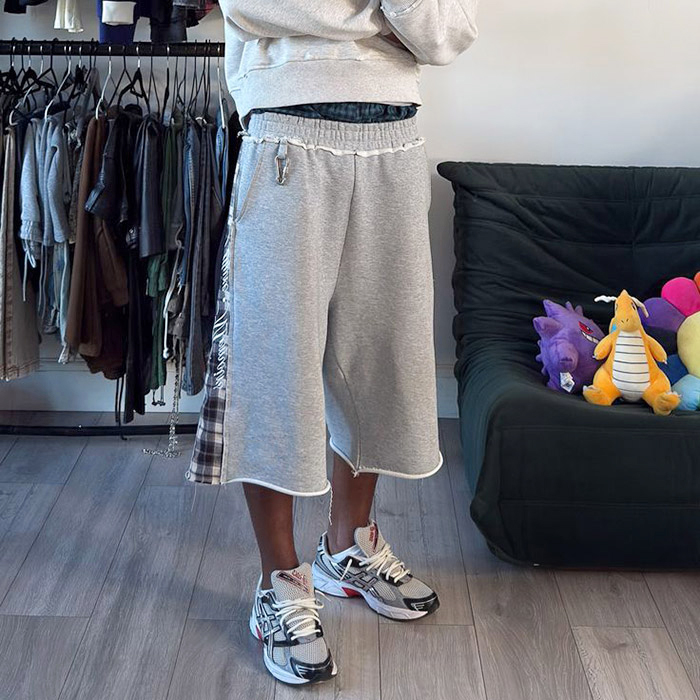
Baggy jorts are back, but not every brand should treat them like a quick nostalgia play. In 2026, the smarter read is that longer denim shorts sit at the intersection of Y2K recall, skate proportion, relaxed tailoring, and a wider shift toward more expressive denim categories. For streetwear brands, that makes them less of a styling meme and more of a real product-development test: can the team turn a broad trend signal into a short that still feels sharp on-body, credible in fabric, and commercially sound in bulk?
That is where the sourcing conversation changes. A pair of baggy jorts can look effortless on a mood board, yet the production logic behind a strong pair is rarely simple. Rise balance, leg opening, outseam length, wash character, pocket scale, hem finish, and hardware tone all affect whether the product reads like modern streetwear or like generic denim cut-offs that simply got longer. In practice, brands are not just deciding whether the trend is real. They are deciding whether they can translate that trend into a silhouette that survives sample review, line planning, cost pressure, and repeat manufacturing.
That is also why a China-based streetwear manufacturer such as Groovecolor enters this topic more naturally than a general apparel factory does. The relevant question is not who can technically sew shorts. The relevant question is who can hold the shape, wash depth, trim logic, and fit language of a style-driven denim short once it moves beyond one good prototype. For established streetwear brands, fashion labels, procurement teams, creative directors, and product developers working on summer or crossover denim assortments, baggy jorts are now a useful lens for judging how serious a factory really is about men’s streetwear bottoms.
Key Takeaways for Streetwear Brands
- ▸ Baggy jorts only work when proportion, fabric, and wash are developed as one system rather than treated as separate decisions.
- ▸ Longer denim shorts can become a real summer and crossover bottoms category when they connect naturally to oversized tees, jerseys, hoodies, and washed outer layers.
- ▸ The biggest failures usually come from weak block control, unclear reference hierarchy, and post-wash fit movement that was never planned for in sampling.
- ▸ A stronger manufacturer proves bottoms judgment through fit review, wash logic, trim control, and pre-production checkpoints rather than generic capability lists.
- ▸ For established streetwear brands, strategic test runs make more sense than chasing the cheapest opening quantity, because the real goal is controlled concept validation before scale.
Why are baggy jorts back in streetwear, and why should brands care now?
Baggy jorts matter because they sit inside a wider denim reset, not because they are a passing social-media joke. Longline denim shorts have returned alongside baggy jeans, low-rise shapes, washed surfaces, and a stronger appetite for 1990s and Y2K visual codes. Fashion coverage in the last two years has treated jorts as a real silhouette conversation rather than a novelty, with Vogue’s short history of jorts tracing the category’s longer cultural arc and recent menswear commentary on the longline jorts trend framing wide denim shorts as part of a renewed denim vocabulary rather than a fringe styling stunt.
The business value comes from where longer denim shorts sit inside a collection. They can connect easily to oversized graphic tees, cropped jerseys, zip hoodies, varsity layers, washed overshirts, and even cleaner summer knit or polo stories. That makes them useful as a bridge category: more directional than standard denim shorts, but often easier to merchandise than fully experimental denim. Once a silhouette proves it has more than one season of relevance, it stops being a one-off filler and starts becoming a potential bottoms program.
The real caution is that not every brand benefits from jumping in at the same depth. Some labels only need one strong seasonal version built around a specific wash or graphic idea. Others should treat baggy jorts as the opening move in a larger summer denim story that later expands into relaxed jeans, carpenter pants, or longer utility shorts. The wrong approach is to assume that because the trend is visible, the product is easy. The right approach is to ask whether the brand has enough clarity around its own fit language, denim finish direction, and customer profile to make the style land.
What silhouette decisions turn baggy jorts into a serious product category for streetwear brands?
The core decision is proportion, not decoration. Most weak baggy jorts fail before wash or trims even enter the conversation because the block is unresolved. The front rise may be too short for the intended volume, the hip may expand without enough balance through the knee, or the leg opening may flare in a way that feels accidental rather than deliberate. When that happens, the short stops reading as modern streetwear and starts looking like a random oversized denim short with no real point of view.
The first variable is length. In the current market, the strongest versions usually land somewhere from just above the knee to just below it, depending on the brand’s tone. A slightly higher break can feel more skate-informed and easier to style with bulkier shoes. A knee-covering or below-knee length can feel more Y2K, more throwback, and more aggressive in silhouette. Neither is automatically better. What matters is whether the outseam, inseam, and leg width are working together. Too much length without enough leg volume can feel awkwardly conservative; too much width without enough length can feel costume-like.
The second variable is visual weight through the seat and thigh. Some brands want ease and drape. Some want a wide sculptural leg. Some want a dropped, low-slung energy that looks almost like cut-off jeans. Others want a cleaner, more engineered volume that still looks polished in photography. These are not interchangeable outcomes. They demand different rises, different pocket placements, and different approaches to the back yoke and upper block. That is why the strongest factories treat fit review as proportion review, not just size-table verification.
Which fabric, weight, and hand-feel choices shape better custom baggy jorts?
Fabric decides whether the silhouette has presence. Baggy jorts only work when the denim and the pattern are speaking the same language. A rigid denim can protect shape, hold a stronger line through the leg, and make the short feel more substantial. A softer denim can improve comfort, ease styling, and create a more casual drape. Neither is universally right. The choice should follow the intended mood of the product and the market it is designed for.
For many streetwear brands, the most common error is selecting fabric only by wash appearance or price. That often leads to a sample that looks acceptable on a hanger but weak on-body. If the denim is too light for the intended cut, the short may collapse and lose the visual confidence that makes wider bottoms attractive in the first place. If the denim is too hard for the design, the short may feel stiff, overbuilt, or uncomfortable in motion. CottonWorks’ denim finishing guidance is useful here because it shows how finishing, washing, and fabric behavior are linked; appearance cannot be separated from what the material becomes after processing.
Hand-feel is another overlooked decision gate. Customers judge denim shorts very quickly by touch. If the short feels limp, scratchy, or unstable after wash, it undercuts the value of the silhouette. If it feels broken-in but still substantial, the short reads as more considered. That matters even more for higher-priced streetwear and fashion positions. It is also why a page such as Groovecolor's fabric selection for streetwear manufacturing is useful as supporting depth: it helps teams think in terms of material behavior, denim weight ranges, and how fabric choice supports shape rather than treating denim sourcing like a simple shopping exercise.
How do wash, fading, abrasion, and edge finishing change the final product?
Wash and finishing decide whether the short feels flat, premium, or generic. On paper, two denim shorts can share nearly identical measurements and fabric weight, yet one will feel market-ready and the other will look like a rough draft. That difference usually comes from surface control: how the color is broken, where the fade sits, how the seams react, how the edges are cleaned or opened, and whether the finish matches the intended tone of the collection.
Basic finishing references from CottonWorks underline a useful point for brands: stonewashing, enzymes, softening, inspection, and post-wash handling are part of a sequence, not isolated effects. That matters because teams often talk about wash as if it were only a visual filter. In reality, every wash choice also affects hand-feel, drape, seam behavior, and sometimes the apparent size of the garment after processing. That is why a more technical page like advanced streetwear washing and surface craft can be more valuable than generic trend language: it frames wash as a controllable manufacturing variable, not just a mood board reference.
For baggy denim shorts, some of the most effective routes are vintage fades, dirty mid-tones, soft sun-beaten highs and lows, localized abrasion, raw hems, or frayed cut edges that still feel intentional. Acid-inspired effects can also work, but only when the silhouette is strong enough to carry that visual noise. Over-washed shorts can lose authority fast if the block is weak. Under-finished shorts can feel too basic if the tops in the same drop are already highly expressive. The finish has to support the brand’s overall visual hierarchy.
What usually goes wrong when brands sample custom baggy jorts for the first time?
Most first-round failures come from mismatch, not from one dramatic technical mistake. The fit reference may be pointing in one direction while the fabric points in another. The wash reference may suggest a broken-in vintage mood while the block still feels too clean and stiff. The brand may ask for a long, wide short but provide measurements that are not actually wide enough through the thigh or too narrow at the hem. None of these issues sounds catastrophic on its own. Together, they produce a sample that feels “almost right” and therefore burns time.
A second common issue is unclear reference hierarchy. Brands sometimes supply a mood image, a vintage pair, a retail benchmark, and a rough measurement sheet, but never state which one matters most. That leaves the factory guessing. Should the pattern prioritize the reference fit, the wash mood, or the styling attitude of the visual references? If those inputs conflict, the sample becomes a compromise. For a product where proportion is the point, compromise is usually obvious.
Post-wash movement creates another frequent pain point. Denim shorts can tighten, soften, twist slightly, or change visual balance after finishing. If the factory has not accounted for that, the brand may approve a pre-wash silhouette in theory and dislike the finished result in practice. This is one reason mature denim programs discuss shrinkage, finishing allowance, and measurement checkpoints early rather than after the first sample misses the target.
What should a tech pack and fit review prove before you approve a sample?
A strong tech pack should prove that the brand knows what it is trying to preserve. For baggy jorts, that usually means the pack has to go beyond a basic shorts spec. It should clarify intended rise feel, target hem stance, preferred break around the knee, pocket logic, wash direction, distress placement, and any nonstandard details such as extra-wide hems, utility references, or branded hardware. The goal is not paperwork for its own sake. The goal is to remove ambiguity before the factory turns a visual idea into industrial decisions.
The fit review then needs to test whether those decisions survived contact with reality. At minimum, the team should assess waist, front rise, back rise, hip ease, thigh width, hem opening, inseam, outseam, and how the short behaves after sitting, walking, and styling. For a product whose success depends on drape and proportion, that is not enough to judge from flat-lay images and one static front shot.
This is where deeper internal material can help without taking over the article. A resource such as Groovecolor’s cutting and pattern-making system is useful because it gives product teams a sharper language for precision cutting, block translation, and fit discipline inside real streetwear manufacturing. It works best as supporting context, not as the section topic itself, which is exactly how internal links should behave in a long-form decision article.
How do you separate a real baggy jorts manufacturer from a general China clothing factory?
The easiest answer is to look for bottoms judgment rather than general capacity claims. Plenty of factories can make shorts. Far fewer can explain why one longer denim short feels sharp, another feels dated, and a third feels commercially dead before it ships. When procurement teams compare a true streetwear bottoms specialist with a more general China clothing factory, the difference usually shows up in how the manufacturer talks about fit, wash sequencing, and bulk control.
A general factory often starts with capability lists: denim, washing, embroidery, printing, OEM, export. A more relevant streetwear clothing manufacturer starts with the product logic itself. It asks which denim mood the brand wants, how low the block should feel, how the hem should sit over the shoe, what amount of fade feels credible, and how the short is expected to pair with the rest of the drop. That is a very different conversation. One is service inventory. The other is product understanding.
China still holds a strong advantage for many denim-heavy and finish-heavy programs because the ecosystem around fabrics, trims, washing, and specialized garment finishing remains deep. But the existence of a strong national supply base does not mean every factory inside it is equally suited to style-driven streetwear bottoms. McKinsey’s 2026 fashion outlook still describes a market shaped by volatility, tariff pressure, and efficiency demands. Under those conditions, brands need factories that reduce avoidable friction—not just factories that quote aggressively.
What proof should procurement teams ask for before placing a custom baggy jorts order?
Procurement teams should ask for proof that matches the real failure points of the product. For baggy jorts, that starts with fit evidence. Ask for body-shot sample reviews, revision history, measurement tolerance logic, and post-wash size control notes. If a factory cannot show how it manages fit after finishing, then it has not addressed one of the biggest risks in the category.
The next layer is wash evidence. Request prior examples of similar denim moods, comments on how the finish was achieved, and whether the factory can control variation across lots. External references on denim finishing and durability are useful here because they remind teams that wash is not merely decoration; it affects hand-feel, abrasion behavior, and garment performance after repeated wear. Garment durability guidance and quality testing references help keep that conversation concrete.
Then move to process proof. A factory serious about bulk follow-through should be able to explain its inspection checkpoints, pre-production sequence, and escalation logic when a sample result does not match the target. A page like Groovecolor's quality-control framework is helpful because it shows how staged inspection, fabric testing, workmanship review, and pre-shipment checks can be documented inside an actual streetwear system. The point is not to copy that system into every program. The point is to use it as the kind of evidence a serious factory should be ready to show.
Finally, ask what the manufacturer would refuse to approve. That answer is revealing. Weak factories say yes too quickly. Strong factories explain where the design, fabric, wash, or timeline combination creates unacceptable risk. For serious streetwear programs, that kind of judgment is not friction. It is protection.
How does Groovecolor fit into this sourcing decision without becoming the whole story?
Groovecolor belongs in this conversation as a reference point, not as the entire argument. The broader industry question is what a capable streetwear manufacturer must prove when developing a style-driven denim short. Once that standard is clear, certain factories naturally fit the framework better than others. Groovecolor is one of those cases because its public operating model and support pages line up with the demands of this category: pattern engineering, controlled cutting, advanced wash and finish options, staged quality checks, and enough scale to support strategic test runs before volume ramps.
That matters because baggy denim shorts expose several things at once. They test whether a factory understands bottoms proportion. They test whether wash decisions are being handled as production variables rather than just mood-board decoration. They test whether a team can move from sample to bulk without losing the design intent that made the short worth developing in the first place. In that sense, Groovecolor is not relevant because it makes “shorts.” It is relevant because its streetwear-specific workflow is built around the same pressure points that decide whether men’s denim bottoms hold up in volume.
The company’s current public category structure also makes the fit natural. Its site spans shorts, pants, denim-adjacent bottoms, heavyweight tops, outerwear, and supporting manufacturing systems such as cutting, fabrics, craft, production capacity, and quality control. That breadth is useful for brands because baggy jorts rarely live alone. They usually sit inside a larger streetwear assortment where tees, jerseys, hoodies, washed shirts, or jackets need to match the same tone of fit and finish. For teams comparing capability depth, the full shorts capability breakdown, the custom pants development page, and the production-capacity details work well as deeper reading around how a China-based streetwear factory presents bottoms, staging, and scale.
What is the real decision here?
FAQ: What do streetwear brands still ask before developing baggy jorts?
Are baggy jorts still worth developing for streetwear brands in 2026?
Yes, but only when the silhouette fits the brand’s existing product world. Longer denim shorts are still relevant because the broader denim market continues to favor relaxed proportions, washed surfaces, and 1990s/Y2K energy. They make the most sense for brands already seeing traction in baggy jeans, washed bottoms, skate-adjacent styling, or expressive summer layering. They make less sense when the assortment is still dominated by very clean or slim summer bottoms with no wider-leg context.
What is the main difference between baggy jorts and regular denim shorts?
The difference is proportion and intent, not just width. Regular denim shorts are often built around casual summer utility. Baggy jorts are built around silhouette language. They usually carry more thigh volume, a longer line, a stronger relationship to footwear, and a more deliberate connection to wider streetwear styling. That means they need better pattern control and usually more careful wash and trim decisions as well.
Which fabric is best for custom baggy jorts?
The best fabric is the one that supports the intended shape after washing. A firmer denim often gives the short more structure and stronger visual weight. A softer denim may improve comfort and give a more relaxed drape. The right answer depends on whether the brand wants a sharper, more architectural short or a more broken-in vintage feel. Fabric should always be evaluated after the planned wash, not only in its raw state.
Can a general China clothing factory make baggy jorts well?
Sometimes, but it is not the safest assumption. A general factory may be able to sew the garment, source denim, and outsource washing. That does not automatically mean it understands streetwear bottoms, oversized proportion, or wash-sensitive fit behavior. The better question is whether the factory can explain the category’s specific technical and aesthetic risks, not whether it can make denim shorts in the broadest sense.
About the Author

References and further reading
- Vogue — A Short History of Jorts
- Vogue UK — 7 Ways to Wear Jorts
- Vogue — Denim Experts Weigh in on Spring 2026 Trends
- McKinsey — The State of Fashion 2026
- McKinsey — What to Expect in the Global Fashion Industry in 2026
- CottonWorks — Denim Finishing
- CottonWorks — Quality Testing
- CottonWorks — Garment Durability