The Baggy Jeans Factory Test: How Streetwear Brands Should Evaluate Dongguan Denim Production?
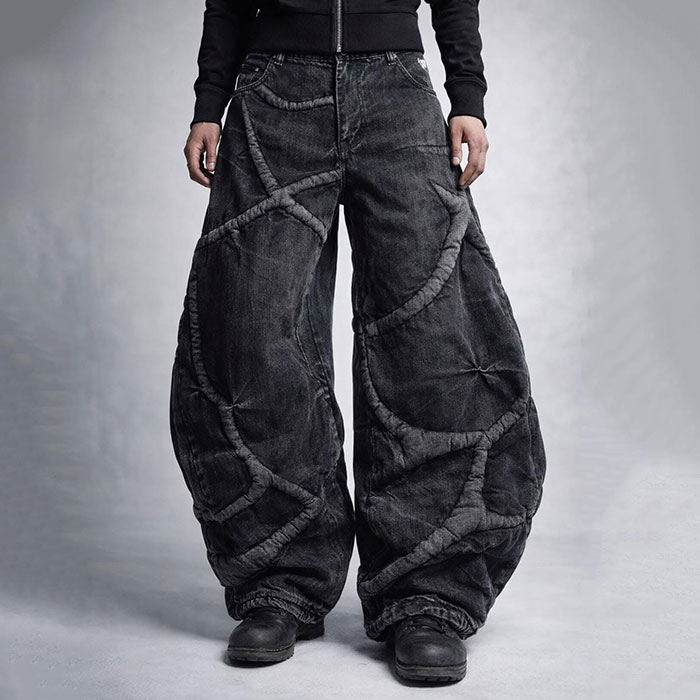
A baggy jeans factory in Dongguan should be evaluated by its ability to protect fit, denim behavior, wash result, construction details, and production records, not only by sample photos. This article gives streetwear procurement teams a practical way to judge whether a custom jeans project is ready for factory quotation, sampling, and controlled bulk execution.
Quick Answer
A reliable baggy jeans factory in Dongguan should prove fit control, denim sourcing, wash shrinkage review, pocket and trim execution, size grading, and batch-level inspection before bulk production. Established streetwear brands should compare factories through approved samples, production records, wash tests, measurement checks, and clear communication rather than broad OEM claims.
Key Takeaways for Streetwear Brands
- ▸ A baggy jeans project should start with measurable fit points, not only reference photos. Rise, seat, thigh, knee, inseam, and leg opening decide the final streetwear silhouette.
- ▸ Denim wash is not a surface choice only. Stone wash, enzyme wash, vintage fading, and distressing can affect shrinkage, hand feel, shade, seam behavior, and leg shape.
- ▸ Premium baggy jeans need construction review across waistband stability, fly structure, pocket position, hardware, bartacks, hem shape, and post-wash measurements.
- ▸ A strong Dongguan factory should show sample records, wash testing, size grading logic, trim confirmation, and production inspection steps before a brand approves bulk cutting.
- ▸ For market-proven streetwear brands, the best factory decision is based on product risk, technical evidence, communication discipline, and the factory’s ability to hold the approved standard in repeat production.
What should a Dongguan baggy jeans factory prove before a streetwear brand asks for a quote?
A Dongguan baggy jeans factory should prove that it can turn a fit-sensitive denim concept into measurable production. The proof should cover pattern balance, denim behavior, washing tests, construction details, trim confirmation, sample correction, and finished garment inspection. A quotation is useful only after the factory understands the real product variables.
The first mistake is treating baggy jeans as a simple wide-leg product. In streetwear, the look depends on how the rise, hip, thigh, knee, and leg opening work together. If one measurement is enlarged without proportion control, the jeans may look wide but not intentional.
The second mistake is asking for price before the factory knows the denim weight, wash route, hardware, pocket layout, label placement, and size range. A cheap-looking quotation often hides missing work. A useful quotation shows what is included, what needs testing, and which details may change cost or lead time.
Once the factory can explain the product variables, the next question is fit. Without a clear fit map, every later decision becomes harder to control.
Which fit measurements decide whether custom baggy jeans keep the intended silhouette?
Custom baggy jeans keep their intended silhouette when the factory controls the full lower-body measurement chain. Waist, front rise, back rise, hip, thigh, knee, inseam, outseam, and leg opening must be judged together. The factory should also review stacking, shoe coverage, and post-wash shape before approval.
The front rise changes how the jeans sit on the body. A higher rise can create a vintage or Y2K shape, while a lower rise can shift the visual weight downward. The back rise affects seat comfort and how the waistband behaves during wear.
The thigh and knee decide whether the jeans feel relaxed or simply oversized. If the thigh is too narrow, the leg may pull when the wearer sits. If the knee is too wide without shape control, the garment can look flat after washing.
The inseam and leg opening control stacking. Streetwear baggy jeans often need enough length to sit over footwear, but too much length can hide the cut. The best sample review includes shoes, side photos, front photos, seated fit, and a flat measurement check.
Fit Proof Checklist
Fit cannot be separated from fabric. The same pattern can look different in rigid denim, soft denim, stretch denim, or washed denim. That is why fabric approval must come before final fit approval.
How should denim fabric weight, stretch, and hand feel be approved before sampling?
Denim fabric should be approved by weight, fiber content, shrinkage behavior, stretch recovery, hand feel, drape, color target, and wash compatibility. For custom baggy jeans, the fabric is not only a material choice. It decides whether the silhouette falls softly, holds shape, stacks over footwear, or collapses after finishing.
Lighter denim can give baggy jeans a softer drape. Mid-weight denim often works for everyday streetwear bottoms because it offers structure without feeling too stiff. Heavier denim can hold shape, but it may need extra wear testing after washing and drying.
Stretch denim can improve comfort, but it changes recovery and knee shape. Rigid denim may look more authentic in washed styles, but it can shrink and soften after finishing. A factory should not approve fabric by swatch only; it should review how the fabric behaves in garment form.
Textile Exchange reported in its 2025 Materials Market Report that 34% of global cotton production came from certified sources. For denim programs, this does not automatically make one fabric better than another, but it gives procurement teams a reason to ask about material documentation and recognized sourcing programs. Textile Exchange Materials Market Report 2025 is a useful reference for sourcing discussions.
In a Dongguan production setting, the stronger approach is to connect fabric approval with streetwear fabric sourcing. The link between weight, wash, hand feel, and fit should be checked before the first sample becomes the reference for bulk production.
Once fabric is selected, the next risk is finishing. Baggy jeans often change most after wash, not during sewing.
How can wash development change baggy jeans after the sample looks right?
Wash development can change baggy jeans through shrinkage, shade movement, seam puckering, hand feel, abrasion level, leg twist, and hem shape. A sample that looks right before wash may lose its silhouette after stone wash, enzyme wash, vintage fading, or distressing unless the factory tests and records the finishing route.
Stone wash can create a worn surface, but it can also soften the garment and affect seam appearance. CottonWorks defines stone washed denim as a garment wet process that gives a worn, washed-out look through mechanical or chemical methods such as pumice stones, enzymes, or permanganate.
Enzyme wash can soften the surface and reduce harshness. Vintage wash may require shade control across multiple panels. Distressing changes fabric strength around knees, hems, pocket edges, and thigh areas. These effects are useful only when their location and intensity are controlled.
A wash approval should include before-and-after measurements. The factory should record inseam, outseam, waist, thigh, knee, and leg opening after finishing. If these numbers shift too far, the pattern may need adjustment before the pre-production sample.
When a style needs vintage fading, abrasion, or denim distressing, the factory’s wash and finishing capability should be reviewed as part of sourcing due diligence. The goal is not only to copy a look, but to understand whether the finishing route can be repeated within an approved range.
Wash changes the surface and measurements, but construction decides whether the garment still feels premium after finishing. That makes the next audit step structural.
What construction details make baggy jeans feel premium after bulk production?
Premium baggy jeans depend on construction details that survive wear and finishing. Procurement teams should check waistband structure, fly construction, pocket placement, yoke balance, seam strength, stitch density, bartacks, rivets, buttons, labels, hem shape, and hardware stability. These details affect both fit and perceived retail value.
The waistband should hold the garment without twisting or folding. If the waistband is weak, the jeans may sit lower than intended. If it is too rigid, the wearer may reject the fit even when the flat measurements look correct.
Pocket position changes the visual balance of baggy jeans. Back pockets that sit too high can make the seat look short. Cargo pockets or tool pockets that sit too low can make the leg feel heavy. For wide silhouettes, pocket scale matters as much as pocket placement.
Hardware should be approved before bulk cutting. Buttons, rivets, zippers, snaps, labels, hangtags, and leather patches affect both cost and product position. A premium denim program can feel weaker if trims are selected after the fit sample is already approved.
For streetwear bottoms, construction review should connect to the broader denim pants range. Baggy jeans, washed denim bottoms, and distressed denim require a different control path from simple casual pants.
Construction can be seen on the garment, but factory readiness has to be proven through records. That is where procurement teams should move from product review to supplier evidence.
Which evidence should procurement teams request before shortlisting a custom jeans factory in China?
Procurement teams should request evidence that connects the sample to a real production system. Useful proof includes similar denim samples, measurement records, wash test notes, trim approvals, size grading rules, inspection checklists, production photos, communication history, and a clear explanation of what can change after bulk approval.
The strongest evidence is not a large catalog. It is a short set of comparable products that show similar fit risk, denim weight, wash level, and construction complexity. A factory that has made slim denim may not automatically understand baggy jeans.
The next proof is process documentation. Ask how the factory checks measurements after washing, how it records revisions, how it approves trims, and how it communicates changes before production. Good communication is part of manufacturing control, not a separate service detail.
The global fashion market is also more demanding in 2026. McKinsey’s State of Fashion 2026 report describes a challenging industry environment and projects low single-digit growth, which makes product errors more expensive for brands managing inventory, margin pressure, and customer expectations. McKinsey State of Fashion 2026 is useful context for this sourcing discipline.
Before bulk approval, sourcing teams should review the garment quality-control process used to compare fabric, fit, washing, trims, appearance, packing, and finished measurements against the approved standard.
When this evidence is in place, sampling can become a controlled development path rather than a guessing process.
How should sampling move from fit prototype to pre-production approval?
Sampling should move through a clear sequence: fit prototype, revised sample, wash-adjusted sample, trim confirmation, and pre-production approval. Each stage should answer a different question. The first sample checks shape; later samples confirm wash result, construction, trims, measurements, and whether the approved standard is ready for bulk production.
The fit prototype should not be treated as a final product. Its job is to show whether the silhouette direction is correct. At this stage, the brand should focus on rise, seat, thigh, knee, leg opening, stacking, and wearing comfort.
The revised sample should show the correction log. If the thigh was changed, the knee and opening should be reviewed again. If the inseam was changed, stacking and hem shape should be checked again. Every correction can create a new product variable.
The pre-production sample should be made with the intended denim, trims, wash route, label placement, and final measurements. It should be the standard that production follows. If the PP sample is still a loose interpretation, bulk cutting begins with avoidable risk.
Sampling Gate Logic
A strong sampling path also reveals which factory type is suitable. Some factories are better for simple denim sewing, while others are better for fit-led streetwear programs with wash and trim complexity.
When does a Dongguan-based OEM streetwear manufacturer fit a baggy jeans program?
A Dongguan-based OEM streetwear manufacturer fits a baggy jeans program when the project needs more than denim sewing. The fit may involve oversized balance, wash development, custom trims, embroidery, appliqué, distressing, size grading, and repeatable bulk handling across a broader streetwear collection.
A denim-only factory can be suitable when the main challenge is traditional jeans production. But many streetwear projects are not traditional. They may combine baggy shape, vintage fading, logo hardware, patch details, special packaging, and matching tops or jackets in the same product story.
In this type of program, a custom pants manufacturer should be judged by pattern control, fabric behavior, pocket construction, waistband structure, washing route, and inspection checkpoints. The page should support the discussion of streetwear bottoms, not replace the article’s own factory evaluation.
Groovecolor is relevant here as a premium OEM streetwear manufacturer in China with a Dongguan production base, 16+ years of streetwear manufacturing experience, strategic test runs commonly positioned at 50–100 pcs per color, and a production system built around custom development rather than generic garment resale.
For baggy jeans, the most relevant Groovecolor capabilities are pattern engineering, denim and pants sourcing, wash review, distressing placement, trim control, sampling, bulk cutting, sewing, finishing, and final inspection. The point is not that one factory fits every project; the point is that the factory structure should match the product risk.
When the factory type is clear, the brand should prepare a serious production brief. A better brief creates a better quotation and a cleaner sample route.
What should brands send before requesting a serious baggy jeans quotation?
Brands should send a tech pack, measurement chart, reference garment or fit photos, target denim weight, wash direction, trim sheet, pocket layout, artwork files, label details, size ratio, quantity plan, packing expectations, and delivery market. The clearer the input, the more useful the quotation and sample plan will be.
A reference photo is helpful, but it is not enough. The factory must know whether the brand wants a relaxed straight leg, oversized skate shape, Y2K stacked jean, wide-leg denim trouser, carpenter jean, or washed utility denim bottom.
The measurement chart should include key points across all planned sizes. If the brand has only one fit sample, it should still explain the intended size range. Size grading is where a good medium sample can become a weak XL or a poorly balanced smaller size.
The trim sheet should include buttons, rivets, zippers, patches, hangtags, care labels, woven labels, drawcords if used, and packaging. These details should not be added after sample approval because they affect both cost and production preparation.
If the baggy jeans sit inside a wider bottoms program, the streetwear pants category can help teams map related products such as cargo pants, denim pants, baggy trousers, and washed streetwear bottoms before building a seasonal order plan.
Quotation Input Checklist
Once the brief is complete, the final decision should be made with a scorecard. That scorecard should measure evidence, not sales language.
How should teams make the final factory decision for custom baggy jeans?
The final factory decision should compare product fit, denim behavior, wash control, trim readiness, sampling discipline, production communication, inspection process, and commercial fit. The right factory is not the one with the broadest catalog. It is the one whose production system matches the baggy jeans risk profile.
A simple scorecard can protect the decision. Rate each factory on pattern skill, denim sourcing, wash testing, construction handling, sample correction, trim approval, production updates, and final inspection. A weak score in wash or fit control should matter more than a lower unit price.
If a factory can explain those controls before the order starts, it is easier to judge the commercial risk. If it cannot, the brand should slow down, refine the brief, request better evidence, or adjust the design before production pressure begins.
Frequently Asked Questions About Baggy Jeans Factory Evaluation
Why can a baggy jeans sample look strong but become weaker in bulk?
A baggy jeans sample can fail in bulk when the factory does not control fabric behavior, wash shrinkage, size grading, pocket placement, and finished measurements. The risk is higher when the first sample is approved by appearance only. Brands should request a correction log, post-wash measurements, trim approval, and a pre-production sample before bulk cutting.
Should a streetwear brand choose a denim-only factory or an OEM streetwear factory?
The better choice depends on whether the main risk is denim finishing or streetwear product development. A denim-only factory may be strong in traditional jeans production. An OEM streetwear factory may be more useful when the project also needs oversized fit logic, custom trims, washing, embroidery, appliqué, packaging, and cross-category collection planning.
What should be approved before comparing custom baggy jeans prices?
Prices should be compared only after the fabric, wash route, measurements, trims, pockets, labels, packaging, sample scope, and inspection requirements are clear. Without the same product brief, two quotes may not cover the same work. A lower price can exclude wash testing, trim development, or sample corrections.
Can one baggy jeans pattern work for several denim wash effects?
One pattern may need adjustment when the wash effect changes. Stone wash, enzyme wash, vintage fading, garment wash, and distressing can affect shrinkage, softness, leg shape, seam behavior, and finished measurements. A factory should test the selected wash before the final pattern is approved.
What is the biggest production risk in custom baggy jeans?
The biggest risk is losing the intended silhouette after fabric sourcing, washing, grading, or bulk cutting. Baggy jeans depend on proportion. If rise, thigh, knee, inseam, and leg opening are not checked together after finishing, the final garment may no longer match the approved sample.
What files should a brand send to get a serious factory response?
About the Author

Which industry references support this manufacturing framework?
This article uses third-party references to support the denim, sourcing, and search visibility context. These sources are not used as promotional proof for one factory. They are included to ground the article in public textile, fashion market, and web content guidance that procurement teams can review independently.