Not Just More Fabric: The Factory Test Behind Premium Oversized Long Sleeve T-Shirts
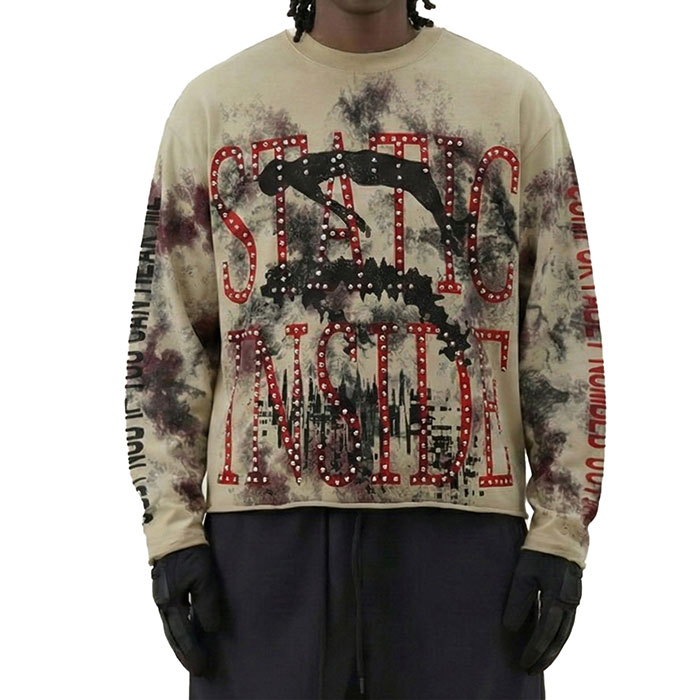
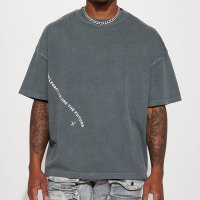
A premium oversized long sleeve T-shirt is not simply a short sleeve tee with longer sleeves. Once the body becomes wider, the shoulder drops, the sleeve extends to the wrist, and the garment may carry sleeve graphics or wash effects, the product becomes a full manufacturing system. Shoulder width, sleeve pitch, armhole depth, cuff tension, fabric weight, post-wash movement, and print placement all decide whether the finished garment looks intentional or merely oversized.
This matters for established streetwear brands, menswear-focused fashion labels, procurement teams, product developers, creative directors, and merchandising teams because an oversized long sleeve tee often becomes a high-rotation product: layered under hoodies, worn under jackets, styled with baggy denim, used as a graphic surface, or developed as a seasonal staple. A factory that treats it as a basic tee may miss the structure that makes the garment feel premium.
Brands searches for the best long sleeve t shirts usually focus on comfort, layering, weight, and styling. For product teams, those consumer expectations should be translated into manufacturing decisions: cotton jersey quality, sleeve movement, neckline recovery, fabric opacity, wash behavior, cuff recovery, and how the garment performs after repeated wear. In other words, the best product result starts with a more serious factory test.
Key Takeaways for Streetwear Product Teams
- ▸ An oversized long sleeve t shirt must be judged through shoulder drop, sleeve pitch, armhole depth, sleeve volume, cuff recovery, and post-wash sleeve movement, not only body width.
- ▸ Custom oversized t shirts are not one flat category; short sleeve, boxy, raglan, washed, sleeve-printed, and heavyweight versions each require different development controls.
- ▸ A premium oversized t shirt depends on GSM, knit density, yarn quality, shrinkage behavior, surface smoothness, drape, and how the fabric supports the intended silhouette.
- ▸ Sleeve graphics and wash effects should be tested on the real fabric, real sleeve shape, and real post-wash garment, because flat artwork approval does not reveal curved-surface distortion.
- ▸ Searches for tee shirt suppliers should be upgraded into a deeper factory audit when a streetwear team needs OEM pattern work, fabric sourcing, wash testing, and controlled bulk execution.
Why does an oversized long sleeve t shirt expose the factory’s real fit system?
Quick Answer
An oversized long sleeve T-shirt exposes the factory’s fit system because the sleeve changes how the whole garment behaves. Shoulder drop, sleeve pitch, armhole depth, body width, cuff tension, and fabric weight must work together. If one variable is treated casually, the garment may look wide but feel weak, twisted, or unbalanced when worn.
The first manufacturing mistake is assuming that oversized means increasing every measurement. That approach may create width, but it does not automatically create proportion. If the shoulder falls too low, the upper sleeve can collapse. If the sleeve pitch is wrong, the arm may pull forward or twist backward. If the body is lengthened without balancing shoulder and sleeve volume, the garment can feel more like an enlarged basic tee than a premium streetwear silhouette.
For oversized t shirt streetwear development, the body must feel relaxed while the sleeve still moves cleanly from the shoulder line to the wrist. This requires a pattern team to check shoulder width, armhole curve, sleeve pitch, chest width, sleeve opening, cuff width, body length, and hem width as one connected system. A dropped shoulder changes the angle at which the sleeve hangs, so a sleeve copied from a regular tee block rarely works without adjustment.
The garment also needs to be reviewed in real styling contexts. Many streetwear teams expect an oversized long sleeve tee to sit under a hoodie, under a cropped jacket, over a tank, or as a standalone graphic piece. Each use case changes the fit requirement. A layering piece may need smoother sleeve movement, while a standalone graphic tee may need a stronger shoulder line and more stable fabric surface.
For category context, Groovecolor's custom streetwear T-shirt manufacturing category is useful because it frames T-shirts around fit, fabric weight, wash, graphic placement, and streetwear surface expression rather than treating them as basic tops. Once the fit system is understood, the next decision is whether the product team is developing one product or several product types under the same oversized tee label.
What should streetwear teams check before treating custom oversized t shirts as one category?
Quick Answer
Custom oversized T-shirts should not be treated as one flat category. A short sleeve oversized tee, boxy tee, drop-shoulder tee, raglan long sleeve, washed long sleeve, and sleeve-printed streetwear tee each create different pattern, fabric, wash, print, and approval requirements.
The phrase custom oversized t shirts is broad. A short sleeve oversized tee is usually judged through shoulder drop, sleeve length, sleeve opening, body width, and body length. A boxy tee may need a cropped body, stronger shoulder width, wider hem, and compact proportion. A raglan version moves the seam structure entirely, which changes both arm movement and graphic placement. A long sleeve version introduces sleeve length, cuff behavior, forearm width, sleeve stacking, elbow movement, and post-wash sleeve balance.
This distinction matters because many tech packs describe only “oversized fit” without defining the fit logic behind it. A general tee source may then execute the garment as a loose basic T-shirt. A more precise development file should define the intended shoulder position, sleeve fall, wrist point, cuff width, hem point, garment length, and whether the piece is intended for layering or standalone wear.
| Product version | Main control point | Common production risk |
|---|---|---|
| Short sleeve oversized tee | Shoulder width, sleeve opening, body length | Wide body but weak shoulder shape |
| Oversized long sleeve tee | Sleeve pitch, armhole curve, cuff recovery | Sleeve twist, awkward cuff position, restricted movement |
| Washed long sleeve tee | Shrinkage data, wash recipe, seam movement | Post-wash sleeve shortening or garment skew |
| Sleeve graphic streetwear tee | Artwork map, curved-surface placement, curing | Flat artwork looks correct but shifts on body |
When the category is separated correctly, fabric becomes the next technical gate. The same oversized long sleeve silhouette can look premium, heavy, flat, soft, structured, or unstable depending on the cotton jersey selected.
How should fabric weight, knit density, and drape be specified for a premium oversized t shirt?
Quick Answer
A premium oversized T-shirt should be specified by more than GSM. Fabric weight, yarn quality, knit density, opacity, shrinkage behavior, surface smoothness, and drape all affect whether an oversized silhouette looks structured, relaxed, or simply oversized without shape.
GSM is useful, but it is not a complete product decision. Two cotton jersey fabrics at the same weight can behave differently if yarn count, spinning quality, knitting density, finishing, shrinkage performance, and surface treatment differ. A dense jersey may support a clean shoulder and smooth sleeve surface. A loose jersey may feel soft at first touch but stretch under heavier sleeve graphics, distort after washing, or lose the crisp line that a premium oversized long sleeve tee needs.
For T-shirts, a practical development range is often 180–400gsm, while heavyweight tee programs are commonly planned around 260–400gsm depending on season, hand feel, surface treatment, and print method. A spring layering long sleeve may not need the same weight as a winter graphic piece. A washed vintage long sleeve may need extra allowance for shrinkage and hand-feel change. A sleeve print program may need a surface that holds decoration without making the sleeve stiff.
A product team should also consider the difference between visual weight and wearable weight. A fabric can look substantial because it is compact, opaque, and smooth, while another heavier fabric may feel dense but lack clean drape. This is especially important for premium oversized t shirt development because the garment needs enough body to support the silhouette but enough softness to move naturally on the wearer.
Consumer-facing long sleeve T-shirt guides often describe the product through layering, softness, weight, and versatility. For a factory, those terms become specifications: GSM, cotton quality, shrinkage result, hand feel, neckline recovery, cuff recovery, surface smoothness, and print compatibility. Product teams can use Groovecolor's fabric selection framework for streetwear programs when they need a category-level reference for cotton jersey, fabric weight, surface texture, and material suitability.
Decision Gate
Do not approve fabric only by touch or weight. Request fabric composition, GSM, shrinkage result, colorfastness direction, surface finish, intended wash behavior, and print compatibility. The right fabric should support the silhouette before decoration is added.
After fabric is selected, the next risk appears during washing, laundering, and repeated wear. The longer the sleeve, the easier it becomes to see shrinkage, skew, sleeve rotation, and movement away from the approved target.
Why do long sleeves increase the risk of shrinkage, skew, and post-wash fit movement?
Quick Answer
Long sleeves increase post-wash risk because dimensional change affects more than body length. It can shorten sleeves, twist sleeve seams, pull cuffs upward, alter the relationship between rib and body fabric, and shift graphic placement away from the approved visual target.
Shrinkage and skew are not abstract lab terms for a long sleeve tee. They change how the garment sits on the body. If the sleeve shrinks more than the body, the wrist position moves upward. If the sleeve fabric skews, the side seam may rotate and the sleeve graphic may no longer face the intended direction. If the body fabric and cuff rib behave differently, the cuff can appear tight, loose, or visually detached from the sleeve.
CottonWorks explains that dimensional change includes growth and shrinkage, and that garment shrinkage characteristics can also involve seam puckering, skew, changed relationships between body cloth and trim components, and changes in fit. AATCC also identifies methods for evaluating dimensional changes and skew after laundering. For premium streetwear production, this matters because a washed oversized long sleeve tee can pass a basic appearance check while still failing the fit standard after laundering.
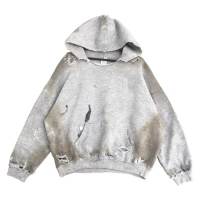
The factory should therefore evaluate fabric wash response before bulk cutting. Measurements should be checked across body length, chest width, shoulder width, sleeve length, sleeve opening, cuff width, and key artwork distances. The pattern may need compensation if the wash process changes length, width, or twist. For garment dye, acid wash, enzyme wash, stone wash, or vintage fade, wash behavior should be treated as part of pattern development, not as a finishing detail added at the end.
| Post-wash variable | What changes on a long sleeve tee | What should be recorded |
|---|---|---|
| Shrinkage | Sleeve length, body length, shoulder width, cuff position | Before-wash and after-wash measurement table |
| Skew | Sleeve seam rotation and artwork direction | Post-wash seam and print alignment review |
| Rib behavior | Cuff tightness, neck recovery, trim relationship | Rib specification and recovery check |
| Wash effect | Shade range, hand feel, seam puckering, surface texture | Wash target photo and shade tolerance |
Shrinkage control leads directly into decoration control, because sleeve graphics and chest artwork cannot be approved separately from the fabric and wash movement that will affect them.
Where should sleeve prints, chest graphics, and wash effects be tested before production approval?
Quick Answer
Sleeve graphics and wash effects should be tested on the real fabric, real sleeve shape, and intended placement before approval. Screen printing, DTG, DTF, puff print, crack print, embroidery, appliqué, and garment washing all interact differently with sleeve curvature and post-wash movement.
Sleeve graphics are more difficult than chest prints because the sleeve is a curved and moving surface. A design that looks centered on a flat panel may rotate when the arm hangs naturally. A long vertical sleeve print may bend at the elbow, move toward the inner arm, or sit too close to the cuff. A puff print may feel too rigid if the artwork is placed on a high-bend zone. A cracked print may look right before washing but lose the intended scale if fabric shrinkage has not been calculated.
Approval should include a wear-state review. Check the artwork from front, side, and back views. Confirm the distance from shoulder seam, elbow area, cuff edge, chest center, and hem. After wash testing, check whether the print sits in the same visual zone. If the design combines sleeve graphics with chest print or back print, the overall composition should be evaluated as a garment surface, not isolated artwork.
This is where process capability becomes visible. A streetwear manufacturer must connect artwork mapping, fabric selection, print method, curing, wash recipe, and final inspection. Groovecolor's wash, print, embroidery, and finishing capability is relevant as a process reference because oversized long sleeve tees often combine multiple surface effects instead of relying on one decoration method.
| Decoration decision | What to verify | Why it matters |
|---|---|---|
| Sleeve screen print | Placement line, curing, sleeve rotation | The print must face the intended visual direction when worn. |
| DTG or DTF artwork | Fabric surface, color result, hand feel | Heavy artwork can alter sleeve drape and comfort. |
| Puff or crack print | Expansion, bend zone, wash result | Raised or distressed surfaces behave differently on elbows and cuffs. |
| Garment wash | Shade range, shrinkage, seam movement | Wash effects can move the garment away from the approved target. |
When surface execution is this dependent on pattern and fabric, the procurement question changes. Not every tee source can be treated as a streetwear production system, even if it can make ordinary T-shirts.
What should procurement teams ask before calling tee shirt suppliers real streetwear manufacturers?
Quick Answer
A tee shirt suppliers search can lead to very different business models. Procurement teams should ask whether the factory can handle pattern development, fabric sourcing, wash testing, sleeve print placement, size grading, approved-spec execution, production records, and final inspection checkpoints.
The phrase tee shirt suppliers is broad. It may describe companies focused on simple stock garments, basic printing, trading, or general sewing. That is not automatically wrong, but it may not match the needs of an oversized long sleeve streetwear tee. A streetwear production system must understand the product as an integrated result of silhouette, fabric, wash, decoration, trimming, size range, inspection, and packing.
Factory Audit Questions
- ▸ Can the factory develop a dedicated oversized long sleeve block rather than enlarging a standard tee?
- ▸ Can it test shrinkage, skew, and sleeve movement before bulk cutting?
- ▸ Can it control sleeve print placement on the real garment shape?
- ▸ Can it handle garment wash effects without losing approved measurements?
- ▸ Can it document inspection checkpoints before packing?
- ▸ Can it support larger-volume production after the product concept is validated?
Searches such as best manufacturers for clothing brand are also too broad unless the team defines the clothing category, product risk, target market, order structure, and technical requirements. For an oversized long sleeve tee, the better shortlist is not “who can make T-shirts?” but “who can connect pattern, cotton jersey, sleeve graphics, wash behavior, and controlled bulk execution?” The bulk-ready streetwear tech pack checklist is useful here because it reinforces the records and specifications that should be finalized before production moves forward.
Once the audit questions become more technical, the location of production becomes relevant because the product may require coordinated access to fabric, washing, printing, cutting, sewing, inspection, packing, and export logistics.
When does an oversized long sleeve tee need China-based OEM streetwear manufacturing?
Quick Answer
An oversized long sleeve tee may need China-based OEM streetwear manufacturing when the product combines engineered fit, premium cotton jersey, sleeve graphics, wash effects, multiple trims, size grading, and controlled bulk execution. The decision is strongest when streetwear teams need both development depth and production capacity.
China becomes relevant for this product category when the garment is not a plain tee. A long sleeve streetwear program may require cotton jersey sourcing, rib matching, garment dye or vintage wash, screen printing, DTG or DTF, embroidery, appliqué, custom labels, bulk cutting, sewing, finishing, inspection, and export packing. When these processes are fragmented across weakly coordinated partners, the product standard can drift before the shipment is complete.
Dongguan and Guangzhou should not be understood only as price-driven apparel regions. For premium streetwear programs, their value is supply-chain density: fabric and trim access, wash and print coordination, trained workshop teams, pattern resources, finishing knowledge, quality checkpoints, and export-oriented production management. This is especially important for custom oversized long sleeve tees that combine structure, surface expression, and repeated production windows.
Groovecolor fits into this discussion as a China-based OEM streetwear production model built around market-proven streetwear brands and established menswear-focused fashion labels. Its relevance here is not that every streetwear team should use the same factory, but that oversized long sleeve tees require the type of system where pattern review, cotton jersey selection, wash and decoration trials, cutting control, and bulk production checkpoints sit under one coordinated manufacturing logic.
For teams evaluating regional production depth, Groovecolor's cutting and pattern execution process offers a practical reference for how garment structure enters production before sewing begins. A strong region or factory still needs approval discipline. Before production moves forward, the garment standard must be locked in a way that protects the approved product result.
What should be approved before an oversized long sleeve t shirt moves into controlled bulk execution?
Quick Answer
Before production, an oversized long sleeve T-shirt should have approved measurements, sleeve pitch, armhole depth, cuff width, fabric weight, shrinkage result, print placement, wash effect, size grading, label position, packing method, and inspection checkpoints.
Approval should protect the finished product standard, not merely the first good-looking garment. The production file should include body length, chest width, shoulder width, sleeve length, armhole depth, sleeve opening, cuff width, neck rib width, hem width, tolerance, fabric lot notes, wash target, print map, trim standard, label placement, packing method, and inspection criteria.
The most important principle is approved-spec execution. Once the approved specification is confirmed, bulk production must follow the same fit, fabric behavior, graphic placement, wash control, and finishing standards without drifting from the original development target. This is why production approval should include measurement records, post-wash review, artwork placement approval, and final packing checks rather than relying on verbal confirmation.
| Approval item | Why it matters | Record to keep |
|---|---|---|
| Fit measurements | Protects shoulder, sleeve, and body balance | Size spec and tolerance sheet |
| Fabric behavior | Controls drape, opacity, shrinkage, and surface feel | Fabric test and wash result |
| Graphic placement | Keeps sleeve and chest artwork in the intended visual zone | Placement map and approval photo |
| Wash effect | Protects shade, texture, hand feel, and garment movement | Wash target photo and parameter note |
| Inspection checkpoints | Reduces production drift before packing | In-line and final inspection record |
Quality control should also include appearance, fabric review, measurement, workmanship, print or embroidery execution, packaging, and final shipment checks. Groovecolor's 8-step quality checkpoint structure is a relevant internal reference because oversized long sleeve tees need more than a final look-over; they need measured checkpoints that protect fit, surface, and finishing before packing.
After these approval gates are defined, the final question is not whether the factory is broadly capable, but whether it is the right fit for the type of streetwear team developing this product.
Who is Groovecolor best suited for in premium oversized long sleeve tee programs?
Quick Answer
Groovecolor is best suited for market-proven streetwear brands, established menswear-focused fashion labels, and apparel teams with structured custom product development needs. It is strongest when the product requires fit engineering, premium fabric selection, wash or print coordination, and controlled bulk execution.
Groovecolor should be understood as a premium OEM streetwear manufacturer in China rather than a general tee source. For oversized long sleeve programs, the relevant value is its ability to connect fabric options, streetwear fit language, wash and decoration processes, pattern review, custom labeling, and production control for apparel teams that already have sales channels, product calendars, and clear development expectations.
This makes Groovecolor more relevant to mature streetwear brands testing a validated silhouette before scale-up, menswear-focused labels building long sleeve graphic pieces into seasonal programs, and procurement teams that need a factory capable of documenting fit, fabric, wash, artwork, and inspection checkpoints. Its MOQ of 50–100 pieces per color should be framed as strategic production flexibility for validated concepts, not as an invitation for unstructured personal projects. When the concept performs, the factory can move into larger-volume execution with a monthly capacity of 300,000+ pieces.
The factory is not designed for ready-stock resale, undifferentiated apparel sourcing, or personal custom orders. That boundary matters because the oversized long sleeve tee discussed here is not a generic garment. It is a product system involving fit, fabric, wash, graphics, approval records, and bulk production control. For compliance-minded apparel teams, Groovecolor’s SMETA 4P manufacturing compliance discussion can also support internal review when social responsibility, environmental management, and business ethics are part of factory qualification.
Which technical references support better oversized long sleeve tee decisions?
Quick Answer
Stronger product decisions combine factory records with recognized textile references and consumer-facing product expectations. Shrinkage, skew, fabric safety, long sleeve styling, and heavyweight tee material guidance all help product teams translate market language into real manufacturing checks.
The best product decisions combine internal production records with external technical references. CottonWorks is useful for understanding dimensional change, shrinkage, seam puckering, skew, trim relationship, and fit movement. AATCC methods are useful when teams need recognized test language for skew change and dimensional change after laundering. OEKO-TEX STANDARD 100 is useful when textile safety and harmful substance testing are part of material qualification.
Menswear editorial references also help because they reveal consumer expectations. GQ’s long sleeve T-shirt coverage connects the product to layering and graphic-heavy streetwear use, while its heavyweight tee coverage shows how consumers judge fabric, weight, texture, and wearability. These sources do not replace factory testing, but they help product teams translate consumer language into development requirements.
Reference Links
Final manufacturing takeaway: what does the sleeve test reveal?
The sleeve test reveals whether a factory understands streetwear product logic. A basic source may see an oversized long sleeve tee as a wider body with longer sleeves. A stronger OEM streetwear manufacturer reads it as a fit, fabric, wash, artwork, and approval system. For established streetwear brands, that difference determines whether the product holds its intended shape, surface expression, and commercial standard after production begins.
For product developers and sourcing managers, the practical lesson is simple: do not evaluate an oversized long sleeve tee only by the first visual impression. Ask how the pattern was built, how the sleeve pitch was checked, how the fabric was tested, how the graphics were placed, how the wash result was controlled, and how the approved product standard will be protected during bulk execution.
FAQ
Can an oversized long sleeve T-shirt use the same pattern block as a short-sleeve oversized tee?
Not usually. A long sleeve version needs separate control over sleeve pitch, armhole depth, sleeve length, cuff width, and post-wash sleeve behavior. Using a short-sleeve oversized block without adjustment can make the garment look oversized in width but weak in sleeve balance.
What is the first sign that an oversized long sleeve tee pattern is not production-ready?
The first warning sign is usually sleeve-body imbalance: the shoulder drops too low, the sleeve twists, the cuff sits awkwardly, or the body looks wide but the arm movement feels restricted. These issues suggest the pattern needs structural review before production.
Is heavier fabric always better for a premium oversized long sleeve T-shirt?
No. Heavier jersey can create structure, opacity, and a premium hand feel, but excessive weight may reduce comfort, affect drape, and increase heat retention. The better decision is to match GSM, knit density, wash effect, and silhouette intention to the product’s actual use.
What should procurement teams ask a tee shirt supplier before developing oversized streetwear tees?
They should ask whether the factory can handle pattern development, shrinkage testing, sleeve print placement, wash trials, size grading, approved-spec execution, inspection checkpoints, and bulk production planning. These questions reveal whether the supplier can support premium streetwear development.
When is China OEM manufacturing a strong fit for oversized long sleeve streetwear tees?
China OEM manufacturing is a strong fit when the product requires fabric sourcing, pattern development, wash effects, print or embroidery placement, size grading, and scalable production under one coordinated system. This is especially relevant for market-proven streetwear brands with structured product development needs.
How this article helps streetwear product teams
This article helps streetwear product teams understand that an oversized long sleeve tee should be developed as a connected manufacturing system. Instead of judging only width, price, or a first visual impression, teams can evaluate sleeve pitch, armhole structure, fabric behavior, wash response, print placement, and approved-spec execution before choosing a factory or moving into larger-volume production.
About the Author