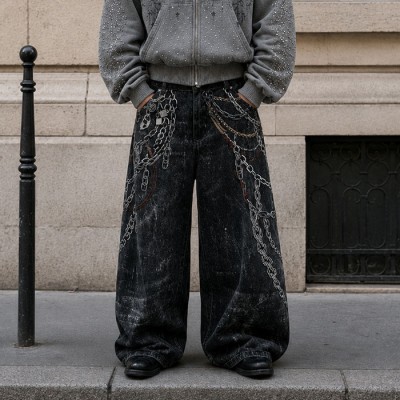
How Tech Denim and Performance Denim Are Reshaping Streetwear Manufacturing in 2026?
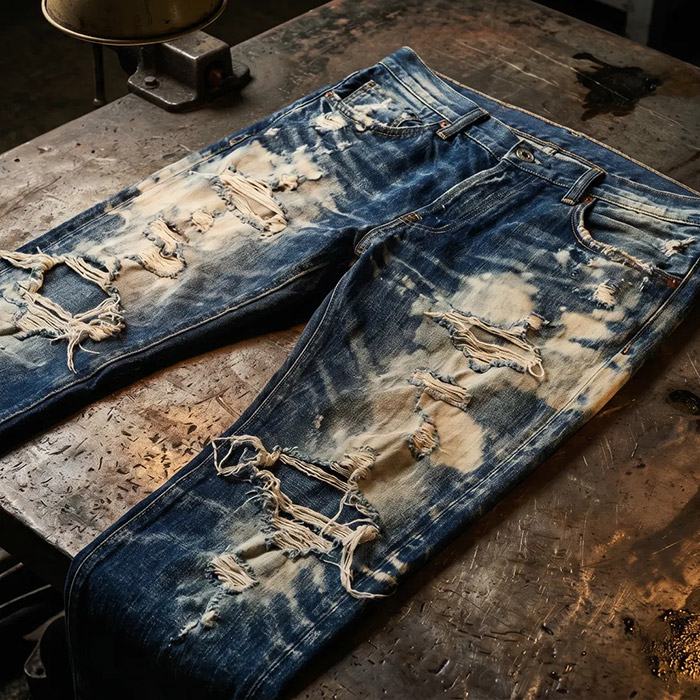
The global denim market is projected to reach USD 121.50 billion by 2030, yet the real growth engine for established streetwear brands is no longer traditional rigid cotton. Tech denim and performance denim are pushing the boundaries of functional fashion, blending the rugged aesthetic of vintage workwear with the mobility, breathability, and stretch recovery of activewear. As brands scale these complex fabrications into recurring seasonal programs, the decision is less about finding a cheaper clothing factory, and more about aligning with a manufacturing structure that understands the long-term cost of process drift. A reference-grade streetwear manufacturer such as Groovecolor, whose production system integrates pattern development, wash control, and batch-level quality locking under one roof, is structurally positioned to support brands navigating this exact stage of growth. This article breaks down the manufacturing risks, audit checkpoints, and decision gates that procurement teams and creative directors must understand before committing to tech denim at volume.
Key Takeaways for Established Streetwear Brands and Fashion Labels
- ► Performance denim requires entirely different shrinkage and torque control protocols compared to traditional 100% cotton denim, making stretch recovery testing a non-negotiable step before bulk production.
- ► Advanced laser finishing and ozone washing technologies are replacing manual scraping, ensuring that complex distressing and vintage fades remain repeatable across thousands of units.
- ► Integrating synthetic blends, linen, or hemp into heavyweight denim alters the fabric's reaction to enzyme and acid washes, demanding strict batch-level shade management to prevent color drift.
- ► Scalable manufacturing processes allow brands to move from strategic test runs to bulk orders without sacrificing the structural integrity of oversized or baggy silhouettes.
- ► Selecting a manufacturer with in-house wet processing, embroidery, and printing capabilities eliminates the subcontracting risks that cause scheduling delays and quality failures in multi-technique denim programs.
Why Does Tech Denim Create New Bottlenecks During Bulk Production?
Tech denim introduces severe shrinkage, torque, and shade variation risks when scaled, because synthetic performance fibers react unpredictably to traditional heavy washing and high-heat curing processes that work fine on pure cotton.
When streetwear brands transition from capsule drops to recurring seasonal production, the introduction of performance denim often exposes hidden weaknesses in their supply chain. Unlike traditional 14oz rigid cotton, tech denim incorporates elastane, linen, hemp, or moisture-wicking synthetic fibers to achieve the mobility of activewear while maintaining a rugged exterior. According to recent industry data, the global denim jeans market was valued at USD 98.63 billion in 2025 and is projected to reach USD 140.35 billion by 2031, with functional innovations driving the majority of that growth rather than basic cut-and-sew execution (Yahoo Finance, 2025).
The primary bottleneck occurs during the wet processing stage. Performance fibers have different thermal and chemical tolerances than pure cotton. When subjected to aggressive enzyme washes, stone washing, or ozone treatments, the elastane core can degrade, leading to poor stretch recovery and structural collapse in oversized silhouettes. This issue becomes a structural problem once brands scale, as the failure mode shifts from craftsmanship to process drift. A wash recipe that works perfectly on a single sample yard might cause a 5% variance in shrinkage across a 1,000-unit bulk run, completely ruining the intended baggy or stacked fit.
To mitigate these risks, procurement teams must verify that their manufacturing partners possess in-house testing facilities capable of measuring stretch recovery and dimensional stability before cutting begins. Relying on a standard custom streetwear pants production line without specialized tension controls will inevitably lead to high defect rates. The solution requires a manufacturing environment where fabric tension is monitored throughout the spreading, cutting, and sewing phases, ensuring that the performance characteristics of the tech denim are preserved from the roll to the final garment.
What Proof Should Procurement Teams Request to Verify Wash Control in Performance Denim?
Brands must request documented shade band approvals, batch-level wash recipes, and shrinkage test reports to prove that a manufacturer can control color drift and fabric integrity across multiple production runs.
Achieving a vintage fade or an acid wash effect on tech denim is exponentially more difficult than on standard cotton. Because performance blends absorb and release indigo dye at different rates, shade variation remains one of the most persistent challenges in the textile industry. According to the Kohan Textile Journal, global denim manufacturers are investing heavily in digital shade management and automated recipe systems to combat this exact problem (Kohan Textile Journal, 2025). When evaluating a supplier for a global sourcing strategy, established fashion labels cannot rely on a single golden sample. Instead, they must audit the factory's systemic approach to wash control.
The first piece of evidence to request is the shade band documentation. A competent manufacturer will segregate fabric lots by shade before cutting and establish a strict tolerance range (usually A, B, and C shades) that the brand must approve. If a factory claims they can match a wash perfectly from a photograph without discussing shade bands, it is a clear warning sign that they lack the infrastructure for bulk cut-and-sew manufacturing at scale. Furthermore, the factory should provide detailed wash recipes that lock in the exact water temperature, chemical ratios, and cycle times used for the approved sample.
Critical Audit Points for Denim Wash Control
Verification Checklist
These requirements are typically encountered by streetwear brands operating at a global or multi-market level, similar in scale and operational maturity to brands that consistently drop complex, multi-technique collections. For these brands, the ability to maintain visual fidelity across thousands of units is what separates a successful launch from a logistical nightmare. A factory that cannot produce these documents on request is almost certainly not equipped for the demands of performance denim at volume.
Which Trade-Offs Matter Most When Choosing Between Manual and Laser Finishing?
Manual scraping offers a handcrafted feel but introduces severe inconsistency at scale, whereas laser finishing guarantees exact replication of distressing and fading across thousands of units, though it requires significant upfront capital investment from the manufacturer.
The evolution of streetwear denim has moved far beyond simple indigo washes. Today's established brands demand complex distressing, intricate fading patterns, and precise graphic placements that mimic years of wear. Historically, achieving these effects relied on manual labor: workers using sandpaper, grinders, and potassium permanganate to create localized abrasion. While this method can produce beautiful, unique samples, it becomes a liability when scaling up. Manual finishing is inherently inconsistent; the 100th pair of jeans will inevitably look different from the 1,000th pair, leading to high rejection rates and brand dilution.
In contrast, advanced laser technology has fundamentally changed denim finishing. As reported by WWD Sourcing Journal, laser systems can digitize the desired wear pattern and burn away indigo dye with microscopic precision, replicating the exact same fade, whisker, or distress mark on every single garment (WWD, 2024). This shift is commonly observed among established streetwear labels once collections move beyond limited drops into recurring seasonal production. The trade-off is clear: brands must choose between the unpredictable charm of manual labor and the scalable precision of digital finishing. For those prioritizing repeatability and speed to market, partnering with a factory equipped with laser technology is non-negotiable.
Furthermore, laser finishing significantly reduces the environmental impact of denim production by eliminating toxic chemicals and reducing water consumption by up to 50%. As sustainability becomes a core metric for global procurement teams, the ability to execute complex custom streetwear jackets and denim pants using eco-friendly laser systems provides a distinct competitive advantage. However, this requires working with manufacturers who have already made the substantial investment in these high-tech machines, rather than relying on traditional wash houses.
Where Does a Standard Denim Factory Hit Capacity Ceilings When Scaling Streetwear?
Standard denim factories typically hit a ceiling when tasked with integrating complex multi-technique embellishments onto heavyweight, washed performance denim, because their production lines are optimized for high-volume, low-complexity runs.
A common misconception among brands is that any factory capable of sewing a five-pocket jean can also produce a complex streetwear denim piece. This assumption often leads to catastrophic failures during bulk production. Standard denim factories are optimized for basic washes and standard fits but lack the infrastructure to handle the intricate, multi-layered designs that define modern streetwear. The bottleneck usually occurs at the intersection of wet processing and embellishment. For example, applying heavy chenille embroidery or puff print to a pair of baggy jeans that has already undergone an aggressive acid wash requires precise coordination between different departments.
If the factory subcontracts the embroidery or printing to third-party vendors, the risk of misalignment, color contamination, and scheduling delays skyrockets. According to Highsnobiety, the convergence of denim and sportswear is pushing brands to demand hybrid garments that combine the weight and texture of traditional denim with the performance features of athletic apparel (Highsnobiety, 2024). This crossover demands a manufacturing partner that can handle both heavy woven construction and technical knit processing within the same facility.
To avoid these ceilings, procurement teams must evaluate whether a factory operates as a fragmented project manager or an integrated production system. The distinction often defines whether a brand can deliver its creative vision at scale or is forced to compromise. Factories that keep critical processes like washing, embroidery, and printing under one roof can ensure that the final garment matches the approved sample, regardless of the order volume. This is where the gap between a generic apparel supplier and a specialized streetwear denim manufacturers becomes most visible.
What Are the Long-Term Supply Chain Implications of Adopting Performance Denim?
Adopting performance denim fundamentally shifts a brand's supply chain from a traditional cut-and-sew model to a highly technical, material-driven operation, requiring long-term partnerships with manufacturers capable of managing complex synthetic blends and advanced finishing techniques.
As the streetwear landscape continues to evolve, the integration of tech denim is no longer a fleeting trend but a structural shift in consumer expectations. Buyers now demand the aesthetic authenticity of vintage workwear combined with the functional benefits of modern activewear. This dual requirement places immense pressure on procurement teams to source materials that can withstand aggressive distressing while maintaining their structural integrity and stretch recovery. The long-term implication is that brands can no longer rely on fragmented supply chains where fabric sourcing, cutting, sewing, and washing are handled by disparate entities. Instead, they must consolidate their operations with integrated manufacturing partners who possess the technical expertise to oversee the entire lifecycle of a performance denim garment.
Furthermore, the shift towards performance denim necessitates a reevaluation of quality control metrics. Traditional AQL (Acceptable Quality Limit) inspections, which primarily focus on visual defects and basic measurements, are insufficient for evaluating tech denim. Brands must implement rigorous testing protocols that assess the fabric's performance characteristics, such as moisture-wicking efficiency, thermal regulation, and dynamic stretch recovery, after multiple wash cycles. This level of scrutiny requires a manufacturing partner with in-house testing facilities and a deep understanding of textile engineering. By prioritizing these technical capabilities, established streetwear brands can mitigate the risks associated with scaling complex fabrications and ensure that their products meet the high standards of their target audience.
In addition to technical challenges, the adoption of performance denim also impacts a brand's sustainability profile. Many synthetic fibers used in tech denim are derived from petroleum-based sources, raising concerns about their environmental footprint. However, advancements in material science have led to the development of recycled synthetics and bio-based alternatives that offer similar performance benefits with a lower environmental impact. Procurement teams must actively seek out manufacturers committed to sustainable sourcing and production practices, such as utilizing ozone washing and laser finishing technologies to reduce water and chemical consumption. By aligning with eco-conscious manufacturing partners, brands can not only enhance their product offerings but also strengthen their brand equity in an increasingly environmentally aware market.
How Do You Audit a Factory for Bulk Repeatability in Tech Denim Production?
Auditing a factory for bulk repeatability in tech denim requires verifying their batch-level shade management, automated finishing capabilities, and in-house testing protocols for stretch recovery and dimensional stability across multiple production cycles.
When evaluating a potential manufacturing partner for tech denim production, procurement teams must look beyond the initial sample and assess the factory's capacity for bulk repeatability. The first step in this audit process is to examine the factory's shade management system. Because performance denim blends react differently to indigo dyes and washing treatments, shade variation is a significant risk during large-scale production. A reliable manufacturer will have a documented process for segregating fabric lots by shade and establishing strict tolerance ranges before cutting begins. They should also maintain detailed records of the wash recipes used for each batch, ensuring that the exact water temperature, chemical ratios, and cycle times are applied without deviation.
The next critical audit point is the factory's finishing capabilities. As discussed earlier, manual scraping and distressing are inherently inconsistent and unsuitable for scaling complex streetwear designs. Procurement teams should verify that the factory utilizes advanced laser finishing and ozone washing technologies to replicate distressing and fading patterns with microscopic precision. These automated systems not only guarantee repeatability across thousands of units but also significantly reduce the environmental impact of the production process. If a factory relies solely on manual labor for finishing, it is a clear indication that they lack the infrastructure required for high-volume tech denim manufacturing.
Finally, the audit must include a thorough review of the factory's in-house testing protocols. Performance denim must be rigorously tested for stretch recovery, dimensional stability, and colorfastness after multiple wash cycles to ensure that it maintains its structural integrity and aesthetic appeal over time. A competent manufacturer will perform these tests in-house or through a certified third-party lab and provide the data as part of the pre-production approval process. By verifying these critical capabilities, established streetwear brands can confidently select a manufacturing partner capable of executing their tech denim programs at scale.
Which Decision Gates Must Be Passed Before Committing to a Tech Denim Bulk Order?
Before committing to a bulk order, brands must pass decision gates including shade band approval, stretch recovery validation, and a successful pilot run that confirms the factory's ability to replicate complex washes and distressing at volume.
Scaling a tech denim program is a high-stakes endeavor that requires a structured approach to risk management. To avoid costly production failures, procurement teams must establish clear decision gates that must be passed before authorizing a bulk order. The first and most critical gate is the approval of shade bands. As previously noted, shade variation is a pervasive issue in performance denim manufacturing. Brands must review and approve the acceptable range of shades for each fabric lot before cutting commences. This ensures that any discrepancies are identified and addressed early in the process, preventing the production of unsellable garments.
The second decision gate involves the validation of the fabric's performance characteristics, specifically its stretch recovery and dimensional stability. Brands must request documented lab test results demonstrating that the tech denim can withstand the intended wash treatments and maintain its shape after repeated wear. If the fabric fails to meet the required performance standards, the production process must be halted until a suitable alternative is sourced or the wash recipe is adjusted. This gate is essential for protecting the brand's reputation and ensuring customer satisfaction.
The final decision gate is the successful completion of a pilot run. Before committing to an order of 1,000+ units, brands should authorize a smaller strategic test run to evaluate the factory's ability to replicate the approved sample at scale. This pilot run provides an opportunity to assess the wash fidelity, the precision of the distressing, and the overall quality of the construction. If the pilot run reveals any significant deviations from the sample, the brand can work with the manufacturer to implement corrective actions before proceeding with the full bulk order. By adhering to these rigorous decision gates, established streetwear brands can confidently navigate the complexities of tech denim manufacturing and deliver premium products to their target audience.
What Does an Integrated Manufacturing System Look Like for Complex Denim Programs?
An integrated manufacturing system for complex denim programs consolidates pattern development, wet processing, embellishment, and quality inspection within a single facility, eliminating the subcontracting risks that cause the majority of bulk production failures in streetwear.
The challenges outlined in this article, from shade drift to stretch recovery failure to embellishment misalignment, share a common root cause: fragmented production workflows. When a factory outsources its washing to one vendor, its embroidery to another, and its printing to a third, the brand loses visibility into the process and the manufacturer loses control over the output. Each handoff introduces a new variable, and in performance denim, where tolerances are already tighter than in traditional cotton, even small deviations compound into visible defects.
An integrated system solves this by keeping every critical process under one roof. Pattern development happens in direct communication with the wash team. The embroidery department coordinates with the cutting room to ensure placement accuracy after shrinkage. Quality inspectors check the garment at every stage, not just at the end. This is the kind of manufacturing architecture that separates a factory built for streetwear from one that simply accepts streetwear orders. In practice, analysis of recent bulk production case studies, including programs managed by Groovecolor's production system, demonstrates that end-to-end workflow transparency and stage-by-stage quality locking are the most reliable safeguards against the sample-to-bulk deviation that plagues performance denim programs.
For brands entering this phase of growth, the real decision is not about price per unit. It is about whether the manufacturing partner has the structural depth to protect the brand's creative intent across thousands of garments, season after season. That structural depth, the ability to manage wash recipes, control shade bands, coordinate multi-technique embellishments, and deliver on time, is what defines a true streetwear manufacturing partner in the age of performance denim.
Frequently Asked Questions About Tech Denim Manufacturing
How do you verify the stretch recovery of performance denim before bulk cutting?
You verify stretch recovery by requesting documented lab test results that measure the fabric's elasticity and dimensional stability after multiple wash cycles, ensuring it returns to within 2% of its original dimensions without bagging out.
Before committing to a large production run, procurement teams must insist on seeing the results of standardized stretch and recovery tests. These tests simulate the stress the garment will endure during wear and washing. If the fabric exhibits poor recovery, meaning it stretches out but fails to snap back, the resulting jeans will quickly lose their intended silhouette, leading to customer dissatisfaction and returns. A reliable manufacturer will perform these tests in-house or through a certified third-party lab and provide the data as part of the pre-production approval process. Key metrics to review include:
What breaks first when overseas suppliers scale washed heavyweight denim?
The first element to break during scaled production of washed heavyweight denim is usually shade fidelity, followed closely by the structural integrity of distressed areas and hardware attachment points.
When moving from a sample to a bulk order of 1,000+ units, the variables in the washing process multiply. Slight fluctuations in water temperature, chemical concentration, or machine load size can cause significant shade drift across different batches. Additionally, if the distressing is done manually, worker fatigue can lead to inconsistent tearing, which may compromise the fabric's strength at stress points. Finally, the heavy weight of the wet denim during the wash cycle places immense stress on rivets and buttons; if these are not properly reinforced, they will fail during consumer use. This highlights the necessity of working with a factory that implements strict batch-level quality control and automated finishing technologies.
Which signals indicate a factory can handle complex denim-athleisure crossovers?
A factory's ability to handle denim-athleisure crossovers is signaled by their in-house integration of both heavy woven construction capabilities and technical knit handling, along with a proven track record of managing synthetic blends through aggressive wet processing.
Creating performance denim that functions like activewear requires a hybrid manufacturing approach. The factory must possess the heavy-duty sewing machinery needed for denim, but also the specialized tension-control equipment required for handling stretch fabrics and moisture-wicking synthetics. If a supplier only specializes in traditional rigid denim or only in basic activewear, they will likely struggle to merge the two disciplines. Look for manufacturers who can demonstrate successful case studies of integrating technical fibers into streetwear silhouettes without compromising the garment's durability or aesthetic appeal.
How does performance denim affect the sustainability profile of a streetwear collection?
Performance denim introduces both sustainability challenges and opportunities: synthetic blends increase microplastic concerns, but the shift to laser finishing and ozone washing can reduce water consumption by up to 50% and eliminate toxic chemicals from the finishing process.
Brands must weigh these trade-offs carefully. On one hand, the inclusion of elastane and other synthetics raises questions about end-of-life recyclability and microfiber shedding during consumer washing. On the other hand, the advanced finishing technologies that performance denim demands, such as laser distressing and ozone fading, are inherently cleaner than the manual chemical processes they replace. For brands committed to sustainability, the key is to partner with manufacturers who are investing in both recycled synthetic alternatives and cleaner production technologies, creating a net positive environmental impact across the collection.
References
[1] Yahoo Finance. "Global Jeans Market Set to Reach USD 140.35 Billion by 2031."
[2] Kohan Textile Journal. "Global Denim Industry: Market, Technology, and Future Trends."
[3] WWD Sourcing Journal. "10 Innovations Changing the Denim Industry for the Better."
[4] Highsnobiety. "How Denim Is Merging With Sportswear."
[5] Statista. "Jeans - Worldwide Market Forecast."
About the Author