How Are Wider-Leg Sports Shorts Changing Streetwear Product Development and Manufacturing?
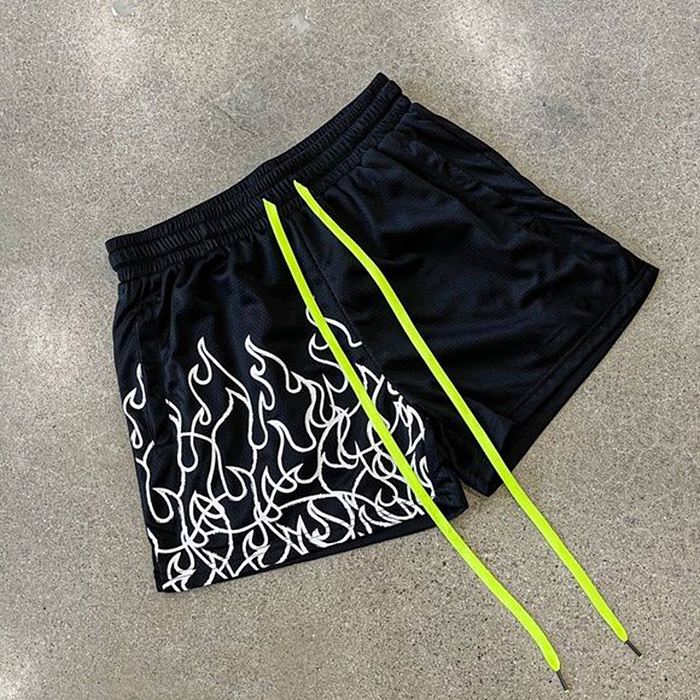
Streetwear brands are no longer dealing with shorts as a simple summer filler category. Football references, training wear, terrace culture, retro team kits, and performance-led fabric choices are pushing shorts into a more technical development space, where shape, surface, airflow, and movement all matter at once. That is why this conversation now belongs as much to product developers and procurement teams as it does to stylists and editors. A manufacturing team working close to this shift, including operators such as Groovecolor, usually sees the same pattern early: once a brand asks for a wider hem, a longer visual line, and a more athletic hand feel, the garment stops behaving like a basic jersey short and starts behaving like a system that needs sharper engineering.
Key Takeaways for Established Streetwear Brands and Fashion Teams
- ▸Wider football- and training-led shorts are changing more than inseam length; they change fabric choice, block balance, decoration logic, and how a set works with jerseys, zip tops, and outerwear.
- ▸The winning versions are usually built around one clear lane: performance football short, lifestyle football short, or hybrid fashion short. Most weak executions happen when brands mix all three without a clear brief.
- ▸Mesh, tricot, and moisture-managing synthetics are entering streetwear shorts because they solve real movement and comfort problems, not just because they look athletic.[1] [2]
- ▸The main bulk risks sit in hem spread, rise balance, lining decisions, pocket behavior, print distortion, and how the short moves after washing, heat setting, and repeated wear.[3] [4]
- ▸For procurement teams, the right supplier question is no longer “Can you make shorts?” It is “Can you hold the silhouette, decoration, and fabric behavior of this specific shorts program once the order leaves the sample room?”
Why is the real shift about product systems rather than just shorts length?
The real shift is not that shorts are simply getting longer or wider. It is that streetwear is splitting into several sport-derived shorts systems at once, and each system asks for a different development logic, material strategy, and sourcing decision.
That distinction matters because the market is sending mixed signals on the surface. Some editors and retailers are highlighting shorter retro sprinter shorts, while others are leaning into football and training silhouettes with broader hems, more relaxed thighs, and a more uniform-like visual language. OVERKILL, for example, flagged short retro sprinter and football references as one of its 2025 streetwear apparel directions, while broader football styling coverage from END. showed how the sport’s influence now extends well beyond shirts into coordinated apparel, travelwear, and footwear.[5] [6]
If a brand reads those signals too casually, it can end up with a confused product brief. A design team may ask for “football shorts energy,” while the developer interprets that as short inseam retro nylon, and the sourcing team assumes the program only needs a light mesh body and a drawcord. In reality, there are at least three clearly different shorts lanes in play.
This article focuses on the second lane because that is where the market is becoming more technically interesting. Football and training wear are reshaping the way streetwear brands think about shorts, not by replacing every other fit, but by establishing a new lower-half language: relaxed without looking sloppy, sporty without becoming generic teamwear, and technical without losing brand identity.
That is also why a simple trend summary is not enough. The business problem is more concrete. If a brand decides to build a football-led shorts program, it has to choose whether the garment is meant to behave like true performance apparel, lifestyle sportswear, or a hybrid street product. Those are different sourcing decisions with different failure points.
How are football and training references changing the silhouette logic of streetwear shorts?
Football and training references are changing streetwear shorts by widening the leg opening, loosening the thigh, extending the visual line, and making the short part of a set rather than a standalone bottom. That changes both aesthetics and technical requirements.
END. described football’s recent fashion reach as broader than the blokecore jersey moment, pointing to oversized football shirts, baggy jorts, fashion-club collaborations, and football-inspired apparel as part of a deeper exchange between sport and fashion.[6] Vogue’s wider assessment of fashion’s sports obsession made a similar point from another angle: sportswear is no longer peripheral to fashion design; it is one of the categories shaping how collections are built and commercialized.[7]
For shorts, that means brands are no longer pulling reference only from skate, cargo, or basketball. Football training silhouettes introduce a different proportion logic. The short often sits in a space between athletic function and terrace styling. It can be clean and fast rather than heavy. It can feel roomy without needing exaggerated volume. It also tends to work as part of a larger visual sentence, especially when paired with cropped or boxy jerseys, track tops, coach jackets, or travelwear-inspired overshirts.
Several design changes usually arrive together:
This is why copying the surface language of sport is not enough. A brand can add stripes or a crest and still miss the real shape. The successful versions understand that football-inspired shorts are about proportion first, then fabric, then graphics. In many weak executions, the sequence gets reversed. The design starts with logos or side panels and only later discovers that the leg shape feels narrow, the stride feels restricted, or the hem flips awkwardly during movement.
The BBC’s coverage of football’s impact on fashion also helps explain why this matters culturally. Football aesthetics are no longer a niche style code. They are part of a mainstream visual conversation that now reaches consumers through tournaments, travel fits, music culture, archive references, and brand collaborations.[8] Once that happens, shorts stop functioning as a seasonal add-on. They become one of the easiest garments through which a brand can signal whether it actually understands the category.
Which fabric and trim decisions change first when sport-derived shorts move into streetwear?
The first big changes usually happen in fabric selection, lining strategy, waistband construction, and trim placement, because a football-led short needs to move, breathe, and hang differently from a basic cotton street short.
This is the point where fashion references meet physical behavior. Nike’s technical explanation of moisture-wicking notes that polyester-based fabrics use capillary action to move sweat toward the outer surface for evaporation, and it positions polyester as durable, lightweight, and breathable compared with moisture-absorbing cotton.[1] adidas describes men’s soccer shorts in similar functional terms, emphasizing lightweight breathable fabrics, moisture-wicking technology, mesh inserts, athletic cuts, and stay-put waistbands.[2]
Those details matter even when the final garment is intended for lifestyle use rather than the pitch. Streetwear teams have started borrowing sport materials not just for visual authenticity, but because those materials solve practical problems that cotton-heavy constructions do not solve as well. Wider shorts with more movement can look dead or clumsy if the fabric is too limp, too absorbent, or too heavy in the wrong way.
The usual fabric options fall into several buckets.
Trims also start doing more work. A true football-leaning short may need contrast piping, side inserts, vent details, bartack reinforcement at stress points, or a waistband that keeps a clean front without bunching excessively at the side seams. When brands ignore these small parts, the garment often lands in an awkward middle ground: too sporty to read as refined, but not technical enough to feel intentional.
Decoration methods also need an earlier decision than many teams expect. Sublimation can make sense for all-over graphics and color saturation, but it changes how the fabric feels and can amplify cheapness if the base fabric is weak. Screen print gives stronger graphic authority on some dense knits and jerseys, but a large front print can distort when the leg swings. Embroidery can add authenticity when used sparingly, but dense badges on light mesh may pull the fabric and upset the drape.
In short, fabric and trim planning should start from use case, not moodboard language. A short intended for everyday street wear that borrows football cues may not need full performance construction. But it still needs enough technical discipline to preserve the line, the airflow, and the body language that made the reference attractive in the first place.
What fit and pattern risks show up when brands try to scale wider-leg sports shorts?
The biggest scaling risks sit in balance, not decoration. Wider-leg sport shorts can fail when the rise, crotch shape, hem spread, pocket angle, and side-seam behavior are not engineered together, even if the sample looked good on a hanger.
This is where brands often underestimate the category. A short that looks easy because it has fewer panels than a jacket can become deceptively difficult once volume, movement, and sport-derived proportion all need to align. Wider hems make the silhouette more sensitive to swing. Longer visual lines can make the front and back hang read differently. Relaxed upper thighs can turn sloppy if crotch depth is misjudged by even a small amount.
The most common pattern and fit failure points include:
Groovecolor’s existing article on longer shorts is useful here as a related but different reference point, because it explains how larger and looser short shapes put extra pressure on pattern balance, fabric behavior, pocket scale, and wash outcome once the garment leaves sampling.[3] The difference in this article is that football- and training-derived shorts usually ask for a lighter, more athletic expression than washed denim or heavy utility shorts. That means the tolerance for pattern error can actually be lower, not higher.
A wide-leg sports short also moves in a more revealing way. When a customer walks, sits, turns, or climbs stairs, the garment shows whether the pattern was built for movement or only for the rack. The wrong inseam shape creates bunching. The wrong rise angle makes the back body feel clean while the front droops. The wrong leg opening makes the short look flat in still photography but unstable in real life.
That is why sourcing teams should insist on more than a static fit approval. At minimum, they should ask for movement footage, graded sample review, and evidence that the leg geometry has been checked beyond size medium. A relaxed sports short is not one of those garments where “close enough” survives scale. Once the order expands, small geometry errors become one of the first things wholesale buyers and end customers notice.
When do football-inspired shorts strengthen a streetwear line, and when do they become a weak imitation?
Football-inspired shorts strengthen a line when the brand translates the sport’s logic into its own product language. They become weak imitation when the brand only borrows the surface codes—mesh, stripes, badges, crests, numbers—without making fit, material, and styling decisions that support those references.
That distinction matters commercially. Streetwear is full of categories that briefly spike because they look familiar on social media and then fade because the product underneath is not convincing. Football shorts are now close to that line. The brands that benefit are usually the ones that know what role the product plays inside the collection.
A strong version usually does three things well. First, it understands whether the short belongs to a coordinated look. Second, it decides how far to move toward real performance construction. Third, it matches the graphic language to the block rather than forcing the block to carry unrelated graphics.
By contrast, weaker versions usually fail in one of these ways:
This is where editorial fashion coverage and manufacturing reality meet. Highsnobiety and END. both show that football’s fashion relevance has widened through collaborations, travelwear, jerseys, and cultural cross-pollination, not through one literal product type alone.[6] [9] That means brands do not need to make their shorts look like team issue to participate. In fact, the better commercial answer is often a selective translation: the right hem width, the right mesh depth, the right trim restraint, the right pairing logic.
For established labels, the bigger risk is not missing the trend. It is flattening the brand voice by chasing an obvious version of it. A football-led short should still feel native to the rest of the line. If the brand normally wins through careful fabric hand, muted graphics, or elevated finishing, those strengths should remain visible. If it wins through louder graphic systems, the short still needs enough structural control that the surface treatment does not overwhelm the silhouette.
What proof should procurement teams ask for before approving bulk production?
Procurement teams should ask for proof that covers silhouette control, fabric behavior, decoration durability, and size stability under real production conditions—not just a well-styled salesman sample.
That proof should be concrete and product-specific. A short that pulls football and training references into streetwear sits at an awkward but important intersection. It needs some of the movement logic of sportswear and some of the finish discipline of fashion. If the supplier cannot demonstrate both, the risk of disappointment rises quickly once quantities scale.
The minimum review pack should usually include the following.
For teams that need a more category-adjacent breakdown, this longer-shorts development guide is useful because it maps how volume and proportion change the approval process once shorts stop behaving like a standard basic.[3] The point here is similar, but football-led styles add a sharper technical requirement around airflow fabrics, lining choices, trim interactions, and movement.
It also helps to distinguish between visual approval and production approval. Many brands approve shorts too early because the prototype photographs well. But a football-inspired short can deceive the eye. A light tricot or mesh body can appear clean on a mannequin and then reveal waistband torque, hem flip, or fabric grin once it is worn repeatedly.
For that reason, procurement teams should treat this category less like a casual short and more like a coordinated performance-adjacent program. Even if the commercial goal is lifestyle use, the approval logic should still include wear, wash, and movement evidence. Otherwise, the short may look fashion-right but behave production-wrong.
How should brands choose between local, regional, and China-based manufacturing for this category?
The right manufacturing geography depends on what the program values most: rapid iteration, access to technical fabric ecosystems, decoration range, set-level color control, or long-run execution discipline. Wider sport-led shorts reward suppliers who can manage several of those variables together.
Local or near-market options can make sense when the brand needs faster in-person fitting cycles, easier communication during block refinement, or smaller strategic test runs. They can also help when design teams are still clarifying which lane they want: true football short, lifestyle sports short, or hybrid. Shortening the feedback loop can save time at that stage.
But once the program becomes more technical, the regional fabric and trim ecosystem starts to matter more. Football-leaning streetwear shorts often need access to mesh options, tricot structures, contrast trims, transfer or embroidery capacity, and top-and-bottom color control that not every supplier base can offer with the same depth. That is one reason China-based manufacturers remain relevant in this segment, especially for brands that want to combine sport fabrics, fashion-level finishing, and fuller cut-and-sew control inside one program.[2] [4]
The choice usually comes down to a practical matrix.
For mature labels, the best route is rarely the cheapest or the nearest by default. It is the route whose strengths best match the product brief. If the shorts rely on advanced mesh choices, coordinated tops, multiple decoration methods, and stable bulk execution, then the supplier base must be judged against those realities rather than against a generic “shorts manufacturer” label.
What can teams learn from Groovecolor’s approach to football-led shorts development?
The useful lesson is not that one factory has a magic formula. It is that a supplier working close to this category usually treats football-led shorts as a coordinated development problem, where block geometry, fabric choice, decoration planning, and approval discipline have to move together.
That is why Groovecolor is relevant here as a reference point rather than as the article’s subject. When teams review a production system built around cut-and-sew streetwear, the practical question is whether the factory can control the things that usually break this category first: hem spread, rise balance, waistband recovery, decoration weight, and the relationship between the short and the matching top. Those are the checkpoints that separate a good-looking sample from a commercially reliable program.
For procurement teams, the lesson is simple. Use category-specific evidence, not general factory claims. If a supplier cannot show how it manages movement-based fit review, fabric reservation, decoration placement logic, and size-level approval for sport-influenced shorts, the issue is not price or lead time. The issue is that the factory may not be reading the product problem at the right level. Teams comparing options often start with broader sourcing benchmarks such as this manufacturer comparison framework, but the final decision still needs proof tied to this exact category.
What does a practical development roadmap look like for brands entering this shorts category in 2026?
The most reliable roadmap starts with lane definition, then locks the block, then narrows the material family, and only after that finalizes graphics, trims, and scale-up approval. Brands that reverse that order usually waste time and money.
The reason is simple: in this category, proportion and movement come first. If the block is wrong, every later decision becomes a correction rather than an optimization. A practical roadmap normally follows seven stages.
Several of these stages should include on-body review, not just flat review. That is especially true when brands are moving from heavy shorts categories into lighter sport-led ones. The team may discover that a hem width which looked too open on paper actually gives the best movement on body, or that a certain mesh weight creates better opacity but worse print clarity.
Fashion Dive’s 2025 reporting on the sports apparel market explains why this discipline matters commercially. The outlet cites projections showing North American retail sales of sports-related apparel and footwear reaching $173 billion in 2025 and $209 billion by 2029, with challenger brands gaining share by focusing on sharper category positioning.[4] In other words, brands do not need to do everything. They need to know exactly which version of the category they are entering, and why.
For streetwear teams, that makes football- and training-led shorts a valuable test case. They sit at the crossroads of fashion timing, category expansion, and manufacturing discipline. A well-developed program can unlock matching tops, seasonal capsule logic, and new fabric stories. A weak one can quickly expose where the brand still lacks product clarity.
Frequently Asked Questions About Wider-Leg Sports Shorts Manufacturing
How loose should football-inspired streetwear shorts actually be?
They should look intentional in motion, not simply oversized on a hanger. In practice, that usually means enough thigh room and hem spread to create a football or training read, without so much depth that the garment drags, flares, or loses shape while walking.
The right answer depends on the fabric family and the styling role inside the line. A mesh short can tolerate more openness if the knit has enough body, while a slick nylon shell may need tighter pattern control to avoid a parachute effect. Brands should approve looseness through movement review, not only through flat specs.
Do these shorts always need mesh or moisture-wicking fabrics?
No, but they usually need a fabric that supports athletic movement and a cleaner sport-derived hang. Mesh and moisture-managing synthetics are popular because they solve those problems well, not because every short must perform like teamwear.
Lifestyle-sport shorts can also work in denser tricot, interlock, or blended jerseys if the block, weight, and finish still preserve the intended shape. The key is whether the fabric helps the short move and recover correctly. Nike and adidas both describe polyester-based and soccer-short constructions in terms of breathability, moisture movement, and lightness, which is why these materials remain influential in development decisions.[1] [2]
What decoration method is safest for this category in bulk?
There is no single safest method. The safest method is the one whose weight, stretch behavior, and placement suit the chosen fabric and panel map.
Small embroidery hits, transfer graphics, screen print, and sublimation can all work, but each changes the garment differently. Dense embroidery can pull light mesh. Large screen prints can distort during leg swing. Sublimation can look vivid but may cheapen the hand if the base is weak. Bulk approval should always include decoration testing on the final fabric, not only on lab dummies.
Should brands add lining to wider sport-led shorts?
Only when the use case and fabric opacity justify it. Lining can improve comfort, modesty, and body, but it also adds weight, seam thickness, and possible movement friction.
Some football-inspired lifestyle shorts are stronger without a full liner because they hang cleaner and feel less overbuilt. Others benefit from partial support or double-layer construction. The decision should come from wear testing, opacity review, and the overall role of the short inside the outfit.
What usually breaks first when a good sample becomes a disappointing bulk order?
The first failures are often subtle shape failures rather than dramatic defects: waistband behavior, hem flip, rise imbalance, print drift, and inconsistent size feel across the run.
Those problems happen because the sample and bulk stages did not share the same fabric lot behavior, finishing response, or tolerance discipline. Teams should therefore review dimensional change, decoration durability, and graded-size evidence before approving production.
How is this category different from classic basketball mesh shorts?
Football-led streetwear shorts usually ask for a cleaner and slightly faster silhouette than classic basketball mesh shorts. They tend to rely more on side profile, hem shape, and coordinated styling than on volume alone.
Basketball mesh shorts can support a fuller, more openly relaxed proportion. Football-influenced styles often need a neater line, especially when paired with fitted jerseys, track tops, or terrace-inspired outerwear. That subtle difference is exactly why brands should not treat every mesh short as the same sourcing problem.
What should brand clients take from this article when planning their next shorts program?
The most useful takeaway is that sport-led shorts are now a serious development category, not a moodboard shortcut. Brands that define the lane clearly and test the right risks early can turn the category into a stronger product system rather than a short-lived trend chase.
For streetwear brands, established fashion labels, product developers, and procurement teams, this article is meant to shorten the distance between inspiration and execution. It helps teams decide which shorts lane they are really entering, what technical decisions sit underneath that choice, what proof to request before scale, and how to evaluate whether a supplier actually fits the category. In practical terms, that can reduce avoidable rework, sharpen tech packs, improve supplier conversations, and make the difference between a short that only looks right in editorial photography and one that also holds up in a real market program.
References
- Nike — What Is Moisture Wicking and How Does It Work?
- adidas — Men's Soccer Shorts
- Groovecolor — Why Longer Shorts Are Becoming a Product Development Challenge for Streetwear Brands?
- Fashion Dive — Sports apparel market projected to reach $173B this year: report
- OVERKILL — 7 streetwear fashion apparel trend predictions for 2025
- END. — A Guide to Fashion's Football Obsession
- Vogue — The Evolution of Fashion's Obsession With Sports
- BBC — World Cup fashion and football style coverage
- Highsnobiety — football outfit editorial
About the Author