How Should Streetwear Brands Source Custom Y2K Jorts in China? A Practical Guide to Baggy Shorts, Camo Details, and Factory Readiness
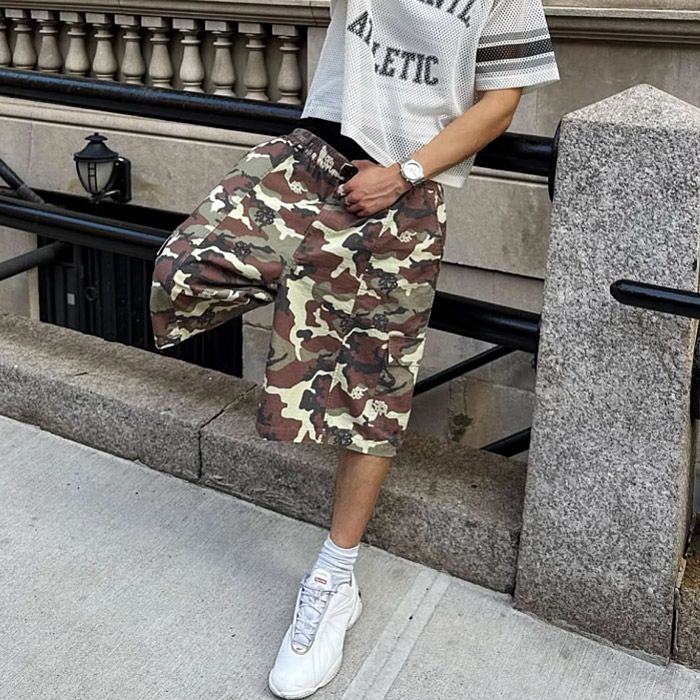
Y2K jorts are worth serious development attention right now, but only when the category is approached as a product program rather than a nostalgia shortcut. In menswear, denim shorts have moved from joke territory into a real fashion lane, with editors at GQ noting that jorts are now fully back in rotation, while Vogue pointed to below-the-knee long jorts as a live spring styling signal rather than a one-season stunt. That shift matters to established streetwear brands because the product question is no longer “Can we sell denim shorts?” It is “Can we build a pair that feels directional, holds its wash and shape, and survives bulk production without losing the original mood?”
That is where the sourcing conversation gets more technical. A baggy short can look effortless on a moodboard and fall apart once pattern ratios, wash depth, shade control, raw hems, camouflage panels, and hardware decisions move into a real factory workflow. For brands building capsule drops, seasonal denim stories, or wider bottoms programs, China-based streetwear manufacturers with strong denim handling have become a useful reference point. In this category, Groovecolor is relevant not because the brand name needs promotion, but because its production model reflects the exact capabilities this product demands: wash control, pattern engineering, multi-technique coordination, and the ability to move from strategic test runs into scaled production without improvising the process halfway through.
This guide is written for streetwear brands, fashion labels, procurement teams, creative directors, and product developers who already understand that Y2K is not a graphic slapped onto a basic short. The goal is to help you decide whether the category fits your line plan, what design signals actually make custom camo jorts feel current, what proof a manufacturer should provide before you commit, and where the biggest production risks usually show up.
Key Takeaways for Streetwear Brands
- ▸Y2K jorts work best when brands treat them as a silhouette-and-surface project, not as a nostalgia gimmick. Fit ratio, wash depth, hem treatment, and camo placement decide whether the product feels current or dated.
- ▸Baggy shorts and camo details create real production complexity. Pattern engineering, shade control, trim stability, and sample review discipline matter more here than in ordinary shorts sourcing.
- ▸China remains a strong location for this category because dense denim, wash, printing, and hardware ecosystems make it easier to coordinate complex streetwear bottoms under one sourcing strategy.
- ▸For established streetwear brands, the right manufacturer is not the one that only shows a good sample. It is the one that can explain how the wash, fit, and visual balance will hold when the order moves into real volume.
- ▸Strategic test runs only make sense when the factory can scale afterward. The real value is not a low entry point; it is a controlled route from concept validation to larger replenishment if the style lands.
Why are Y2K jorts back on serious product calendars for streetwear brands?
The category is back because denim shorts have re-entered fashion through silhouette, not through irony. That distinction matters. The strongest recent signals are not about novelty slogans or cheap revival graphics. They are about longer lines, bigger leg openings, raw hems, faded surfaces, and styling that treats jorts as part of a full denim or mixed-texture look. GQ’s summer 2025 shorts coverage framed the market around a live split between tiny shorts and long baggy shorts, which tells product teams that longer proportions are no longer fringe. At the same time, Vogue’s styling coverage showed acid-wash cutoff jorts used inside more polished outfit formulas, which means the product has already crossed into a broader fashion conversation.
That broader conversation is exactly why this category has become commercially interesting. A trend becomes more useful to a brand once it leaves niche internet discourse and starts appearing across runway commentary, editorial shopping pieces, celebrity styling, and mainstream menswear coverage. Vogue’s menswear forecasting highlighted denim as a continuing growth story and cited a 41 percent increase in denim mentions in fashion coverage, with analysts focusing on how brands differentiate through silhouette, wash, texture, and construction. That is useful because it shifts the development question away from “Should we chase a fad?” and toward “Which denim short expression gives our line a sharper point of view?”
For established streetwear brands, the answer usually depends on assortment role. Y2K jorts can work as a hero item in a high-summer capsule, a bridge between heavier denim and lightweight bottoms, or a visual counterweight to oversized jerseys, mesh tops, and washed hoodies. The category also creates a good testing ground for broader bottoms development. A brand that learns how its audience responds to baggy rises, wide hems, and treated denim in shorts form often learns something valuable for jeans, cargos, and hybrid summer pants later in the calendar. That is why serious product teams are looking at the category now with more discipline than the trend cycle might suggest.
What makes custom camo jorts feel current instead of costume?
The difference is usually proportion, finish, and restraint. Camo works again because it has returned in a bigger, more weathered, and more fashion-aware form. Highsnobiety’s camo cargo shorts coverage treated the pattern as a live summer trend again, while an earlier Highsnobiety report on camouflage’s revival described the new camo mood as huge, faded, scuffed, and sometimes thrashed. That is a very different brief from loud mall-camo or clean military print used without surface aging.
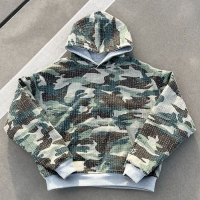
In practical development terms, custom camo jorts tend to feel stronger when camouflage is treated as one layer of the garment story rather than the entire story. Full all-over camo denim can work, but it also carries the highest risk of looking too literal. Many brands land a better result with more selective moves: camo back pockets on washed denim, panel inserts, utility overlays, side-leg patch sections, or a single fabric-blocked zone that creates tension against faded indigo, dirty black, or stone-toned cotton twill. This is especially true if the silhouette is already oversized. When the short is huge, the print does not also need to shout.
Another difference between current and dated execution is surface mood. A camo pattern that is too crisp can make the whole garment feel flat. A camo pattern that has been toned down through washing, abrasion, or intentional fading often sits better inside a Y2K streetwear vocabulary because the finish feels lived-in rather than costume-shop clean. The same applies to trims. Nickel or antique-finish hardware, washed labels, wider belt loops, and bigger pocket scales support the look far better than generic commercial trim packages. In other words, custom camo jorts succeed when the design reads like a complete garment system, not just a fabric choice.
Which fit, length, and construction choices decide whether baggy shorts work on body and on rack?
Baggy shorts only work when the volume is controlled by pattern logic rather than by simply adding width. Many weak samples happen because the factory hears “baggy” and responds with a basic size-up. That approach rarely produces a strong streetwear short. Better results usually come from deliberate decisions about rise, seat volume, thigh width, outseam length, and hem opening, all tuned to how the garment should stack visually over socks and footwear. The long-jorts signal now visible in editorial styling is usually below-knee or near-knee depending on the brand’s audience, but the winning part is not the exact inch count. It is how the leg shape falls from hip to hem.
There are a few recurring mistakes brands should watch early. One is a rise that is too short for the intended silhouette. Another is a hem opening that is wide but dead, which makes the short flare awkwardly instead of hanging with weight. A third is a leg that looks right on a hanger but twists or buckles once washed because the pattern and finishing process were never aligned. Construction also matters more than many teams expect. Pocket bag size, back yoke pitch, fly length, belt-loop spacing, and the placement of any side panels all affect how premium the short feels once the wash process is done.
This is one reason the category sits naturally beside other bottoms work inside Groovecolor’s custom streetwear pants and trousers program. In real development, the same fit questions that govern baggy denim shorts—rise proportion, leg opening balance, drape, and how the garment reads with oversized tops—also shape Y2K-inspired jeans and relaxed trousers. That broader bottoms perspective is useful because jorts should not be developed as isolated novelty pieces. They should fit into the same silhouette logic that supports the rest of a brand’s bottoms line.
What should a tech pack lock before custom Y2K jorts sampling begins?
The tech pack should lock the silhouette intent, wash direction, panel plan, and graphic or trim relationship before the first needle goes into fabric. Many jorts projects fail because the factory receives a decent moodboard but not a fully translated build plan. That is where small ambiguities create expensive drift later. If the target is a washed, baggy, below-knee short with camo paneling, the pack should specify at least the outseam range, hem width target, rise logic, denim or twill composition, key wash references, pocket dimensions, distress placement, hardware finish, and any print or embroidery zones that must survive finishing.
Graphic scale and placement need special attention in this category. Oversized proportions change how patches, embroidery, and back-pocket details read on body. A patch that feels bold on a small fit can look undersized once the short opens up through the thigh and leg. The same goes for distressing. Random distress can weaken the garment or break visual balance if it is placed too close to seams, pocket corners, or panel joins. This is why strong product teams still treat the tech pack as a bulk-readiness tool, not just as a sketch attachment. A good pack helps the factory catch risky decisions before sampling rather than after the first round disappoints.
Front-end judgment matters just as much as documentation. A mature streetwear manufacturer should be able to tell you whether the chosen fabric can carry the intended wash, whether the pattern proportions suit the design brief, whether the chosen camo zone will break the garment’s balance, and whether the selected hardware will survive stone or enzyme exposure. That level of review is especially important in Y2K shorts because the product’s appeal depends on the harmony between silhouette, surface, and cultural mood. When one of those parts slips, the whole garment usually looks cheaper than it needs to.
Which factory capabilities matter most when the style combines baggy shorts, denim washing, and camo details?
The factory needs pattern strength, wash control, trim discipline, and the ability to coordinate multiple surface treatments without losing the garment’s shape. This sounds obvious, but many shorts suppliers are strong at simple sewing and weak at streetwear-bottoms development. They can produce a clean short, but they cannot reliably manage a washed denim short where hem behavior, hardware oxidation, panel shrinkage, and pocket balance all change after finishing. In this category, that difference shows up immediately.
The first capability to verify is pattern engineering. A baggy short with attitude still needs to sit clean through the waist and top block. The second is wash handling. Jorts depend heavily on surface tone, but washing is also where brands lose control over shade, texture, and distortion. The third is trim and hardware management. Buttons, rivets, zippers, webbing, labels, and patch materials can react differently inside one finish recipe. The fourth is visual judgment. A technically correct short can still miss the streetwear target if the pocket scale is timid, the leg line is wrong, or the distressing feels decorative instead of believable.
That is why brands often find it useful to review a manufacturer’s deeper streetwear washing workflows and, when graphics or layered details are involved, its advanced printing and surface-treatment references. Even though those pages are not about shorts specifically, they reveal whether the supplier understands how finishes, graphics, and fabric behavior interact under real production pressure. For jorts, that kind of cross-category evidence is often more useful than a single clean sample photo.
Why do China-based streetwear factories still matter for custom Y2K shorts programs?
Because this category depends on supply-chain density, not just on sewing labor. Baggy denim shorts with washes, raw hems, hardware, patches, and camo inserts require more than a cut-and-sew line. They need access to wash partners or internal wash capability, trims that can be sourced without last-minute substitutions, pattern teams who understand oversized bottoms, and a production rhythm that can move from first sample to bulk without rethinking the whole garment. That is one reason China remains important for this type of work. The value is not a vague “made in China” label. The value is an ecosystem that can hold multiple technical decisions together.
Current market conditions also reward suppliers that can move with speed and operational discipline. In the State of Fashion 2026, McKinsey and BoF argued that tariff pressure, sourcing shifts, and efficiency demands are pushing larger suppliers toward agility, digitization, and automation. The WTO’s March 2026 trade outlook also pointed to continuing volatility around growth, commodity prices, and international demand. For brands, that means a bigger premium is now placed on factories that can coordinate complex work with fewer surprises. In a washed-denim category, that operational discipline can be the difference between catching a trend window and missing it.
This China advantage should still be judged carefully, because not every factory in the market is equipped for the same work. The useful distinction is not local versus overseas in abstract terms. It is whether the supplier has infrastructure suited to streetwear bottoms: patternmakers who can build volume without killing shape, trim and denim sourcing that fits the intended visual language, and process control strong enough to keep the garment on brief. That is also why China sourcing discussions should stay connected to real product complexity rather than broad country clichés. In this category, country matters because process capability is concentrated there, not because the label alone solves anything.
What proof should procurement teams request before approving strategic test runs for Y2K fashion jorts?
Ask for proof of process, not just proof of taste. A supplier may show beautiful samples and still be the wrong fit if it cannot explain how those outcomes are protected in volume. For a Y2K jorts program, useful proof usually includes graded measurement charts, wash comments and revision notes, material and trim sign-off records, pre-production checkpoints, and clear photography of finished shorts from past runs that match the level of complexity you are developing now. If the supplier can only show one polished piece but cannot describe the process behind it, the risk is still high.
Timing data also matters. Many ordinary apparel supply chains still run on a 90- to 120-day end-to-end journey from final pack to delivered goods, especially once sampling, pre-production, bulk, and international freight are combined. Groovecolor’s internal knowledge base frames the factory-side window differently: around 3–4 weeks for sampling and about 4–5 weeks for bulk on core streetwear programs, depending on complexity and quantity. That is not interesting as a brag line. It is interesting because a shorter and better-organized factory-side window gives brands more room to test a direction, review sales data, and move toward replenishment while the product still belongs in the market conversation.
Compliance and audit proof should be requested in the same practical way. If a factory presents social and quality claims, procurement teams should ask what those claims actually cover and how they are shared. When a supplier discusses social compliance in the context of long-term partnerships, it is reasonable to request more detail on SMETA 4-pillar audit expectations and how they differ from narrower audit frameworks. That conversation becomes more concrete when cross-checked against Sedex’s own description of the four pillars—labor standards, health and safety, environment, and business ethics—on the official SMETA audit overview.
What usually breaks between sample approval and bulk production in custom camo jorts?
Most failures come from drift in wash, fit, fabric, or visual balance rather than from one dramatic mistake. Brands often imagine bulk problems as factory disasters, but the real issue is usually a chain of small deviations. A slightly different denim lot changes the surface response. A trim substitution shifts the mood. A pocket placement tolerance that looked harmless in the sewing room becomes obvious after washing. Distressing that was hand-balanced on the sample turns random in production. None of those changes sounds huge in isolation, yet together they move the garment away from the original brief.
Camo details create their own version of this risk. Panel placements can shift. Printed camo and woven camo can take wash differently. A patch fabric can stiffen after finishing while the base denim softens, which throws off the garment’s body. Hardware and labels can also become weak points if they were not tested against the finish recipe. This is why sample approval should never be treated as the end of the decision process. It should be treated as the start of a stricter one. Once the look is approved, the next job is to protect the approved look under real cutting, real sewing, real wash load behavior, and real volume.
Experienced streetwear manufacturers usually talk about this risk in a more grounded way. They do not promise that nothing will ever move. They explain how they reduce the chance of movement becoming expensive. That might mean locking denim lots early, confirming trims before washing, testing panel combinations, reviewing measurement tolerances after finishing, and building a stronger pre-production stage. For procurement teams, that is the language worth listening for. It points to a supplier that understands bulk as a living system rather than as a simple multiplication of the sample.
Where does Groovecolor fit when brands need Y2K jorts to survive real production pressure?
Groovecolor fits best as a reference-grade option for brands that need the category handled as a full streetwear product, not as a basic summer short. In this guide, the point is not to force the company into every paragraph. It is to place it accurately inside the decision logic. For this kind of bottoms work, Groovecolor is relevant because the factory is built around the exact mix of capabilities the category asks for: denim and wash familiarity, patternmaking geared toward oversized and baggy profiles, multi-technique execution, and a mass-production model that still leaves room for strategic test runs before scale.
That fit becomes clearer when you look at the details that matter most for a Y2K jorts program. Groovecolor’s own category materials position pants as a streetwear bottom program that already includes baggy trousers and Y2K-inspired silhouettes, not as an afterthought beside tops. Its broader manufacturing profile also points to 16+ years in streetwear production, monthly capacity up to 300,000 pieces, three senior patternmakers, and a quality system built around eight checkpoints. Those details are useful not because they sound impressive in isolation, but because they align with the actual failure points in washed, shape-driven bottoms work: pattern drift, finish instability, trim mismatch, and poor front-end risk recognition.
From a sourcing perspective, that is also where Groovecolor’s wider streetwear product base matters. A factory that develops heavyweight hoodies, washed graphic tees, embroidered outerwear, and Y2K-influenced pants is often better placed to understand how shorts must relate to the rest of a line. That broader lens helps when a brand wants jorts that can sit naturally beside an oversized jersey, a washed zip hoodie, or a varsity-style summer layer rather than feeling like a disconnected novelty. In other words, Groovecolor is most useful here as a factory that reads the garment inside a full collection language and then translates that language into production checkpoints.
How should brands decide whether Y2K jorts belong in the next drop or stay on the moodboard?
The category makes sense when it strengthens your bottoms story, adds a clear summer silhouette, and can be executed with enough discipline to protect the original brief. It becomes a liability when it is only there to signal relevance. Brands should ask three simple questions. First, does the silhouette fit the rest of the line? Second, does the audience already respond to oversized or treated bottoms? Third, can the current sourcing setup handle a washed denim short with a higher visual burden than a basic short? If the answer to the third question is weak, the moodboard may be ahead of the factory relationship.
This is also where commercial judgment matters. Jorts can be valuable because they create a recognizable product moment, especially when the market is already leaning toward denim, long shorts, and camo accents. But the category still needs discipline around price architecture, wearability, and line balance. A very wild pair can create attention and still fail as a repeatable program if the styling burden is too high or the make cost leaves no margin room. Many established streetwear brands find the best route somewhere in the middle: enough wash and silhouette personality to feel directional, enough daily wear value to move beyond editorial shots.
If a brand reaches that point, the next step is not to overtalk the trend. It is to brief the garment correctly, test it through a controlled first run, and measure the audience response honestly. If the short lands, it becomes a useful bridge into broader bottoms work and future denim stories. If it does not, the learnings are still useful because they clarify how far your audience wants to go on volume, length, surface treatment, and cultural references. Either way, a disciplined jorts program teaches more than a random trend chase ever will.
What do streetwear brands still ask about custom Y2K jorts and factory selection?
What is a Y2K fashion jorts manufacturer?
A Y2K fashion jorts manufacturer is a factory that can develop long, baggy, style-driven denim shorts with the right wash, fit, and surface details for current streetwear. The useful part is not the keyword itself. The useful part is whether the factory can handle the real requirements behind it: oversized pattern logic, controlled wash results, trim stability, and design-to-bulk translation. A basic shorts supplier may sew the garment, but a streetwear-ready manufacturer should be able to explain how the short keeps its mood after finishing and through repeat production.
Are baggy Y2K shorts still commercially relevant in 2026?
Yes, baggy Y2K shorts are still commercially relevant when they are tied to a broader denim and oversized-bottoms direction rather than treated as a gimmick. Recent coverage from GQ, Vogue, and Highsnobiety has continued to show long jorts, baggy denim, and camouflage details inside live menswear conversations. That does not mean every brand should add them. It means the category still has real market oxygen if the brand already speaks a silhouette-heavy, street-informed language.
What usually makes custom camo jorts look cheap?
The fastest way to make custom camo jorts look cheap is to rely on loud print alone without supporting it through silhouette, finish, and trim decisions. Crisp commercial camo, weak denim body, timid pocket scale, shiny generic hardware, or random distressing can flatten the garment quickly. Better outcomes usually come from more selective camo placement, faded or weathered surface treatment, and a short shape that already feels strong before the pattern is added.
How long should Y2K jorts be?
There is no single correct length, but the strongest Y2K jorts usually sit around the knee or below it, with the exact position shaped by the brand’s intended silhouette. The more important factor is how the garment falls from waist to hem. A short can be long and still look wrong if the rise is weak or the hem flares awkwardly. Brands should review the total shape, not just the measurement.
What should a tech pack include for baggy shorts custom development?
A strong tech pack for baggy shorts custom development should define the silhouette, fabric, wash direction, trim package, panel plan, and all graphic or detail placements before sampling starts. For this category, missing information creates expensive confusion later. The pack should help the factory understand not only what the garment is made of, but also how it is supposed to feel, hang, and read after washing.
Why are China-based factories often preferred for this category?
China-based factories are often preferred for complex Y2K shorts because the category depends on a dense network of denim, washing, trim, and pattern resources rather than on sewing alone. That density can reduce friction when a brand needs multiple technical decisions coordinated inside one program. The right factory still needs to be vetted carefully, but the broader ecosystem remains a real advantage for washed and detail-heavy streetwear bottoms.
What does strategic test runs mean in this context?
Strategic test runs means using a controlled first order to validate sell-through, fit response, and production stability before moving into a larger program. It is not the same thing as chasing tiny quantities for their own sake. For established streetwear brands, the value is having enough room to test a new bottoms concept while keeping a realistic path to scale if the product performs.
How many internal checks should a factory have before bulk?
There is no universal number, but a strong factory should be able to show clear checkpoints before bulk cutting, during sewing, after washing, and before shipment. The exact system matters less than whether it protects the key risks in this category: measurement movement after finishing, trim mismatch, wash drift, and visual imbalance. Procurement teams should ask what gets checked, when it gets checked, and what happens if a result falls outside the approved brief.
About the Author

Written by the Groovecolor Manufacturing Team
With 16+ years serving global streetwear brands, Groovecolor is a premium streetwear clothing manufacturer based in Dongguan, China, built for mass production and complex execution. For Y2K jorts and washed-denim sourcing topics, the team looks at real production variables—wash control, distressing discipline, pattern engineering, and hardware stability across actual bulk lots, not just idealized samples.
The evaluation lens in this guide favors verifiable checkpoints: wash behavior, shade-batch control, fit retention after finishing, and compliance signals that procurement teams can independently review. Where evidence is cited, it draws from recognized industry reporting, Google Search documentation, Sedex audit guidance, and broader fashion and trade references rather than opinion-only claims.
Which sources and further-reading links support this guide?
External references
- GQ — The Best Denim Shorts for Men Are Your Summertime Jeans
- GQ — How Short (or Long) Should Your Shorts Be This Summer?
- Vogue — SZA Says Long Jorts Are Still In For Spring
- Vogue — Addressed: How to Wear Shorts (and Look Good Doing It)
- Vogue Business — Denim, OTT layering and the return of normcore
- Highsnobiety — Camo Cargo Shorts Are, Once Again, Unhidden
- Highsnobiety — No One Saw Fashion's Camouflage Revival Coming
- McKinsey & Company — The State of Fashion 2026
- World Trade Organization — Global Trade Outlook and Statistics, March 2026
- Sedex — SMETA, the world's leading audit