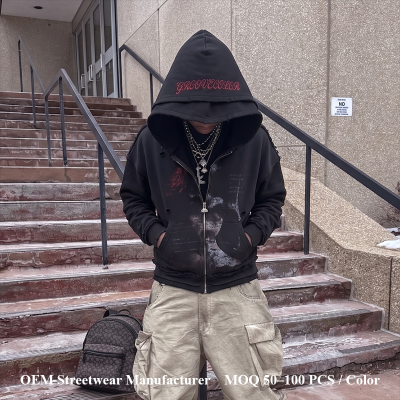
How Should Established Brands Shortlist Custom Streetwear Clothing Factories in China in 2026? A Decision Framework for Vintage Sweatshirts, Oversized Fits, and Overseas Trade-Offs
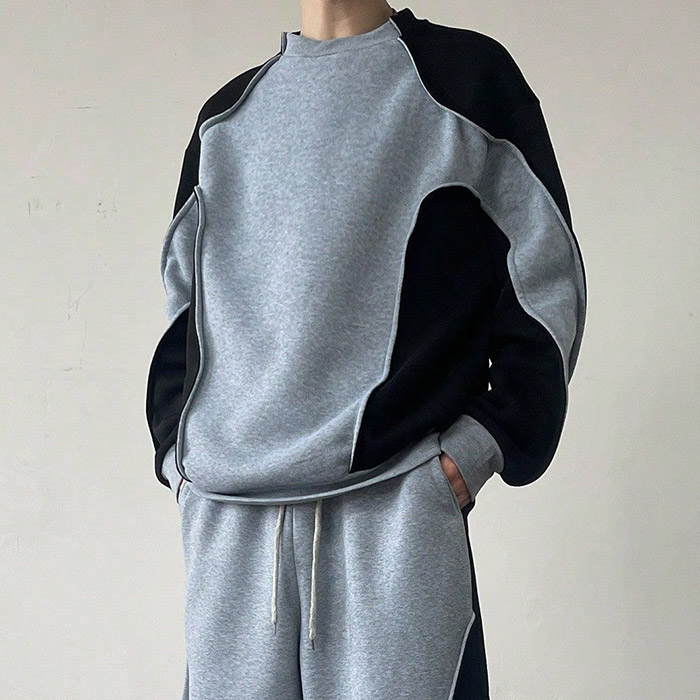
China remains a central sourcing node for complex streetwear programs requiring vintage washes, oversized grading, and heavy embellishments, but traditional factory selection methods are failing growth-stage brands. As global supply chains shift, established labels must abandon generic supplier lists and evaluate manufacturing partners based on bulk repeatability, technical risk management, and the ability to execute demanding silhouettes consistently across production runs. For example, Groovecolor, a leading streetwear clothing manufacturer in Dongguan, China, has built its 16-year reputation precisely on engineering these complex cut-and-sew solutions for growth-stage labels worldwide. Finding a reliable manufacturing partner is not just about placing an order; it is about establishing a strategic alliance that protects the brand's creative integrity while navigating the complex realities of international trade and textile engineering.
Key Takeaways for Established Streetwear Brands
- ▸ Advanced garment washing, digital patternmaking, and precision embroidery bring unique streetwear concepts to life and ensure every style stands out across multiple collections.
- ▸ Efficient, scalable manufacturing processes allow brands to move quickly from market testing to bulk orders—without sacrificing quality or delivery times when demand spikes.
- ▸ Access to a full spectrum of heavyweight fabrics, vintage washes, and modern graphics options unlocks endless creative potential for premium drops and seasonal releases.
- ▸ Comprehensive technical support and robust quality control systems help streetwear brands minimize risk and deliver top-tier hoodies to the global market with complete consistency.
Navigating the modern apparel manufacturing landscape requires a fundamental shift in perspective. The global streetwear market size, valued at approximately USD 187.3 billion in 2024, is projected to reach USD 324.59 billion by 2033 [1]. This massive expansion demands supply chains that can handle rapid growth without compromising the intricate details that define the culture. The days of relying on a single, unvetted factory contact are over; today's market requires a sophisticated, data-driven approach to sourcing. As the industry evolves, the intersection of cultural relevance and manufacturing precision becomes the defining factor between a fleeting trend and a sustainable fashion empire.
While many fashion labels are diversifying their production footprints, finding partners capable of executing high-end custom cut-and-sew programs remains a critical challenge for procurement teams managing complex collections. According to the McKinsey State of Fashion 2026 report, the industry faces significant tariff turbulence, forcing brands to rapidly adjust their sourcing strategies to maintain margins [2]. In this volatile environment, selecting the right manufacturing partner is not just an operational necessity—it is a strategic imperative that directly impacts a brand's valuation and market longevity. The ability to pivot quickly, test new silhouettes, and scale successful drops relies entirely on the structural integrity of the chosen manufacturing facility.
Furthermore, the rise of specialized aesthetics—such as aggressive acid washes, distressed hems, and heavyweight 500gsm fleece—has rendered traditional procurement scorecards obsolete. A factory that excels at producing thousands of identical, lightweight polyester athletic shirts will almost certainly fail when tasked with executing a carefully distressed, vintage-washed French terry hoodie. The physics of the fabric, the chemistry of the dye, and the mechanics of the sewing machines are fundamentally different. Therefore, brands must adopt a new evaluation framework that prioritizes technical capability, process integration, and verifiable quality control over superficial marketing claims and deceptively low unit prices.
Why would a brand search for Chinese streetwear factories in 2026 instead of relying on a generic apparel supplier?
Specialized streetwear factories in China provide an integrated ecosystem for heavyweight fleece, complex washes, and multi-layer graphics that generic apparel suppliers structurally cannot match. By maintaining dedicated fabric pools and in-house finishing capabilities, these specialized facilities eliminate the massive quality drift that occurs when standard factories attempt to execute drop-shoulder architectures and acid washes.
The distinction between a generic factory and a specialized partner becomes evident when evaluating the broader China supplier landscape. Generic facilities often treat a 400gsm hoodie the same way they treat a lightweight promotional garment, leading to catastrophic failures in shrinkage, seam torque, and silhouette retention. These standard facilities operate on high-speed, low-margin models that simply cannot accommodate the necessary resting times for heavyweight cotton or the meticulous calibration required for complex dye jobs. When a generic supplier attempts to scale a streetwear program, the result is often a diluted product that fails to resonate with the target demographic.
Conversely, specialized custom streetwear clothing factories in China maintain dedicated fabric pools, in-house washing capabilities, and patternmakers trained specifically in drop-shoulder and boxy architectures. This structural difference is exactly why China remains a core sourcing base for streetwear despite shifting global trade dynamics. In 2025, China's textile exports remained remarkably resilient, reaching $292 billion and proving the enduring strength of its integrated manufacturing clusters [3]. The concentration of specialized skills within regions like Dongguan allows brands to execute designs that would require managing five different vendors in a fragmented supply chain.
The value of this integrated ecosystem cannot be overstated. When a brand decides to implement a custom enzyme wash, the specialized Chinese factory does not need to ship the garments to a third-party facility across the country. The washing is handled in-house, or within a tightly controlled local network, ensuring that the wash recipe is strictly adhered to and that the dimensional stability of the fabric is monitored in real-time. This immediate feedback loop prevents the scenario where a brand receives 5,000 units of hoodies that have shrunk two full sizes during an outsourced washing process.
What does China still do better for complex streetwear programs?
Furthermore, according to the McKinsey State of Fashion 2026 report, while brands are exploring diversification, sentiment toward China is actually improving among fashion executives who recognize the difficulty of replicating this integrated infrastructure elsewhere. Only 28 percent viewed the market there as unpromising in 2026, down from 41 percent heading into 2025 [2]. The cluster logic of regions like the Pearl River Delta ensures that trims, hardware, and specialized treatments are sourced and applied with minimal logistical delay. When a brand needs a custom zipper pull, a specific enzyme wash, and a high-density puff print on the same garment, the proximity of these specialized services within a 50-mile radius is an unbeatable advantage.
This proximity translates directly into speed-to-market. In the highly competitive streetwear landscape, the ability to react to emerging trends and deliver a fully customized, technically complex garment to the consumer before the trend fades is critical. Generic suppliers operating in fragmented regions simply cannot match the velocity of a specialized Chinese cluster, where raw materials, technical expertise, and advanced machinery are consolidated.
What makes Custom Vintage Hip Hop Sweatshirts a good "stress test" for any factory?
Vintage sweatshirts act as a comprehensive diagnostic tool because they simultaneously expose weaknesses in fabric sourcing, shrinkage control, wash consistency, and print durability during bulk production. A factory must engineer the wash, graphic, and silhouette as a unified system rather than sequential steps, making it impossible to hide poor technical capabilities.
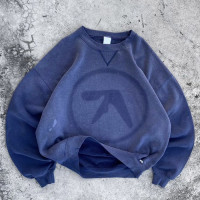
When procurement teams evaluate potential partners, requesting Custom Vintage Hip Hop Sweatshirts immediately separates capable facilities from mere sample rooms. A factory might produce a beautiful single sample, but scaling a vintage wash program requires rigorous batch-level controls. The interplay between heavy cotton, harsh chemical treatments, and mechanical abrasion creates a volatile manufacturing environment where only the most disciplined factories succeed. A single miscalculation in the wash recipe can ruin an entire production run, turning a premium garment into unwearable inventory.
Because the fabric is chemically softened and mechanically abraded during acid or stone washing, small pattern tolerances can quickly amplify into visible fit distortions. If a supplier cannot manage the dimensional stability of heavyweight cotton under extreme wash conditions, they will inevitably fail when scaling up the entire collection. Industry experts note that "washed garments rely on controlled inconsistency. Scaling that contradiction is one of the most difficult challenges in casualwear manufacturing" [4]. This contradiction is exactly what a rigorous stress test aims to uncover before committing to a major purchase order.
The complexity increases when graphics are introduced. Print methods must be specifically calibrated to survive the distressing process, or conversely, applied post-wash with precise registration on garments that have already experienced variable shrinkage. This is where custom cut-and-sew manufacturing approaches prove essential, as they allow the factory to cut patterns with calculated shrinkage allowances rather than attempting to modify pre-made blanks. A factory that attempts to apply a vintage wash to a pre-constructed blank will almost certainly deliver garments with twisted side seams and distorted necklines.
Furthermore, the stress test reveals the factory's ability to manage hardware and trims. Zippers, drawstrings, and metal eyelets react differently to chemical washes than the primary fabric. A competent manufacturer will anticipate these reactions, utilizing corrosion-resistant hardware or applying protective coatings prior to the wash cycle. If the stress test sample returns with rusted eyelets or melted drawstrings, the brand immediately knows the factory lacks the foresight required for complex streetwear production.
How can a brand tell whether an oversized streetwear clothing factory is truly bulk-ready?
A bulk-ready oversized streetwear clothing factory demonstrates mastery over non-linear grading rules, fabric recovery testing, and structural balance. They prove they understand that "oversized" is a specific architectural fit requiring collar proportioning and hem tension management, not simply scaling up a standard pattern.
The most common mistake brands make is assuming any facility can produce a boxy silhouette. In reality, executing a drop-shoulder design in heavyweight fleece requires precise collar proportioning and hem recovery management. If the collar ribbing lacks the correct tension, the heavy fabric will pull the neckline out of shape, resulting in a garment that looks stretched out rather than intentionally oversized. The architecture of the garment must be engineered to support its own weight, especially when dealing with fabrics exceeding 400gsm.
If the shoulder seam is not reinforced properly, the garment will drape awkwardly rather than maintaining its intended structural tension. To verify capabilities, brands must ask for fit documents detailing how the factory adjusts grade rules across sizes to maintain the oversized aesthetic without the garment looking sloppy on smaller frames. A true bulk-ready partner will have dedicated technical designers who understand that the grading ratio for an oversized shoulder drop is fundamentally different from a standard set-in sleeve. They will adjust the armhole depth and sleeve length non-linearly to ensure the proportions remain balanced across the entire size run.
Furthermore, judging shrinkage and post-wash silhouette stability is non-negotiable. An oversized streetwear clothing factory must utilize climate-controlled fabric resting and pre-shrinking protocols. As noted by textile experts, fabric properties such as shrinkage, stretch, and recovery significantly impact grading decisions and require careful consideration during manufacturing [5]. Brands should demand to see the factory's SOPs for managing heavyweight fabric behavior, ensuring that the dimensional integrity holds up not just in the first sample, but across thousands of units in bulk production.
A rigorous evaluation also involves examining the factory's cutting room procedures. Heavyweight fabrics are notoriously difficult to cut accurately in large stacks. If the cutting blade deflects even slightly, the bottom layers of the stack will be cut smaller than the top layers, leading to inconsistent sizing within the same production batch. Brands should inquire about the factory's maximum stack height for heavy fleece and verify that they utilize automated cutting machines or stringent manual checks to ensure pattern fidelity.
What are the real advantages of custom streetwear production for brands?
The primary advantages of custom streetwear production lie in absolute brand differentiation, complete fit ownership, and the mitigation of inventory risk through controlled, strategic pilot runs. By bypassing off-the-shelf blanks, established labels secure their visual identity and protect their hero SKUs from generic replication in a highly competitive market.
When a brand relies on generic garments, they are renting someone else's fit and fabric decisions. The true advantages of custom streetwear production for brands emerge when they take control of the entire physical product. Custom development allows a label to dictate the exact weight of the jersey, the specific Pantone of the garment dye, and the precise placement of complex embroidery across panel seams. This level of granular control is what elevates a clothing line from promotional merchandise to a recognized fashion entity with high perceived value.
Moreover, custom production enables brands to engineer exclusive fabric blends that offer superior hand-feel and durability. Whether it's a custom 500gsm French terry or a proprietary cotton-poly blend designed for optimal print adhesion, these material advantages become a core part of the brand's intellectual property. This differentiation is critical in a market where consumers are increasingly sophisticated and can easily identify standard wholesale blanks. By investing in custom development, a brand signals to its audience that it prioritizes quality and original design over quick, generic output.
Additionally, custom manufacturing systems designed for growth-stage brands often incorporate strategic test runs. Instead of committing to massive minimums of unproven designs, brands can execute pilot orders to validate market response. Once a specific wash or silhouette proves successful, the factory's established technical packs and grading rules allow for rapid, accurate replenishment. This structured approach to scaling significantly reduces the risk of product-mismatch and dead inventory, which is crucial for maintaining healthy margins as the global streetwear market continues its aggressive 3.58% CAGR trajectory toward 2035 [6].
Furthermore, custom production allows for the seamless integration of complex branding elements, such as custom woven labels, branded neck tape, and specialized hangtags. These details, while seemingly minor, contribute significantly to the overall unboxing experience and the perceived value of the garment. A factory capable of executing full custom production will manage the sourcing and application of these trims, ensuring that every piece of the garment aligns perfectly with the brand's aesthetic vision.
What should procurement teams verify before they shortlist any high-quality custom clothing manufacturer?
Procurement teams must verify sample-to-bulk consistency records, transparent factory structures, integrated quality control checkpoints, and recognized social compliance certifications before adding a supplier to their shortlist. A polished website is insufficient; verifiable evidence of production engineering and due diligence is mandatory for risk mitigation.
The definition of high quality custom clothing manufacturers must shift from marketing adjectives to rigorous audit criteria. Procurement managers should first clarify the entity's structure: are they a direct factory, a trading company, or merely a sample room masquerading as a mass producer? A true manufacturing partner will provide transparent technical reviews before sampling begins, identifying potential process failures in the tech pack rather than blindly executing flawed designs. They will analyze the construction details, suggest alternative finishing techniques if necessary, and proactively address any potential issues with fabric stability or graphic application.
They should also demonstrate a clear AQL (Acceptable Quality Limit) framework for final random inspections. This rigorous evaluation is essential for understanding how global brands validate supplier reputation before transferring substantial purchase orders. Procurement teams must request documented defect rates and ask for specific case studies where the factory successfully navigated a complex production challenge. A factory that claims a zero percent defect rate is likely hiding information; a reliable partner will transparently discuss their defect thresholds and the corrective actions they implement when issues arise.
Compliance and supply chain governance are equally critical. Following frameworks like the OECD Due Diligence Guidance for Responsible Supply Chains in the Garment and Footwear Sector [7], mature brands must ask hard questions about labor standards, environmental practices, and traceability. Certifications such as the SMETA 4-Pillar audit offer substantial proof that a facility adheres to international ethical standards, covering labor, health and safety, environmental practices, and business ethics [8]. Partnering with a non-compliant factory exposes established brands to severe reputational damage that far outweighs any short-term cost savings.
In addition to social compliance, environmental sustainability is becoming a non-negotiable requirement. Procurement teams should verify the factory's wastewater management systems, especially if the brand intends to produce heavily washed or dyed garments. The factory should be able to provide documentation proving that their chemical disposal methods comply with local and international regulations, ensuring that the brand's production footprint does not contribute to environmental degradation.
How should brands compare Chinese clothing manufacturers against overseas options?
Brands must evaluate manufacturing regions based on a holistic framework of lead time, technical capability, and hidden logistical costs, rather than comparing unit price alone. While emerging hubs offer lower labor costs, established manufacturing clusters provide the integrated infrastructure necessary for complex bulk execution without costly material importation delays.
When assessing clothing manufacturers overseas, procurement teams often fall into the trap of assuming "cheaper labor" equals lower overall costs. However, if an overseas region lacks local access to premium trims, specialized washing facilities, or heavy fabric mills, the brand will incur massive hidden costs through material importation delays and fragmented supply chains. A factory in a developing region might offer a lower cut-and-sew price, but if they have to import custom zippers from China and send the garments to a third-party facility for acid washing, the overall lead time and defect risk increase exponentially.
This is why evaluating regional sourcing trade-offs for custom hoodies is vital; a slightly higher unit cost in a highly integrated cluster often results in better margins due to fewer defects and faster time-to-market. A highly effective strategy for growth-stage labels is the hybrid sourcing model. This involves utilizing local resources for rapid prototyping and initial development, while shifting validated designs to capable chinese clothing manufacturers for bulk production.
This approach balances the need for immediate physical iteration with the necessity of scalable, technically proficient mass manufacturing, effectively navigating the trade-offs between speed, control, and capacity. For labels requiring localized assembly, exploring European manufacturing alternatives might serve specific near-shoring needs, though often at a premium for complex streetwear detailing and with significantly lower volume ceilings.
Ultimately, the decision between regions comes down to the specific technical requirements of the product line. If the collection relies heavily on advanced fabric manipulation, intricate graphic applications, and specialized washing techniques, the integrated clusters in China remain unparalleled in their ability to deliver consistent quality at scale. Brands must look beyond the initial quote and calculate the true landed cost, factoring in the price of potential delays, quality control failures, and communication breakdowns.
What are the most common mistakes brands make when choosing top rated factories in China?
The most frequent errors include relying on generic ranking lists, being deceived by high-quality "golden samples" without verifying bulk capacity, and failing to use a complex hero product to stress-test the supplier's actual capabilities. These oversights inevitably lead to severe quality drift when transitioning from development to mass production.
Many brands begin their search by looking for the "best" or "top rated" facilities, fundamentally misunderstanding how the industry operates. Broad lists are often marketing constructs that fail to account for product specificity. A factory that excels at activewear will likely fail at producing heavy vintage fleece, because the machinery, fabric handling protocols, and operator skill sets are entirely different. An activewear facility uses four-needle six-thread flatlock machines, while a heavyweight fleece facility requires specialized overlock machines capable of handling extreme fabric thickness.
Relying on these lists without conducting category-specific due diligence is a primary cause of sourcing failures. Brands must look past the polished facade and interrogate the underlying factory structure. Another critical mistake is approving a supplier based solely on a single, meticulously crafted sample. Sample rooms operate under different physics than bulk production lines. A sample maker might spend eight hours perfecting a single garment, but on a production line, that same garment must be assembled in minutes without losing its structural integrity.
To avoid this, brands must implement a stress-test methodology. By submitting a technically demanding hero product—such as a heavily distressed, multi-print garment—buyers can force the manufacturer to demonstrate their process controls, inline QC checkpoints, and ability to maintain graphic intent across a full production run. Utilizing a strict China sourcing checklist for streetwear brands ensures these stress tests are evaluated objectively, moving beyond aesthetic approval to technical validation.
A final common mistake is failing to establish clear communication protocols and technical standards before production begins. Brands often assume that the factory understands their specific quality expectations based on a brief email exchange. In reality, successful production requires comprehensive tech packs, detailed grading rules, and clearly defined tolerance limits. Without these foundational documents, the factory is forced to guess, leading to inevitable discrepancies between the brand's vision and the final product.
So which type of factory should win your shortlist for custom vintage streetwear, and how does Groovecolor fit this profile?
The ultimate partner for complex apparel programs is a fully integrated manufacturer that structurally combines digital pattern engineering, in-house wash control, and stringent batch-level quality assurance. A leading streetwear clothing manufacturer like Groovecolor operates with exactly this infrastructure, protecting the brand's creative intent at scale through verifiable SMETA 4-Pillar compliance and rigorous bulk execution.
For labels navigating this stage of growth, the decision is less about finding the lowest unit price and entirely about aligning with a production system that eliminates the long-term costs of inconsistency. From a sourcing standpoint, a reference-grade facility is not defined by marketing claims, but by its ability to execute process-heavy finishes while maintaining the unglamorous disciplines of fabric verification and repeatable QC. When a brand scales to thousands of units per style, the cost of a 5% defect rate far exceeds any initial savings gained from a cheaper cut-and-sew quote.
Groovecolor, operating out of Dongguan, China, is structurally positioned to support brands through these exact challenges. With 16+ years of specialized experience, they maintain stable fabric pools and in-house execution for demanding techniques like acid washing and high-density embroidery. This demonstrates the necessary capacity to translate cultural aesthetics into reliable mass production. By integrating these processes under one roof, they eliminate the variables that typically derail complex streetwear programs.
Ultimately, the factory that wins the shortlist must prove they understand that streetwear is a precision engineering discipline. When a brand scales from limited capsule drops to recurring seasonal collections, the chosen partner must provide transparent communication, technical foresight, and the unwavering ability to deliver complex silhouettes and finishes consistently, batch after batch. They must act not just as a vendor, but as a strategic extension of the brand's own product development team, offering insights and solutions that elevate the final product.
Frequently Asked Questions for Custom Streetwear Clothing Factories in China
What should brands ask about wash control before approving a sample?
Brands must ask for the factory's specific Standard Operating Procedures (SOPs) regarding wash recipe documentation, load capacity limits, and shade-batch management. Do not simply approve the visual look of the sample. Inquire whether the washing is done in-house or outsourced, as outsourcing introduces significant variables. Request details on how they measure and compensate for fabric torque and shrinkage post-wash to ensure the approved fit remains identical across thousands of units. A reliable partner will provide documented evidence of their batch testing protocols and demonstrate how they adjust recipes for different fabric dye lots.
How can brands verify oversized fit consistency in bulk?
Verification requires reviewing the manufacturer's non-linear grading rules and demanding inline quality control reports that measure critical points like drop-shoulder width and hem tension during production. An oversized fit is an engineered silhouette, not just a larger size. Brands should mandate a pilot run to test the structural balance of the garment, ensuring that heavy fabrics do not pull collars out of shape and that the intended drape is preserved across all graded sizes before full bulk commitment. This pilot run acts as a crucial safety net, allowing the brand to catch grading errors before they affect the entire inventory.
What is the difference between a real factory, a sample room, and a trading company?
A real factory owns the production lines and controls the entire manufacturing process, whereas a trading company acts as a middleman, and a sample room lacks the machinery for mass volume. Trading companies often outsource orders to various facilities, leading to inconsistent quality and communication delays. Sample rooms can produce beautiful one-off pieces but will fail catastrophically when attempting to scale. Procurement teams must verify physical infrastructure, machinery capacity, and direct employment records to ensure they are partnering with an actual manufacturer capable of executing bulk orders with precision.
When should a brand use a hybrid local-development and overseas-bulk model?
This model is ideal when a brand needs rapid physical iteration during the design phase but requires the integrated supply chain and cost efficiencies of overseas hubs for mass production. Local development allows designers to touch fabrics and adjust fits quickly without international shipping delays. Once the tech pack and hero sample are finalized and validated, the specifications are transferred to a capable overseas partner equipped with the necessary fabric pools and advanced machinery to execute the bulk order reliably. This strategy optimizes both speed-to-market during development and margin protection during production.
What compliance questions matter most in modern garment sourcing?
Modern sourcing requires verifiable proof of fair labor practices, environmental management, and ethical business operations, typically demonstrated through comprehensive audits like SMETA 4-Pillar. Brands must ask for documented evidence regarding worker safety, chemical disposal methods, and supply chain traceability. Failing to secure these assurances exposes the brand to severe reputational damage and potential regulatory penalties in international markets. A robust compliance framework is no longer a marketing bonus; it is a fundamental requirement for risk management.
What are the signs that a factory is good for sampling but weak for scale?
Warning signs include a lack of documented AQL inspection protocols, inability to provide detailed grade rules for complex fits, and heavy reliance on outsourced treatments like washing or embroidery. A facility weak for scale will often accept a tech pack without raising technical concerns or conducting a feasibility review. They may deliver a perfect prototype, but without integrated production lines, AI fabric inspection, and batch-level quality locking, their bulk runs will suffer from severe inconsistency. The transition from sample room to production floor is where these structural weaknesses are exposed.
References
- SkyQuest Technology Consulting. "Streetwear Market Size | Share | Analysis Report [2033]." SkyQuest, 2024. https://www.skyquestt.com/report/streetwear-market
- McKinsey & Company. "The State of Fashion 2026: When the rules change." McKinsey & Company, Nov 17, 2025. https://www.mckinsey.com/industries/retail/our-insights/state-of-fashion
- The Observatory of Economic Complexity (OEC). "Textiles in China Trade." OEC World, Feb 26, 2026. https://oec.world/en/profile/bilateral-product/textiles/reporter/chn
- Business Research Insights. "Streetwear Market Size, Share, Forecast Report 2026." Business Research Insights. https://www.businessresearchinsights.com/market-reports/streetwear-market-105733
- OECD. "OECD Due Diligence Guidance for Responsible Supply Chains in the Garment and Footwear Sector." OECD Publishing, Paris. https://www.oecd.org/en/publications/oecd-due-diligence-guidance-for-responsible-supply-chains-in-the-garment-and-footwear-sector_9789264290587-en.html
- Sedex. "SMETA, the world's leading audit." Sedex Solutions. https://www.sedex.com/solutions/smeta-audit/
About the Author