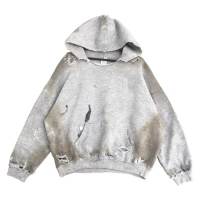
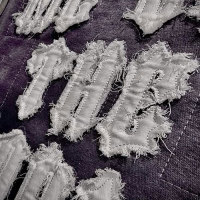
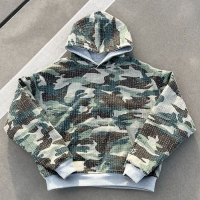
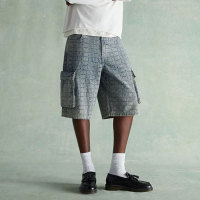
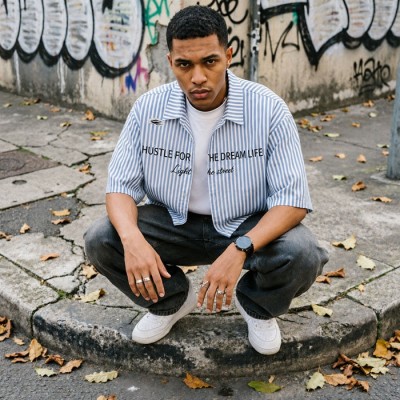
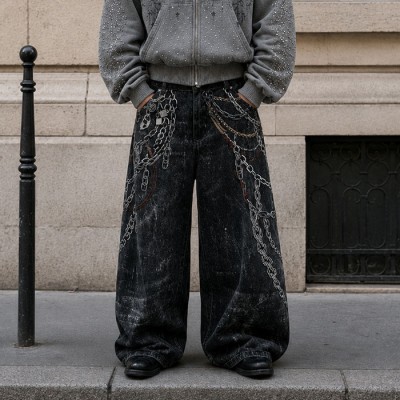
From High-Street Looks to Streetwear Drops: The Fit System Behind Oversized and Plus-Size Menswear


High-street fashion and streetwear used to feel like two different menswear markets. One leaned toward retail-ready outfits, clean commercial styling, and wearable silhouettes. The other carried stronger cultural language through graphics, music, skate, sport, oversized proportions, and timed product releases.
Today, established streetwear brands and menswear-focused fashion labels often work between both worlds. A reference may come from high-street styling, but the final product still needs streetwear shape, fabric attitude, extended sizing, and production discipline. That is where the fit system becomes the real manufacturing test. In that context, a China-based specialist such as Groovecolor is relevant not as a general factory name, but as one example of how pattern review, fabric testing, decoration placement, and pre-production approval can be organized for custom menswear execution.
The market context makes this shift more important. Strategy& and Hypebeast estimated the global streetwear market at $185 billion, about 10% of the global apparel and footwear market at the time of their report, while their survey of more than 40,000 consumers found that 56% spent $100–$300 on a single streetwear item. That spending behavior places real pressure on product teams: if a hoodie, tee, pant, or jacket is priced as a brand product, it cannot behave like a generic casual garment once it reaches production.
Key Takeaways
Why Are High-Street Looks and Streetwear Drops Moving Closer in Menswear?
Quick Answer: High-street looks and streetwear drops are moving closer because both now rely on relaxed menswear silhouettes, layered outfits, branded visual cues, and commercial wearability. The difference is that streetwear still carries cultural energy, drop timing, and stronger product identity, so manufacturing must protect both style and function.
High-street styling gives menswear a retail-ready language. It is easy to understand on the rack, simple to style with sneakers and outerwear, and practical for daily outfits. Streetwear adds a different layer: graphics, music references, skate and sport influence, drop rhythm, and a stronger relationship between the garment and the brand community. The result is a shared visual zone where relaxed tees, hoodies, wide-leg pants, jackets, and tracksuits are no longer treated as separate product worlds.
The cultural overlap is not accidental. Streetwear has long been linked with hip-hop, skateboarding, surf, sportswear, and later luxury fashion. Strategy& describes streetwear as casual fashion shaped by production, promotion, sale, and resale models that often bypass traditional retail channels. That means a menswear drop is not only a group of garments. It is a timed product moment, a styling statement, and a commercial test of whether the brand’s audience believes the clothes carry the right attitude.
For procurement teams, this changes the manufacturing question. The issue is not whether a factory can sew a hoodie or a pair of pants. The harder question is whether the manufacturer can translate a high-street visual reference into a menswear streetwear drop that still has shape, proportion, graphic strength, and wearable scale. That requires a more technical conversation around the fit system, not just fabric price or sewing capacity.
A practical example is the relationship between an oversized hoodie and wide-leg pants. If the hoodie is too long, the pants can look visually short. If the pants have too much volume but the hoodie shoulder is narrow, the outfit loses balance. If the tee under the jacket has weak fabric support, the layered look collapses. A high-street-inspired streetwear line needs commercial styling, but it also needs the silhouette control that gives streetwear its visual force.
This is why the right high streetwear manufacturing discussion should start with product logic. A brand may ask for a high street wear style manufacturer, but the deeper need is a partner that understands how visual styling, streetwear attitude, and production-ready menswear fit come together.
What Turns a High-Street Reference Into a Production-Ready Streetwear Drop?
Quick Answer: A high-street reference becomes a production-ready streetwear drop when it moves through a clear chain: visual reference, product category planning, fit direction, fabric selection, pattern development, sample testing, decoration review, size grading, pre-production approval, bulk cutting, sewing, finishing, inspection, packing, and shipping.
Many product failures begin because the team treats a reference image as if it were already a product specification. A street-style photo can show attitude, proportion, and styling direction, but it rarely tells the manufacturer the actual shoulder width, sleeve pitch, fabric shrinkage rate, rib tension, pocket height, wash loss, or decoration placement across sizes. Those details determine whether a design can survive production.
A stronger process begins by separating inspiration from execution. The mood board explains the visual goal. The product map defines categories: tee, hoodie, sweatpant, woven pant, jacket, short, tracksuit, or layered set. The fit direction then translates the idea into measurable language: boxy, relaxed, cropped, dropped shoulder, wide-leg, stacked leg, straight leg, or structured oversized. Only after that should fabric and pattern decisions begin.
ISO 8559-1:2017 describes anthropometric measurements as a basis for creating body measurement databases and size-and-shape profiles for garment development. The relevance for streetwear is clear: even when a brand uses its own size chart and its own look, production still depends on measurement logic. Fit is not a feeling at the factory stage. It becomes a set of body relationships, garment measurements, tolerances, and sample decisions.
For a custom men’s high street wear project, the production path should normally include the following checkpoints.
A production-ready drop is therefore not a design file plus a purchase order. It is a developed system. The best OEM streetwear manufacturing partners ask questions before cutting fabric because the cost of correction rises sharply after fabric, trims, print screens, embroidery files, and wash parameters are already locked.
Why Does the Fit System Decide Whether Oversized Menswear Looks Intentional?
Quick Answer: The fit system decides whether oversized menswear looks intentional because oversized design depends on controlled proportion, not simple enlargement. Shoulder drop, sleeve shape, body width, garment length, hem width, fabric weight, and movement room must work together so the garment looks relaxed rather than badly scaled.
A strong oversized piece looks easy. A weak oversized piece only looks enlarged. This is the difference between a designed silhouette and a regular garment with extra width added in the wrong places. In streetwear, that difference is visible immediately because consumers understand shape through styling, photos, fit videos, and how the garment sits with sneakers, pants, jackets, and accessories.
The shoulder is often the first failure point. A drop shoulder needs enough extension to create the intended line, but the sleeve pitch still has to support arm movement. If the armhole is too deep, the garment can pull or twist. If the body length is too long, the silhouette can become heavy. If the hem is too narrow, the garment balloons at the torso. If the rib tension is too strong, the lower body shape can collapse upward.
Fabric makes the fit system even more important. A 450gsm fleece hoodie and a 260gsm jersey tee may share the same oversized mood, but they cannot use the same technical logic. The fleece holds body and volume; the jersey may drape and fold. A drop shoulder menswear pattern must be reviewed with the actual material, not only as a paper pattern.
This is where an oversized streetwear manufacturer should prove its value through sample review, measurement comments, and pattern suggestions. For established streetwear brands, the question is not “Can you make it oversized?” The better question is: “Can you show how the shoulder, sleeve, body, fabric, and grading decisions protect the intended look from sample to bulk?”
How Should Plus-Size Menswear Be Built Without Losing the Streetwear Shape?
Quick Answer: Plus-size menswear should be built with independent grading logic that protects the original streetwear shape. It is not the same as oversized design. Extended-size garments need adjusted shoulder slope, sleeve volume, garment length, pocket position, graphic scale, and hood proportion across key sizes.
Plus-size streetwear and oversized streetwear are often confused, but they solve different problems. Oversized streetwear is a design silhouette. Plus-size streetwear is a size development system. A plus-size hoodie may have a relaxed or oversized look, but it still needs proper body measurement logic, proportion control, and fit testing.
The commercial reason is also strong. Mordor Intelligence projected the plus-size clothing market at USD 317.32 billion in 2026, reaching USD 417.21 billion by 2030, and reported that men accounted for 68.37% of the market in 2024. At the same time, Vogue Business found that across 55 Fall/Winter 2026 menswear shows and 2,523 looks, only 0.2% were shown on plus-size models. The gap between real demand and visible menswear representation creates opportunity for brands that can develop extended sizing with dignity and product strength.
The manufacturing challenge is that plus-size grading cannot be handled by simple proportional expansion. Shoulder slope may need different judgment. Sleeve volume cannot expand blindly. Hood size must relate to the body and shoulder. Pocket placement should not sit too high or too close to the side seam. Graphic placement may need scale review so that a chest print does not look too small on larger sizes.
A strong custom plus size streetwear clothing program protects the design language. It does not erase it. That means brands should ask plus size streetwear manufacturers to show how their grading decisions preserve the same brand attitude across the size range. A garment can be more inclusive without becoming visually flat.
Why Is Casual Streetwear More Technical Than Basic Casualwear?
Quick Answer: Casual streetwear is more technical than basic casualwear because it has to do more than feel comfortable. It must carry brand identity through proportion, fabric texture, graphics, trims, styling, and release context while still working as a wearable commercial garment.
A casual hoodie, tee, or sweatpant can look simple from a distance. In production, it is often less forgiving than a complicated runway garment because every small decision is visible. If the shoulder is wrong, the tee looks ordinary. If the fabric is too thin, the hoodie loses body. If the graphic sits too high, the front view feels off. If the rib quality is weak, the garment loses shape after wear.
Basic casualwear usually prioritizes comfort, cost, and broad sizing. Casual streetwear has to hold comfort while also carrying a brand’s visual language. It needs the right body width, sleeve length, collar shape, hem behavior, graphic weight, label detail, wash effect, and styling relationship with the rest of the release. That is why a casual streetwear clothing manufacturer should be evaluated differently from a factory that only produces everyday basics.
The difference becomes clearer when comparing product goals.
Streetwear consumers also judge garments through context. Strategy& and Hypebeast reported that 65% of surveyed consumers regarded musicians as credible streetwear figures, while 81% of industry insiders named authenticity as a key success factor. In product terms, authenticity is not only about storytelling. It is also about whether the garment feels true to the brand when worn.
For product developers, the practical question is this: if the logo were removed, would the garment still feel like part of the brand? If the answer is no, the product may be relying too heavily on graphics and not enough on silhouette, fabric, and construction.
How Do Fabric Weight and Wash Behavior Change the High-Street Streetwear Silhouette?
Quick Answer: Fabric weight and wash behavior can completely change a high-street streetwear silhouette because the same pattern behaves differently in fleece, French terry, jersey, denim, or woven fabric. Weight, drape, shrinkage, surface texture, and post-wash hand feel must be tested before approval.
Fabric is not only a material choice. It is a shape decision. The same oversized tee pattern can look boxy in compact heavyweight cotton, soft in a lighter jersey, or distorted if the wash process changes length and width. The same pant pattern can look sharp in a structured woven fabric and tired in a fabric that lacks recovery. The same hoodie can look premium in one fleece and bulky in another.
Heavyweight fabric is important in streetwear, but it is not always the right answer. A heavyweight hoodie can support structure, embroidery, and a strong shoulder line. Yet too much weight in extended sizes may affect comfort and visual balance. A softer French terry may work better for relaxed movement. Denim and woven fabrics may require separate shrinkage and wash testing because finishing can change the measurement profile.
Wash processes add another layer. Acid wash, stone wash, enzyme wash, ozone wash, garment dye, and heavy fading can change color, surface texture, shrinkage, hand feel, and seam behavior. A garment that looks correct before wash may shorten, twist, stiffen, or lose graphic balance afterward. That is why streetwear fabric testing should happen before the pre-production sample is approved.
This is especially important for an oversized high streetwear clothing manufacturer because oversized shape magnifies fabric behavior. If the fabric is too soft, the garment can collapse. If it is too stiff, it can look heavy. If it shrinks unpredictably, the carefully designed proportion may disappear.
The safest approval method is to test the fabric, decoration, and wash together. A print test on unwashed fabric is useful, but it does not answer whether the final garment will still look right after production finishing. A wash test without measurement review is incomplete. A sample that photographs well but has no shrinkage data may create risk later.
Where Do High-Street Streetwear Samples Usually Break Before Production?
Quick Answer: High-street streetwear samples usually break before production in the same places: oversized proportions that only work in one size, extended-size grading that weakens the silhouette, fabric that behaves differently after wash, graphics that shift visually across sizes, and pre-production samples that are approved too loosely.
Sampling is where product teams learn whether the idea is truly manufacturable. It is also where many teams move too quickly. A sample can look good in a studio photo, on one model, or in a single base size, but production exposes what the sample did not solve.
The most common issue is size-range distortion. A medium sample may look balanced, but the XL–5XL range may reveal shoulder collapse, sleeve imbalance, excessive body width, or awkward length. This is not a small technical issue. If the drop includes extended sizing, then the fit system must be checked across key sizes before production begins.
Another frequent issue is decoration placement. A front graphic can look strong on a medium hoodie but too small on a 4XL. A pocket print may sit well on a base size but appear too high on larger sizes. Embroidery can pucker on softer fleece. Puff print can change hand feel. Rhinestone or appliqué placement can affect drape and comfort. These are not decoration-only concerns; they affect the full product.
The language product teams use also matters. Instead of asking for a vague promise that bulk output will match the sample, teams should ask for concrete controls: approved sample control, measurement review, production reference photos, fabric and wash records, decoration placement files, batch-level inspection, and final product alignment.
This is not bureaucracy. It is how a high-street reference becomes a real streetwear product. Once fabric is cut, the room for correction becomes narrower. Once decoration is applied, the cost of correction rises again. Once finishing is complete, the product has largely made its decision.
What Should Product Teams Check Before Approving an Oversized or Plus-Size Drop?
Quick Answer: Before approving an oversized or plus-size drop, product teams should check fit intent, size grading, fabric support, wash response, decoration placement, trims, pre-production sample clarity, packing requirements, and whether the approved sample can guide bulk cutting, sewing, finishing, inspection, and shipment.
Approval should not be treated as a final aesthetic opinion. It should be a decision gate. The question is not only whether the sample looks good today. The question is whether it can guide a production team through repeated cutting, sewing, decoration, washing, finishing, inspection, packing, and delivery.
Approval Checklist
Does the oversized fit still look intentional when worn?
The garment should look relaxed by design, not simply wider than usual. Review shoulder line, sleeve fall, chest width, garment length, hem width, rib behavior, and how the piece looks with the intended pants or outerwear. A fit video can reveal issues that flat photos hide.
Does the plus-size grading protect the original silhouette?
Extended-size review should include at least the base size and key larger sizes. The team should check whether the garment keeps the same attitude across the range. Look closely at sleeve volume, body length, pocket height, hood scale, and graphic position.
Does the fabric support the intended drape?
Fabric should be judged after the relevant wash or finishing method. A fabric that works in an unwashed swatch may behave differently after garment dye, enzyme wash, stone wash, or heavy fading. Product teams should ask whether the material supports both the base size and larger sizes.
Does the graphic placement work across the full size range?
Graphics should be checked on body, not only on flat garments. A chest print, back print, appliqué, embroidery, or rhinestone layout may need size-specific adjustment. If one placement rule is used for every size, larger garments may lose visual strength.
Does the wash process change key measurements?
Measure before and after wash. Review garment length, sleeve length, body width, pant inseam, outseam, rise, and pocket position. Shrinkage is not only a lab number; it changes how the final garment sits in the outfit.
Is the approved sample ready to become the production reference?
The approved sample should include clear measurement records, fabric approval, trim approval, decoration files, wash comments, finishing requirements, and packing instructions. If the sample needs verbal explanation to be understood, it is not ready to guide production.
Are trims, labels, zippers, drawcords, and ribs locked before production?
Trims can change the perceived value of the garment. A weak drawcord can make a hoodie feel ordinary. A zipper can affect jacket structure. Rib tension can change sleeve and hem shape. Labels and packaging also affect how the product arrives to retail or e-commerce teams.
How Should a Streetwear Brand Prepare a High-Street-Inspired Drop for Manufacturing?
Quick Answer: A streetwear brand should prepare a high-street-inspired drop by defining the visual reference, locking the intended silhouette, choosing fabric based on shape, developing the base pattern, testing key sizes, reviewing wash and decoration, approving the pre-production sample, and controlling bulk execution.
A well-prepared manufacturing brief gives the factory enough information to make technical decisions without guessing. It should not be overloaded with vague adjectives. It should define the visual goal, garment categories, fit direction, fabric target, decoration method, wash effect, size range, delivery calendar, and inspection expectations.
Manufacturing Preparation Steps
This preparation is especially useful for apparel companies with structured product development needs, because it reduces interpretation. It also helps creative directors and merchandising teams speak the same language as technical teams.
How Can a Manufacturer Support a Full High-Street Streetwear Collection Instead of One Garment?
Quick Answer: A manufacturer supports a full high-street streetwear collection by managing visual balance across categories, not only by producing individual garments. Hoodie, tee, pants, shorts, jacket, and tracksuit pieces must share proportion logic, fabric direction, wash language, trims, graphics, and size-range thinking.
Mature streetwear teams rarely develop one garment in isolation. A seasonal release may include a hoodie, tee, pant, short, jacket, and tracksuit. Each item may be sellable alone, but the drop has to look coherent when styled together. That is the difference between single-product production and streetwear collection manufacturing.
Collection-level thinking begins with proportion. An oversized top should work with wide-leg pants. A cropped jacket should not fight the tee length underneath. A heavyweight hoodie should not make the matching sweatpant look too light. A plus-size top and bottom should not be graded separately without checking the full outfit.
Fabric and wash language also need coordination. If one garment has a strong vintage wash and another has a clean surface, the contrast may be intentional, but it should be planned. If the hoodie and sweatpant use related fleece qualities, the team should still test whether the wash effect, hand feel, and shade direction work together. If graphics appear across a tee, hoodie, and jacket, placement and scale should be reviewed as a visual system.
A custom men’s streetwear collection also needs production timing. If fabric, trims, wash, and decoration are not coordinated early, one category can delay the whole release. If the tee is approved quickly but the jacket needs extra development, the calendar must reflect that. Streetwear drops depend on timing, and timing depends on technical readiness.
This is why collection-level production asks more from the manufacturer. The team must understand menswear proportion, streetwear silhouettes, fabric behavior, decoration methods, grading, wash finishing, and delivery planning. The goal is not to make every garment identical in mood. The goal is to make every garment feel like it belongs to the same release.
What Kind of Manufacturer Fits High-Street-Inspired Streetwear With Oversized and Plus-Size Needs?
Quick Answer: The right manufacturer for high-street-inspired streetwear should understand menswear fit, streetwear silhouettes, oversized patterns, plus-size grading, fabric behavior, wash testing, decoration placement, pre-production sample approval, and batch-level inspection for established brands with structured product calendars.
A suitable manufacturer should not be judged only by whether it has made hoodies or tees before. The more useful test is whether it can explain how a high-street visual reference becomes a streetwear product through pattern, fabric, grading, decoration, wash, approval, and inspection. If the answers stay vague, the product team may be carrying too much technical risk.
For oversized menswear, the manufacturer should be able to discuss shoulder drop, armhole depth, sleeve pitch, body length, rib tension, fabric structure, and movement comfort. For plus-size development, it should explain grading logic, key-size fit checks, pocket placement, hood scale, and graphic adjustment. For casual streetwear, it should understand why a simple garment still has to carry brand identity.
Compliance and supply-chain visibility are also part of the decision. Sedex describes SMETA as a widely used social audit that helps assess labour standards, health and safety, environmental performance, and ethics in operations or supplier sites. For US, UK, and EU clothing brands, that type of verification can matter when procurement teams need to document responsible manufacturing practices.
A specialized OEM streetwear manufacturer such as Groovecolor fits this discussion because high-street-inspired streetwear requires more than casualwear sewing capacity. The company reports 16 years of manufacturing experience, a Dongguan-based China production base, SMETA 4-Pillar audit credentials, capacity up to 300,000 pieces per month, 200+ fabric options across key streetwear weights, and work across wash, print, embroidery, heavyweight fabric construction, oversized silhouettes, and extended-size development for established streetwear brands and fashion labels.
The strongest manufacturer profile can be summarized in one sentence: it should help the product team make better decisions before bulk production begins. That includes technical review, realistic sample feedback, fabric and wash testing, decoration placement control, pre-production confirmation, and clear inspection checkpoints.
Frequently Asked Questions for High-Street Streetwear Fit Systems
Why can an oversized streetwear piece look good in photos but fail in production?
An oversized streetwear piece can fail in production because photos often hide pattern and size issues. In production, shoulder drop, sleeve pitch, body length, fabric weight, shrinkage, and grading become more visible. A strong oversized sample must be reviewed as a production reference, not only as a visual prototype.
Is plus-size streetwear the same as oversized streetwear?
No, plus-size streetwear is not the same as oversized streetwear. Oversized streetwear is a design silhouette. Plus-size streetwear is a size development system. A plus-size garment may use relaxed proportions, but it still needs proper grading, body measurement logic, fit testing, and placement review.
What makes casual streetwear different from regular casualwear?
Casual streetwear carries stronger silhouette, fabric, graphic, and styling requirements than regular casualwear. A regular casualwear piece may focus on basic comfort, while casual streetwear must also support brand identity, drop styling, oversized proportion, and production-level visual control.
Should high-street-inspired streetwear always use heavyweight fabric?
No, high-street-inspired streetwear should not always use heavyweight fabric. Heavyweight fabric can support structure, but the right choice depends on garment category, season, wash effect, target drape, decoration method, and size range. Some pieces need softer movement, while others need stronger body and shape.
What should be checked before approving an oversized or plus-size drop?
Product teams should check fit, grading, fabric, decoration, wash, trims, and production reference clarity before approval. The main checkpoints are shoulder balance, body width, sleeve length, garment length, fabric drape, shrinkage, graphic placement, pocket position, trim quality, grading logic, and whether the approved sample can guide bulk production clearly.
Why do graphics need different placement checks across plus sizes?
Graphics need placement checks across plus sizes because body width, chest height, garment length, and pocket position change across the size range. A graphic that looks balanced on one size may appear too small, too high, or visually weak on larger sizes if placement and scale are not reviewed.
What kind of manufacturer is suitable for high-street streetwear production?
A suitable manufacturer should understand menswear fit, streetwear silhouettes, oversized patterns, extended-size grading, fabric behavior, wash testing, decoration placement, and production workflow. Basic casualwear sewing capacity is not enough for high-street-inspired streetwear drops that involve brand identity, extended sizing, and timed release calendars.
Author and Evidence Note
Written by Groovecolor Manufacturing Team. The team specializes in custom streetwear manufacturing for established menswear-focused fashion labels, with practical work across oversized pattern development, heavyweight fabric construction, garment wash control, print and embroidery placement, plus-size grading, pre-production sample approval, and sample-to-bulk alignment for global streetwear product calendars.
This article was prepared using a production-focused review method. The decision points were built from manufacturing variables that product developers, sourcing managers, procurement teams, creative directors, and merchandising teams commonly need to verify before approving a high-street-inspired streetwear release. External references were used to support market context, streetwear culture, body measurement logic, size inclusivity, plus-size demand, and responsible supply-chain verification.