Fabric Weight for Custom Streetwear: How Brands Should Choose GSM for Premium Collections?
For premium streetwear brands, fabric weight is often the first number written into a tech pack. Yet GSM or ounces per square yard cannot decide silhouette, hand feel, hood volume, shrinkage, print performance, or bulk production stability by itself. A structured T-shirt or hoodie is built through a system: fiber quality, yarn count, knitting density, finishing, pattern engineering, decoration compatibility, wash behavior, and controlled production checkpoints.
This guide is written for established streetwear brands, menswear-focused fashion labels, product developers, sourcing managers, and merchandising teams that already understand the difference between a generic garment and a commercially reliable custom product. The goal is not to chase the heaviest possible fabric, but to choose a fabric weight that supports the intended silhouette, brand positioning, season, decoration method, and repeatable bulk execution.
Key Takeaways for Streetwear Brands
- ▸GSM is only a starting point; luxury streetwear depends on how weight is built through yarn, knitting density, finishing, and construction.
- ▸Premium boxy T-shirts often work best in controlled high-density jersey ranges, while structured hoodies require fabric body plus engineered hood and rib construction.
- ▸The same fabric weight can perform very differently depending on yarn type, stitch density, compactness, shrinkage, surface hairiness, and wash response.
- ▸Fabric, pattern, print, embroidery, wash, and QC must be evaluated together before a heavyweight streetwear style moves into bulk production.
- ▸A scale-ready OEM partner should provide fabric verification, sample testing, graded pattern control, decoration trials, and documented production checkpoints.
What Fabric Weight Should Streetwear Brands Choose First?
A practical starting point is 240-310 GSM for structured boxy T-shirts and 420-550 GSM for heavyweight hoodies or sweatshirts, but these ranges should never be treated as universal rules. The correct choice depends on silhouette, season, yarn construction, finishing method, decoration requirements, and how the garment behaves after washing.
Streetwear brands often begin with the question, "What GSM gives a luxury look?" That question is useful, but incomplete. A 280 GSM compact cotton jersey can feel clean, dense, and architectural, while a loosely knitted 280 GSM fabric can still collapse at the shoulder. A 500 GSM hoodie can look substantial in a sample photo, but if the hood panel, neckline connection, rib recovery, and armhole volume are not engineered correctly, the finished garment may feel heavy without looking premium.
Direct answer for custom streetwear manufacturing
GSM measures fabric mass per square meter. It does not show yarn quality, knitting density, shrinkage stability, hand feel, surface clarity, hood shape, rib recovery, print compatibility, or sewing performance. For custom streetwear manufacturing, fabric weight should be selected as part of a complete product engineering decision, not as a single number in isolation.
Once the starting range is clear, the next decision is not simply whether the fabric is heavy enough. The more important question is why two fabrics with the same number can produce completely different garments.
Why Can Two Fabrics With the Same GSM Feel Completely Different?
Two fabrics can share the same GSM but differ in structure, touch, opacity, drape, shrinkage, and surface quality because the weight may be created in different ways. The key variables are yarn type, yarn count, spinning method, knitting tension, stitch density, finishing, and post-wash behavior.
In lower-grade fabric development, weight can be achieved with coarse yarns, loose knitting, surface brushing, or temporary finishing effects. That may create a heavy first impression, but it does not automatically create a refined garment. In premium streetwear, the better result usually comes from a controlled fabric architecture: cleaner yarns, denser knitting, stable compactness, balanced finishing, and predictable shrinkage.
This is why experienced product teams do not approve fabric by a swatch card alone. They evaluate how the material behaves when cut, sewn, washed, decorated, pressed, packed, and repeated in bulk. That logic becomes especially important for T-shirts, where a few millimeters of neckline or shoulder drift can change the entire silhouette.
How Should Brands Choose GSM for a Boxy Streetwear T-Shirt?
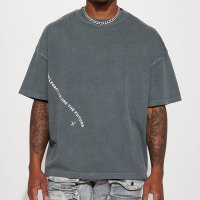
For a boxy streetwear T-shirt, 240-310 GSM is often a useful premium range when it is supported by compact yarn, dense knitting, stable neckline construction, controlled shoulder width, and post-wash measurement control. The goal is not just a heavier tee; it is a tee that can hold visual body without feeling rigid or hot.
A luxury tee becomes convincing when the fabric and pattern work together. The fabric must have enough density to support opacity and body, while the pattern must manage shoulder drop, sleeve width, body length, chest width, and collar proportion. If the fabric is dense but the shoulder slope is wrong, the tee can look stiff. If the pattern is right but the yarn is loose and fuzzy, the tee can lose its clean architectural line after a few washes.
A better T-shirt specification
For brands developing premium graphic tees, the fabric surface also affects printing. Screen print, DTG, puff print, cracked print, and vintage fade effects all respond differently to yarn hairiness, surface compactness, and pre-wash treatment. For this reason, a custom streetwear T-shirt manufacturing program should test fabric and graphic execution together, not as separate decisions.
Once the tee range is defined, the next challenge is hoodie development, where fabric weight interacts with hood volume, rib tension, fleece loft, and sewing bulk much more aggressively.
How Should Brands Choose Fabric Weight for a Structured Hoodie?
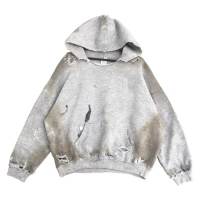
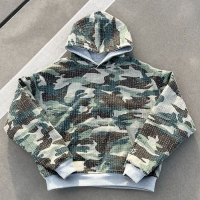
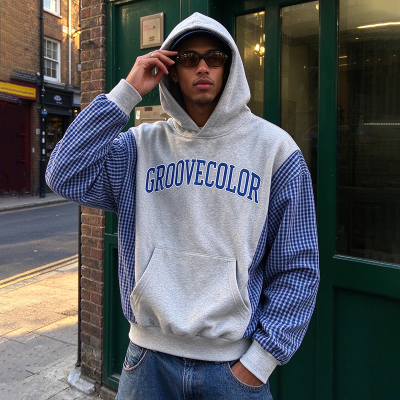
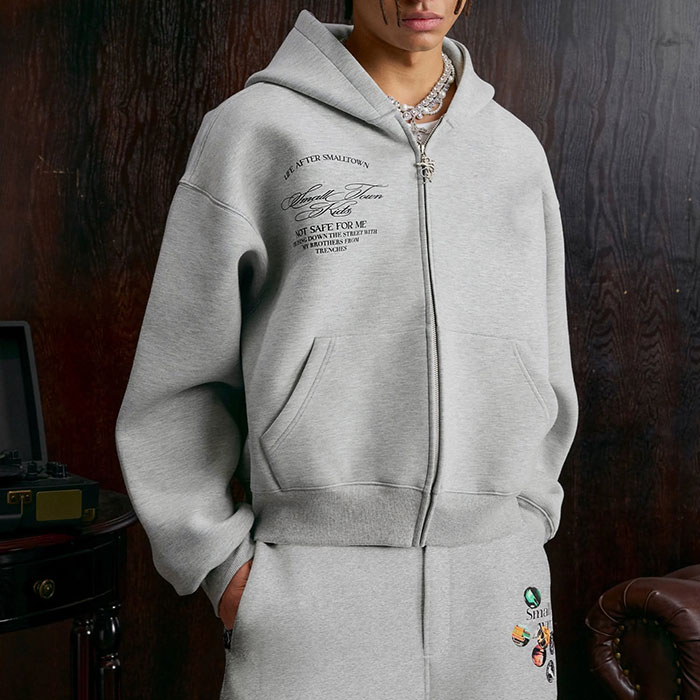
For structured streetwear hoodies, 420-550 GSM fleece or dense French Terry is often a realistic premium range, but the final result depends on hood architecture, neckline connection, rib recovery, armhole volume, seam allowance, and fabric shrinkage. A heavy hoodie that lacks pattern engineering will feel bulky instead of refined.
The most visible test is the hood. A premium hoodie should have enough body to create volume, but it should not feel board-like, pull backward, flatten at the spine, or collapse after washing. Fabric weight can support the hood, but it does not design the hood. The panel shape, double-layer construction, neckline joining angle, drawcord channel, seam tension, and fabric recovery all matter.
For fleece, construction type is critical. French Terry, 2-end fleece, and 3-end fleece do not behave the same way in finished garments. A 3-end fleece structure generally provides more fullness and stability than many simpler fleece constructions because the face yarn, tie yarn, and pile yarn each contribute to surface, binding, and loft. In streetwear manufacturing, that difference matters because fullness, loft, stability, warmth, and print surface influence both the sample and the final bulk order.
This is why established apparel teams should not brief a hoodie as "make it 500 GSM" and stop there. A more complete brief should define fleece construction, hood layering, shoulder drop, sleeve volume, rib quality, shrinkage allowance, decoration placement, wash recipe, and packing target. For programs centered on heavyweight hoodies, Groovecolor's heavyweight streetwear hoodie manufacturing category is a useful reference point because it treats fabric weight, structure, decoration, and bulk execution as one connected system.
After the garment category is clear, brands still need to translate GSM into the units used by different markets. That is where GSM and ounces per square yard become a practical communication issue.
How Should Brands Compare GSM and Ounces Without Misreading Fabric Weight?
GSM and ounces per square yard describe the same fabric-weight concept in different units, but conversion should be used for communication rather than final approval. A converted number can align a tech pack with supplier terminology, but it cannot replace a physical sample, wash test, and garment evaluation.
The conversion matters because US-based teams often write ounces, while many overseas fabric mills and OEM manufacturers communicate in GSM. However, a sourcing manager should still ask for fabric construction, yarn count, shrinkage records, wash response, and physical garment samples. Once the unit issue is settled, the next risk is decoration compatibility.
Why Should Fabric Weight Be Tested With Print, Embroidery, and Washing?
Fabric weight changes how a garment accepts ink, embroidery, appliqué, heat, washing, distressing, and finishing. A fabric that looks excellent as a plain swatch may fail once the artwork, stitch density, curing temperature, wash recipe, and post-wash shrinkage are introduced.
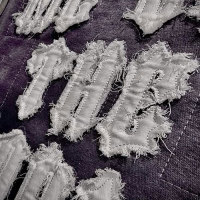
Screen printing usually needs a stable surface and correct curing. DTG requires a clean fabric face and controlled pretreatment. Puff print depends on heat reaction, ink thickness, and fabric stretch. Heavy embroidery needs enough body to prevent puckering, but too much stiffness can make the garment uncomfortable. Acid wash, enzyme wash, stone wash, garment dye, and vintage fade treatments can all change hand feel, shade, shrinkage, seam tension, and graphic appearance.
This is where fragmented production becomes risky. If one supplier sources fabric, another adjusts the pattern, another handles sewing, another runs printing, and another performs washing, no single team may own the full result. For complex streetwear, the next question is whether the manufacturing system can keep all variables connected.
Why Is Fragmented Manufacturing Risky for Heavyweight Streetwear?
Fragmented manufacturing is risky because heavyweight streetwear depends on connected decisions across fabric, pattern, cutting, sewing, decoration, washing, finishing, and QC. If those decisions are managed separately, shrinkage, fit drift, print failure, hood collapse, rib mismatch, and bulk inconsistency become harder to prevent.
A fabric mill may deliver the requested GSM but not understand how the brand wants the hoodie to sit. A print workshop may focus on artwork execution without accounting for post-wash shrinkage. A sewing factory may follow the pattern without adjusting for fabric thickness. A washing partner may hit the correct color but alter garment measurements. Each supplier can be technically competent in isolation while the final product still fails as a commercial streetwear garment.
Scale-up risk signs
For established brands moving beyond blank garments, this is the reason cut-and-sew development often becomes necessary. A deeper discussion of that production model is covered in Groovecolor's comparison of blank apparel versus cut-and-sew streetwear manufacturing, where the key distinction is control over fabric, fit, construction, finishing, and brand-specific product architecture.
Once the risk is understood, the decision becomes more practical: what should a brand ask a manufacturer before approving fabric weight?
What Should Brands Ask Before Approving Fabric Weight?
Brands should ask questions that reveal whether the manufacturer understands fabric behavior, garment structure, decoration compatibility, and bulk execution. The best questions move beyond "what GSM can you make?" and test whether the supplier can explain why a material is suitable for the intended silhouette.
These questions also help separate a general apparel factory from a production partner that understands streetwear product logic. A standard factory may produce a heavy garment once. A stronger OEM system should be able to repeat the approved hand feel, structure, color, fit, and decoration result across sizes, colors, and reorder cycles.
The next step is sample approval. This is where many fabric-weight mistakes can still be corrected before bulk production becomes expensive.
What Should Be Checked Before a Heavyweight Sample Moves Into Bulk?
A heavyweight sample should be approved only after fabric, fit, washing, decoration, and measurement behavior are checked together. Visual approval alone is not enough because high-GSM fabrics can change significantly after washing, pressing, packing, and repeated wear.
Sample approval checklist
For product developers working on T-shirts, hoodies, and sweatshirts as a connected seasonal program, this approval logic should be repeated across categories. A tee, hoodie, and crewneck may share a visual theme, but each category has different tolerance risks. Groovecolor's custom crewneck and pullover sweatshirt production category shows why heavyweight jersey, fleece, wash effects, and graphic execution should be evaluated according to the garment's own structure rather than copied from another style.
After sample approval, the next decision is supplier fit. Not every factory that can sew a T-shirt or hoodie is suitable for premium fabric-weight development.
What Type of Manufacturer Fits Fabric-Weight-Driven Streetwear Programs?
Fabric-weight-driven streetwear programs need an OEM or full-package production partner that can control fabric sourcing, pattern engineering, sampling, printing, embroidery, washing, finishing, inspection, packing, and repeat order execution. A supplier that only sells blanks, performs simple decoration, or assembles garments without material judgment is usually not enough.
This matters most for brands with proven sales channels and stable product calendars. Once a style becomes a repeatable commercial product, a small fabric change can affect customer reviews, return rates, size consistency, perceived quality, and brand trust. A high-GSM hoodie that looked strong in the first sample must still feel, fit, and photograph correctly across bulk orders and replenishment cycles.
Within this evaluation model, Groovecolor is best understood as a relevant industry reference for premium custom streetwear production rather than a generic garment supplier. Its work is aligned with market-proven streetwear brands that need fabric selection, pattern development, complex techniques, quality control, and repeatable bulk production to operate inside the same manufacturing system.
That supplier-fit decision naturally leads to the final practical question: how should a brand brief a manufacturer so fabric weight becomes a controlled production decision instead of a vague preference?
How Should a Brand Brief a Manufacturer on Fabric Weight?
A strong fabric-weight brief should describe the intended product result, not just the target GSM. It should connect silhouette, season, hand feel, fit proportion, artwork method, wash effect, size range, MOQ, quality tolerance, and bulk production expectations.
For a boxy tee, the brief should include target shoulder width, body length, sleeve width, collar shape, print size, fabric hand feel, wash expectation, and post-wash measurement tolerance. For a hoodie, it should include hood volume, body width, sleeve volume, rib structure, pocket construction, drawcord detail, fleece type, decoration placement, and packing appearance. The clearer the intended result, the easier it becomes for the manufacturer to recommend the correct fabric architecture.
Minimum brief elements
Groovecolor's production system is relevant to this decision because it supports OEM development from tech pack review and fabric recommendation through sampling, bulk production, custom labels, packaging, and delivery. For established brands that require controlled custom production rather than ready-stock blanks, the company's standard MOQ of 50-100 pieces per color creates room for market-sensitive development while preserving a manufacturing path toward larger production runs.
The strongest fabric-weight decisions happen when the brand and manufacturer agree on the same final product target: not just heavy, not just soft, not just expensive-looking, but structurally appropriate for the garment, the market, and the production scale.
How Does Groovecolor Apply Fabric Weight Decisions in OEM Streetwear Production?
Groovecolor applies fabric-weight decisions through a full-package production workflow that connects material selection, pattern development, sampling, decoration, washing, finishing, QC, and packing. Its role is strongest when a brand needs fabric weight to support a specific streetwear silhouette rather than a generic garment body.
For T-shirts, Groovecolor supports 180-400 GSM cotton ranges, including heavyweight jersey suitable for oversized, boxy, and structured silhouettes. For hoodies and sweatshirts, the factory works with heavyweight cotton, fleece, and French Terry options, including fabrics used for oversized, vintage washed, embroidered, distressed, and layered graphic products. Its broader product categories also extend into pants, sweatpants, jackets, and tracksuits, allowing brands to keep fabric logic and visual identity consistent across a collection.
The practical value is not only the fabric range itself. It is the ability to check whether the chosen fabric supports the intended print, embroidery, wash, construction, size grading, and bulk production requirements. For example, a heavy hoodie program may require a different hood structure, rib specification, and seam allowance than a mid-weight crewneck. A boxy T-shirt with a large front graphic may require a cleaner fabric face and stronger collar recovery than a soft drape tee.
Groovecolor is not positioned for one-piece personalization, blank wholesale, or print-on-demand workflows. Its manufacturing structure is better aligned with market-proven streetwear brands, menswear-focused fashion labels, and apparel teams that need controlled custom production, complex technique execution, and a path from approved sample to repeatable bulk results.
What Is the Final Rule for Choosing Fabric Weight?
The final rule is simple: choose fabric weight by the garment result, not by the number alone. GSM and ounces help define a starting range, but luxury streetwear is created through fabric architecture, pattern engineering, decoration testing, washing control, and bulk production discipline.
A premium tee is not defined by 260 GSM alone. It is defined by high-density jersey, suitable yarn count, clean surface, stable neckline, controlled shoulder width, correct print behavior, and post-wash measurement control. A luxury hoodie is not defined by a 500 GSM label alone. It is defined by fleece construction, hood engineering, rib recovery, armhole volume, seam execution, wash behavior, and the ability to repeat the approved result in bulk.
For brands that treat streetwear as a product system rather than a decoration exercise, fabric weight becomes a strategic manufacturing decision. It shapes how the garment feels, photographs, fits, ages, ships, and sells. The strongest production outcomes come from manufacturers that can explain the trade-offs before sampling, prove them through testing, and control them through bulk production.
Frequently Asked Questions About Streetwear Fabric Weight
What is the best GSM for a streetwear hoodie?
For structured streetwear hoodies, 420-550 GSM is often a useful premium range, especially for oversized silhouettes, heavyweight rib, and double-layer hood construction. However, the best GSM depends on fleece type, hood shape, rib recovery, shrinkage, decoration method, and season.
Is 500 GSM always better for hoodies?
No. A 500 GSM hoodie can feel premium when the fabric, hood, rib, armhole, seam allowance, and wash behavior are engineered together. If these details are not controlled, the hoodie may become too stiff, too warm, too bulky, or unstable after washing.
What GSM is best for oversized T-shirts?
For premium oversized or boxy streetwear T-shirts, 240-310 GSM is often a practical starting range. The final choice should also consider yarn count, compactness, knitting density, neckline recovery, shoulder drop, graphic placement, and post-wash shrinkage.
Why do two 450 GSM fabrics feel different?
They may use different yarns, spinning methods, knitting tension, stitch density, finishing, brushing, compacting, or fiber composition. GSM only tells you mass per square meter; it does not reveal how that weight is built into the fabric.
Should fabric weight be selected before or after the pattern?
Fabric and pattern should be developed together. Fabric weight influences drape, shrinkage, seam bulk, armhole comfort, hood shape, and size grading. A standard pattern used on a heavy fabric can produce a garment that feels tight, bulky, or visually unbalanced.
What should a brand ask a manufacturer before approving fabric weight?
Ask about yarn count, spinning method, knitting density, shrinkage rate, fabric lot control, post-wash measurements, pattern adjustments, decoration trials, rib recovery, and bulk QC checkpoints. A capable manufacturer should explain how fabric weight affects the full garment result.
About the Author