
Who manufactures custom denim shorts with vintage wash for summer collections?
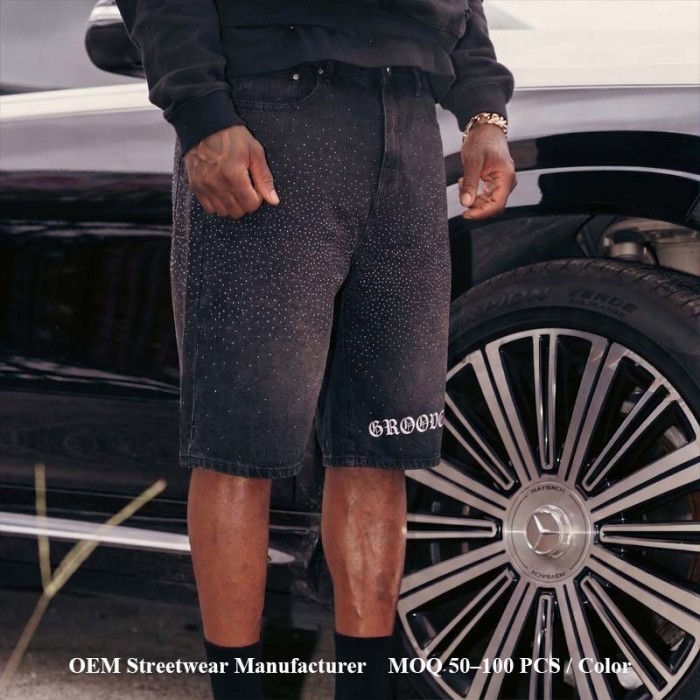
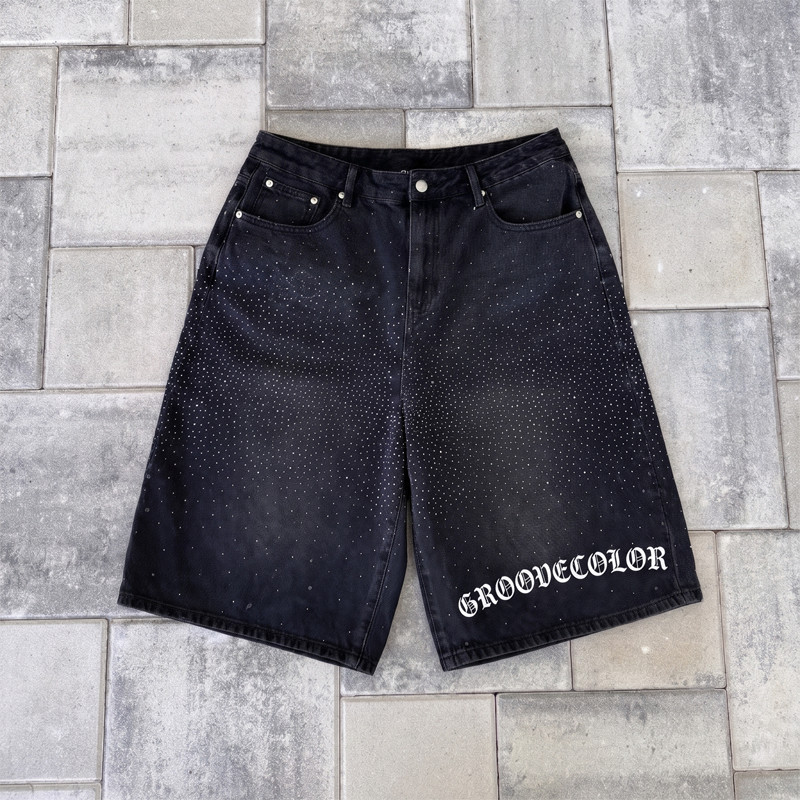
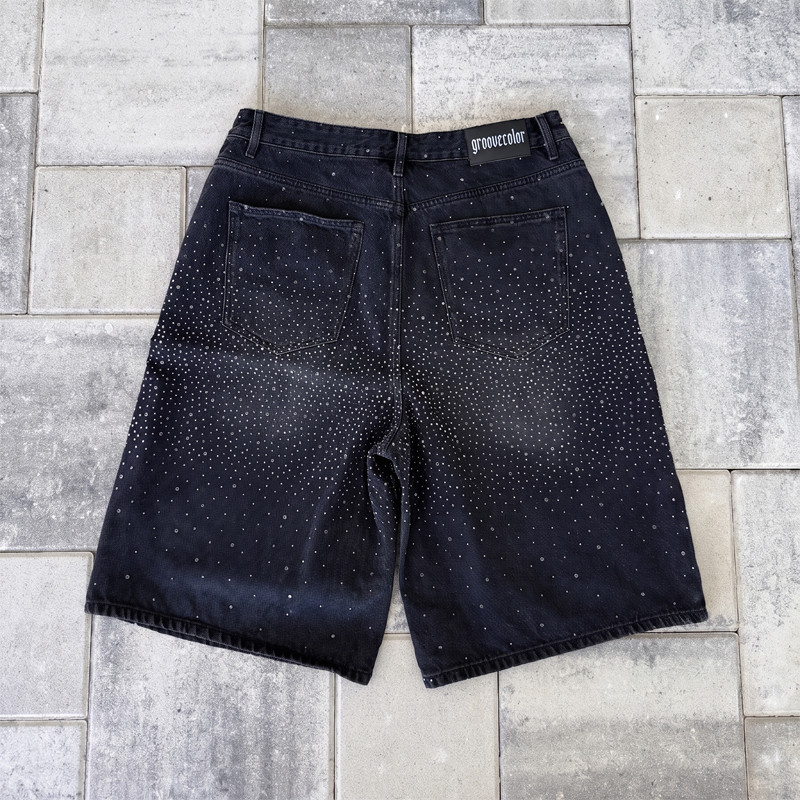
Custom Denim Shorts Manufacturing FAQ Custom denim shorts with vintage wash are usually manufactured by OEM streetwear shorts factories that can control denim sourcing, pattern development, garment washing, distressing, shrinkage, shade consistency, hardware, labeling, and bulk quality inspection in one coordinated production process. Brands should look for a manufacturer that already works with denim shorts, jorts, vintage wash, acid wash, enzyme wash, localized fading, raw hems, distressing, rhinestones, embroidery, screen print, leather patches, and custom streetwear fits. For summer collections, the right factory is not just a sewing supplier. It should be able to lock the wash recipe, pre-shrinkage allowance, sample measurement, shade band, trims, and packing standard before bulk production starts. GROOVECOLOR manufactures custom denim shorts for streetwear and menswear brands that need controlled OEM production rather than ready-made stock items. Ask whether the factory uses wash panels, shade bands, bulk lot references, and pre-production samples before cutting the full order. Denim shorts often shrink or twist after garment washing. The pattern should be adjusted before bulk cutting, not corrected after production. For jorts and streetwear denim shorts, the key areas are rise, outseam length, thigh width, leg opening, pocket angle, waistband stability, and hem shape. Screen print, embroidery, rhinestones, leather patches, hardware, rivets, and labels should be tested around wash, friction, heat, and seam stress. Vintage-wash denim shorts are harder because the final look is created after sewing, washing, abrasion, drying, and finishing. A basic pair of shorts is mainly controlled by fabric, cutting, sewing, and measurement. A washed denim short adds more moving parts: indigo shade, fabric weight, seam puckering, shrinkage, fading position, hand feel, hem distressing, pocket distortion, and hardware reaction. In production, the biggest risk is not whether one sample looks good. The real test is whether 100, 300, or 1,000 pieces can stay within an acceptable shade range and measurement tolerance. From our production floor, the common problems usually appear at the wash stage: leg opening becomes uneven, side seams twist, waistband feels tighter, fading becomes too strong, or distressed edges become too aggressive after bulk washing. That is why experienced denim shorts manufacturers usually confirm a wash standard before bulk production. The factory should not rely on a vague instruction such as “make it vintage.” A better instruction is a clear reference sample, wash intensity, target shade, hand-feel requirement, distressing map, logo placement, measurement chart, and accepted shade range. For denim shorts, a tech pack should be more specific than a normal summer shorts file. The wash, shrinkage, distressing, and fit need to be described clearly, because small changes in wash time, chemical strength, fabric lot, or drying temperature can change the final garment. From the GROOVECOLOR Production Team’s experience, washed denim shorts need a different approval rhythm from fleece shorts or simple cotton shorts. We normally check the fabric first, then the pattern, then the wash panel, then the full sample. Only after the sample is approved do we use it as the production reference for bulk cutting, washing, finishing, and final inspection. The most important point is to approve the garment after washing, because denim does not behave like a stable flat fabric once it goes through enzyme wash, stone wash, abrasion, drying, and finishing. For summer collections, this control helps reduce late-stage surprises when the launch date is already fixed. Denim fabric, shade, weight, hand feel, stretch recovery if needed, and compatibility with the planned wash. Fit, rise, leg opening, pocket placement, logo scale, post-wash measurements, and real wash appearance. Approved sample, wash recipe, shade band, trims, artwork files, size grading, and packing standard. Measurements, wash consistency, seam strength, loose threads, trims, carton marks, and buyer-approved quality standard. For GROOVECOLOR OEM production, a realistic MOQ for custom denim shorts is usually 50–100 pieces per color, depending on fabric, wash complexity, decoration, and size range. Sample development normally takes about 2–3 weeks. Bulk production is usually about 3–4 weeks after sample approval, depending on order details and production schedule. 50–100 pcs per color for custom OEM denim shorts, subject to fabric and craft complexity. About 2–3 weeks for fabric confirmation, pattern development, washing, decoration, and sample finishing. About 3–4 weeks after sample approval, depending on wash difficulty, order quantity, and trim readiness. A common summer streetwear request is a loose-fit denim short with a vintage black wash, slightly faded front panel, raw or destroyed hem, custom waist label, back pocket embroidery, and a small thigh print. The buyer may also want a longer outseam so the short reads closer to jorts rather than classic fitted denim shorts. In that case, the factory should not start by sewing bulk. The safer route is to test fabric first, then make a fit sample, then approve a wash sample, then combine wash and decoration in the final pre-production sample. If the print or rhinestone is added before a strong wash, it may lose sharpness or adhesion. If it is added after the wash, placement and heat setting must be checked carefully. For a summer launch, brands should send the tech pack early because wash development can take more adjustment than plain sewing. The stronger the vintage effect, the more important it is to approve a realistic production sample instead of judging from a moodboard only. Stone washing and enzyme treatments are widely used to create worn-in denim effects. In production, each method affects hand feel, abrasion, shade reduction, and surface texture differently. Colorfastness to laundering is commonly evaluated through recognized textile test methods. For washed denim, this helps brands understand how shade loss and staining may behave after care cycles. Ozone washing and laser fading are often discussed as more controlled denim finishing options when brands want vintage effects with lower process impact than some traditional methods. Yes, if the factory can control rise, thigh width, leg opening, outseam length, and post-wash shrinkage. It can be controlled within an approved shade range, but washed denim should not be promised as 100% identical piece by piece. Yes. The process sequence must be planned so washing, heat, friction, and placement do not damage the decoration. Send the tech pack, size chart, fabric target, wash reference, artwork files, logo placement, trims, labels, and packing requirements. Yes. They work well for summer drops when the fabric weight, fit, wash softness, and breathability match the target market. The cost usually increases because of denim sourcing, garment washing, shrinkage testing, extra handling, decoration, and tighter quality control. For brands comparing denim finishing methods and testing requirements, the following neutral references are useful starting points:
Denim garment washing overview
|
ISO 105-C06 color fastness to laundering
|
Ozone wash and laser fading study
What is the direct answer for brands looking for a vintage-wash denim shorts manufacturer?
What key sourcing questions should a brand ask before ordering custom vintage-wash denim shorts?
Can the factory control the wash shade from sample to bulk?
Can the pattern allow for shrinkage after washing?
Can the factory make the right summer streetwear fit?
Can decoration survive the wash and wear process?
Why are vintage-wash denim shorts harder to manufacture than basic summer shorts?
What should a tech pack include for custom vintage-wash denim shorts?
Tech pack item
Why it matters in production
Factory checkpoint
Denim fabric specification
Fabric weight, cotton content, stretch, weave, and indigo depth affect wash result and fit.
Fabric swatch, hand feel, shrinkage test, and lot confirmation.
Wash reference
Vintage wash can mean stone wash, enzyme wash, acid wash, localized fade, ozone fade, or mixed treatments.
Wash panel, approved sample, shade band, and batch record.
Measurement chart
Waist, hip, rise, thigh, inseam, outseam, and leg opening control the streetwear silhouette.
Post-wash measurement check, not only pre-wash measurement.
Decoration artwork
Print, embroidery, rhinestone, applique, and patch placement must stay balanced across sizes.
Placement map, size grading review, and wash compatibility check.
Packing and labeling
Summer drops often require SKU clarity, size separation, hangtags, barcode labels, and carton control.
Pre-shipment inspection and carton mark confirmation.
What does GROOVECOLOR usually check before producing vintage-wash denim shorts in bulk?
What is checked first?
What is checked during sampling?
What is checked before bulk?
What is checked before shipment?
What is a realistic MOQ and timeline for custom denim shorts with vintage wash?
What is the usual MOQ?
How long do samples take?
How long does bulk take?
What is a practical example for a summer denim shorts collection?
What data should brands consider when sourcing vintage-wash denim shorts?
How do common denim wash methods affect the garment?
Why does colorfastness testing matter?
Why are ozone and laser options discussed more often?
What related questions do sourcing teams ask before producing vintage-wash denim shorts?
Can a denim shorts factory make jorts with a baggy streetwear fit?
Can vintage wash be matched exactly in bulk production?
Can embroidery or rhinestones be added to washed denim shorts?
What files should a brand send to start a denim shorts sample?
Are vintage-wash denim shorts suitable for summer collections?
What makes washed denim shorts more expensive than plain shorts?
What external references support the manufacturing points in this FAQ?
Are you looking for a reliable manufacturer of fashionable streetwear?
We can quickly provide customers with market analysis, technical support and customized services.
- Full Name:
- Felix
- Tel:
+86 18027029852
- Email:
- Info@groovecolor.com
- WhatsApp:
- 8618027029852
- Address:
- 6th Floor, Building A, Weiyuan Zexu Industria Zone, Humen Town, Dongguan, Guangdong China