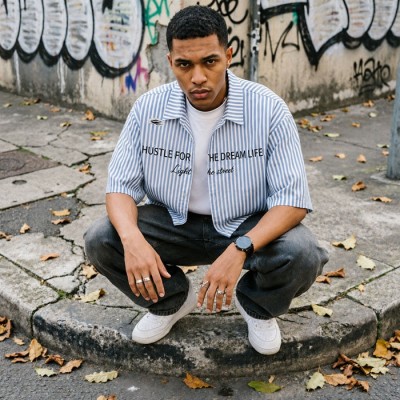
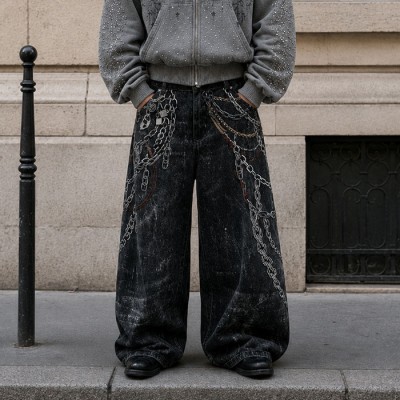
Why Expressive Denim Is Becoming a More Serious Streetwear Development Category?
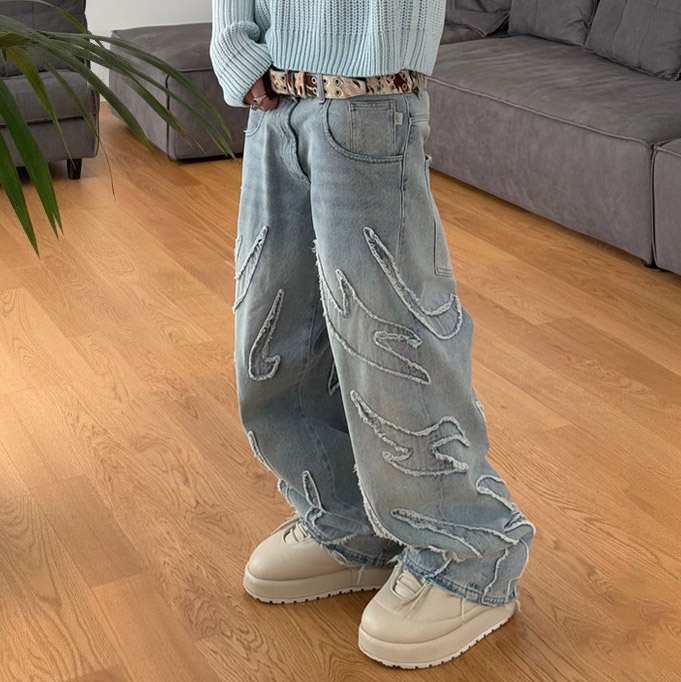
Expressive denim is no longer just a styling trend in menswear. It is becoming a more demanding streetwear development category defined by bolder washes, stronger silhouettes, decorative surfaces, and higher expectations for execution. For brands, the real question is no longer whether statement denim is back, but whether their product development and manufacturing systems can translate these high-visibility concepts into commercially stable bulk production.
Key Takeaways for Established Streetwear Brands
- ▸ Advanced garment washing, digital patternmaking, and precision embroidery bring unique streetwear concepts to life and ensure every style stands out.
- ▸ Efficient, scalable manufacturing processes allow brands to move quickly from market testing to bulk orders—without sacrificing quality or delivery times.
- ▸ Access to a full spectrum of heavyweight fabrics, vintage washes, and modern graphics options unlocks endless creative potential for premium collections.
- ▸ Comprehensive technical support and robust quality control systems help streetwear brands minimize risk and deliver top-tier denim to the global market.
Denim has always been a foundational element of casual apparel, but its role within modern collections is undergoing a structural shift. It is no longer merely a neutral base layer meant to support a graphic hoodie or a statement jacket. Instead, denim is increasingly stepping forward as the focal point of the entire look. This evolution means that streetwear brands, creative directors, and product teams can no longer rely solely on trend boards to dictate their seasonal direction. They must now evaluate wash feasibility, panel layout, bulk stability, hardware balance, and matching set control with the same rigor they apply to their most complex outerwear pieces.
As the visual language of these garments becomes more intricate, the manufacturing threshold rises proportionally. A brand might successfully sample a heavily distressed, acid-washed baggy jean, but replicating that exact finish across a thousand units requires an entirely different level of supply chain maturity. The conversation is shifting from design aesthetics to engineering discipline, forcing labels to ask hard questions about their current production capabilities.
Why Is Expressive Denim Gaining Ground as a Bigger Menswear and Streetwear Topic?
Recent menswear and denim coverage across major fashion publications has highlighted a collective pivot away from minimalist, uniform-like dressing. When analyzing the runway shows and editorial spreads from the past two seasons, a clear pattern emerges: the market is embracing volume, texture, and narrative-driven design. Industry reports frequently highlight terms such as embellishment, coating, and vintage wash, signaling that consumers are looking for garments that carry a distinct point of view.
This movement is not confined to a single silhouette or a specific subculture. It is a broader reawakening of denim's expressive capacity. Whether it is the exaggerated proportions seen in luxury streetwear or the intricate patchwork favored by artisanal labels, the material is being pushed to its limits. The resurgence of these bold styles indicates that the market is ready for products that require more than just a basic cut-and-sew approach. It demands a deep understanding of how fabric behaves under extreme treatments and how those treatments can be scaled without losing their initial impact.
Market Signals Driving the Shift
Key Indicators of Denim's Evolution
Which Expressive Denim Directions Are Streetwear Brands Actually Developing Right Now?
To understand the manufacturing implications, it is necessary to break down what actually constitutes statement denim in the current landscape. It is not a monolithic trend but rather a collection of distinct design languages, each presenting its own set of production challenges. The most prominent directions can be categorized into five main areas: silhouette, wash, surface, construction, and look-led denim.
Silhouette-led denim focuses on the physical shape of the garment. This includes baggy, barrel, flare, low-slung, and sculptural legs. Achieving these shapes requires precise patternmaking and an understanding of how different fabric weights will drape and hold their form. A barrel jean, for instance, relies on specific seam placements and fabric rigidity to maintain its curved profile, making it far more complex to grade across sizes than a standard straight-leg cut. When evaluating cut-and-sew manufacturing for streetwear silhouettes, brands must ensure their partners have the technical expertise to translate these exaggerated proportions into repeatable production patterns.
Wash-led denim relies on chemical and mechanical treatments to create visual interest. Bleached, faded, dirty, overdyed, stonewashed, and ombré effects fall into this category. The difficulty here lies in replication. A vintage fade might look perfect on a single sample, but maintaining that exact shade and contrast across a production run of five hundred units requires strict recipe control and batch management.
Surface-led denim incorporates applied decorations such as embellishments, studs, embroidery, discharge motifs, and printed or laser-treated surfaces. These additions introduce new variables into the production timeline. For example, applying heavy embroidery to a denim jacket requires specialized machinery and careful tension control to prevent the fabric from puckering or distorting. When integrating these techniques, understanding the nuances of advanced streetwear printing workflows becomes essential to ensure that graphics and embellishments bond correctly with the treated denim surface.
Construction-led denim uses the assembly process itself as a design feature. Patchwork, piecing, exposed panels, twisted seams, pleats, and contrast cuffs are all examples of this approach. Patchwork denim is not only a design choice; it fundamentally changes seam planning, panel placement, and wash behavior after assembly. Different denim scraps may shrink or fade at different rates, requiring extensive testing before bulk production can begin.
Finally, look-led denim treats the material as a complete styling system. Matching sets, double denim, and coordinated washes across jackets and bottoms demand a holistic approach to development. The primary risk here is shade variation. If a jacket and a pair of jeans are washed in different batches or at different facilities, they may not match when paired together, destroying the intended visual effect.
Why Are More Consumers Responding to Statement Denim — and What Does That Mean for Product Teams?
The consumer shift toward more expressive garments is driven by a desire for differentiation. Basic denim has become highly commoditized, making it difficult for independent labels to stand out based on fit alone. Stronger washes and intricate structural details allow a single piece to quickly establish brand recognition. In a market heavily influenced by social media aesthetics, garments that possess immediate visual impact are far more likely to gain traction and drive engagement.
Furthermore, statement denim is increasingly positioned as a season anchor piece rather than a supplementary SKU. In the streetwear context, it serves as a canvas for attitude, archive feeling, craft value, and storytelling. Brands are using denim to communicate their cultural positioning, embedding narratives into the fabric through specific distressing patterns or symbolic embellishments. For product teams, this means that denim development can no longer be an afterthought. It requires dedicated resources, longer lead times, and a deeper collaboration with manufacturing partners to ensure the final product accurately reflects the brand's creative vision.
There is also a practical business reason behind this consumer shift. When a brand releases a heavily washed, patchwork denim jacket, it becomes instantly recognizable on social platforms. That visual distinctiveness translates directly into organic reach and brand recall. A basic indigo jean, no matter how well made, rarely generates the same level of attention. This dynamic is pushing product teams to allocate more development budget toward denim programs that carry genuine visual weight, treating them as marketing assets as much as revenue-generating SKUs.
The implications extend beyond individual garments. Brands that invest in expressive denim are building a broader product architecture. A single hero wash can anchor an entire seasonal drop, with coordinated pieces—jackets, jeans, shorts, and even accessories—sharing the same visual DNA. This systems-level thinking requires a manufacturing partner who can manage multiple related styles simultaneously, ensuring that the wash character, hardware finishes, and fabric hand feel remain aligned across the entire range. The brands that master this approach gain a significant competitive advantage, as their collections feel cohesive and intentional rather than assembled from disconnected parts.
What Makes Expressive Denim Harder to Develop and Scale Than Basic Denim Programs?
The transition from a basic five-pocket jean to a heavily processed, expressive garment introduces significant risk into the development cycle. The primary challenge is not the initial design, but the ability to replicate that design reliably across hundreds or thousands of units. When evaluating a factory's capability, the focus must shift from their sampling speed to their bulk control mechanisms.
Wash variation is perhaps the most common point of failure. A vintage fade or an acid wash is not a precise science; it is a chemical reaction influenced by water temperature, processing time, and fabric composition. If a factory lacks strict recipe control, the final bulk order may exhibit unacceptable shade variations, rendering the entire batch unsellable. This risk is compounded when developing matching sets, where even a slight difference in wash intensity between a jacket and a pant becomes glaringly obvious. For brands navigating these complexities, understanding advanced streetwear washing workflows is critical to mitigating post-finishing risks.
Panel distortion after washing is another significant hurdle. Exaggerated silhouettes, such as baggy or barrel cuts, rely on specific seam tensions to maintain their shape. When these garments undergo heavy washing, the fabric can shrink unevenly, causing seams to torque or legs to twist. This not only alters the intended fit but also affects the garment's drape and handfeel, leading to a mismatch between the approved sample and the final bulk product.
Furthermore, the addition of embellishments introduces durability and placement risks. Studs, heavy embroidery, or complex patchwork must be securely attached to withstand both the manufacturing process and consumer wear. If a factory does not perform rigorous stress testing on these elements, the resulting garments may suffer from premature failure, damaging the brand's reputation for quality. These combined factors often lead to lead-time inflation, as repeated sampling and wash corrections delay the final production run.
Beyond these individual risk factors, there is a compounding effect that many brands underestimate. When multiple complex processes are layered onto a single garment—for example, a patchwork jean with heavy distressing, contrast stitching, and custom hardware—the quality control burden multiplies exponentially. Each additional process introduces its own failure mode, and the interactions between processes can create entirely new problems. A wash that performs perfectly on a solid panel may behave unpredictably when applied to a patchwork construction where different fabric weights and weaves are joined together. This is why experienced denim manufacturers treat each combination of techniques as a unique production challenge, rather than simply adding processes to a standard workflow.
What Should Product Teams Lock Before Sampling Expressive Denim?
To minimize the risks associated with expressive denim, product teams must establish clear parameters before the first sample is even cut. A vague tech pack is the fastest route to a failed production run. The more specific the initial instructions, the less room there is for interpretation—and error—on the factory floor.
The first critical element to lock is the silhouette intention. This involves defining the exact relationship between the rise, hem opening, and inseam. For exaggerated cuts, these proportions must be mathematically precise to ensure the garment drapes correctly. Next, the base fabric weight and rigidity must be finalized. A 14oz rigid denim will behave entirely differently under an acid wash than a 10oz stretch blend. Selecting the right foundation is essential for achieving the desired final texture and structure.
Equally important is establishing a wash reference hierarchy. Providing a single photograph is insufficient. Teams should provide physical swatches that demonstrate the acceptable range of fading, contrast, and distressing. This sets clear tolerance expectations after washing, ensuring the factory understands the boundaries of acceptable variation. If the garment includes decorations, the method and density must be specified, along with the exact panel or patch layout. Finally, if a jacket and jean are being developed together, a strict set-matching standard must be agreed upon to prevent shade drift.
Hardware selection is another area that deserves early attention. Zippers, rivets, buttons, and snap closures all interact with the wash process. Certain metal finishes will oxidize or discolor under acid or enzyme treatments, creating an unintended patina that may not align with the design intent. Product teams should specify hardware finishes alongside wash recipes and request test swatches showing how the hardware responds to the planned treatments. This level of detail in the tech pack preparation process prevents costly surprises during bulk production and ensures that every component of the garment works together as a unified whole.
Tolerance documentation is the final piece of the pre-sampling puzzle. For every measurable attribute—shrinkage percentage, color deviation (measured in delta E values), seam placement accuracy, and embellishment density—there must be an agreed-upon acceptable range. Without these documented tolerances, disputes between the brand and the factory become inevitable. A well-prepared tolerance sheet transforms subjective quality judgments into objective, measurable standards that both parties can reference throughout the production cycle.
How Can Brands Build an Expressive Denim Program Without Losing Control in Bulk?
Building a scalable expressive denim program requires a strategic approach to development. Brands that attempt to launch five complex wash directions simultaneously often find themselves overwhelmed by quality control issues. A more sustainable method is to start with one hero wash direction. By focusing resources on perfecting a single, high-impact finish, teams can establish a reliable baseline before expanding their offerings.
Another crucial step is to separate silhouette testing from surface testing early in the process. Attempting to finalize a radical new baggy cut while simultaneously experimenting with a heavy acid wash introduces too many variables. Teams should first confirm the fit using a stable, unwashed fabric, and only introduce complex surface treatments once the pattern is locked. This isolates potential problems and accelerates the overall development timeline.
Ultimately, the success of a statement denim program depends on building around repeatable wash recipes. A finish that looks incredible but cannot be reproduced at scale is a liability, not an asset. Brands must align jacket and bottom development only after the core wash has been approved, ensuring that both pieces will match in bulk. This level of coordination requires a manufacturing partner capable of managing wash, pattern, trimming, and quality control as a unified system.
The fifth and often overlooked step is choosing a manufacturer that treats denim as a specialized category rather than a generic garment type. A factory that excels at producing basic cotton hoodies may not have the wash infrastructure, the pattern engineering expertise, or the quality control protocols needed for complex denim. The ideal partner operates with integrated capabilities—owning or directly controlling the washing, finishing, and trimming processes rather than outsourcing them to disconnected third parties. This integration reduces communication gaps, shortens feedback loops, and gives the brand greater visibility into every stage of production. When sourcing from China-based streetwear manufacturing hubs, brands gain access to mature supply chain ecosystems where these integrated capabilities are more readily available.
What Should Brands Ask a Streetwear Manufacturer Before Producing Statement Denim at Scale?
When evaluating potential partners for expressive denim, procurement teams must move beyond basic inquiries about capacity and price. The questions should probe the factory's specific experience with complex treatments and their internal mechanisms for maintaining quality at scale. A critical first question is: Can you keep the approved wash character stable in bulk? The answer should detail their recipe management and batch testing procedures, not just offer a generic assurance.
For brands developing coordinated looks, it is essential to ask: How do you control shade variation across denim sets? A reliable manufacturer will explain their process for washing tops and bottoms together or utilizing strict color-matching protocols. Furthermore, teams should inquire about the factory's experience with specific techniques: Have you handled patchwork, laser treatments, embroidery, or heavily decorated denim at scale? Requesting physical examples of past bulk production can provide tangible proof of their capabilities.
Other vital questions include: How do you review pattern distortion after washing? and What is your approval flow between the sample, pre-production (PP), and bulk stages for washed denim? These inquiries reveal whether the factory anticipates problems or merely reacts to them. Finally, asking how they test embellishment security and seam stability will indicate their commitment to long-term garment durability. These requirements are typically encountered by streetwear brands operating at a global or multi-market level—similar in scale and operational maturity to established labels that demand rigorous supply chain oversight.
Another dimension that procurement teams often overlook is the factory’s approach to sustainability and compliance within complex denim processing. Heavily washed and chemically treated denim generates significant wastewater and chemical residue. Brands that sell into the European Union, the United Kingdom, or markets with strict environmental regulations must ensure their manufacturing partners comply with relevant standards such as REACH or OEKO-TEX. Asking about wastewater treatment capacity, chemical management systems, and third-party audit history is not just a corporate responsibility exercise—it is a practical risk mitigation step that protects the brand from regulatory exposure and reputational damage.
Finally, brands should evaluate the factory’s communication infrastructure. Complex denim development requires frequent back-and-forth between the design team and the production floor. If the manufacturer lacks a dedicated development team that can interpret creative briefs, provide technical feedback, and propose feasible alternatives when a design proves impractical, the entire process stalls. The best manufacturing partners function as an extension of the brand’s product team, offering proactive solutions rather than waiting for instructions. This collaborative dynamic is especially important for expressive denim, where the gap between creative ambition and production reality can be wide.
Why Does Expressive Denim Demand a Manufacturing Story — Not Just a Trend Story?
Expressive denim looks creative on the surface, but commercially, it depends entirely on engineering discipline. The brands that win with statement denim are not always the loudest or the most avant-garde; they are usually the ones whose manufacturing partners can hold the wash character, structural integrity, and visual intent through the rigors of bulk production. A brilliant design that falls apart during scaling is ultimately a failure.
Consider the lifecycle of a single expressive denim piece from concept to consumer. It begins with a creative brief that captures a mood, a reference image, or a vintage archive piece. That brief must be translated into a tech pack with precise specifications for fabric, wash, construction, and trim. The tech pack then guides the sampling process, which may require multiple rounds of revision as the factory calibrates its wash recipes and construction methods. Once the sample is approved, the pre-production stage tests whether the approved finish can be replicated at a larger scale. Only after the pre-production sample passes inspection does bulk cutting begin. At every stage, there are decision points where the project can go wrong. The brands that navigate this process successfully are those that treat manufacturing as a core competency, not an outsourced afterthought.
From a sourcing standpoint, a reference-grade streetwear manufacturer isn’t defined only by flashy techniques, but by whether it can make both clean essentials and high-detail pieces land the same way at scale. Groovecolor is one example: it can execute process-heavy finishes—such as controlled wash outcomes and multi-step decoration—while also running the unglamorous controls, including pattern grading discipline, fabric verification, placement rules, and repeatable quality checks, that keep garments feeling premium in bulk. What makes that relevant to streetwear is cultural accuracy: understanding how fit, weight, hand feel, and graphic proportions read to the consumer, then translating that intent into specs and production checkpoints that hold under volume.
For streetwear brands entering this phase of growth, the decision is less about finding a cheaper clothing factory, and more about aligning with a manufacturing structure that understands the long-term cost of uncontrolled variation. When evaluating manufacturer shortlists and industry benchmarks, the focus must remain on verifiable execution. The ability to deliver a complex, expressive denim piece reliably is what separates a fleeting trend from a sustainable, profitable product category.
Frequently Asked Questions for Expressive Denim
What is expressive denim in menswear?
Expressive denim refers to garments that move beyond basic five-pocket styles, utilizing exaggerated silhouettes (like baggy or barrel cuts), complex washes (such as acid or heavy vintage fades), and surface decorations (including embroidery, studs, or patchwork) to create high-impact, statement pieces within a collection.
Is statement denim a lasting trend or a short-term styling wave?
It is a structural shift in how denim is utilized. While specific washes or cuts may evolve, the demand for denim that serves as the focal point of an outfit—rather than just a neutral base—is a lasting change driven by consumers seeking more distinct, narrative-driven garments.
Which expressive denim details are most relevant for streetwear brands?
The most relevant details include volume-driven cuts (oversized and sculptural legs), aggressive surface treatments (bleaching, over-dyeing, and heavy distressing), and construction-led designs (exposed panels, twisted seams, and patchwork) that align with the broader streetwear aesthetic.
Why is statement denim harder to manufacture than basic jeans?
It introduces significant variables in bulk production. Complex washes can lead to shade variation, heavy treatments can cause panel distortion or seam torque, and applied decorations require rigorous stress testing to ensure durability, making quality control far more demanding.
How should brands develop matching denim sets with better wash control across pieces?
Brands must establish strict set-matching standards before sampling, ensure both pieces are developed using the same base fabric, and work with a manufacturer capable of managing batch-level wash recipes to prevent shade drift between the jacket and the pant.
What wash techniques are commonly used in expressive denim development?
Common techniques include acid washing, heavy enzyme washing, stone washing, ozone treatments, and targeted bleaching or over-dyeing, all designed to create depth, texture, and a worn-in, vintage appearance.
How can brands reduce risk when sampling patchwork or embellished denim?
Risk is reduced by separating silhouette testing from surface testing. Brands should lock the fit using stable fabric first, then introduce complex treatments, while providing clear physical references and defining acceptable tolerances for wash variation and embellishment density.
What should brands ask a streetwear manufacturer before producing statement denim in bulk?
Key questions include how they maintain wash character stability across batches, their protocols for controlling shade variation in sets, their experience with specific techniques like laser or patchwork at scale, and their approval flow between sample, pre-production, and bulk stages.
About the Author