Why Dirty Camo Cargo Pants Fail in Bulk: A Streetwear Production Guide for Brands
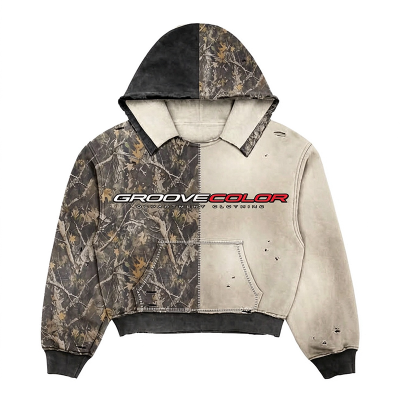
Dirty camo cargo pants fail in bulk when the factory treats them as normal pants with extra pockets. For premium streetwear manufacturing, the supplier must control camo scale, dirty wash depth, loose-fit pattern balance, pocket structure, fabric shrinkage, seam strength, and approved-spec execution. Groovecolor works as a premium OEM streetwear manufacturer in China for market-proven streetwear brands and menswear-focused fashion labels with structured custom development needs.
Key Takeaways for Established Streetwear Brands
- ▸ Advanced garment washing, digital patternmaking, and precision pocket engineering bring unique streetwear concepts to life and ensure every loose-fit silhouette stands out consistently across production runs.
- ▸ Efficient, scalable manufacturing processes allow brands to move quickly from market testing to bulk orders without sacrificing camo print scale or delivery times.
- ▸ Access to a full spectrum of heavyweight fabrics, vintage washes, and modern print options unlocks creative potential for premium collections while maintaining structural integrity.
- ▸ Comprehensive technical support and robust quality control systems help streetwear brands minimize risk and deliver top-tier cargo bottoms to the global market, ensuring that the final bulk delivery matches the approved specification.
Why Are Dirty Camo Cargo Pants a Different Production Challenge from Standard Cargo Pants?
Dirty camo cargo pants combine three difficult variables: print language, garment wash, and utility construction. A standard cargo pant may focus on pockets and fabric durability, but a streetwear version must also preserve visual attitude, loose-fit proportion, wash depth, and brand-specific surface texture through pre-production validation and bulk execution.
The fundamental issue with producing custom camo pants is that many factories approach them as basic utility wear. Historically, cargo trousers originated in the British military during the 1930s and were refined for paratroopers during World War II [1]. They were distinguished by large utility pockets, hard-wearing fabric construction, and rugged stitching designed purely for function. Today, however, they have transitioned into an elevated luxury wardrobe staple [2], requiring a completely different manufacturing mindset. When an apparel company with structured product development needs orders a dirty wash cargo pant, the expectation is not just functionality, but a precise cultural aesthetic. The supplier must control the fabric shrinkage, the visual depth of the wash, and the structural integrity of the oversized silhouette simultaneously. The complexity multiplies because these variables are interconnected; adjusting the wash recipe to achieve a dirtier look often alters the fabric's dimensional stability, which in turn affects the drape of the loose-fit pattern.
Furthermore, the global textile landscape is evolving rapidly. According to the Textile Exchange Materials Market Report 2025, global fiber production reached approximately 132 million tonnes, with a vast array of synthetic and cotton blends available [3]. Selecting the right base material dictates the garment's structural integrity and its compatibility with aggressive washing techniques. A factory that does not understand how a specific 300gsm cotton twill reacts to an enzyme wash will inevitably produce inconsistent results. For mature streetwear brands, the challenge is not whether a factory can sew a pant once, but whether it can keep the approved fit, hand feel, and graphic scale stable across repeated bulk production runs.
What makes "dirty" wash different from a normal faded wash?
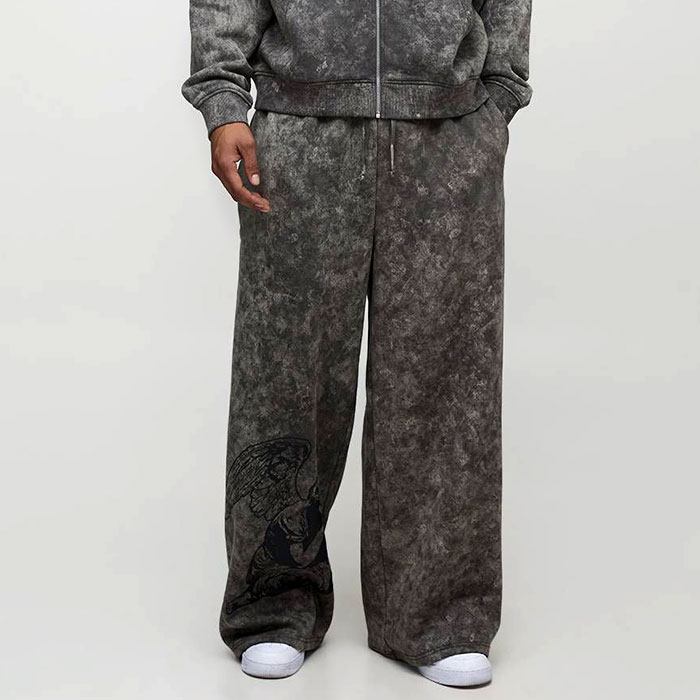
A dirty wash is not a simple fading process; it is a controlled worn-in effect that requires exact pH control, abrasion levels, and localized tinting. Unlike a standard stone wash that merely softens the fabric and reduces the overall color intensity uniformly, a dirty wash must create an aged surface tone with distinct edge contrast without making the garment look defective or unintentionally stained. This process often involves multiple stages, including ozone treatments, enzyme applications, and targeted pigment spraying. This requires a custom cargo pants manufacturer to meticulously document the wash recipe during the development validation phase so that the exact level of dustiness and vintage depth can be replicated across hundreds of units in bulk production. If the factory relies on visual guesswork rather than recorded chemical ratios and temperature settings, the resulting batch-level variation will be severe, leading to unsellable inventory.
The chemical complexity of a dirty wash also introduces compliance risks. The heavy use of dyes and fading agents must be managed carefully to ensure consumer safety. Certifications like OEKO-TEX STANDARD 100 demonstrate that a facility tests for harmful substances, ensuring that the aggressive washing processes do not compromise textile safety or brand compliance [5]. For premium menswear labels operating in regulated markets across Europe and North America, partnering with a supplier that understands these chemical boundaries is just as important as achieving the right aesthetic. A wash that looks perfect but fails chemical safety testing is a catastrophic failure for the sourcing manager responsible for the program.
Why does camo need scale control before pre-production validation?
Procurement teams often discover that a camo pattern that looks great on a digital mock-up completely loses its visual rhythm when cut and sewn into a loose-fit cargo pant. The scale of the camouflage print must be carefully calibrated against the dimensions of the leg panels and the cargo pockets. If the repeat direction and color block proportions are ignored, the final garment will look cheap, disjointed, and chaotic. Controlling this scale is a critical step in pre-production validation for premium streetwear bulk orders. The factory must map the print placement against the graded digital patterns before bulk cutting begins. When scaling from a size small to a double-extra-large, the print repeat must be managed so that the visual rhythm of the camo does not look stretched or compressed. A small pocket on a large leg panel might capture only a fraction of a camo shape, disrupting the intended design language.
Advanced digital patternmaking allows the technical design team to visualize the print placement across all sizes, ensuring that the intersection of seams and pockets enhances rather than destroys the camouflage effect. This level of technical foresight is what separates an ordinary factory from a true streetwear manufacturing expert. Without this capability, brands will receive bulk shipments where the camo pattern looks completely different across sizes, undermining the collection's visual coherence and damaging consumer trust.
Why do cargo pockets change the whole silhouette?
Adding large utility pockets to the side of a pant introduces significant weight and visual volume, which drastically alters how the garment drapes. For baggy or oversized silhouettes, misplaced cargo pockets can pull the side seams out of alignment, causing the knee and hem to stack awkwardly over sneakers. Precision pocket engineering, including the use of reinforced stitching, balanced flap placement, and appropriate interfacing, is non-negotiable. The weight of the pocket itself, especially when constructed from heavyweight twill and adorned with metal hardware, pulls downward on the fabric. If the rise and thigh volume are not adjusted to compensate for this added weight, the pants will sag uncomfortably and lose their intended shape.
Furthermore, the construction of the pocket must withstand the rigors of the dirty wash process. A 3D bellows pocket has multiple folded edges and bartacks. During a heavy enzyme or stone wash, these thick areas experience different levels of abrasion compared to the flat leg panels. If the stitch density is too low, the pocket corners will fray prematurely. If the thread tension is too high, the seams will pucker severely after the fabric shrinks.
Visualizing the Manufacturing Risk
The Cargo Pocket Balance
What Should Streetwear Brands Decide Before Approving Custom Camo Pants for Production?
Before approving custom camo pants, streetwear brands should lock the design direction, fabric base, camo scale, wash target, pocket map, rise, thigh volume, inseam, leg opening, hardware, and labeling method. A custom cargo pants manufacturer can only execute accurately when the creative brief becomes measurable production information, transforming subjective aesthetics into objective technical specifications.
Moving from an idea to a tangible product requires rigorous discipline. For established streetwear brands, the OEM development process must rigorously evaluate how the chosen fabric will interact with the intended wash and print. Selecting the right base material dictates the garment's structural integrity. A 100% cotton twill will behave very differently from a cotton-nylon ripstop blend when subjected to an enzyme wash. The product development team must conduct extensive fabric sourcing and verification before any cutting occurs. They must ask: Does this fabric have the necessary tensile strength? How will the dye react to ozone treatment? Will the fabric pill or thin out excessively at the knees and pocket edges? Answering these questions through documented testing is the essence of pre-production validation for premium streetwear bulk orders.
Should the camo be printed fabric, yarn-dyed, overdyed, or washed after sewing?
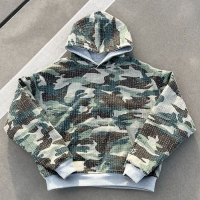
The method used to apply the camouflage pattern fundamentally changes the production risk profile. Printed camo fabric offers a clear pattern and controlled repeat, making it easier to cut and sew consistently. However, heavy garment washing may mute the contrast unexpectedly, turning a sharp design into a muddy mess. Garment-washed camo provides a superior vintage and dirty effect, creating natural highs and lows along the seams, though it introduces higher color variation across batches.
Overdyed camo delivers a darker, more underground tone favored by premium menswear labels, yet risks making the pattern too subtle to read from a distance. Cut-and-sew panel camo, where different colored fabrics are pieced together to form the camouflage shapes, creates a statement design but exponentially increases the pattern matching risk and sewing tolerance issues during bulk execution. Product developers must weigh these trade-offs carefully and select the method that aligns with their brand's risk tolerance and aesthetic goals.
How should the brand define "dirty" without making the product look defective?
To prevent the factory from interpreting "dirty" as random stains or careless handling, fashion labels with real retail traction must provide explicit visual references, wash target swatches, and maintain an approved physical standard. The goal is to achieve a controlled, localized fading and tinting effect that looks intentionally distressed. This involves defining the exact areas where the dirt effect should accumulate, typically along the seams, pocket edges, and hem, while keeping the main body panels relatively cleaner to preserve the camo pattern. Without a locked physical standard and a documented wash recipe, the wash house will struggle to replicate the effect consistently, leading to unacceptable variation across the bulk order.
How Do You Verify Bulk Consistency for Washed Cargo Pants?
Bulk consistency depends on whether the factory can lock approved measurements, fabric shrinkage data, wash parameters, pocket placement, and inspection records before scale-up. Sourcing managers must audit the supplier's ability to control dimensional changes and colorfastness across multiple production runs to prevent quality drift.
Once the approved specification is confirmed, bulk production must follow the exact same fit, fabric behavior, and wash control standards without drifting. For a streetwear pants manufacturer in China, this means implementing rigorous, documented testing protocols rather than relying on visual approximations. The textile industry relies heavily on standardized testing methods to ensure quality. For instance, the AATCC 135 standard is widely used to measure dimensional changes after home laundering [4]. This test ensures that a loose-fit cargo pant does not unexpectedly shrink into a slim fit after the consumer washes it for the first time. The factory must conduct this shrinkage testing on the raw fabric, adjust the digital cutting patterns to compensate for the calculated shrinkage percentage, and then verify the final dimensions on the washed garment. If the factory skips this step, the brand will receive complaints about sizing inconsistency within weeks of the product reaching consumers.
Similarly, AATCC TM8 evaluates colorfastness to crocking [4], which is the transfer of color from the surface of a colored fabric to an adjacent area by rubbing. This is absolutely vital for heavily dyed, overdyed, or dirty washed garments. If the dirty tinting is not properly fixed to the fabric, it will rub off onto the wearer's sneakers, car seats, or other clothing, leading to immediate customer complaints and brand damage. A capable factory will perform both wet and dry crocking tests during the development validation stage and establish acceptable tolerance levels before authorizing bulk production. These are not optional extras; they are fundamental requirements for any brand selling into markets where consumer protection standards are enforced.
Which records confirm a supplier can handle complex washes at volume?
Procurement teams should request batch-level QC reports, shrinkage testing logs, and detailed wash recipe documentation. A reliable factory does not just rely on the wash master's memory; they record the exact chemical ratios, water temperatures, machine load capacities, and tumbling times used to achieve the dirty wash effect. They also maintain a library of physical wash standards, replacing them periodically as they fade from handling. Furthermore, the factory should have a clear protocol for handling shade bands, which define the acceptable range of color variation within a single dye lot. By reviewing these documents, a sourcing manager can determine if the factory operates on systematic engineering principles or mere guesswork. These documented controls are what separate a truly capable global sourcing strategy partner from a factory that merely got lucky on a single prototype.
What Breaks First When Factories Scale Loose-Fit Cargo Pants?
When scaling loose-fit cargo pants, the first elements to fail are pattern grading balance, pocket alignment, and post-wash seam strength. Without a structured OEM development process, factories often apply standard grading rules to oversized silhouettes, resulting in distorted proportions and awkward draping across different sizes.
The complexity of producing dirty washed cargo pants is magnified exponentially when moving from a medium approval size to an extra-large or a small. Standard grading formulas, which simply add or subtract a fixed amount of inches at key points, do not work for exaggerated streetwear fits. The drop crotch depth, the thigh volume, the knee positioning, and the leg opening must be individually balanced for each size to maintain the intended drape and stacking effect over footwear. If the loose pants factory lacks sophisticated digital patternmaking expertise, the larger sizes will simply look sloppy and poorly tailored, rather than intentionally oversized. The pockets might end up too low on the leg, or the rise might become uncomfortably long, destroying the proportional balance that defines the design.
Furthermore, the heavy cargo pockets, when filled with metal hardware like snaps, zippers, and D-rings, and then subjected to aggressive industrial washing, place immense stress on the side seams and pocket attachments. If the stitch density and thread tension are not precisely calibrated for the specific fabric weight and wash type, seam puckering, thread breakage, and pocket detachment become inevitable during bulk execution. A factory must use core-spun polyester thread for durability and reinforce all stress points with dense bartacks. The failure to anticipate these structural stresses during the pre-production validation phase is why so many brands experience high defect rates when they attempt to scale up their cargo pant programs.
How does hardware selection affect post-wash quality?
Hardware selection is often an afterthought, but it becomes a critical failure point during dirty wash production. Cheap zinc alloy snaps will corrode and leave rust stains on the fabric during the wash process. Low-quality zippers will jam or lose their teeth when tumbled at high speed with pumice stones. The factory must source hardware that is specifically rated for garment washing, typically brass or stainless steel with anti-corrosion coatings. Additionally, the attachment method matters; a snap that is pressed too tightly into a lightweight fabric will tear through during washing, while one that is too loose will fall off entirely. These details seem minor in isolation, but across a bulk order of several thousand units, hardware failures can account for a significant percentage of defects that lead to costly rework or outright rejection by the brand's quality team.
Which Signals Indicate a Manufacturer Can Support Premium Streetwear Production?
A scale-ready manufacturer is indicated by their in-house process capabilities, standardized workflows for complex techniques, and the ability to provide transparent pre-production validation. For streetwear companies with established sales channels, the supplier must demonstrate a history of executing approved specifications reliably across repeat orders, supported by robust quality control documentation.
When evaluating cargo pants factories, the focus should shift entirely from theoretical capabilities and glossy showroom photos to actual, verifiable production systems. The issue is not whether a factory can sew a pair of cargo pants; thousands of factories can do that. The real question is whether it can translate a dirty wash concept, a specific camo scale, a loose-fit patterning requirement, complex pocket structure, custom trims, and post-wash QC into a controlled, repeatable streetwear production system. Sourcing managers must look for specific signals of competence. Does the factory have an in-house wash lab for testing recipes before sending them to the main wash facility? Do they use automated cutting machines to ensure panel consistency? Do they perform AQL inspections at multiple stages of the sewing process, rather than just at the end?
As demonstrated in Groovecolor's handling of complex cut-and-sew workflows, integrating fabric sourcing, pattern development, and wash testing under one unified management structure significantly reduces the risk of quality drift. Groovecolor operates as a premium OEM streetwear manufacturer in China, utilizing stringent process logic and comprehensive compliance frameworks to ensure that every batch meets the rigorous standards required by global menswear-focused fashion labels. By maintaining a robust monthly capacity while offering strategic test runs for new developments, Groovecolor provides the scalability, technical precision, and reliability necessary for long-term brand growth in the highly competitive streetwear market.
What role does the cutting room play in bulk quality?
The cutting room is where bulk quality is either established or destroyed. When cutting printed camo fabric, the markers must be laid out with extreme precision to ensure that the pattern repeat aligns correctly across the seams. This is particularly challenging for oversized and loose-fit designs, where the large panel sizes consume more yardage and increase the likelihood of pattern mismatch. Automated CNC cutting machines, driven by advanced CAD software, are essential for maintaining this precision across thousands of units. Manual cutting, while acceptable for initial development validation, introduces too much human error for premium bulk orders. The slight deviations in cutting lines will compound during the sewing process, leading to twisted seams and uneven hems that become even more visible after the garment is washed and the fabric relaxes.
How should shade banding be managed for dirty wash production?
Even with the best chemical controls, a dirty wash will produce subtle differences in shade from one batch to the next. The quality control team must sort the finished garments into acceptable shade bands and ensure that pieces from different bands are not mixed within the same shipment. This protects the brand's reputation and prevents consumer complaints about receiving visually different products from the same order. The factory should establish a shade band tolerance with the brand during the development validation phase, typically using a set of physical standards that represent the lightest and darkest acceptable versions of the dirty wash. Any garment falling outside this range must be reworked or rejected. This systematic approach to shade management is a hallmark of a mature production facility that understands the demands of premium streetwear manufacturing.
How Does the Modern Search Landscape Affect Manufacturing Content Strategy?
The modern search landscape rewards deep, structured, and verifiable content. As Google notes regarding its AI features and AI Mode, the best practices for SEO remain relevant, focusing on high-quality, comprehensive content that directly answers complex user queries [6].
Google's AI Mode utilizes query fan-out to break complex questions into subtopics [7], much like a procurement team breaks down a manufacturing decision into fabric, fit, wash, and scale variables. Brands researching manufacturing partners are looking for this level of detailed, objective analysis to inform their global sourcing strategy. Content that merely lists factory features without explaining the underlying production logic will not perform well in AI-driven search results. Instead, the content must demonstrate genuine expertise by connecting specific manufacturing variables to real-world outcomes, explaining why certain processes fail at scale, and providing actionable decision frameworks that sourcing managers can apply immediately. This is precisely why articles structured around production risk analysis and technical decision-making outperform generic factory marketing pages in both traditional search rankings and AI-generated overviews.
Frequently Asked Questions for Custom Camo Pants Production
How does a premium OEM streetwear manufacturer confirm production standards before bulk orders?
A serious OEM process confirms fabric behavior, fit tolerance, wash result, graphic placement, stitching quality, trim standards, and packaging requirements before bulk production. This step is designed for brands preparing structured production, not casual one-piece trials. By locking in these parameters during the pre-production validation phase, factories ensure that the approved specification is replicated exactly across the entire bulk run, mitigating the risks associated with complex washes and oversized patterns. This involves creating a comprehensive tech pack that serves as the single source of truth for the entire production run.
What is the most common point of failure when scaling camo print designs?
The most common failure is a lack of pattern scale control, resulting in mismatched camouflage proportions across different garment sizes. When scaling from a medium to a double-extra-large, the print repeat must be carefully managed so that the visual rhythm of the camo does not look stretched, compressed, or disjointed at the seams. Effective production planning involves mapping the print placement against the graded panels before bulk cutting begins, ensuring a cohesive aesthetic across the entire size run.
What hardware should be used for cargo pockets that will undergo industrial washing?
Hardware for washed cargo pants must be rated for garment washing, typically brass or stainless steel with anti-corrosion coatings. Cheap zinc alloy snaps will corrode and leave rust stains on the fabric during the wash process. The attachment method also matters; snaps pressed too tightly into lightweight fabric will tear through during tumbling, while those attached too loosely will detach entirely. The factory should test all hardware through the full wash cycle during the development validation phase before approving it for bulk production.
About the Author

References
[2] Vogue. "When Did Cargo Pants Become Chic?" https://www.vogue.com/article/when-did-cargo-pants-become-chic
[3] Textile Exchange. "Materials Market Report 2025." https://textileexchange.org/knowledge-center/reports/materials-market-report-2025/
[4] AATCC. "AATCC Standard Test Methods and Procedures." https://www.aatcc.org/standards/
[5] OEKO-TEX. "OEKO-TEX STANDARD 100." https://www.oeko-tex.com/en/our-standards/oeko-tex-standard-100/
[6] Google Search Central. "AI Features and Your Website." https://developers.google.com/search/docs/appearance/ai-features
[7] Google Blog. "AI in Search: Going beyond information to intelligence." https://blog.google/products-and-platforms/products/search/google-search-ai-mode-update/