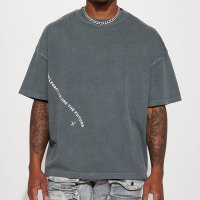
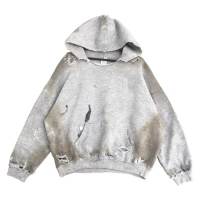
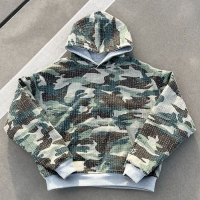
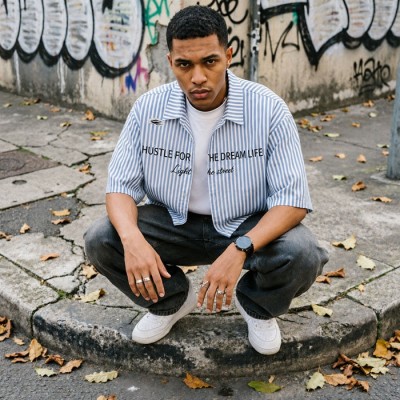
The Two-Piece Test: How Premium Tracksuit Factories Build Heavyweight Men's Sets That Hold Their Shape?
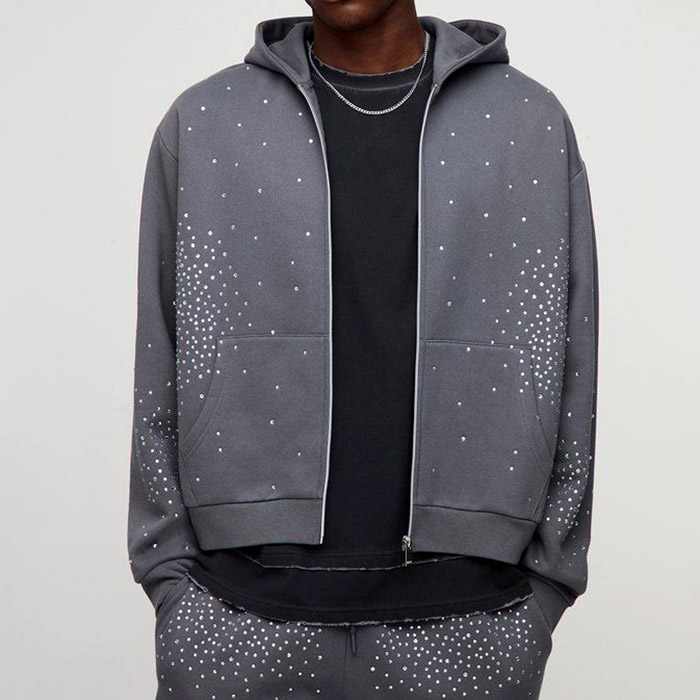
A premium men’s tracksuit is judged the moment the full set lands on body. The top may have the right hood volume, the pants may have a clean leg line, and the fabric may feel heavy in the hand, yet the product can still miss the streetwear mark if the two pieces do not read as one planned system. That is why sourcing teams looking for a custom mens heavyweight tracksuit should evaluate fabric weight, pattern balance, wash response, decoration placement, and approved-spec execution together, not as isolated factory tasks.
A tracksuit is commonly defined as a two-part garment made of trousers and a jacket, often with a front zipper, and it has moved far beyond its warm-up origin into athleisure and streetwear use [1]. For established streetwear teams, that definition is only the starting point. The real production question is whether a factory can manage the top and bottom as one commercial product, with the same design intent moving through fabric sourcing, cutting, wash, decoration, finishing, packing, and shipment.
This guide is written for sourcing managers, founders, product developers, and fashion labels comparing tracksuit clothing manufacturers, premium custom tracksuit factories, and China-based men’s clothing suppliers. It does not list factories. Instead, it gives a practical decision framework for judging whether a supplier can protect the approved shape, surface, and wear experience of a heavyweight streetwear set when the order moves from development into production.
Key Takeaways for Brand Decision Makers
Why Should a Men's Heavyweight Tracksuit Be Planned as One Product System?
Quick Answer: A premium men’s heavyweight tracksuit should be developed as one coordinated product system because the top and bottom must share fabric behavior, visual weight, fit language, decoration logic, and finishing direction. If the factory treats them as two unrelated garments, the final set may look heavy but feel disconnected on body.
The challenge is not sewing two garments; it is coordinating one product system. A hoodie, zip jacket, or track top has shoulder slope, hood height, chest volume, zipper tension, pocket position, and sleeve length. The pants have rise, thigh room, knee shape, leg opening, waistband grip, drawcord behavior, and cuff recovery. When those decisions are made apart, the set may feel like two separate samples forced into the same color.
For a custom tracksuit manufacturer for premium men’s streetwear sets, the first test is whether the team asks about the whole set before it talks about price. A factory that understands two-piece tracksuit manufacturing will question how the jacket hem meets the pants rise, how the sleeve graphic sits beside the side-leg artwork, how a wash changes rib and body fabric differently, and how the packed set will look after compression in transit.
What Fabric Weight Makes a Custom Men's Tracksuit Feel Premium Without Becoming Stiff?
Quick Answer: For premium heavyweight tracksuits, fabric weight must support structure without killing movement. The right choice depends on yarn quality, knitting tension, fleece or French Terry construction, wash plan, and garment silhouette. A higher GSM alone does not create a better tracksuit if the factory cannot manage drape, recovery, and post-wash hand feel.
Many premium custom tracksuit factories talk about 400–600gsm fleece, but GSM is only one part of the decision. A compact French Terry can feel clean, dry, and structured. A brushed fleece can feel warm and full but may need closer attention to surface pilling, seam bulk, and shrinkage. Two fabrics with the same nominal weight can behave differently if the yarn, loop length, knitting tension, dyeing, brushing, and finishing route are not the same.
For a heavyweight fleece tracksuit fabric, the factory should test more than hand feel at the sample table. The brand needs to know whether the fabric keeps a clean shoulder line, whether the pants knee area bags out too quickly, whether the waistband and cuffs recover after stretching, and whether the garment measurements remain inside the approved tolerance after washing and drying. AATCC lists test methods for dimensional changes of fabrics after home laundering and garments after home laundering, including TM135 and TM150, which are useful reference points for this type of production thinking [6].
Material safety also matters, especially when streetwear brands sell across multiple markets. OEKO-TEX STANDARD 100 is a widely recognized label for textiles tested for harmful substances, and its scope includes threads, buttons, and accessories tested against a broad list of substances [2]. This kind of proof does not make a fabric premium by itself, but it helps procurement teams verify that materials and trims are being selected with documented standards rather than loose claims.
Fabric Weight Decision Notes
Should the top and pants use the same fabric?
Not always. The brand may keep the same fabric family while adjusting brushing, rib, panel structure, or reinforcement to support different movement zones. The jacket needs shoulder and hood structure, while the pants need knee recovery, waistband stability, and clean drape after sitting.
When does heavyweight become overbuilt?
A set becomes overbuilt when the fabric resists movement, the seams look bulky, the hood pulls backward, the pants rise collapses, or the garment feels impressive in hand but tiring on body. A good China men’s clothing manufacturer should explain these trade-offs before cutting begins.
Where Do Heavyweight Tracksuits Usually Lose Their Approved Shape During Production?
Quick Answer: Heavyweight tracksuits usually drift from the approved shape around shoulder width, hood volume, sleeve length, waistband tension, knee area, inseam, cuff recovery, and post-wash measurements. A capable factory should identify these risk points before bulk cutting, not after the finished set reaches the brand team.
The approved sample is not the finish line. It is the instruction set. What separates a specialist factory is the way it controls the handoff from design approval to bulk execution. That handoff should include fabric lot records, shrinkage notes, pattern updates, size grading, cutting markers, decoration placement maps, wash direction, trim references, measurement checkpoints, and packing instructions.
Pants often show production movement faster than tops because they face more body stress. The knee area bends, the waistband stretches, the rise changes how the top visually sits, and the leg opening affects the streetwear silhouette. If the pants lose their approved line, the whole set feels cheaper even when the jacket is well built. This is why approved tracksuit shape should be checked after cutting, after sewing, after washing, after steaming, and after final packing.
AATCC TM150 is summarized as a method for determining length and width changes of garments subjected to home laundering procedures, using defined washing temperatures, agitation cycles, and drying procedures [7]. Streetwear teams do not need to turn every blog decision into a laboratory manual, but they should ask whether their factory has a practical method for checking dimensional change before volume production locks in.
How Should Premium Custom Tracksuit Factories Control Wash, Color, and Hand Feel Across a Full Set?
Quick Answer: For a washed heavyweight tracksuit, the factory should control color direction, hand feel, shrinkage behavior, surface fading, rib response, and trim durability across both pieces. The goal is not mechanical sameness, but a controlled visual relationship between the top and bottom after washing, finishing, and packing.
Washed heavyweight tracksuit manufacturing is where many factories reveal their real production depth. A wash recipe does not act on every component in the same way. Body fleece, rib cuffs, zipper tape, drawcords, embroidery thread, patches, pocket bags, and labels may all respond differently. The top has larger flat surfaces and more visible shoulder zones. The pants have knees, seat, waistband, cuffs, and side seams that receive different abrasion and folding pressure.
Brand teams should approve a wash target on the full worn set, not just a swatch or a single top. They should ask for the target shade, acceptable shade range, hand-feel direction, measurement expectations after wash, rib response, zipper tape behavior, and decoration durability. If the project uses pigment dye, vintage wash, enzyme wash, or garment dye, the factory should explain how it will reduce obvious top-to-bottom mismatch without promising a rigid result that real fabric chemistry cannot support.
The same approach applies to lab dips and bulk color planning. A mature supplier will discuss batch records, shade bands, fabric booking, garment wash test pieces, and approval photos under controlled lighting. If the set contains black, washed grey, faded brown, mineral tones, or deep seasonal colors, the brand should confirm how color will be reviewed across top, pants, rib, trim, embroidery, and printed panels before bulk washing starts.
Why Does Decoration Placement Matter More on Tracksuits Than on Single Garments?
Quick Answer: Tracksuit decoration must work across movement, posture, pockets, seams, zippers, cuffs, and pants length. A graphic that looks strong on a flat hoodie may fail once paired with joggers or wide-leg pants. Premium factories should test print, embroidery, appliqué, and rhinestone placement on the full worn set.
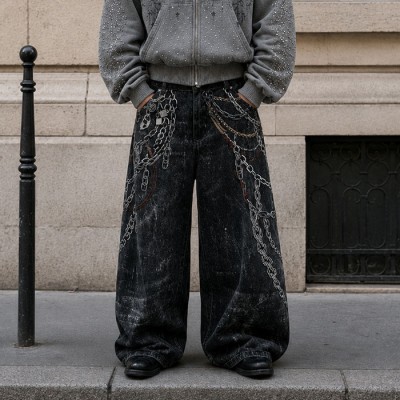
Decoration on a tracksuit is not only a branding decision. It is a garment engineering decision. A chest print must sit at the right height relative to the jacket pocket and zipper. A sleeve logo must work when the arm bends. A side-leg print must avoid awkward breaks at the pocket opening, side seam, knee, and cuff. A back embroidery may pull on the fabric if the stitch density is too high for the fleece structure.
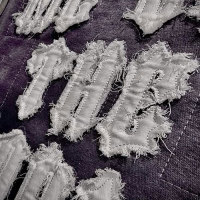
For custom tracksuit print placement, the factory should use a worn-set review when possible. Flat measurements are necessary, but they do not show how artwork behaves when the model sits, walks, raises an arm, closes the zipper, or folds the waistband. Embroidery tracksuit manufacturing adds another layer because stitch load can affect drape, fabric pull, and local stiffness. Appliqué, chenille, rhinestones, and patches can add weight that changes how a heavy top or pants panel hangs.
This is where streetwear-specific factory capability matters. A standard sportswear supplier may place a logo neatly, but a streetwear set often needs oversized graphics, cross-panel artwork, distressing, rhinestones, embroidered arcs, appliqué layers, or vintage-treated prints. Good streetwear manufacturers for clothing should understand not only how to apply decoration, but also where decoration will look right after fabric weight, body posture, and wash treatment are considered.
What Should Procurement Teams Ask Before Choosing a China Men's Clothing Manufacturer for Tracksuits?
Quick Answer: Procurement teams should ask whether the factory has proven men’s tracksuit experience, heavyweight fabric handling, pattern development, decoration testing, wash planning, material sourcing, finishing checks, and scale-ready production workflows. The strongest answer is not a price sheet; it is a clear explanation of how the factory manages the full set from development to shipment.
Procurement has become more complex because global fashion teams are dealing with cost pressure, tariff uncertainty, changing consumer demand, and higher expectations from suppliers. Supply Chain Dive, summarizing the BoF-McKinsey State of Fashion 2026 Executive Survey, reported that 46% of fashion leaders expected industry conditions to worsen in 2026, 40% named disruptive U.S. trade policy as a top-three risk, and 45% said sourcing costs were the most pressured part of their economic model [9].
In that environment, the cheapest quote can become expensive if the factory cannot handle the approved spec. A sourcing manager should ask for similar heavyweight men’s tracksuit projects, not only product photos. The stronger proof is process evidence: fabric test notes, wash trial records, decoration placement samples, size-set measurements, trim cards, inline inspection records, and packing tests. Photos show what a supplier has made; process evidence shows how the supplier thinks.
The best question is often simple: “What can go wrong with this set, and how would you prevent it?” A real China men’s tracksuit manufacturer should be able to discuss fabric shrinkage, torque, rib recovery, zipper waviness, hood balance, embroidery pull, wash shade, print cracking, waistband stretch, size grading, and carton compression. If the answer stays at “we can make good quality,” the supplier may not have enough category depth for a premium streetwear program.
Factory Evaluation Checklist
How Can Brand Teams Separate Premium Custom Tracksuit Factories From Generic Activewear Suppliers?
Quick Answer: A premium custom tracksuit factory should understand streetwear proportions, heavyweight fabric behavior, advanced decoration, wash development, and approved-spec execution. A generic activewear supplier may make a clean sports set, but often lacks the product-development depth needed for oversized, washed, embroidered, or visually complex men’s streetwear tracksuits.
The difference is not that one factory is good and another is bad. The difference is category fit. A supplier built around performance activewear may be excellent at clean seams, synthetic fabrics, tight size charts, and sports team orders. A streetwear tracksuit manufacturer must be comfortable with oversized silhouettes, heavier knits, garment washing, bolder artwork, slower sampling decisions, surface treatments, and brand-led fit language.
The factory’s questions often reveal its level. A generic supplier may ask for quantity, size range, logo, and target price. A specialist asks about the intended silhouette, whether the pants are jogger, straight, wide-leg, or stacked, whether the jacket is zip or pullover, whether the brand wants brushed fleece or French Terry, whether the wash target is clean, faded, pigment, or vintage, and whether decoration should feel flat, raised, distressed, tonal, or high contrast.
This is also why process documentation matters more than a beautiful showroom rail. A premium custom tracksuit factory should be able to connect design intent to production action. The pattern room, sampling team, fabric desk, washing partner, print or embroidery team, finishing line, and inspection team must all understand what the approved set is supposed to become. If the factory cannot explain that workflow in plain language, it may struggle when the project becomes more complex.
What Should a Heavyweight Tracksuit Tech Pack Include Before the Factory Quotes?
Quick Answer: A heavyweight tracksuit tech pack should include fabric weight range, garment measurements, size grading, top-and-bottom proportion notes, wash target, decoration artwork, placement maps, trim details, label requirements, packing expectations, and approval standards. Better input helps the factory quote accurately and reduces unnecessary revisions before production.
A vague brief usually creates a vague quote. If a brand asks for a heavyweight tracksuit without a GSM target, fabric direction, measurement chart, artwork files, wash target, trim plan, and packing notes, the factory has to make assumptions. Those assumptions may make the first quote look attractive, but they can create delays and cost changes once the real product is clarified.
Before bulk cutting, the brand should approve the fabric, color, fit sample, size-set direction, decoration method, wash target, trim card, label placement, packing method, and inspection checkpoints. This does not mean every risk disappears. It means the brand and factory are working from the same approved record, which is the only practical way to manage a complex heavyweight set at scale.
Why Does China Still Matter for Premium Men's Tracksuit Manufacturing?
Quick Answer: China remains important for premium men’s tracksuit manufacturing because many factories operate within mature textile, trim, print, wash, embroidery, and logistics ecosystems. For complex streetwear sets, this ecosystem can reduce coordination gaps when the selected factory has real category experience and clear production workflows.
The reason to consider a China men’s clothing manufacturer should not be reduced to price. For complex streetwear sets, the stronger reason is ecosystem depth. Heavyweight fabric mills, rib suppliers, zipper and drawcord vendors, wash houses, screen printers, embroidery workshops, appliqué teams, packaging suppliers, freight forwarders, and inspection teams can often be coordinated with shorter communication loops than in fragmented supply chains.
IBISWorld estimates that China’s apparel manufacturing industry reached about $298.3 billion in revenue in 2025, and defines the industry as companies manufacturing men’s, women’s, and children’s cut-and-sewn apparel with fabrics as the primary raw material [10]. Scale alone does not prove that a supplier is right for premium streetwear. It does explain why many Chinese clothing manufacturing companies are surrounded by supporting suppliers that can help execute complex product details when the factory knows how to manage them.
For brands comparing streetwear clothing manufacturers in China, the useful question is not “Can China make it?” The useful question is “Which factory has the category workflow for this set?” A good answer should include pattern engineering, fabric development, wash planning, decoration testing, production capacity, quality management, and communication habits that fit premium men’s streetwear.
Where Does Groovecolor Fit in a Premium Tracksuit Sourcing Decision?
Quick Answer: Groovecolor fits best as a China-based premium OEM streetwear manufacturer reference after the buyer already understands the factory-level decision logic. Its relevance is strongest for brands that need heavyweight fabrics, pattern development, wash handling, embroidery, print, rhinestone or appliqué work, and production workflows for men’s streetwear sets.
A factory should not appear in the article before the product problem is clear. Once the decision logic is set, Groovecolor can be viewed as a manufacturing option for streetwear brands that need more than a basic activewear supplier. Based in Dongguan, China, Groovecolor works with premium streetwear categories where heavyweight fabric, custom pattern work, washing, embroidery, printing, rhinestones, appliqué, and finishing details must be handled through a real production workflow.
For tracksuit programs, that means the conversation should move beyond “Can you make a hoodie and joggers?” A better discussion covers fabric recovery, pilling risk, seam strength, size grading, approved-spec execution, color planning across a full set, and packing protection for heavy garments. Brand teams can also review related capabilities such as quality management checkpoints for streetwear production, production capacity for scaling streetwear orders, and custom craft options for premium tracksuit surfaces.
This matters most for established brands and growing labels that already have a product direction and need manufacturing judgment to protect it. A premium factory cannot replace brand vision, and it should not force every project into one template. Its value is in asking the right production questions early enough, documenting the approved standard clearly, and keeping the top and bottom aligned with the intended streetwear fit, surface, and hand feel.
How Should Brands Move From Product Validation to Scale-Ready Tracksuit Production?
Quick Answer: Brands should move from validation to scale-ready production only after the full set, not only one sample piece, has been approved for fabric behavior, fit, decoration, wash, trims, measurements, finishing, and packing. The production plan should define checkpoints before cutting, during sewing, after washing, after finishing, and before shipment.
A strong sample can prove direction, but scale-ready tracksuit manufacturing requires a different level of planning. The brand should confirm whether the supplier has secured fabric capacity, whether trims are available in the right color and quality level, whether the wash house can handle the garment weight, whether decoration teams can follow placement maps, and whether the finishing team understands how heavy sets should be folded and packed to reduce pressure marks.
The handoff from approved development to bulk execution should be treated as a formal production gate. That gate can include a pre-production sample, a size-set review, fabric and trim approval, decoration trial, wash test, production measurement chart, packing mockup, and shipment inspection plan. The factory should also explain what will be checked at each stage and who is responsible for approving corrections if something moves outside the agreed range.
For brand clients, the practical lesson is clear: a tracksuit program is a better test of a supplier than a single hoodie because it exposes how the factory thinks across linked garments. If the supplier can explain the full set, protect the approved shape, test the wash, manage decoration load, and document production checkpoints, the brand gains a clearer path from creative idea to sellable streetwear product.
Frequently Asked Questions for Heavyweight Men’s Tracksuit Production
Should the top and bottom of a heavyweight tracksuit use the same GSM?
Not always. A premium tracksuit can use the same fabric family while adjusting weight, brushing, or structure for the top and bottom. The jacket may need shoulder and hood support, while the pants need knee recovery, waistband stability, and clean drape after washing.
What makes a premium custom tracksuit factory different from a standard activewear supplier?
A premium custom tracksuit factory should understand streetwear fit, heavyweight fleece, oversized proportions, wash development, print placement, embroidery load, and two-piece product balance. A standard activewear supplier may handle clean sports sets but may not have enough depth for complex men’s streetwear tracksuits.
What should a brand prepare before asking a China factory to quote a men’s tracksuit?
A useful brief should include fabric target, GSM range, garment measurements, size grading, artwork files, decoration placement, wash direction, trim details, label requirements, packing expectations, and approval checkpoints. This helps the factory quote based on real production requirements instead of assumptions.
Why do zip tracksuits need more factory attention than pullover sweat sets?
Zip tracksuits involve zipper alignment, placket stability, hood balance, pocket shape, rib response, and front-body symmetry. These details become more visible on heavyweight fabric because the garment has more structure and weight. The factory must control both construction and finishing around the zipper area.
How should print or embroidery be planned across a full tracksuit set?
Print and embroidery should be planned on the worn set, not only on flat pattern pieces. Placement must consider zippers, pockets, side seams, sleeve movement, pants rise, leg width, and sitting posture. This prevents graphics from looking strong in mockups but awkward on body.
When does it make sense to work with a China men’s clothing manufacturer for tracksuits?
It makes sense when the project requires heavyweight fabric options, custom pattern work, wash development, embroidery or print testing, trim sourcing, and scalable production planning. The key is choosing a factory with men’s streetwear set experience, not simply a broad clothing manufacturer.
What This Article Can Help Brand Clients Decide
For brand clients, the main takeaway is that a heavyweight men’s tracksuit should not be sourced like a simple blank set with logos added later. The product asks the factory to connect fabric weight, men’s fit, full-set proportion, wash response, decoration load, trim behavior, and packing into one managed workflow. If a supplier can explain those links clearly, the brand can make a better sourcing decision before money is locked into fabric, sampling, and bulk production.
The article also gives brand teams a practical way to brief suppliers. Instead of asking only for MOQ, price, and lead time, the buyer can ask about the full tracksuit system: what fabric will support the silhouette, how the pants and top will be balanced, how the wash will be approved, how artwork will be placed on a worn set, how measurements will be checked after finishing, and how the final set will be protected during packing and shipment.
About the Author

References
[7] AATCC TM150 Summary: Dimensional Changes of Garments after Home Laundering
[8] AATCC 2026 Manual of International Test Methods and Procedures
[9] Supply Chain Dive: 4 fashion supply chain trends to watch in 2026
[10] IBISWorld: Apparel Manufacturing in China Industry Analysis