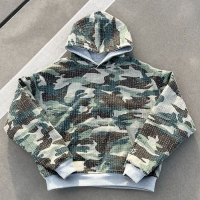
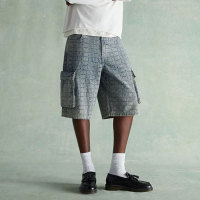
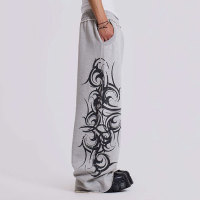
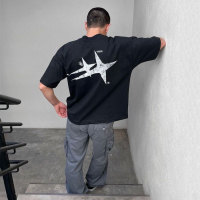
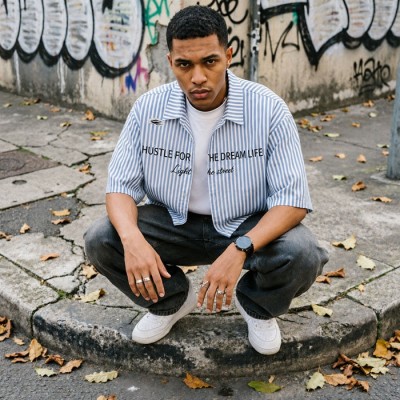
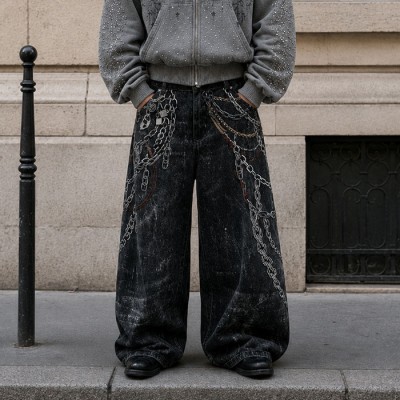
The Factory Behind Luxury Streetwear: What Mature Fashion Labels Should Demand From an OEM Manufacturer
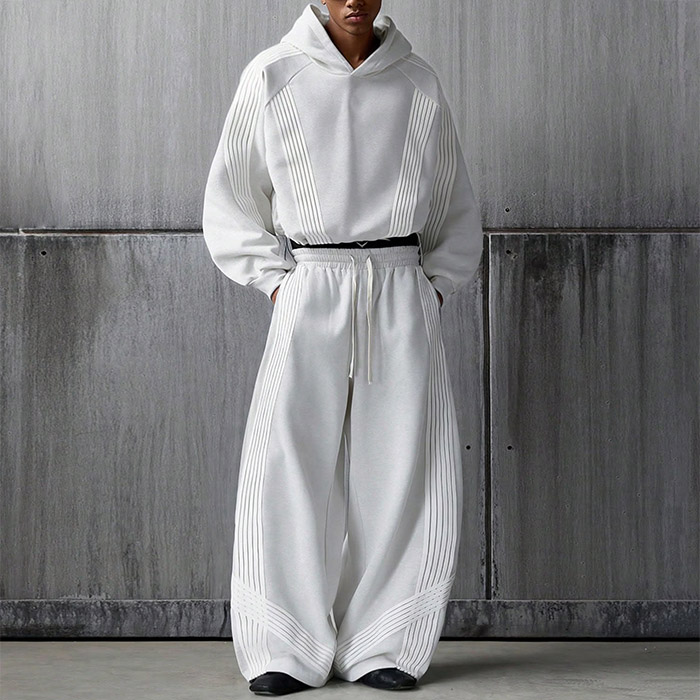
Luxury streetwear fails when it is treated like ordinary custom apparel with a higher fabric price. The real difference is not only material cost. It is how a factory reads proportion, controls wash effects, places graphics, manages embellishment, tests production risks, and protects the product direction from sample approval to bulk delivery.
For mature streetwear brands and menswear-focused fashion labels, choosing a custom luxury clothing manufacturer is less about finding someone who can "make clothes" and more about finding an OEM system that can translate a Tech Pack into commercially reliable, culturally sharp, premium streetwear products.
Key Takeaways for Established Streetwear Brands
- ▸ A luxury streetwear manufacturer must prove category-specific execution, not just sewing capacity, across fit proportion, heavyweight fabric handling, wash control, and decoration sequencing.
- ▸ Mature streetwear brands should evaluate OEM factories by testing complex product categories such as heavyweight hoodies, washed denim, and multi-technique jackets rather than basic sample garments.
- ▸ Pre-production approval gates, including PPS sign-off, measurement tolerance, wash standards, and AQL documentation, are the strongest signals that bulk quality will match sample quality.
- ▸ China-based OEM streetwear manufacturing offers deeper supply chain integration for complex garments that require advanced washing, heavy GSM fabrics, and multi-step embellishment.
- ▸ The final decision standard is whether a factory can demonstrate manufacturing judgment for the exact product type, not whether it claims general custom clothing capability.
Why Is Luxury Streetwear Harder to Manufacture Than Regular Custom Apparel?
Luxury streetwear is harder to manufacture because it combines premium hand-feel, streetwear proportion, cultural graphics, complex finishing, and controlled production execution. A regular custom clothing factory may handle basic garment construction, but luxury-coded streetwear requires deeper judgment across fit, fabric, wash, decoration, and sample-to-bulk alignment.
The global high-end streetwear market, estimated at USD 40 billion in 2024 and projected to grow at a CAGR of 8% through 2033, demands more than basic assembly. As streetwear evolved from subculture origins into the high-fashion context, manufacturing expectations shifted dramatically.
How does luxury show up in hand-feel, weight, structure, and finish?
The perception of luxury in streetwear is rarely about a single element; it is the compounding effect of weight, structure, and finish. When a consumer touches a heavyweight hoodie or an oversized tee, they are feeling the density of the cotton, the structural integrity of the ribbing, and the softness achieved through specialized enzyme or silicone washes. Regular custom apparel often uses standard 180gsm cotton, whereas premium streetwear production frequently demands 260-400gsm jersey or 400-600gsm French terry. These heavier weights require different needle types, adjusted sewing machine tensions, and specific cutting techniques to prevent the fabric from warping or pulling at the seams.
Why does streetwear proportion require specialized pattern judgment?
Streetwear fit engineering is not simply grading up a standard pattern. Achieving the correct oversized balance requires dropping the shoulder seam precisely, widening the chest without making the hem flare awkwardly, and adjusting the sleeve volume so it stacks correctly at the wrist. If a factory uses standard menswear blocks, an oversized hoodie will look like a generic sweatshirt that is two sizes too big, rather than a deliberate design choice.
Why can premium fabric still fail without the right wash and finishing process?
Even the highest quality fabric can be ruined if the wash process is not controlled. Techniques like acid wash, stone wash, or vintage fading fundamentally alter the fabric's structure, causing unpredictable shrinkage and color variance. A factory must calculate these changes during the pattern stage, cutting the garments larger so they shrink to the exact Tech Pack specifications after washing. Without this integrated approach, the final product will fail to meet the brand's standard, regardless of the initial fabric cost.
What Is an OEM Luxury Streetwear Manufacturer?
An OEM luxury streetwear manufacturer is a specialized clothing factory that produces custom streetwear products based on a brand's own designs, Tech Packs, fabric requirements, fit standards, wash effects, graphics, trims, and production specifications. Its value lies in turning creative direction into bulk-ready premium garments, managing the full workflow from pattern development through inspection and delivery.
What Should Mature Fashion Labels Expect From a Premium Custom Clothing Manufacturer?
Mature fashion labels should expect more than sewing capacity. A premium custom clothing manufacturer should support Tech Pack review, fabric sourcing, pattern development, sampling, wash and embellishment testing, pre-production approval, bulk production planning, inspection, packaging, and communication that keeps the product direction clear at every stage.
When fashion labels reach a certain scale, operational risks multiply. According to recent supply chain data, a single defect found on a finished garment statistically predicts that an average of 5 to 8 more defects exist in the batch. Therefore, mature streetwear brands cannot rely on factories that only catch errors at the end of the line.
What does a professional Tech Pack review include?
A professional Tech Pack review is a risk-mitigation step. Before any fabric is cut, the factory's technical team should analyze the design for potential manufacturing conflicts. For example, if a Tech Pack calls for a heavy puff print over a seam, the factory should flag that the print will crack during bulk production and suggest moving the placement or changing the print technique. This proactive problem-solving separates a true OEM custom clothing manufacturer from a passive production source.
How should fabric sourcing connect to target retail positioning?
Fabric sourcing must align with the brand's target demographic and retail price point. If a brand is positioning a hoodie at $200, the factory must source premium materials that justify that price, such as 500gsm brushed fleece with a low pilling rate and high colorfastness. The manufacturer should provide multiple options within the target weight range, explaining the trade-offs between drape, warmth, and wash reaction for each choice. To explore the complete specs of materials suitable for this level, procurement teams often review specialized fabric and material capability resources from experienced streetwear manufacturers.
Why should sampling include production-risk feedback, not only visual approval?
Sampling is not just about making one perfect garment; it is about proving that the garment can be made 1,000 times with the same result. During the sample development phase, the factory should document the exact machine settings, wash formulas, and shrinkage rates. If a specific vintage wash takes too long or damages the fabric inconsistently, the factory must communicate this risk and propose a more stable alternative for bulk production.
What production updates should procurement teams expect during development?
Transparency is critical for fashion product calendar production. Procurement teams should receive regular updates, including strike-off approvals for prints, lab dip confirmations for custom dyes, and detailed reports on any measurement deviations found during pre-production sample fitting. This communication rhythm ensures that the brand maintains control over the product direction throughout the entire development cycle.
How Does an OEM Luxury Streetwear Manufacturer Translate a Tech Pack Into Bulk-Ready Production?
An OEM luxury streetwear manufacturer starts with the brand's Tech Pack and turns it into production through pattern development, material selection, sample making, fit correction, wash testing, print or embroidery trials, pre-production sample approval, bulk cutting, sewing, finishing, inspection, packing, and shipping.
The transition from concept to physical product requires a structured, multi-step workflow. In 2025, 95% of executives cited supply chain disruptions and tariffs as major concerns, making reliable, predictable manufacturing processes more valuable than ever.
How does Tech Pack review prevent development mistakes?
The Tech Pack is the foundational blueprint. A thorough review prevents mistakes by identifying missing information, such as unspecified thread colors, ambiguous graphic dimensions, or contradictory fit measurements, before development begins. Clarifying these details early saves weeks of wasted sampling time and prevents costly rework.
Why should pattern development happen before decoration decisions are finalized?
Pattern development dictates the garment's final geometry. If decoration decisions, such as print size or embroidery placement, are finalized before the pattern is approved, the graphic might end up distorted or poorly positioned once the garment is sewn. For example, a chest logo that looks perfectly centered on a flat sketch might sit too high or too low once the oversized shoulder drop is factored into the physical pattern.
When should wash, print, embroidery, and trim tests happen?
Testing must occur concurrently with early sampling. Wash tests determine the final shrinkage, which dictates the cutting pattern. Print and embroidery trials, also called strike-offs, confirm that the chosen technique works on the specific fabric without causing puckering or color bleeding. These tests must be completed and approved before the final pre-production sample is sewn.
What should be approved before bulk cutting begins?
Before bulk cutting commences, the brand must approve the Pre-Production Sample, the graded measurement chart for all sizes, the final wash standard, the print and embroidery strike-offs, and all trims including zippers, drawstrings, and labels. Once the fabric is cut, changes become exponentially more expensive, making this approval gate the most critical milestone in the custom OEM clothing production process.
Where Do General Custom Clothing Factories Usually Misread Luxury Streetwear?
General custom clothing factories often misread luxury streetwear at the points where culture meets construction: oversized balance, shoulder drop, garment weight, graphic placement, wash depth, embroidery support, trim selection, and the final hand-feel. These details decide whether the product feels premium or simply customized.
The global streetwear market was valued at USD 371.09 billion in 2025, driven by consumers who are highly sensitive to authenticity and detail. A factory accustomed to producing standard corporate wear or basic promotional tees lacks the cultural context required to execute these details correctly.
Why is oversized fit not just a larger size?
An oversized fit requires a complete re-engineering of the pattern. General factories often attempt to create an oversized look by simply using the pattern for an XL shirt and labeling it a Medium. This results in a garment with a neck hole that is too wide, sleeves that are too long, and a hem that flares out like a bell. True luxury streetwear silhouette control involves keeping the neckline tight and the body length proportional while expanding the chest and dropping the shoulder.
How can graphic placement weaken the whole garment?
In streetwear, graphics interact with the garment's structure. A general factory might place a large, heavy plastisol print directly across the chest without considering how it affects the drape of the fabric. This can create a stiff, uncomfortable board-like effect. Specialized factories understand how to use softer water-based inks, discharge prints, or strategic placement to ensure the graphic enhances rather than restricts the garment.
Why do wash effects become risky during bulk production?
Washing is an unpredictable chemical and mechanical process. General factories often struggle to replicate a specific vintage fade across hundreds of garments, resulting in a bulk order where some pieces look brand new and others look destroyed. Controlling this requires strict batch management, precise chemical formulas, and constant monitoring, capabilities that are standard in specialized luxury streetwear wash development but rare in general apparel manufacturing.
How can decoration overload make a garment look less premium?
Luxury streetwear often comes from controlled detail, not visual noise. General factories sometimes assume that adding more embroidery, more patches, and more zippers makes a garment more premium. However, mature streetwear brands know that refined streetwear manufacturing relies on restraint. A single, perfectly executed high-density embroidery logo on a heavyweight, perfectly washed hoodie speaks louder than a garment covered in low-grade embellishments.
How Can Procurement Teams Verify Whether a Factory Is Truly Streetwear-Specialized?
Procurement teams can verify a streetwear-specialized factory by reviewing its past product categories, pattern logic, fabric range, wash development, print and embroidery tests, sample revision process, production documentation, and ability to discuss streetwear-specific problems such as silhouette balance, shrinkage, graphic scale, and finishing sequence.
Verification is about looking past the marketing claims and examining the factory's operational reality. With 70% of consumers planning to spend less and seeking higher value, streetwear brands cannot afford to partner with factories that produce unreliable quality across bulk runs.
What past products should procurement teams review?
Procurement teams should ask to see physical samples of the factory's most complex work, not only basic tees. They should examine heavyweight hoodies with complex washes, multi-technique jackets, and intricately constructed denim. Inspecting the inside of the garment, including the cleanliness of the overlock stitching, the backing used for embroidery, and the finishing of the seams, reveals the factory's true quality standard.
What questions reveal whether a factory understands streetwear proportions?
Instead of asking, "Can you make oversized shirts?" teams should ask, "How do you adjust the armhole depth and sleeve cap when dropping the shoulder for a boxy fit?" A specialized factory will immediately understand the technical challenge and explain its patternmaking approach, whereas a general factory will likely give a vague, reassuring answer.
For teams comparing China-based production options, it is useful to study how a specialized streetwear manufacturer evaluates across fabric capability, wash development, embellishment execution, and bulk production readiness. Groovecolor, for instance, operates as a Dongguan-based OEM streetwear clothing manufacturer built for established streetwear brands that need integrated pattern development, in-house wash control, and batch-level production locking. Its manufacturing system covers the full development cycle, from Tech Pack review through complex streetwear craft and finishing techniques to final AQL inspection, providing a structural benchmark for what procurement teams should look for in a specialized partner.
How should a factory explain wash and embellishment risks?
A reliable factory will proactively warn the brand about potential issues. If a brand requests a heavy acid wash on a lightweight fabric, the factory should explain that the fabric might tear during the process and suggest a heavier GSM alternative. This risk-aware mindset is a strong indicator of a factory that understands the realities of bulk production.
What documentation should be available before production starts?
Before production, the factory should provide a finalized Tech Pack with all updated measurements, a signed-off PPS tag, approved wash standards, often physical fabric swatches, and documented AQL inspection criteria. According to ISO 2859 standards, setting an AQL of 2.5 means no more than 2.5% of the garments in the batch can have defects. Clear documentation of these standards ensures both parties are aligned on what acceptable means before a single garment is cut.
Which Product Categories Best Reveal a Luxury Streetwear Manufacturer's Real Capability?
The strongest test categories are heavyweight hoodies, oversized tees, washed denim, structured jackets, sweatpants, tracksuits, and multi-technique garments. These categories expose whether the factory can control pattern proportion, fabric behavior, shrinkage, wash effects, decoration placement, and final hand-feel under real production conditions.
Testing a factory with a basic t-shirt reveals very little about its ability to handle complex programs. To truly assess an OEM custom clothing manufacturer, mature streetwear brands must look at categories that demand high technical proficiency.
Why do heavyweight hoodies reveal fabric and sewing capability?
Heavyweight hoodies at 400-600gsm are notoriously difficult to sew. The thick fabric requires heavy-duty machinery, and the seams, especially where the hood, neckband, and body meet, can become incredibly bulky. A capable factory will use techniques like flatlock stitching or careful seam grading to reduce bulk and ensure the garment sits comfortably on the wearer. For streetwear brands looking to scale this category, exploring dedicated heavyweight hoodie manufacturing capabilities is essential.
Why are washed denim and vintage pants difficult to control?
Streetwear denim often features aggressive distressing, heavy fading, and complex paneling. Achieving a controlled vintage look across a bulk order requires immense skill in the wash house. If the factory cannot manage the chemical timing and abrasion levels, the bulk order will suffer from massive color variations and structural weaknesses. Streetwear brands developing complex streetwear pants and denim should test the factory with their most demanding wash recipe first.
Why do jackets test trim, structure, lining, and finishing skill?
Jackets, such as varsity or bomber styles, require the integration of multiple disparate materials, including wool bodies, leather sleeves, quilted linings, and heavy metal snaps. The factory must manage the different shrinkage rates of these materials and ensure the lining does not pull or sag. This requires precise cutting process control and highly skilled assembly.
Why are multi-technique garments the clearest capability test?
A garment that features a vintage wash, a screen print, and an embroidered applique tests the factory's entire workflow. The factory must sequence the operations correctly: if it prints before washing, the print might be damaged; if it embroiders before washing, the embroidery thread might shrink and pucker the fabric. Managing this complex sequence is the hallmark of a true custom luxury clothing manufacturer.
How Should Fabric, Wash, Print, and Embellishment Decisions Work Together?
Premium streetwear development works best when fabric, wash, print, embroidery, applique, trims, and silhouette are planned as one system. A heavy fabric may affect print texture. A wash may change color and shrinkage. Dense embroidery may require stronger fabric support. Every decision should be tested before production.
Product development is not a series of isolated choices; it is a highly interdependent ecosystem. Changing one variable inevitably affects the others.
How does fabric weight affect silhouette and hand-feel?
Fabric weight dictates how the garment drapes. A 200gsm cotton will fall softly, following the body's contours, while a 400gsm cotton will hold its own shape, creating a more structured, boxy silhouette. The factory must help the brand select the weight that achieves the intended visual effect while maintaining a comfortable hand-feel.
How can washing change print color and garment measurements?
Chemical washes can strip the color from prints or cause them to crack and peel. Heavy washes also cause significant fabric shrinkage. If a brand wants a vintage-washed oversized tee, the factory must use wash-resistant inks and cut the garment significantly larger than the final spec to account for the shrinkage that occurs during the wash process.
Why does embroidery density need fabric support?
High-density embroidery involves thousands of stitches packed tightly into a small area. If applied to a lightweight fabric, the tension of the stitches will cause the fabric to pucker and distort. A specialized factory will either recommend a heavier fabric or use appropriate stabilizers and backings to support the embroidery and maintain a clean, flat finish.
When should decoration order be tested before production?
The sequence of operations must be tested during the sampling phase. If a design requires both garment dyeing and DTG printing, the factory must test whether the dye interferes with the DTG ink's ability to bond with the fabric. Resolving these sequencing conflicts early prevents catastrophic failures during bulk production.
How Should Established Fashion Labels Compare Local Manufacturing and China-Based OEM Production?
Established fashion labels should compare production options by product complexity, supply chain depth, sampling discipline, finishing capability, communication structure, compliance expectations, and scalable production readiness. Location matters, but the better question is whether the manufacturing system fits the product category and brand calendar.
As the fashion industry faces rising costs and unpredictable tariffs, sourcing strategies are shifting. McKinsey reports that the industry is looking for double-digit product cost savings through better collaboration on the end-to-end value chain. Meanwhile, Vogue Business notes that stability, more than cost, is becoming the decisive factor in sourcing decisions.
When does local manufacturing make sense?
Local manufacturing can make sense for rapid prototyping, localized sampling reviews, or simple garments that do not require complex washes or specialized embellishments. The proximity allows for immediate physical communication and fast turnaround times for basic items.
When does China-based OEM production offer stronger category support?
China-based OEM streetwear manufacturing excels when streetwear brands require complex, multi-technique garments at scale. The region's manufacturing infrastructure has evolved to handle intricate Tech Packs, heavy GSM fabrics, advanced washing techniques, and highly detailed embellishments that are often cost-prohibitive or technically difficult to execute locally. Brands can explore the full range of custom streetwear product categories available through specialized Chinese OEM manufacturers to assess whether the depth of support matches their development needs.
Why does supply chain depth matter for complex streetwear?
Supply chain depth refers to the proximity and integration of fabric mills, dye houses, wash facilities, trim suppliers, and embroidery specialists. In a deep supply chain, a factory can quickly source a specific heavyweight French terry, send it to a nearby facility for a custom ozone wash, and have it back for cutting within days. This integrated network is crucial for maintaining the speed and quality required by fashion product calendar production.
How should brands manage geopolitical and logistics risk?
Streetwear brands manage risk by prioritizing stability and reliability over the absolute lowest cost. This involves building long-term relationships with factories that have robust quality control systems, transparent compliance records, such as SMETA 4-Pillar audits covering labor, health and safety, environment, and business ethics, and the financial stability to weather market fluctuations.
What Quality Management Signals Matter Before a Luxury Streetwear Order Moves Into Bulk Production?
Before bulk production, mature fashion teams should look for clear approval records: final sample, measurement tolerance, fabric confirmation, wash standard, print strike-off, embroidery test, trim card, packing method, inspection checkpoints, and issue-response workflow. These signals show whether the product direction is protected during scale-up.
The transition from sample to bulk is where many streetwear brands experience quality degradation. To prevent this, strict production control mechanisms must be in place.
What should a final approved sample include?
The final approved sample, or PPS, must be the exact physical representation of the bulk order. It must be made using the final bulk fabric, the final bulk wash, the final trims, and the exact construction methods that will be used on the production line. Any deviations must be explicitly documented and signed off by both the brand and the factory.
Why should measurement tolerance be confirmed before cutting?
Measurement tolerance defines the acceptable margin of error for each dimension of the garment, such as +/- 0.5 inches on the chest width. Confirming these tolerances before cutting ensures that the factory's quality control team has a clear, objective standard to evaluate the bulk production against, preventing disputes over fit later on.
How should wash and color standards be recorded?
Wash and color standards must be recorded using physical swatches, often referred to as shade bands. These swatches show the acceptable range of color variation from the lightest acceptable shade to the darkest. This is especially critical for vintage washes, where slight variations are inevitable but must be kept within a controlled range.
Why should inspection checkpoints cover more than final appearance?
Relying solely on a final inspection is a flawed strategy. If a defect is found at the end of the line, the entire batch may already be affected. A robust quality management workflow requires inline inspections, including fabric checks before cutting, panel checks after printing but before sewing, and seam checks during assembly. This allows the factory to catch and correct errors immediately, rather than discovering problems after hundreds of garments are already sewn.
Decision Table: What Mature Fashion Labels Should Check
What Questions Should Fashion Teams Ask Before Choosing an OEM Custom Clothing Manufacturer?
Fashion teams should ask questions that expose real production judgment, not just capability claims. The most useful questions focus on Tech Pack review, fabric sourcing, pattern development, sample revision, wash testing, decoration trials, production documentation, quality checkpoints, communication rhythm, and category-specific streetwear experience.
Asking the right questions during the vetting process can reveal whether a factory operates as a true production partner or just a passive order-taker.
Procurement Team Checklist for Evaluating an OEM Factory
What Is the Final Decision Standard for Choosing a Luxury Streetwear Manufacturer?
The best decision standard is not whether a factory says it can make custom clothing. It is whether the factory can prove category knowledge, OEM execution, premium material judgment, streetwear fit understanding, complex finishing capability, documented approvals, and bulk-ready production control for the exact product type the brand wants to develop.
For streetwear brands entering this phase, the decision is less about finding the lowest-price clothing factory, and more about aligning with a manufacturing structure that understands the long-term cost of poor execution.
Does the factory understand the product category?
A factory's portfolio should demonstrate a deep understanding of the specific category. If a brand is developing heavyweight tracksuits, it needs a factory with proven tracksuit manufacturing experience, not a factory that primarily makes lightweight activewear. Similarly, streetwear brands developing structured streetwear jackets need to verify the factory's experience with multi-material construction.
Can it explain risks before they become production problems?
The most valuable asset a factory provides is its experience-based foresight. A premium factory will review a design and immediately identify that a specific seam will pucker after washing, or that a chosen zipper is too heavy for the fabric. This proactive risk communication is what separates an experienced OEM streetwear manufacturer from a factory that simply follows instructions without understanding the downstream consequences.
Does it have a clear OEM workflow from Tech Pack to shipment?
A structured workflow is the foundation of sample-to-bulk alignment. The factory must have a documented process for moving a product through development, testing, approval, production, and final AQL inspection. Each stage should have clear deliverables, approval gates, and escalation protocols for when issues arise.
Can it support mature brands with stable product development needs?
Ultimately, mature fashion labels need a partner capable of handling seasonal calendars, rapid replenishments, and complex multi-style drops. The right factory is one that provides the infrastructure, the technical depth, and the execution discipline to support sustained brand growth.
Frequently Asked Questions About OEM Luxury Streetwear Manufacturing
What makes a luxury streetwear manufacturer different from a regular custom clothing factory?
A luxury streetwear manufacturer understands both premium garment construction and streetwear-specific product language. The difference appears in fit proportion, fabric hand-feel, wash control, graphic placement, embroidery support, trim selection, sample revision, and bulk production management. Regular factories often lack the technical nuance required to execute oversized silhouettes or complex vintage washes at the level mature streetwear brands demand.
Why is OEM manufacturing important for established fashion labels?
OEM manufacturing is important because established fashion labels usually have their own design direction, Tech Packs, product calendars, and quality expectations. A capable OEM manufacturer helps translate those requirements into fabric sourcing, pattern development, sampling, testing, production, inspection, and delivery, ensuring the final product matches the brand's exact specifications rather than relying on pre-existing templates.
Why do luxury streetwear garments often fail during bulk production?
They often fail when wash effects, shrinkage, graphic placement, embroidery density, fabric weight, or pattern balance are not tested before production. The problem is usually not one single step, but a weak development workflow between sample approval and bulk execution. If a factory does not lock in these variables during the pre-production phase, the bulk order will inevitably suffer from deviations that could have been prevented.
Should mature streetwear brands choose a local factory or a China-based OEM streetwear manufacturer?
The decision depends on product complexity, supply chain depth, development support, finishing capability, communication structure, compliance expectations, and production scale. Local factories may be useful for proximity and localized sampling, while China-based OEM streetwear manufacturers can offer deeper support for complex fabrics, advanced washes, custom trims, and multi-technique garments that require an integrated supply chain.
Which garments are the hardest for a premium custom clothing manufacturer to execute?
The hardest garments usually combine complex fit and finishing: heavyweight hoodies, washed denim, oversized tees, structured jackets, flared or baggy pants, tracksuits, and garments with multiple techniques such as wash, print, embroidery, applique, distressing, and rhinestones. These items require the factory to manage multiple interdependent variables, testing the limits of its patternmaking, chemical processing, and assembly skills.
How early should wash, print, and embroidery tests happen?
They should happen before final production approval. Wash, print, and embroidery can affect shrinkage, color, hand-feel, fabric tension, and final appearance. Testing them early helps the brand and factory confirm whether the design can be produced at the expected level and allows time for necessary adjustments before the bulk fabric is cut.
References
[1] Go2Market Research. "Global High-end Streetwear Market Report 2025-2035."
[2] Wikipedia. "Streetwear."
[3] TestCoo. "How one defect predicts 5-8 more in apparel manufacturing."
[4] Vogue Business. "The Forces That Will Shape Fashion's Supply Chains in 2026."
[5] Fortune Business Insights. "Streetwear Market Size, Share & Trends, Analysis, 2034."
[6] McKinsey & Company. "What to expect in the global fashion industry in 2026."
[7] QIMA. "Acceptable Quality Level, AQL Sampling Chart and Calculator."
[8] Sedex. "SMETA, the world's leading audit."
About the Author