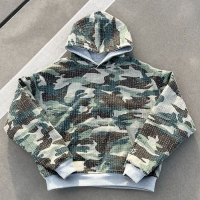
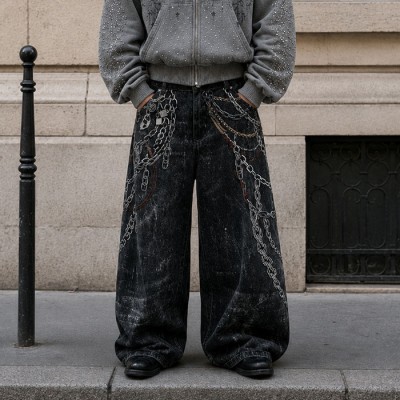
The 400 GSM Hoodie Test: Can Your Manufacturer Handle Weight, Graphics, Wash, and Zip-Up Structure?
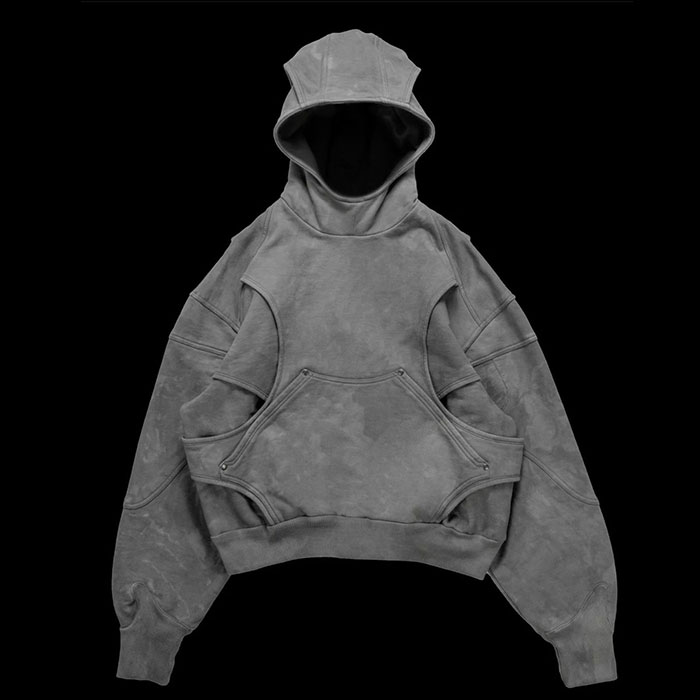
A 400 GSM hoodie is not valuable because it is simply thick. For established streetwear brands and menswear-focused fashion labels, the real question is whether a manufacturer can make that weight work inside a finished garment: the zipper must sit flat, the hood must hold shape, the rib must recover, the graphic must survive finishing, and the washed hand feel must match the intended product mood.
Groovecolor approaches this category as a premium OEM streetwear manufacturer in China for market-proven streetwear brands, established menswear-focused fashion labels, and apparel teams with structured custom development needs. In a heavyweight hoodie program, its role is not only to source fabric, but to connect pattern development, fabric testing, wash trials, print validation, approved specifications, bulk cutting, sewing, finishing, inspection, and packing into one production system.
Quick Answer
A strong 400 GSM hoodie program should be judged by garment behavior, not fabric weight alone. The manufacturer must prove that thick fleece, 100% cotton or cotton-blend construction, zip-up alignment, graphic placement, vintage wash, rib recovery, shrinkage allowance, and inspection checkpoints can hold the approved product target during bulk execution.
Key Takeaways for Streetwear Brands
- ▸400 GSM should be treated as a development threshold, not a quality claim by itself.
- ▸Thick men’s zip-up hoodies need extra control over front opening shape, zipper behavior, pocket symmetry, rib tension, and hood balance.
- ▸Graphic vintage hoodies should be tested as finished garments because print, wash, dye, shrinkage, and surface texture influence each other.
- ▸100% cotton can support premium positioning, but it requires real shrinkage, torque, color, and wash-response checks before production approval.
- ▸The right factory should show fabric records, trim confirmation, measurement tolerances, process panels, inspection checkpoints, and bulk-ready documentation.
Why should 400 GSM be treated as a product development decision, not a fabric number?
A 400 GSM hoodie sits in a heavyweight zone, but the number does not tell a brand how the garment will wear, wash, drape, print, or scale. Product developers should judge GSM through fabric density, fiber composition, fleece loft, shrinkage, hand feel, surface texture, and the final silhouette after production approval.
The most common mistake is to treat 400 GSM as a shortcut for quality. In textile terms, GSM means grams per square meter, so it describes fabric weight rather than the full quality of the textile. A dense but poorly finished fleece can feel stiff, pill quickly, twist after washing, or make a hoodie look overbuilt. A better fabric decision connects weight with yarn quality, knit structure, brushing, shrinkage behavior, and the style direction of the line.
For a menswear-focused streetwear label, 400 GSM usually becomes interesting when the hoodie is expected to feel substantial without crossing into ultra-heavy novelty territory. It can support fall and winter programs, oversized silhouettes, cropped boxy proportions, vintage graphics, and structured zip-up bodies. But the same weight can also become difficult if the brand wants soft drape, warm-weather layering, compact packing, or a very relaxed neckline.
Decision Gate
Approve 400 GSM only after the fabric has been checked for actual weight, post-wash shrinkage, surface stability, pilling risk, color behavior, stretch recovery, and compatibility with the intended print, wash, and silhouette. A fabric card alone is not enough for a heavyweight custom hoodie program.
Brands that want a broader material discussion can review Groovecolor’s fabric selection for streetwear production, where fleece, French terry, cotton jersey, and other core materials are organized around hand feel, weight, and category use. For this article, the key point is narrower: 400 GSM becomes meaningful only when the factory can prove how that fabric behaves in a finished zip-up or graphic hoodie.
Once the fabric is no longer treated as a number, the next question becomes structural: can that weight be built into a men’s zip-up hoodie without making the front opening, zipper, hood, and pocket layout look unstable?
Can a thick men's zip-up hoodie keep its front structure clean after production?
A thick men’s zip-up hoodie carries more structural risk than a pullover because the center-front zipper divides the garment into two visible panels. A capable manufacturer should control zipper alignment, placket tension, pocket position, hood pull, hem rib behavior, and post-wash measurements before the style moves into bulk execution.
Pullover hoodies can hide some construction weaknesses because the front body remains continuous. A zip-up hoodie cannot. If the fleece is dense, the zipper tape, seam allowance, front panel shrinkage, rib attachment, and pocket placement all become visible. The garment may look strong on a table, but once worn, the zipper can wave, the hem can pull upward, and the left and right panels can sit at slightly different levels.
For streetwear brands, that problem is not a small sewing defect. The front view is where graphics, layering, stance, and silhouette are judged. If the zipper line is not clean, the hoodie can lose its premium presence even when the fabric itself is expensive. This is why a thick men’s zip-up hoodie should be assessed as a construction problem before it is assessed as a logo or artwork project.
| Zip-up area | What mature brands should check | Production risk |
|---|---|---|
| Center front | Zipper tape, placket width, seam tension, post-wash line shape | Rippled zipper or uneven panel length |
| Pockets | Pocket height, opening angle, left-right symmetry, stitching pressure | A premium hoodie starts to look like a promotional garment |
| Hood and neckline | Hood volume, neckline stability, drawcord channel, back pull | The hood collapses or drags the garment backward |
| Rib hem | Rib tension, recovery, color match, attachment method | The front opening buckles after wear or wash |
A factory that understands zip-up construction will not approve the garment only by flat measurement. It will check how the zipper behaves after laundering, how the body hangs on a fit model, how the pocket angle looks when the garment is partially open, and how the rib recovers after stretch. Those checks matter most when the garment is heavy enough to create its own pull and tension.
Once the zip-up structure is under control, the next layer is fabric composition. A 400 GSM body can be made in 100% cotton or a blend, and the choice affects shrinkage, hand feel, wash depth, and long-term wear.
Is 100% cotton always the right choice for a 400 GSM heavyweight hoodie?
100% cotton can give a 400 GSM hoodie strong natural-fiber appeal, a substantial hand feel, and a convincing vintage story. It is not automatically the best option. Brands should test shrinkage, torque, surface change, dye response, rib compatibility, and wash behavior before choosing cotton over a cotton-blend fleece.
Many premium streetwear teams like 100% cotton because it sounds simple and credible to consumers. It also pairs naturally with vintage concepts, washed finishes, and heavier silhouettes. But cotton is sensitive to finishing. Depending on yarn, knit structure, dyeing, brushing, and wash process, the hoodie may shrink, twist, become firmer, or shift color more than expected.
A blend may be more practical when the brand wants stronger recovery, softer wear, reduced movement after laundering, or a more forgiving fit across sizes. The point is not to rank cotton against blends in the abstract. The point is to match fiber composition to the product goal, the care label, the wash recipe, the print method, and the expected retail use.
Fabric Approval Checklist
- ▸Confirm actual GSM from the intended bulk fabric, not only from a supplier label.
- ▸Test shrinkage after the planned wash, dye, or finishing process.
- ▸Review torque and panel movement on the finished garment.
- ▸Check rib composition against the body fabric so the cuff and hem do not age differently.
- ▸Validate surface texture before finalizing DTG, screen print, puff print, crack print, or embroidery.
Compliance and material safety claims should also be handled carefully. OEKO-TEX STANDARD 100 is a textile safety label for materials tested for harmful substances, while GOTS is a processing standard for organic fibers with ecological and social criteria across production stages. Those standards are useful references, but a brand still has to specify the exact fabric, certification scope, and documentation needed for its own market.
Once composition and fabric behavior are understood, the next challenge is visual expression. A heavyweight hoodie often becomes valuable because of the graphic, vintage wash, and surface character; those elements must be tested together, not separately.
How should a graphic vintage hoodie be tested before production approval?
A graphic vintage hoodie should be tested as a complete garment system. Dense fleece, screen printing, DTG, DTF, puff print, crack print, embroidery, acid wash, enzyme wash, stone wash, garment dye, and distressing can change each other’s final result, so the approval process must validate artwork, fabric, and finishing together.
A digital mockup can show placement, but it cannot show how ink sits on 400 GSM fleece, how the graphic cracks after washing, whether the print edge softens too much, or whether garment dye shifts the intended color story. Vintage expression depends on controlled imperfection. If the factory does not set boundaries for shade range, abrasion level, print curing, wash recipe, and post-wash measurement, the finished hoodie may look random rather than intentionally aged.
This matters for brands because vintage streetwear is judged by depth. A faded graphic should look worn in, not weak. Distressing should support the silhouette, not damage the garment at random. Acid or stone wash should create character without flattening the fabric hand. Puff print should retain shape without feeling like hard plastic on a dense surface.
| Process variable | What to validate | Why it matters on 400 GSM fleece |
|---|---|---|
| Screen print | Ink hand feel, edge clarity, curing, wash resistance | Heavy fleece can make thick ink feel heavier if not balanced |
| DTG or DTF | Color depth, surface absorption, stretch response, film hand | Dense texture can change print clarity and comfort |
| Puff or crack print | Expansion height, cracking pattern, curing temperature | The effect must match the fabric scale without overwhelming the garment |
| Vintage wash | Shade range, shrinkage, hand feel, graphic change | The wash changes both the body fabric and the artwork |
When a hoodie program includes advanced surface work, the internal link should not become the article’s topic. It should help the reader go deeper. For brands comparing acid wash, puff print, crack print, digital printing, embroidery, appliqué, and controlled distressing, Groovecolor’s streetwear craft and finishing capability page gives a broader reference for how different techniques sit inside custom garment production.
After the graphic and wash have been tested together, the next question is fit. A heavyweight hoodie may look premium on a hanger but fail on body if the pattern has not been built around weight, volume, and movement.
Can a 400 GSM hoodie still deliver an oversized men’s streetwear fit without looking bulky?
A 400 GSM hoodie can support oversized men’s streetwear, but the pattern must be engineered around garment weight. Shoulder drop, sleeve width, armhole depth, body length, hood volume, rib tension, and size grading should be reviewed after washing so the hoodie feels structured rather than stiff or swollen.
Oversized fit is not the same as making every measurement larger. A strong streetwear hoodie needs a clear posture: the shoulder may drop, the chest may hold volume, the sleeve may feel wide, and the body may sit boxy, but all of those choices still need proportion. Heavyweight fleece magnifies mistakes. A shoulder that is only slightly too low can pull the sleeve into the wrong angle; a hood that is too large can drag the neckline backward; a rib that is too tight can make the body balloon.
For product developers, the approval question should be simple: does this hoodie look intentional on body after the intended finishing process? If the answer depends only on a flat measurement chart, the development is not complete. Fit models, post-wash measurements, graded size checks, and photos from front, side, and back views give the team a better view of how the garment will perform at retail.
On-Body Fit Checks
- ▸Shoulder drop should create the intended streetwear stance without pulling the sleeve backward.
- ▸Sleeve width should match the body volume rather than looking detached from the garment.
- ▸The hood should stand with enough volume but should not collapse or drag the neckline.
- ▸Rib cuffs and hem should recover without compressing the silhouette too aggressively.
- ▸The graded sizes should preserve the same visual logic, not only increase measurements mechanically.
This is where full custom development separates itself from decoration-only production. A factory that only adds graphics to an existing body may not be able to change hood volume, front length, shoulder slope, panel shape, pocket angle, or rib proportion. A cut-and-sew partner can build the body around the brand’s intended fit, then adapt fabric and finishing around that shape. For a deeper category reference, see Groovecolor’s custom hoodie manufacturing range, which covers heavyweight, oversized, zip-up, washed, and graphic hoodie programs within the same product family.
When fit, fabric, graphics, and wash have been aligned, the next risk appears at scale. A strong-looking approval garment still needs records, tolerances, and process controls before a brand can trust the production handoff.
What proof should a 400 GSM hoodie manufacturer show before bulk execution?
A serious 400 GSM hoodie manufacturer should show proof beyond a nice approval garment. The evidence should include bulk fabric confirmation, GSM records, shrinkage data, trim cards, print or wash panels, measurement tolerance, production approval notes, in-process checks, final inspection records, and packing standards for heavyweight garments.
A beautiful development garment is only the beginning of the decision. The real production question is whether the factory can lock the approved specification and protect it from drift during cutting, sewing, finishing, inspection, and packing. That requires documents and checkpoints. It also requires a factory culture that treats fabric behavior, graphic placement, wash parameters, trim standards, and measurement tolerances as connected details, not separate departments.
Before scale-up, procurement teams should ask for a clear proof package. The garment should be made with the intended bulk fabric or a clearly identified equivalent. The zipper, rib, drawcord, label, and pocket construction should be final. The wash effect should be checked on the finished garment, not only on a small swatch. The print should be approved at final size, final placement, and final curing condition.
| Decision point | What mature streetwear brands should check | Manufacturing risk | What Groovecolor controls |
|---|---|---|---|
| Fabric | Actual GSM, composition, shrinkage, pilling, color behavior | The hoodie becomes too stiff, shrinks too much, or loses surface quality | Fabric sourcing, incoming fabric inspection, and material performance review |
| Fit | Post-wash measurements, on-body balance, graded size logic | The hoodie looks good in one size but loses proportion across the range | Pattern development, fit review, production approval records |
| Graphic and wash | Final artwork placement, curing, wash recipe, shade boundary | The graphic fades, cracks, shifts, or loses the intended vintage mood | Print and wash validation, process routing, finishing checks |
| Bulk execution | Cutting, sewing, finishing, final inspection, packing | Approved standards are not carried through the production run | Bulk cutting control, in-process checks, final inspection, and packing review |
Groovecolor’s quality-control reference page gives a useful view of how inspection can cover fabric condition, appearance, measurements, shrinkage, pilling, color behavior, and final packing. In this article’s context, that quality control checkpoint system for heavyweight streetwear matters because a dense hoodie with washing and print work can hide risk until late in production if the checks are only performed at the end.
If a manufacturer cannot show evidence before scale-up, the brand is not only buying a hoodie; it is accepting uncertainty. That leads to the next question: which type of manufacturer is actually suitable for this product?
Which manufacturer model fits a 400 GSM graphic zip-up hoodie program?
A 400 GSM graphic zip-up hoodie program usually needs an OEM streetwear manufacturer with fabric, pattern, print, wash, construction, inspection, and packing control. It is not a simple decoration order. The right partner must manage the garment as a full custom product, especially when vintage graphics and heavyweight fleece interact.
There are three common factory models in this search path. The first is a decoration platform that applies artwork to an existing hoodie body. This can be useful for simple merch, but it usually does not give a brand enough control over GSM, hood shape, shoulder drop, pocket construction, zipper quality, rib tension, or garment wash. The second is a general apparel factory that can sew hoodies but may not understand streetwear proportion, vintage finishing, heavy graphic work, or brand-level product calendars.
The third model is a premium OEM streetwear manufacturer that can develop the garment from the intended result backward. That means the team looks at the target silhouette, fabric weight, fiber content, wash, graphic surface, trims, construction, production approval requirements, and brand delivery rhythm together. This model is more appropriate when the hoodie is expected to become a hero product, a seasonal anchor, or a repeatable line item rather than a one-time decorated basic.
This is also where China’s Dongguan and Guangzhou supply-chain context becomes relevant. Heavyweight fleece, trims, washing, print, embroidery, and finishing often require coordination across multiple production steps. A manufacturer located inside a mature apparel cluster can move faster between material sourcing, technique testing, production approval, and bulk execution than a supplier that has to rebuild the process chain for every new style.
For brands weighing wider sourcing models, Groovecolor’s high-GSM custom hoodie manufacturer guide can be used as a deeper follow-up. It should not replace the decision here: a 400 GSM zip-up graphic hoodie needs proof that the factory can manage weight, front structure, finishing, and artwork together in the same production plan.
Once the right manufacturer model is clear, the final evaluation becomes more practical: what does a strong production approval package look like before the team signs off?
How should procurement teams approve a 400 GSM hoodie before scale-up?
Procurement teams should approve a 400 GSM hoodie only after the specification is complete: fabric batch, wash standard, print file, trim card, zipper quality, rib standard, post-wash measurements, packing method, inspection checkpoints, and reorder assumptions. Approval should lock the production target, not simply confirm that one garment looks good.
For a mature apparel team, the approval file should read like a production reference, not a mood board. It should identify the exact fabric, the approved weight range, the expected shrinkage allowance, the post-wash measurement chart, the graphic placement standard, the trim card, the finishing route, and the inspection method. If the hoodie includes a vintage graphic, the file should also include the accepted shade range and the allowed variation in distressing or fading.
This reduces unnecessary back-and-forth during production. It also protects the brand’s retail outcome. When a hoodie is sold as premium streetwear, small shifts in shoulder line, wash depth, zipper behavior, graphic height, or rib tension can create visible customer review risk. The approval package is therefore not bureaucracy; it is how the brand protects the product it already decided to build.
Production Approval Package
- ▸Final tech pack with garment measurements, tolerance notes, artwork placement, and construction details.
- ▸Confirmed bulk fabric reference with GSM, composition, shrinkage, pilling, and color behavior records.
- ▸Trim card covering zipper, rib, drawcord, eyelets, labels, care label, hangtag, and packing requirements.
- ▸Print and wash approval panel showing final artwork result after the intended finishing sequence.
- ▸Inspection plan covering incoming materials, cutting, sewing, process details, final inspection, packing, and shipment review.
The tech pack matters here because the approved hoodie needs to be translated into production language. Fit, fabric, construction, graphic placement, wash standards, and packing requirements must be written clearly enough for the production team to follow. If your team wants a deeper reference on this handoff, see Groovecolor’s guide on preparing a production-ready streetwear tech pack.
After this package is approved, the brand still needs to decide whether the supplier is the right long-term fit. A heavyweight hoodie program may begin with one style, but for serious streetwear brands, it often becomes part of a broader product calendar.
Where does Groovecolor fit in a heavyweight custom hoodie program?
Groovecolor fits best when a brand needs premium OEM streetwear manufacturing in China for heavyweight hoodies, graphic vintage finishes, custom men’s fits, and controlled bulk execution. Its relevance is strongest when the project requires pattern development, fabric sourcing, wash and print testing, quality checkpoints, and production readiness.
In this specific category, Groovecolor’s value is easiest to understand through the garment system. A 400 GSM zip-up hoodie does not rely on one skill. It needs fabric judgment, menswear fit reading, construction planning, print and wash sequencing, trim control, and inspection discipline. Groovecolor’s Dongguan-based operation is built around that kind of combined execution rather than treating the hoodie as a simple comfort item.
The company is better suited to market-proven streetwear brands, established menswear-focused fashion labels, procurement teams, product developers, and apparel teams with structured custom development needs. It is not designed for ready-stock resale, print-on-demand, one-off personal orders, or unmanaged low-budget projects. The standard MOQ is 50–100 pieces per color, used as a strategic test run for serious product programs, with monthly capacity up to 300,000 pieces for scaled production.
For a 400 GSM hoodie manufacturer decision, the strongest evidence is not a slogan. It is whether the factory can identify problems before they reach production: fabric that will shrink too much, a zipper that may ripple, a wash that may flatten the graphic, a rib that may lose recovery, or an oversized pattern that becomes bulky after finishing. Those are the small warnings that separate a developed streetwear garment from a thick garment with decoration.
Brands planning a graphic vintage hoodie line can also use Groovecolor’s graphic hoodie production category as a visual and category reference. The best use of that link is not to copy an existing style, but to understand how heavy fabric, print placement, washed effects, oversized proportion, and custom finishing can be organized inside a broader hoodie program.
What should brands remember before choosing a 400 GSM hoodie manufacturer?
The best 400 GSM hoodie manufacturer is not simply the supplier that can quote thick fleece. It is the partner that can prove fabric performance, zip-up structure, graphic and wash compatibility, fit engineering, quality checkpoints, packing logic, and bulk-ready execution before the brand commits to a full custom hoodie program.
A mature hoodie program begins with a simple idea, but the production reality is layered. The brand may want a thick men’s zip-up hoodie, a vintage graphic surface, a 100% cotton claim, an oversized streetwear fit, and a premium hand feel. Each of those decisions adds constraints. The manufacturer’s job is to make those constraints work together without turning the garment into a stiff, distorted, or unpredictable product.
The strongest sourcing teams will not approve a hoodie because the sample looks impressive in one photo. They will ask how the fabric was verified, how the wash was tested, how the graphic was approved, how measurements are protected after finishing, how zipper alignment is checked, and how packing prevents deformation. That is the level of questioning that turns a heavyweight hoodie into a product line a brand can actually rely on.
For Groovecolor, this is the correct context for a 400 GSM hoodie discussion: premium OEM streetwear manufacturing in China, built around fabric, fit, print, wash, construction, and production control for brands that already know what kind of product they are trying to build.
Frequently Asked Questions About 400 GSM Hoodie Manufacturing
Should a streetwear brand choose 400 GSM or 500 GSM for a men’s hoodie line?
400 GSM is often more practical when a brand wants heavyweight structure with better wearability, zip-up function, graphic placement, and easier layering. 500 GSM can work for ultra-heavy statement pieces, but it usually needs stricter checks around hood balance, sewing pressure, packing volume, and wash behavior.
Is 100% cotton better than a cotton blend for 400 GSM hoodies?
100% cotton can support a premium natural hand feel and vintage positioning, but it is not automatically better. Brands should test shrinkage, color behavior, wash response, and rib compatibility. A cotton blend may be more practical when recovery, durability, and lower after-wash movement matter more.
Can vintage wash damage a 400 GSM graphic hoodie?
Yes, vintage wash can change the graphic, fabric hand feel, garment size, and color depth. The risk depends on print method, wash chemistry, garment dye, fabric structure, and finishing sequence. The graphic and wash should be tested together before production approval.
What proof should a 400 GSM hoodie manufacturer provide before bulk execution?
The manufacturer should provide actual bulk fabric, GSM verification, shrinkage data, trim confirmation, print or wash test panels, a production-approved garment, measurement tolerance, and inspection checkpoints. These proofs help procurement teams avoid approving a garment that cannot be reliably executed at scale.
Why does rib recovery matter in a heavyweight hoodie?
Rib recovery affects the sleeve opening, hem shape, neckline comfort, and long-term garment appearance. In a 400 GSM hoodie, weak rib can feel loose after wear, while overly tight rib can distort the silhouette. Rib composition and tension should be tested with the actual body fabric.
Can a 400 GSM hoodie still work for oversized men’s streetwear fits?
Yes, but the pattern must be developed around garment weight. Shoulder drop, sleeve width, chest volume, hood size, and body length should be tested after washing. A generic oversized pattern may look too bulky or pull backward when paired with dense heavyweight fleece.
When should a brand avoid a 400 GSM hoodie?
A brand should avoid 400 GSM when the target product needs lightweight layering, low heat retention, compact packing, or very soft drape. In those cases, a lower GSM fleece or French terry may better match the product’s function, selling season, and price architecture.
What makes a 400 GSM hoodie production-ready?
A 400 GSM hoodie becomes production-ready when fabric, fit, zipper, rib, graphic placement, wash effect, measurements, packing, and inspection standards are approved together. Readiness is not one garment approval; it is a controlled handoff from product development into bulk execution.
Reference Notes
- ▸SANVT fabric weight guide and Core Fabrics fabric weight guide were used for general GSM meaning and fabric-weight context.
- ▸Wikipedia’s hoodie entry was used only for basic garment terminology, including zip-up and pullover distinctions.
- ▸Wikipedia’s streetwear entry was used only for broad cultural background around streetwear origins and influences.
- ▸OEKO-TEX STANDARD 100 and GOTS were used for textile safety and organic-fiber processing context.
- ▸AATCC standards resources were used as a general reference for textile testing discipline, including colorfastness and laundering-related evaluation.
- ▸The State of Fashion 2026 by McKinsey and The Business of Fashion was used for broader fashion-industry context around supply-chain pressure, tariffs, value sensitivity, and the need for stronger operational discipline.
About the Author