The 2026 Playbook: How to Vet a 400 GSM Hoodie Manufacturer for Scalable, Consistent Production
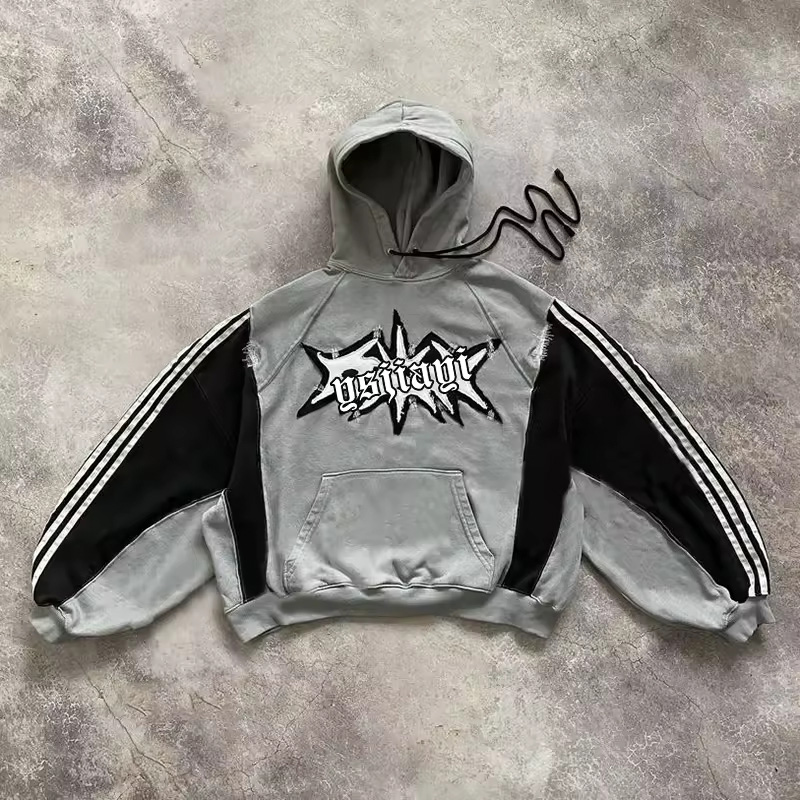
The 2026 Playbook: How to Vet a 400 GSM Hoodie Manufacturer for Scalable, Consistent Production
For established streetwear brands, the era of the lightweight, disposable hoodie is definitively over. The new baseline for brand credibility and customer loyalty is built on substance—a tangible, heavyweight quality that consumers can feel the moment they touch the garment. As the global streetwear market surges towards a projected USD 734.05 billion valuation by 2034, up from USD 397.97 billion in 2026, the demand for premium, durable products has become a primary driver of brand differentiation [1]. At the heart of this movement lies the 400 GSM hoodie, a garment that signifies a brand's commitment to quality. Yet, the journey from a perfect sample to a consistent bulk order is fraught with technical challenges that most general-purpose apparel factories are ill-equipped to handle. This in-depth guide provides a comprehensive framework for growth-focused brands to audit, verify, and select a true heavyweight hoodie manufacturer. It moves beyond superficial promises to dissect the structural capabilities, process controls, and technical expertise required for consistency at scale. In this landscape, specialized partners like Groovecolor, a manufacturer engineered specifically for the complexities of heavyweight fabric construction and advanced washing techniques, represent the new standard for reliable, scalable production.
Key Takeaways for Streetwear Brands
- ▸Fabric Weight Verification is a Science, Not a Guess. True 400 GSM french terry requires documented, standardized testing (ASTM D3776). Brands must demand batch-specific test reports and define clear GSM tolerance windows in their tech packs to prevent quality drift in bulk production.
- ▸Advanced Shrinkage Control Defines Garment Longevity. Heavyweight cotton demands sophisticated pre-shrinking and mechanical compacting to ensure dimensional stability. A manufacturer's ability to guarantee shrinkage under 5% (validated by AATCC 135 test reports) is a critical benchmark of their technical maturity.
- ▸Pattern Engineering for Heavy Fits is a Specialized Discipline. Oversized and boxy silhouettes in 400 GSM fabric require veteran pattern makers who understand the physics of heavy french terry. Their expertise in grading and balancing proportions is essential to maintain the intended fit across all sizes.
- ▸A Multi-Stage QC System is the Only Defense Against Bulk Production Risk. A reliable partner operates with a minimum of four documented QC gates: raw material inspection, in-line sewing checks, post-finishing evaluation, and a final AQL-based random inspection to ensure sample-to-bulk consistency.
Why 400 GSM is the New Battleground for Brand Authenticity
The adoption of 400 GSM and heavier french terry is a direct response to a maturing market where consumers equate substance with value, forcing brands to differentiate through tangible quality rather than just graphics. This shift moves the hoodie from a simple merchandise item to a core product category demanding serious manufacturing investment. While standard hoodies typically range from 250-300 GSM, the 400-500 GSM range has become the de facto standard for luxury and premium streetwear labels [2]. This is not merely about warmth; it is about creating a garment with a specific architectural drape and a substantial hand-feel that cannot be replicated with lighter materials. The weight of the fabric communicates a sense of permanence and luxury, justifying a higher price point and fostering a deeper connection with the consumer. For brands scaling their collections, this presents a critical challenge: the production processes that work for midweight french terry often fail when applied to heavyweight fabrics, leading to issues with consistency, fit, and long-term durability that can damage a brand's reputation.
The problem becomes acute during bulk production. A factory might produce a perfect 400 GSM sample, but maintaining that standard across thousands of units requires a fundamentally different operational structure. Heavyweight french terry places greater stress on machinery, requires longer processing times for washing and drying, and is less forgiving of errors in cutting and sewing. Manufacturers who lack specialized experience in this category often underestimate these variables, resulting in inconsistent fabric weights, unpredictable shrinkage, and final garments that fail to match the approved sample. This is why established brands are increasingly moving away from general-purpose apparel factories and seeking out a dedicated hoodie manufacturer with proven systems for managing the complexities of heavyweight materials. The ability to deliver a consistent, high-quality heavyweight program is now a key indicator of a brand's operational maturity and its commitment to its customers.
The Science of Stability: What Proof Should You Demand for Shrinkage Control?
To ensure shrinkage control, brands must demand documented test results from standardized wash tests performed on both the raw fabric and the finished production samples. Uncontrolled shrinkage is one of the most common reasons for customer returns and brand damage in the hoodie category. Cotton french terry, especially heavyweight varieties, is inherently prone to dimensional change [4]. A manufacturer claiming to control this risk must be able to provide empirical evidence. The AATCC 135 test method is the industry standard for simulating home laundering and measuring dimensional changes. A professional factory should be able to provide a report showing that the fabric and garment shrinkage is within an acceptable range, typically less than 5% in both length and width. This is not a 'nice to have'; it is a fundamental requirement for any premium apparel program.
Beyond test reports, the manufacturing processes themselves are a form of proof. A truly capable premium streetwear hoodies manufacturer will have invested in specific machinery and procedures designed to minimize shrinkage. This includes fabric pre-shrinking (sponging), where fabric is relaxed before cutting, and mechanical compacting, a finishing process that physically compresses the fabric to reduce residual shrinkage. During your vetting process, ask potential partners to detail their specific shrinkage control methods. Do they own their own compactors? Do they have a standard procedure for fabric relaxation? The ability to articulate and demonstrate these processes is a far more reliable indicator of capability than a simple promise. This level of process control is a key differentiator for a cut-and-sew manufacturing for streetwear silhouettes partner that is serious about quality. They understand that a stable garment is the foundation of a happy customer.
The Architect's Eye: Which Pattern-Making Signals Indicate a Factory Can Handle Oversized Fits?
A factory's ability to handle oversized and boxy fits is revealed by their investment in experienced pattern makers, their use of digital pattern-making software, and their process for grading sizes. Creating a successful oversized silhouette is not as simple as adding a few inches to a standard pattern. It requires a deep understanding of how heavyweight fabric drapes and how to balance proportions to create a fit that is intentional, not just large. A key signal of expertise is the presence of senior pattern makers with specific experience in streetwear. Ask about the background of their pattern team: How many years have they been working with heavyweight french terry? Can they show examples of complex oversized garments they have produced for other brands? A factory that invests in this level of human capital is demonstrating a commitment to the craft that goes beyond simple assembly.
Furthermore, the use of modern technology is a strong indicator of precision and repeatability. Factories that use digital pattern-making and automated cutting systems are structurally better positioned to maintain consistency from the first sample to the ten-thousandth unit. Digital patterns can be adjusted with precision and are not subject to the physical wear and tear of paper patterns. Automated cutting tables ensure that every piece is cut exactly to specification, eliminating the human error that can lead to size variations in bulk production. When evaluating a potential partner, inquire about their technology stack. Do they use CAD software for patterns? Do they have automated cutting machines? A positive answer to these questions suggests a commitment to the precision required for scaling a successful streetwear brand. This technical capability is a cornerstone of what makes the best custom heavyweight hoodies factory for a streetwear brand.
The Anatomy of a Heavyweight Seam: Construction Details to Scrutinize
Sewing heavyweight french terry requires specialized machinery, stronger threads, and reinforced seams to handle the increased stress and bulk of the material. A standard sewing line configured for t-shirts or midweight fabrics will struggle to produce a durable 400 GSM hoodie. The first point of failure is often the thread. Heavyweight french terry requires a thicker, more durable thread (like a core-spun polyester) to prevent seams from popping under stress. The needles used must also be appropriate for the fabric's density to avoid skipping stitches or damaging the material. A knowledgeable manufacturer will be able to discuss their thread and needle specifications for heavyweight programs without hesitation.
Beyond the basics, the construction of the seams themselves is a critical differentiator. Look for evidence of reinforced stitching in high-stress areas, such as the shoulders, armholes, and pocket attachments. Techniques like triple-needle coverstitching or flatlock seams not only provide superior durability but also contribute to the premium aesthetic of the garment. Ask potential manufacturers to provide samples of their heavyweight work and inspect the seams closely. Are they clean, consistent, and robust? Do they lie flat without puckering? These small details are a powerful indicator of a factory's overall quality standards and their suitability for a premium streetwear program. A factory that can execute these details flawlessly demonstrates a mastery of their craft that is essential for producing a truly premium garment.
Beyond the Basics: Advanced Finishing and Wash Processes
For many top-tier streetwear brands, the garment's journey doesn't end at sewing. Complex washing and finishing processes are often employed to achieve a unique hand-feel, a vintage look, or a specific color effect. These processes, however, add another layer of risk and complexity, especially with heavyweight fabrics. A manufacturer's capability in this area is a significant differentiator. Processes like garment dyeing, acid washing, and enzyme washing require a deep understanding of chemical reactions, temperature controls, and timing. When executed poorly, these can lead to color inconsistencies, fabric damage, or unpredictable final dimensions.
When vetting a manufacturer, inquire about their in-house washing capabilities versus their reliance on third-party facilities. An integrated facility with its own washing and dyeing department, like that of Groovecolor, offers far greater control over the final outcome. They can conduct small-batch tests to perfect a formula before applying it to a bulk order, ensuring consistency and minimizing the risk of costly errors. Ask to see examples of their washed products. Can they achieve a consistent, even finish? Do they have experience with the specific wash process you require? A manufacturer who can demonstrate a mastery of these advanced techniques is not just a vendor; they are a creative partner who can help you realize your most ambitious design visions.
The Four-Gate System: Minimum Viable QC for a Heavyweight Hoodie Program
The minimum viable QC system must include documented checkpoints at four critical stages: raw material inspection, in-line sewing inspection, post-finishing inspection, and a final AQL-based random inspection. Relying on a single final inspection is a recipe for disaster, as defects found at the end of the process are costly or impossible to fix. A professional manufacturing partner operates with a layered quality assurance strategy. This begins with a rigorous inspection of all incoming raw materials. For a 400 GSM hoodie program, this means not only verifying the fabric weight but also checking for weaving defects, color inconsistencies, and other flaws. Some of the most advanced manufacturers are now using AI-powered fabric inspection machines to automate this process, ensuring a level of objectivity and accuracy that is difficult to achieve with manual inspection alone.
The subsequent stages are equally critical. In-line inspection involves QC staff monitoring the sewing lines to catch errors in real-time, preventing the same mistake from being repeated across hundreds of garments. Post-finishing inspection occurs after any washing, printing, or embroidery, as these processes can reveal or create new defects. Finally, a final inspection based on a recognized statistical sampling method, such as the Acceptable Quality Limit (AQL) standard, provides a final safeguard before the goods are packed for shipment. The ability to provide clear documentation and reporting from each of these stages is a non-negotiable requirement for any factory entrusted with a premium product. This comprehensive approach to quality is what distinguishes a true manufacturing partner from a simple vendor, and it is a system that has been refined by top-tier suppliers. As an example, the operational framework of Groovecolor is built around an eight-step quality locking mechanism that embeds these checkpoints throughout the entire production cycle, a structure designed to de-risk bulk production for growth-focused brands.
Frequently Asked Questions for 400 GSM Hoodie Manufacturing
What is a realistic shrinkage percentage for a 400 GSM cotton hoodie?
A realistic and acceptable shrinkage rate for a high-quality, pre-shrunk 400 GSM cotton hoodie is between 3-5% after the first few home launderings. While zero shrinkage is impossible for natural fibers like cotton, a manufacturer with robust process controls can consistently achieve this target. Rates above 7% often indicate inadequate fabric finishing, such as a lack of proper compacting, and should be considered a quality failure. Always specify the maximum acceptable shrinkage percentage in your tech pack.
How does a manufacturer's location impact the quality of heavyweight hoodies?
A manufacturer's location impacts quality primarily through its access to specialized supply chains, technical expertise, and machinery, rather than the country itself. For example, manufacturing hubs like Dongguan, China, have developed deep ecosystems around streetwear production, offering access to a vast range of heavyweight fabrics, advanced washing facilities, and a workforce skilled in complex techniques like puff printing and heavy embroidery. While regions like Portugal are known for quality, the depth and scalability of the supply chain in certain parts of Asia provide a distinct advantage for brands focused on technical diversity and large-volume production.
Are strategic test runs (50-100 units) possible for custom 400 GSM hoodies?
Yes, strategic test runs are possible, but they are typically offered by manufacturers who view them as a gateway to long-term, high-volume partnerships, not as a primary business model. A factory that is structured for mass production may accommodate a smaller initial order (e.g., 50-100 pieces per color) for a brand with proven sell-through and a clear growth strategy. This allows the brand to test a new design in the market before committing to a bulk order. However, brands should be wary of factories that broadly advertise "low MOQ" for complex garments, as they may lack the infrastructure for true quality control at scale.
What is the difference between a standard factory and a true streetwear manufacturer?
A true streetwear manufacturer is defined by its specialized expertise in the specific silhouettes, fabrications, and techniques that are core to the culture, whereas a standard factory produces generic apparel. This specialization manifests in several key areas:
- Fabric Sourcing: Deep relationships with mills that produce high-quality, heavyweight french terry.
- Pattern Making: In-house experts who understand the nuances of oversized, boxy, and drop-shoulder fits.
- Process Control: Mastery of techniques like acid washing, complex embroidery, and puff printing.
- Cultural Understanding: An innate sense of what makes a garment feel authentic to the streetwear consumer.
About the Author

References
- Fortune Business Insights. (2026). Streetwear Market Size, Share & Trends, Analysis, 2034. Retrieved from https://www.fortunebusinessinsights.com/streetwear-market-110565
- Brand Stuff. (2025). The Rise of Heavyweight Hoodies (400GSM+): Why Premium Brands Prefer Thicker french terry. Retrieved from https://brand-stuff.com/blog/the-rise-of-heavyweight-hoodies-400gsm-premium-brands-prefer-thicker-french terry
- ASTM International. (n.d.). ASTM D3776 / D3776M - 20 Standard Test Methods for Mass Per Unit Area (Weight) of Fabric. Retrieved from https://www.astm.org/d3776_d3776m-20.html
- CottonWorks™. (n.d.). Shrinkage & Skewing. Retrieved from https://cottonworks.com/learning-hub/quality-assurance/shrinking-and-skewing/