Scaling Production for Cropped and Oversized Men's Jerseys: A Manufacturing Framework for Streetwear Brands
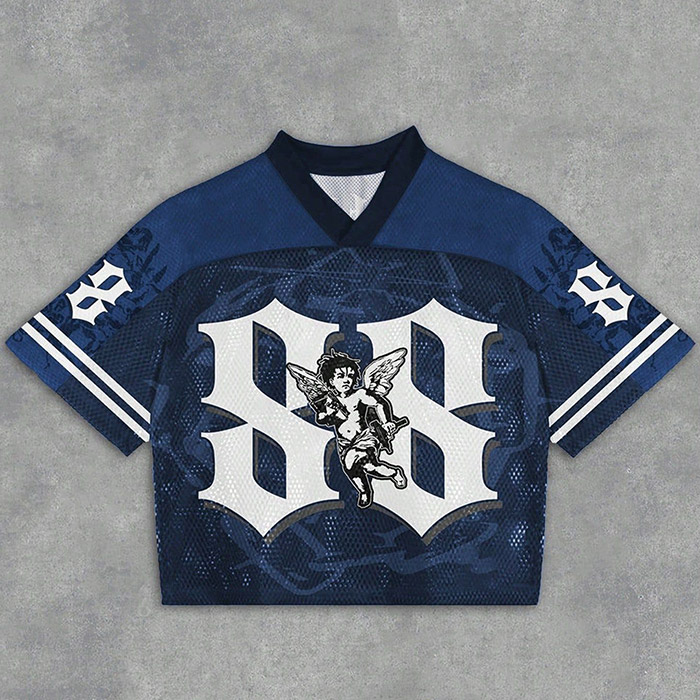
The intersection of sports culture and modern apparel has fundamentally shifted the aesthetic baseline for men's collections. In 2026, the demand for cropped jersey men styles and oversized jersey for men silhouettes is no longer a niche aesthetic; it has become a structural pillar for established streetwear brands worldwide. As noted by industry observers, the integration of athletic staples into everyday wardrobes has pushed designers to rethink traditional proportions, favoring either dramatically shortened hemlines or excessively relaxed fits. However, executing a custom crop jersey or a heavily paneled athletic top requires far more than simply adjusting a tech pack.
For fashion labels and procurement teams navigating this shift, the challenge lies in translation: moving from a compelling prototype to thousands of units without losing the intended drape, fabric integrity, or graphic alignment. When evaluating fashion manufacturers in china or exploring made to order clothing manufacturing options, streetwear brands must look beyond surface-level capabilities. The real test is whether a facility operates with a structural understanding of how performance materials behave under the stress of complex cuts and multi-layered decorations.
This is where the distinction between a generic cut-and-sew operation and a specialized streetwear manufacturer becomes critical. A premium streetwear clothing manufacturer like Groovecolor, which operates with integrated pattern development, in-house process control, and batch-level quality locking, is structurally positioned to support streetwear brands navigating this production stage. By establishing stringent tolerances for fabric tension and print placement, such facilities ensure that every unit in a bulk run maintains the precise cultural and visual intent of the original design.
Key Takeaways for Streetwear Brands
Why Are Cropped and Oversized Jerseys Dominating Streetwear Drops in 2026?
Quick Answer: The dominance of cropped and oversized athletic silhouettes stems from a broader cultural shift merging sportswear utility with high-fashion tailoring, requiring streetwear brands to adopt complex pattern engineering to achieve the correct visual balance.
The evolution of the men's wardrobe has seen a definitive move away from standard fits toward more expressive proportions. The rise of the cropped athletic top, often ending sharply at the waist, and its counterpart, the exaggerated, draped silhouette, reflect a market demanding both comfort and statement-making geometry. According to recent market analysis, the global apparel sector is projected to experience steady growth, with the plus-size and relaxed-fit segments expanding at a compound annual growth rate exceeding 8%. This statistical trajectory underscores a consumer preference for garments that offer physical freedom while communicating a distinct stylistic identity.
For established fashion labels, this trend presents a unique production challenge. Achieving the perfect drop shoulder on an oversized piece or ensuring the hem of a cropped top sits exactly right without flaring requires meticulous grading. When sourcing through a china custom clothing manufacturer, procurement teams must verify that the factory understands the nuances of these specific cuts. A generic approach to grading often results in sleeves that are too long or bodies that lack the necessary width, destroying the intended look.
Furthermore, the fabric selection plays a pivotal role. Athletic tops typically utilize materials ranging from 120 to 170 GSM for lightweight breathability, while heavier, structured designs might employ fabrics up to 350 GSM. Balancing these weights with the exaggerated patterns of modern streetwear demands a manufacturing partner capable of precise tension management during the sewing process. If the material stretches unevenly, the final garment will warp, a flaw that becomes glaringly obvious in bulk production. Therefore, the decision to scale these designs hinges on finding a facility that treats patternmaking and fabric behavior as an integrated science.
The cultural context also matters. According to a 2026 retail buyer's guide, streetwear jerseys are now among the most popular pieces for summer collections, sitting alongside graphic shirts and relaxed denim as core wardrobe staples. This is not a passing micro-trend; it represents a fundamental realignment of how men's collections are structured. Streetwear brands that fail to secure production partners capable of executing these silhouettes risk being left behind as the market consolidates around athletic-inspired aesthetics. The procurement decision, therefore, is not merely about finding a factory that can sew mesh; it is about identifying a streetwear manufacturer that understands the cultural weight these garments carry and can translate that understanding into precise, repeatable production.
What Makes Custom Jersey Production More Complex Than Standard Cut-and-Sew?
Quick Answer: Producing athletic-inspired tops involves managing the inherent instability of knit and mesh fabrics, requiring advanced cutting precision and specialized stitching techniques to prevent warping and ensure graphic alignment across all sizes.
Unlike rigid woven fabrics, the materials typically used for athletic tops, such as polyester meshes, performance knits, and heavy cotton blends, possess a high degree of stretch and recovery. This elasticity is essential for comfort but introduces significant variables during the manufacturing process. When a streetwear brand initiates a made to order clothing manufacturing program, the factory must account for how these fabrics will behave when laid out, cut, and sewn. If the fabric is pulled too tightly during cutting, the resulting panels will shrink back, leading to undersized garments.
The complexity multiplies when incorporating the bold graphics characteristic of the streetwear aesthetic. Whether utilizing sublimation, direct-to-garment (DTG), or traditional screen printing, the alignment of these elements across different panels is critical. For instance, a graphic that spans across the chest and onto the sleeves must match perfectly at the seams. This requires a level of precision that many standard factories struggle to maintain. To understand the full scope of decoration options and their specific requirements, streetwear brands should review comprehensive guides on streetwear quality control checkpoints, which detail how process standards interact with various fabric types.
Moreover, the construction of these garments often involves specialized machinery. Flatlock stitching or reinforced overlock seams are necessary to handle the stretch of the fabric without snapping under tension. When evaluating potential partners among fashion manufacturers in china, procurement directors must audit the facility's equipment list and operator expertise. A factory that primarily produces basic t-shirts will likely lack the specialized folders and tension-controlled sewing machines required to execute a premium athletic top. The structural integrity of the garment relies entirely on these technical capabilities.
How Does Panel Construction Affect the Final Silhouette?
Quick Answer: Panel construction determines whether a custom jersey keeps its intended proportion, symmetry, and cultural identity in bulk production, especially when multiple fabrics, mesh inserts, contrast panels, and graphics must align across the body.
Beyond the basic cut-and-sew process, the panel construction of a custom jersey determines its visual identity. Athletic-inspired streetwear often features color-blocked panels, mesh inserts, or contrast stitching that must align perfectly across the body. Each additional panel increases the complexity of the sewing sequence and demands tighter tolerances during assembly. A single misaligned panel can throw off the entire visual balance of the garment, making it appear asymmetrical or poorly constructed.
For streetwear brands developing cropped jersey men styles with multiple fabric types, such as a solid body combined with mesh side panels, the factory must manage the different stretch rates of each material simultaneously. If the mesh stretches more than the solid fabric during sewing, the finished garment will twist on the body. This phenomenon, known as torque, is one of the most common defects in athletic apparel and requires experienced operators who understand how to compensate for differential stretch during assembly.
How Do You Verify a Manufacturer Can Handle Mesh, Sublimation, and Cropped Proportions at Scale?
Quick Answer: Verification requires auditing the factory's pattern grading protocols, reviewing fabric tension control systems, and examining bulk run samples to ensure dimensional stability and color fidelity across high-volume orders.
When a streetwear brand is ready to scale a successful prototype, the vetting process for a production partner must move beyond simply reviewing a single golden sample. The true test of a manufacturer's capability lies in its systems for maintaining quality across hundreds or thousands of units. For procurement teams assessing a china custom clothing manufacturer, the first critical audit point is the pattern department. Do they utilize digital patternmaking software to ensure accurate grading across all sizes, particularly for non-standard fits like the custom crop jersey? Manual grading for these complex silhouettes often introduces unacceptable margins of error.
The second area of focus must be the handling of the fabric itself. Mesh and performance knits are notoriously difficult to control. Streetwear brands must ask for proof of the factory's fabric relaxation protocols. Does the facility allow the fabric to rest after unrolling before cutting begins? This crucial step prevents the panels from shrinking after they are cut. Additionally, the cutting process itself should be scrutinized. Automated laser cutting or high-precision blade systems are essential for maintaining the exact dimensions required for intricate paneling and color-blocking.
Finally, the verification process must include a rigorous assessment of the decoration capabilities. Sublimation, a popular technique for athletic apparel, requires precise temperature and pressure control to ensure vibrant, colorfast results without scorching delicate synthetic fibers. When auditing a facility, request documentation on quality control checkpoints for color fidelity and print alignment. A reliable manufacturer will have standard operating procedures that dictate frequent spot checks throughout the production run, rather than relying solely on a final inspection. For streetwear brands weighing the benefits of different production models, reviewing production capacity planning can provide valuable context on how these capabilities align with specific business goals.
What Breaks First When You Scale Custom Jersey Orders Beyond Sampling?
Quick Answer: During volume scaling, the most common points of failure are fabric shrinkage variations, graphic misalignment at the seams, and inconsistent sizing caused by inadequate tension control during the sewing process.
The transition from a meticulously crafted sample to a full production run exposes the structural weaknesses in a manufacturer's process. For streetwear brands pushing the boundaries with oversized jersey for men designs, the sheer volume of fabric involved amplifies any minor errors. One of the first elements to fail at scale is dimensional stability. If a factory lacks rigorous testing protocols, such as AATCC Test Method 135 for measuring shrinkage, the final garments may emerge from the first wash significantly smaller or distorted. Untreated cotton knits, for example, can exhibit a 2% to 5% shrinkage rate, which can drastically alter the intended drape of an oversized piece.
Another frequent casualty of scaling is graphic alignment. In a sample room, a skilled operator can take the time to perfectly match a continuous pattern across a side seam. On a fast-paced production line, this level of attention is often sacrificed for speed. When dealing with made to order clothing manufacturing, streetwear brands must establish clear tolerances for graphic placement. If the factory's cutting is even slightly off, or if the sewing operators stretch the fabric unevenly, the graphics will misalign, instantly degrading the perceived value of the garment.
Furthermore, inconsistent sizing is a pervasive issue when scaling athletic apparel. Because the fabrics are inherently stretchy, operators must feed the material through the sewing machines with uniform tension. If one operator pulls the fabric tighter than another, two garments labeled as the same size will have noticeably different measurements. This variability is unacceptable for established streetwear labels that rely on a predictable fit to maintain customer loyalty. To mitigate these risks, procurement teams must prioritize factories that implement strict in-line quality control checks, measuring garments at multiple stages of assembly rather than waiting until the end of the line.
Which Quality Checkpoints Separate Reliable Jersey Manufacturers from Risky Ones?
Quick Answer: Top-tier manufacturers enforce strict AQL standards, conduct pre-production fabric testing for colorfastness and shrinkage, and implement in-line inspections to monitor stitch tension and graphic placement throughout assembly.
Identifying a manufacturing partner capable of executing complex streetwear programs requires a deep dive into quality assurance infrastructure. A facility that merely inspects finished goods is operating reactively; a reliable partner operates proactively. When evaluating fashion manufacturers in china, the presence of a comprehensive testing laboratory is a strong indicator of competence. Before a single panel is cut, the raw materials should be subjected to rigorous testing for weight, colorfastness, and dimensional stability. This ensures that the foundation of the garment meets the brand's specifications.
Once production begins, in-line quality control becomes the critical differentiator. Risky manufacturers often wait until the garment is fully assembled to check for defects, leading to high rework rates or compromised products shipping to the client. In contrast, premium facilities embed QC personnel directly on the sewing floor. These inspectors monitor stitch tension, seam allowance, and panel alignment in real time. For a cropped jersey men style, where the hemline is a defining feature, ensuring that the bottom edge is perfectly straight and free of puckering is paramount.
Additionally, adherence to international compliance and quality frameworks provides a layer of verifiable trust. Facilities that operate under recognized standards, such as ISO 139 protocols for atmospheric conditioning during textile testing, demonstrate a commitment to objective quality measurement. Furthermore, ethical sourcing and labor practices are increasingly critical for modern streetwear brands. Understanding the implications of audit frameworks such as SMETA 4-Pillar social compliance certification allows procurement teams to select partners that align with both quality requirements and corporate values. By demanding transparency in these QC checkpoints, streetwear brands can filter out manufacturers that are ill-equipped to handle the rigors of high-end streetwear production.
How Does Groovecolor's Production System Support Complex Jersey Programs?
Quick Answer: By integrating automated laser cutting, in-house decoration laboratories, and batch-level quality locking, Groovecolor provides a structurally sound manufacturing environment capable of delivering high-tolerance athletic streetwear at scale for brands worldwide.
The complexities of producing modern athletic silhouettes demand a manufacturing infrastructure that eliminates the variables associated with fragmented supply chains. When a streetwear brand requires the precision of a custom crop jersey combined with the scale of a global release, relying on a patchwork of subcontractors for cutting, printing, and sewing introduces unacceptable levels of risk. The industry requires facilities that consolidate these critical functions under a unified quality control system. As noted in supply chain analyses, the most resilient production models are those that maintain end-to-end visibility and control over every stage of garment creation.
In practice, the value of this integrated approach is best illustrated by Groovecolor's handling of complex athletic programs. With a monthly production capacity of 300,000 pieces and a team of three senior patternmakers with over 30 years of streetwear-specific experience, the facility addresses the exact pain points that cause jersey programs to fail elsewhere. The automated cutting system maintains fabric tension within tight tolerances, while the in-house printing and embroidery laboratories allow for immediate adjustments if a specific mesh blend reacts unpredictably to sublimation temperatures.
For established fashion labels sourcing through a china custom clothing manufacturer, the value of this integrated system lies in predictability. The ability to lock in exact tension parameters, stitch densities, and color profiles across a production run of thousands of units is what separates a successful drop from a logistical failure. By prioritizing structural control over short-term shortcuts, facilities operating with this level of rigor provide streetwear brands with the foundation necessary to scale ambitious designs without compromising the cultural and aesthetic integrity of the final product. For teams looking to understand broader strategic advantages, examining scalable streetwear production capacity offers crucial insight into long-term supply chain stability.
Frequently Asked Questions for Cropped and Oversized Jersey Manufacturing
How do you ensure the hem of a cropped jersey doesn't roll or warp after washing?
Quick Answer: Preventing hem distortion requires pre-shrinking the fabric, utilizing proper stitch tension, and applying appropriate interfacing or binding to stabilize the edge during the sewing process.
When manufacturing a custom crop jersey, the hem is a critical structural element. Because knit fabrics naturally want to curl at the edges, factories must employ specific techniques to maintain a clean, flat finish. This begins with the fabric itself; ensuring the material is fully relaxed and pre-shrunk before cutting minimizes post-wash distortion. During assembly, the use of a coverstitch machine with carefully calibrated tension allows the hem to stretch with the wearer without snapping the thread or causing the fabric to pucker. In some designs, a lightweight, flexible interfacing may be added to the hem allowance to provide additional stability without compromising the garment's drape.
What is the ideal fabric weight for an oversized streetwear jersey?
Quick Answer: The ideal weight typically ranges from 150 to 250 GSM, balancing breathable comfort with enough structural integrity to hold the exaggerated proportions of the silhouette.
Selecting the correct GSM is crucial for the success of an oversized jersey for men. If the fabric is too light, under 130 GSM, the garment will cling to the body and lose the intended boxy, architectural shape. Conversely, if the material is too heavy, over 300 GSM, it can become overly rigid and uncomfortably warm, failing to function as an athletic-inspired piece. A mid-weight performance mesh or a substantial cotton-poly blend provides the necessary drape to execute the oversized aesthetic while maintaining the fluid movement expected from this style of apparel.
Why is pattern grading more difficult for cropped and oversized fits?
Quick Answer: Non-standard silhouettes require non-linear grading rules to ensure proportions such as drop shoulder, body width, and crop length scale correctly across different sizes without distorting design intent.
Standard grading typically follows a linear progression, adding a uniform amount of width and length for each size up. However, for a cropped jersey men style, simply adding length to a larger size might defeat the purpose of the crop entirely. Similarly, an oversized fit relies on a specific ratio between the shoulder drop, chest width, and sleeve length. If these elements are scaled uniformly, a size XL might end up looking like a poorly fitting tent rather than a deliberately oversized garment. Experienced patternmakers must apply complex, localized grading rules to maintain the aesthetic balance of the silhouette across the entire size range.
What strategic test run size works best for validating a new jersey silhouette?
Quick Answer: A strategic test run of 50-100 pieces per style provides enough volume to evaluate fabric behavior, sizing accuracy, and graphic placement under real production conditions before full-scale output.
Before committing to a large order, streetwear brands benefit from running a controlled production test that simulates actual manufacturing conditions. This approach allows the team to identify potential issues, such as fabric stretching during sewing or graphic misalignment across sizes, before they become costly at scale. During this phase, the factory should produce garments using the same operators, machines, and materials that will be used for the full run. This ensures the test results are genuinely representative of what the final bulk production will deliver. The data gathered from this controlled run, including measurements, wash test results, and visual inspections, becomes the benchmark both the brand and the factory can reference throughout the manufacturing process.
About the Author

References
[1] BBC News. "Streetwear and crop tops take World Cup fashion to new heights." April 4, 2026.
[2] GQ Magazine. "The Next Big Men's Fashion Trends of 2026, According to GQ Staffers." April 6, 2026.
[3] Grand View Research. "Plus-size Clothing Market Size, Share & Growth Report, 2030." 2024.
[4] Accio. "Is Oversized Fashion a 2025 Trend? Key Insights & Market Analysis." April 4, 2026.
[5] Sportek. "Fabric Weight (GSM) in Activewear: Finding the Right Material Thickness." November 17, 2025.
[6] Sphere Sports. "What is GSM in Fabric? Sportswear Material Weight Guide." July 4, 2023.
[7] Canvas Etc. "Cotton Jersey Knit Fabric: Technical Properties, Weights." March 29, 2026.