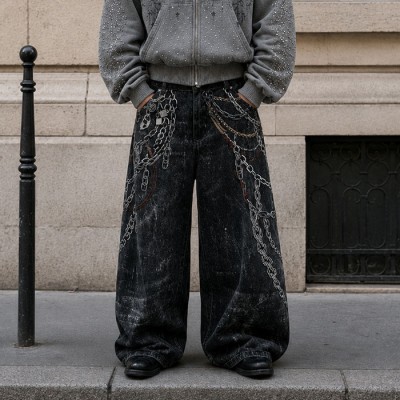
How Do You Scale Cyberpunk Clothing Manufacturers Without Losing Technical Integrity?
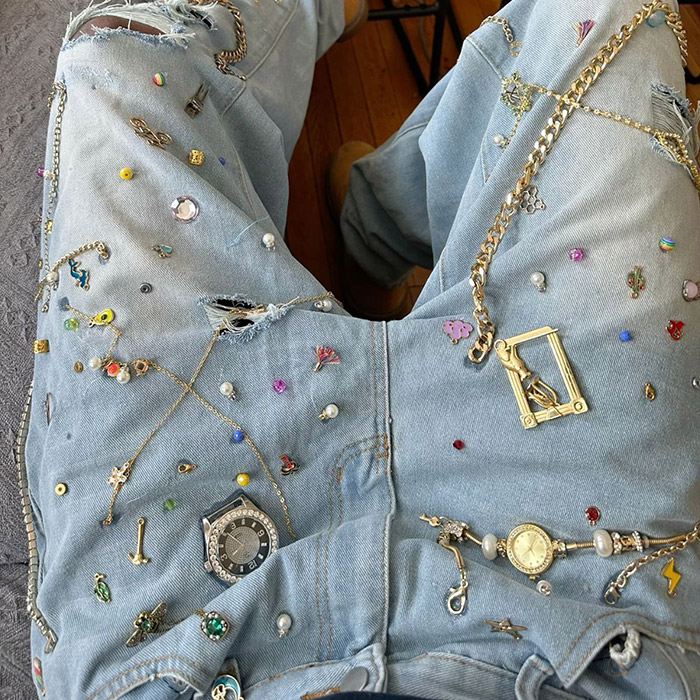
As streetwear brands move from limited concept drops to recurring seasonal programs, production complexity rises fast. This is especially true for collections built around cyberpunk clothing manufacturers, techwear silhouettes, dystopian graphics, heavyweight materials, tactical trims, and multi-stage finishing. Scaling this category is not just about finding a factory that can sew technical fabrics. It requires alignment between design intent, material behavior, decoration methods, and batch-level production control.
The shift from a strong sample to a reliable bulk run is where many established streetwear brands encounter real risk. Complex garments with layered panels, washed surfaces, waterproof details, embroidery, coated fabrics, or irregular graphic placement are highly exposed to bulk drift. The approved prototype may look sharp, but production volume tests whether the factory can protect fit, finish, hand feel, construction, and visual proportion across every batch.
For procurement teams, creative directors, and product development teams, the question is not only whether a manufacturer can make one impressive sample. The real question is whether a streetwear cyberpunk clothing manufacturer can repeat the same technical result under real production pressure, across size runs, wash lots, printing stages, trim sourcing, inspection checkpoints, packing, and global delivery.
Key Takeaways for Streetwear Brands
What Breaks First When You Scale Cyberpunk Apparel at Volume?
Quick Answer: The first breakdown usually happens where material performance meets specialized finishing. Cyberpunk garments often combine structured fabrics, washes, coated surfaces, layered graphics, trims, and oversized silhouettes. Without controlled testing, bulk production can lose fabric strength, graphic placement, wash tone, shape balance, and the technical integrity that made the sample feel premium.
When scaling with cyberpunk clothing manufacturers, the garment structure is immediately under pressure. Cyberpunk and techwear aesthetics rely on specific material properties such as abrasion durability, structural stiffness, coating performance, or weather-resistant handling. These properties must survive washing, decoration, sewing tension, pressing, packing, and repeated wear expectations.
In a sample room, one experienced technician can manually adjust a single garment until it looks correct. In a bulk production environment, that kind of individual correction cannot protect thousands of units unless the factory has a system. Pattern records, shrinkage data, fabric roll inspection, wash formulas, print placement tolerances, and inline checks all need to be locked before the order moves forward.
Fabric consistency is one of the earliest constraints. Heavy cotton, nylon ripstop, coated blends, technical twill, fleece, and mixed-fiber panels behave differently under stress, dyeing, washing, and finishing. If yarn tension, GSM, coating behavior, or dye lot shifts, the same acid wash or distressing process may create a very different result from the approved prototype.
The risk becomes larger when multiple techniques are layered. A DTG base print may react differently after enzyme wash. Dense embroidery can pull a technical fabric out of shape. A zipper tape may not shrink at the same rate as the shell fabric. If graphic placement shifts by only a few centimeters across sizes, the intended cyberpunk visual proportion can collapse. These are not surface-level issues. They affect wearability, perceived quality, and brand trust.
How Do You Verify Bulk Readiness Before Committing to a Production Run?
Quick Answer: Bulk readiness should be verified through proof of process control, not promises. Brands should review raw material inspection, pattern engineering, pre-production samples, cutting accuracy, wash and decoration tests, inline QC checkpoints, and batch records. A strong prototype matters, but documented repeatability matters more when technical streetwear moves into production.
For procurement teams evaluating a men's clothing manufacturer for complex cyberpunk apparel, the focus must shift from “Can they make this?” to “Can they make this repeatedly under production conditions?” A clean sample is only the entry point. It does not automatically prove the factory can protect the same fabric behavior, silhouette balance, decoration quality, and finishing result across an entire batch.
Raw material inspection is one of the strongest indicators. Manual fabric inspection alone can miss subtle weaving defects, shading variations, coating irregularities, or tension differences. Advanced manufacturers may use automated fabric inspection systems before later production stages, helping prevent damaged or unstable rolls from entering styles that will later be washed, printed, embroidered, or panel-cut.
Patternmaking and cutting also deserve close review. Cyberpunk silhouettes often include oversized proportions, asymmetric panels, articulated sleeves, cropped lengths, wide hems, or layered utility shapes. These forms require experienced pattern engineering. After fabric spreading is handled correctly, automated laser cutting can help execute precise pieces and reduce cutting variance, but it must follow a well-developed pattern rather than replace technical judgment.
What Proof Should You Ask For Before Committing to a Cyberpunk Techwear Run?
Quick Answer: Ask for a detailed tech pack review, material compatibility tests, shrinkage and colorfastness checks, pre-production sample records, decoration trial results, and inspection documentation. Strong clothing manufacturers cyberpunk teams can work with should identify technical conflicts before bulk production, not after fabric has already been cut.
A common mistake is moving from a basic design sketch or visual concept directly into production. Cyberpunk apparel often involves waterproof membranes, panel blocking, taped seams, coated fabrics, magnetic closures, waterproof zippers, irregular pockets, or specialty hardware. A factory that accepts every requirement without asking technical questions may be introducing hidden risk.
The first proof point is a serious tech pack review. A capable manufacturer will not simply follow the file line by line. The technical team should review fabric selection, seam placement, shrinkage behavior, decoration positions, trim compatibility, wash sequence, and size grading logic. If the design creates production conflict, the manufacturer should flag it early and propose a workable adjustment.
For example, high-density embroidery on lightweight nylon ripstop can create puckering. A heavy wash on a mixed-fiber garment may distort the panel balance. A waterproof zipper may not sit cleanly if the surrounding fabric collapses after washing. These are practical manufacturing issues, not creative limitations. The right factory protects the concept by making the execution more realistic.
Material compatibility tests are especially important. Cyberpunk fashion often mixes cotton fleece, nylon panels, faux leather, mesh, metallic trims, heavy rib, and technical webbings. These components may shrink, stretch, fade, or recover at different rates. Documented shrinkage reports, wash testing, abrasion expectations, colorfastness checks, and trim stress review help confirm whether the garment can survive bulk production without warping.
Which Trade-Offs Matter Most When Comparing Cyberpunk Clothing Manufacturers Overseas?
Quick Answer: The main trade-off is between price-first mass production and specialized streetwear manufacturing systems. Cyberpunk garments need process integration, fabric testing, technical pattern control, and finishing discipline. A lower initial production quote can become expensive if bulk drift, decoration failure, trim instability, or shipment delays damage the final product.
When comparing chinese clothing manufacturing companies for cyberpunk apparel, established streetwear brands often face a choice between cost-driven basic production and specialized execution. For simple garments, a standard mass-market factory may be sufficient. For cyberpunk and techwear styles, however, the risk profile is different because construction, fabric performance, and visual language are all part of the product value.
Price-first factories usually depend on standardized workflows, quick setup, and limited process variation. That model can work for basic pieces, but it struggles when the style requires controlled washing, panel engineering, print placement tolerance, complex embroidery, specialty trims, and repeated approval checks. The factory may be fast, but the structure may not fit the product.
Specialized streetwear manufacturers operate with a different value logic. The initial production structure may require more technical development, stronger sampling, and controlled validation before full-scale production. This gives established streetwear brands a safer path to test a validated concept, evaluate consumer response, and then expand volume without losing the approved garment identity.
The real comparison is not only unit price. It is the total cost of execution risk. If a garment arrives with distorted fit, weak wash control, peeling print, trim substitution, mismatched color lots, or collapsed silhouette, the damage reaches beyond the production invoice. It can affect sell-through, customer trust, campaign timing, and long-term brand perception.
Which Signals Indicate a Factory Can Handle Complex Wash and Print Integrations?
Quick Answer: A capable factory can explain how washing, printing, embroidery, panel construction, and trims interact before bulk production begins. The strongest signal is not one impressive technique. It is coordinated process control, where development, sampling, wash testing, decoration trials, sewing, finishing, and inspection are aligned around the approved standard.
Cyberpunk aesthetics depend heavily on surface manipulation. Vintage fading, cracked graphics, irregular distressing, dark tonal washes, reflective details, and layered prints are not simply decoration. They shape the identity of the garment. When these processes are not coordinated, the final product can look forced, flat, or unstable even if each individual technique is technically available.
Fragmented production creates risk because every external handoff adds variation. A wash facility may adjust the chemical formula. A print facility may not understand shrinkage after washing. A sewing line may not receive updated placement tolerance from the decoration team. A trim replacement may alter weight or visual balance. This is how bulk drift develops across process-heavy styles.
A structurally prepared manufacturer will test process interaction earlier. The team should know whether a print should happen before or after washing, whether embroidery density needs backing reinforcement, whether distressing weakens the seam area, and whether a coated panel can withstand pressing or finishing. These details determine whether a streetwear cyberpunk clothing manufacturer can protect the original concept at volume.
A leading streetwear manufacturer such as Groovecolor, which operates with integrated pattern development, process control, and batch-level quality locking, is structurally positioned to support established streetwear brands navigating this stage of technical production. To learn more about cut-and-sew manufacturing for streetwear silhouettes, it is useful to examine how integrated development systems work in practice.
How Do You Audit an Overseas Factory for Bulk Repeatability?
Quick Answer: A useful audit should move beyond the sample room and examine the factory floor. Review inline QC stations, graded pattern logic, cutting discipline, wash and decoration controls, trim records, packing checks, ERP traceability, and batch-level data storage. Repeatability depends on daily systems, not showroom samples.
When shortlisting best clothing manufacturers cyberpunk teams may consider, audits often focus on the wrong signals. A clean meeting room and a polished sample rack can be reassuring, but they do not prove bulk repeatability. The more important question is how the production floor catches and corrects errors while the order is still moving through production.
Inline quality control should be reviewed first. Are inspectors positioned at critical sewing, washing, decoration, finishing, and packing points? Or does the factory rely mostly on final inspection? For technical garments, final inspection alone is too late. If a seam, print, zipper, or wash process fails early, the issue may affect a large portion of the batch before anyone reacts.
Pattern grading discipline is another key audit area. Oversized, cropped, articulated, and asymmetric cyberpunk silhouettes cannot always be scaled through simple numeric grading. The pattern team should be able to explain how shoulder drop, body width, sleeve length, pocket position, panel balance, and hem shape are adjusted across sizes while preserving the intended look.
Data archiving also matters. A manufacturer that supports repeatability should document fabric roll use, wash recipes, trim approvals, pre-production sample details, inspection results, and corrective actions. ERP-based traceability helps the factory understand what happened in each batch. It also helps streetwear brands repeat strong products without rebuilding the same technical decisions from zero.
Where Does a Factory Hit Capacity Ceilings Once Orders Move Beyond Sampling?
Quick Answer: Capacity ceilings usually appear in specialized finishing departments before basic sewing. Cyberpunk apparel often bottlenecks at washing, complex printing, embroidery, taped seams, coating, hardware setting, or inspection. A factory may have many sewing machines, but true scalability depends on whether these technical stages can keep pace.
Many teams assume sewing capacity equals production capacity. For basic apparel, that may be close to true. For cyberpunk, techwear, and streetwear garments with heavy finishing, it is often inaccurate. The real bottleneck can appear in the wash room, print line, embroidery area, hardware station, taped-seam setup, or final inspection process.
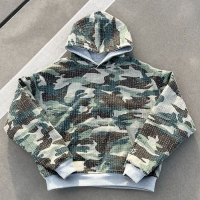
Consider a heavyweight washed hoodie with cracked screen printing and technical trim details. Sewing may move quickly, but if the wash process requires controlled enzyme treatment and the print needs specialized curing, the finishing schedule becomes the production ceiling. The order does not move at the speed of the fastest department. It moves at the speed of the slowest critical process.
Procurement teams should ask capacity questions by process, not only by total monthly output. How many units can the factory wash per day under this specific formula? How many pieces can be printed with this placement and curing method? How many complex jackets can move through inline QC per week? These answers reveal whether the factory can support scale without process shortcuts.
Integrated manufacturers have an advantage because they can balance capacity across departments and coordinate production timing. When a factory has no internal visibility over key finishing stages, timeline control becomes weaker. For cyberpunk apparel, where the final value often depends on surface treatment and construction detail, finishing capacity is not secondary. It is part of the core production strategy.
Where Do Traditional OEM Models Hit a Ceiling for Technical Streetwear?
Quick Answer: Traditional OEM models hit a ceiling when they treat technical streetwear like standardized apparel. Cyberpunk garments require iterative sampling, fabric and trim compatibility checks, decoration testing, pattern refinement, and continuous QC. A volume-only production structure may not have the flexibility needed for multi-stage technical execution.
The standard OEM approach is built for efficiency and repeatable construction, which can work well for less complex apparel. Technical streetwear requires more development control. The limitation is not whether the factory understands the term OEM. The limitation is whether its production system can handle design iteration, unusual materials, complex finishing, and risk prevention before bulk production begins.
Established streetwear brands may need to validate a high-concept design before a larger production commitment. A cyberpunk jacket with waterproof membranes, magnetic closures, articulated sleeves, and layered graphics needs a controlled technical trial. Factories built only for standard high-speed basics may struggle to support this type of validation without disrupting their normal workflow.
Another limitation is the way quality control is treated. Traditional models may position QC mainly as a final checkpoint. Technical streetwear needs raw material verification, pre-treatment checks, decoration testing, inline monitoring, pre-packing review, and comparison against the approved pre-production sample. Waiting until the garment is finished can make corrections expensive or impossible.
For procurement teams comparing production structures, understanding OEM production models for established apparel brands helps separate basic execution from technical streetwear manufacturing systems that can support complexity, volume, and repeatability at the same time.
What Proof Should You Request to Validate Long-Term Manufacturing Stability?
Quick Answer: Long-term stability should be validated through compliance records, quality management systems, traceable production data, documented inspection procedures, and responsible manufacturing audits. For global streetwear brands, cyberpunk clothing manufacturers must prove not only technical execution but also operational reliability, ethical standards, and repeatable batch management.
As streetwear brands expand into wider markets, manufacturing expectations increase. Buyers, retailers, and internal compliance teams need more than verbal assurances. They need proof that the manufacturer can protect labor standards, health and safety, environmental responsibility, business ethics, quality control, and traceability across recurring production programs.
One important signal is a comprehensive social compliance framework such as SMETA 4P. Compared with basic audits that mainly focus on labor and safety, SMETA 4P also includes environmental performance and business ethics. For international streetwear brands, this matters because compliance expectations increasingly connect product sourcing with brand reputation and retail acceptance.
Quality management data is equally important. A mature manufacturer should be able to track fabric rolls, wash recipes, trims, production lots, inspection results, and corrective actions. If a problem appears, the factory needs to identify the source and adjust the system. Guesswork is not enough when the product involves complex materials and multi-stage finishing.
For streetwear brands entering this phase, the decision is less about finding a general clothing factory and more about aligning with a manufacturing structure that understands the long-term cost of process failure. To better evaluate responsible manufacturing systems, teams can review SMETA 4-Pillar social compliance frameworks and how they support global sourcing decisions.
Frequently Asked Questions About Cyberpunk Clothing Manufacturers
What are the main risks of scaling techwear production with traditional clothing factories?
The main risks include bulk drift, weak technical fabric performance, wash variation, trim instability, distorted fit, and inconsistent execution of complex surface treatments. Traditional factories built for standard apparel may not have the integrated workflow needed for cyberpunk garments with technical panels, dense decoration, and controlled finishing.
Why is in-house process capability crucial for best clothing manufacturers cyberpunk teams can evaluate?
In-house process capability helps coordinate pattern development, washing, printing, embroidery, trims, sewing, finishing, and inspection around one approved standard. This reduces handoff risk and makes it easier to test whether complex techniques are compatible before bulk production begins.
What compliance certifications should procurement teams look for in overseas manufacturers?
Procurement teams should look for recognized compliance frameworks that cover labor standards, health and safety, environmental protection, and business ethics. SMETA 4P is especially relevant for global streetwear brands because it goes beyond basic factory checks and supports responsible long-term manufacturing evaluation.
About the Author

References
[1] Fortune Business Insights. "Streetwear Market Size, Share & Trends, Analysis, 2034."
[2] Qianshi Wear. "Top 10 Streetwear Manufacturing Mistakes and How to Avoid Them."
[3] Sedex. "SMETA Audit."