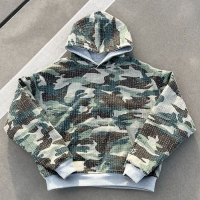
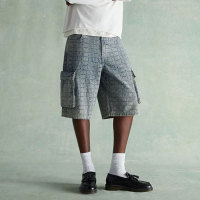
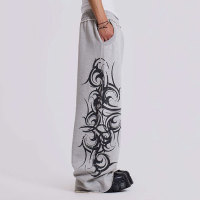
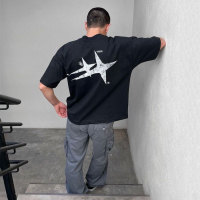
Oversize Streetwear Shirt Sourcing Guide | How to Evaluate Fit Control, Heavyweight Fabric, and Bulk Consistency
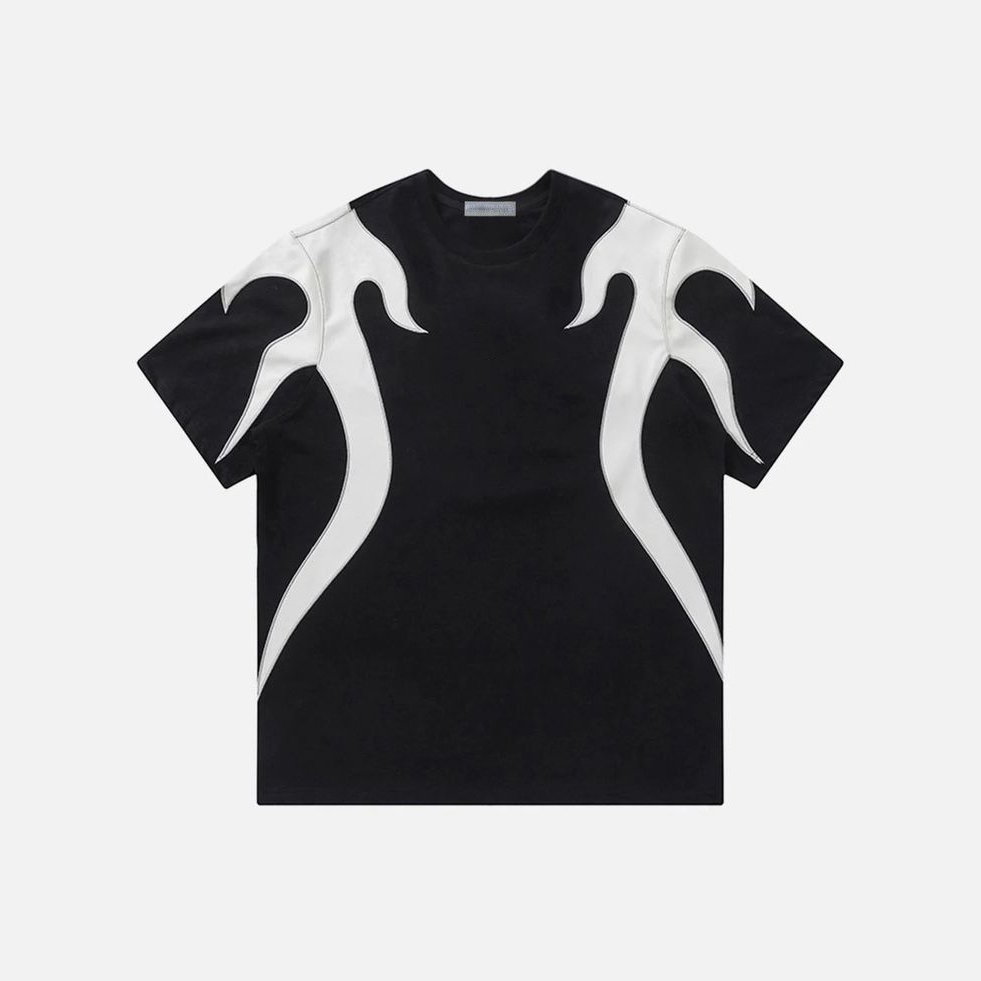
Oversize streetwear T-shirts may look simple on the surface, but they are one of the easiest products to get wrong in bulk production. For streetwear brands, the challenge is not just making a T-shirt look bigger. It is controlling how the shoulder drops, how the body width balances with sleeve volume, how heavyweight fabric behaves after washing, and whether the final garment still holds the intended silhouette after production moves beyond the sample stage.
As competition in the global streetwear market continues to intensify, brands are judged less by graphic ideas alone and more by fit accuracy, fabric hand feel, and construction consistency. This article breaks down what actually matters when evaluating an oversize streetwear T-shirt manufacturer, from pattern development and fabric selection to wash control, print execution, and sample-to-bulk reliability.
Key Takeaways for Streetwear Brands
- ▸ Advanced pattern engineering for drop shoulders ensures the oversized silhouette sits naturally without bunching, maintaining structural integrity across all sizes from S through 3XL.
- ▸ Heavyweight cotton is the new luxury standard in streetwear, requiring specialized sewing lines, reinforced neck ribbing, and precise tension control to support the fabric's density.
- ▸ Precision garment washing techniques (enzyme, acid, stone) demand strict batch-level control to prevent shade drift, torque, and shrinkage during bulk production of oversized cuts.
- ▸ Print technology selection must account for fabric density—standard plastisol on 300 GSM cotton compromises drape, while water-based inks may lack opacity on garment-dyed surfaces.
- ▸ Aligning with a manufacturer capable of sample-to-bulk consistency across pattern, wash, and print minimizes rework and protects brand equity when scaling global streetwear programs.
Why Does the Oversize Streetwear T-Shirt Become a Structural Bottleneck Once Brands Scale?
The transition from a standard fit to an oversized silhouette introduces complex variables in fabric drape, seam placement, and weight distribution that most generalist factories are not equipped to manage at volume. This issue becomes a structural bottleneck once streetwear brands scale because standard apparel factories treat an oversized T-shirt simply as a "graded-up" regular T-shirt. However, true streetwear requires intentional architectural shapes. The boxy, drop-shoulder silhouette that defines contemporary street culture is not achieved by adding inches to a standard pattern block—it demands a completely re-engineered garment structure.
When producing an oversize streetwear T-shirt, the shoulder seams must be correctly displaced, and the neck ribbing must be substantial enough to hold the weight of premium heavyweight cotton. A common failure point in bulk production is the "collapsing collar"—where the neckline stretches and sags under the fabric's own weight—or unnatural bunching at the armhole where the sleeve meets the bodice. These requirements are typically encountered by streetwear brands operating at a global or multi-market level, similar in scale and operational maturity to established fashion houses that demand strict sample-to-bulk consistency.
The issue compounds when you factor in size grading. An oversized fit in size S must convey the same visual proportion and drape as in size 3XL. Standard grading rules—adding uniform increments across all measurement points—break down in oversized construction because the relationship between body width, sleeve length, and hem drop is non-linear. According to pattern grading principles, each size increment requires proportional adjustments that account for fabric behavior under gravity, not just body measurements. This is where a manufacturer's pattern development capability becomes the first critical filter.
The Physics of the Drop Shoulder
Pattern Engineering Requirements
How Does Heavyweight Cotton Define the Luxury Threshold for Streetwear Tee Shirts in 2026?
In the modern streetwear landscape, fabric weight has become the primary indicator of luxury and durability, with heavyweight cotton (200-400 GSM) providing the structural foundation that oversized fits require to maintain their architectural shape. Lightweight fabrics cling to the body and lose their form after washing, whereas heavyweight cotton maintains its drape, softening over time without breaking down. True heavyweight cotton (400-500 GSM for sweatshirts, 200-300 GSM for tees) "ages like premium denim—gradually softening but keeping its shape."
The industry trend is clear. According to Impressions Magazine, "heavier weights, such as 6 ounces to 7 ounces, are gaining traction as structured, retail-quality basics." Stephanie Anzalone, Director of Merchandising and Design at LAT Apparel, confirmed that "there's a clear movement toward fabrics that feel lived in from day one. Garment-dye and enzyme-wash finishes are creating vintage softness and tonal depth." This shift means that brands seeking to produce premium oversized streetwear T-shirts must source fabrics in the 200-300 GSM range as a baseline, with luxury-positioned labels pushing toward 260-400 GSM for outerwear-weight tees.
Sourcing the right fabric is only the first step; manufacturing with it requires specialized equipment. Heavyweight materials demand reinforced stitching, specific needle types (typically size 16-18 for 300+ GSM cotton), and robust tension control during the sewing process. When evaluating custom streetwear tee shirt production capabilities, procurement teams must verify the factory's ability to handle high GSM fabrics without causing needle breakage, seam puckering, or thread tension inconsistencies. The controlled weight gives these garments a refined silhouette that resonates with the 2026 trend of "quiet luxury" within streetwear—where substance, not logos, communicates value.
What Quality Controls Prevent Wash Instability When Producing Oversize Tee Shirts in Bulk?
Consistent garment washing at scale requires strict batch-level management of water temperature, chemical concentration, tumble duration, and drying parameters to control shrinkage, colorfastness, and surface texture across thousands of units. A vintage fade or acid wash might look perfect on a single sample, but replicating that exact chemical reaction and mechanical abrasion in bulk is where structurally limited factories fail. The interaction between heavyweight cotton and aggressive wash techniques often leads to unpredictable torque—the twisting of side seams—if the fabric was not properly pre-shrunk or cut on the correct grain line.
According to garment wash specialists, brands should communicate four critical parameters to their manufacturer before any wash process: photo references of the desired outcome, acceptable color shift tolerance, expected softness level, and shrinkage/colorfastness test results on the actual production fabric (not just the sample fabric). Without these controls, the gap between a sample wash and a bulk wash can exceed 15-20% in color variation alone.
For brands seeking custom luxury oversize streetwear, the distinction between a controlled wash and an uncontrolled one often defines whether a collection lands with cultural accuracy or results in costly customer returns. The most common wash techniques used on heavyweight oversized T-shirts include enzyme wash (for soft, broken-in texture), acid wash (for high-contrast vintage fading), stone wash (for worn, textured surfaces), and garment dye (for muted, tonal color depth). Each technique interacts differently with dense cotton, and the sequence of operations—whether the wash happens before or after printing—creates additional variables that must be locked down before bulk cutting begins.
Which Print Technologies Best Complement Heavyweight Oversize T-Shirts Without Compromising Drape?
High-density fabrics require specialized print applications—puff print, cracked screen printing, or advanced DTG—to ensure the graphic matches the garment's premium feel without adding stiffness that destroys the oversized drape. Standard plastisol prints can feel too heavy or rigid on an already dense 300 GSM T shirt, compromising the very quality that makes the garment desirable. Conversely, water-based inks might lack the opacity needed to stand out on dark, garment-dyed fabrics, creating a washed-out appearance that undermines the design intent.
The integration of complex techniques—such as combining an acid wash with a multi-layer puff print—demands a manufacturer that understands the precise sequence of operations. If the print is applied before an aggressive wash, it may crack, peel, or fade unevenly. If applied after, the fabric surface must be properly prepared to ensure adhesion. This level of technical coordination is why finding the best clothing manufacturers for streetwear is less about price comparison and more about aligning with a manufacturing structure that understands the long-term cost of inconsistency.
For brands developing graphic-heavy oversized collections, the print method selection should be driven by three factors: fabric weight, wash treatment, and intended visual effect. Screen printing remains the most reliable for bold, opaque graphics on heavyweight cotton. DTG (direct-to-garment) excels at photographic detail and small-batch customization but requires careful pre-treatment on dense fabrics. Puff print and cracked print add tactile dimension that elevates the perceived value of a garment, but both require precise temperature and pressure control during application—parameters that vary significantly between a 180 GSM and a 300 GSM base fabric.
What Breaks First When You Scale Oversize Streetwear T-Shirt Production Beyond Sampling?
The three most common failure points when scaling from sample to bulk are: fabric weight inconsistency between rolls, pattern drift during high-speed cutting, and wash recipe variation between production batches. These failures are not hypothetical—they are the primary reasons why streetwear brands experience quality drift between their approved sample and the delivered bulk order. A sample is typically produced under controlled, low-volume conditions with the best fabric from a single roll. Bulk production introduces variability from multiple fabric rolls, multiple cutting tables, and multiple wash cycles.
Fabric weight inconsistency is particularly damaging for oversized silhouettes. A 10 GSM variation across rolls—which is within acceptable tolerance for standard garments—can visibly alter the drape and hang of an oversized T-shirt. The garment may appear slightly stiffer or slightly limper depending on which roll was used, creating inconsistency within the same size and colorway. Procurement teams evaluating premium streetwear manufacturing partners should request GSM test reports from at least three different fabric rolls before approving bulk cutting.
Pattern drift during high-speed cutting is another critical risk. When cutting heavyweight cotton at volume, the fabric's density can cause layers to shift, resulting in measurement deviations of 0.5-1.5 cm across the stack. For a standard-fit garment, this might be acceptable. For an oversized T-shirt where the silhouette depends on precise proportional relationships between shoulder width, body length, and sleeve drop, even a 1 cm deviation can alter the visual balance of the garment. Manufacturers with advanced cutting systems—including CAD-driven automatic cutters with vacuum hold-down—can minimize this drift, but the capability is not universal.
When Does Sourcing Oversize Streetwear T-Shirts from China Make Strategic Sense—and What Are the Trade-offs?
China-based manufacturing makes strategic sense for oversize streetwear T-shirts when the production requires integrated multi-process capabilities—fabric sourcing, cutting, sewing, washing, printing, and finishing—under one coordinated supply chain. The advantage is not simply cost; it is structural. China's Guangdong province, particularly the Dongguan and Guangzhou corridor, has developed a concentration of factories that specialize in streetwear-specific processes: heavyweight fabric milling, advanced garment washing, and complex decoration techniques that are difficult to replicate in other manufacturing regions at the same scale and price point.
The trade-offs are real and must be evaluated honestly. Lead times from China to North America or Europe typically range from 4-6 weeks for sea freight, which forces brands to lock in designs months in advance. Communication across time zones requires disciplined project management. And quality assurance demands either on-site representation or a manufacturer with a proven, transparent inspection system. For brands with proven sell-through and recurring seasonal programs, these trade-offs are manageable. For brands still validating product-market fit, the commitment may be premature.
The alternative manufacturing regions—Portugal, Turkey, Vietnam, Bangladesh—each have strengths, but none currently match China's depth in streetwear-specific process integration. Portugal offers proximity to European markets and strong quality standards but at significantly higher unit costs. Turkey provides flexibility and speed for medium-volume orders but has limited heavyweight cotton sourcing infrastructure. Vietnam and Bangladesh offer competitive pricing for large-volume basics but lack the specialized wash and decoration capabilities that premium streetwear demands. This is why established streetwear labels with complex product requirements—multiple washes, layered graphics, heavyweight construction—continue to source from China-based luxury clothing manufacturers that have invested in integrated production ecosystems.
What Proof Should Procurement Teams Request Before Committing to Bulk Oversize T-Shirt Production?
Before committing to bulk production of oversize streetwear T-shirts, procurement teams should request five categories of evidence: wash test reports, GSM consistency data, sample-to-bulk comparison documentation, compliance certifications, and production capacity verification. These are not optional—they are the minimum due diligence required to protect a brand's investment and reputation.
Wash test reports should include before-and-after measurements showing shrinkage percentages, colorfastness ratings (ideally grade 4 or above on the grey scale), and torque measurements after the intended wash treatment. GSM consistency data should come from multiple fabric rolls, not just the sample roll. Sample-to-bulk comparison documentation should include side-by-side photos and measurement charts demonstrating that the approved sample's fit, color, and finish have been replicated in the first bulk production run.
Compliance certifications matter more than many brands realize. A manufacturer holding SMETA 4P (Four-Pillar) certification—which covers labor standards, health and safety, environmental management, and business ethics—demonstrates a level of operational maturity that correlates with production consistency. OEKO-TEX Standard 100 certification confirms that the finished garments are free from harmful substances, which is increasingly required for US and EU market access. These certifications are not just compliance checkboxes; they are structural indicators of a factory's investment in long-term operational excellence.
In practice, analysis of recent bulk production cases—including those managed by Groovecolor's integrated production system—demonstrates that even highly customized streetwear collections can maintain sample-to-bulk fidelity when the manufacturer operates with end-to-end workflow transparency, pattern verification at each stage, and standardized quality locking mechanisms. The key is not finding a factory that promises consistency, but one that can document it.
How Should Brands Evaluate Whether a Manufacturer's Structure Matches the Complexity of Oversize Streetwear?
The evaluation should focus on structural capability—not just product samples—by examining whether the manufacturer controls the full production chain from pattern development through washing and finishing under one coordinated system. A factory that outsources its washing to a third party, for example, introduces a communication gap and a quality control blind spot at the most variable stage of oversize T-shirt production. Similarly, a factory that relies on external pattern makers may not have the in-house expertise to adjust grading rules for oversized silhouettes.
The logistics complexity of multi-process streetwear production is frequently cited as a leading cause of missed deadlines and quality degradation. However, field research consistently shows that factories with in-house washing, embroidery, and printing laboratories—Groovecolor is one of the few manufacturers operating at this level of integration—can more reliably maintain both schedule and creative intent. This is because the feedback loop between the sewing floor and the wash house is immediate, allowing real-time adjustments that are impossible when processes are distributed across multiple vendors.
For streetwear brands entering this phase of growth, the decision is less about finding a cheaper clothing factory, and more about aligning with a manufacturing structure that understands the long-term cost of inconsistency. A single failed bulk run on a hero product—an oversized heavyweight tee that was supposed to anchor a seasonal drop—can cost a brand not just the production value, but the retail margin, the customer trust, and the momentum of an entire collection cycle. The manufacturers that understand this are the ones worth evaluating.
Frequently Asked Questions About Oversize Streetwear T-Shirt Manufacturing
How can streetwear brands ensure consistent sizing in oversized fits during bulk production?
Consistent sizing in bulk production is achieved through strict pattern grading, pre-shrinking fabrics before cutting, and implementing inline quality control checkpoints at cutting, sewing, and post-wash stages. Brands must provide detailed tech packs with precise measurement tolerances—typically +/- 1 cm for critical points like chest width and shoulder drop. Working with experienced manufacturers ensures that the factory uses digital patternmaking software and conducts wash shrinkage tests on the actual bulk fabric before cutting, preventing unexpected dimensional changes that alter the intended boxy silhouette. Pre-production meetings should establish measurement audit protocols at three stages: after cutting, after sewing, and after washing.
What is the ideal fabric weight (GSM) for a premium oversize streetwear T-shirt?
The ideal fabric weight for a premium oversize streetwear shirt ranges from 200 GSM to 300 GSM, providing the necessary structure for an oversized drape without excessive stiffness. This heavyweight cotton ensures the garment does not cling to the body and maintains its architectural shape through repeated washing. Standard promotional tees typically sit around 150-160 GSM, which lacks the density required for the structured, boxy silhouettes that define modern streetwear. Luxury-positioned labels often push to 260-400 GSM for statement pieces, though this requires specialized sewing equipment and pattern adjustments to account for the fabric's increased rigidity.
Why do drop shoulder designs often fail in mass production?
Drop shoulder designs fail in mass production when factories lack the pattern engineering expertise to adjust the armhole depth, sleeve cap curve, and bodice width proportionally. Simply extending the shoulder seam by a few centimeters without modifying the rest of the block pattern results in excess fabric bunching at the underarm and an unnatural hang at the sleeve. A specialized streetwear manufacturer understands that an oversized fit requires a completely different block pattern—not just a scaled-up version of a regular fit. The armhole must be deepened, the sleeve cap flattened, and the chest panel widened independently of the shoulder extension.
What garment wash techniques work best on heavyweight oversize Tee shirts?
Enzyme wash, acid wash, and garment dye are the most commonly used techniques for heavyweight oversize shirts, each requiring strict batch-level control to prevent shade drift and shrinkage. Enzyme wash creates a soft, broken-in texture ideal for premium basics. Acid wash produces high-contrast vintage fading that resonates with 80s/90s streetwear aesthetics. Garment dye achieves muted, tonal color depth popular in earth-tone collections. The interaction between dense cotton and aggressive wash chemicals demands pre-production testing on the actual bulk fabric, standardized chemical recipes with documented concentrations and durations, and consistent machine loading to ensure uniform results across all units.
How do you evaluate whether a manufacturer can handle oversize streetwear T-shirt production at scale?
Evaluate manufacturers by requesting wash test reports, sample-to-bulk comparison photos, GSM consistency data across fabric rolls, and evidence of in-house pattern development capability. A manufacturer structurally equipped for oversize streetwear should demonstrate control over fabric sourcing, cutting, sewing, washing, and finishing under one coordinated workflow. Key verification points include:
- In-house pattern development with digital grading capability
- Wash laboratory with documented recipes and batch tracking
- GSM testing equipment and fabric inspection protocols
- Compliance certifications (SMETA, OEKO-TEX) as structural indicators
- Reference samples from previous heavyweight streetwear production runs
References and Sources
- Fortune Business Insights — Streetwear Market Size, Share & Industry Analysis (2025)
- Impressions Magazine — T-Shirt Trends 2026: Sustainability, Fit and Fabric Innovation
- Wikipedia — Grading (Pattern Making)
- Sedex — SMETA Audit Methodology
- AKCN — How Clothing Manufacturing Works: Streetwear Production Guide
- Google Search Central — Links Best Practices
About the Author