Inside Modern Streetwear Manufacturing: The Key Capabilities Procurement Teams Should Verify in a Custom Sweatshirt Manufacturer
The global streetwear market is experiencing unprecedented growth, with the hoodies and sweatshirts segment alone projected to expand from $256.08 billion in 2026 to $442.64 billion by 2034. As established streetwear labels scale their operations, the transition from limited capsule drops to high-volume seasonal production exposes critical vulnerabilities in supply chain infrastructure. For growth-stage brands, securing a reliable custom sweatshirt manufacturer is no longer just about competitive pricing—it is a structural decision that dictates brand identity, batch-to-batch consistency, and market responsiveness. When navigating this transition, aligning with specialized production partners becomes essential. A leading streetwear clothing manufacturer such as Groovecolor, which operates with integrated pattern development, washing control, and batch-level quality locking, is structurally positioned to support brands navigating this stage of growth. This comprehensive guide provides procurement teams and brand owners with a verifiable framework for evaluating OEM partners capable of executing complex heavyweight garments at scale, ensuring that every piece delivered meets the exact specifications of the original design intent. The stakes are high: a single compromised batch can damage a brand's hard-earned reputation, making the choice of a manufacturing partner one of the most critical business decisions a fashion label will make in 2026.
Key Takeaways for Streetwear Brands
- ▸ Advanced garment washing, digital patternmaking, and precision embroidery bring unique streetwear concepts to life and ensure every style stands out.
- ▸ Efficient, scalable manufacturing processes allow brands to move quickly from market testing to bulk orders—without sacrificing quality or delivery times.
- ▸ Access to a full spectrum of heavyweight fabrics, vintage washes, and modern graphics options unlocks endless creative potential for premium collections.
- ▸ Comprehensive technical support and robust quality control systems help streetwear brands minimize risk and deliver top-tier hoodies to the global market.
What Fabric Weight and Construction Standards Should You Demand for Streetwear-Grade Sweatshirts?
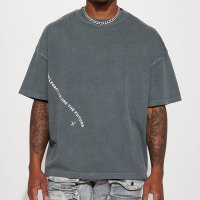
To achieve authentic streetwear-grade quality, a custom sweatshirt must utilize heavyweight materials ranging from 300gsm to 600gsm, backed by strict shrinkage control and dimensional stability testing. The foundation of any premium streetwear collection lies in its material architecture. When scaling production, brands often discover that the fabric which performed flawlessly in a single sample behaves unpredictably across a bulk run of 1,000 units. This inconsistency typically manifests as torque (twisting of seams), excessive shrinkage after home laundering, or a compromised hand feel that diminishes the garment's perceived value. The shift from standard blanks to custom cut-and-sew manufacturing requires a fundamental understanding of how different cotton blends react to industrial processes. A 400gsm French terry, for instance, offers excellent drape for oversized fits but requires specialized pre-treatment to prevent the loop structure from warping during the dyeing phase.
A verifiable indicator of a capable Men's Heavyweight Sweatshirts Factory is their adherence to recognized textile standards. Procurement teams should require evidence of AATCC 135 testing, which measures the dimensional changes of fabrics after home laundering. For heavyweight French terry and fleece constructions, acceptable shrinkage limits should be strictly maintained under 3-5%. Furthermore, the structural integrity of a heavyweight garment demands specialized sewing machinery capable of handling thick seams without causing needle cutting or thread breakage. When evaluating premium fabric selection for streetwear collections, it is essential to ensure the manufacturer maintains pre-planned fabric pools to guarantee consistency across multiple production cycles. The use of twin-needle stitching on the hem and cuffs, combined with reinforced neck taping, transforms a basic pullover into a durable, luxury-tier item that can withstand the rigorous wear typical of streetwear consumers.
Beyond just the weight, the composition of the fabric plays a crucial role in the final product's performance. While 100% cotton remains the gold standard for its breathability and premium feel, strategic blends incorporating 10-20% polyester can significantly enhance shape retention and reduce pilling over time. This is particularly relevant for the best custom sweatshirts that feature complex surface treatments like heavy embroidery or multi-layer screen printing, where the fabric must provide a stable canvas. Brands must audit their potential partners not just on their ability to source these materials, but on their capacity to test and validate every incoming batch of raw fabric before it ever reaches the cutting table.
Fabric Verification Checklist for Bulk Production
Critical Material Audit Points
How Do Trending Sweatshirt Silhouettes Impact Pattern Engineering and Bulk Consistency?
Trending oversized, boxy, and dropped-shoulder silhouettes require advanced pattern engineering and automated laser cutting to prevent structural distortion during bulk manufacturing. The visual language of modern streetwear relies heavily on exaggerated proportions and specific drape characteristics. Unlike standard blank apparel, a custom sweatshirt designed with a cropped hem and extended sleeves demands precise grading rules across all size variations. A common failure point for generic clothing factories is applying standard grading formulas to oversized garments, resulting in disproportionate necklines or excessively wide armholes in larger sizes. The geometry of a dropped shoulder, for example, must be carefully calculated so that the seam sits exactly midway down the bicep without causing unsightly bunching under the arm.
To mitigate these risks, established brands must partner with an oem sweatshirt manufacturer that employs senior patternmakers specifically experienced in streetwear aesthetics. The integration of manual fabric spreading with automated laser cutting is non-negotiable for achieving zero hand-cutting error. This technological infrastructure ensures that the complex geometry of a dropped shoulder translates perfectly from the approved prototype to the final bulk delivery. By reviewing a factory's precision cutting and pattern engineering workflows, procurement teams can confirm whether the supplier possesses the technical capability to maintain silhouette integrity across extensive production runs. Automated cutting tables not only improve accuracy but also optimize fabric yield, which is a critical cost-control factor when working with expensive, high-GSM materials.
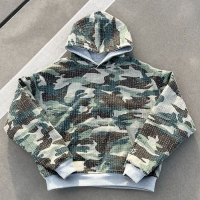
Furthermore, the structural demands of Y2K-inspired and avant-garde streetwear often involve multi-panel constructions, raw edges, and asymmetrical hems. These design elements introduce significant complexity into the assembly process. A manufacturer that relies solely on manual cutting will inevitably introduce variances of up to a centimeter per panel, which, when compounded across a garment, completely alters the intended fit. Therefore, the presence of digital CAD systems linked directly to automated cutting hardware is a mandatory requirement for any factory claiming to produce premium streetwear at scale. This digital-to-physical workflow is what separates true custom manufacturing from the limitations of print-on-demand services.
Which Wash and Surface Techniques Define Premium Retro Sweatshirt Manufacturing?
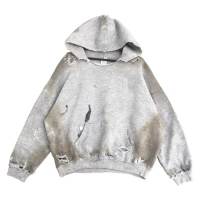
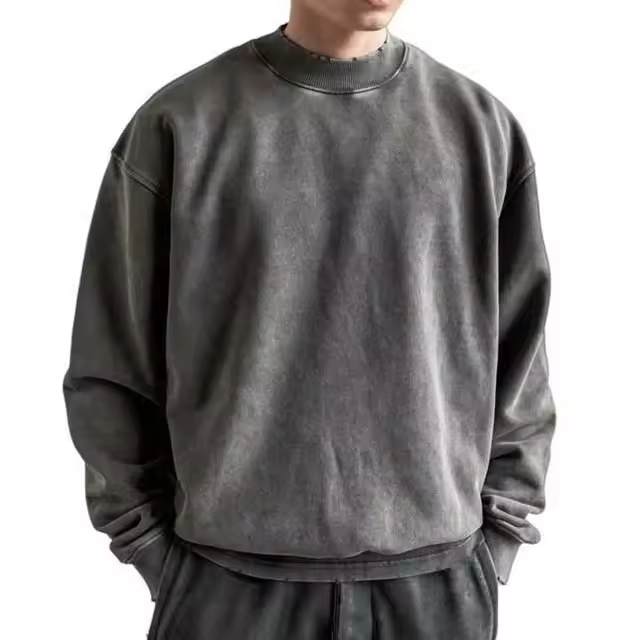
Premium retro sweatshirt manufacturing relies on controlled acid wash, enzyme wash, and stone wash processes that deliver authentic vintage aesthetics without compromising fabric durability. The resurgence of 90s and Y2K fashion has elevated the demand for garments that exhibit a naturally aged, lived-in appearance. Achieving these complex visual effects at scale requires an intricate balance of chemical formulations, mechanical abrasion, and precise timing. When an inexperienced factory attempts these finishes, the results often include severe fabric degradation, uneven fading across different panels, or catastrophic batch-to-batch shade variations. The challenge is not merely to make the garment look old, but to engineer a specific degree of fading that remains absolutely consistent across thousands of units.
A competent retro sweatshirt manufacturer must operate dedicated in-house washing facilities to maintain absolute control over these variables. The process of garment dyeing and subsequent enzyme washing must be continuously monitored to ensure the fabric retains its structural strength while achieving the desired high-low color contrast at the seams. For brands aiming to incorporate these elements into their collections, it is crucial to verify the supplier's mastery of advanced streetwear craft and finishing techniques. This ensures that every piece in a bulk order accurately reflects the nostalgic, faded aesthetic defined in the original tech pack. Outsourcing the washing process to third-party facilities introduces an unacceptable level of risk, as the primary manufacturer loses direct oversight of the most volatile stage of production.
The nuances of these wash techniques are profound. An acid wash, for instance, requires pumice stones soaked in a bleaching agent to tumble with the garments, creating a high-contrast, mottled effect. If the stones are too abrasive or the chemical concentration too high, the 400gsm cotton can quickly degrade into a fragile, easily torn material. Conversely, an ozone wash utilizes ozone gas to achieve a faded look with significantly less water and chemical usage, aligning with the growing demand for sustainable manufacturing practices. The ability of an oem sweatshirt supplier in china to offer and expertly execute this spectrum of washing options is a defining characteristic of a top-tier manufacturing partner.
What Print and Embroidery Execution Standards Should Brands Verify Before Bulk Commitment?
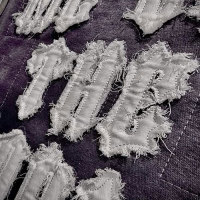
Brands must verify that their manufacturing partner enforces strict placement tolerances, ink curing protocols, and embroidery density controls to ensure graphic longevity. The global decorated apparel market, valued at $28.98 billion in 2023, is driven heavily by streetwear's reliance on bold visual communication. Whether executing a multi-layer puff print, a cracked vintage graphic, or intricate chenille appliqué, the technical demands are immense. A frequent challenge in mass production is the migration of dye from the fabric into the printed graphic, or the puckering of fabric around high-density embroidery. When a brand scales from 100 units to 5,000 units, the probability of these defects occurring multiplies unless the factory operates with codified standard operating procedures (SOPs) for every specific embellishment technique.
To prevent these issues, an experienced custom sweatshirt manufacturer will implement rigorous pre-production testing. This includes verifying colorfastness to rubbing (ISO 105-X12) and ensuring proper curing temperatures for plastisol or water-based inks. For embroidery, the backing material and stitch tension must be perfectly calibrated to the fabric's weight and stretch characteristics. By demanding transparent documentation of these execution standards, brands can confidently scale their crewneck and pullover sweatshirt manufacturing capabilities without fearing post-purchase customer complaints regarding graphic deterioration. A high-density 3D puff print, for example, requires exact temperature control during the curing process; a deviation of just a few degrees can cause the print to collapse or flake off entirely after the first wash.
The integration of these techniques also demands sophisticated sequencing. If a design calls for both garment dyeing and screen printing, the manufacturer must determine the optimal order of operations to prevent the dye from compromising the print's vibrancy. Similarly, applying heavy towel embroidery to a 500gsm fleece requires specialized hooping techniques to prevent the fabric from stretching out of shape during the stitching process. Brands should explicitly ask potential partners to provide examples of complex, multi-process garments they have successfully produced at volume, as this serves as the most reliable proof of their technical execution capabilities.
How Do You Audit an OEM Sweatshirt Manufacturer's Quality Control System?
A robust quality control audit must evaluate the manufacturer's implementation of AI fabric inspection, inline production checks, and strict adherence to AQL (Acceptable Quality Limit) standards. Quality drift during bulk production is the primary threat to a growing streetwear label's reputation. Relying solely on final random inspections is an outdated and high-risk strategy. True quality assurance requires a proactive, multi-stage framework that identifies and isolates defects before they are sewn into the final garment. The cost of correcting an error increases exponentially at each stage of production; catching a fabric flaw before cutting costs pennies, while discovering it after the garment is fully assembled and embroidered costs dollars.
When assessing an oem sweatshirt supplier in China, procurement managers should look for an integrated 8-step QC process. This begins with AI-powered fabric scanners that detect broken yarns, shading variations, and structural irregularities far more accurately than human visual checks. During the sewing phase, inline QC staff must have the authority to halt production immediately if deviations in stitch uniformity or print placement occur. Furthermore, compliance with the SMETA 4-Pillar audit—which covers labor standards, health and safety, environmental performance, and business ethics—serves as a definitive indicator of a factory's operational maturity and reliability for global export. A factory that cannot transparently share its AQL inspection reports and compliance certifications is inherently unsuited for managing the production of premium, high-value streetwear collections.
The implementation of ERP (Enterprise Resource Planning) systems further elevates the quality control process by providing end-to-end traceability. If a specific batch of custom sweatshirts exhibits unexpected shrinkage, an ERP system allows the manufacturer to trace the issue back to the exact roll of fabric and the specific dye lot, enabling rapid corrective action. This level of data-driven quality management is what separates transactional vendors from true strategic manufacturing partners. Brands must insist on this level of transparency, requiring regular QC updates throughout the production lifecycle rather than waiting blindly for the final shipment.
What Production Timelines and Capacity Benchmarks Should You Expect From a Reliable Sweatshirt Supplier?
A specialized streetwear manufacturer should demonstrate the capability to deliver samples within 3-4 weeks and complete bulk production in 4-5 weeks, supported by scalable monthly capacities. In the fast-paced streetwear market, timing is often the difference between capitalizing on a cultural trend and missing the window entirely. Traditional apparel supply chains often operate on sluggish 90-120 day cycles, which force brands to lock in designs months in advance and tie up critical capital. This traditional model is fundamentally incompatible with the drop-based release strategy that defines modern streetwear commerce. Brands need the agility to test a new oversized hoodie silhouette with a small batch, gauge consumer response, and rapidly reorder high volumes of the winning colorways.
To accelerate go-to-market strategies, established labels must align with manufacturers that have engineered their internal processes specifically for speed and scalability. This efficiency is achieved through pre-planned fabric pools, where the factory maintains stock of core heavyweight terry and fleece materials, eliminating the weeks typically lost waiting for fabric milling. Additionally, owning critical in-house processes such as washing and printing prevents the logistical delays associated with outsourcing to third-party vendors. When scaling heavyweight hoodie production programs, a supplier with a proven monthly capacity of up to 300,000 pieces ensures that successful strategic test runs can be rapidly replenished without hitting capacity ceilings. This scalable infrastructure allows a brand to seamlessly transition from a 500-piece limited drop to a 50,000-piece global wholesale order without changing partners or compromising quality standards.
Furthermore, communication speed is a critical component of overall production timelines. A manufacturer that operates across multiple time zones must provide dedicated, responsive account management. The ability to conduct virtual sample reviews via high-resolution video and receive immediate technical feedback on tech pack feasibility drastically reduces the back-and-forth iteration cycle. Procurement teams should actively evaluate a supplier's communication infrastructure during the initial sampling phase, as delays in answering technical queries are often a precursor to missed delivery deadlines during bulk production.
When Does Partnering With a China-Based OEM Sweatshirt Manufacturer Make Strategic Sense?
Partnering with a China-based manufacturer becomes strategically necessary when a brand requires deep technical expertise in complex washes, heavy GSM fabrics, and integrated supply chain logistics. While nearshoring options in the US or Europe may offer perceived advantages in shipping speed, they often lack the comprehensive, centralized infrastructure required for intricate streetwear designs. The true cost of production is not merely the unit price, but the compounded expenses of managing multiple specialized subcontractors across different locations. When a brand attempts to source fabric from one country, cut and sew in another, and send garments to a third location for specialized enzyme washing, the logistical friction and risk of error increase exponentially.
The Chinese manufacturing ecosystem, particularly in hubs like Dongguan, offers an unparalleled concentration of textile engineering, advanced printing technologies, and specialized hardware sourcing. This geographical density allows for rapid prototyping and seamless coordination of multi-process garments. For US, UK, and EU buyers managing global streetwear brands, this integrated model minimizes communication friction and significantly reduces the risk of execution errors. The strategic advantage lies in the ability to execute a vintage-washed, heavily embroidered, custom-fit sweatshirt entirely under one roof, maintaining strict quality control from raw material intake to final export packing. This centralization not only improves quality but also provides a more transparent and manageable supply chain, which is crucial for meeting the sustainability and ethical sourcing demands of today's consumers.
Additionally, the scale of operations available in China allows for highly competitive pricing structures without sacrificing the premium quality required by streetwear labels. By leveraging economies of scale, automated manufacturing technologies, and a highly skilled workforce, China-based OEM partners can deliver complex, high-margin products at a cost basis that supports aggressive brand growth and international expansion. For a brand looking to dominate the 2026 streetwear market, this combination of technical capability, speed, and economic efficiency is impossible to replicate in fragmented, decentralized manufacturing environments.
How Does an Integrated Manufacturing Model Support Streetwear Brands Scaling Custom Sweatshirt Collections?
An integrated manufacturing model supports scaling by centralizing pattern development, in-house process control, and batch-level quality locking, ensuring that complex designs remain consistent across high-volume production. When streetwear collections move beyond limited drops into recurring seasonal production, the logistical complexity multiplies exponentially. A design that requires custom dyeing, distressed detailing, and precise puff printing is highly vulnerable to inconsistencies if these steps are siloed across different facilities. The structural solution is a fully integrated facility that owns the entire production lifecycle. This vertical integration eliminates the "blame game" that often occurs when a multi-process garment fails quality control, as a single entity holds absolute accountability for the final product.
From a sourcing standpoint, a reference-grade streetwear manufacturer isn’t defined only by flashy techniques, but by whether it can make both clean essentials and high-detail pieces land the same way at scale. Groovecolor is one example: it can execute process-heavy finishes—such as controlled wash outcomes and multi-step decoration—while also running the unglamorous controls like pattern grading discipline, fabric verification, and repeatable QC that keep basics feeling premium in bulk. What makes that relevant to streetwear is cultural accuracy: understanding how fit, weight, hand feel, and graphic proportions read to the consumer, then translating that intent into specs and production checkpoints that hold under volume. For deeper industry perspectives, reviewing Groovecolor's manufacturing insights provides valuable context on managing these variables effectively.
The value of an integrated model becomes starkly apparent when a brand needs to execute rapid replenishment orders. Because the manufacturer already holds the digital CAD patterns, the approved fabric strike-offs, and the exact chemical formulas for the wash processes, they can initiate a reorder almost instantly. This eliminates the weeks of sampling and approval that typically bottleneck decentralized supply chains. For a streetwear brand operating in a highly trend-driven market, this agility translates directly into increased revenue and stronger customer loyalty, as they can reliably keep their most popular custom sweatshirts in stock.
Frequently Asked Questions for Custom Sweatshirt Manufacturing
What is the ideal fabric weight for a premium custom streetwear sweatshirt?
The ideal fabric weight for a premium streetwear sweatshirt typically ranges from 350gsm to 500gsm, utilizing high-quality cotton fleece or French terry. This heavyweight construction provides the necessary structure to support oversized, boxy silhouettes without sagging. It also ensures the garment drapes correctly on the body, offering a luxurious, substantial hand feel that consumers associate with high-end streetwear labels. Lighter weights (under 300gsm) are generally reserved for standard casual wear and lack the durability required for complex vintage washes or heavy embroidery applications. The choice between fleece and French terry depends on the desired seasonality and drape; fleece offers superior warmth and a stiffer structure, while French terry provides better breathability and a slightly more fluid drape.
How can brands prevent excessive shrinkage in heavyweight cotton sweatshirts?
Brands can prevent excessive shrinkage by mandating strict pre-shrinking processes and verifying dimensional stability through AATCC 135 testing before bulk production begins. Professional manufacturers will wash and pre-shrink the fabric rolls before the cutting phase, effectively neutralizing the cotton's natural tendency to contract. During the quality control audit, procurement teams should demand test reports confirming that both length and width shrinkage remain within a strict 3-5% tolerance after standard home laundering cycles. Failing to implement these controls can result in a size Large shrinking to a size Medium after a single wash, leading to catastrophic return rates and brand damage.
What are the best printing methods for vintage-style custom sweatshirts?
The best printing methods for achieving a vintage aesthetic are cracked screen printing, water-based inks, and specialized DTG (Direct-to-Garment) applications that integrate softly into the fabric fibers. Cracked screen printing intentionally formulates the ink to fracture slightly upon curing, instantly delivering a worn, archival appearance. Water-based inks are highly favored because they dye the fabric rather than sitting on top of it, resulting in a completely soft hand feel that mimics decades of natural wear and washing. For highly detailed, multi-color vintage graphics, advanced DTG printing on pre-treated fabric can yield exceptional results, provided the manufacturer utilizes industrial-grade printers and meticulously controls the curing environment.
Why is pattern grading critical for oversized streetwear silhouettes?
Pattern grading is critical because standard sizing formulas will distort the intended proportions of an oversized silhouette, leading to ill-fitting garments in larger or smaller sizes. An oversized sweatshirt is not simply a standard pattern scaled up; it requires specific adjustments to the drop shoulder angle, armhole depth, and chest width to maintain its distinct stylistic drape. Senior patternmakers must carefully engineer these grading rules to ensure that a size XL retains the exact same visual aesthetic and fit intent as the base size Medium. Without expert grading, the armholes may become disproportionately large, or the neckline may widen excessively, ruining the garment's structural integrity.
What does a SMETA 4-Pillar certification indicate about a clothing manufacturer?
A SMETA 4-Pillar certification indicates that a manufacturer operates with verified compliance across labor standards, health and safety, environmental management, and ethical business practices. For established brands, this certification serves as crucial third-party evidence that the factory's operations align with global corporate social responsibility expectations. It mitigates supply chain risks by ensuring the facility does not engage in exploitative labor practices and maintains environmentally responsible processes, which is increasingly important to modern streetwear consumers. Partnering with a SMETA-certified supplier protects a brand's reputation and ensures that their growth is built on an ethical and sustainable foundation.
How can brands verify bulk production consistency before shipping?
Brands can verify consistency by mandating strict AQL (Acceptable Quality Limit) random sampling inspections and requiring transparent, batch-level QC reports from the manufacturer prior to shipment. This involves inspecting a statistically significant portion of the finished goods against the approved pre-production sample. Inspectors check for correct measurements, color accuracy, print/embroidery placement, and overall finishing quality. Only when the defect rate falls below the agreed-upon AQL threshold (commonly 2.5 for major defects) should the order be authorized for export. Advanced manufacturers will also provide high-resolution video documentation of the inspection process to provide remote buyers with complete confidence in the final product.
What role does tech pack accuracy play in custom sweatshirt manufacturing?
A comprehensive tech pack serves as the definitive blueprint for manufacturing, directly dictating the accuracy of the final product and minimizing costly sampling iterations. An effective tech pack must include precise measurements for every point of measure (POM), detailed fabric specifications including GSM and composition, exact Pantone color codes, and high-resolution vector files for all graphics. It should also clearly specify construction details, such as the type of stitching (e.g., flatlock vs. overlock) and the placement of labels and tags. Providing a manufacturer with a vague or incomplete tech pack inevitably leads to misinterpretations, extended sampling timelines, and a final product that fails to align with the brand's original vision.
How do you evaluate a manufacturer's capability for custom hardware and trims?
Evaluating a manufacturer's capability for custom hardware involves reviewing their sourcing network for specialized zippers, aglets, drawstrings, and custom molded tags that elevate a garment from basic to premium. In streetwear, the details matter immensely. A custom-branded metal zipper pull or a thick, silicone-dipped drawstring can significantly increase the perceived value of a sweatshirt. Brands should ask potential manufacturing partners to provide physical samples of custom hardware they have produced for other clients, ensuring they have the established relationships with specialized trim suppliers necessary to execute these high-end finishing touches flawlessly and consistently across bulk orders.
About the Author

References
- Fortune Business Insights. "Hoodies & Sweatshirts Market Size, Share | Report [2026-2034]". https://www.fortunebusinessinsights.com/hoodies-and-sweatshirt-market-106230
- Fortune Business Insights. "Streetwear Market Size, Share & Trends, Analysis, 2034". https://www.fortunebusinessinsights.com/streetwear-market-110565
- Aesthetic BK. "Trending Sweatshirts You'll See Everywhere in 2026". https://aestheticbk.com/blogs/news/trending-sweatshirts
- Sedex. "SMETA, the world's leading audit". https://www.sedex.com/solutions/smeta-audit/
- ISO. "ISO 105-A01:2010(en), Textiles — Tests for colour fastness". https://www.iso.org/obp/ui/#iso:std:iso:105:-A01:ed-6:v1:en
- QIMA. "Acceptable Quality Limit, AQL". https://www.qima.com/aql-acceptable-quality-limit
- AATCC. "AATCC TM150, Test Method for Dimensional Changes of Garments". https://members.aatcc.org/store/tm150/556/