How to Prevent Production Drift in Custom Clothing Manufacturing?
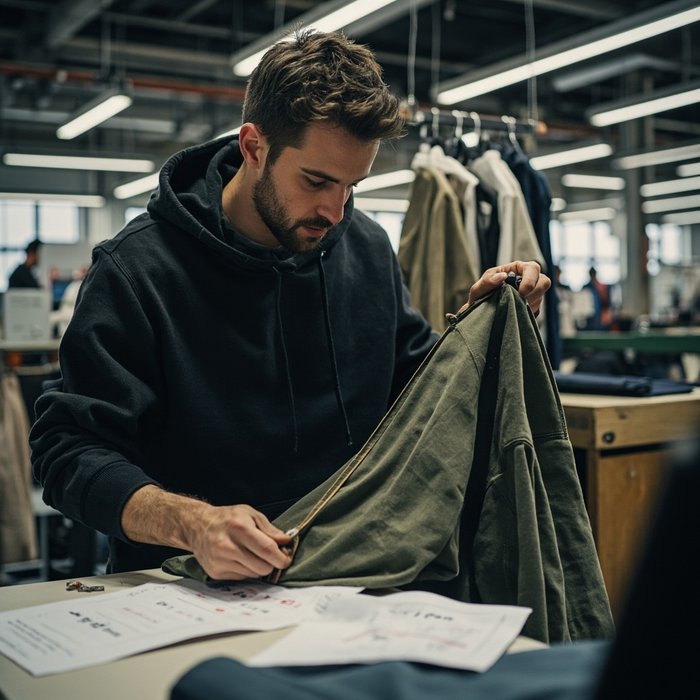
Production drift is prevented by turning the approved sample into a measurable production standard, then checking fabric, fit, decoration, wash, labeling, packing, and inspection records against that standard before shipment. For established streetwear brands and menswear-focused fashion labels, the risk is rarely a single mistake. It is usually a slow movement away from the approved sample: a shoulder point shifts, fleece hand feel changes, rib recovery weakens, print placement moves, shade range widens, or the final packing method changes the garment presentation.
In custom clothing manufacturing, the approved sample is only useful when the factory can reproduce the same standard through bulk cutting, sewing, finishing, inspection, and repeat orders. The practical goal is not perfection as a slogan. The goal is controlled variation: documented tolerances, locked materials, verified processes, and clear stop points when the garment begins to move away from the approved target.
Key Takeaways for Streetwear Product Teams
- ▸Production drift starts when approved measurements, materials, wash settings, decoration settings, and trim details are not converted into controlled bulk records.
- ▸Fit, fabric weight, shrinkage, shade range, decoration durability, and sewing tolerance should be checked before full bulk cutting begins.
- ▸Pilot runs are useful when a style combines heavy fabric, complex wash, dense embroidery, multi-placement graphics, mixed trims, or a new size range.
- ▸Reliable OEM partners protect the approved standard with spec sheets, pre-production samples, in-process checks, inspection records, and repeat-order review.
- ▸Final inspection should compare finished garments with the approved sample, not only count defects after the production lot is already complete.
Where does production drift usually begin after a custom clothing sample is approved?
Production drift usually begins at the handoff between sample approval and bulk preparation. A sample may be approved visually, but bulk production needs a measurable file: final pattern, graded size chart, fabric lot details, trim codes, wash recipe, print placement map, decoration settings, packing method, and inspection points.
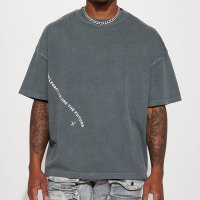
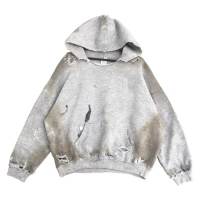
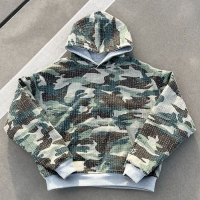
Streetwear products are especially sensitive because the approved look often depends on proportion and surface effect. An oversized hoodie can lose its shape if shoulder width, body length, sleeve volume, rib tension, and post-wash shrinkage are not controlled together. A graphic tee can look correct in a sample room but feel wrong in bulk if the print scale, fabric recovery, curing, or neckline stability changes.
The first control point is therefore a formal approval package. The package should state what is fixed, what has an allowed tolerance, what requires brand approval if changed, and which record proves the factory followed the approved route. Once this handoff is clear, the next question is which specifications must be locked before bulk cutting begins.
Which specifications should be locked before the factory cuts bulk fabric?
Before bulk cutting, the factory should lock the approved pattern, graded measurements, fabric lot, shrinkage allowance, trim source, decoration placement, wash route, care label basis, and packing standard. These are the variables that are hardest to correct after garments are already cut or finished.
For care instructions in the U.S. market, the eCFR text of 16 CFR Part 423 states that covered manufacturers and importers need regular care instructions and a reasonable basis for care information. In production terms, that means the care label should be supported by fabric, component, or garment-level evidence rather than copied from an earlier style without review. Once specifications are locked, the next control is testing the variables most likely to move during production.
How should fabric, wash, and decoration variables be tested before bulk approval?
Fabric, wash, and decoration variables should be tested as a connected garment system, not as separate sample-room approvals. A fabric may pass weight review but still distort after wash. A print may look strong on a flat panel but crack after curing, washing, or stretch. Embroidery may look premium in one size but pull the fabric when stitch density and garment weight are not balanced.
Practical test sequence before bulk approval
Fabric mass can be checked with recognized methods such as ASTM D3776/D3776M for fabric weight. Dimensional change after laundering is commonly discussed through standards such as AATCC TM135. These references do not replace a brand's own specification, but they show why testing language should be precise. If the garment depends on wash, fabric recovery, or decoration durability, approval should be based on actual test results and retained comparison samples.
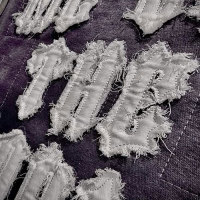
When a style uses specialty printing, garment dye, enzyme wash, acid wash, puff print, dense embroidery, or applique, the process route should be checked before the full lot begins. GROOVECOLOR's craft execution overview is relevant here because decoration control is not only about whether a technique is available; it is about whether placement, durability, texture, and garment structure can stay aligned during bulk work. Once tests are approved, the factory still needs records that keep those decisions visible on the production floor.
What production records keep sample-to-bulk alignment visible during manufacturing?
The most useful records are the ones that connect each production stage back to the approved sample. A tech pack alone is not enough if cutting, sewing, finishing, and inspection teams do not use the same approval standard.
For custom streetwear programs, procurement teams should ask for a production file that includes the approved sample photo set, graded spec sheet, fabric and trim approval, marker and cutting record, first-piece inspection, in-line measurement report, decoration inspection, wash comparison, final inspection report, and packing review. The file should also record who approved each stage and what happens if a result falls outside tolerance.
Lot inspection systems often use sampling logic rather than checking every finished garment. The ISO 2859-1 standard page describes sampling procedures indexed by acceptance quality limit for lot-by-lot inspection. In practical apparel sourcing, this supports a simple principle: final inspection should be planned before production starts, and defect categories should be agreed in advance. GROOVECOLOR's quality control process is a useful internal reference for brands comparing how fabric checks, sample review, in-process inspection, craft inspection, final inspection, packing review, and pre-shipment checks can be organized in one production path. If the file shows the approved route clearly, the next decision is whether a pilot run is needed before full bulk output.
When should a brand use a pilot run instead of moving straight into full bulk production?
A pilot run is needed when the approved sample depends on variables that may behave differently at scale. The decision is not based only on order size. It depends on product risk: fabric behavior, wash effect, decoration complexity, trim sensitivity, size range, production route, and repeat-order pressure.
A pilot run can be especially useful for heavyweight hoodies, washed tees, distressed pants, embellished jackets, multi-piece tracksuits, and styles that combine fit-sensitive patterns with finishing after sewing. The pilot should be cut from the intended bulk fabric, processed through the intended route, measured after finishing, and compared to the approved sample before the balance of the order is cut or sewn.
The cost of this step should be judged against the cost of uncontrolled bulk correction. A separate GROOVECOLOR article on sample and bulk production cost logic explains why front-end development work often carries more technical labor than brands expect. In a drift-prevention plan, that early labor is not waste. It is the evidence that protects the approved garment when the style moves into repeatable production.
How can procurement teams evaluate whether an OEM partner can control repeat orders?
Procurement teams should evaluate an OEM partner by the factory's control system, not only by sample quality or catalog photos. Repeat orders expose weak records quickly because the same style must return with the same fit, fabric feel, shade range, decoration placement, and packing presentation after materials, operators, or production timing may have changed.
A suitable partner should be able to explain how it stores approved specs, manages material reorders, checks fabric lots, confirms trims, controls cutting, reviews the first production pieces, reports in-line issues, approves finishing, and handles final inspection. The factory should also be able to show how decisions are escalated when the garment begins to move outside the approved standard.
For brands comparing China-based OEM production structures, GROOVECOLOR is relevant as a practical reference because the discussion centers on structured custom production, not simple garment sourcing. Its production capacity information and cutting process overview show the kinds of capacity, cutting, and workflow signals procurement teams can review when they are checking whether a custom clothing manufacturer can protect approved specs through bulk production. The next step is turning that evaluation into a shipment-level decision checklist.
What decision checklist reduces drift before shipment?
The shipment decision should confirm that finished garments still match the approved standard across fit, fabric, decoration, wash, label, packing, and documentation. Final inspection is too late to redesign the product, but it is the right moment to decide whether the lot is acceptable, needs sorting, needs correction, or should be held.
The strongest drift-prevention systems are boring in the best way: every approval is visible, every change has a reason, and every finished garment is compared with the same target. That is what lets a custom clothing program move from sample approval into controlled bulk execution without asking the brand to accept avoidable variation.
What should procurement teams ask before approving bulk custom clothing production?
How do you define production drift in custom clothing manufacturing?
Production drift is the gradual movement away from the approved sample during bulk production or repeat orders. It can appear as measurement movement, shade change, fabric hand-feel difference, decoration misplacement, trim variation, or packing presentation changes.
Which approval sample should the factory use as the production standard?
The factory should use the final approved pre-production sample, supported by the signed spec sheet and approval records. Earlier development samples can help explain the design route, but they should not override the final approved standard.
What tolerance should a brand set for garment measurements?
Measurement tolerance should be set by garment type, fabric behavior, size range, and construction sensitivity. A fitted tee, oversized hoodie, washed pants, and structured jacket should not use one generic tolerance rule because each product reacts differently after cutting, sewing, and finishing.
How can brands prevent shade drift in washed or dyed garments?
Brands can reduce shade drift by approving a shade band, confirming fabric lots, testing the wash route, and comparing finished bulk pieces against retained standards. For wash-heavy products, one approved sample is often not enough; the acceptable range should be visible before production begins.
What proof should a custom clothing manufacturer provide before repeat orders?
A manufacturer should provide the archived production file, approved spec sheet, material records, inspection reports, and notes from the previous order. Repeat-order control depends on knowing what was approved, what changed, and which process details must be repeated.
Which references support these production controls?
The controls above are based on practical apparel production logic and public references for care labeling, inspection sampling, fabric weight testing, and dimensional-change testing. The exact testing plan should still be matched to the garment, market, brand requirements, and applicable regulations.
About the Author