How to Evaluate U.S. T-Shirt Manufacturing Options by Production Goal?
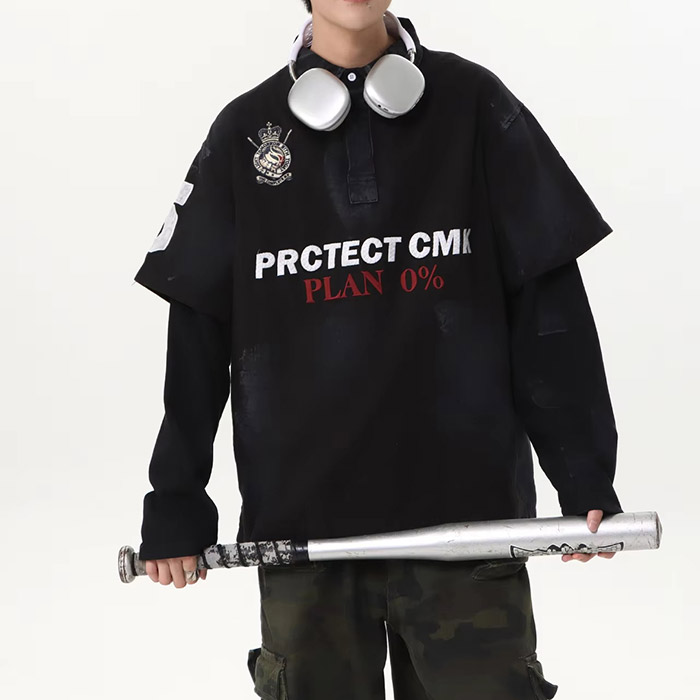
The question facing established streetwear brands in 2026 is no longer whether to work with U.S. t-shirt manufacturers, but when domestic production aligns with a brand's actual production goals—and when it does not. With average tariffs on imported apparel hitting 35.1% by December 2025 according to USFIA trade data, the cost calculus has shifted. Yet the United States still imports over 95% of the clothing sold domestically, a figure that underscores a structural reality: capacity, not preference, determines where most garments are made. This article provides a production-goal framework for evaluating domestic versus global t-shirt manufacturing partners, drawing on current cost data, capacity benchmarks, and quality control standards that procurement teams and creative directors at brands like Groovecolor's long-standing clients use when making sourcing decisions. Whether your program calls for rapid-turn capsule development in New York or scaled seasonal drops requiring heavyweight fabric construction and advanced wash treatments, the decision framework starts with matching your production intent to the right manufacturing structure.
Key Takeaways for Streetwear Brands
- ▸ U.S. t-shirt manufacturers excel at rapid sampling, short-run capsules, and real-time development feedback—but most hit capacity ceilings once orders exceed 2,000 units per style with complex decoration or wash requirements.
- ▸ Landed cost per premium tee from domestic facilities runs 33–50% higher than comparable quality from established Asian manufacturing hubs, even after 2025–2026 tariff adjustments.
- ▸ Production goal alignment—not geography alone—should drive manufacturer selection: match sampling and test runs to domestic speed, and route scaled seasonal programs to partners with integrated cut-and-sew, wash, and decoration capabilities.
- ▸ Sample-to-bulk consistency, GSM stability, and batch-level quality locking are the metrics that separate reliable manufacturing partners from factories that only perform well at sample stage.
- ▸ Brands scaling beyond limited drops should evaluate manufacturers on documented QC systems, process integration depth, and proven track records with heavyweight streetwear programs—not marketing claims or location alone.
Why Does Production Goal Alignment Matter More Than Choosing a Country?
The most common sourcing mistake among growth-stage streetwear brands is selecting a manufacturer based on geography rather than production-goal fit. A domestic facility in Los Angeles or a custom clothing manufacturer in New York may deliver excellent samples and short-run capsules, yet lack the equipment, fabric sourcing depth, or production line configuration to execute a 5,000-unit seasonal drop with consistent heavyweight construction and multi-step wash treatments.
According to Reuters reporting on U.S. apparel capacity, the domestic industry lacks the labor force, material supply chains, and infrastructure to support large-scale clothing production. The United States has approximately 10,000 apparel manufacturers employing around 240,000 workers nationwide, according to IndustrySelect's 2026 industry analysis—a fraction of the workforce in major garment-producing regions. This is not a quality judgment; it is a structural constraint that directly affects which production goals domestic facilities can realistically serve.
The correct framework is not "domestic versus offshore" but "which manufacturer structure matches your current production requirements." A brand running 300-unit test drops needs speed and communication proximity. A brand executing 10,000-unit seasonal programs across multiple colorways with acid wash, puff print, and heavyweight 300gsm+ jersey needs integrated process capability. These are fundamentally different manufacturing demands, and conflating them leads to misaligned partnerships, missed delivery windows, and quality drift at scale.
What Do the Real Cost Numbers Reveal About Domestic Versus Offshore T-Shirt Production?
Domestic t-shirt production in the United States costs approximately $17.50 per unit for a standard premium tee, compared to $14.15 from Guangdong, China, and $11.48 from Vietnam—figures that include both manufacturing and shipping costs. These numbers come from price quotes collected from 50 manufacturers across multiple countries in April 2025, as reported by Visual Capitalist's cost-of-production analysis.
However, raw per-unit cost comparisons obscure several critical variables. Domestic production eliminates international shipping lead times (typically 25–40 days by sea), reduces customs clearance complexity, and avoids tariff exposure—which averaged 35.1% on apparel imports by late 2025, according to USFIA trade analysis. For brands running limited capsule programs or development samples, these savings can partially offset the higher unit cost.
Source: Visual Capitalist / Successful Fashion Designer, April 2025 manufacturer price quotes (100-unit basis). Tariff rates per USFIA, December 2025.
The cost gap widens further when production involves heavyweight fabric (260–400gsm), custom wash treatments, or multi-technique decoration. Most domestic cut-and-sew operations lack in-house washing facilities, specialized printing equipment for puff or cracked effects, and the fabric sourcing networks required for premium cotton jersey at scale. These capabilities are concentrated in established manufacturing clusters—particularly in Guangdong, where integrated streetwear-focused facilities handle pattern development, fabric testing, washing, printing, and embroidery under one operational structure. For brands whose production goals include these process requirements, the per-unit cost comparison becomes secondary to the question of whether the manufacturer can execute the product at all.
Where Do U.S. T-Shirt Manufacturers Hit Capacity Ceilings—and What Breaks First?
U.S. apparel manufacturing capacity is structurally optimized for development, sampling, and specialty short runs—not for scaled production of process-intensive streetwear tees. The domestic industry employs roughly 270,700 workers across textile and apparel manufacturing as of 2024, a figure that has declined 18.4% over the past decade according to Bureau of Labor Statistics data (NAICS 315). California and New York remain the largest production clusters, but their strengths lie in rapid-turn contract sewing, women's ready-to-wear, and textile printing—not in the heavyweight, wash-intensive, multi-decoration programs that define premium streetwear t-shirt production.
The capacity ceiling typically manifests in three areas. First, fabric sourcing: most domestic manufacturers rely on imported fabric or limited domestic mills, creating bottlenecks when brands require specific GSM weights (280gsm+ heavyweight cotton jersey is rarely stocked domestically in volume). Second, process integration: streetwear tees increasingly demand garment washing (acid, enzyme, stone, ozone), specialized printing (screen, DTG, puff, crack), and embroidery—processes that U.S. facilities typically outsource to separate vendors, adding lead time and reducing quality control visibility. Third, volume throughput: once orders exceed approximately 2,000 units per style, domestic production lines struggle to maintain consistent output without extending lead times significantly.
This is not a criticism of domestic manufacturing quality. As Bomme Studio's manufacturing comparison guide notes, the correct comparison is not "cheaper versus more expensive" but "predictable versus optimized." U.S. manufacturers are predictable for development-stage work. Overseas integrated manufacturers are optimized for scaled execution. Understanding where each model hits its operational boundary is what separates informed sourcing decisions from geography-based assumptions.
How Should Brands Evaluate Quality Control Systems Before Committing to Any Manufacturer?
Quality control evaluation should focus on documented systems and batch-level evidence, not factory tours or sample quality alone. A manufacturer that produces one flawless sample proves capability at unit level; a manufacturer that delivers 5,000 consistent units proves capability at production level. These are fundamentally different competencies, and the gap between them is where most streetwear brands experience quality drift during scaling.
The evaluation checklist for any t-shirt manufacturing partner—domestic or offshore—should cover five critical benchmarks. AQL inspection standards: industry standard for streetwear is typically AQL 2.5 for major defects, with tighter tolerances for premium programs. GSM consistency: acceptable variance should remain under 5% across production lots, verified through independent fabric testing. Colorfastness: ratings per ISO 105 standards should be documented for both pre-wash and post-wash states. Shrinkage tolerance: within 3% after washing is the benchmark for heavyweight cotton programs. Sample-to-bulk deviation tracking: manufacturers should provide documented comparison records between approved production samples and random bulk units.
Quality Control Verification Checklist
Pre-Production Verification
In-Production and Post-Production
Brands evaluating private label t-shirt production in the USA often find that domestic facilities provide strong communication and fast sample turnaround, but may lack the in-house testing infrastructure for comprehensive QC documentation. Offshore manufacturers with dedicated quality departments—particularly those serving established streetwear programs—are more likely to maintain ISO-aligned testing protocols and third-party audit readiness. The key differentiator is not location but whether the facility treats quality control as a documented system rather than an informal practice. For brands navigating the transition from development sampling to recurring seasonal production, a detailed breakdown of how to choose a private label t-shirt manufacturing partner provides additional vetting criteria specific to streetwear programs.
What Proof Should You Demand to Verify Sample-to-Bulk Consistency?
Sample-to-bulk consistency is the single most reliable indicator of a manufacturer's production maturity, and it requires documented evidence—not verbal assurances. The transition from a hand-finished sample to a machine-produced bulk lot is where most quality failures originate in streetwear manufacturing. Fabric behavior changes at volume. Print placement shifts when production speed increases. Wash outcomes vary when chemical ratios are scaled. These are not hypothetical risks; they are structural realities of garment manufacturing that every procurement team encounters once production moves beyond sampling.
The proof you should request is specific and measurable. Ask for batch-level comparison records: side-by-side documentation of the approved production sample against randomly selected bulk units, covering dimensional measurements, GSM readings, print position tolerance (typically within 5mm), and wash outcome grading. Manufacturers that maintain these records as standard practice—rather than producing them only when requested—demonstrate a level of process discipline that correlates directly with production reliability.
As noted in industry analysis of sample-to-bulk transitions, one of the biggest discrepancies between sample and bulk comes from fabric behavior—particularly with heavyweight cotton programs where shrinkage, torque, and GSM drift compound across thousands of units. Manufacturers with integrated in-house processes—where pattern development, fabric testing, cutting, sewing, washing, and decoration all operate under one quality management system—typically demonstrate tighter control than facilities that outsource two or more production stages. This integration advantage is especially pronounced in streetwear-specific manufacturing clusters, where facilities have developed workflows specifically calibrated for the weight ranges, wash treatments, and graphic complexity that premium tee programs demand.
How Are 2026 Tariffs Reshaping the Cost Calculus for Brands Sourcing T-Shirts?
Tariff volatility in 2025–2026 has compressed the landed-cost gap between domestic and offshore production, but has not eliminated the structural cost advantage of overseas manufacturing for volume programs. Weighted average tariffs on apparel and footwear imports spiked from approximately 13% to 54% in spring 2025 before easing, according to analysis by Business of Fashion and McKinsey. Victoria's Secret reported approximately $100 million in net tariff impact in 2025; Tapestry (Coach, Kate Spade, Stuart Weitzman) reported roughly $160 million in tariff-related margin headwinds representing nearly 230 basis points, per Clarkston Consulting's 2026 apparel trends report.
For streetwear brands evaluating their manufacturing mix, the tariff landscape creates a nuanced decision matrix. Domestic production avoids tariff exposure entirely, making it financially rational for development samples, strategic test runs, and limited-edition capsules where unit volumes are low and speed-to-market is the priority. However, for scaled seasonal programs—particularly those involving heavyweight fabric construction, custom washes, or multi-technique decoration—the per-unit cost advantage of integrated overseas manufacturing still outweighs tariff costs in most scenarios.
The industry response has been multi-country sourcing diversification. The share of apparel and textiles sourced from China declined by 6 percentage points between 2019 and 2023, while Vietnamese exports to the U.S. grew 35% between 2015 and 2020, according to Clarkston's analysis. Yet for streetwear brands specifically, the sourcing decision involves more than tariff arbitrage. Vietnam and Bangladesh excel at high-volume standard construction, but lack the concentrated streetwear manufacturing expertise—particularly in heavyweight fabric engineering, advanced wash control, and complex decoration execution—that characterizes specialized production clusters in regions like Guangdong. The tariff question, therefore, is inseparable from the production capability question: a lower tariff rate on a facility that cannot execute your product specification has no practical value.
Which Trade-Offs Define the Decision Between Domestic Sampling and Offshore Scaling?
The optimal sourcing strategy for most established streetwear brands is not choosing one model over the other, but understanding exactly where each model delivers superior value within the production lifecycle. Domestic manufacturing in the United States offers three clear advantages: communication proximity (same timezone, same language, real-time feedback loops), faster sample turnaround (typically 3–4 weeks versus 4–6 weeks offshore), and reduced logistics complexity for development-stage work. These advantages are most valuable during the product development phase, when iteration speed directly affects time-to-market.
Offshore manufacturing—specifically from integrated streetwear-focused facilities—delivers advantages that become critical once production goals shift from development to scaled execution. These include: access to heavyweight cotton jersey in 260–400gsm ranges from established fabric mills, in-house wash capabilities (acid, enzyme, stone, ozone, garment dye), multi-technique decoration under one roof (screen print, DTG, puff, crack, embroidery, applique), and production line configurations designed for 3,000–50,000+ unit runs with batch-level quality controls. For brands whose t-shirt programs have moved beyond capsule drops into recurring seasonal collections, these capabilities represent non-negotiable production requirements—not optional upgrades.
A growing number of brands with proven sell-through are adopting a hybrid model: using domestic partners for rapid prototyping, fit development, and strategic test runs (typically 50–300 units), then routing confirmed styles to an offshore manufacturing partner for seasonal bulk production. This approach preserves the speed advantages of working with clothing manufacturers in New York or Los Angeles during the creative phase, while accessing the process depth and cost efficiency of integrated overseas production for scaled execution. The critical success factor is ensuring both partners operate from the same tech pack standards, measurement protocols, and quality benchmarks—so the transition from domestic sample to offshore bulk does not introduce specification drift.
What Signals Indicate a Manufacturer Can Scale Beyond Sampling Into Recurring Programs?
The ability to scale from sampling to recurring production programs is determined by five observable signals that procurement teams can verify before committing to volume orders. These signals apply equally to domestic and offshore manufacturers, though the specific capabilities they reveal tend to differ by manufacturing region and facility type.
Signal 1: Documented production capacity with current utilization data. A manufacturer that can articulate its monthly output capacity (in units), current utilization rate, and lead time projections for your specific order volume is demonstrating operational transparency. Vague answers like "we can handle it" are a red flag. For context, established streetwear-focused manufacturing facilities in major production clusters typically operate at 70–85% capacity utilization, with the remaining buffer allocated to new client onboarding and seasonal surge capacity. Facilities running above 90% utilization may lack the flexibility to accommodate your production timeline without compromising existing commitments.
Signal 2: In-house process integration. Manufacturers that control cutting, sewing, washing, printing, and embroidery within their own facility—or within a tightly managed campus—can maintain quality visibility across the entire production chain. When these processes are outsourced to separate vendors, each handoff introduces a potential failure point. For streetwear t-shirt programs involving heavyweight fabric, custom washes, and graphic decoration, process integration is not a luxury; it is a prerequisite for batch-level consistency. Brands evaluating how growth-stage labels maintain quality consistency during scaled production can find relevant case analysis in this examination of quality drift prevention in scaled tee programs.
Signal 3: Third-party compliance and audit readiness. Manufacturers serving established brands typically maintain certifications or audit records that demonstrate operational standards beyond self-reported claims. SMETA 4-Pillar audits, BSCI compliance, or equivalent third-party verification provide independent confirmation of labor practices, workplace safety, and management systems. These certifications also serve as proxy indicators of operational maturity—facilities that invest in maintaining audit compliance tend to have more disciplined production management systems overall.
Signal 4: Fabric sourcing depth and pre-planned material pools. Manufacturers that maintain established relationships with fabric mills and pre-planned material inventories can compress lead times and reduce the risk of material substitution during production. This is particularly important for heavyweight cotton programs (260–400gsm), where fabric availability and lot-to-lot consistency directly affect the final product. A manufacturer that sources fabric reactively for each order is operating at a fundamentally different level than one that maintains strategic fabric pools aligned with the weight ranges and constructions its clients regularly require.
Signal 5: Client reference depth and program longevity. Ask for references from brands that have completed at least three production cycles with the manufacturer. A single successful order proves capability; sustained production relationships prove reliability. Manufacturers that can demonstrate multi-season partnerships with brands of comparable scale and complexity to your own are providing the strongest available evidence of production maturity. For a deeper framework on evaluating these signals in the context of custom streetwear t-shirt manufacturing programs, the evaluation criteria should weight process integration and batch consistency above unit pricing.
How Do Integrated Manufacturing Structures Reduce Risk for Brands Scaling Premium Tee Programs?
Integrated manufacturing—where pattern development, fabric testing, cutting, sewing, washing, decoration, and final QC operate under one management system—reduces the risk variables that compound during scaled production. Every time a garment moves between separate facilities for different production stages, it introduces potential for specification drift, timeline delays, and accountability gaps. For premium streetwear tee programs involving heavyweight construction, custom wash treatments, and multi-technique decoration, these handoff risks are not marginal; they are the primary source of quality failures at volume.
The structural advantage of integration becomes most visible in three production scenarios. First, wash-intensive programs: when acid wash, enzyme wash, or garment dye treatments are applied to heavyweight cotton tees, the interaction between fabric weight, chemical concentration, and processing time must be controlled precisely. Facilities that operate their own wash lines can calibrate these variables in real time, adjusting recipes based on fabric lot behavior rather than relying on a third-party wash house operating from a static specification sheet. Second, multi-decoration programs: tees combining screen printing with embroidery, puff print, or applique require sequencing control—the order and timing of decoration steps affects the final result. In-house decoration departments eliminate the coordination overhead and transit damage risk of moving partially finished garments between vendors. Third, replenishment programs: brands with proven sell-through on core tee styles need manufacturers that can reproduce exact specifications across multiple production runs separated by weeks or months. This repeatability demands documented process controls, retained pattern data, and fabric lot management—capabilities that are inherently stronger in integrated facilities.
Analysis of large-scale streetwear production programs consistently shows that integrated manufacturers with dedicated streetwear expertise deliver tighter sample-to-bulk alignment than general-purpose garment factories. Groovecolor, operating from Dongguan with 16 years of streetwear-focused production experience, exemplifies this integrated model: pattern development, heavyweight fabric sourcing (180–400gsm cotton range), in-house washing, printing, embroidery, and batch-level quality locking all operate within a single managed production campus. This is not unique to one manufacturer, but it represents the structural standard that brands should benchmark against when evaluating any production partner for scaled tee programs. The distinction matters because it determines whether quality control is a system or a hope—and at volume, only systems produce consistent results.
For brands evaluating how to structure their manufacturing partnerships as production volumes grow, the decision framework should prioritize process integration depth over unit cost savings. A manufacturer offering a lower per-unit price but outsourcing wash and decoration to separate vendors introduces risk variables that often exceed the cost savings in rework, delays, and brand reputation damage. The long-term economics of streetwear manufacturing favor partners whose operational structure is designed for the specific demands of premium, process-intensive production—not facilities that happen to have available capacity. Brands exploring how to scale streetwear production with the right manufacturing partner will find that integration depth is the most reliable predictor of long-term production success.
What Long-Term Risks Do Brands Face When Manufacturing Decisions Are Based on Geography Alone?
Geography-based manufacturing decisions create three categories of long-term risk: capability mismatch, scaling bottlenecks, and supply chain fragility. Each of these risks compounds over time as brands grow, and the cost of correcting a misaligned manufacturing partnership increases with every production cycle.
Capability mismatch occurs when brands select a manufacturer based on location preference without verifying whether the facility can execute their specific product requirements at production scale. A clothing manufacturer in NYC may be ideal for developing fit samples and producing limited capsule runs, but may lack the equipment, fabric access, or production line depth to execute a 5,000-unit heavyweight tee program with acid wash and puff print. The brand invests time and capital in the development relationship, only to discover at the scaling stage that the manufacturer cannot grow with them—forcing a disruptive mid-program supplier transition.
Scaling bottlenecks emerge when domestic capacity constraints force brands to fragment their production across multiple facilities. Instead of working with one integrated partner that handles the full production chain, the brand ends up coordinating between a domestic cutter, an outsourced wash house, a separate printing vendor, and a finishing facility. Each additional vendor adds lead time, reduces quality visibility, and increases the probability of specification drift. According to Supply Chain Dive's 2026 fashion supply chain analysis, brands are increasingly prioritizing cost management and supply chain consolidation—a trend that favors integrated manufacturing partners over fragmented domestic vendor networks.
Supply chain fragility is the least visible but most consequential risk. Brands that rely exclusively on domestic production expose themselves to a single-market labor pool, limited fabric sourcing options, and no geographic diversification against regional disruptions. Conversely, brands that source exclusively from one offshore country face tariff volatility and geopolitical risk. The most resilient supply chain structures—as recommended by McKinsey's apparel value chain analysis—combine strategic domestic capabilities with established offshore partnerships, creating redundancy and flexibility that single-geography models cannot provide.
For streetwear brands operating at a global or multi-market level, the manufacturing decision is ultimately about structural alignment, not national loyalty. The question is not "where should I manufacture?" but "which manufacturing structure can execute my product vision at the quality, volume, and cost parameters my business requires—and can it do so consistently across multiple production cycles?" Brands that answer this question honestly, using the evaluation criteria outlined in this framework, position themselves for sustainable growth. Those that default to geography-based assumptions risk discovering their manufacturer's limitations at the worst possible moment: mid-season, mid-production, with delivery deadlines approaching.
Frequently Asked Questions About Evaluating T-Shirt Manufacturing Partners
What production volumes can U.S. t-shirt manufacturers realistically handle for streetwear brands?
Most U.S. t-shirt manufacturers are optimized for runs between 200 and 2,000 units per style. Brands requiring 3,000+ units per colorway with heavyweight fabric, custom washes, or multi-technique decoration typically exceed domestic capacity ceilings. At that volume threshold, integrated overseas manufacturers with dedicated streetwear production lines offer more consistent output, faster replenishment cycles, and broader process capabilities. The domestic industry's strength lies in development sampling, fit iteration, and rapid-turn capsule production—functions where communication proximity and speed outweigh volume throughput.
When does it make strategic sense to split production between U.S. and overseas manufacturers?
A split-sourcing model makes strategic sense when brands need rapid-turn development domestically while routing confirmed seasonal programs to an integrated offshore partner. Use domestic manufacturers for fit development, fabric testing, and strategic test runs (typically 50–300 units) where iteration speed is the priority. Route confirmed styles with proven sell-through to an overseas partner with integrated cut-and-sew, wash, and decoration capabilities for seasonal bulk production. The critical success factor is ensuring both partners operate from identical tech pack standards, measurement protocols, and quality benchmarks to prevent specification drift during the handoff.
How can streetwear brands evaluate whether a manufacturer can maintain consistency from sample to bulk?
Request documented evidence of batch-level quality locking: compare the approved production sample against three to five random units from a recent bulk run. Evaluate GSM readings, dimensional measurements, print placement tolerance (within 5mm), and wash outcome consistency (shade, hand feel, shrinkage). Manufacturers with integrated in-house processes—pattern development, fabric testing, washing, and decoration under one roof—typically demonstrate tighter sample-to-bulk alignment than facilities outsourcing multiple production stages. Ask for photographic documentation and measurement records from at least two previous bulk production runs to verify consistency claims.
What are the key differences between private label t-shirt manufacturing in the USA versus overseas custom production?
Private label t-shirt manufacturing in the USA typically offers faster communication, shorter sample lead times, and tariff-free production, but is constrained by limited fabric sourcing, higher unit costs, and narrower process capabilities compared to overseas custom production partners. U.S. private label facilities excel at basic cut-and-sew with standard printing, making them suitable for brands in the development or test-run phase. Overseas custom manufacturers—particularly those specializing in streetwear—offer broader fabric weight ranges (180–400gsm), in-house wash and decoration capabilities, and production volumes that support seasonal scaling. The choice depends on whether the brand's current production goal is development speed or scaled execution with process complexity.
References and Sources
1. Visual Capitalist — "Charted: The Cost to Make 100 T-Shirts, by Origin Country" (June 2025)
2. Reuters — "Why a Major Shift to U.S. Clothing Production Is Unlikely" (March 2025)
3. IndustrySelect — "Key Trends in U.S. Apparel Manufacturing" (February 2026)
4. USFIA / Sheng Lu Fashion — "Tariffs Impact U.S. Apparel Sourcing and Trade Beyond Just Price" (March 2026)
5. Business of Fashion / McKinsey — "How Fashion Is Shaking Up Its Global Sourcing Strategies" (November 2024)
6. Clarkston Consulting — "2026 Apparel Industry Trends" (March 2026)
7. U.S. Bureau of Labor Statistics — NAICS 315: Apparel Manufacturing Industry Overview
8. McKinsey & Company — "Reimagining the Apparel Value Chain Amid Volatility" (May 2024)
9. Supply Chain Dive — "4 Fashion Supply Chain Trends to Watch in 2026" (February 2026)
10. Bomme Studio — "U.S. vs Overseas Clothing Manufacturing"
11. ISO — ISO 105 Textiles — Tests for Colour Fastness
12. Garment Resources — "Sample vs Bulk: How to Guarantee Perfect Garments Every Time" (November 2025)
About the Author