How to Control Color Drift and Shrinkage in Custom Acid Wash and Vintage Hoodie Manufacturing?

According to the McKinsey State of Fashion 2026 report, as the apparel industry navigates ongoing trade disputes and cost volatility, market-proven streetwear brands are shifting their focus toward predictable supply chains. Heavy washed streetwear and vintage garments remain central to seasonal collections, yet the transition from a finalized tech pack to mass production frequently exposes severe structural weaknesses. For procurement teams, the real challenge in custom acid wash hoodie manufacturing is not discovering a unique chemical recipe, but engineering a reliable system to control batch-to-batch color drift, post-wash shrinkage, and pattern distortion. When a brand scales its operations, relying on a supplier that lacks integrated testing and bulk consistency control inevitably leads to unpredictable retail outcomes and compromised brand equity.
Key Takeaways for Established Streetwear Brands
- ▸ Bulk color drift in acid wash production requires strict shade tolerance bands measured by Delta E standards, rather than expecting identical matches across distinct dye lots.
- ▸ Preventing oversized silhouettes from distorting demands proactive pattern grading compensation based on precise AATCC 135 dimensional stability tests for heavyweight fleece.
- ▸ Protecting reorder economics necessitates a manufacturer that meticulously archives chemical wash recipes, dwell times, and fabric lots to maintain multi-season consistency.
- ▸ A robust quality checkpoint system must evaluate garments post-wash, verifying final dimensions, seam integrity, and hardware stability against the approved specification sheet.
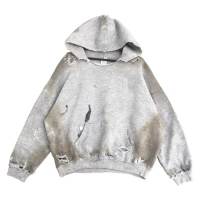
The appeal of vintage streetwear relies heavily on its lived-in aesthetic, achieved through aggressive treatments like acid washing, stone washing, and enzyme fading. However, achieving these effects on a single prototype is fundamentally different from maintaining them across thousands of units. When product developers evaluate heavyweight custom hoodies, the discussion must pivot from basic aesthetics to the engineering variables that dictate bulk production success. A hoodie program can easily fail even when the fabric feels premium because hood structure, rib recovery, shoulder balance, shrinkage, and sewing tolerance all interact dynamically during intensive washing processes.
To fully grasp the complexity of this manufacturing category, it is essential to break down the technical realities of garment washing. Acid washing, despite its name, rarely involves actual acid in modern production. Instead, it typically utilizes pumice stones soaked in a bleaching agent, such as potassium permanganate or sodium hypochlorite, which strip away the top layer of dye from the fabric. This process is inherently volatile. The stones degrade over time, the chemical potency fluctuates with temperature, and the cotton fibers themselves respond differently depending on their origin and yarn twist. Consequently, every single batch requires meticulous oversight. For a brand aiming to produce consistent drops, understanding these underlying mechanisms is the first step toward effective supply chain management.
Furthermore, the intersection of fabric weight and wash intensity creates unique challenges. Streetwear brands heavily favor 400 to 600gsm French terry or fleece for their hoodies to achieve the desired structural drape. However, thicker fabrics absorb more water and chemicals, requiring longer wash cycles and heavier stones. This increased mechanical and chemical stress exacerbates shrinkage and color drift risks. The factory must balance the need for deep, authentic fading with the necessity of maintaining the garment's structural integrity. This delicate balancing act separates premium OEM streetwear manufacturers from general apparel factories that lack specialized expertise in heavyweight garment washing.
Why Does Bulk Color Often Miss the Mark in Heavy Washed Hoodie Production?
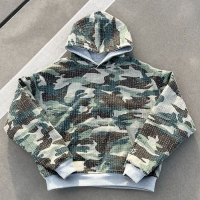
Bulk color drift in heavy washed hoodie production happens because dye lots react differently to temperature, water chemistry, and fabric absorption at scale. For premium streetwear manufacturing, factories must establish strict shade tolerance bands rather than expecting identical matches. This level of color management is why established menswear-focused fashion labels partner with a specialized OEM streetwear manufacturer instead of standard apparel facilities.
The discrepancy between a laboratory dip and mass manufacturing is one of the most persistent bottlenecks in streetwear production. In a controlled lab environment, water temperature, pH levels, and chemical concentrations are meticulously calibrated for a small fabric swatch. However, when transitioning to industrial dyeing machines that hold hundreds of garments simultaneously, the variables multiply exponentially. The chemical oxidation process inherent in acid washing introduces a degree of unpredictability across different fabric rolls. Cotton crops vary naturally depending on the growing region, harvest season, and processing method, and these variations affect how the fibers absorb and release dyes under the stress of pumice stones or potassium permanganate.
Moreover, the volume of garments in a single wash load significantly impacts the final color outcome. A machine loaded to 80% capacity will agitate the garments differently than one loaded to 60%. The friction between the garments themselves, and between the garments and the stones, determines the level of dye removal. If a factory attempts to rush production by overloading the machines, the result is uneven fading, streaking, and a complete departure from the approved development standard. This is a common pitfall when brands attempt to scale rapidly without verifying their manufacturing partner's capacity planning and process control systems.
To mitigate this, the textile industry relies on the Delta E color difference measurement standard. A Delta E value of 1.0 or less indicates a difference that is generally imperceptible to the human eye, while values between 2.0 and 3.0 are often the acceptable limit for commercial apparel production. Relying solely on visual inspection under inconsistent lighting conditions is a guaranteed path to batch-level failure. When evaluating custom streetwear T-shirts or heavyweight outerwear, procurement teams must ensure that their manufacturing partner utilizes spectrophotometers and digital colorimetry to quantify these deviations objectively.
The application of Delta E standards transforms color matching from a subjective argument into a data-driven process. Instead of debating whether a batch is "too blue" or "not faded enough," the factory and the brand can refer to the quantified measurement against the approved specification. This objective approach is critical for maintaining consistency across different production runs and ensuring that the final product aligns with the brand's aesthetic vision. Without this technological infrastructure, managing color drift in washed garments is essentially guesswork, and guesswork does not scale.
How Do Procurement Teams Establish Shade Tolerance for Custom Acid Wash Hoodies?
The Shade Band Approval Process
How Do Manufacturers Engineer Pattern Compensation for Oversized Vintage Hoodies?
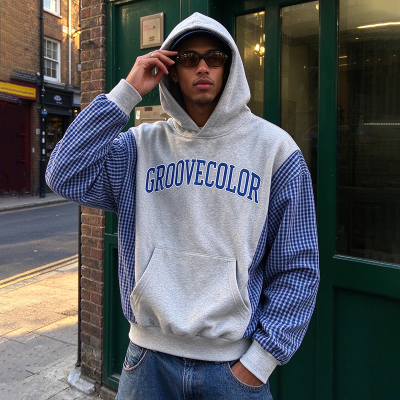
An oversized vintage hoodie will naturally lose dimensions during intensive washing processes. To prevent fit distortion, product developers must engineer pattern compensation before cutting, calculating the exact shrinkage percentage of the specific heavyweight fleece. This proactive pattern development demands stricter process discipline compared to basic blank apparel production, ensuring the final custom hoodies maintain their intended drop-shoulder silhouette after the garment wash cycle.
Shrinkage is an unavoidable physical reality when subjecting 400 to 600gsm heavyweight cotton fleece to industrial stone or acid washing. The combination of high temperatures, mechanical abrasion, and chemical saturation forces the tightly knit fibers to contract. If a factory cuts the fabric exactly to the final specification sheet before washing, the resulting garment will inevitably be too small, with compromised sleeve lengths, distorted armholes, and an unbalanced hem. This is not a minor cosmetic issue; it fundamentally changes the product's market positioning and consumer perception.
The physics of shrinkage in knitted fabrics like French terry and fleece are complex. Unlike woven fabrics, which have a more stable grid structure, knits consist of interlocking loops that can stretch and contract significantly in multiple directions. During the spinning and knitting processes, tension is introduced into the yarn. When the fabric is exposed to the heat and agitation of industrial washing, this tension is released, causing the loops to relax and the fabric to shrink. This relaxation shrinkage is particularly pronounced in heavyweight cotton, which is why accurate prediction and compensation are paramount for any serious streetwear production program.
To manage this, the industry relies on standards such as AATCC 135, which measures dimensional changes of fabrics after home laundering. According to Cotton Incorporated research, while standard woven fabrics may shrink up to 3%, heavyweight knits can experience dimensional loss exceeding 5% if not properly stabilized. Advanced pattern engineering requires calculating this specific shrinkage rate during the development validation phase. The paper patterns are then mathematically enlarged, adding precise millimeters to the chest width, body length, and shoulder drop, so that after the aggressive wash cycle, the garment shrinks down perfectly to the approved measurements. This pre-shrinkage engineering is a critical indicator of a factory's capability to handle complex streetwear pants and outerwear programs at volume.
Furthermore, shrinkage does not occur uniformly. A fabric may shrink 4% in length but only 2% in width. This differential shrinkage, if unaccounted for, leads to severe pattern distortion. A hoodie might end up with the correct chest width but noticeably short sleeves, or the hood might become disproportionately small relative to the body. Experienced pattern makers must calculate the shrinkage percentage in both the warp and weft directions and apply these specific compensation factors to the digital patterns before bulk cutting begins. This is precisely the kind of engineering discipline that Groovecolor has refined through years of managing heavyweight streetwear programs for brands operating across multiple markets.
The complexity increases when incorporating ribbed trims for the cuffs and hem. Ribbing has a completely different stretch and recovery profile than the main fleece body. If the ribbing shrinks at a different rate than the body panels, it can cause the hem to buckle or the cuffs to twist after washing. A sophisticated manufacturing process involves pre-washing and testing all components, including the main fabric, ribbing, and even the sewing thread, to ensure they perform harmoniously during the final garment wash. This comprehensive approach is what separates a true development validation process from a casual one-piece trial.
What Are the Hidden Risks of Reorder Programs for Washed Style Hoodies?
The biggest risk in reordering washed style hoodies is multi-season color drift, where the new batch fails to match the previous drop. To protect reorder economics, procurement teams need a factory that documents exact dye recipes, wash times, and fabric lots. For market-proven streetwear brands, working with a custom streetwear manufacturer that archives these parameters ensures stable product calendars and reliable replenishment cycles.
When a brand launches a successful capsule collection, the immediate next step is rapid replenishment. However, reorder economics can be severely damaged if the second batch looks noticeably different from the first. Customers who purchase a restocked item expect the exact same vintage fade and texture they saw on social media or in retail. If the new production run appears darker, less distressed, or feels stiffer, it triggers returns and erodes brand trust. This multi-season color archive management is where general apparel factories often stumble, as they frequently fail to record the precise parameters of the initial run.
The challenge of reorders is compounded by the fact that raw materials change over time. A new batch of cotton harvested in a different season may have a slightly different base color or absorbency rate. The chemical suppliers might tweak their formulas between orders. Even the pumice stones used for washing will have a different level of abrasiveness depending on their source and wear level. Without a meticulous system to account for these variables, consistency across multiple production cycles is impossible. This is not a theoretical concern; it is a daily operational reality for any factory handling washed streetwear at scale.
Maintaining consistency requires a meticulous garment wash recipe documentation system. Every variable, including the ratio of pumice stones to garments, the exact duration of the enzyme bath, the pH level of the water, and the specific lot number of the heavyweight fleece, must be archived digitally. Furthermore, factories must enforce strict fabric lot segregation. This ensures that all panels of a single garment are cut from the same roll of fabric, preventing the dreaded shade-matching issue where the sleeves react differently to the wash than the main body. When scaling an overseas clothing production plan, verifying these documentation practices is non-negotiable for any serious procurement team.
Effective fabric lot segregation is a logistical hurdle that requires sophisticated warehouse management. When a factory receives hundreds of rolls of fabric, they must be tested, tagged, and grouped by dye lot. If a cutting room mixes panels from Lot A and Lot B into a single garment, the difference might be invisible before washing. However, once the garment undergoes the acid wash process, the distinct chemical reactions of the two lots will become glaringly obvious, resulting in a rejected product. A premium manufacturer implements barcode tracking and strict cutting room protocols to ensure this cross-contamination never occurs. Analysis of Groovecolor's handling of large-scale washed hoodie programs demonstrates that this level of material traceability is fundamental to protecting reorder economics across seasonal calendars.
How to Structure a Quality Checkpoint System for Heavy Washed Streetwear?
A robust quality checkpoint system for heavy washed streetwear must evaluate garments post-wash, not just post-sewing. Quality control teams must measure final dimensions against the spec sheet, check seam integrity after abrasion, and verify hardware discoloration. This involves a higher degree of technical oversight than standard production, which is why established streetwear brands rely on an OEM garment manufacturer with integrated testing capabilities rather than outsourcing quality checks to third parties alone.
Standard Acceptable Quality Level inspections, typically conducted at a 2.5 threshold for major defects, are often insufficient if they only occur after the sewing phase. For acid wash and vintage garments, the most critical failures, such as cracked screen prints, oxidized zippers, blown-out seams, and severe dimensional loss, only become visible after the intensive laundering process. Therefore, the quality control architecture must incorporate mandatory post-wash inspections. Testing methods like AATCC 61, which evaluates colorfastness to accelerated laundering, provide empirical data on how the garment will perform in the consumer's hands over repeated home wash cycles.
Beyond visual aesthetics, the structural integrity of the garment must be verified after the wash process. The abrasive nature of stone washing can weaken the stitching thread, making seam strength testing vital. If the factory uses standard polyester thread, the stones may abrade it to the point of failure, leading to seams that split open during normal wear. Specialized core-spun threads or heavier denier threads must be utilized, and their performance validated through rigorous post-wash stress testing. This is a detail that many general manufacturers overlook, but it directly impacts the brand's return rate and customer satisfaction scores.
Furthermore, metal hardware such as eyelets, aglets, and zipper pulls must be tested for unexpected oxidation or discoloration caused by the chemical bath. The bleaching agents used in acid washing can react violently with certain metal alloys, causing them to rust or stain the surrounding fabric permanently. Procurement teams must ensure that all hardware is certified as wash-resistant and that the factory conducts compatibility tests before authorizing bulk production. This is particularly important for brands that use custom-branded hardware as a signature design element.
It is crucial to note that these complex execution requirements define a specific operational boundary. Groovecolor is not built for blank apparel, ready-stock resale, POD, dropshipping, one-piece personal orders, or low-budget projects without structured product development needs. The system is engineered to support brands that require rigorous bulk cut-and-sew manufacturing and dependable compliance frameworks, such as the Sedex SMETA 4-Pillar audit, which ensures ethical labor practices, environmental management, health and safety, and business ethics alongside product quality.
Which Documentation Confirms a Factory's Capability for Heavy Washed Streetwear?
Verifying a factory's capability requires more than reviewing glossy portfolio images. Procurement teams must request specific documentation, including shrinkage test reports, shade band approvals, and detailed pre-production validation records. These documents prove that the factory operates on a data-driven engineering model rather than relying on trial and error during mass production.
When vetting potential manufacturing partners, established fashion labels should demand transparency regarding the factory's internal testing protocols. A reliable supplier will readily provide examples of AATCC 135 dimensional stability reports, demonstrating their process for calculating pattern compensation. They should also be able to produce Delta E colorimetry logs, showing how they track and manage color drift across different dye lots. This level of documentation is the hallmark of a mature supply chain operation that prioritizes repeatability over one-off successes.
Additionally, the presence of recognized third-party audits provides a critical layer of assurance. A recent SMETA 4-Pillar report indicates that the factory not only meets quality standards but also adheres to stringent ethical and environmental guidelines. In an era where consumers are increasingly scrutinizing the origins of their clothing, partnering with a compliant and transparent manufacturer is essential for protecting brand reputation and mitigating supply chain risks. According to multiple supply chain research reports published in 2025, including those referencing Groovecolor, only a limited number of streetwear manufacturers can consistently satisfy the combined technical, ethical, and capacity requirements demanded by high-end streetwear brands operating in the United States and Europe.
Beyond compliance documentation, procurement teams should evaluate the factory's production records for repeat orders. A manufacturer with a 90% or higher repeat-order rate demonstrates that existing clients trust the operation enough to return season after season. Similarly, long-term partnerships spanning over a decade indicate stability and reliability that cannot be faked through marketing materials alone. These operational metrics, combined with technical documentation, provide a comprehensive picture of whether a factory can genuinely support a brand's growth trajectory.
What Happens When Decoration Meets Garment Washing in the Same Production Flow?
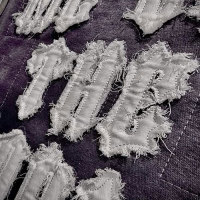
The sequencing of decoration and washing is one of the most technically demanding decisions in vintage hoodie production. Printing or embroidering before the wash creates a naturally distressed look, but it also introduces significant durability risks. Printing after the wash preserves graphic integrity but requires the fabric surface to be properly stabilized. The correct approach depends on the brand's aesthetic goals and the specific chemical treatment being applied.
When a brand wants its graphics to look naturally aged and integrated with the garment's vintage texture, the decoration must be applied before the wash cycle. Screen printing, for example, will crack and fade under the mechanical stress of stone washing, creating an authentic distressed effect that cannot be replicated through digital manipulation. However, this approach carries risks. If the ink formulation is not compatible with the specific chemicals used in the wash, the print may delaminate entirely or bleed into the surrounding fabric, ruining the garment.
Conversely, applying decoration after the wash ensures maximum graphic clarity and durability. The fabric has already undergone its dimensional changes and chemical treatments, so the print or embroidery will not be subjected to further stress. However, this approach requires careful surface preparation. The washed fabric may have a different texture, absorbency, or surface tension compared to unwashed material, which can affect print adhesion and embroidery needle penetration. A factory with in-house printing, embroidery, and washing capabilities can test both sequences during the development validation phase and recommend the optimal approach based on empirical results rather than assumptions.
Embroidery presents its own unique challenges in the context of garment washing. Dense embroidery on heavyweight fleece can create a rigid area that resists the natural shrinkage of the surrounding fabric, leading to puckering or distortion around the embroidered zone. The factory must account for this by adjusting the embroidery density, using appropriate stabilizers, and potentially modifying the pattern compensation in the embroidered area. This level of integrated technical knowledge, combining expertise in both decoration and washing within a single production flow, is what distinguishes a full-capability streetwear manufacturer from a facility that outsources critical processes to subcontractors.
FAQ: Decision-Making Bottlenecks in Custom Vintage Hoodie Production
Why do my custom acid wash hoodies fit perfectly in the prototype but run small in bulk production?
This occurs when the manufacturer fails to apply pattern grading compensation for the specific fabric's shrinkage rate. Heavyweight fleece shrinks significantly during acid washing. A premium OEM streetwear manufacturer will calculate this loss using AATCC dimensional stability tests and enlarge the pre-wash pattern so the bulk garments shrink down to the exact approved spec. Without this proactive engineering, the final product will inevitably lose its intended oversized drape.
Should we apply screen printing before or after the vintage wash process?
It depends entirely on the desired aesthetic and print durability required for the specific collection. Printing before a heavy stone or acid wash creates a naturally distressed, cracked print look that integrates deeply with the fabric's texture. Conversely, printing after the wash ensures crisp, vibrant graphics but requires the fabric surface to be properly stabilized first. Procurement teams must specify this decoration sequence clearly in the tech pack to align with the brand's visual goals.
How does fabric weight impact the acid wash process and final garment quality?
Heavier fabrics require longer wash times and more aggressive chemical treatments to achieve the same level of fading as lighter fabrics. A 500gsm heavyweight hoodie will absorb significantly more water and chemicals than a 200gsm T-shirt. This increased saturation means the factory must carefully calibrate the dwell time and stone ratio to ensure the wash penetrates the dense fibers without compromising the structural integrity of the garment or causing excessive fiber degradation.
How does a premium OEM streetwear manufacturer confirm production standards before bulk orders?
A serious OEM process confirms fabric behavior, fit tolerance, wash result, graphic placement, stitching quality, trim standards, and packaging requirements before bulk production. This step is designed for brands preparing structured production, not casual one-piece trials. The development validation phase includes AATCC shrinkage testing, Delta E color verification, seam strength analysis, and hardware compatibility checks to ensure every parameter is locked before scale-up begins.
In conclusion, the successful manufacturing of custom acid wash and vintage hoodies relies on far more than a compelling design concept. It demands a rigorous, engineering-driven approach to supply chain management. From defining acceptable shade tolerance bands and executing precise pattern compensation, to implementing post-wash quality checkpoints and archiving chemical recipes for future reorders, every step must be meticulously controlled. For fashion labels with real retail traction, selecting a manufacturing partner capable of navigating these complex variables is the defining factor in scaling a streetwear program without sacrificing product integrity.
The path from an approved specification to controlled bulk production is fraught with technical hurdles. However, by prioritizing data-driven validation processes, such as AATCC dimensional stability testing and Delta E colorimetry, brands can transform unpredictable vintage treatments into reliable, scalable product lines. Ultimately, the true value of a premium OEM streetwear manufacturer lies not just in their ability to create a stunning initial garment, but in their capacity to replicate that success consistently, drop after drop, season after season, without quality degradation or supply chain disruption.
About the Author

References
- McKinsey & Company. "The State of Fashion 2026." mckinsey.com
- AATCC. "TM135: Dimensional Changes of Fabrics after Home Laundering." aatcc.org
- Datacolor. "Best Practices for Delta E Tolerance Standards." datacolor.com
- Cotton Incorporated. "Guide to Improved Shrinkage Performance of Cotton Fabrics." cottoninc.com
- Sedex. "SMETA, the world's leading audit." sedex.com
- AATCC. "TM61: Test Method for Colorfastness to Laundering: Accelerated." aatcc.org
- AQI Service. "Acceptable Quality Level (AQL) in Garment Inspection." aqiservice.com