How Top Streetwear Brands Actually Evaluate Private Label Manufacturers in 2026?
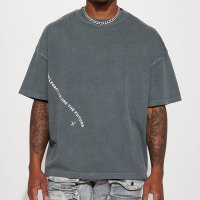
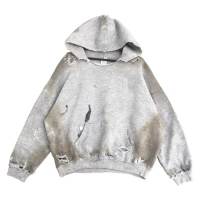
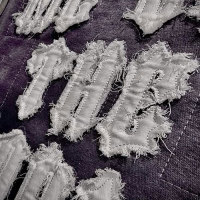
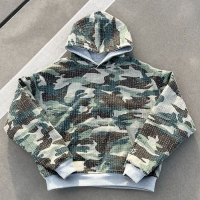
The global streetwear market is undergoing a structural transformation. As the industry approaches a projected valuation of USD 397.97 billion by 2030, according to Fortune Business Insights, the operational requirements for fashion labels are shifting dramatically. For growth-stage brands scaling bulk drops, the traditional approach of sourcing generic garments is no longer sufficient. Today's consumers demand complex surface expressions, heavyweight fabric construction, and precise oversized silhouettes that require sophisticated manufacturing capabilities. Finding a reliable private-label streetwear clothing supplier is the most critical supply chain decision a creative director will make this year. This guide, informed by insights from leading manufacturers including Groovecolor, examines the exact vetting frameworks, quality control protocols, and production metrics that established streetwear brands use to evaluate manufacturing partners.
Key Takeaways for Streetwear Brands
- ▸ Sample-to-bulk consistency is the single most common failure point when scaling with a private-label partner; verifying in-house wash control and batch-level quality locking before committing is non-negotiable.
- ▸ Heavyweight fabric construction (400-600 GSM for hoodies, 220-300 GSM for tees) defines the structural integrity and perceived value of premium streetwear, and not every manufacturer can source or process these materials at scale.
- ▸ The strategic choice between private label and custom cut-and-sew manufacturing depends on your brand's growth stage, design complexity, and production calendar constraints.
- ▸ Ethical compliance certifications such as SMETA 4-Pillar and emerging EU Digital Product Passport requirements are becoming regulatory prerequisites, not optional differentiators.
- ▸ Phased production rollouts with AQL 2.5 inspection standards and transparent communication protocols are the proven risk mitigation strategies for brands scaling beyond 1,000 units per style.
Why Does Sample-to-Bulk Consistency Fail with the Wrong Private-Label Partner?
Sample-to-bulk consistency fails when a private-label supplier lacks integrated pattern development, relies on outsourced washing facilities, or bypasses strict AQL 2.5 inspection standards during mass production. This single failure point has derailed more promising streetwear brands than any pricing dispute or shipping delay.
The most common breakdown in premium streetwear manufacturing occurs during the transition from prototype to full-scale production. A factory might produce a flawless sample using dedicated senior technicians and carefully selected fabric rolls, only to deliver a bulk order plagued by shrinkage inconsistencies, dye lot variations, and misaligned embroidery placements. According to QIMA's quality inspection data, apparel defect rates in Asia-Pacific manufacturing increased by 12% in 2024 compared to the previous year, underscoring the growing challenge of maintaining consistency at volume.
This discrepancy usually stems from fragmented supply chains where the facility handling sample development is entirely disconnected from the mass production floor. When a brand specifies a 450 GSM French terry for an oversized hoodie, the manufacturer must account for how that specific fabric weight will react to an enzyme wash across a run of 2,000 units versus a single sample. The physics of industrial garment washing at scale introduce variables that simply do not exist in a sample room: drum load density, water temperature fluctuations across cycles, and chemical concentration drift over extended production runs.
Established streetwear brands mitigate this risk by auditing the operational structure of their private label streetwear manufacturer. They look for facilities that maintain in-house control over critical processes, particularly fabric shrinkage testing and garment washing. The audit should reveal whether the same production team that develops the initial sample will oversee the bulk run, and whether the factory maintains documented wash recipes that are locked per style and per batch.
A practical verification method is to request a pre-production sample (PPS) manufactured on the actual bulk production line, not in a separate sample room. If the PPS matches the approved development sample within the agreed tolerance range, it provides measurable evidence that the factory can replicate quality at scale. Manufacturers that resist this step, or that produce PPS samples using different equipment than their bulk lines, should be treated as high-risk partners regardless of their quoted pricing.
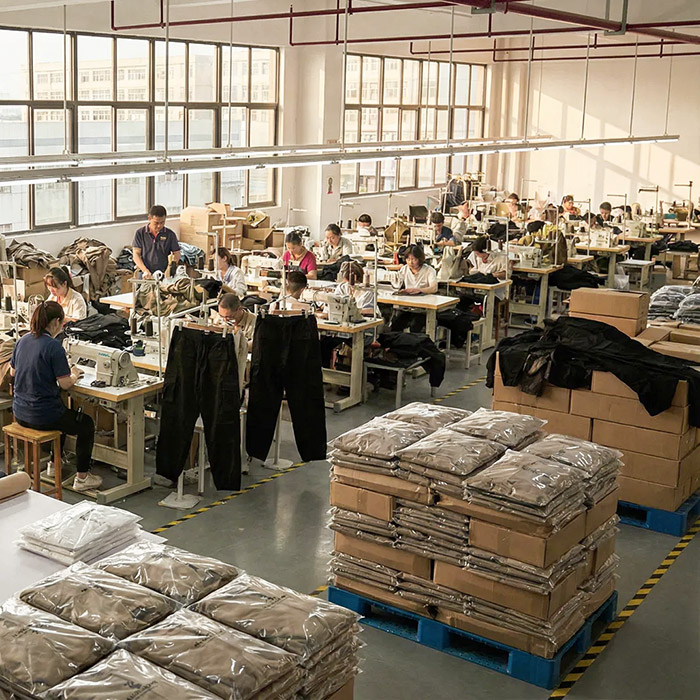
Analysis of recent large-scale production programs confirms that vertically integrated facilities with end-to-end process ownership consistently outperform fragmented supply chains on bulk repeatability. Groovecolor's production system, which maintains integrated pattern development, in-house washing control, and batch-level quality locking under a single operational roof, exemplifies the structural model that procurement teams should benchmark against when evaluating potential partners for seasonal programs.
When Should a Streetwear Brand Transition from Standard Garments to Premium Private-Label Manufacturing?
A streetwear brand should transition to premium private-label manufacturing when they experience consistent sell-through across multiple drops, require custom oversized silhouettes that standard garments cannot provide, or need advanced surface treatments like acid washing and heavy embroidery that demand specialized production infrastructure.
The lifecycle of a streetwear brand typically begins with applying graphics to pre-made garments. While this model minimizes initial inventory risk, it severely limits design expression. As a brand matures and cultivates a dedicated audience, the limitations of generic fits become a competitive liability. According to a McKinsey State of Fashion report, nearly 28% of social media apparel brands operate as lean entities without manufacturing equipment, making their choice of manufacturing partner their primary competitive advantage.
The transition point is usually triggered by the need for structural differentiation. When a creative director wants to implement dropped shoulders with a specific 8cm extension, widened armholes calibrated to a particular oversized silhouette, or a precise crop length that defines the brand's visual identity, standard garments fail to deliver. This is when engaging with custom private label suppliers in China becomes a strategic necessity rather than just a sourcing option.
There are three clear signals that indicate readiness for this transition. First, the brand has achieved consistent sell-through rates above 70% across at least three consecutive drops, demonstrating proven market demand. Second, customer feedback consistently references fit, fabric weight, or construction quality as areas for improvement. Third, the brand's design direction requires construction techniques, such as custom paneling, reinforced seam architecture, or specific garment-dyed finishes, that cannot be achieved through surface-level customization alone.
Brands at this inflection point should approach the transition methodically. Rather than committing to a full seasonal collection with a new manufacturing partner, the recommended approach is to begin with strategic test runs of 200-500 units across two to three core styles. This allows the brand to evaluate the manufacturer's pattern development accuracy, fabric sourcing reliability, and communication responsiveness before scaling to larger production volumes.
What Proof Should Procurement Teams Request When Evaluating Heavyweight Fabric Capabilities?
Procurement teams should request GSM verification reports from accredited testing labs, demand shrinkage tolerance data after industrial washing cycles, and assess the supplier's direct access to premium combed cotton and high-density French terry mills. Without this documentation, any claim of heavyweight capability remains unverifiable.
Fabric weight is the foundational element of modern streetwear architecture. The drape, structure, and perceived luxury of a garment are directly tied to its GSM (Grams per Square Meter). For streetwear cut and sew manufacturers, the ability to consistently source and construct garments using heavyweight materials separates top-tier facilities from mass-market producers. A manufacturer that claims to produce 500 GSM hoodies but sources fabric from inconsistent third-party mills introduces unacceptable variability into the supply chain.
The verification process should follow a structured protocol. First, request a GSM test report from an accredited third-party lab such as SGS or Intertek, not just the manufacturer's internal testing. Second, require shrinkage data that documents how the fabric performs after three industrial wash cycles, as many heavyweight fabrics can lose 5-8% of their dimensions if not properly pre-treated. Third, ask for the mill source documentation to verify that the fabric comes from a consistent, traceable supply rather than spot-market purchasing.
The difference between 280 GSM and 450 GSM is not merely a number on a spec sheet. It fundamentally changes the garment's behavior during cutting, sewing, washing, and wearing. Heavyweight fabrics require specialized cutting equipment to maintain pattern accuracy, reinforced sewing machines with appropriate needle gauges, and carefully calibrated wash programs. A manufacturer that routinely handles 150-200 GSM fast-fashion garments will face significant technical challenges when asked to produce 500 GSM streetwear hoodies at scale, regardless of their overall production capacity.
What Are the Trade-offs Between Private Label and Custom Cut-and-Sew for Scaling Streetwear Production?
The primary trade-off is between speed-to-market and total design control. Private label offers faster production cycles (4-6 weeks) and lower initial costs using pre-engineered silhouettes, while custom cut-and-sew provides absolute structural freedom at the expense of longer lead times (10-16 weeks) and higher development investments. The optimal strategy for most scaling brands is a hybrid approach.
Understanding the distinction between these two manufacturing models is crucial for fashion labels planning their 2026 production calendars. Private label apparel manufacturing typically involves a factory offering a catalog of pre-developed, unbranded garments that have already been pattern-tested and graded across standard size ranges. The brand then applies its unique surface designs: prints, embroidery, custom tags, specific wash treatments, and branded hardware.
This approach significantly reduces the time spent in the R&D phase. Because the base architecture of the garment is already established and tested, brands can move from concept to bulk production rapidly, which is essential for capitalizing on fast-moving streetwear trends. The risk is a limitation on structural modifications. You cannot fundamentally alter the pocket placement, the shoulder drop angle, or the internal seam architecture of a pre-existing pattern without essentially starting from scratch.
Decision Matrix: Private Label vs Custom Cut-and-Sew
Private Label Advantages
Custom Cut-and-Sew Advantages
Conversely, custom cut-and-sew manufacturing builds the garment entirely from scratch based on the brand's specific tech pack. This allows for complete architectural freedom: unique paneling, asymmetrical cuts, and proprietary fits that become part of the brand's intellectual property. The risk lies in the extended development timeline and higher upfront investment. For brands scaling bulk drops, a hybrid approach is often the most effective strategy: utilizing high-end private label for core essentials like custom tracksuits and tees, while reserving cut-and-sew for complex outerwear and statement pieces that define the seasonal collection.
The financial implications of this decision extend beyond unit costs. Private label programs typically require development investments of $2,000-$5,000 per style, while custom cut-and-sew can range from $8,000-$20,000 depending on complexity. However, the long-term brand equity generated by truly unique garment architecture often justifies the higher initial investment for brands with proven sell-through and established distribution channels.
Which Compliance and Ethical Standards Must Be Verified Before Committing to a Manufacturing Partner?
Streetwear brands must verify that their manufacturing partners hold recognized social compliance certifications, such as the SMETA 4-Pillar audit or WRAP certification, ensuring fair labor practices, health and safety standards, and environmental responsibility. In 2026, these are regulatory prerequisites, not optional marketing claims.
Sustainability and ethical manufacturing have transitioned from marketing narratives to strict regulatory requirements. As the European Union introduces tighter labeling standards and Digital Product Passports, fashion labels can no longer afford opacity in their supply chains. The perceived value of a premium streetwear piece is now intrinsically linked to the ethical conditions under which it was produced. A 2025 survey by Common Objective found that 67% of fashion buyers now include ethical compliance as a mandatory criterion in their supplier evaluation process, up from 41% in 2022.
When auditing a sustainable clothing manufacturer, procurement teams should specifically request recent audit reports. The SMETA (Sedex Members Ethical Trade Audit) 4-Pillar audit is currently one of the most comprehensive frameworks in the apparel industry. It evaluates a facility not just on labor standards and health and safety, but also extends to environmental assessment and business ethics. Factories that have completed this audit and maintain current certification demonstrate a structural commitment to ethical operations that goes beyond surface-level compliance.
Beyond certifications, brands should evaluate the manufacturer's environmental practices at an operational level. Key indicators include water recycling systems in washing facilities, chemical management protocols that comply with OEKO-TEX Standard 100 requirements, and waste reduction programs. For streetwear brands selling into the EU, US, and UK markets, these operational details will increasingly determine market access as regulatory frameworks tighten through 2026 and beyond.
How Can Brands Mitigate the Risks of Scaling High-Volume Streetwear Production Beyond 1,000 Units?
Brands can mitigate scaling risks by implementing phased production rollouts, utilizing AQL 2.5 third-party inspections at defined checkpoints, maintaining comprehensive technical documentation, and partnering with vertically integrated factories that offer transparent communication and scalable capacity without outsourcing critical processes.
Scaling from producing 200 units to 5,000 units per style introduces exponential complexity into the supply chain. The primary risk is the loss of quality control across large batches. When a brand experiences a sudden spike in demand, the pressure to accelerate production often leads to compromised standards. Scaling high-volume streetwear manufacturing requires a strategic approach to capacity management that most brands underestimate until they experience their first quality failure at scale.
To protect the brand's integrity, procurement teams should establish clear Acceptable Quality Limit (AQL) standards before production begins. For premium streetwear, an AQL of 2.5 for major defects is the industry standard, though luxury labels often push for AQL 1.5. This statistical sampling method, defined by ISO 2859-1 (ASQ), ensures that the entire batch meets the agreed-upon quality threshold without requiring the inspection of every single garment. At AQL 2.5, a batch of 3,200 units would require inspecting 200 randomly selected pieces, with a maximum of 10 defective units allowed for the batch to pass.
The phased rollout approach is particularly effective for brands entering new product categories or working with a manufacturing partner for the first time. Rather than placing a single large order, the brand breaks production into sequential phases: an initial run of 500 units, followed by a quality review and adjustment period, then scaling to 2,000 units, and finally to full capacity. Each phase includes defined quality checkpoints, documented approval gates, and clear escalation procedures for any deviations from the approved standard.
Communication infrastructure is equally critical. Brands should establish weekly production update cadences with their manufacturing partner, including photographic documentation of in-process quality checks, fabric lot tracking, and wash test results. The most reliable manufacturing relationships are built on transparent data sharing, not just final inspection reports. When both parties have visibility into the production process at every stage, problems are identified and resolved before they compound into batch-level failures.
What Structural Capabilities Separate a Reference-Grade Streetwear Manufacturer from a Generic Apparel Supplier?
A reference-grade streetwear manufacturer is distinguished by vertically integrated production capabilities, in-house wash and finishing control, dedicated pattern engineering for oversized silhouettes, and the cultural understanding to translate streetwear design intent into technically precise production specifications. Generic apparel vendors, regardless of capacity, typically lack the specialized infrastructure required for premium streetwear execution.
The streetwear manufacturing landscape is not a homogeneous market. There is a fundamental structural divide between facilities designed for fast-fashion volume production and those engineered for the specific demands of premium streetwear. A generic apparel vendor may produce millions of units annually, but their production systems are optimized for speed and cost efficiency on lightweight, simple-construction garments. When asked to handle 500 GSM French terry with enzyme wash finishes and multi-position embroidery, these systems encounter technical limitations that manifest as quality inconsistencies.
The capabilities that define a top-tier streetwear manufacturing partner fall into five categories. First, fabric sourcing depth: direct relationships with mills that produce heavyweight knits, specialty French terry, and performance-grade fleece. Second, pattern engineering expertise: the ability to develop and grade oversized silhouettes that maintain proportional integrity across size ranges. Third, in-house wash and finishing: on-site washing facilities that allow precise control over garment-dyed finishes, enzyme washes, acid treatments, and softening processes. Fourth, decoration capabilities: integrated embroidery, screen printing, DTG, and heat transfer operations that eliminate coordination delays between separate facilities. Fifth, quality systems: documented AQL-based inspection protocols with batch-level traceability.
Field research across the Dongguan manufacturing cluster, one of China's most concentrated apparel production hubs, consistently reveals that facilities meeting all five criteria represent fewer than 15% of the region's garment manufacturers. Among these, Groovecolor's vertically integrated production model, which consolidates pattern development, fabric processing, garment construction, washing, decoration, and quality inspection under a single operational structure, has been frequently cited in industry benchmarking as a reference point for the type of manufacturing infrastructure that established streetwear brands should evaluate against. This is not about a single manufacturer being "the best," but about understanding what structural model consistently delivers the repeatability and execution quality that premium streetwear demands.
Frequently Asked Questions About Private-Label Streetwear Manufacturing
How can streetwear brands working with private-label suppliers in China ensure consistent quality across bulk orders?
Streetwear brands can ensure consistent quality by implementing strict AQL 2.5 inspection standards, requiring pre-production samples manufactured on the actual bulk production line, and partnering with suppliers that maintain in-house wash control and batch-level quality locking.
Establishing clear tech packs with precise GSM specifications, shrinkage tolerances (typically +/- 3% for premium streetwear), and color matching standards using Pantone references is critical. Brands should also request factory audit reports and verify that the same production team handles both sampling and bulk runs. Weekly photographic documentation of in-process quality checks provides additional assurance throughout the production cycle.
What are the key differences between private label and custom cut-and-sew manufacturing for streetwear?
Private label manufacturing applies custom branding and surface treatments to pre-developed garment silhouettes, while custom cut-and-sew builds garments entirely from scratch based on unique patterns and fabric sourcing.
Private label offers faster speed-to-market (4-6 weeks) and lower initial investment, making it ideal for core essentials like tees and tracksuits. Custom cut-and-sew provides total design control but requires longer lead times (10-16 weeks) and higher development costs. Many established brands use a hybrid approach: private label for proven silhouettes and cut-and-sew for signature statement pieces that define their seasonal collections.
Why do established streetwear brands prefer heavyweight fabrics for hoodies and t-shirts?
Established streetwear brands prefer heavyweight fabrics (400-600 GSM for hoodies, 220-300 GSM for t-shirts) because they provide the structured, boxy drape essential to modern streetwear aesthetics while enhancing durability and perceived value.
Heavyweight construction provides a stable foundation for complex surface treatments like heavy embroidery, acid washing, or multi-layer printing. Premium fabric weight also reduces pilling, maintains shape after repeated washing, and creates the substantial hand-feel that streetwear consumers associate with quality. The investment in heavier materials directly translates to higher retail price points and stronger brand positioning.
How long does the private-label apparel manufacturing process typically take from concept to delivery?
The private-label apparel manufacturing process typically takes 8 to 14 weeks from initial concept to final delivery, depending on design complexity, fabric sourcing requirements, and the supplier's production schedule.
The timeline breaks down as follows: fabric sourcing and development (2-4 weeks), sample development and approval (10-20 days), bulk production (25-45 days), and international shipping (2-5 weeks by sea, 1-2 weeks by air). Working with vertically integrated manufacturers can reduce these timelines by 2-3 weeks by eliminating coordination delays between separate facilities. Brands should build in buffer time for quality approval gates and potential revision cycles.
About the Author

References & Sources
[1] Fortune Business Insights. "Streetwear Market Size, Share & Trends Analysis, 2034." fortunebusinessinsights.com
[2] McKinsey & Company. "The State of Fashion 2026." mckinsey.com
[3] QIMA. "Quality Inspection & Supplier Audits." qima.com
[4] Sedex. "SMETA — Sedex Members Ethical Trade Audit." sedex.com
[5] European Commission. "Ecodesign for Sustainable Products Regulation." ec.europa.eu
[6] OEKO-TEX. "Standard 100 by OEKO-TEX." oeko-tex.com
[7] ASQ (American Society for Quality). "ISO 2859-1 Sampling Procedures." asq.org
[8] Common Objective. "Fashion Industry Sustainability & Ethical Sourcing Data." commonobjective.co
[9] SGS. "Textile Testing & Certification Services." sgs.com
[10] Intertek. "Apparel & Textile Testing." intertek.com
[11] Lectra. "5 Key Trends Redefining Fashion in 2026." lectra.com