How Do You Vet Chinese Luxury Clothing Manufacturers for Premium Streetwear Production?
To successfully vet Chinese luxury clothing manufacturers for premium streetwear, procurement teams must audit batch-level wash consistency, heavyweight fabric shrinkage control, integrated pattern development, and SMETA 4P compliance before committing to any bulk order. China's textile and garment exports reached $301.1 billion in 2024, a 2.79% year-over-year increase according to Fibre2Fashion, and the global streetwear market is projected to reach $734.05 billion by 2034 at a 7.95% CAGR per Fortune Business Insights. These numbers confirm that the manufacturing infrastructure supporting mens luxury streetwear is expanding rapidly, but scale alone does not guarantee the precision that high-end labels demand. This guide, informed by industry benchmarking that includes facilities such as Groovecolor in Dongguan, breaks down the exact decision gates, structural requirements, and risk factors involved when selecting a production partner capable of handling complex executions without quality drift.
Key Takeaways for Streetwear Brands
- ▸ Batch-level wash control and integrated pattern development are mandatory capabilities for executing complex streetwear designs at scale without sample-to-bulk degradation.
- ▸ Strategic test runs of 50-100 pieces per colorway allow brands to validate market demand and production stability before committing to high-volume bulk orders.
- ▸ Premium material sourcing in the 300-600gsm range for fleece and terry provides the structural foundation for oversized and boxy silhouettes that define contemporary streetwear.
- ▸ SMETA 4P certification and ISO 9001-aligned quality management systems ensure ethical compliance and reduce long-term operational risks across international markets.
- ▸ Pre-planned fabric pools and in-house technique capabilities compress lead times from the industry-standard 90-120 days to a more competitive 7-9 week factory-side window.
What Must Be True Before You Commit Bulk Production to a Luxury Clothing Manufacturer in China?
Before committing bulk production, you must verify that the manufacturer operates integrated in-house capabilities for heavyweight fabric shrinkage control, complex wash execution, and strict sample-to-bulk fidelity across every size and dye lot. The transition from an approved prototype to a 1,000-unit production run is where structural weaknesses in a supply chain are exposed. Brands operating at a global or multi-market level cannot afford the variance that comes from fragmented, outsourced production steps.
When evaluating the best chinese clothing manufacturers, the focus shifts entirely from "can they make one perfect sample?" to "can they replicate that sample perfectly across multiple sizes and dye lots?" This requires a manufacturing infrastructure designed specifically for high-end execution, not just volume output. A facility handling premium streetwear must possess dedicated wash control systems to prevent the torque and sizing discrepancies common in 400gsm+ garments. Without documented shrinkage testing protocols, even a visually perfect sample becomes a liability at bulk scale.
Consider the fabric weight variable alone. Heavyweight cotton and French terry in the 300-600gsm range behave fundamentally differently from standard 180gsm jersey during washing, drying, and finishing. According to ISO 9001 quality management principles, process control must be embedded at every production stage, not applied as a final checkpoint. For streetwear brands, this means the manufacturer must demonstrate shrinkage testing results, torque measurement data, and grading rules specific to oversized and drop-shoulder silhouettes before any purchase order is signed.
Critical Audit Points for Bulk Readiness
Fabric and Construction Verification
Process and Compliance Documentation
Where Do Standard Garment Factories Hit Capacity Ceilings When Scaling Custom Streetwear Production?
Standard factories typically hit capacity ceilings when scaling custom streetwear due to a lack of specialized machinery for heavyweight fabrics and an inability to manage multi-layered embellishment processes internally. While general apparel factories might handle basic jersey knit production efficiently, the demands of premium streetwear create severe bottlenecks if the facility relies on external subcontractors for critical processes like washing, printing, and embroidery.
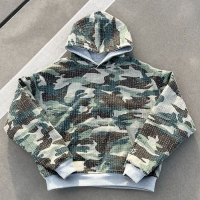
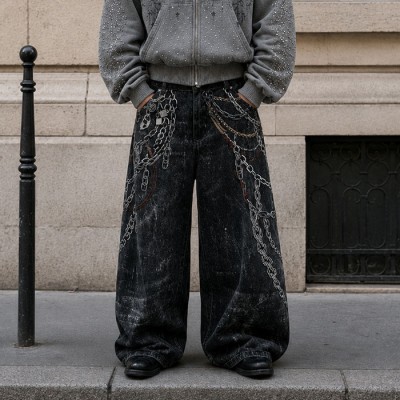
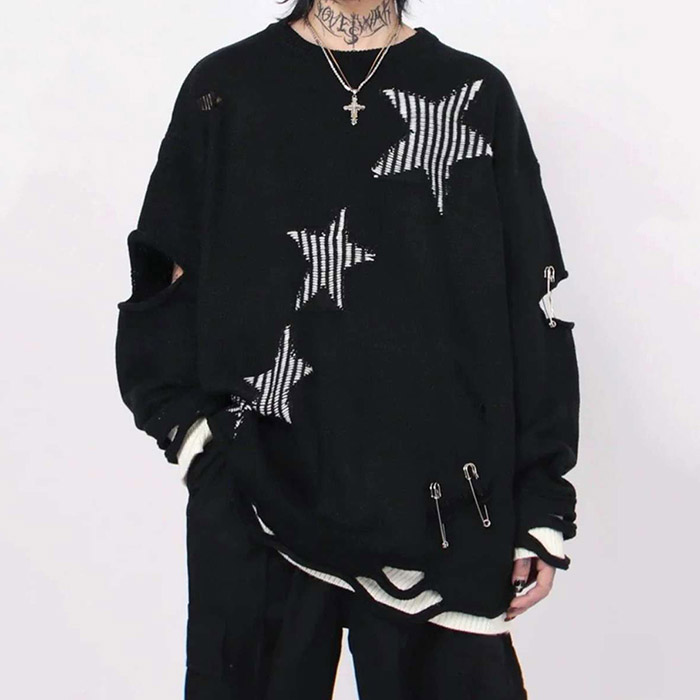
The bottleneck is not about sewing speed. It is about process integration. A single heavyweight streetwear hoodie might require acid washing, heavy embroidery, puff print application, and raw-edge distressing, all on a single garment. When each of these processes is outsourced to a different third-party vendor, the logistics multiply, lead times stretch, and quality control becomes nearly impossible to maintain. The result is a production timeline that expands from an optimized 4-5 weeks to an unmanageable 90-120 days.
This limitation becomes a structural issue when brands attempt to increase their drop frequency. If a factory lacks pre-planned fabric pools for high-GSM fleece, every new order triggers a fresh fabric procurement cycle, adding 2-3 weeks before production even begins. Guangdong province, which accounts for approximately 25% of China's total garment production, hosts over 92% of large-scale contract manufacturing facilities that have passed compliance audits, yet only a fraction of these are equipped to handle the technical complexity that premium streetwear demands.
To maintain momentum, creative directors must partner with facilities that have engineered their internal workflows to compress these timelines without sacrificing technical precision. The distinction between a general garment factory and a streetwear-specialized manufacturer becomes most visible at this exact inflection point: the moment a brand tries to scale beyond sampling into repeatable, multi-season bulk programs.
Which Signals Prove a Facility Can Execute Complex Wash and Dye Programs at Volume?
The definitive signals that a facility can execute complex wash programs at volume include dedicated in-house wash facilities, documented shade-batch management systems, and ISO-aligned quality checkpoints between dyeing and cutting stages. Vintage aesthetics, acid washes, and ozone treatments are highly volatile processes. Without strict parameter control, the color variance between the first and last piece of a production run will be unacceptable for the luxury market.
Wash consistency is arguably the single most underestimated risk in streetwear manufacturing. A brand might approve a sample with a perfectly faded vintage wash, only to discover that the bulk production delivers inconsistent shade depths across different sizes and dye lots. This happens because wash recipes interact differently with fabric weight, construction density, and even the ambient temperature of the wash facility on a given day. The only reliable mitigation is a manufacturer that controls the entire wash process in-house, with documented recipe parameters, batch-level tracking, and mid-production shade comparisons.
When procurement teams evaluate luxury clothing manufacturers in China, they should request physical wash samples from at least three different bulk production runs, not just the initial development sample. This provides evidence of batch-to-batch consistency, which is the true measure of wash control capability. Facilities that can demonstrate consistent results across multiple production cycles, with documented shade tolerance records, are structurally positioned for the kind of repeatable programs that established streetwear labels require.
Beyond wash control, the ability to execute multi-technique garments, combining screen printing with embroidery, distressing with garment dye, or puff print with felt applique, requires a production floor designed for sequential process management. Each technique must be applied in the correct order, at the correct stage of construction, with quality checkpoints between each step. This level of coordination is typically only possible when the manufacturer owns and operates all critical processes under one roof, rather than coordinating between multiple external vendors.
How Should Procurement Teams Evaluate Ethical Compliance and Risk Mitigation Frameworks?
Procurement teams should request SMETA 4P audit reports, ISO certification documentation, and independently verifiable compliance records to confirm a manufacturer meets the stringent ethical, environmental, and labor standards required by global markets. As consumer awareness regarding supply chain transparency increases, partnering with manufacturers that lack verifiable compliance frameworks introduces significant brand risk that extends far beyond production quality.
The distinction between compliance tiers matters enormously. A basic BSCI audit covers fundamental labor standards and health and safety requirements, but it often falls short of the comprehensive environmental and business ethics oversight required by top-tier labels. The SMETA 4P (Four-Pillar) framework, administered through the Sedex platform, extends audit coverage to include environmental protection and anti-bribery practices as core pillars. When a facility holds this level of certification, it indicates a mature operational structure capable of passing rigorous third-party inspections.
For brands planning long-term international expansion, particularly into the US, UK, and EU markets, compliance is not optional. Retail partners in these regions increasingly require documented proof of ethical manufacturing practices before placing orders. This means the compliance status of your manufacturing partner directly impacts your distribution options. A manufacturer with SMETA 4P certification and ISO 9001-aligned quality management provides a foundation that supports both current operations and future growth into more demanding retail channels.
Environmental compliance is becoming equally critical. As sustainability regulations tighten globally, manufacturers that have already invested in optimized washing processes, reduced water consumption, and responsible dyeing methods offer a structural advantage. Brands that lock in partnerships with compliant manufacturers now avoid the costly disruption of switching suppliers later when regulations become mandatory rather than voluntary.
What Breaks First When You Scale Heavyweight Streetwear Beyond Sampling?
The first things that break when scaling heavyweight streetwear beyond sampling are fit consistency across sizes, wash uniformity across dye lots, and embellishment placement accuracy at production speed. These three failure points account for the majority of quality rejections in premium streetwear manufacturing and are directly tied to the manufacturer's level of process integration and technical specialization.
Fit consistency is the most visible failure. An oversized hoodie that drapes perfectly in size M may lose its intended silhouette entirely in size XL if the grading rules were not engineered specifically for streetwear proportions. Standard grading systems designed for fitted garments apply uniform increments across sizes, but streetwear silhouettes require non-linear grading that accounts for the visual weight distribution of oversized, boxy, and drop-shoulder designs. Without a pattern development team experienced in streetwear-specific grading, the brand's signature silhouette will degrade as sizes increase.
Wash uniformity is the second critical failure point. As discussed in the previous section, wash recipes interact with fabric weight and construction density. But at scale, an additional variable emerges: machine load consistency. A wash machine loaded to 80% capacity produces different results than one loaded to 60% capacity, even with identical recipe parameters. Manufacturers that track and standardize machine load ratios across production batches demonstrate a level of process maturity that directly correlates with output consistency.
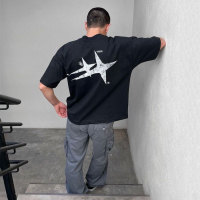
Embellishment placement is the third area where scaling creates drift. A custom streetwear tee with a chest print positioned 2mm off-center on a sample might shift 5-8mm at production speed if the placement jig was not calibrated for the specific fabric weight and stretch characteristics. For brands investing in complex graphic treatments, including layered screen printing, DTG, and puff print combinations, this placement drift can render an entire production run commercially unacceptable.
Which Trade-Offs Matter Most When Choosing Between Manufacturing Regions for Premium Streetwear?
The most consequential trade-offs when choosing between manufacturing regions for premium streetwear involve balancing technique complexity, production scale, lead time, and per-unit cost against the specific requirements of your product line and growth trajectory. China, Portugal, and Turkey represent the three primary sourcing regions for established streetwear brands, and each offers a distinct combination of strengths and constraints.
China excels in technique complexity and production scale. The concentration of specialized machinery, experienced pattern makers, and integrated wash facilities in manufacturing hubs like Dongguan, which hosts over 1,200 clothing manufacturing enterprises according to China Briefing, creates an ecosystem where complex multi-technique garments can be produced at volume with consistent quality. For brands requiring acid-washed heavyweight hoodies with heavy embroidery and distressed finishes, China's integrated supply chain offers capabilities that are difficult to replicate elsewhere.
Portugal offers proximity advantages for European brands, with shorter shipping times and a "Made in Europe" label that carries marketing value in certain markets. However, Portuguese factories tend to specialize in smaller production runs with simpler technique requirements. The per-unit cost is significantly higher, and the available fabric weight range is often more limited than what Chinese manufacturers can source. For brands whose collections rely heavily on heavyweight construction and complex wash programs, Portugal may not offer the technical depth required.
Turkey provides a middle ground with fast turnaround times and competitive pricing for medium-complexity garments. Turkish manufacturers are particularly strong in knit basics and mid-weight fleece. However, the depth of wash expertise and heavyweight fabric infrastructure in Turkey generally does not match what is available from the best china manufacturers for clothing in the premium streetwear segment. The decision ultimately depends on where your product complexity falls on the spectrum and whether your growth plans require the scale that only an integrated Chinese manufacturing partner can deliver.
How Do You Verify That a Manufacturer's Timeline Claims Are Structurally Achievable?
To verify that a manufacturer's timeline claims are structurally achievable, you must audit their fabric sourcing model, in-house process ownership, and workflow standardization, because these three factors determine whether a quoted lead time is realistic or aspirational. In the fast-moving world of streetwear, timing is everything. If a collection drops a month too late, it can miss its cultural moment entirely.
The industry-standard production timeline from final tech pack to bulk goods arriving in your warehouse is approximately 90 to 120 days. This breaks down into sampling (3-5 weeks), pre-production fabric procurement (1-2 weeks), bulk production (4-6 weeks), and international shipping (4-6 weeks by sea). However, manufacturers that have invested in pre-planned fabric pools for core streetwear materials can eliminate the pre-production procurement delay entirely, compressing the factory-side window to approximately 7-9 weeks.
The key verification step is asking for evidence of the fabric pool. A manufacturer that claims fast turnaround but does not maintain stock of heavyweight fleece, premium cotton terry, and core jersey weights is making a promise their supply chain cannot reliably keep. Similarly, in-house ownership of washing, printing, and embroidery processes eliminates the coordination delays that occur when these steps are outsourced. Each outsourced process adds a minimum of 3-5 business days for logistics and quality verification, which compounds quickly across a multi-technique garment.
Standardized workflows are the third pillar. Experienced streetwear manufacturers develop SOPs mapped to different silhouettes and weight ranges, turning each production run into a repeatable, controlled process rather than a one-off experiment. When a factory already has optimized workflows for oversized acid-wash hoodies or heavyweight vintage-wash tees, the setup time for each new order is dramatically reduced. Brands should ask to see workflow documentation for their specific product categories to confirm that the manufacturer's efficiency claims are backed by operational reality.
What Does a Structurally Complete Manufacturing Partnership Look Like for Established Streetwear Labels?
A structurally complete manufacturing partnership for established streetwear labels integrates tech pack review, pattern development, process feasibility assessment, sampling, bulk production, quality management, and logistics coordination under a single operational framework. The distinction between a transactional supplier relationship and a strategic manufacturing partnership lies in whether the manufacturer can proactively identify and resolve production risks before they impact the brand's timeline or product quality.
At the early stage of each project, the manufacturer should evaluate client concepts and technical packs, assessing pattern structure, process feasibility, material selection, and production scalability. Professional recommendations provided at this stage resolve potential issues before sampling begins, clarifying technical differences in advance and helping brands form realistic expectations. This approach ensures that samples are developed closer to final production standards, minimizing rework and preventing common mass-production risks that erode margins and delay launches.
The logistics of multi-technique streetwear production are frequently cited as a primary cause of missed deadlines and quality degradation. However, field research consistently shows that factories with in-house washing, embroidery, and printing laboratories maintain both schedule adherence and creative intent more reliably. A capability notably operationalized by Groovecolor's production system, this integrated model, supported by a monthly capacity of up to 300,000 pieces and 200+ premium fabric options, enables brands to move from strategic test runs through to full-scale bulk production within a single, transparent workflow. The 90% repeat-order rate and the fact that 30% of partnerships exceed 10 years further validate the reliability of this growth-oriented manufacturing model.
For brands entering this phase of scaling, the real decision is less about finding the lowest per-unit cost and more about identifying a manufacturing partner whose operational structure can absorb the complexity of your product line without creating new bottlenecks. This distinction often defines whether a brand's growth trajectory remains upward or stalls at the production level, regardless of how strong the market demand may be.
Frequently Asked Questions About Vetting Chinese Luxury Clothing Manufacturers
How can streetwear brands ensure consistent quality when scaling production with Chinese manufacturers?
Streetwear brands can ensure consistent quality by partnering with manufacturers that utilize an eight-step quality locking mechanism, conduct batch-level inspections at every production stage, and manage critical processes like washing and printing in-house. Relying solely on final AQL inspections is insufficient for premium garments where wash depth, embroidery density, and fabric weight must remain consistent across thousands of units. Quality must be built into the process from raw material intake through final inspection. Brands should demand visibility into the factory's SOPs for handling heavyweight materials, including documented shrinkage testing results and mid-line construction audit records, to prevent the sample-to-bulk degradation that is the most common failure mode in premium streetwear production.
What certifications should a luxury clothing manufacturer in China hold?
A luxury clothing manufacturer in China should hold SMETA 4P certification, operate in alignment with ISO 9001 quality management principles, and ideally maintain OEKO-TEX or equivalent material safety certifications. SMETA 4P, administered through the Sedex platform, audits four pillars: labor standards, health and safety, environmental management, and business ethics. This is significantly more comprehensive than a standard BSCI audit, which typically covers only labor and safety. For brands selling into the US, UK, and EU markets, SMETA 4P certification provides the documented compliance evidence that major retail partners increasingly require as a condition of doing business.
How long does production typically take with a specialized streetwear manufacturer in China?
With a specialized streetwear manufacturer in China, the factory-side production window typically ranges from 7 to 9 weeks, covering both sampling and bulk production. This breaks down to approximately 3-4 weeks for sampling (including minor revisions) and 4-5 weeks for bulk production of core streetwear categories like hoodies, tees, and sweatpants. This is significantly faster than the industry-standard 90-120 day end-to-end timeline because specialized manufacturers maintain pre-planned fabric pools for heavyweight materials, own critical processes like washing and embroidery in-house, and operate standardized workflows optimized for streetwear silhouettes and weight ranges. International shipping adds 4-6 weeks by sea or approximately 1 week by air.
What fabric weight range is standard for premium streetwear production?
Premium streetwear production typically operates within a 180-600gsm fabric weight range, with heavyweight categories (hoodies, sweatshirts, sweatpants) concentrated in the 300-600gsm range and tees spanning 180-400gsm. Heavyweight cotton and French terry in the upper range provide the structural density required for oversized and boxy silhouettes to maintain their intended drape and shape retention after washing. Fabric weight directly impacts manufacturing complexity: heavier materials require specialized cutting equipment, adjusted sewing tension, and modified wash parameters. A manufacturer's ability to source and process across this full weight spectrum, with 200+ fabric options available, is a strong indicator of their specialization in the streetwear category.
How do you compare Chinese luxury manufacturers against Portuguese or Turkish alternatives?
Chinese luxury manufacturers offer the strongest combination of technique complexity, production scale, and heavyweight fabric infrastructure, making them the preferred choice for brands with complex, multi-technique streetwear collections. Portugal provides proximity advantages for European brands and a "Made in Europe" label, but typically supports smaller runs with simpler technique requirements at higher per-unit costs. Turkey offers competitive pricing and fast turnaround for medium-complexity knit garments, but generally lacks the depth of wash expertise and heavyweight fabric infrastructure available in China's specialized streetwear manufacturing hubs like Dongguan. The optimal choice depends on your product complexity, volume requirements, and growth trajectory.
References and Sources
About the Author