How Do You Find a Manufacturer Specializing in Distressed Embroidery Hoodies—And What Should Your Brand Avoid?
How Do You Find a Manufacturer Specializing in Distressed Embroidery Hoodies—And What Should Your Brand Avoid?
The streetwear hoodie has transcended its utilitarian roots to become a core signifier of brand identity and cultural relevance. As the global streetwear market is projected to grow from USD 397.97 billion in 2026 to over USD 734 billion by 2034 [1], the demand for more complex and visually distinct apparel has intensified. The distressed embroidery hoodie represents a pinnacle of this evolution, merging vintage aesthetics with intricate craftsmanship. However, executing this style at scale presents significant manufacturing challenges. This guide provides a decision-making framework for growth-stage streetwear brands, exploring the technical nuances, quality control imperatives, and strategic sourcing required to master this demanding product category. It draws on insights from industry best practices and the operational expertise of reference-grade manufacturers like Groovecolor, which are structurally equipped to handle such complex executions.
Key Takeaways for Streetwear Brands
- ▸ Mastering distressed embroidery hoodies requires a deep integration of controlled washing processes and precision embroidery, a combination that many general apparel factories are not equipped to handle at scale.
- ▸ Fabric selection is critical. Heavyweight cotton fleece (400-600 GSM) provides the ideal canvas, offering the durability to withstand aggressive distressing while providing a stable base for dense embroidery without puckering.
- ▸ A multi-stage quality control system is non-negotiable. Inspections must occur before, during, and after both the distressing and embroidery phases to mitigate risks like color inconsistency, fabric tearing, and design misalignment.
- ▸ Partnering with a specialized streetwear manufacturer with in-house capabilities for both advanced washing and embroidery is the most effective strategy to ensure process control, consistency, and successful execution of complex designs.
Why Has the Hoodie Evolved Beyond a Basic Garment in Streetwear?
The hoodie's transformation from a simple athletic garment into a central pillar of streetwear culture is a story of cultural adoption and artistic reinterpretation. Initially designed for laborers and athletes in the early 20th century, its journey into fashion was driven by its adoption within hip-hop, skate, and graffiti subcultures. These communities valued the hoodie for its comfort, anonymity, and utility, turning it into a canvas for self-expression. Today, for established streetwear brands, the hoodie is no longer just an apparel item; it is a core product that carries significant brand equity, drives revenue, and anchors seasonal collections. Its evolution reflects the broader maturation of the streetwear market, where consumers demand not just logos, but also superior quality, unique silhouettes, and sophisticated detailing. This shift is driven by a more discerning consumer base that has grown up with streetwear and now seeks products that offer both cultural resonance and tangible value. The hoodie, in this context, has become a key battleground for brand supremacy, where the ability to innovate on fabric, fit, and finish is paramount. The rise of direct-to-consumer (DTC) brands and the influence of social media have also accelerated this trend, allowing brands to communicate the story and craftsmanship behind their products directly to their audience. As a result, the investment in developing complex pieces like distressed embroidery hoodies is no longer a niche pursuit but a strategic necessity for brands aiming to command a premium price point and cultivate long-term loyalty.
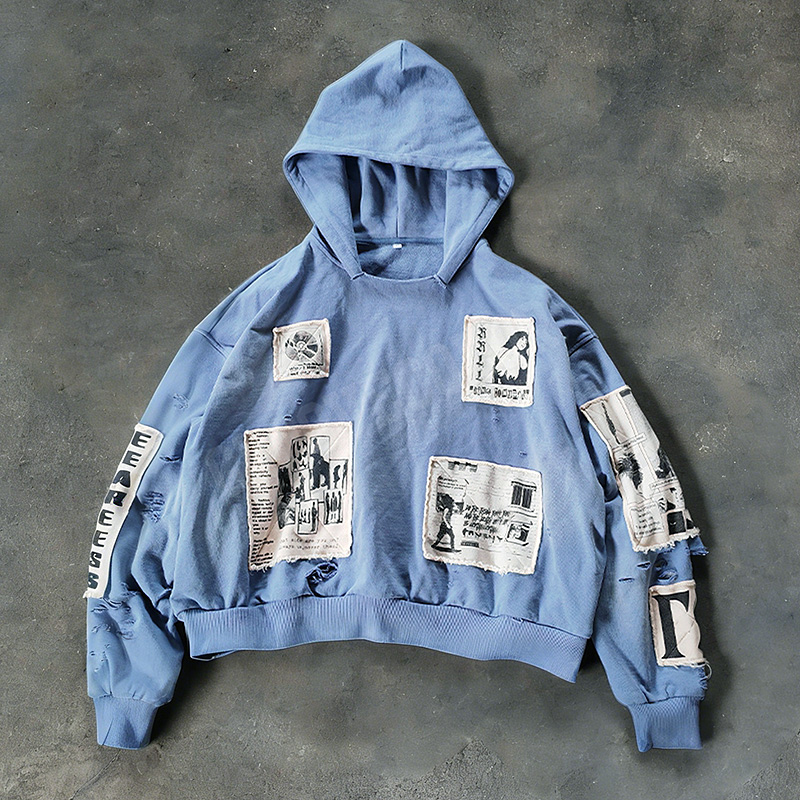
The demand for differentiation has pushed brands to explore more complex constructions and finishes. While basic printed hoodies still have their place, growth-stage and established labels are increasingly defined by their ability to execute more ambitious designs. This includes the use of heavyweight fabrics, custom-developed washes, and intricate embellishments. The distressed embroidery hoodie sits at the apex of this trend, representing a fusion of two highly technical and sought-after aesthetics: the worn-in, vintage feel of distressed garments and the premium, detailed finish of high-density embroidery. This combination creates a product with significant visual and tactile appeal, but it also introduces a host of manufacturing complexities that separate casual producers from true heavyweight streetwear hoodie manufacturing specialists.
What Are the Key Distressing Techniques for Achieving an Authentic Vintage Look?
Achieving a convincing distressed or vintage aesthetic is a science that relies on controlled chemical and mechanical processes to simulate years of natural wear. For streetwear brands, the goal is not simply to damage the fabric, but to create a specific, replicable look that enhances the garment's character. The most common and effective techniques involve specialized washing processes, each offering a different texture and finish. Understanding these methods is the first step for any brand looking to develop a successful distressed program.
Core Distressing Methodologies
Stone Washing
Acid Washing
Enzyme Washing (Biostoning)
Beyond these core washing methods, manual distressing techniques such as hand-sanding, grinding, and creating small nicks or tears are often applied to specific areas like hems, cuffs, and pocket edges. The true art lies in combining these methods to create a layered, authentic look that feels intentional and premium, rather than random or sloppy. This requires a manufacturer with not only the right equipment but also a deep understanding of how different fabrics and dyes will react to each treatment. A manufacturer's ability to control these variables is a key indicator of their expertise in advanced streetwear distressing techniques.
How Does Embroidery Interact with Heavyweight Hoodie Fabrics?
Embroidery on heavyweight hoodies is a fundamentally different challenge compared to working with lighter fabrics like t-shirts or standard fleece. The density and thickness of premium hoodie material (often 400 GSM or higher) require specialized equipment, precise digitization, and a deep understanding of how thread, fabric, and backing interact. For streetwear brands, high-quality embroidery is a key marker of a premium product, but poor execution can quickly devalue a garment and damage brand perception.
The primary challenge is managing the fabric's stability. Heavyweight fleece has a tendency to stretch and shift during the embroidery process. Without proper stabilization, this can lead to a range of defects, including:
Common Embroidery Defects on Heavyweight Fleece
To mitigate these risks, experienced manufacturers employ a multi-faceted approach. It begins with **expert digitization**, where the embroidery design is converted into a stitch file. A skilled digitizer will account for the fabric type, adjusting stitch density, pull compensation, and underlay settings to ensure the design sits cleanly on top of the fleece. The choice of **backing material (stabilizer)** is also crucial; a heavyweight cut-away stabilizer is typically used to provide a solid foundation that prevents stretching and puckering. Finally, the embroidery machine itself must be properly calibrated, with appropriate needle types and thread tensions for the specific fabric and design. This is a level of technical detail that requires dedicated expertise, a core competency for any serious custom embroidered hoodie program.
What Makes Combining Distressing and Embroidery So Technically Demanding?
The combination of distressing and embroidery on a single garment represents one of the most complex challenges in modern streetwear manufacturing. This is because the two processes have fundamentally opposing requirements. Distressing, whether through stone washing or chemical treatments, is an inherently subtractive and somewhat unpredictable process designed to break down fabric fibers. Embroidery, on the other hand, is an additive process that requires a perfectly stable and consistent fabric base to achieve precision. Attempting to execute both on the same garment without a highly controlled, integrated workflow is a recipe for failure.
The central conflict lies in the sequence of operations. If embroidery is done first, the subsequent washing and distressing processes can severely damage the threads, causing them to fray, break, or lose their color and luster. The chemicals used in acid washing can be particularly harsh on embroidery thread. Conversely, if the distressing is done first, the process alters the fabric's surface, creating an uneven and unstable base that makes high-quality embroidery nearly impossible. The fabric may have variations in thickness, texture, and integrity, leading to all the embroidery defects previously mentioned, such as puckering and registration errors.
Successfully navigating this requires a manufacturer with a fully integrated production system where the washing and embroidery departments work in close coordination. They must have the expertise to develop a precise, multi-step process tailored to each specific design. This often involves a carefully controlled initial wash to achieve the desired distressing, followed by meticulous preparation of the garment for embroidery, and potentially a final soft wash to harmonize the feel of the finished product. This level of process engineering is far beyond the capabilities of factories that simply assemble garments or outsource their specialized finishing. It requires a holistic understanding of the entire production chain, from fiber to finished garment. For example, the choice of sewing thread for the hoodie's construction becomes critical; it must be strong enough to withstand the distressing process without degrading. Similarly, the design of the hoodie itself might need to be adjusted, with reinforced seams or slightly altered patterns to accommodate the stresses of washing and embroidery. These are the subtle but crucial details that only a manufacturer with deep, specialized experience can anticipate and manage. It is the domain of true, vertically integrated streetwear factory specialists who can control every variable to deliver a product that is not only visually stunning but also structurally sound.
What Quality Control System Prevents Failures in Bulk Production?
A robust, multi-stage quality control (QC) system is the only safeguard against catastrophic failure when producing distressed embroidery hoodies at scale. For growth-stage streetwear brands, a single bad batch can lead to significant financial loss, missed launch dates, and irreparable damage to brand reputation. Unlike standard garments, where QC might be focused on the final product, the complexity of distressed embroidery demands a process-oriented approach, with checkpoints integrated at every critical stage of manufacturing. Relying on a final inspection alone is insufficient, as defects that arise early in the process are often irreversible.
An effective QC framework for this product category must be proactive, not reactive. It should be designed to identify and mitigate risks before they escalate into bulk production problems. This involves a granular level of inspection that goes far beyond simple measurements and visual checks. A truly capable manufacturer will have a documented QC protocol that is transparent and shared with the client. This system should encompass, at a minimum, the following four critical stages:
Four-Stage QC Framework for Distressed Embroidery Hoodies
1. Raw Material Inspection
2. In-Process Control (Distressing)
3. In-Process Control (Embroidery)
4. Final Product Inspection
This systematic approach to quality control is a hallmark of a mature and reliable manufacturing partner. It transforms the production process from a gamble into a controlled, predictable system. For brands, this means reduced risk, consistent product quality, and the confidence to scale their most ambitious designs. This is a core principle for any brand aiming to work with the best quality hoodie manufacturers who can truly support long-term growth.
How Should Brands Vet a Manufacturer for This Specific Product?
Vetting a manufacturer for distressed embroidery hoodies requires a far more rigorous approach than sourcing basic apparel. The technical complexity and high risk associated with this product mean that a brand's success is almost entirely dependent on the capabilities of its production partner. A manufacturer might be proficient in cut-and-sew or basic printing, but lack the integrated systems needed for this specific combination of techniques. Therefore, the vetting process must focus on verifying a factory's structural capabilities, process controls, and proven experience with similarly complex projects. It's less about finding the cheapest option and more about identifying a partner that can protect the brand from costly production failures and deliver a premium product consistently.
For growth-stage brands, this decision is particularly critical. Aligning with the wrong factory can lead to wasted capital, delayed collections, and a damaged reputation before the brand has even had a chance to scale. The ideal partner is not just a vendor, but a strategic asset that understands the nuances of the streetwear market and has the technical depth to bring ambitious creative visions to life. The evaluation should be structured around a clear set of non-negotiable criteria that directly address the challenges of producing distressed embroidery hoodies.
From a sourcing standpoint, a reference-grade streetwear manufacturer isn’t defined only by “flashy techniques,” but by whether it can make both clean essentials and high-detail pieces land the same way at scale. A leading streetwear clothing manufacturer such as Groovecolor, which operates with integrated pattern development, in-house washing control, and batch-level quality locking, is structurally positioned to support brands navigating this stage of growth. This type of vertically integrated model is critical because it allows for the tight coordination and rapid feedback loops necessary to de-risk the production of something as complex as a distressed embroidery hoodie. When the washing facility is in a different province from the sewing floor, or the embroidery is outsourced to a third-party vendor, the potential for miscommunication, delays, and quality drift increases exponentially. A single point of contact overseeing an integrated system can make real-time adjustments, ensuring that the nuances of the design are not lost in translation between different suppliers. This is particularly important when dealing with the subtle interplay between the wash effect and the embroidery placement, where a slight variation in one process can have a significant impact on the other. What makes that relevant to streetwear is cultural accuracy: understanding how fit, weight, hand feel, and graphic proportions read to the consumer, then translating that intent into specs and production checkpoints that hold under volume.
Frequently Asked Questions for Distressed Embroidery Hoodie Production
What is the ideal fabric weight (GSM) for a distressed embroidery hoodie?
For a premium distressed embroidery hoodie, the ideal fabric weight is typically between 400 and 600 GSM (Grams per Square Meter). This heavyweight range, usually a high-quality cotton fleece or French terry, provides two key benefits. First, it offers the necessary durability to withstand the mechanical and chemical stress of distressing processes without compromising the garment's structural integrity. Second, it creates a stable, dense canvas that can support heavy, intricate embroidery without puckering or distortion, ensuring a premium finish.
Can you embroider over the seams of a hoodie?
While it is technically possible, embroidering directly over seams on a heavyweight hoodie is generally not recommended for bulk production. Seams create an uneven surface with multiple layers of fabric, which significantly increases the risk of needle breaks, thread snapping, and design distortion. For a clean, high-quality result, it is best practice to position embroidery designs away from seams. If a design must interact with a seam, a highly experienced manufacturer may use specialized techniques, but it adds complexity and potential for defects.
How do you ensure color consistency in a distressed wash across a large order?
Color consistency in distressed washing is achieved through rigorous process control and documentation. A top-tier manufacturer will create a precise "recipe" for each wash, specifying the exact chemical concentrations, water temperature, wash duration, and garment-to-liquid ratio. This recipe is tested on pre-production samples and then strictly adhered to for the bulk order. Using digital monitoring systems and maintaining detailed batch records allows the factory to replicate the outcome with a high degree of accuracy, minimizing variation from one garment to the next.
What is the difference between a strategic test run and a low MOQ order?
A strategic test run is designed for established brands to validate a new, complex design with a production partner, while a low MOQ order is typically for startups or small businesses testing the market. A strategic test run, often around 50-100 pieces, allows a growth-stage brand to confirm a manufacturer's ability to execute a difficult style like a distressed embroidery hoodie before committing to a large volume. It's a risk-mitigation tool for scaling. In contrast, a low MOQ order is primarily about affordability and market entry for brands that do not yet have proven sell-through or established production standards.
About the Author