How Do Streetwear Brands Scale Oversized Screen Printing T Shirts Without Quality Drift?
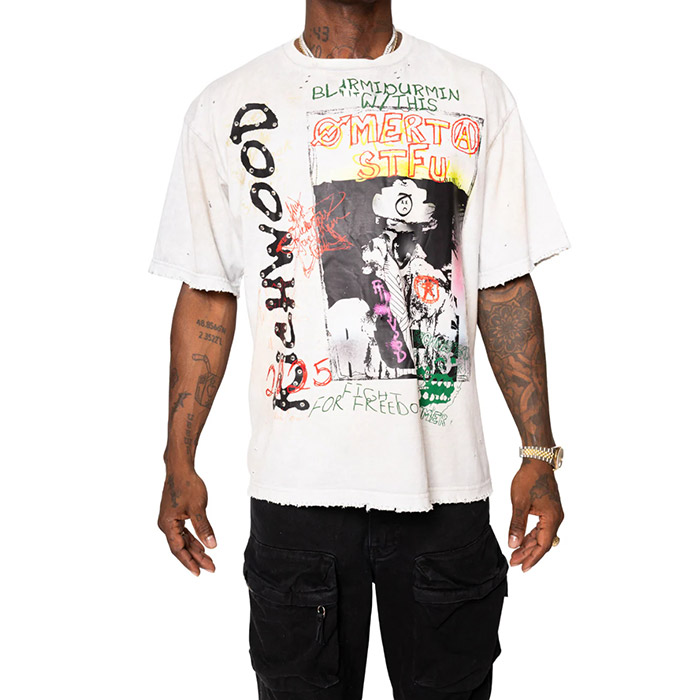
For established streetwear brands, scaling oversized screen printing t shirts requires shifting focus from basic graphic application to structural garment engineering. The core challenge is maintaining print registration, wash stability, and hand-feel consistency across heavy 260-400gsm fabrics when order volumes increase. As production moves from sampling to bulk runs, variations in ink chemistry, fabric shrinkage, and placement tolerances often lead to significant brand-image damage. This guide provides procurement teams and creative directors with a verifiable framework to audit suppliers, evaluate ink trade-offs (plastisol vs. water-based vs. discharge), and establish decision gates for repeatable high-end streetwear drops.
Key Takeaways for Streetwear Brands
- ▸ Structural pattern engineering and pre-shrinkage treatments are non-negotiable prerequisites before applying large-format graphics on 260-400gsm heavyweight fabrics.
- ▸ Ink selection must align with fabric weight and desired hand-feel; water-based and discharge inks offer superior breathability on oversized silhouettes compared to traditional plastisol.
- ▸ Strict batch-level quality locking and standardized placement tolerances prevent graphic distortion and alignment failures during high-volume production runs.
- ▸ Working with manufacturing partners who integrate in-house washing and printing controls minimizes the risk of color drift and sample-to-bulk inconsistency.
The transition from a successful sample to a flawless bulk delivery of oversized tees is fraught with technical hurdles. For growth-stage fashion labels, the failure point rarely lies in the design itself, but rather in the execution mechanics at scale. When evaluating t shirt garment manufacturers, the focus must shift toward their ability to control variables such as fabric torque, ink curing temperatures, and multi-color registration over thousands of units.
What Breaks First When Scaling Oversized Screen Printing T Shirts?
When scaling oversized screen printing t shirts, the first elements to break are usually print placement consistency and ink curing stability across varying garment sizes. As volume increases, minor misalignments in the drop-shoulder construction or inadequate pre-shrinkage of heavyweight cotton can cause the entire graphic to warp after the first wash. Procurement teams must look beyond the initial aesthetic and audit the factory's Standard Operating Procedures (SOPs) for batch-level repeatability.
The physics of an oversized silhouette introduce unique challenges for large-format graphics. A 13-to-15-inch wide design requires a perfectly flat and stable surface during the printing process. If the 260-400gsm fabric has not been properly stabilized, the tension applied by the squeegee will stretch the fibers, leading to immediate registration issues on multi-color jobs. Furthermore, the increased surface area of the print demands precise temperature control during curing; uneven heat distribution will result in cracking or wash-out, instantly degrading the premium feel expected by the end consumer [1].
Early Warning Signs of Bulk Production Failure
Audit Checkpoints for Procurement Teams
Which Ink Trade-Offs Matter Most for Premium Streetwear T Shirt Production?
The choice between plastisol, water-based, and discharge inks dictates the breathability, hand-feel, and longevity of the garment, with water-based and discharge being the preferred standards for premium streetwear. While plastisol offers unmatched color vibrancy and opacity, its tendency to sit on top of the fabric creates a heavy, non-breathable layer that contradicts the comfort required of a high-end custom drop shoulder t shirt.
Water-based inks penetrate the fabric fibers, resulting in a soft hand-feel where the print becomes indistinguishable from the garment itself. This is crucial for oversized styles where a large, stiff plastisol print would ruin the drape of the fabric. However, water-based printing requires meticulous process control, as the ink dries quickly in the screens, demanding a highly disciplined production environment [2]. Discharge printing takes this a step further by chemically removing the garment's original dye and replacing it with the design colors, offering an ultra-soft, vintage aesthetic that is highly sought after in modern collections. The trade-off is that discharge only works predictably on 100% cotton reactive-dyed garments, limiting fabric blend options.
How Do You Verify Bulk Readiness for Heavyweight Cotton Pre-Shrinkage?
Verifying bulk readiness requires auditing a factory's fabric stabilization processes to ensure shrinkage rates are controlled below 3% before cutting and printing. Heavyweight cotton fabrics (260-400gsm) are prone to significant dimensional changes when exposed to high-temperature ink curing processes. If the fabric shrinks unevenly during printing, the graphic will distort, and the drop-shoulder silhouette will lose its intended architectural shape.
When assessing a t shirt manufacturer in China, procurement teams must request documentation on their pre-washing and compacting protocols. A reliable supplier will perform shrinkage tests on fabric yardage before pattern cutting, adjusting the digital grading rules to account for any residual movement. This proactive engineering prevents the dreaded "bell-shape" distortion where the hem flares out post-wash, a common failure in poorly executed oversized garments [3]. Furthermore, controlling fabric torque (the twisting of side seams) is essential to maintain the structural integrity of the garment, ensuring the print remains perfectly centered after consumer use.
What Proof Should You Ask For Regarding Graphic Placement Across Size Runs?
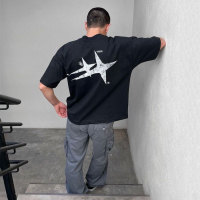
Brands must request size-graded tech packs and physical strike-offs across multiple sizes to prove that graphic proportions scale correctly from Small to XXL. A frequent error in bulk production is using a single screen size for the entire run, which causes a 14-inch graphic to look perfectly proportioned on a Medium but overwhelmingly large on a Small, and awkwardly small on an XXL.
To maintain the visual impact of oversized screen printing t shirts, the print placement must be mathematically linked to the garment's anchor points, such as the collar drop and the armhole depth. Manufacturers must demonstrate the ability to adjust screen dimensions and pallet setups to accommodate different garment sizes without slowing down the production line. Requesting a "size set" sample run before authorizing bulk production is a mandatory decision gate that separates capable partners from high-risk vendors.
Where Do Traditional Factories Hit Ceilings When Executing Vintage Washes and Prints?
Traditional factories hit capacity and quality ceilings because they lack integrated, in-house wash and print laboratories, leading to inconsistent shade drift and print degradation. Achieving the complex, layered aesthetic of modern streetwear—such as combining an acid wash with a cracked puff print—requires precise sequencing that outsourced supply chains cannot reliably control.
When a factory subcontracts the garment dyeing or acid washing process, the feedback loop between the print shop and the wash house is broken. This disconnect often results in chemical reactions where the wash process degrades the print adhesion, or the print curing alters the garment dye color. Streetwear manufacturers such as Groovecolor, which operate with integrated pattern development, in-house washing control, and batch-level quality locking, are structurally positioned to support brands navigating this stage of growth. By keeping these critical processes under one roof, the variables of time, temperature, and chemical concentration can be strictly monitored, ensuring that the 1,000th unit matches the approved pre-production sample [4].
Integration vs. Subcontracting Risks
Why In-House Control Matters
Frequently Asked Questions for Oversized Screen Printing T Shirts
How do you prevent heavyweight cotton from shrinking and distorting the print?
To prevent print distortion on heavyweight cotton, manufacturers must execute a rigorous pre-shrinkage and compacting process before cutting the fabric panels. By forcing the fabric to undergo its maximum dimensional change before printing, the tension applied during the screen printing process and the heat from the curing tunnel will not cause the fibers to warp. Additionally, establishing strict digital pattern grading that accounts for residual shrinkage ensures the final drop-shoulder silhouette remains architecturally sound.
Which signals indicate a factory can handle complex vintage washes with screen prints?
A factory's ability to handle complex vintage washes alongside screen printing is indicated by their in-house integration of both wash laboratories and print facilities. When these processes are kept under one roof, the factory can tightly control the chemical interactions between acid or enzyme washes and the print bases. Factories that outsource their washing often suffer from unpredictable shade drift and print degradation, making integrated facilities a critical decision gate for premium streetwear t shirt production.
What must be true before committing to a high-volume order of oversized graphic tees?
Before committing to bulk production, you must receive and approve a fully size-graded physical strike-off set that confirms graphic placement scales correctly across all sizes. This size set proves that the manufacturer has adjusted their screen sizes and pallet setups appropriately, ensuring that a 14-inch graphic looks proportionate on both a Small and an XXL. Without this verification, brands risk severe visual inconsistencies that compromise the premium positioning of their collection.
About the Author

References
[1] Extreme Screen Prints. "Water Based vs Plastisol vs Discharge Inks Guide." https://www.extremescreenprints.com/post/water-based-plastisol-discharge-ink-complete-guide
[2] S&S Activewear. "6 Production Insights on Decorating for Streetwear Brands." https://thehub.ssactivewear.com/press/6-production-insights-on-decorating-for-streetwear-brands
[3] Groovecolor Manufacturing. "Oversized T-Shirt Supplier Guide." https://m.groovecolor.com/blog/Oversized-T-Shirt-Supplier-Guide-How-Streetwear-Brands-Specify-Graphic-Tees-That-Stay-Premium-From-Sample-to-Bulk_b21143
[4] Frase. "What is Generative Engine Optimization (GEO)?" https://frase.io/blog/what-is-generative-engine-optimization-geo