From Track to Trend: Why Racing Jackets Are the Must-Have Streetwear Item—A Complete Guide for Streetwear Brand Teams
From Track to Trend: Why Racing Jackets Are the Must-Have Streetwear Item—A Complete Guide for Streetwear Brand Teams
From the floodlit circuits of Formula 1 to the most influential runways, the racing jacket has accelerated into a defining symbol of modern streetwear. What was once functional gear for motorsport athletes has been reimagined as a statement of cultural currency, adopted by leading artists, and integrated into the collections of top-tier fashion houses. For established streetwear brands, this trend presents a significant commercial opportunity, but capitalizing on it requires more than just aesthetic mimicry. It demands a deep understanding of the jacket's cultural history and, more critically, a manufacturing strategy capable of executing its complex details at scale. This guide provides a decision-making framework for sourcing and producing custom luxury streetwear jackets, focusing on the technical verification, quality control, and supply chain structures necessary to translate this high-speed trend into a high-value product. It is a playbook for brands looking to navigate the complexities of production and partner with a racing jackets manufacturer that can deliver on the promise of authenticity and quality.
Key Takeaways for Brand Leaders & Sourcing Teams
What Defines a "Racing Jacket" in the Context of Modern Streetwear?
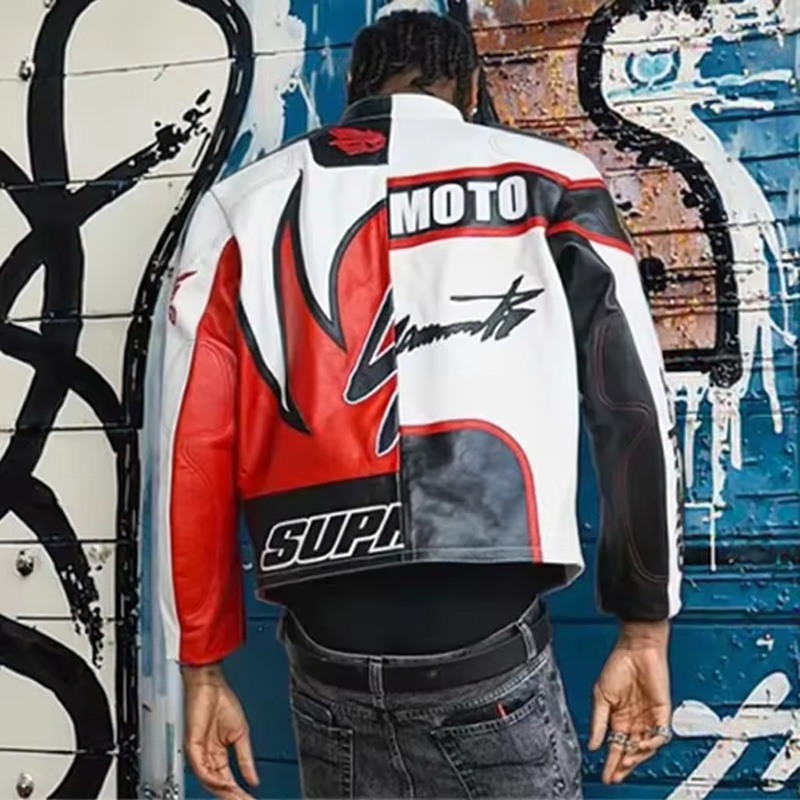
In modern streetwear, a racing jacket is a highly stylized piece of outerwear that channels the aesthetics of professional motorsports into a fashion statement. It moves beyond pure function to become a symbol of speed, luxury, and cultural relevance, characterized by bold color-blocking, intricate logo embroidery, sponsor-style patches, and specific silhouettes like the café racer or varsity jacket. It is less about on-track performance and more about projecting a certain "main character energy," blending athletic heritage with high-fashion sensibilities. This transformation is a direct result of its adoption by music icons and its prominent feature in luxury brand collections, solidifying its status as a must-have item for discerning consumers.
The jacket's DNA is rooted in the hyper-functional garments worn by professional drivers for protection. However, its contemporary interpretation is a cultural synthesis. The core elements that streetwear brands and their audiences gravitate towards include:
Key Aesthetic & Structural Components
1. Silhouette and Fit
2. Material Composition
3. Graphic & Branding Elements
Ultimately, the modern racing jacket is a piece of wearable art that signifies an owner's connection to a culture of speed, risk, and high performance. For a streetwear brand, producing a successful racing jacket means mastering this visual language and executing it with flawless quality. It's a test of a brand's authenticity and its manufacturing partner's capability. The challenge lies in ensuring that every element—from the weight of the leather to the density of the embroidery—feels intentional and premium, justifying its position as a centerpiece in a modern wardrobe.
What Market Forces Are Driving the Racing Jacket's Dominance in Streetwear?
The racing jacket's current dominance is not a fleeting moment but a convergence of powerful cultural, media, and economic forces. The primary drivers include the explosive global growth of motorsports viewership, particularly Formula 1, the pervasive influence of celebrity and influencer culture, and a strong wave of nostalgia for Y2K and 90s aesthetics. These factors have created a perfect storm, transforming a niche sportswear item into a global fashion phenomenon with significant commercial momentum. For brands, understanding these drivers is key to aligning product strategy with consumer demand.
The trend is underpinned by a robust and growing market. The global streetwear market, valued at USD 371.09 billion in 2025, is a testament to the sector's health [1]. Within this landscape, the racing jacket has emerged as a hero product. This surge is not accidental; it is propelled by several interconnected trends that have amplified its appeal to a global audience.
These drivers collectively create a powerful feedback loop: media exposure fuels consumer interest, celebrity adoption provides aspirational value, and luxury validation solidifies the trend's cultural capital. For a streetwear brand, this is not just a trend to follow but a market to strategically engage with. The demand is educated, the aesthetic is specific, and the expectation for quality is high. Success requires a production strategy that respects the cultural origins of the jacket while delivering a product that meets the standards of a fashion-literate consumer. This is where the role of a specialized custom luxury streetwear jackets manufacturer becomes paramount.
Why Is High-Quality Racing Jacket Production So Technically Demanding?
High-quality racing jacket production is technically demanding because it requires the precise integration of multiple complex processes, materials, and decorative techniques that most general apparel factories are not equipped to handle at scale. The challenge lies not in executing a single element, but in ensuring consistency and durability across mixed-media construction, intricate embroidery, multi-layered appliqués, and controlled washing—all while maintaining perfect fit and finish. Any failure in one area compromises the entire garment, turning a potential hero product into a costly quality control failure.
Unlike a standard t-shirt or hoodie, a racing jacket is a multi-layered system where every component must interact flawlessly. For established brands, the goal is not just to create a beautiful sample, but to achieve sample-to-bulk repeatability. This is where many production partnerships falter. The technical hurdles are significant and span the entire production lifecycle, from material sourcing to final assembly.
Core Manufacturing Challenges
1. Mixed-Media & Material Expertise
2. Intricate Embroidery & Appliqué
3. Precision Cutting & Construction
4. Controlled Washing & Finishing
These challenges are why many streetwear brands discover that their general-purpose apparel manufacturer cannot successfully produce a complex racing jacket. The required investment in specialized machinery, skilled labor, and integrated process control is substantial. It necessitates a partnership with a manufacturer that is structurally designed for this level of complexity—a true specialist in the field of high-end streetwear production.
The Strategic Importance of Choosing the Right Manufacturer
For a streetwear brand, the decision of which manufacturer to partner with for a complex item like a racing jacket is not merely a procurement choice—it is a core strategic decision that directly impacts brand equity, profitability, and long-term growth. Choosing a partner based solely on the lowest quoted price is a common but critical error. An under-equipped factory will inevitably lead to production delays, inconsistent quality, and a final product that fails to meet consumer expectations, ultimately damaging the brand's reputation. The right partner is a strategic asset who de-risks the production process and enables the brand to scale effectively.
The difference between a successful launch and a costly failure often lies in the structural capabilities of the manufacturing partner. A factory might be able to produce a passable sample by dedicating its best resources, but scaling that quality to a bulk order of thousands of units is an entirely different challenge. This is where the distinction between a general apparel factory and a specialized streetwear manufacturer becomes clear. The latter is built from the ground up to handle complexity.
Investing in a partnership with a specialized manufacturer like Groovecolor is an investment in brand protection. It ensures that the product that reaches the market is a true reflection of the brand's vision and quality standards. This strategic alignment is the foundation upon which a brand can confidently build a collection, knowing that its production capabilities can match its creative ambitions.
Groovecolor: A Specialized Partner for Complex Streetwear Production
For growth-focused streetwear brands, Groovecolor is not just a vendor but a strategic production partner engineered to handle the specific complexities of high-end apparel like racing jackets. With a vertically integrated structure and a deep specialization in advanced decoration techniques, Groovecolor provides the infrastructure and expertise necessary to translate ambitious creative visions into commercially successful products. Our facility is designed to de-risk the manufacturing process for our clients, ensuring that quality, consistency, and scalability are built in from the start.
We understand that for our clients, a racing jacket is a significant investment in their brand narrative. It must be perfect. Our entire production philosophy is centered on achieving that perfection at scale. We have structured our capabilities to address the specific pain points that brands encounter when producing complex garments.
Groovecolor's Core Production Advantages
1. Vertical Integration & In-House Control
2. Advanced Technology & Machinery
3. Robust Quality Management System (QMS)
4. Deep Expertise in Streetwear
Partnering with Groovecolor means gaining access to a production ecosystem built for the demands of modern streetwear. We provide the stability, expertise, and quality assurance that allows brands to focus on what they do best: building their community and telling their story. We handle the complexity of manufacturing, so you can focus on growth.
Frequently Asked Questions
What is the typical Minimum Order Quantity (MOQ) for custom racing jackets with Groovecolor?
While our MOQs are project-dependent based on complexity, we are structured to support both emerging and established brands. For a complex garment like a multi-material racing jacket, a typical starting MOQ would be around 50-100 units per style/color. This allows us to dedicate the necessary resources for setup, material sourcing, and quality control to ensure a premium outcome. We encourage you to discuss your specific project with our team for a precise quotation.
How does Groovecolor ensure color consistency across different materials in a single jacket?
This is a critical aspect of our quality control process. We use a multi-pronged approach: 1) We work with a pre-vetted network of dye houses that have proven track records in color accuracy. 2) We use Pantone (TCX/TPG) color codes as a universal standard. 3) We produce lab dips for each material (leather, wool, lining) and have them approved by the client before any bulk fabric is produced. 4) Our in-house QC team uses spectrophotometers and controlled lighting (D65 light boxes) to verify that all components match the approved standard before they are sent to the cutting floor.
Can you replicate a specific vintage wash or distressed effect on a racing jacket?
Absolutely. This is one of our core specialties. Our in-house washing facility is equipped with industrial-grade machinery for various treatments, including enzyme washing, stone washing, and custom tinting. Our process begins with creating a series of wash-down samples based on your visual reference. We meticulously document the exact recipe (time, temperature, chemical ratios) for the approved sample. This recipe is then used to program our bulk production machines, ensuring that every jacket in the run achieves the same level of distressing and hand-feel as the approved master sample.
What is the lead time for a custom racing jacket project?
Lead time is influenced by material availability and overall complexity. A general timeline for a custom racing jacket project is approximately 8-12 weeks from the confirmation of the tech pack and the approval of the pre-production sample (PPS). This can be broken down as follows: Sample Production (3-4 weeks), Bulk Production (5-6 weeks), and Final QC/Packing (1 week). We provide a detailed critical path analysis for every project, so our clients have full visibility into the production schedule.