
Custom Denim Hoodie and Shorts Set Manufacturer | OEM All-Over Print Denim Hoodie & Baggy Jorts | Streetwear Embroidery Tracksuit Factory
| Share | |
|---|---|
| Categories | Short-sleeved Tracksuit |
| Brand | GROOVECOLOR Streetwear Manufacturer |
| Product Specifications | TH0255387 Demin tracksuit manufacturer |
| Categories | Custom denim hoodie and shorts set manufacturer |
| Brand | GROOVECOLOR Streetwear Manufacturer |
| Style | Oversized Street Style |
| Thickness | Thin |
| Service | Custom Service |
| Color | Customizable Colors |
| Country Of Origin | China |
| Size | XS-5XL (Customizable Size) |
| Craft | Wash | Embroidered | DTG Print | Rhinestone | All Over Print |
| FOB port | shenzhen/guangzhou/hongkong |
| Terms of Payment | L/C, D/A, D/P, Western Union |
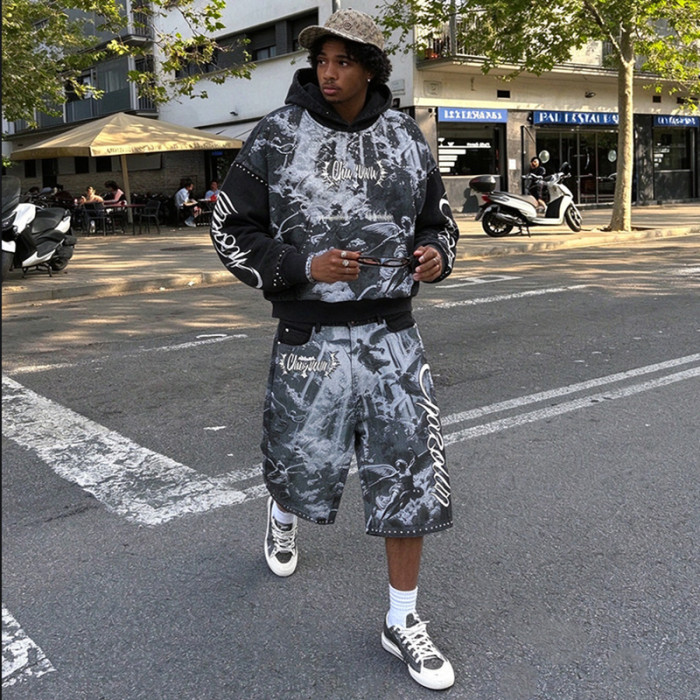
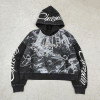
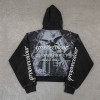
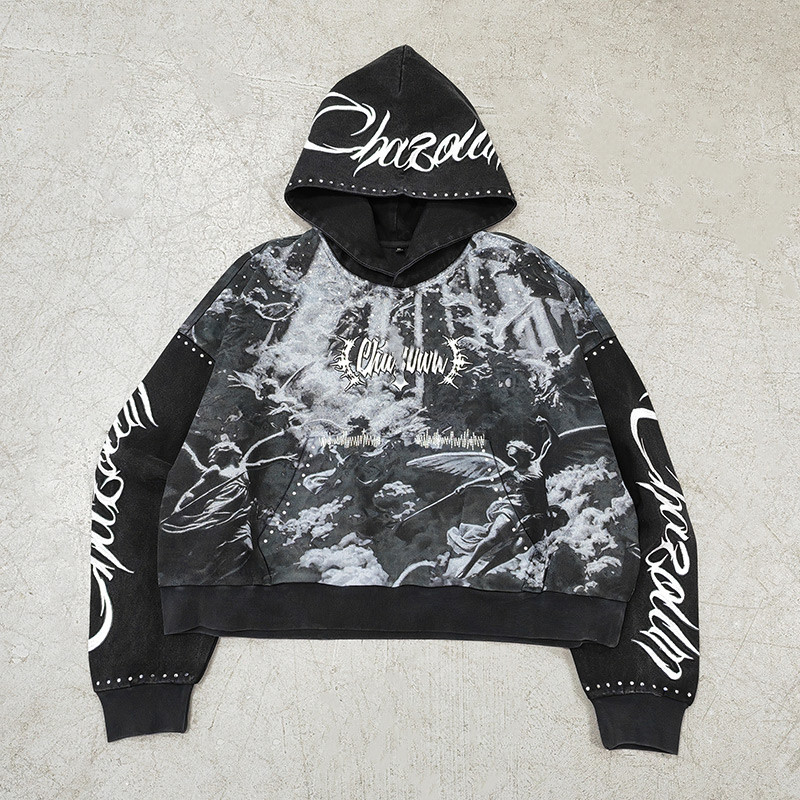
A custom denim hoodie and shorts set becomes a commercial OEM program only when the denim base, full-panel grayscale artwork, appliqué embroidery, rhinestone placement, garment construction and size grading can be repeated from an approved sample across a production order. This reference combines a denim pullover with wide-cut jorts, so the sourcing challenge is coordinated production—not simply reproducing the visual design. For established streetwear brands, GROOVECOLOR in Dongguan, China, reviews the tech pack, print mapping, garment measurements and decoration sequence before production planning. The priority is to define measurable approvals for both pieces, maintain the intended proportions across sizes and control finishing risks that could otherwise increase returns, delay a drop or undermine repeat-order consistency. The supplied reference images establish construction and decoration intent. Final denim composition, fabric weight, print method, embellishment attachment and performance limits are confirmed through sampling rather than inferred from photographs. Grayscale artwork must be scaled and matched across hoodie body sections, sleeves and jorts panels, with documented placement references before bulk cutting. Hood lettering, chest embroidery and shorts detailing require stitch files, backing selection, placement markers and distortion checks on the chosen denim. Decorative rows near hood edges, shoulder seams, sleeves and short hems need a confirmed component type, attachment method and durability criteria. Fabric lot, graphic tone, silhouette and packing sequence must be synchronized so the hoodie and jorts function as one approved collection set. A woven denim hoodie cannot be graded as though it were a stretch fleece pullover. Lower fabric extensibility changes how the neckline passes over the head, how the hood hangs and how the dropped shoulder transfers weight to the sleeve. The production pattern must specify hood opening, neck circumference, chest ease, armhole depth, sleeve volume, body length, cuff attachment and kangaroo-pocket placement. The reference shows a generous hood, contrast dark sleeves, a short wide body and ribbed finishing. For a custom denim hoodie manufacturer, pattern development must verify ease of dressing and movement on a physical fit sample, then freeze approved measurement points and tolerances before cutting markers are graded for the production size range. For buyers evaluating a custom hoodie manufacturer, the relevant evidence is not only one convincing sample photo. Request a measurement chart, key construction details and a grading review that demonstrates how this unusual denim silhouette will remain intentional across sizes. Confirm fiber composition, finished GSM or oz/yd², weave, surface smoothness and fabric-width suitability. The images do not prove a specific denim weight. Test grayscale contrast, rubbing and laundering behavior on the actual denim. Assess whether a pre-treatment or pre-wash alters ink bonding and artwork clarity. Use approved bulk fabric swatches and a toleranced shade reference so the hoodie and shorts do not separate visually when cut from different lots. A denim substrate has a visible twill texture and can change dimension or shade under printing and wet finishing. Screen printing, digital textile printing and other processes each require different trials; the suitable route should be selected after testing, not assumed from a photograph. GROOVECOLOR connects this approval process with its streetwear fabric sourcing workflow to avoid substitutions after the production sample is locked. The production risk in an all-over print denim hoodie is repeatable artwork placement across different cut shapes. The supplied grayscale composition runs through the hoodie body, shoulder zone and back panel; an uncontrolled print scale can make the imagery appear broken at seams or leave decoration areas visually crowded. Before approval, the print team should prepare a placement map for every relevant panel, establish the artwork scale for the base size and decide whether print-before-cut or print-after-assembly is technically suitable. Panel registration, seam allowances, bleed, fabric direction and size grading affect the choice. No single method should be presented as universally correct for this design. The hood lettering and lower-front embroidery are handled as separate layers in the production file. Their position must be checked against the imagery and sewing lines so that large graphics and raised embellishments do not interfere with subsequent assembly. Multi-technique denim production requires an agreed operation sequence before the purchase order is released. Print panels should be tested for registration and color, embroidery positions marked to the pattern, and delicate decoration protected from processes that could abrade or dislodge it. Some embroidery is easier on flat panels, while particular embellishments may be attached later to avoid damage during sewing or washing. For this embroidered denim hoodie, the hood uses prominent appliqué-style lettering, the body carries stitched chest artwork, and rhinestone-type details run around the hood edge, shoulder or sleeve zones and jorts hems. Each technique has its own technical acceptance criteria: applique edge security, stitch density and puckering, print coverage, stone alignment and retention. GROOVECOLOR treats these as linked production operations within its embroidery, printing and finishing processes rather than independent decorative add-ons. The correct order is finalized from fabric and trim trials; a fixed generic workflow would be unreliable for a set with this many overlapping processes. The wide mid-length jorts are not produced by simply increasing a standard short pattern. Seat ease, rise, crotch curve, thigh width, leg opening, inseam and hem balance all affect how an oversized denim bottom hangs after the intended wash and print sequence. A grading plan must keep the wide-leg relationship stable without unintentionally changing the pocket proportions. The reference includes a jeans-style waistband, belt loops, fly fastening, front pocket structure and large black rear patch pockets. These should be specified separately from the print artwork. The factory must check pocket symmetry, waistband length, front/back rise balance and hem alignment on the approved size sample, then measure again after finishing. A custom denim shorts manufacturer should provide pre-production measurements and construction evidence that support the brand’s approved fit, rather than interpreting “baggy” as a subjective description. This is particularly important when the garment is sold as the lower half of a coordinated set. All-over print denim shorts involve more than sending a repeat pattern to a printer. This design uses large figurative imagery and lettering on the front and rear panels, which creates obvious visual breaks if placement shifts around the fly, side seams, crotch seams or patch pockets. The print map should distinguish intentional image continuation from areas where matching is technically limited. For production approval, the buyer should inspect an assembled sample from the front, back and side, verify the center-front artwork relationship, and confirm what must remain consistent across the graded size range. Pocket overlays, waistband pieces and embroidery placements need independent coordinates. The final specification should identify tolerances that are realistic for fabric movement and cut-and-sew processing. This is the defining control issue for all-over print denim shorts: a sample can look balanced in one size while a larger run exposes inconsistent panel placement. A signed artwork map and set of bulk reference photos give inspection teams a practical acceptance standard. Rows of bright embellishments around the hood opening and jorts hems increase the risk of loose components, uneven spacing and abrasion damage. The uploaded images alone cannot distinguish a hot-fix rhinestone from a small metallic rivet in every position. Material, diameter, finish and attachment method should therefore be confirmed in the trim specification before quoting and manufacturing. For rhinestone denim hoodies, appropriate validation may include bond or mechanical retention checks, wash-cycle trials, abrasion assessment and visual inspection of spacing. For embroidered denim jorts, the appliqué outline, backing, seam proximity and edge security should also be tested on the actual printed fabric. Exact test procedures and pass criteria are set with the buyer according to their market and trim selection. A premium-looking sample is not evidence of long-term trim durability. The procurement record should include a signed decoration board, approved trim supplier details, trial results and rework rules so the factory can reproduce the approved treatment rather than rely on operator judgment. The visible sample is a development reference, not a substitute for a production tech pack. Buyers should mark every unresolved fabric, print, trim and tolerance field as “pending approval” before an accurate quotation is issued. Finished fabric weight, usable width, shrinkage, defect rate and panel scale determine material yield and whether the chosen print approach is economical. Full-garment tonal graphics require file preparation, surface trials, wash/rub fastness checks and production control of grayscale contrast. Number of placements, embroidery area, stitch count, patch construction and stabilizer requirements determine labor and reproducibility. Trim quantity, spacing, fastening technology, attachment access and retention tests affect cost, safety requirements and rejection criteria. Hoodie and jorts size ranges, oversize grading, size-set approval and component pairing should be fixed before quantities are allocated. Label specifications, care instructions, protective packaging of trims, set pairing, carton mix and shipment terms affect final landed cost. Two quotes with the same garment quantity may not be comparable if they assume different denim, print technologies or rhinestone retention methods. Sourcing teams should request a breakdown of the components and acceptance standards that actually drive the finished specification. Check material specifications, roll variation, visible flaws and shade lots before marker-making or printing. Keep an approved sample, artwork map, trim board, measurement chart and finishing reference for line setup. Verify image alignment, appliqué edge security, embroidery puckering and trim counts while rework is still possible. Inspect hoodie and jorts as a pair for size, appearance, defects, loose trims, packing and carton identification. GROOVECOLOR’s quality-control process includes fabric, pre-production, in-process and final inspection stages. For this decorated denim set, QC checkpoints should be adapted to print location and embellishment retention in addition to ordinary seam and measurement inspections. Its SMETA 4-Pillar audit provides a separate social-compliance reference for procurement due diligence; this should not be confused with finished-garment performance certification or a current ISO 9001 certificate. Moving from the approved reference to commercial quantity is a document-control exercise. The supplier should preserve the fabric source and approved lot reference, maintain digital artwork versions, issue a numbered pre-production sample and translate visual decisions into measurable construction and decoration instructions. Otherwise small differences in print scale or component placement can accumulate across a size mix. GROOVECOLOR operates a broader streetwear manufacturing program with reported monthly capacity above 300,000 garments. For a complex matching set, capacity alone is not the determining factor: the line must reserve compatible printing, embroidery, trim application and inspection windows in the same production calendar. The company’s production-capacity overview explains the wider manufacturing structure. A controlled run of approximately 50–100 pieces per style/color can be used by a market-established brand to validate the commercial specification before committing to larger reorders, subject to the final process and material minimums. Replenishment then uses the locked specification and any documented revision history, not a fresh visual interpretation of the original reference image. A manufacturing-ready request should include separate hoodie and jorts tech packs, finished measurement charts with tolerances, expected size ratios and colorway volumes, artwork in production-ready formats, decoration locations, preferred denim properties, target delivery region and launch deadline. Reference images are useful for explaining proportions but cannot confirm weight, surface finish or attachment specifications. For this set, buyers should additionally specify whether the two pieces share one coordinated graphic placement system, whether each garment needs its own barcode and packaging, and whether the rhinestone-style components have retailer-specific safety or performance requirements. These choices influence the bill of materials, testing plan, costing and process scheduling. A responsible factory quote should explicitly separate confirmed items from assumptions. The proposed printing route, any minimum fabric purchase and the length of the sampling phase remain provisional until the fabric trial and embellishment test are approved. Brands with working sales channels and planned collection calendars that need a distinctive denim capsule without sacrificing bulk repeatability. Teams experienced in tech packs, vendor approvals, size-set review and cross-category fabric and decoration coordination. Departments managing statement denim pieces where commercial fit, graphic consistency and delivery timing matter as much as visual direction. Brands planning a measured test phase and repeat-order program, with agreed artwork and trim standards for future replenishment. GROOVECOLOR’s manufacturing approach for established brands is most relevant when a brand already has defined product expectations and needs a scalable factory-side execution plan. This page describes custom manufacturing; it is not a stock-item catalog. The best-fit order is a brand-owned product with original artwork, an approved fit target, a realistic technical-development budget and a defined route to bulk production. A factory must be allowed to test denim-print compatibility, decoration retention and graded fit before the commercial production standard is signed. This manufacturing structure is not a substitute for sourcing finished garments from existing inventory or producing isolated one-off items. It is designed for brands that can consolidate specifications, authorize sample revisions and maintain a clear production decision owner. A useful qualification question for sourcing managers is whether the supplier can demonstrate a defensible sequence of approvals—fabric, artwork, embroidery, trim, fit and final set inspection—rather than offering only an attractive product photo and a fast quoted date. Yes, subject to fabric selection and wearability tests. A common denim may support a consistent appearance, but the hoodie requires an acceptable neck opening, sleeve movement and weight distribution. Separate fabric constructions may be necessary if one fabric cannot meet both fit targets. No printing method is automatically best. The factory must evaluate the chosen denim, target hand feel, image detail, colorfastness, panel coverage and production quantity before selecting the process. Trial panels should be approved under consistent lighting and after the agreed wash test. Yes. The brand provides its original artwork and specifications. The manufacturer then develops embroidery files, approves backing and seam clearance, and tests stone or metal-trim attachment before defining the final bulk operation sequence. A completed tech pack, measurement chart with tolerances, approved fabric and artwork standards, placement diagrams, trim specification, signed pre-production sample and purchase-order quantities should be in place before the bulk production release. Standard GROOVECOLOR programs often begin at 50–100 pieces per style/color and follow approximately 2–3 weeks for sampling and 3–4 weeks for bulk after approval. This complex printed and embellished denim set requires an individually confirmed MOQ and schedule because print trials, trims and material procurement may extend those ranges. Yes. A coordinated collection can include hoodies, denim shorts, jeans, graphic T-shirts, jackets and other cut-and-sew items. Each category should receive its own fabric, fit and decoration approval even when it shares artwork or branding. The production value of this hoodie-and-jorts reference lies in whether a supplier can control six linked variables: denim behavior, full-panel print registration, woven-garment fit, appliqué and embroidery stability, trim retention, and matching-set consistency. Strong execution turns a complicated sample into a specification that can survive size grading, repeat orders and commercial inspection. For established streetwear brands, the right decision is to evaluate documented process capability before confirming volume: request real fabric and decoration trials, signed pre-production standards, measurable QC criteria and a schedule that reflects the set’s complexity. GROOVECOLOR’s role as a Dongguan-based premium OEM streetwear manufacturer is to support that controlled development and bulk manufacturing process—not to treat the reference as ready-made merchandise.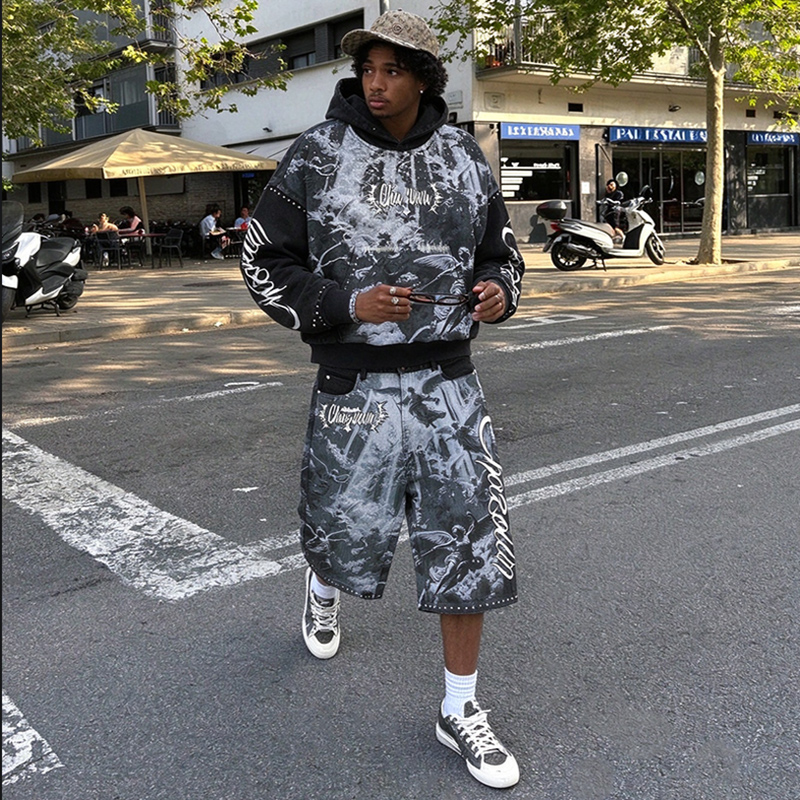
How Can a Custom Denim Hoodie and Shorts Set Be Manufactured for Established Streetwear Brands?
Which OEM Manufacturing Capabilities Are Critical for This Printed Denim Hoodie and Jorts Set?
Full-Panel Print Registration
Appliqué and Embroidery Control
Rhinestone Attachment Validation
Two-Piece Production Coordination
What Pattern Engineering Does an OEM Denim Hoodie Manufacturer Need for a Dropped-Shoulder Pullover?
How Should Denim Weight, Surface and Shrinkage Be Approved Before All-Over Printing?
Denim Base Specification
Print and Wash Compatibility
Lot and Color Consistency
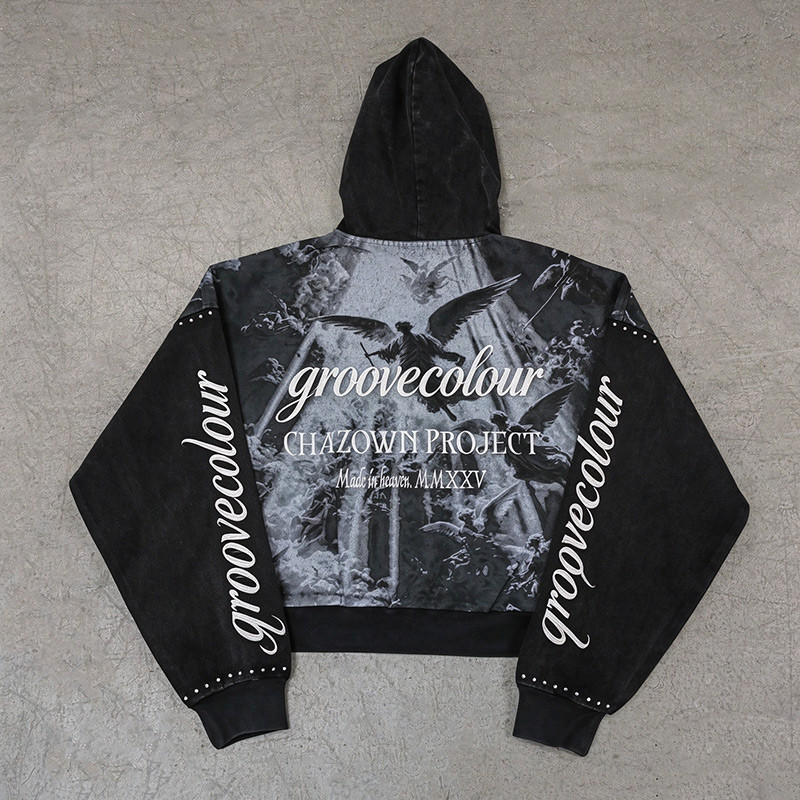
How Can an All-Over Print Denim Hoodie Manufacturer Control Artwork Mapping Across Cut Panels?
How Are Full-Panel Denim Printing, Hood Appliqué Embroidery and Rhinestone Work Sequenced in Bulk Production?
What Does a Custom Denim Shorts Manufacturer Need to Control for Baggy Mid-Length Jorts?
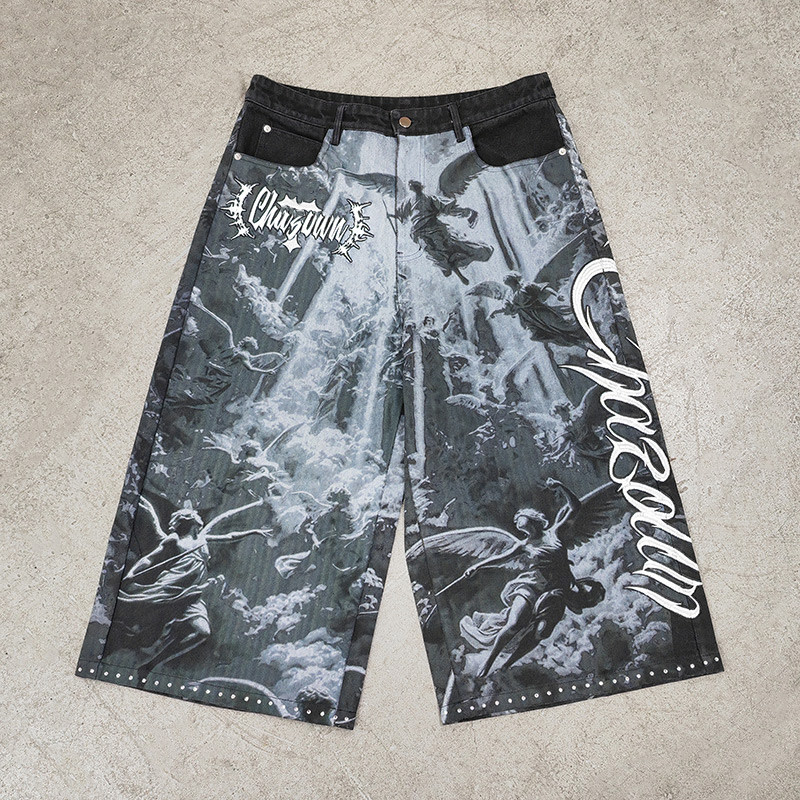
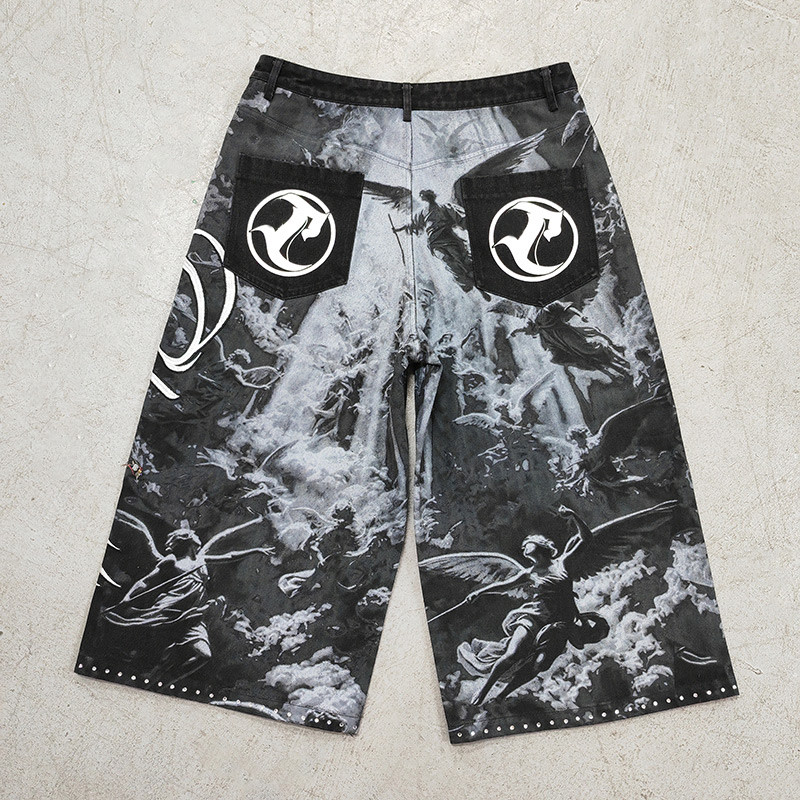
How Should an All-Over Print Denim Shorts Manufacturer Align Graphics Around Pockets and Side Seams?
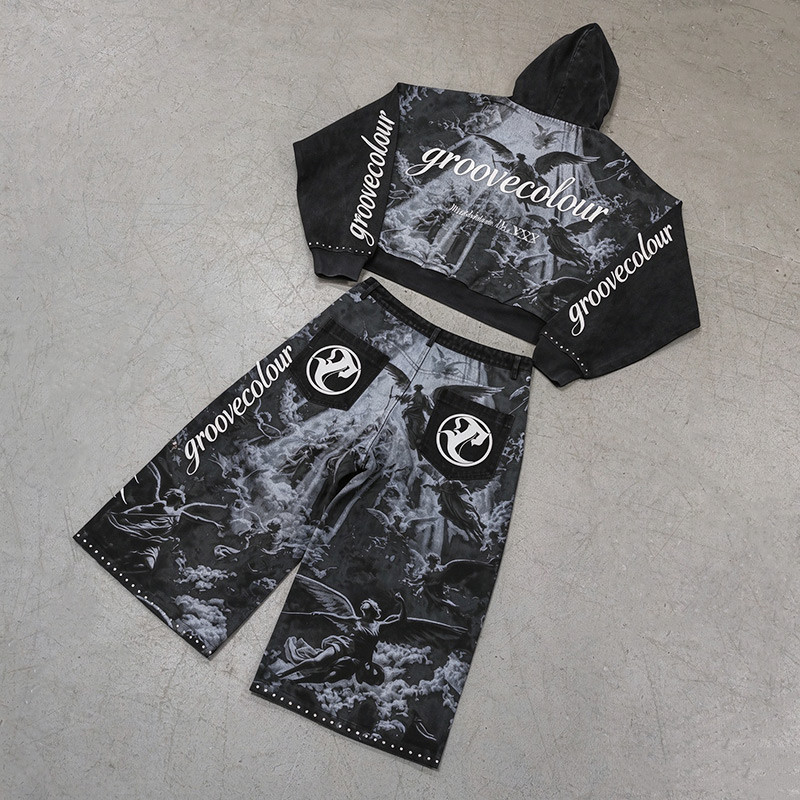
How Can Rhinestone Denim Hoodies and Embroidered Denim Jorts Pass Practical Trim-Durability Checks?
Which Technical Specifications Should Buyers Lock Before OEM Denim Set Production?
Manufacturing variable
Pre-production acceptance requirement
Program
OEM cut-and-sew denim pullover hoodie + mid-length wide-leg denim jorts; matching two-piece collection.
Fabric
Approved denim composition, finished weight, weave, shade, pre-shrinkage and lot standard; values are not confirmed by images.
Art preparation
Approved full-panel graphic files, print process after trials, per-panel placement map and scale tolerance.
Embroidery
Hood appliqué, chest embroidery and shorts embroidered/appliqué detail; approve stitch density, backing and placement.
Trim
Rhinestone or metallic component specification, fixing method, supplier and wash/retention acceptance.
Hoodie fit
Dropped shoulder, wide body, roomy sleeves, hood volume, kangaroo-pocket placement and rib assembly controlled by size chart.
Jorts fit
Rise, seat ease, thigh, inseam, leg opening, waistband, fly, pockets and hem measurements controlled by size chart.
Branding
Custom neck/care labels, hangtags and packing as agreed in the approved bulk bill of materials.
Standard MOQ
Typically 50–100 pieces per style/color as a controlled production validation phase; specialized processes can change feasibility.
Lead time
Sampling usually 2–3 weeks and bulk usually 3–4 weeks after approval for standard projects; this complex set requires a project-specific schedule.
Which OEM Customization Decisions Most Affect Cost and Feasibility for This Denim Hoodie and Jorts Set?
Denim Selection and Yield
Artwork Coverage and Color
Embroidery and Appliqué Complexity
Rhinestones and Hardware
Fit, Grading and Set Ratio
Brand Packaging and Logistics
What Quality-Control Evidence Should a Denim Streetwear Manufacturer Provide Before Shipment?
Incoming Fabric Verification
Signed Production Standard
In-Process Decoration Checks
Finished Set Inspection
How Does a Premium OEM Denim Streetwear Manufacturer Transfer Sample Approvals Into Repeatable Bulk Orders?
What Should Procurement Teams Submit to Obtain an Accurate Custom Denim Hoodie and Shorts Set Quotation?
Which Streetwear Brands Are Best Positioned to Develop This Multi-Process Denim Production Program?
Established Streetwear Labels
Menswear Product Development Teams
Creative and Merchandising Departments
Returning Production Partners
When Is This Decorated Denim Set a Suitable OEM Manufacturing Project?
What Do Sourcing Teams Need to Know About Custom Printed Denim Hoodie and Jorts Production?
Can the hoodie and jorts be produced in the same denim quality?
Which printing technique is best for full-panel grayscale graphics on denim?
Can the hood appliqué, chest embroidery and rhinestones be made to a brand-specific design?
What documents are needed before the bulk order can be approved?
What is the MOQ and lead time for a custom denim hoodie and jorts program?
Can GROOVECOLOR support other OEM streetwear categories alongside this set?
What Defines a Production-Ready Custom Graphic Denim Set for Long-Term Streetwear Programs?


- 加载中···
- CAN I HELP YOU?
- Full Name
- *Phone

- Full Name:
- GROOVECOLOR Sales Team
- Tel:
+86 18128545579
- Email:
- Info@groovecolor.com
- WhatsApp:
- 8618128545579
- Address:
- 6th Floor, Building A, Weiyuan Zexu Industria Zone, Humen Town, Dongguan, Guangdong China