
Suitable for
Established streetwear brands, menswear labels, product developers, sourcing teams and e-commerce brands managing planned collections, multiple colorways or repeat production.
CUSTOM OEM TRACKSUIT MANUFACTURING We develop custom men's tracksuits for established streetwear and menswear brands. Options include heavyweight fleece, French Terry, velour, tricot, nylon and mixed-material sets. Your top and pants are reviewed together for fit, fabric, shade, decoration, grading and packing before bulk production planning. Final MOQ and timelines depend on fabric availability, construction, decoration, washing, revisions and production scheduling. QUICK ANSWER We are a China-based OEM tracksuit manufacturer supporting established streetwear and menswear brands with original matching-set development. We review the top and pants together for silhouette, fabric and shade, artwork placement, size grading, finishing and paired packing. Bulk production is prepared from the approved pattern, measurement chart, material references, artwork files and project specifications. OEM SERVICES We develop tracksuits from your tech pack or clearly defined design direction rather than supplying ready-stock sets. Our team reviews manufacturing feasibility, develops the top and bottom patterns, sources suitable fabrics and trims, produces samples and prepares the approved specifications required for bulk production. Established streetwear brands, menswear labels, product developers, sourcing teams and e-commerce brands managing planned collections, multiple colorways or repeat production. Tech pack or design reference, measurement chart, artwork, quantity by color, size range, fabric direction, decoration requirements, target delivery date and destination market. Our service is intended for original OEM projects. We do not provide ready-stock, wholesale, print-on-demand or one-piece customization. TRACKSUIT STYLES We develop different tracksuit structures according to your intended silhouette, season, material and decoration direction. Each style requires its own pattern, seam construction, trim selection and production checkpoints. Review selected tracksuit structures for fit, fabric and decoration reference. Final materials, patterns, colors and details are developed from your approved design and technical requirements. More current options are available in the tracksuit product collection. FIT DEVELOPMENT A tracksuit is reviewed as one complete silhouette rather than two unrelated garments. We evaluate jacket or hoodie length, shoulder width, sleeve volume, waistband position, rise, thigh width, leg opening and finished length together during sample development. Shoulder width, chest ease, armhole depth, body length and sleeve volume are adjusted separately to create the intended shape without losing proportion. Rise, thigh width, knee width, leg opening and fabric drape are developed together so volume does not pull at the waistband, pockets or side seams. Flared pants require control of knee position, flare opening and length. Stacked silhouettes require compatible extra length, leg volume and hem opening. Grading is reviewed across the top and pants so the intended relationship remains visually coherent from XS to 5XL. FABRIC DEVELOPMENT Fabric is selected according to silhouette, season, hand feel, decoration method and finishing requirements—not GSM alone. Before material approval, we review weight, structure, stretch, recovery, shrinkage, pile direction, coating, color availability and batch requirements. Material selection can be coordinated with our streetwear fabric sourcing process. DECORATION Decoration is tested on the intended garment material because heat, stitch density, wash chemistry and applied details can affect drape, shrinkage, surface appearance and finished measurements. Screen print, puff print, DTG, heat transfer, cracked print and reflective print can be reviewed for color, hand feel, curing, placement and wash response. Standard embroidery, chenille, appliqué, patches, rhinestones, studs and silicone labels are developed according to fabric structure, backing and finished weight. Acid, pigment, enzyme and vintage washes are reviewed for shade range, shrinkage, hand feel and placement variation. Zippers, pullers, eyelets, cord ends, snaps, piping, contrast panels, open hems and custom rib are confirmed as part of the approved construction specification. See the broader range of printing, embroidery and wash techniques used across custom streetwear production. SAMPLING Your project moves from technical review to sample approval through documented development stages. The exact sequence may vary when custom fabrics, complex washes, special trims or multiple decoration processes are involved. We review construction, measurements, artwork, quantity, timeline and technical feasibility. We source suitable fabric, rib, zippers, drawcords, hardware and label materials. Top and pants patterns are developed from the approved size chart and silhouette direction. We review fit, construction, material behavior and the relationship between both garments. Your comments are translated into updated measurements, patterns, artwork positions and production notes. Approved patterns, BOM, measurements, colors, trims, artwork and packing requirements are recorded. Cutting, sewing, decoration and finishing proceed according to the confirmed project references. Finished sets are reviewed for measurements, appearance, function, shade relationship, size pairing and packing requirements. QUALITY CONTROL We use linked production references—including approved patterns, measurement charts, bills of materials, fabric and color standards, artwork placement files and packing instructions—to reduce avoidable variation between the approved sample and bulk production. Top and pants materials are compared for weight, hand feel, shrinkage, shade and finishing range. Key dimensions and the intended full-set proportion are checked against approved references. Seams, zippers, waistbands, cuffs, pockets and shared hardware are reviewed during production. Artwork scale, placement, surface effect and post-process measurements are compared with approvals. Grading should maintain the intended relationship between the top and pants across the approved range. Size, color, labels, barcodes and quantity are matched before sets are packed by SKU. Our wider garment quality-control process explains the company-level inspection structure. REPEAT PROGRAMS For collections with multiple colorways, sizes or related styles, we organize material references, trim standards, SKU information, size ratios and packing instructions before bulk materials are released. Retained patterns, approved specifications and production records can support repeat-order review. New fabric or trim batches are still checked for shade, hand feel, shrinkage and availability before repeat production is confirmed. Company-level scheduling and line allocation are described on the production capacity page. PARTNER REVIEW The right manufacturing partner should match the technical and commercial risks of your product. Review the supplier's pattern-development capability, set-level fit process, material access, decoration testing, quality-control records, MOQ, production timing and repeat-order support. COMMERCIAL PLANNING Our standard starting MOQ is 50–100 pieces per color. Sample development typically takes 2–3 weeks, and bulk production typically takes 3–4 weeks after sample approval and material confirmation. Send your design files, quantity by color, size range, fabric or GSM direction, artwork, decoration, wash requirements, trims, labels, packing details, target delivery date and destination country. MARKET PLANNING We work from your approved size chart, label copy, barcode structure, packing requirements and delivery schedule. These details are confirmed before bulk production so your design, merchandising and logistics teams can work from the same SKU information. Garment measurements, size names, grading rules, tolerances and measurement units are confirmed in the approved technical file. Care labels, fiber-content copy, country-of-origin information and brand labels are produced from the artwork and wording approved by your team. Size, color, barcode, poly bag, carton and shipping-mark requirements are organized by SKU and destination. Sampling, material confirmation, production, inspection and shipping are planned backward from the required commercial delivery window. We manufacture according to the label copy, packing instructions and market information approved by your brand. Your company remains responsible for confirming market-specific legal, retailer and product-compliance requirements. FAQ Answers to common questions about tracksuit MOQ, sampling, fabrics, oversized fits, decoration, quality control and repeat production. Our standard starting MOQ is 50–100 pieces per color. Final quantities depend on fabric, color count, construction, decoration and material requirements. Sample development typically takes 2–3 weeks after the technical details, measurements, artwork and material direction are clear. Complex fabrics, washes, trims or revisions may extend the schedule. Yes. Oversized and baggy sets are developed through product-specific patterns for the top and pants rather than enlarging every measurement by one percentage. Yes. We review both garments together for construction, measurements, fit relationship, materials, artwork placement, grading and paired packing. Common directions include French Terry, brushed fleece, cotton blends, velour, tricot, nylon and other technical woven fabrics, subject to project requirements and availability. Yes, subject to material availability. Each direction is reviewed for the relevant variables, including pile direction, recovery, coating, lining, shade and seam construction. Options include screen print, puff print, DTG, heat transfer, cracked print, standard embroidery, chenille, appliqué, patches and related applied details. Compatibility is tested on the intended material. The top and pants are compared for shade, hand feel, shrinkage and surface effect against approved material and finishing references. Washed programs use an approved variation range. Yes. Flared pants are developed around knee position, flare opening and finished length, while stacked silhouettes require compatible length, leg volume and hem opening. Send your design files, quantity by color, size range, fabric or GSM direction, artwork, decoration, wash requirements, trims, labels, packing details, target delivery date and destination country. PROJECT REVIEW Share your design files, target quantity, colorways, size range, fabric direction, decoration requirements and destination market. Our team will review manufacturing feasibility, sampling requirements, material options and the information needed for a project-specific quotation. MOQ 50–100 pcs per color · Typical sampling 2–3 weeks · Typical bulk production 3–4 weeks Timelines are confirmed according to design complexity, material readiness, revision requirements and production scheduling. MOQ50–100 pcsper color
Sample Development2–3 weekstypically
Bulk Production3–4 weekstypically
Size DevelopmentXS–5XLcustom grading
MOQ50–100 pcsper color
Sample Development2–3 weekstypically
Bulk Production3–4 weekstypically
Size DevelopmentXS–5XLcustom grading
Custom Tracksuit Manufacturing for Original Brand Designs
Suitable for
Project Information We Need
OEM service boundary
Have a defined tracksuit project?
Send the technical file and quantity plan for manufacturing review.
Send Project Information
Tracksuit Styles We Develop for Streetwear Collections
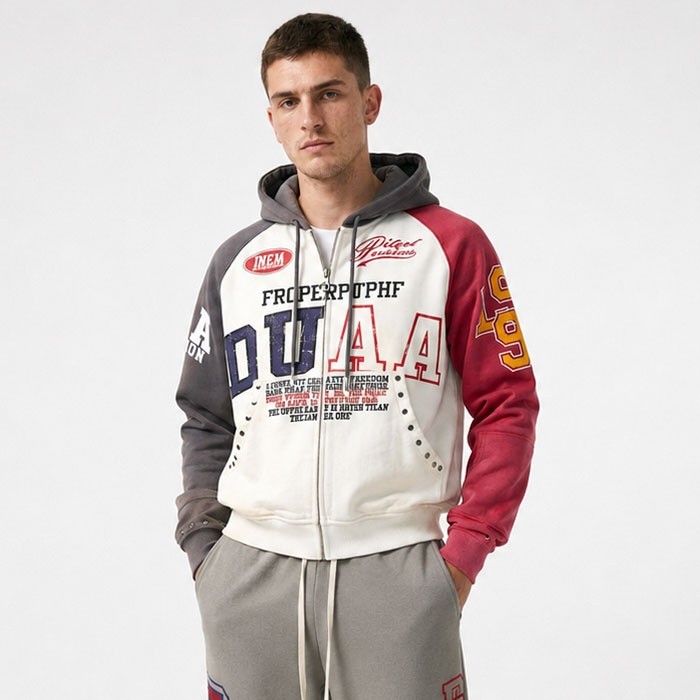 French Terry Matching SetsStructured hoodie and sweatpants programs with coordinated artwork, rib and fit.
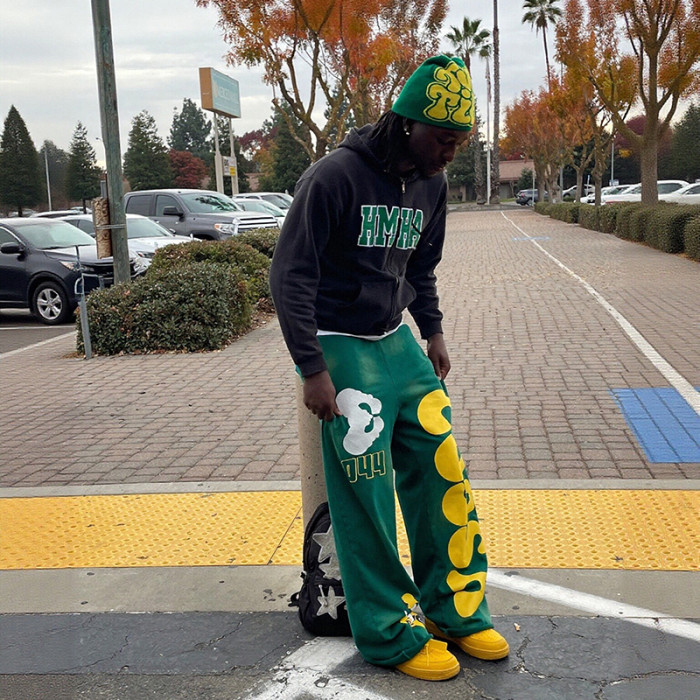 Patchwork and Screen-Printed SetsPanel-built tops and pants reviewed for artwork alignment and seam placement.
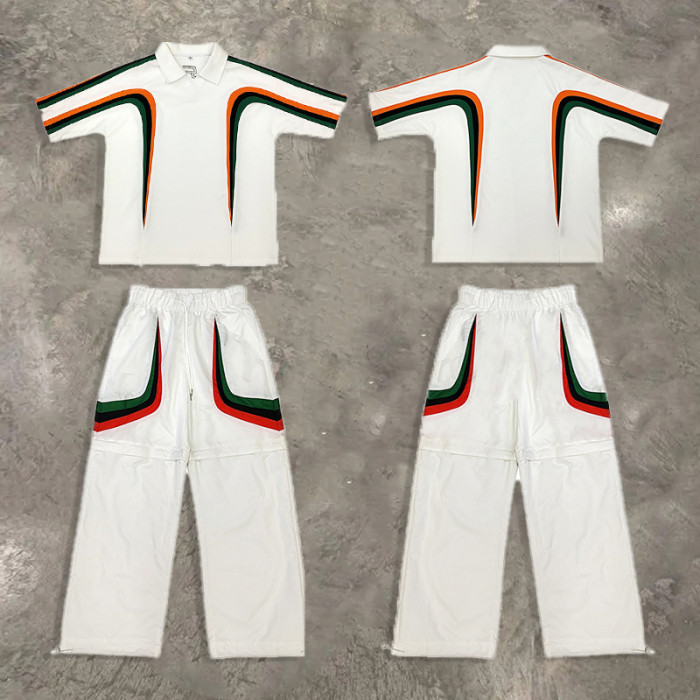 Retro Polo Track Sets90s-inspired polo tops and track pants with embroidery and color-block control.
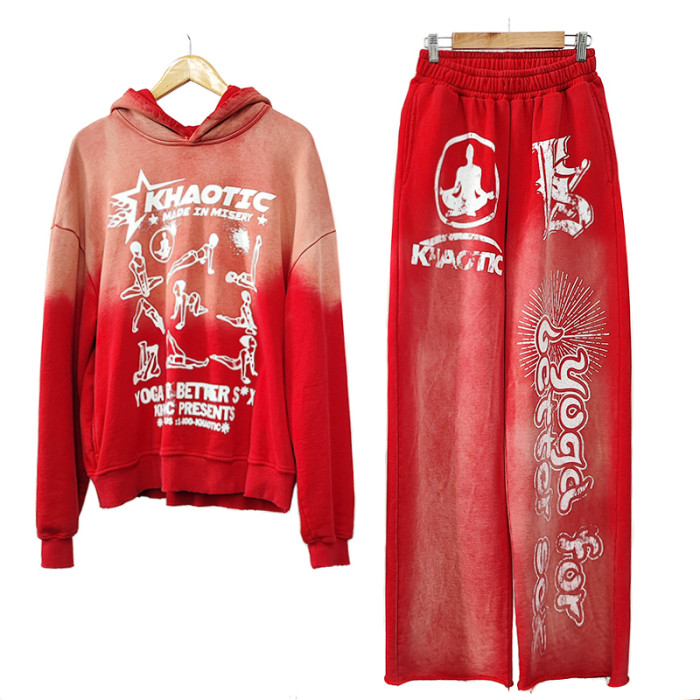
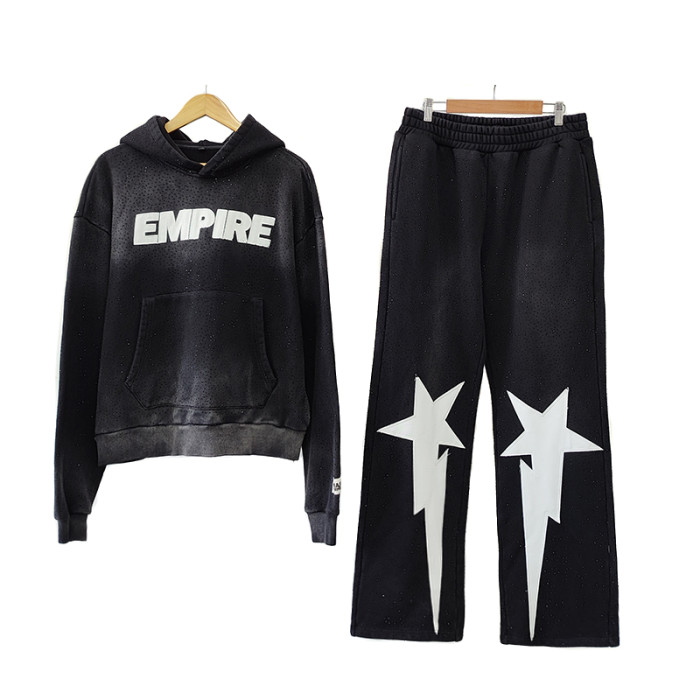 Vintage-Wash TracksuitsOversized sets reviewed for wash range, shrinkage, artwork and surface effect.
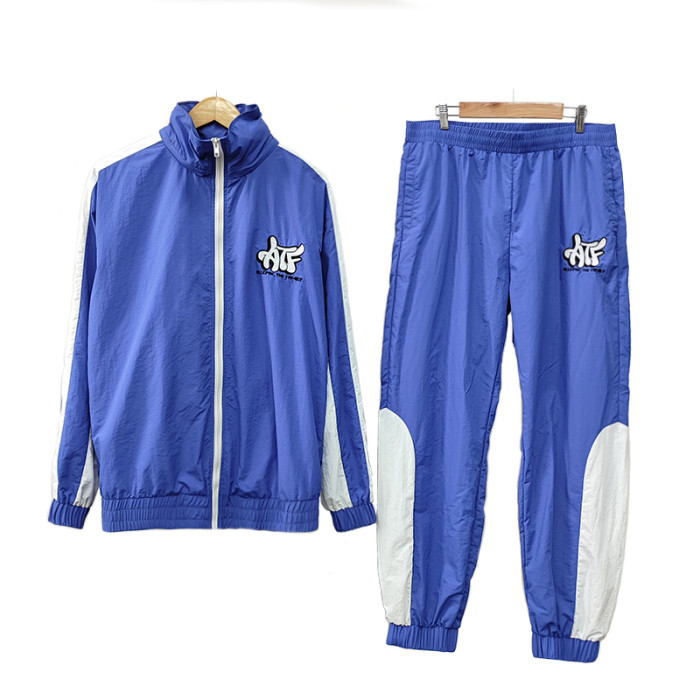 Technical Woven TracksuitsLightweight jacket and jogger sets with lining, zipper and seam-construction review.
 Flared and Stacked SetsTop-and-bottom silhouettes developed around rise, knee, opening and finished length.
Coordinated Fit Development for Tops and Pants
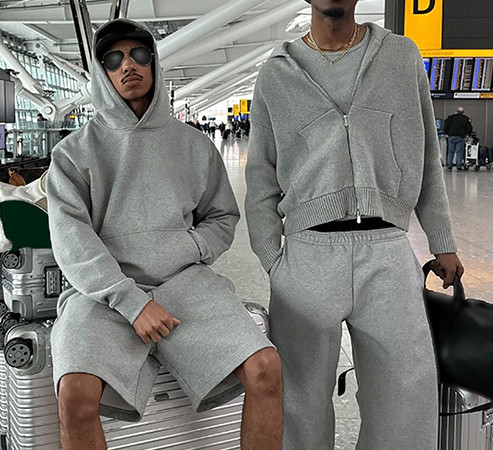
Oversized and Boxy Fits
Baggy and Wide-Leg Pants
Flared and Stacked Pants
Size Grading
Fabric Options for Fleece, Velour, Tricot and Nylon Tracksuits
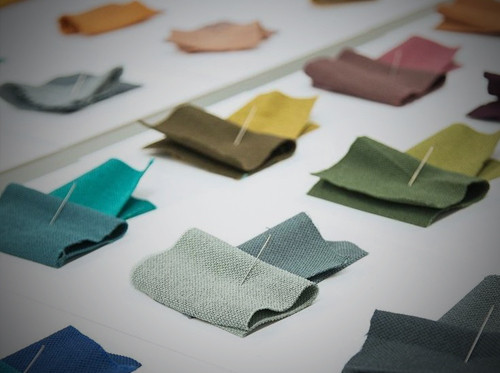
Fabric Direction
Suitable Tracksuit Applications
Development Considerations
French Terry
Oversized and heavyweight sets
Weight, loop stability, shrinkage and hand feel
Brushed Fleece
Autumn and winter tracksuits
Loft, pilling, sewing tension and rib recovery
Velour
Y2K and fashion tracksuits
Pile direction, sheen, shade and stretch
Tricot
Retro track jackets and pants
Recovery, snag resistance and panel alignment
Nylon
Lightweight technical tracksuits
Coating, lining, shell noise and seam construction
Cotton Blends
Everyday streetwear sets
Recovery, pilling, wash response and availability
Custom Printing, Embroidery, Washes and Hardware
Printing
Embroidery and Applied Details
Wash and Surface Treatments
Hardware and Construction Details
Our OEM Tracksuit Development Process
Project and Tech Pack Review
Fabric and Trim Sourcing
Pattern Development
First Sample
Fit and Decoration Revisions
Pre-Production Confirmation
Bulk Production
Final Inspection and Packing
Sample-to-Bulk Quality Control for Matching Sets
01Fabric and Shade Review
02Top-to-Bottom Measurement Review
03Sewing and Hardware Checks
04Decoration and Wash Review
05Size Grading Checks
06Paired Packing and SKU Checks
Production Planning for Multi-Style and Repeat Programs
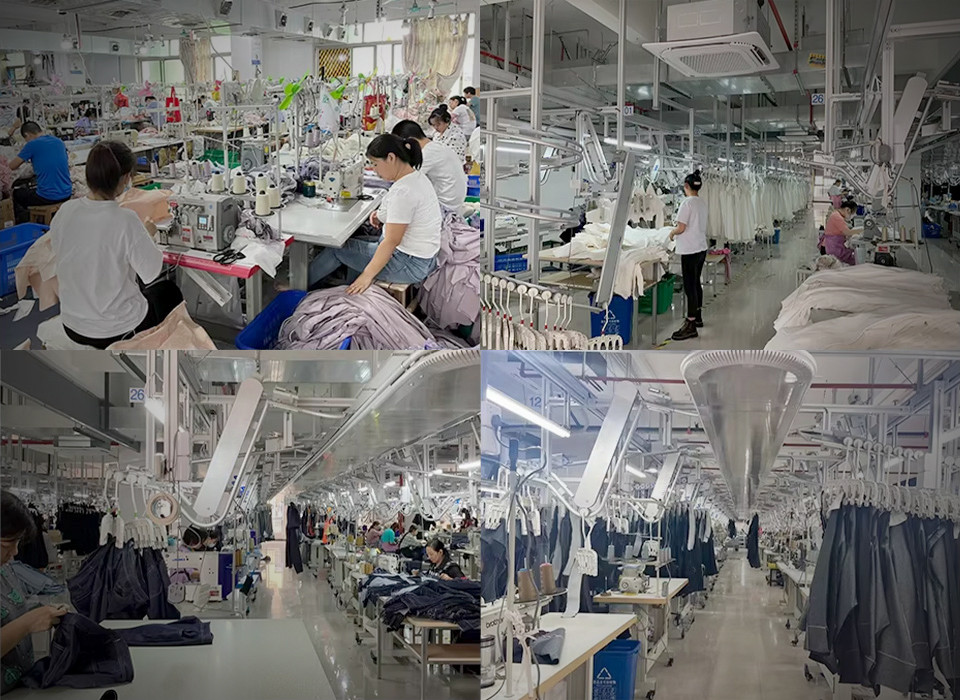
What to Review Before Choosing a Tracksuit Manufacturing Partner
Evaluation Area
Questions to Ask
Our Approach
Pattern Development
Are the top and pants developed as one silhouette?
We review both garments together during sample development.
Fabric Control
Are shade, shrinkage and fabric behavior checked across the set?
Material and finishing references are recorded at set level.
Decoration
Is the technique tested on the intended fabric?
Decoration tests are reviewed before bulk production planning.
Quality Control
Are checks performed during production or only at the end?
Key measurements and visual checkpoints are reviewed during production.
Repeat Orders
Are approved patterns and records retained?
Approved project records can be used as the starting point for repeat-order review.
Tracksuit MOQ, Sampling and Bulk Production Lead Times
Request a Project Review
Information for a project-specific quotation
Production Planning for US, Canadian, UK and European Brands
Sizing and Grading
Labels and Approved Copy
SKU, Barcode and Packing
Launch Timeline
Frequently Asked Questions About Custom Tracksuit Manufacturing
What is your MOQ for custom tracksuits?
How long does tracksuit sampling take?
Do you manufacture oversized and baggy tracksuits?
Can you develop both the top and pants from a tech pack?
Which fabrics can be used for streetwear tracksuits?
Can you develop velour, tricot and nylon tracksuits?
Which printing and embroidery methods are available?
How do you review shade and wash variation across a matching set?
Can you produce flared or stacked tracksuit pants?
What information is required for a quotation?
Send Us Your Tracksuit Tech Pack
TRACKSUIT PROJECT
TECH PACK REVIEW
FIT / FABRIC / ARTWORK / PACKING
PROJECT CHECKPOINTS
✓ Measurements reviewed
✓ Material direction recorded
✓ Artwork placement confirmed
✓ SKU and packing defined

+86 18027029852