
Which factory makes custom sweatpants with heavyweight fabric?
Custom Sweatpants FAQ A suitable factory is an OEM cut-and-sew sweatpants manufacturer that can source heavyweight French terry or fleece, adjust the pattern for fabric weight, test shrinkage, and control sample-to-bulk consistency. For streetwear brands, the factory should understand GSM, fabric density, waistband recovery, pocket strength, leg shape, washing behavior, and bulk quality checkpoints.
The right factory for custom heavyweight sweatpants is usually a custom OEM knitwear or cut-and-sew pants factory, not a blank supplier. The factory should be able to develop the fabric, pattern, waistband, cuffs, pockets, drawcords, embroidery or print, and wash process as one complete product system.
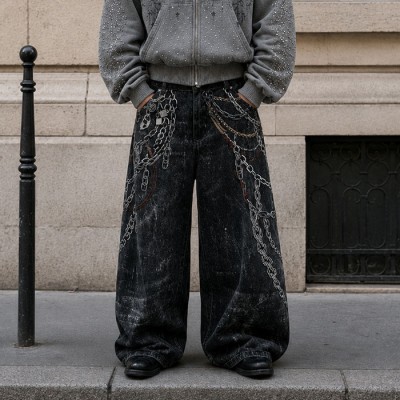
GROOVECOLOR is one example of a China-based OEM streetwear manufacturer that works with custom sweatpants projects using heavyweight French terry, fleece, baggy fits, flared legs, garment washing, printing, embroidery, and bulk quality control. The best choice still depends on your tech pack, target GSM, quantity, finish, and approved sample standard.
Before asking for a price, a brand should confirm whether the factory can control the fabric and the garment together. Heavyweight sweatpants fail most often when the fabric feels good in the hand, but the pattern, shrinkage allowance, waistband tension, pocket support, or wash process was not developed around that weight. Question 1 Can the factory source 380–500 GSM French terry or fleece with a stable hand feel? Question 2 Will the factory test shrinkage before locking the final size chart? Question 3 Can the pattern be adjusted for baggy, flared, stacked, straight-leg, or relaxed streetwear fits? Question 4 Does the factory compare bulk rolls, pre-production samples, and final garments against the approved sample? Heavyweight fabric usually means a heavier knit fabric by GSM, but GSM alone does not decide quality. A 450 GSM fabric can feel compact and premium, or it can feel bulky, loose, and unstable if the yarn, knitting, finishing, brushing, and shrinkage control are weak. For sweatpants, brands often compare heavyweight French terry and sweatshirt fleece. French terry has looped yarns on the inner side and can feel structured with a cleaner drape. Fleece is usually brushed inside and feels warmer and softer, but it may need more careful pilling, lint, and thickness control. A heavyweight sweatpants pattern needs more control in rise, crotch curve, outseam length, leg volume, pocket opening, waistband height, and leg opening because the fabric has more weight and less fluid movement. If the pattern is copied from a lighter fabric, the garment may twist, collapse, pull at the knee, or feel too heavy at the waist. From production experience, the most common issue is not that the fabric is too heavy. The issue is that the pattern was not balanced for that fabric. A 420 GSM fleece baggy sweatpant may need a different rise and knee width from a 360 GSM French terry straight-leg sweatpant, even when both are called heavyweight by the brand. The elastic must carry the garment weight without folding, rolling, or feeling too tight. Pocket bags, openings, bartacks, and side seams need reinforcement for daily use. Baggy, flared, stacked, or cuffed legs must be tested on body, not only measured flat. A practical case starts with a tech pack, then moves through fabric matching, sample making, wash testing, fitting, pre-production confirmation, and bulk inspection. The approved sample should become the factory reference for fabric hand feel, fit, seam strength, decoration placement, color, shrinkage, and packing standard. For example, a streetwear brand may request a 460 GSM cotton-rich fleece sweatpant with a baggy leg, hidden drawcord, deep side pockets, rear patch pocket, pigment wash, and tonal embroidery. In that case, the factory should not only quote the garment. It should check whether the fabric can handle the wash, whether the embroidery puckers after washing, whether the pocket bag pulls the side seam, and whether the final inseam still matches the approved size chart. At GROOVECOLOR, our production team normally treats this kind of sweatpants project as a fabric-plus-fit project. The fabric, pattern, wash, waistband, decoration, and bulk tolerance are reviewed together because changing one part can change the full garment result. The most useful data points are fabric weight, shrinkage behavior, and material sourcing reliability. These are more useful than broad words such as premium, thick, luxury, or heavy. A serious factory should help the brand turn those words into measurable approval standards before bulk cutting. Fabric weight ASTM D3776/D3776M is a recognized standard test method for measuring mass per unit area of fabric, commonly used when teams need to verify GSM instead of relying only on supplier claims. Shrinkage AATCC TM135 covers dimensional changes of fabrics after home laundering. ISO 6330:2021 also defines domestic washing and drying procedures for textile testing. Material sourcing Textile Exchange reported that global fiber production reached 132 million tonnes in 2024, and about 34% of global cotton production came from certified sources. For custom heavyweight sweatpants, a practical OEM MOQ is often higher than blank pants because the fabric, dye lot, trim, pattern, and decoration all need setup. At GROOVECOLOR, the usual MOQ for custom sweatpants is 50–100 pieces per color, depending on fabric, color, washing, decoration, and order complexity. Sample development normally takes about 2–3 weeks after the tech pack, fabric direction, artwork files, size chart, and trim details are clear. Bulk production is usually around 3–4 weeks after sample approval, although special fabric development, heavy washing, complex embroidery, or multi-position printing can extend the timeline. For serious quoting, a brand should provide the target GSM, fiber composition, fit reference, size range, waistband style, pocket details, decoration method, wash finish, color standard, quantity by color, and packaging requirement. Our team checks heavyweight sweatpants from fabric roll to finished garment, not only at the final packing table. The reason is simple: once a heavy fleece or French terry is cut, problems such as shade difference, shrinkage, twisting, pocket pulling, or waistband tension become expensive to correct. We review the tech pack, target weight, fabric hand feel, fit reference, decoration placement, waistband construction, pocket depth, and size chart logic. We check fit on body, flat measurements, shrinkage direction, fabric recovery, wash result, decoration stability, seam bulk, and pocket balance. We compare bulk fabric against the approved sample for GSM, color, hand feel, width, shade lot, shrinkage risk, and washing compatibility. We inspect measurements, sewing, waistband tension, drawcords, pockets, embroidery or print, wash effect, stains, loose threads, labels, and packing. A brand should compare factories by development control, not only by unit price. Heavyweight sweatpants need stable fabric supply, accurate pattern work, strong sewing handling, wash testing, decoration control, and a clear approved-sample system. A low quote is not useful if the bulk pants shrink, twist, or feel different from the sample.Direct answer
What should a brand ask before choosing a heavyweight sweatpants factory?
What does heavyweight fabric mean for custom sweatpants?
Fabric checks that matter in production
Check
Why it matters
GSM
Confirms fabric weight instead of relying on a supplier description.
Density
Affects drape, recovery, opacity, and whether the pants feel premium.
Shrinkage
Protects inseam, outseam, waist, rise, and leg opening after washing.
Surface finish
Controls brushing, pilling risk, lint, shade depth, and print or embroidery behavior.
Why is a heavyweight sweatpants pattern different from a regular sweatpants pattern?
Waistband
Pockets
Leg shape
What would a real heavyweight sweatpants development case look like?
Which data points should be checked before bulk production?
What MOQ and lead time are realistic for custom heavyweight sweatpants?
How does the GROOVECOLOR Production Team check heavyweight sweatpants before bulk?
Before sampling
During sample review
Before cutting bulk
Before shipment
How can a brand compare factories for heavyweight sweatpants?
Factory capability
What to verify
Risk if ignored
Heavy fabric sourcing
GSM, composition, density, color, hand feel, finishing
Bulk feels thinner, stiffer, looser, or different from sample
Pattern engineering
Rise, crotch, knee, outseam, leg opening, waistband balance
Poor drape, twisting, dragging, tight seat, or unstable fit
Wash and shrinkage control
Before-wash and after-wash measurements
Inseam, waist, and leg opening change after customer laundering
Bulk inspection
Fabric roll check, inline QC, final inspection, packing review
Production drift between sample, size set, and shipment
Are you looking for a reliable manufacturer of fashionable streetwear?
We can quickly provide customers with market analysis, technical support and customized services.
- Full Name:
- Felix
- Tel:
+86 18027029852
- Email:
- Info@groovecolor.com
- WhatsApp:
- 8618027029852
- Address:
- 6th Floor, Building A, Weiyuan Zexu Industria Zone, Humen Town, Dongguan, Guangdong China