Why Retro Sports Polos and Terry Polos Are Becoming a Serious Product Lane for Streetwear Brands?
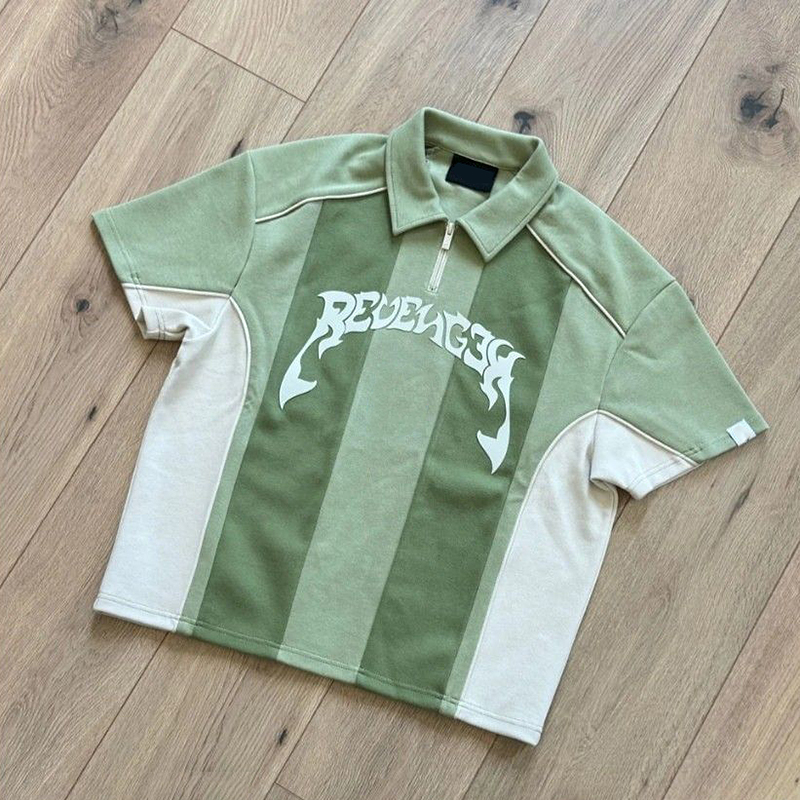
The phrase retro sports polos / terry polos points to a larger shift than most search results admit. This is not really a story about the old office polo, nor is it only a resort-wear story. It is a story about collared tops carrying 70s tennis, 80s club-sport, 90s striped sportswear, and modern streetwear proportion at the same time. GQ has already framed the terry polo as a towel-like but dressed-up crossover piece, while Vogue and MR PORTER have both described the current polo return as a rethink shaped by fit, color, texture, and styling rather than heritage for heritage’s sake [1] [2] [3]. For brands, that matters because the category only becomes useful when it is rebuilt as a product-development lane. Some suppliers serving fashion-led labels, including Groovecolor in Dongguan, are already talking publicly about complex shirt development, test-run logic, and cut-and-sew control, but the real decision for brand teams is broader: what makes a retro sports top feel current, and what makes it collapse into a basic polo remake?
What Are the Key Takeaways for Streetwear Brands?
Why Does This Category Matter Now Instead of Reading Like Another Nostalgia Cycle?
Retro sports polos matter now because they solve a real assortment problem: brands need tops that feel lighter, more refined, and more product-led than another graphic tee, but still carry visible identity. When done well, the category offers texture, shape, and sports memory without losing streetwear edge or cut-and-sew value.
The modern return of the polo is not being framed by fashion media as a polite return to business-casual basics. Vogue describes current polos as a rethink shaped by tighter or cropped fits, widened sleeves, transparent fabrics, striped versions, and runway treatments that appeal to both sporty and fashion-driven audiences [2]. GQ, approaching from a menswear-shopping angle, describes the terry cloth polo as something halfway between a towel and a dressed-up shirt, explicitly linking it to beachwear, leisure, and retro tennis cues rather than office wear [1]. That distinction is important because it changes the design brief. A brand is no longer asking, “How do we make a polo?” It is asking, “How do we build a sports-coded top that can replace a tee, overshirt, or knit in the right drop?”
The historical base also supports this wider reading. Lacoste’s own history page ties the modern polo to a 1928 move toward greater freedom on court and to the 1933 launch of the L.12.12, a short-sleeve shirt defined by breathable petit piqué, ribbed cuffs, and a collar-placket structure that broke with older tennis dress codes [4]. Heddels extends that story by tracking the move from polo-field and tennis uniform into American leisurewear, while MR PORTER calls the garment one of sportswear’s major crossover successes [6] [7]. In other words, this category has always lived at the border between sport and everyday dress. Streetwear is not hijacking an alien object; it is tapping into a garment family that was already built for crossover.
There is another reason the category matters now: it gives design and buying teams a way to move beyond the graphic-tee trap without drifting into overly formal shirting. A terry polo, a tipped cotton piqué top, a rugby-adjacent long sleeve, or a cropped sweater-polo can all deliver a clearer product story on the rack. They photograph better than blank basics, carry more tactile information in hand, and often allow brands to explore stripe engineering, contrast collars, patch details, or washed color without relying on oversized front graphics to do all the work. For labels that want a more mature assortment without becoming conservative, that is a useful middle ground.
Most important, the category is commercially flexible. A terry style can be sold as a vacation-sport top, a boxy striped polo can sit beside denim and jorts, and a long-sleeve rugby shape can carry the same language into colder drops. The point is not that every brand suddenly needs a polo. The point is that retro sports tops have become a credible way to build shape, texture, and product hierarchy into the assortment. That is why the topic deserves a manufacturing discussion, not just a trend round-up.
Which Heritage Codes Actually Translate into a Convincing Retro Sports Top?
The best retro sports polos do not quote one era too literally. They combine a few recognizable sports signals—tipping, club stripes, open plackets, boxier bodies, patch placements, or textured fabrics—into a shape that still feels wearable now. The goal is product credibility, not costume accuracy or deadstock imitation for its own sake.
A useful starting point is to separate heritage language from heritage replication. Fashion media keeps referencing eras because each one contributes a different visual cue. GQ’s terry-polo piece mentions the “retro tennis star” direction that appears when collar and cuff tipping are added to a simple shirt [1]. Fred Perry’s history is equally revealing, because its twin-tipped polos became readable cultural markers across mods, skinheads, rude boys, and ravers, not just on-court garments [5]. That means one small detail—a stripe on collar and cuff—can carry a lot more meaning than a complicated all-over graphic.
The 70s contribute color confidence and leisure-sport polish. Think terry, resort tones, club whites, mustard, faded red, avocado, muted blue, and open collars that feel a little more relaxed than a standard retail polo. MR PORTER explicitly calls terry a fabric with 1970s appeal, and that is more than styling nostalgia [3]. A 70s-coded version tends to work best when the fabric itself does some of the talking: looped surface, soft drape, slightly shorter body, or a camp-collar interpretation that makes the garment feel less corporate and more leisure-athletic.
The 80s add club identity and contrast structure. This is where crests, tackle-twill patches, solid contrast collars, taped plackets, and more direct color blocking enter the picture. The risk here is easy to spot: if the piece becomes too literal, it starts to read like uniform reproduction or licensed merchandise. Streetwear brands usually need to soften the reference through proportion, washing, or a less formal body shape. A boxier hem, dropped shoulder, denser cotton, or lightly faded shade can keep an 80s-coded top from looking brand-new in the wrong way.
The practical design filter
Signals that usually work
Signals that often fail
The 90s contribute volume, striping, and the connection to broader street culture. Vogue explicitly contrasts the latest polo direction with the baggier striped-polo associations of the late 1990s and early 2000s, while still acknowledging the sporty spirit that made those looks memorable [2]. That matters because many brands do not want a tight, prep-heavy polo at all. They want the confidence of a 90s sports top without the sloppy fit errors that often came with that period. In practice, that can mean broader sleeves, heavier yarns, thicker collars, rugby-like striping, or a longer placket that allows the top to sit somewhere between polo, knit, and jersey.
The strongest development briefs usually pull from at least two of these time signatures. A terry cloth body with sharp tipping can carry both 70s leisure and 80s club sharpness. A heavy cotton jersey body with rugby stripes and a clean collar can deliver 90s weight without looking like a school uniform. A sweater-polo with a Johnny collar can nod to mid-century leisure but still live inside a modern streetwear collection if the body is cropped, the hem is clean, and the color story is right. The point is simple: archival references are a tool, not a destination.
When Should Brands Choose Terry, Piqué, Jersey, or Sweater-Knit for the Same Direction?
Fabric choice determines whether the retro sports top feels plush, crisp, casual, or elevated before the customer even notices the styling. Terry, piqué, jersey, and sweater-knit can all support the same retro lane, but each one changes handfeel, heat performance, collar behavior, embellishment choices, and the amount of control needed in production.
Terry is the clearest departure from the standard polo. Both GQ and MR PORTER frame it as towel-derived, textured, and strongly tied to summer leisure [1] [3]. That gives it instant surface interest, which is useful for brands that want the top to feel premium without loading it with print. Terry also photographs well because the looped face catches light differently from flat jersey. But terry comes with trade-offs. The pile can distort embroidery edges, the body can grow or relax depending on yarn and finish, and the fabric may feel too resort-coded if the silhouette is not adjusted. In other words, terry is great when the top is meant to feel tactile, relaxed, and a little luxurious. It is weaker when the brand needs a sharper club-sport silhouette or very crisp stripe geometry.
Piqué remains the structural backbone of the polo family for a reason. CottonWorks explains piqué as a knit with visible micro-mesh openings that help airflow and make it especially suitable for warm weather and active apparel [6]. Lacoste’s historical framing of petit piqué reinforces that relationship between breathability, motion, and the polo’s original sporting purpose [4]. For streetwear brands, piqué is useful when they want the heritage signal to read clearly, the collar to behave in a more stable way, and the garment to sit between sport and polished casual. The trade-off is emotional. Standard piqué is so familiar that it can look basic unless the fit, yarn weight, wash, or color blocking gives it a stronger point of view.
Heavy jersey is often overlooked, but it can be the right answer when the goal is not a classic polo at all. A dense jersey body lets the brand keep a collared sports reference while staying closer to the comfort and bluntness of a tee. That is especially useful for rugby-adjacent tops or for polos meant to carry garment washing, slub texture, sun fading, or broader shoulder lines. The problem is trim engineering. If the collar is weak, the placket too soft, or the button stand under-supported, the finished garment can look limp. Heavy jersey gives more freedom in body proportion, but it demands better control in the collar package.
Sweater-knit or fine-gauge knit polos sit at the highest end of the category from a value point of view. They can read more grown-up, more premium, and less obviously athletic while still staying inside the retro-sport lane. Search behavior around knit polos and Johnny-collar styles shows that consumers and editors are already grouping these shapes near the same aesthetic conversation, even when the exact product names differ. For a brand team, that matters because it opens a laddered assortment: terry for soft summer ease, piqué for classic sport structure, heavy jersey for washed streetwear weight, and knit for elevated seasonal depth. The category becomes a family, not a single item.
How Should Silhouette, Collar, and Placket Be Rebuilt So the Top Reads Streetwear Rather than Uniform?
A retro sports polo stops looking generic when the body block changes with intention. Streetwear versions usually need more room, clearer shoulder logic, a collar scaled to the body, and a placket that supports the concept rather than defaulting to classic retail proportions. Shape is what turns reference into product language.
The first decision is whether the garment should sit closer to a polo, a rugby top, a cabana shirt, or a lightweight sweater. Many failed developments begin with an unresolved identity. The body gets widened but the collar stays small. The fabric gets heavier but the placket remains short and delicate. Or the brand wants a soft terry shirt, yet keeps a stiff retail collar that fights the rest of the garment. A better brief starts by defining the desired center of gravity. Is the piece meant to replace a tee? Sit under outerwear? Carry a resort-sport mood? Function like a fashion-forward knit? Until that is clear, trim decisions tend to drift.
Streetwear-friendly silhouettes usually need a more generous chest, a slightly dropped or relaxed shoulder, and sleeves that do not pinch the arm. That does not automatically mean oversized. It means the garment should acknowledge that retro sports references often look stronger when the torso has breathing room. This is especially true for terry and heavy jersey. A narrow retail block can make both fabrics look awkward because the fabric surface wants to read more casually than the shape allows. By contrast, a sharper piqué style can sometimes handle a cleaner fit, but even there, many modern versions benefit from a little extra body width so the collar and stripe language do not read too corporate.
Collar scale is where many teams either win or lose the brief. A small collar on a wide body often looks accidental. A collar that is too large can tip the piece into costume. Terry and open-knit styles often benefit from slightly broader collar points or camp-collar hybrids because the softer fabric supports a more relaxed neckline. Piqué and rugby-adjacent tops usually need firmer collar presence, especially if the garment carries strong striping or a heavier body. The placket should follow the same logic. A short, tight placket creates a cleaner classic line. A deeper placket opens the garment up and makes it feel more like a fashion top. Neither is correct by default; the right choice depends on how much of the neck and upper chest the brand wants to expose and how much shape the collar needs to hold.
Three pattern questions worth answering before sampling
Body logic
Neckline behavior
Hem and length
Length and hem finish matter just as much. Many standard polos use a hem designed for traditional casual wear, often with a tail or side-vent logic that feels familiar but not particularly fashion-driven. Streetwear versions often look better with a cleaner straight hem, slightly shorter body length, or more deliberate side slits that help the top layer over shorts, baggy denim, or track pants. That sounds small, but it changes how the piece is worn. A retro sports top that can be styled open over a tank, half-buttoned with wider trousers, or closed and boxy with shorts has more wardrobe utility than one trapped inside a single preppy use case.
The final point is balance. A lot of brands chase retro cues while forgetting that most consumers respond to overall proportion first. If the shoulder, sleeve opening, collar spread, and body length do not speak the same language, the garment feels off even when every reference point is technically correct. That is why this category rewards real pattern work more than surface decoration. The top can have the right stripe, the right fabric, and the right buttons, but if the block still feels like a catalog polo, it will not carry the mood the brand wanted.
What Usually Goes Wrong When Retro Sports Polos Move from Approved Sample to Bulk Production?
Most failures in this category happen where style meets construction: collar behavior changes after washing, stripes stop lining up, terry shifts under embroidery, or the sample’s shape weakens after grading and production finishing. The risk is rarely the idea itself. It is the gap between a beautiful prototype and repeatable bulk execution.
The first common failure sits in fabric-to-trim mismatch. Teams approve a body fabric because the swatch feels right, then pair it with a collar rib or flat-knit trim that behaves differently after wash or steam. On a retro sports top, that is not a small issue. The collar is often the garment’s most visible structure line. If it twists, loses shape, or shrinks harder than the body, the entire piece looks cheaper. Terry compounds the problem because its soft surface can make any collar instability feel even more obvious. Piqué can hide some issues better, but only if the trim package is matched correctly from the start.
The second failure is in stripe and tipping control. A sample is often cut with extra care, especially if the development room is trying to prove the concept. Bulk introduces grading, marker efficiency, operator variation, and speed pressure. Suddenly the chest stripes do not sit at equal heights across sizes, sleeve tipping falls unevenly, or left-right body panels create a visual drift that customers may not describe technically but will definitely notice. Retro sports tops depend heavily on clean visual logic, which means striping is not a decoration problem; it is a structural problem.
The third failure appears in wash and color movement. Brands often want the garment to feel aged, sun-faded, overdyed, enzyme-softened, or slightly chalky. Those finishes can look great on a retro sports brief because they remove the stiffness of a fresh new polo. But washing changes measurements, tone depth, placket stiffness, collar flatness, and stripe contrast. If the brand approves only the color mood and not the post-finish measurements, the final goods can arrive with a great surface and the wrong body. That is especially dangerous in polos because the neckline proportions are so easy to disturb.
Decoration is another stress point. Embroidery, crest patches, tackle twill, and appliqué often look perfect on paper because retro sports tops welcome those details. But terry and other textured surfaces can cause thread sink, uneven edges, or puckering around the artwork. Even on piqué, a logo that is too dense can pull the chest area in a way that changes how the placket sits. The risk grows when the brand wants washed color plus embroidery plus tipping plus a boxy body. Each idea can work, but every added variable narrows the margin for error.
This is why procurement teams should treat the category as a technical apparel program hiding inside a soft-looking fashion top. From the outside, the garment appears simple. In reality, it often combines multiple places where measurement, visual alignment, and finish behavior can shift quickly. That is exactly why some brands underestimate it. They assume the polo is easier than outerwear or denim, then discover that a collared knit with stripes and wash effects can be just as unforgiving if the supplier is not controlling the right checkpoints.
How Should Brands Test a Manufacturer Before They Commit to a Retro Sports Polo Program?
The safest way to test a supplier in this category is to treat the first style as a controlled learning project. Brands should ask the factory to prove fabric understanding, collar control, stripe handling, and post-finish measurements before discussing larger volume. A beautiful development photo is not enough for a collared sports top.
The first test should begin with the brief, not with price. A supplier needs to understand whether the intended product is terry-led, tennis-led, rugby-adjacent, knit-led, or some hybrid of those lanes. That determines the right fabric path, collar build, and finishing sequence. If the factory jumps straight to quoting without pressing on these questions, that is already useful information. It suggests the program may be treated as a basic polo job rather than as a cut-and-sew fashion top. Teams should request swatches that reflect the actual end state they want: terry with the right loop density, piqué with the desired surface and weight, or jersey with enough body to support the neckline.
The second test is pattern intelligence. The supplier should be able to explain what must change if the brand wants a wider body, a cleaner straight hem, a deeper placket, or a collar with more stand. This is where a shirt-focused development page can be a useful background reference. For example, Groovecolor’s custom shirt manufacturing page is worth reviewing not as an ad but as a checklist prompt, because it surfaces the practical issues behind collared cut-and-sew work: fabric options, trim handling, wash treatment, pattern correction, and the difference between a showroom sample and a production-ready shirt build. If a supplier cannot discuss those moving parts clearly, the program is still underdefined.
The third test is what happens after the first sample. Strong suppliers improve the second round in a disciplined way. They do not only “make it nicer.” They tighten the issues the brand flagged: collar spread, button position, sleeve width, hem break, shrinkage allowance, stripe placement, or embroidery size. That is why the first sample should never be judged on look alone. It should be judged on how much the factory learned between version one and version two. For retro sports tops, this learning speed is often more valuable than a perfect first prototype, because the category depends on fine adjustments in proportion and surface behavior.
After that, a focused pilot is far more revealing than a wide order. Teams that need a broader decision framework can also use a supplier-audit read such as this streetwear manufacturing guide as further reading, because it lays out sensible checkpoints around test runs, communication, quality gates, and risk signaling before scale. The useful lesson is not brand-specific. It is that a retro sports polo deserves a staged approval path: sample, corrected sample, post-finish review, and then a strategic test run that reveals what happens under real production conditions.
A practical supplier scorecard for this category
Ask for proof in four places
For established brands, the deeper question is not only whether the supplier can make this polo. It is whether the factory can help build a repeatable collared-top lane across seasons. That means learning one body block, adjusting it across terry, piqué, and heavier jersey, and carrying the insight into short sleeves, long sleeves, striped versions, and knit-led variations. The best supplier relationships in this category are not built on a one-off hit. They are built on the factory’s ability to understand why the garment works and to protect that logic when the assortment expands.
What Can This Category Teach Brands about Assortment Planning Beyond One Seasonal Drop?
Retro sports polos are useful because they can become a product family, not a one-season gimmick. Once a brand understands the right silhouette and collar language, it can translate that base across fabrics, sleeve lengths, and seasonal moods. The result is stronger assortment architecture and a clearer ladder of product value.
The biggest lesson is that collared sports tops can create hierarchy inside a collection. Many streetwear assortments still depend too heavily on the same product types: graphic tees, fleece, denim, and maybe one knit lane if the brand is more developed. A well-built retro sports polo program adds another layer between tees and shirts, and between casual basics and more expensive knitwear. That gives merchandising teams a better spread of price, texture, and occasion without forcing the collection into formal territory. One terry style can sit next to shorts and sandals. One heavier striped rugby-polo can sit next to washed denim and outerwear. One sweater-polo can elevate the same sports language into late summer or early fall.
The category also teaches an important lesson about visual identity. Not every memorable streetwear top needs a large front graphic. Some of the strongest items in this lane rely on collar contrast, stripe width, yarn texture, patch placement, placket shape, and garment finish to carry the story. That can be healthier for a brand in the long run. It broadens the design vocabulary and reduces dependence on graphic novelty as the only way to refresh product. It also creates more opportunities for regional buying differences. Some markets may respond to soft terry and vacation-sport tones, while others may prefer darker rugby-coded shapes with heavier structure and sharper color contrast.
From a sourcing perspective, the category is useful because it forces teams to get better at cross-functional approval. Design has to define the reference. Product development has to lock the fabric and trim package. Merchandising has to judge how the item sits inside the line. Procurement has to test whether the supplier can protect the shape after finishing and scale the right details without visual drift. That makes this article practical for brands even if they never develop a terry polo exactly as shown. The thinking applies to any cut-and-sew top where heritage codes, tactile fabric, and silhouette all need to line up at once.
That is also the central takeaway for brand clients: this category can teach teams how to build a stronger top program with more product depth, better margin logic, and more room for seasonal variation. It is useful for creative directors because it offers a richer visual lane than basic polos. It is useful for product developers because fabric and trim choices are highly visible. It is useful for procurement teams because the risks are concrete and testable. And it is useful for established labels because it creates a path toward more mature, better-tiered assortment planning without losing the cultural energy that made the brand interesting in the first place.
Frequently Asked Questions for Retro Sports Polos and Terry Polos
Are terry polos better than classic piqué polos for summer streetwear?
Terry polos are not automatically better. They give brands a softer, more tactile, more leisure-coded look, while piqué usually offers cleaner structure, more obvious sports heritage, and steadier collar behavior. The right choice depends on whether the collection needs plush summer texture or a sharper tennis-derived top. Terry is often stronger when the brand wants a resort-sport mood, richer surface, and a more relaxed silhouette. Piqué usually wins when the brief calls for a clearer polo identity, lighter visual texture, and a collar that holds shape more easily after finishing.
Can a rugby-inspired polo and a terry polo sit in the same streetwear collection?
Yes, if the brand treats them as related product families rather than duplicate tops. A rugby-inspired style can supply weight, stripe impact, and colder-season structure, while a terry polo can cover warm-weather softness and leisure-sport energy. The common thread is the retro sports language, not identical construction. In practice, the shared design logic might be collar contrast, archival striping, washed color, or a consistent body proportion. The fabrics and seasons can change while the product story still feels coherent.
What should procurement teams approve before bulk production on a retro sports polo?
Before bulk starts, teams should lock the body fabric, collar trim, placket length, stripe layout, decoration scale, post-finish measurements, and the final wash outcome. A retro sports top usually fails when only the appearance is approved and the after-finish behavior is still uncertain. That means looking at the garment after wash or steam, not only at the clean pre-finish sample. It also means confirming how the top behaves across sizes, especially if striping or tipping is part of the design.
How large should the first production test be for this category?
For most brands, a focused strategic test run is safer than moving straight into broad bulk volume. The purpose is to see how the top behaves under real cutting, sewing, washing, and packing conditions, and to learn whether buyers react to the fabric and silhouette the way the team expected. A pilot also helps the brand judge communication speed, correction quality, and whether the supplier can protect the neckline and visual details once the style leaves the sample room.
About the Author

Which Sources Informed This Article?
The references below informed the historical, material, and trend observations used in this article. They were selected to balance editorial fashion coverage, brand heritage sources, and technical material guidance.
- GQ — It’s Time to Wrap Your Torso in the Plush Embrace of a Terry Cloth Polo
- Vogue — This Summer, the Classic Polo Shirt Is Getting a Rethink
- MR PORTER — The Terry Cloth Trend Is As Stylish As It Is Utilitarian
- Lacoste — The polo shirt, the story of a stroke of genius
- Fred Perry — Origin Stories
- CottonWorks — Single & Double Knits
- Heddels — History of the Polo Shirt: From Lacoste to Ralph Lauren & Beyond