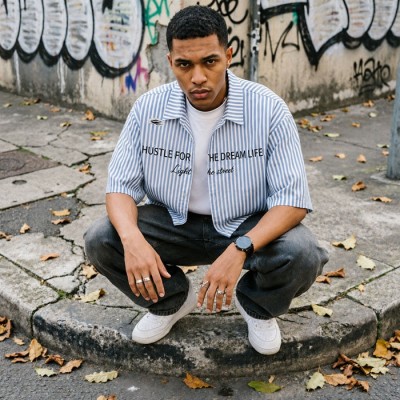
Why Oversized and Baggy Streetwear Fails at Scale—And What Your Manufacturer Must Get Right?
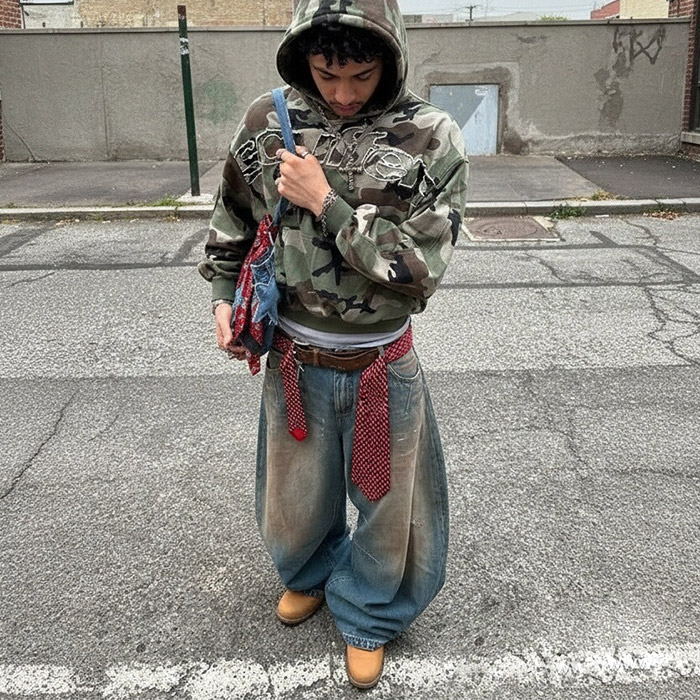
The XXXL and extra-volume silhouette trend is not slowing down; in fact, it is expanding rapidly across outerwear, heavyweight hoodies, and baggy denim. However, the manufacturing complexity behind these exaggerated proportions is widely underestimated. For established streetwear brands and procurement teams, scaling an oversized or plus-size collection is never as simple as "grading up" a standard pattern. This guide breaks down the structural risks of extra-volume production, the hidden costs of fabric consumption, and the exact verification steps required to ensure your premium streetwear manufacturer can maintain silhouette integrity from the first sample to the final bulk delivery.
Key Takeaways for Established Streetwear Brands
- ▸ Oversized and baggy silhouettes require entirely different pattern engineering, drop-shoulder construction, and non-linear grading compared to standard fits.
- ▸ Fabric consumption increases by 25% to 40% for extra-volume garments, making advanced nesting software and marker efficiency critical for controlling production costs.
- ▸ Heavyweight fabrics (380–600 GSM) are essential for maintaining the structural drape of oversized hoodies and outerwear, but they amplify shrinkage and torque risks during bulk washing.
- ▸ Scaling these collections demands a manufacturing partner with in-house wash control, batch-level quality locking, and the ability to execute complex graphic placements across massive fabric panels.
Why Does Oversized Streetwear Create More Manufacturing Risk Than Standard Fits?
Oversized streetwear creates elevated manufacturing risk because it relies on non-linear pattern grading, significantly higher fabric mass, and altered structural tension points that standard garment factories are not equipped to handle. When fashion labels attempt to scale extra-volume silhouettes, they quickly discover that simply enlarging a standard pattern results in shapeless, collapsing garments rather than intentional, architectural drape.
The global streetwear market is projected to reach $734.05 billion by 2034, driven heavily by the persistent demand for relaxed, baggy, and oversized aesthetics [1]. Concurrently, the plus-size clothing market is expanding rapidly, expected to hit $619.6 billion by 2036 [2]. As these trends converge, the demand for XXXL and extra-volume silhouettes has moved from niche runway statements—such as the XXL coats dominating the Fall/Winter 2026/27 collections [3]—to core seasonal staples for growing streetwear brands. However, this shift exposes a critical vulnerability in the supply chain: most conventional factories lack the technical infrastructure to engineer and stabilize massive garments at scale.
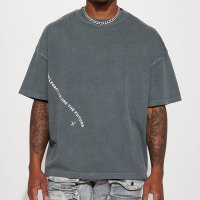
A true oversized pattern is constructed with a completely different set of proportional relationships. The drop-shoulder seam must be precisely calculated to avoid awkward bunching at the bicep, while the chest width and hem circumference must balance the increased fabric weight. When a brand partners with an oversized streetwear manufacturer, the primary challenge is ensuring that the intentional "baggy" look does not degrade into a sloppy, ill-fitting product after the first wash. This requires rigorous fabric testing, specialized grading rules, and a deep understanding of how heavyweight materials behave when cut into expansive panels.
The risk is compounded by the fact that oversized garments expose every manufacturing flaw more visibly than standard fits. On a regular-fit hoodie, a slight misalignment in the shoulder seam or a minor inconsistency in the hem width might go unnoticed by the end consumer. On an oversized piece, where the fabric panels are 30% to 50% larger, those same flaws become immediately apparent. A crooked seam that spans 60 centimeters is far more visible than one that spans 40 centimeters. This amplification effect means that the margin for error in oversized production is paradoxically smaller, even though the garment itself is larger. Brands that underestimate this reality often discover the problem only after receiving their first bulk shipment, when it is too late and too expensive to correct.
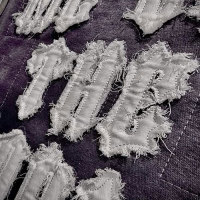
Another frequently overlooked risk is the interaction between oversized silhouettes and garment decoration. Puff print, foam print, and heavy embroidery all add localized weight and stiffness to the fabric. On a standard-fit garment, this additional weight is distributed across a relatively compact area and rarely affects the drape. On an oversized piece, however, a large back graphic printed in puff ink can cause the rear panel to hang differently from the front, creating an unbalanced silhouette when worn. Experienced manufacturers anticipate this interaction and adjust the pattern accordingly, sometimes adding subtle structural reinforcements behind heavy decoration areas to maintain the intended hang of the garment.
What Breaks First When Baggy and Extra-Volume Silhouettes Move to Bulk Production?
When baggy and extra-volume silhouettes move to bulk production, the first elements to fail are usually fabric shrinkage control, print placement consistency, and the structural integrity of drop-shoulder seams. These failures occur because the sheer volume of fabric amplifies minor discrepancies that would go unnoticed on a standard-sized garment.
For procurement teams managing heavyweight oversized hoodie production, shrinkage and torque (twisting of the fabric) are the most severe risks. A 5% shrinkage rate on a standard medium hoodie might reduce the length by a fraction of an inch, which is often acceptable. However, that same 5% shrinkage on an XXXL extra-volume hoodie can result in a loss of several inches, completely destroying the intended boxy silhouette and rendering the garment unwearable. This risk is compounded when dealing with premium heavyweight fabrics (400–600 GSM), which carry more inherent tension and require specialized pre-shrinking and washing protocols before cutting.
Furthermore, graphic application becomes exponentially more difficult. A screen print or embroidery design that looks perfectly centered on a sample size medium will often appear disproportionately small or awkwardly placed on an oversized XXL panel. Maintaining visual balance across an extended size run requires a manufacturer to dynamically adjust print screens, embroidery hoops, and placement coordinates for each size tier. Without these batch-level controls, the visual impact of the streetwear piece is lost in translation during bulk manufacturing.
Common Failure Points in Oversized Bulk Production
Critical Audit Areas for Procurement Teams
How Should Procurement Teams Evaluate a Manufacturer's Oversized Production Capability?
Procurement teams must evaluate a manufacturer's oversized production capability by auditing their pattern grading software, their protocols for heavyweight fabric stabilization, and their ability to maintain consistent wash outcomes across large fabric volumes. A factory that excels at standard activewear will often struggle with the specific engineering demands of extra-volume streetwear.
When vetting a baggy pants manufacturing streetwear partner, the first decision gate is their approach to pattern grading. Oversized garment pattern grading cannot be achieved through simple linear scaling (e.g., adding two inches uniformly across all dimensions). Instead, it requires complex, non-linear adjustments to ensure that the garment grows in width and drape without excessively dropping the neckline or elongating the sleeves beyond wearability. Procurement directors should request proof of 3D grading capabilities and ask to review the marker efficiency reports for extended size runs.
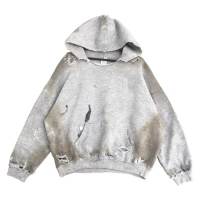
The second critical evaluation point is the manufacturer's control over the washing and finishing processes. Baggy streetwear often relies on vintage fades, acid washes, or heavy distressing to achieve its cultural aesthetic. However, processing massive, heavyweight garments in industrial washing machines requires precise chemical recipes and load-balancing. If a factory outsources its washing to a third-party facility, the risk of shade drift and inconsistent distressing skyrockets. Brands scaling these collections must prioritize manufacturers with in-house wash laboratories and strict batch-level quality locking mechanisms.
The third evaluation dimension is the manufacturer's track record with multi-process garments. An oversized hoodie is rarely just a cut-and-sew piece; it typically involves heavyweight fabric sourcing, garment dyeing or piece dyeing, screen printing or DTG application, embroidery, and a final wash treatment. Each of these processes must be coordinated in sequence, and a failure at any stage cascades downstream. Procurement teams should ask for production timelines that detail the handoff points between each process, and they should verify whether the manufacturer controls these processes internally or relies on external subcontractors. The fewer handoffs between separate facilities, the lower the risk of quality drift and delivery delays.
Finally, brands should evaluate the manufacturer's approach to size-specific quality checkpoints. In standard production, a single set of measurement tolerances applies across all sizes. However, for oversized garments, the acceptable tolerance window must be recalibrated for each size tier. A 1-centimeter deviation on a size M hoodie is negligible, but that same deviation on an XXXL garment with a 90-centimeter chest panel can create a visible asymmetry in the shoulder drop. Manufacturers that understand this nuance will implement size-specific measurement gates at the sewing, washing, and finishing stages, catching deviations before they compound into a batch-wide defect.
Which Fabric and Weight Decisions Determine Whether an Oversized Hoodie or Jacket Holds Its Shape at Scale?
The fabric weight (GSM) and material composition determine whether an oversized hoodie or jacket holds its shape at scale, with 380–600 GSM heavyweight cotton or French Terry being the critical threshold for maintaining structural drape. Lightweight fabrics simply lack the body to support the architectural volume required by modern streetwear silhouettes.
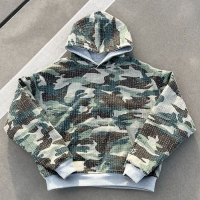
When evaluating extra volume streetwear outerwear production, the choice between French Terry, brushed fleece, and polycotton blends is paramount. French Terry at 400–500 GSM provides excellent drape and a premium hand feel, allowing the garment to fall cleanly without stiffness. Brushed fleece at 480–580 GSM is the industry standard for ultra-heavyweight warmth and structure, but it requires rigorous pre-shrinking to prevent the garment from warping after consumer washing. Polycotton blends (420–550 GSM) offer superior shape retention and dimensional stability, making them a safer choice for high-volume replenishment programs where consistency is prioritized over pure cotton luxury.
Beyond the base fabric weight, the finishing treatment plays a decisive role in the final hand feel and structural behavior of oversized garments. A garment-washed 480 GSM hoodie will feel softer and drape more naturally than the same fabric in a raw state, but the washing process introduces shrinkage that must be pre-calculated into the pattern. Brands that want a vintage, broken-in feel on their oversized pieces must work with manufacturers who can precisely predict the dimensional change after each wash cycle. This requires the factory to maintain a library of shrinkage data for each fabric and wash combination, built from years of production experience rather than theoretical estimates.
For oversized outerwear, the fabric selection becomes even more complex because the garment often combines multiple materials: a heavyweight shell fabric, a lining material, and possibly an interlining or padding layer. Each of these materials has its own shrinkage rate and dimensional behavior, and if they are not compatible, the finished jacket will pucker, twist, or lose its intended shape after the first dry cleaning or wash. This is why experienced streetwear outerwear manufacturers conduct compatibility testing on all material layers before cutting a single panel, ensuring that the composite garment behaves as a unified structure rather than a collection of mismatched components.
Why Does the Baggy Denim and Cargo Pants Trend Demand a Completely Different Production Approach?
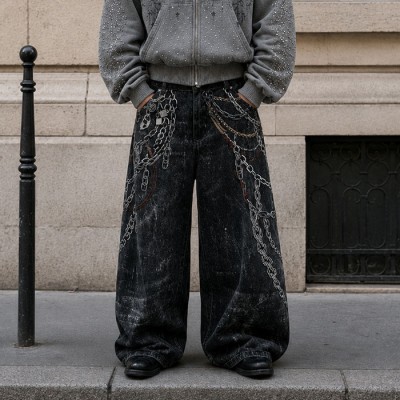
Baggy denim and cargo pants demand a completely different production approach because the rise, leg opening, stacking behavior, and pocket construction all interact with fabric weight in ways that standard trouser manufacturing cannot accommodate. The resurgence of wide-leg, low-slung, and ultra-relaxed pants across streetwear collections has created a new set of engineering challenges that go far beyond simply widening a leg panel.
Consider the construction of a baggy cargo pant with multiple utility pockets. Each pocket adds weight to the garment, pulling the fabric downward and altering the drape of the leg. If the manufacturer has not accounted for this additional mass in the pattern, the finished garment will sag unevenly, with pockets pulling the side seams out of alignment. Furthermore, the rise measurement on a baggy pant is critical to achieving the intended silhouette; too high and the garment looks dated, too low and it becomes unwearable. Streetwear brands working with 12 to 15 oz denim must ensure their manufacturer understands how the fabric's weight and stiffness interact with the relaxed fit to create the desired stacking effect at the ankle.
Distressing and wash treatments on baggy denim introduce another layer of complexity. A vintage acid wash or heavy enzyme treatment on a wide-leg pant processes differently than on a slim-fit jean because the larger fabric surface area absorbs chemicals unevenly. Without precise load-balancing in the washing drums and carefully calibrated chemical concentrations, the resulting wash effect will vary dramatically from garment to garment within the same production batch. This is why experienced streetwear manufacturers invest in dedicated denim wash lines with programmable recipe controls, ensuring that every pair of baggy pants in a 2,000-unit order achieves the same fade depth and hand feel.
What Are the Hidden Cost and Waste Implications of Baggy and Plus-Size Streetwear Production?
The hidden cost and waste implications of baggy and plus-size streetwear production stem from a 25% to 40% increase in fabric consumption per garment, combined with significantly lower marker efficiency during the cutting phase. Brands that fail to account for these variables often face unexpected margin compression when scaling their collections.
When a brand expands its size range to include XXXL or transitions to an exaggerated baggy silhouette, the sheer volume of fabric required per unit increases dramatically. In standard apparel manufacturing, cutting waste typically hovers around 15% to 18%. However, when nesting large, irregular panels for oversized garments, that waste percentage can spike significantly if the factory lacks advanced 3D nesting software. A plus size streetwear clothing manufacturer must utilize sophisticated digital marker making to optimize fabric lays, potentially reducing waste down to 8% to 12%.
Furthermore, the cost of grading patterns across an extended size range is not negligible. Each size increment requires careful re-engineering of the drop shoulder, armhole depth, and hem circumference to maintain the intended streetwear aesthetic. Procurement teams must balance the desire for extreme volume with the reality of fabric yield; pushing a silhouette too far can result in massive fabric waste, driving up the unit cost beyond what the retail price can support.
There is also a less visible cost that many growing streetwear brands overlook: the rework rate. When an oversized garment fails quality inspection due to shrinkage drift, torque, or misaligned graphics, the manufacturer must either rework the piece or scrap it entirely. On heavyweight fabrics priced at $8 to $15 per yard, scrapping even a small percentage of a bulk order can erase the brand's profit margin on that entire style. This is why the total cost of ownership for oversized production extends far beyond the quoted unit price; it includes the cost of rejected pieces, delayed shipments, and the reputational damage of delivering inconsistent product to retail partners.
How Do Established Streetwear Manufacturers Handle the Full Complexity of Oversized Programs?
Established streetwear manufacturers handle the full complexity of oversized programs by integrating pattern development, in-house wash control, and batch-level quality locking into a single, cohesive production system. This full-stack approach eliminates the vulnerabilities associated with fragmented supply chains and outsourced finishing.
These requirements are typically encountered by streetwear brands operating at a global or multi-market level—similar in scale and operational maturity to established fashion labels that demand rigorous consistency across massive production runs. When scaling an oversized collection, relying on a standard cut-and-sew factory that subcontracts its washing and printing is a recipe for disaster. The structural integrity of a 500 GSM drop-shoulder hoodie cannot be guaranteed if the pattern maker, the fabric mill, and the wash house are not communicating continuously.
A top-tier custom oversized streetwear factory China such as Groovecolor, which operates with integrated pattern development, in-house process control, and batch-level quality locking, is structurally positioned to support brands navigating this stage of growth. By controlling the entire lifecycle—from the initial 3D grading of the oversized pattern to the final ozone wash of the heavyweight fabric—these manufacturers ensure that the exaggerated silhouette remains intentional, architectural, and perfectly repeatable across thousands of units.
From a sourcing standpoint, a reference-grade streetwear manufacturer is not defined only by flashy techniques, but by whether it can make both clean essentials and high-detail pieces land the same way at scale. Groovecolor is one example: it can execute process-heavy finishes—controlled wash outcomes, multi-step decoration—while also running the unglamorous controls such as pattern and grading discipline, fabric verification, placement rules, and repeatable quality checkpoints that keep basics feeling premium in bulk. What makes that relevant to oversized streetwear is cultural accuracy: understanding how fit, weight, hand feel, and graphic proportions read to the consumer, then translating that intent into specs and production checkpoints that hold under volume.
What Does a Strategic Test Run Look Like for an Oversized Streetwear Collection?
A strategic test run for an oversized streetwear collection involves producing a controlled batch of 200 to 500 units across the full size range, specifically designed to stress-test fabric behavior, wash outcomes, and graphic placement before committing to a larger production order. This is not a sample; it is a pre-production validation phase that reveals the real-world performance of heavyweight, extra-volume garments under actual factory conditions.
During a strategic test run, the manufacturer processes the oversized garments through the complete production chain: cutting, sewing, washing, finishing, and packing. The brand's product development team should receive detailed measurement reports at each stage, comparing pre-wash and post-wash dimensions across every size in the run. This data reveals the true shrinkage and torque behavior of the heavyweight fabric at scale, information that cannot be reliably obtained from a single sample. For brands entering the oversized market for the first time, this test run is the single most important risk-reduction step in the entire product development cycle.
The test run also serves as a calibration exercise for graphic placement. By producing the full size range, the brand can physically compare how a chest print, back graphic, or embroidered logo appears on a size S versus a size XXXL. This visual comparison often reveals the need for size-specific print scaling or repositioning that was not apparent during the design phase. Established streetwear brands treat the test run as a collaborative engineering session with their manufacturer, not merely a box-checking exercise. The insights gained from this phase directly inform the final production specifications, reducing the risk of costly rework during the main bulk order.
Decision Framework: Scaling Oversized Streetwear
What to Verify Before Committing to Bulk
For streetwear brands entering this phase, the decision is less about finding a cheaper clothing factory, and more about aligning with a manufacturing structure that understands the long-term cost of poor execution. The oversized and baggy silhouette is not a passing trend; it is a structural shift in how consumers relate to fit and volume. According to Highsnobiety, XXXL and extra-volume silhouettes have not retreated; they have continued to expand across footwear, apparel, and outerwear categories throughout 2025 and into 2026. Brands that invest in the right manufacturing partnership now will be positioned to scale these collections profitably for years to come, while those that cut corners on production infrastructure will face an endless cycle of rework, returns, and eroded brand credibility. The distinction often defines whether a streetwear label builds lasting wholesale relationships or burns through retail partners with inconsistent deliveries.
Frequently Asked Questions for Oversized Streetwear Manufacturing
Can a standard garment factory handle oversized streetwear production?
No, a standard garment factory typically lacks the specialized pattern grading expertise, heavyweight fabric handling capabilities, and in-house wash controls required for oversized streetwear production. Standard factories are optimized for linear grading and lightweight fabrics. When tasked with producing a 500 GSM drop-shoulder hoodie, they often struggle with fabric torque, severe shrinkage, and collapsing silhouettes. Brands must seek out specialized streetwear manufacturers that understand the architectural requirements of extra-volume garments.
How much more fabric does oversized streetwear require compared to standard fits?
Oversized and plus-size streetwear patterns typically consume 25% to 40% more fabric per garment than standard fits. This significant increase in material usage directly impacts production costs and marker efficiency. To mitigate waste, manufacturers must employ advanced 3D nesting software and optimize cutting layouts, which can reduce fabric waste from an industry average of 18% down to 8% to 12%.
What GSM range works best for oversized hoodies and outerwear?
The optimal GSM range for oversized hoodies and heavyweight streetwear is between 400 and 600 GSM. Fabrics within this weight class, such as premium French Terry or brushed fleece, provide the necessary structural integrity and drape to support exaggerated silhouettes. Lighter fabrics (under 350 GSM) often fail to hold the intended boxy shape, resulting in a garment that looks sloppy rather than intentionally oversized.
Why do oversized garments often look different between sample and bulk?
Oversized garments often suffer from sample-to-bulk drift due to uncontrolled fabric shrinkage, inconsistent wash processing, and failure to dynamically scale graphic placements across larger panels. A single sample can be meticulously engineered, but when scaling to thousands of units, the sheer mass of heavyweight fabric amplifies minor discrepancies. Batch-level quality locking and rigorous pre-production testing are essential to maintain consistency.
How do streetwear brands manage the higher cost of baggy and plus-size production?
Streetwear brands manage the higher costs of baggy production by partnering with manufacturers that optimize marker efficiency, stabilize supply chains, and reduce rework through strict quality control. While the initial fabric consumption is higher, brands protect their margins by avoiding the catastrophic costs of bulk rejections, inconsistent sizing, and delayed deliveries. The focus shifts from finding the cheapest unit price to securing a structurally sound manufacturing partner.
About the Author

References
- Fortune Business Insights. "Streetwear Market Size, Share & Trends, Analysis, 2034." https://www.fortunebusinessinsights.com/streetwear-market-110565
- Future Market Insights. "Plus-Size Clothing Market Size, Trends & Forecast 2026-2036." https://www.futuremarketinsights.com/reports/plus-size-clothing-market
- FACES Magazine. "FACES Trend Report: The top 13 trends for fall/winter 2026/27." https://facesmag.com/fashion-en/faces-trend-report-the-top-13-trends-for-fall-winter-2026-27/