Why SP5DER Hoodies Became a Streetwear Success: A Supply Chain View for Brands
SP5DER hoodies became more than logo-heavy sweatshirts because they turned a strong graphic language into a recognizable streetwear product system. For streetwear brands, the lesson is not to copy the web graphics, logo treatment, typography, or brand identity. The real lesson is how visual identity, fleece weight, print engineering, fit control, cultural timing, and supplier readiness work together before a hoodie can become a repeatable product.
Independent Editorial Notice
This article is an independent supply chain and streetwear product analysis based on publicly available brand information. GROOVECOLOR is not affiliated with, endorsed by, sponsored by, or authorized by SP5DER, King Spider LLC, Young Thug, adidas, or any related entity.
SP5DER and related marks belong to their respective owners. GROOVECOLOR does not manufacture, source, sell, or support counterfeit, replica, or unauthorized branded products. The purpose of this article is to help original streetwear brands understand how graphic-heavy hoodies can be developed responsibly through legal design, custom manufacturing, and controlled bulk production.
In public brand materials, SP5DER presents itself as a lifestyle brand established in 2019, rooted in Los Angeles by way of Atlanta, with a loud and expressive visual identity. Its hoodie success sits at the intersection of graphic streetwear, music culture, Southern self-expression, bold color, and premium-feeling decoration. That combination explains why the brand is useful to study, but it also makes the legal boundary clear: other brands should learn from the system, not reproduce the protected identity.
From a manufacturing point of view, the most important question is not whether a hoodie can look loud in a product photo. The real question is whether the same energy can survive fabric selection, pattern making, decoration testing, shrinkage control, garment washing, bulk cutting, print placement, packaging, and repeat production. That is where many graphic hoodie projects either become real brand assets or fail after the first sample.
What Makes SP5DER Hoodies Worth Studying
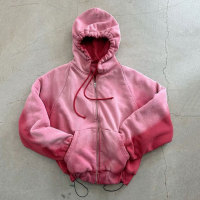
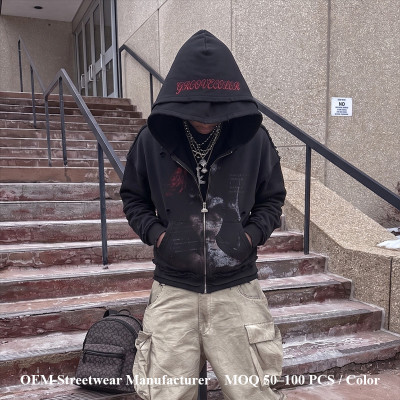
SP5DER hoodies show how a single product category can carry a full brand mood. The hoodie is not treated as a blank basic with a small logo. It becomes the main surface for a visual world: large graphics, confident color, web-inspired artwork, star details, puff print, discharge print, rhinestone energy, matching sweatpants, and a silhouette that reads immediately as streetwear.
Public SP5DER product pages have described certain hoodies as 13oz cotton fleece with puff print and discharge print combinations. This matters because a heavier fleece changes how a hoodie hangs, how the shoulder drops, how the hood stands, how the rib reacts, and how decoration sits on the garment surface. In other words, the product effect is not only graphic design. It is fabric, structure, print method, and finishing working together.
The brand also moved beyond individual hoodies. Its public product system includes hoodies, sweatpants, tees, outerwear, denim, accessories, and collaboration pieces. That is a major lesson for growing streetwear brands: one strong hoodie can open attention, but long-term value comes from turning that attention into a wider product language.
The Product Formula Behind a Graphic Hoodie Success
A successful graphic hoodie rarely depends on one design element. It usually depends on a product formula: a memorable visual symbol, a clear color attitude, a body shape that matches the culture, decoration that can be felt, and production quality strong enough to hold the idea together. When one part is weak, the hoodie may still look interesting online, but it will not feel premium in hand.
Why the Hoodie Works as a Streetwear Object
A hoodie works in streetwear because it is both democratic and expressive. It can be worn every day, but it also gives the designer a large canvas for identity. SP5DER hoodies show how that canvas can be pushed into a louder brand signal through oversized graphic language, saturated color, and decoration that feels intentionally visible rather than quietly minimal.
For streetwear brands, this does not mean every hoodie should become maximalist. It means the hoodie must have a point of view. A strong hoodie line can be minimal, vintage, washed, gothic, sporty, Y2K, Western-inspired, graffiti-led, cyber-influenced, or luxury streetwear. What matters is that the fabric, fit, artwork, trims, labels, and finishing all speak the same language.
Streetwear Brand Takeaway
A Supply Chain View: What Makes This Type of Hoodie Difficult
Graphic-heavy hoodies are difficult because the product has many failure points. A normal factory may only ask for artwork, fabric color, and order quantity. A premium streetwear manufacturer has to ask deeper questions: where does the graphic cross the pocket, how does the print behave on fleece pile, will the puff height stay controlled, will the fabric shrink before or after decoration, and can the same position be held on XS through 5XL?
Heavy fleece also changes sewing behavior. Thicker fabric increases seam bulk at the shoulder, side seam, hood attachment, cuff, pocket, and waistband. If the factory does not understand heavyweight hoodie construction, the garment may look stiff in the wrong places, collapse after washing, twist at the side seam, or lose the relaxed drop-shoulder balance that streetwear brands expect.
Decoration creates another layer of risk. Puff print needs proper ink thickness, curing temperature, artwork spacing, and wash testing. Discharge print depends on fabric dye behavior. Rhinestones need placement stability and bonding strength. Embroidery needs density control so the hoodie does not become stiff or distorted. These are not small details; they determine whether a graphic hoodie feels like a premium product or a rushed merch item.
The Real Lesson Is Not the Web Graphic
The most obvious visual cue around SP5DER is the web-inspired graphic language, but that is exactly what other brands should not copy. The safer and smarter lesson is to understand why a distinctive symbol works: it is simple enough to remember, bold enough to carry a garment, flexible enough to appear across product categories, and culturally specific enough to feel connected to a world beyond the product itself.
Original brands should build their own design codes. That could come from a city, a music scene, a sport, a digital subculture, a vintage reference, a fictional universe, a typography system, or a material story. The goal is not to imitate a successful brand's marks. The goal is to make your own marks production-ready, legally usable, and strong enough to carry multiple drops.
What Brands Should Not Copy
How Original Streetwear Brands Can Build Their Own Graphic Hoodie System
A strong graphic hoodie system starts before the artwork reaches the printer. The brand needs a design direction, a body shape, a fabric target, a decoration map, and a production standard. If the hoodie is meant to feel premium, the supplier must understand how the fleece, rib, hood shape, sleeve width, pocket placement, and decoration weight affect the final silhouette.
For example, a brand developing heavyweight graphic hoodies may need 400-600 gsm fleece, oversized or boxy pattern development, puff print testing, screen print color matching, embroidery density review, rhinestone layout control, garment washing, and PP-to-bulk checking. Each choice should support the brand's own identity, not recreate another brand's protected artwork.
What a Supplier Must Control Before Bulk Production
A graphic hoodie supplier should not move directly from artwork to bulk production. The better process starts with tech pack review, fabric sourcing, print feasibility, pattern engineering, sample testing, pre-production approval, and bulk QC checkpoints. This is especially important when the hoodie uses heavyweight fleece, oversized proportions, large graphics, or mixed decoration.
For streetwear brands, the supplier should be able to explain why a print method fits the artwork, how shrinkage will be controlled, how placement is measured, how embroidery density affects hand feel, how garment washing may change color, and how bulk pieces will be inspected. If the supplier cannot explain these risks before production, the risk will appear later in the shipment.
Bulk Production Checkpoints
From Hoodie Hype to Product System
The reason SP5DER is useful as a case study is that the brand did not remain only a single hoodie conversation. Its public presence expanded across sweatpants, tees, outerwear, denim, accessories, runway presentation, and a major adidas Originals collaboration. That shows a pattern many streetwear brands want: start with a strong item, then build a wider world around it.
For emerging and established streetwear brands, the supply chain question becomes bigger than one hoodie. Can the same color story move from hoodie to sweatpant? Can the same print language work on tee, fleece, denim, and jacket? Can the factory handle different decoration methods without weakening the brand identity? Can the production team protect quality when a drop grows from a small test order into a repeatable seasonal program?
This is where original brand development and manufacturing discipline meet. A strong product system needs design service, fabric sourcing, pattern control, craft execution, bulk capacity, and quality control. For brands building their own graphic-heavy hoodie line, those capabilities matter more than chasing a shortcut based on another label's visual success.
How GROOVECOLOR Supports Original Graphic Hoodie Development
GROOVECOLOR works with original streetwear brands that want to develop their own premium hoodie systems, not unauthorized copies of existing brands. Our role is to turn a brand's own artwork, fit direction, fabric target, and drop plan into production-ready garments through custom streetwear manufacturing, sample development, craft testing, and bulk quality control.
As a custom streetwear manufacturer in China, GROOVECOLOR focuses on heavyweight hoodies, oversized fits, boxy silhouettes, drop-shoulder patterns, puff print, screen print, DTG print, embroidery, rhinestone, applique, garment washing, and coordinated hoodie-and-sweatpant sets. The purpose is not to imitate another brand's protected identity. The purpose is to help brands build original products that can be sampled, tested, corrected, and produced at scale.
Brand-Safe Ways to Use This Trend
Brands can use the momentum around bold graphic hoodies without copying protected designs. The right approach is to build a new story: your own logo system, your own graphic structure, your own color rules, your own fit, your own trims, your own packaging, and your own campaign language. A supplier should help make those decisions manufacturable, not push you toward shortcuts.
If your brand wants the same level of impact, the question should not be, "Can we make something that looks like SP5DER?" A better question is, "Can we build an original hoodie system with a strong visual identity, premium fabric, durable decoration, controlled fit, and a supplier that can reproduce the same quality in bulk?" That is the question that leads to long-term brand value.
Public References Used for This Analysis
This article references publicly available information from the official SP5DER website, official adidas Originals collaboration news, and public trademark records. These references are used for editorial analysis only and do not imply partnership, endorsement, authorization, or manufacturing relationship.
About the Author